
Flexible Blockchain Smart-Contract Deployment
a blockchain and smart contract technology, applied in the field of flexible blockchain smart contract deployment, can solve the problems of privacy and security concerns, scaling concerns of blockchain nodes,
Patent Information
- Authority / Receiving Office
- US · United States
- Patent Type
- Applications(United States)
- Current Assignee / Owner
- Publication Date
- 2018-05-03
- Estimated Expiration
- Not applicable · inactive patent
Smart Images
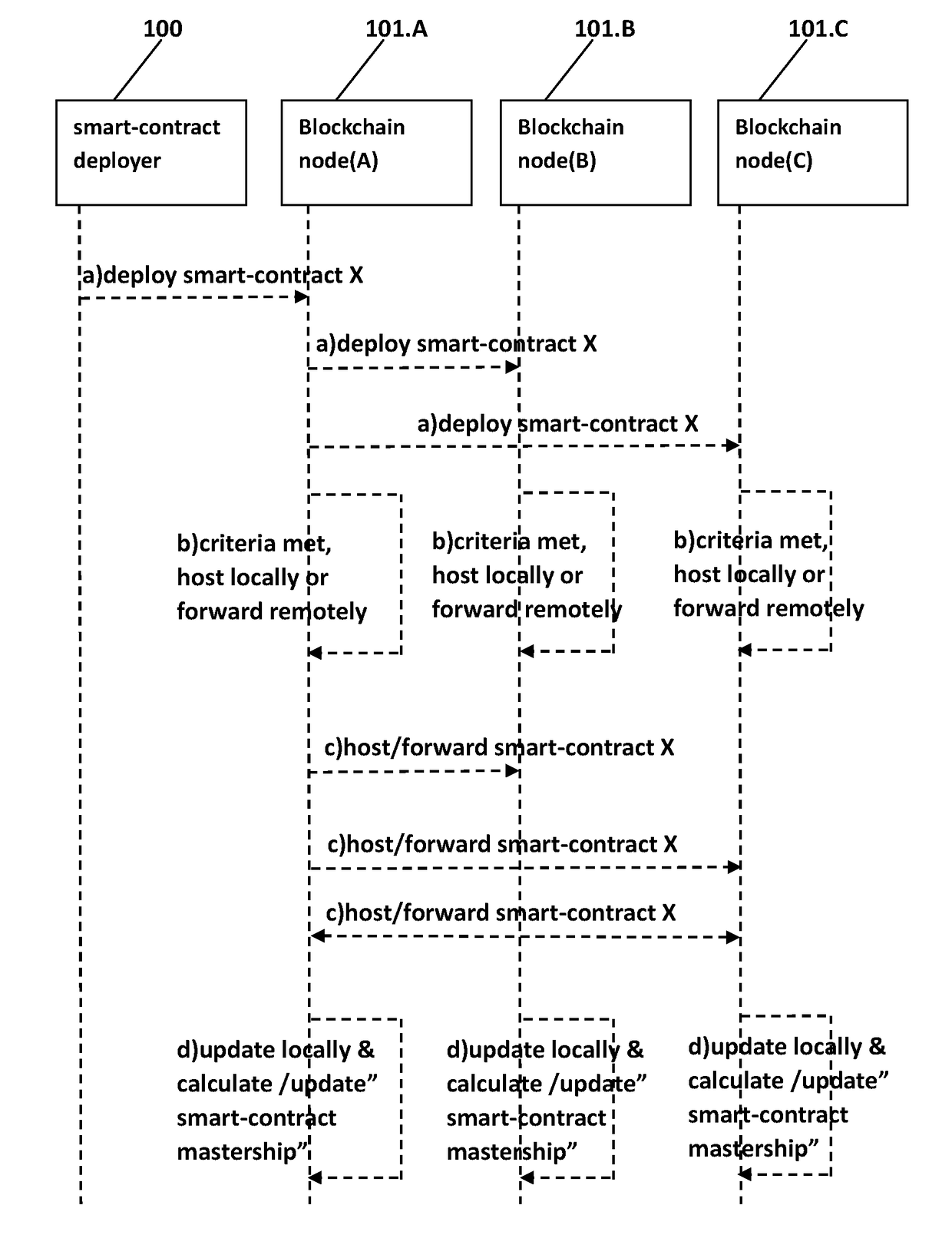
Figure 1 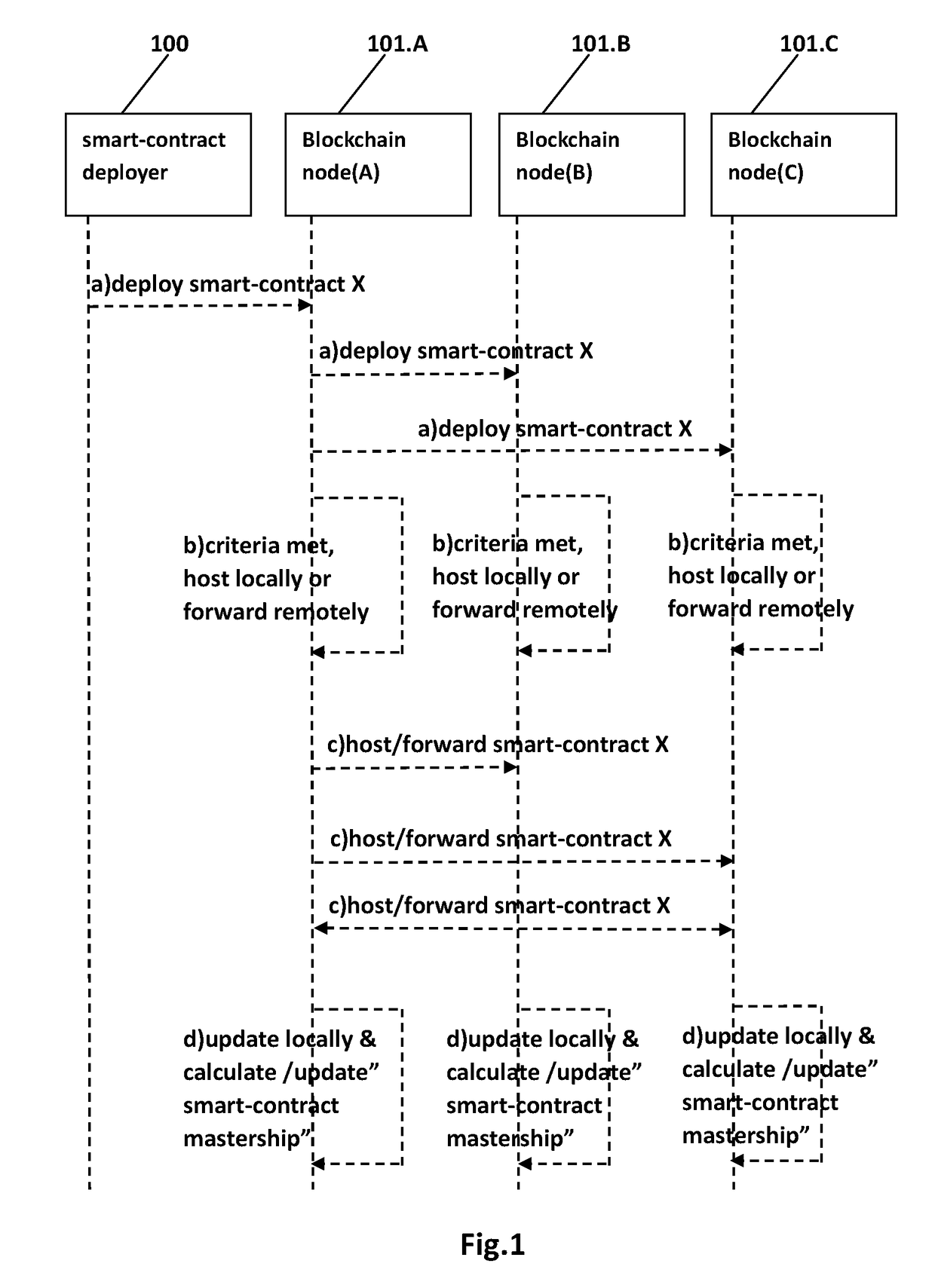
Figure 2 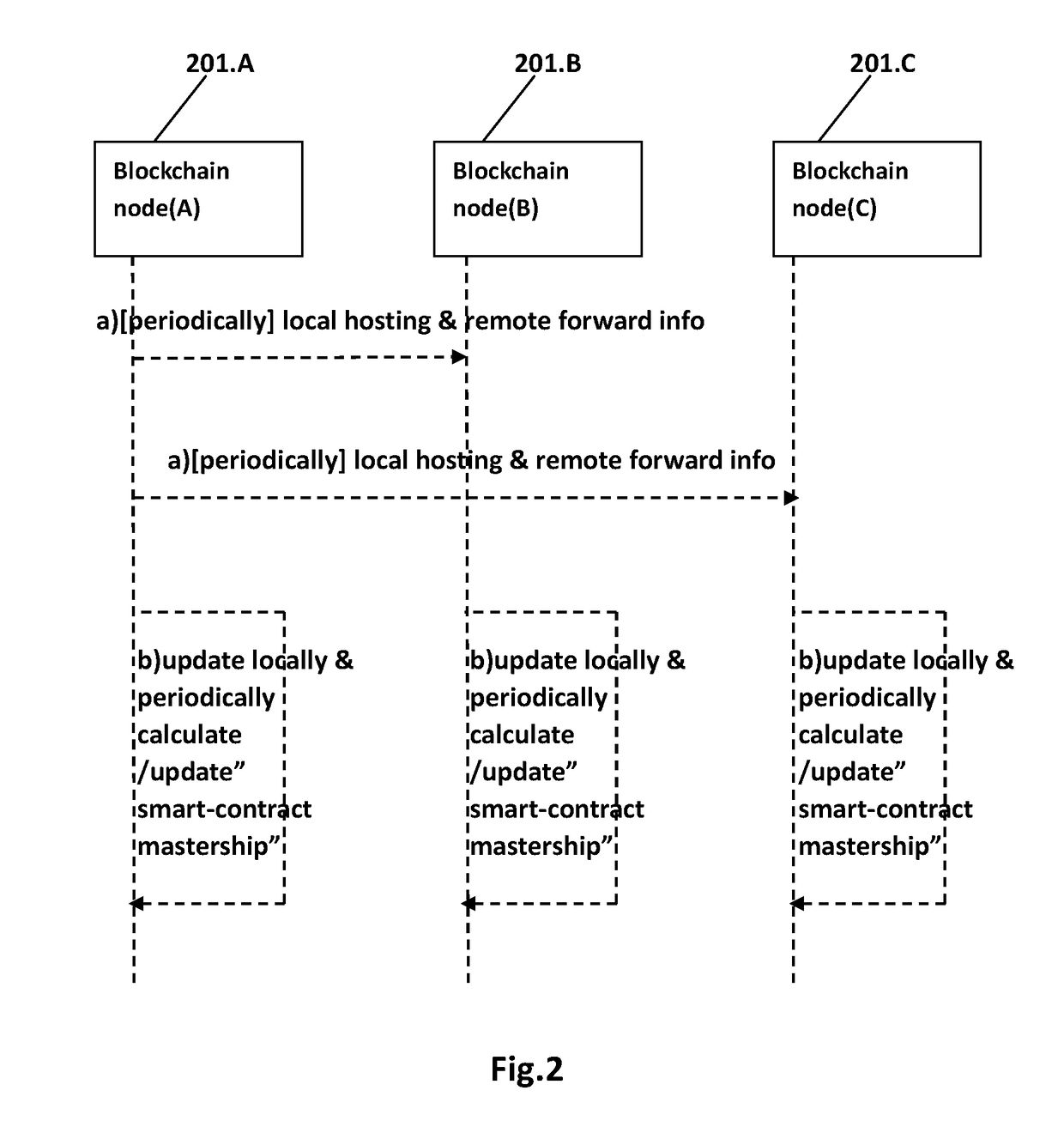
Figure 3
Abstract
Description
CROSS REFERENCE TO RELATED APPLICATION
[0001] This application claims priority from U.S. Patent Application No. 62 / 415,509, filed Nov. 1, 2016 and entitled “Flexible blockchain smart-contract deployment” the disclosure of which is hereby incorporated entirely herein by reference.FIELD OF THE INVENTION
[0002] The present invention is in the technical field of blockchain smart-contract deployment. More particularly, the present invention is in the technical field of achieving privacy, security and scalability in blockchain smart-contract deployment and execution.BACKGROUND OF THE INVENTION
[0003] Conventional blockchains, e.g. bitcoin, Ethereum, HyperLedger etc., all require a smart-contract to be deployed on-chain on every blockchain validating node, which is not only unnecessary, but also leads to scalability concern on blockchain nodes, as well as privacy and security concerns on implementing smart-contracts on public or consortium blockchains.SUMMARY OF THE INVENTION
[0004] The present in...
Examples
Embodiment Construction
[0020]The Problem Statement
[0021]Conventional blockchains, e.g. bitcoin, Ethereum, HyperLedger etc., all require a smart-contract to be deployed on-chain on every blockchain validating node, which is not only unnecessary, but also leads to potentially serious concerns and issues en route blockchain adoption in real-world use cases.
[0022]First, is the potential scalability concern on all blockchain validating nodes. A blockchain could have many smart-contracts deployed and each consumes and competes against other smart-contracts on CPU power, memory, storage, network bandwidth etc. on each validating nodes (computers).
[0023]Second, is the potential security and privacy concern on deploying a private smart-contract on a public or consortium blockchain. The reason being, a smart-contract is codification of a business logic, which is realization of potentially secret business contracts, and a private smart-contract processes potential sensitive and confidential business and personal dat...