
Method and apparatus for improving osseointegration, functional load, and overall strength of intraosseous implants
a technology of intraosseous implants and functional load, applied in dental prosthetics, dental surgery, impression caps, etc., can solve the problems of reducing osseointegration time and speeding up recovery, and achieve the effects of reducing integration time, improving osseointegration efficiency, and improving osseointegration performan
Patent Information
- Authority / Receiving Office
- US · United States
- Patent Type
- Applications(United States)
- Current Assignee / Owner
- Publication Date
- 2019-08-29
Smart Images
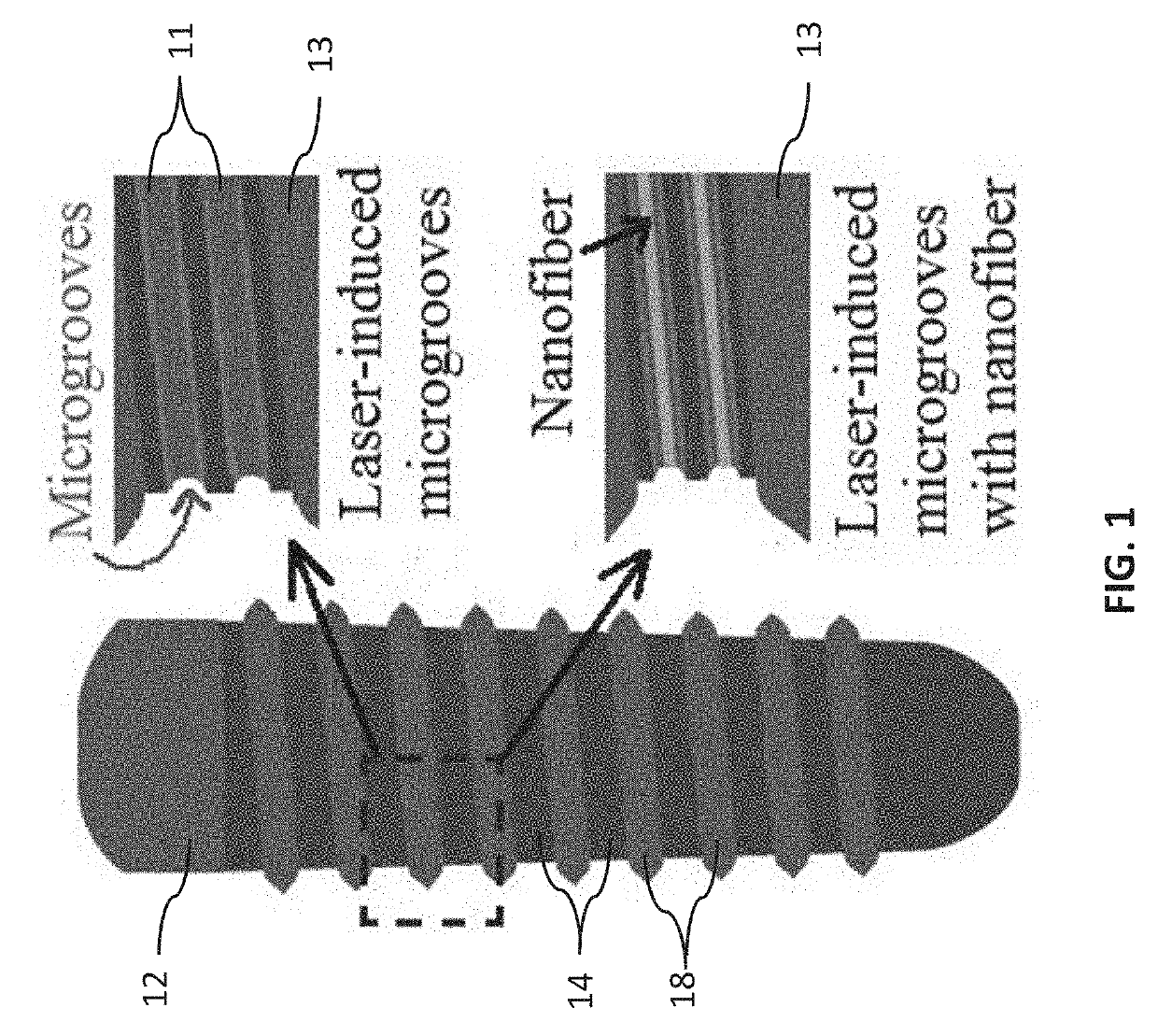
Figure 1 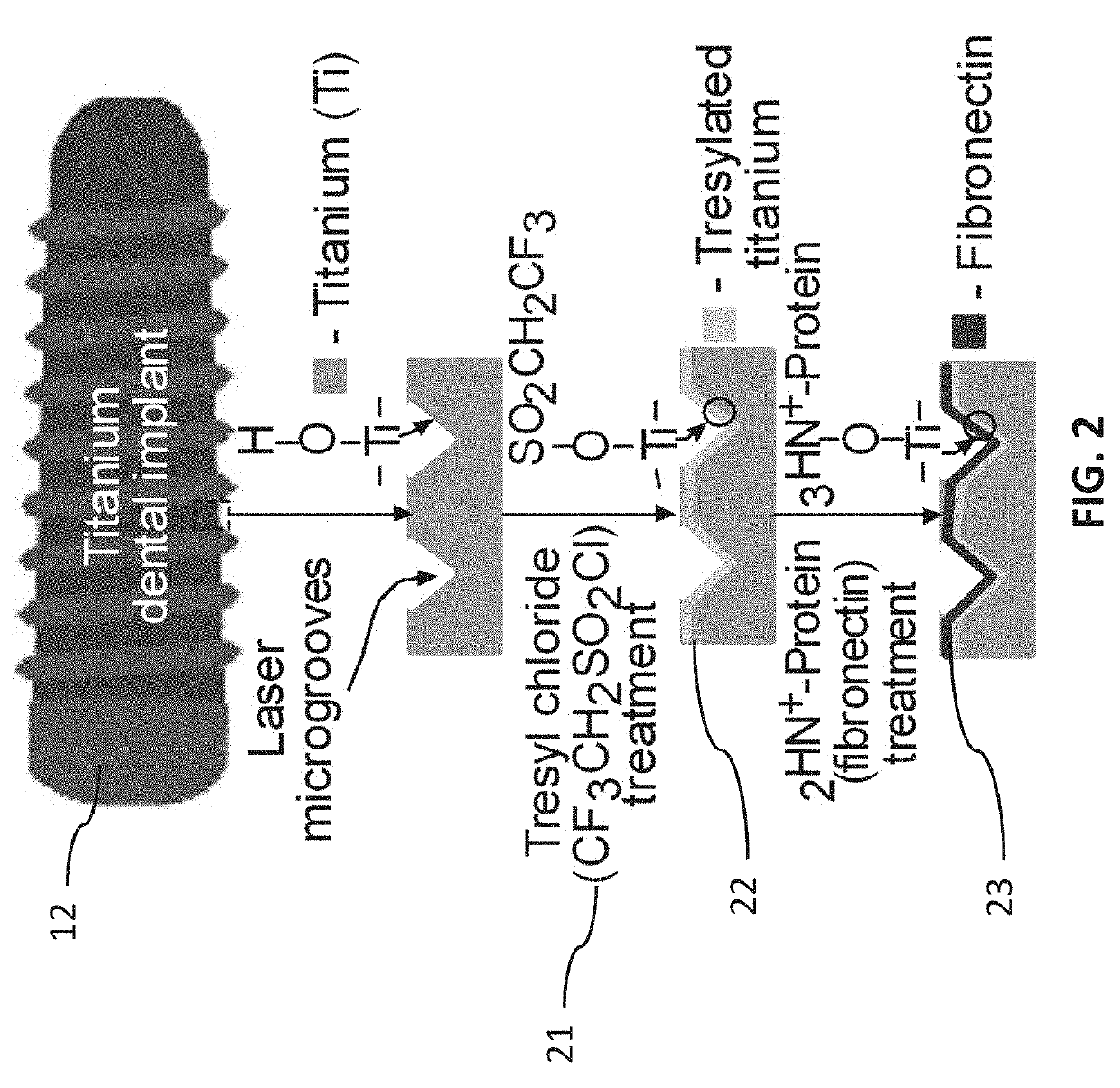
Figure 2 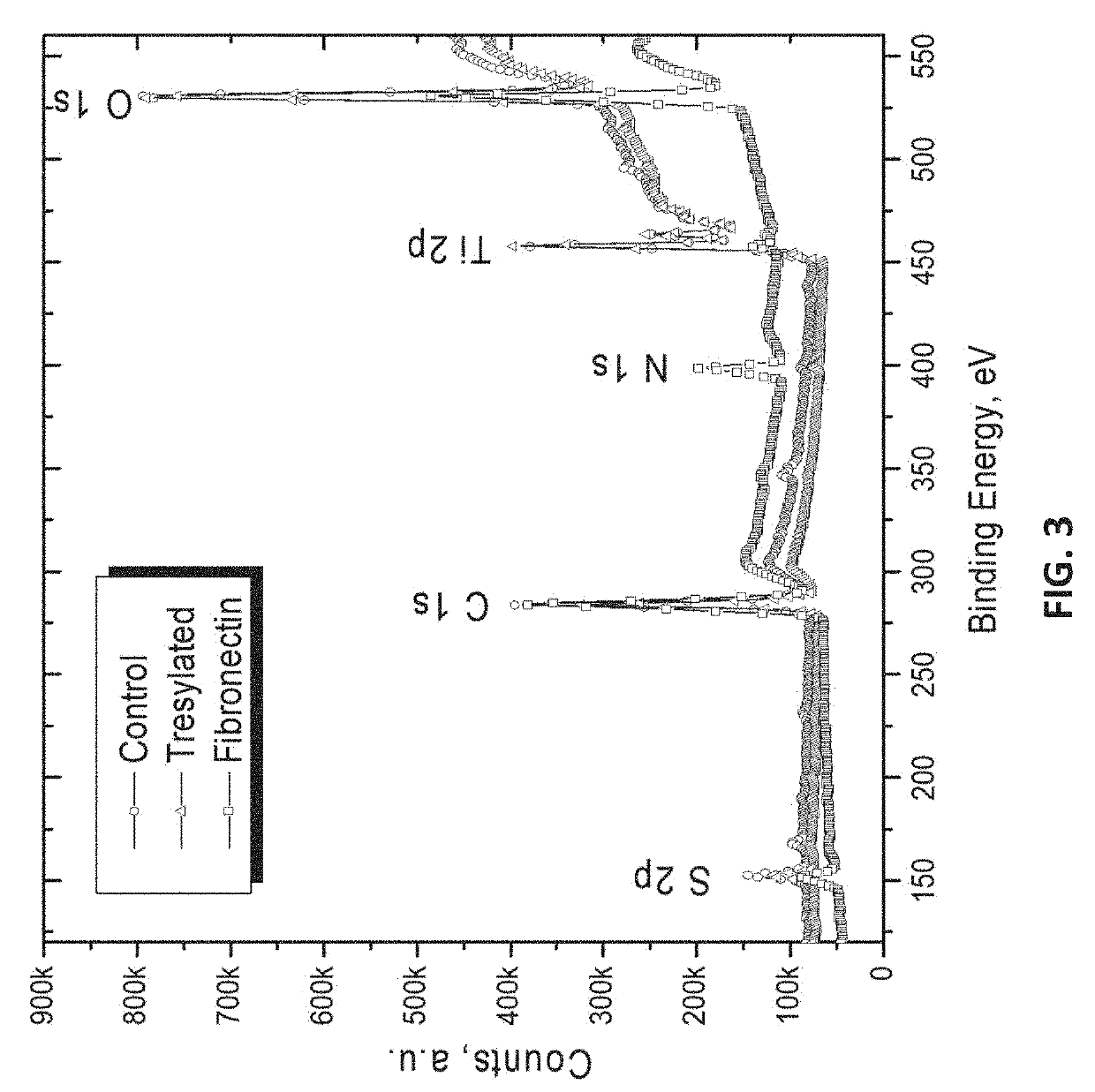
Figure 3
Abstract
Description
CROSS REFERENCES TO RELATED APPLICATIONS
[0001] This application is a continuation-in-part of and claims the benefit of priority of U.S. patent application Ser. No. 16 / 248,122 filed Jan. 15, 2019 by the University of Central Oklahoma (Applicant), entitled “Nanofiber coating to improve biological and mechanical performance of joint prosthesis” the entire disclosure of which is incorporated herein by reference in its entirety for all purposes. This application claims the benefit of U.S. Provisional Patent Application No. 62 / 634,993 filed on Feb. 26, 2018 in the name of Vagan Tapaltsyan and Morshed Khandaker, which is expressly incorporated herein by reference in its entirety and to which priority is claimed.STATEMENT AS TO RIGHTS TO INVENTIONS MADE UNDER FEDERALLY SPONSORED RESEARCH OR DEVELOPMENT
[0002] This invention was made with government support under Grant Number 5P20GM103447 awarded by the National Institutes of Health. The government has certain rights in the invention.FIELD OF T...
Examples
Embodiment Construction
[0036]Our research demonstrates: (1) immobilization of ECM proteins (CG and FN) and bone growth factors (BMP2) with PCL NFM is possible, and such immobilization improves the in vitro cell viability of PCL NFM; (2) immobilization of antibacterial nanoparticles (Ag) with PCL NFM is possible, and such immobilization improves the in vitro antibacterial activity of PCL NFM; (3) direct attachment of FN on a dental implant material (Ti-6Al-4V) is possible using tresyl chloride activation method; and (4) microgrooving of a Ti implant followed by coating the microgrooves with CG-PCL NFM significantly improves in vivo mechanical stability and osseointegration.
[0037]Referring to FIG. 1, in a preferred embodiment the present invention 10 provides coating methods described above to dental implants with the goal of improving the osseointegration of implants. We use a laser pulse to create microgrooves 11 at the interspace between two threads 18 of a dental implant (Di) 12. Laser-induced microgroo...