
Absorbent article with fluid treatment agent
Patent Information
- Authority / Receiving Office
- US · United States
- Current Assignee / Owner
- Publication Date
- 2005-03-15
- Estimated Expiration
- Not applicable · inactive patent
Smart Images
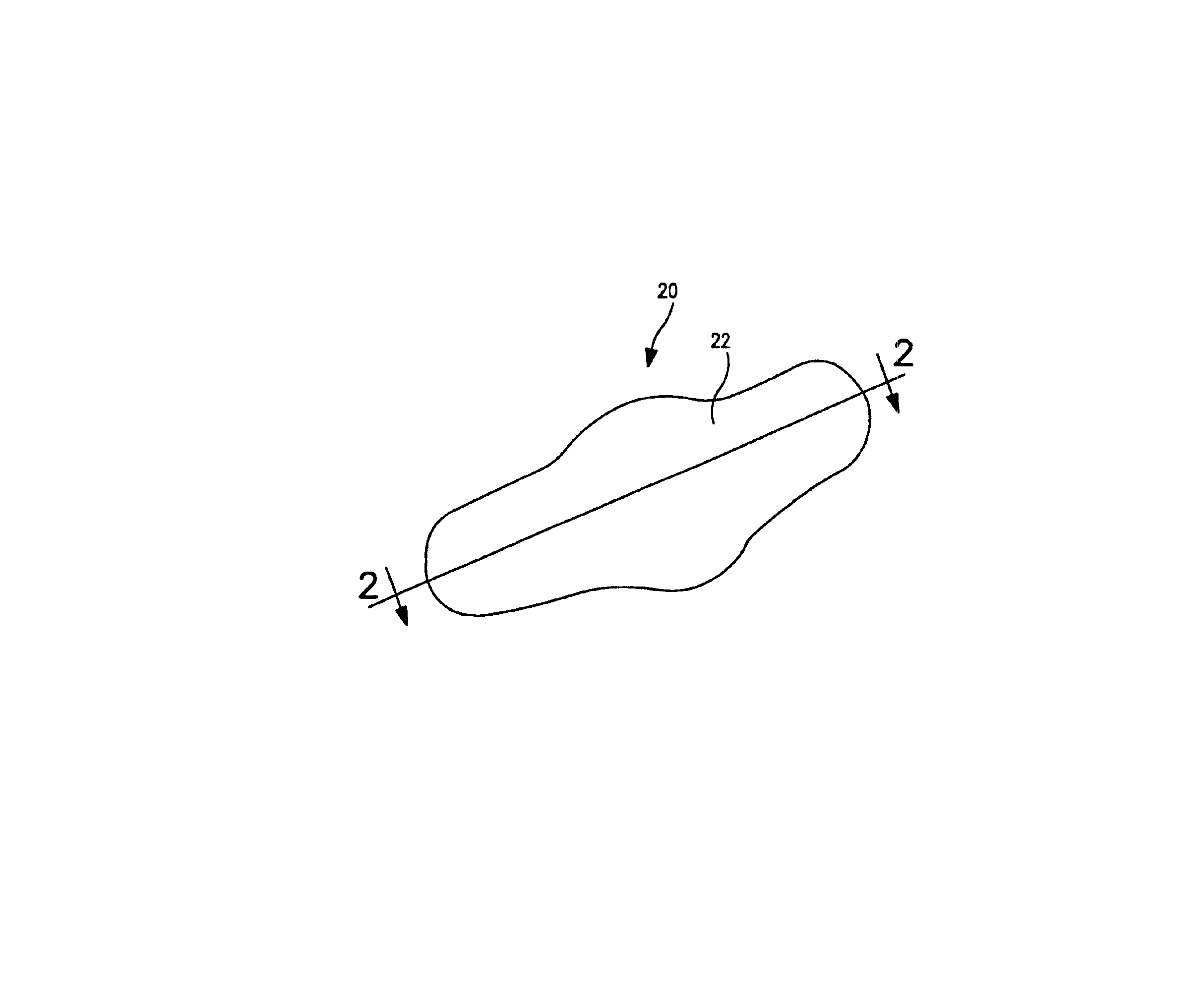
Figure 1 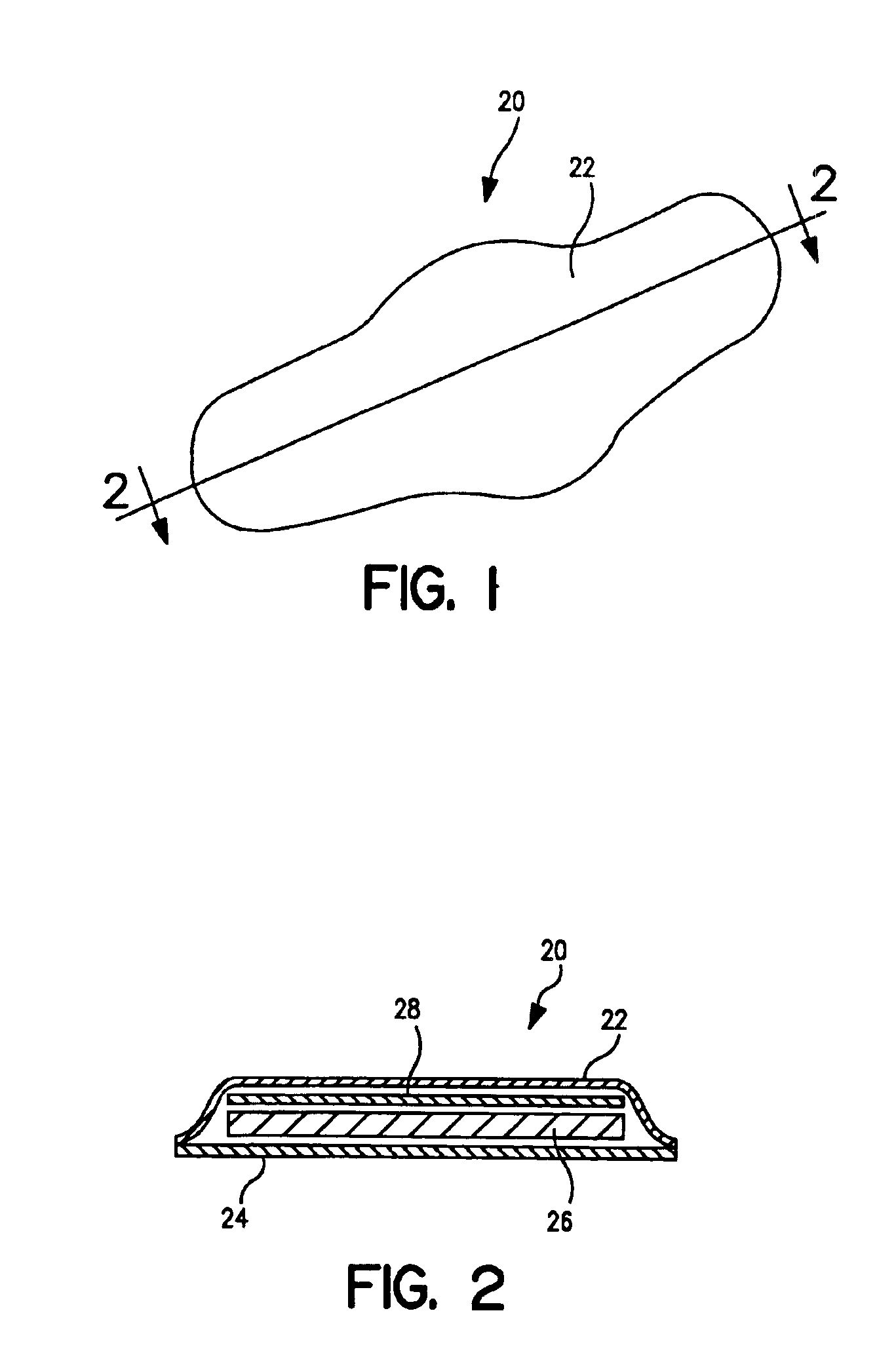
Figure 2 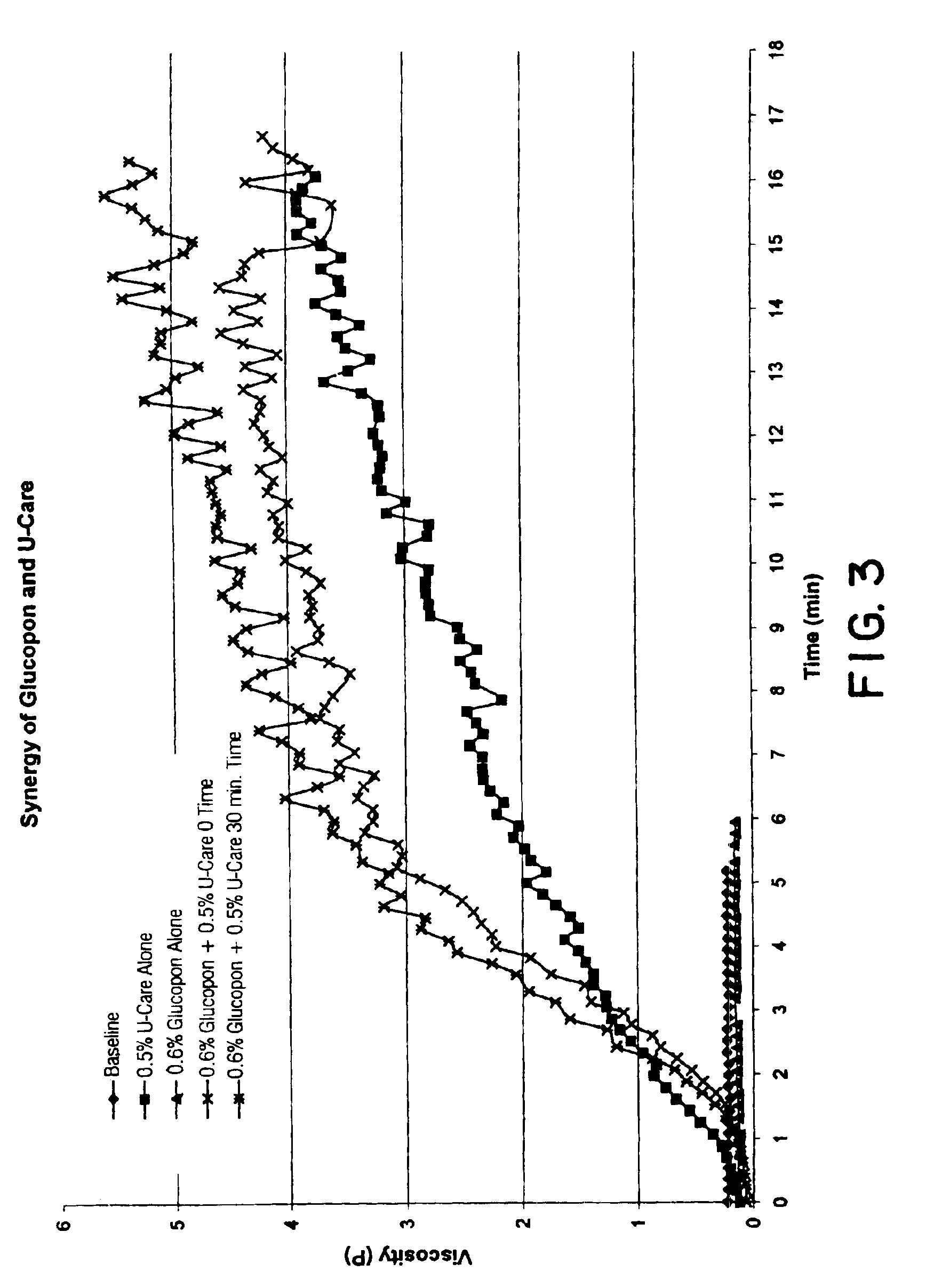
Figure 3
Abstract
Description
BACKGROUND OF THE INVENTIONThis invention relates to a treatment for absorbent material that improves the materials' ability to absorb various blood-containing bodily fluids.A wide variety of disposable absorbent articles for collecting bodily fluids are known in the art. Commercial absorbent articles include diapers, sanitary napkins, training pants, and incontinent care pads, wound dressings, and the like. Disposable products of this type include some functional elements for receiving, absorbing, and retaining fluids. Typically, such absorbent articles have an absorbent core containing cellulosic fibers, for example, wood pulp fluff, polymeric fibers, for example polypropylene or polyethylene, particles of highly absorbent materials, for example, superabsorbents, and an admixture of cellulosic fibers, superabsorbents and / or polymeric fibers. Typically, such articles include a fluid-permeable cover sheet or liner which typically faces the body of the user, an absorbent core or cont...
Examples
example
A Theological test was used to demonstrate the performance of the composition of the invention. The testing was carried out using a Vilastic III capillary rheometer equipped with a 1 millimeter diameter capillary tube, available from Vilastic Scientific, located in Austin, Tex. The instrument was set up to take 30 time course measurements of a fluid's viscoelasticity in equal increments over a 15 minute time frame. These measurements were taken at a single frequency of 0.5 Hz and shear rate of 1 s−1.
When 0.5% UCARE™ gelling agent and 0.6% GLUCOPON 220 red blood cell lysing agent were added to a biological menses stimulant, made according to the method described above and time course viscoelastic measurements were immediately taken, both the rate and degree of gelling were increased compared to the addition of UCARE™ alone.
The test was performed first on 0.5% UCARE™ alone added to the simulant, resulting in a viscosity of about 3.5 P after 15 minutes. The test was then performed on 0...