
System and methods for transforming data from a source to target platform using snapshot
Patent Information
- Authority / Receiving Office
- US · United States
- Current Assignee / Owner
- Publication Date
- 2005-03-29
- Estimated Expiration
- Not applicable · inactive patent
Smart Images
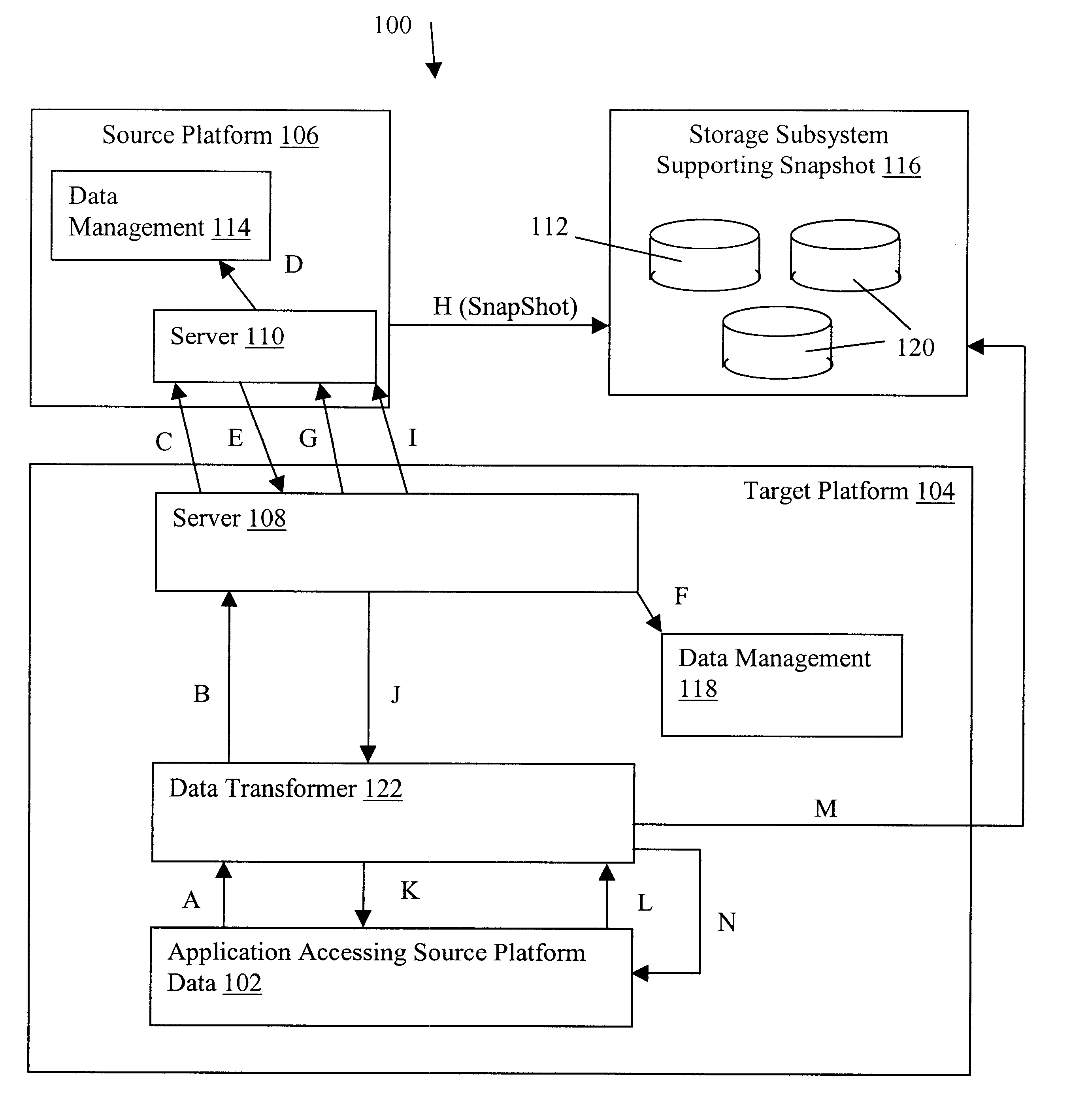
Figure 1 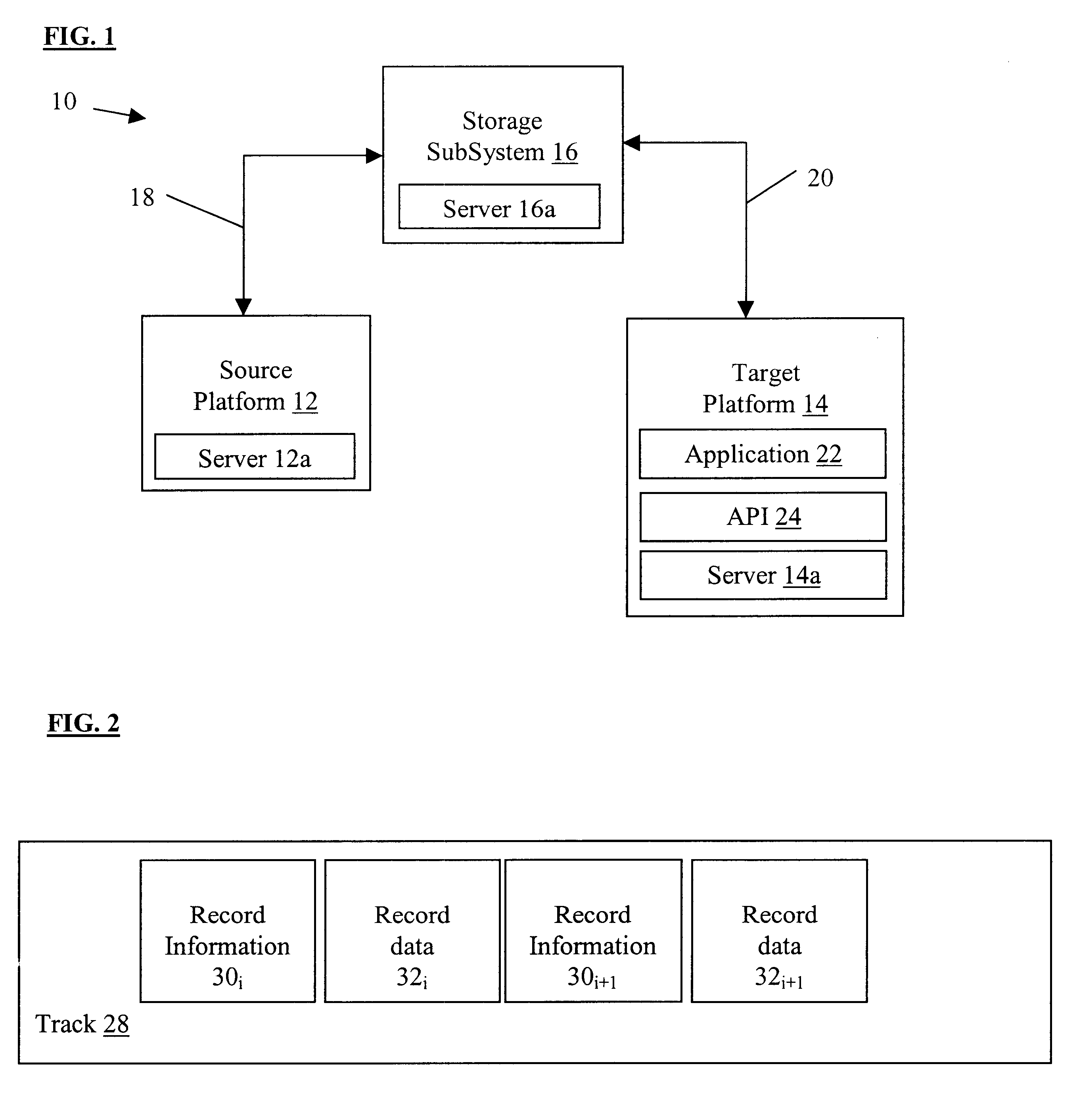
Figure 2 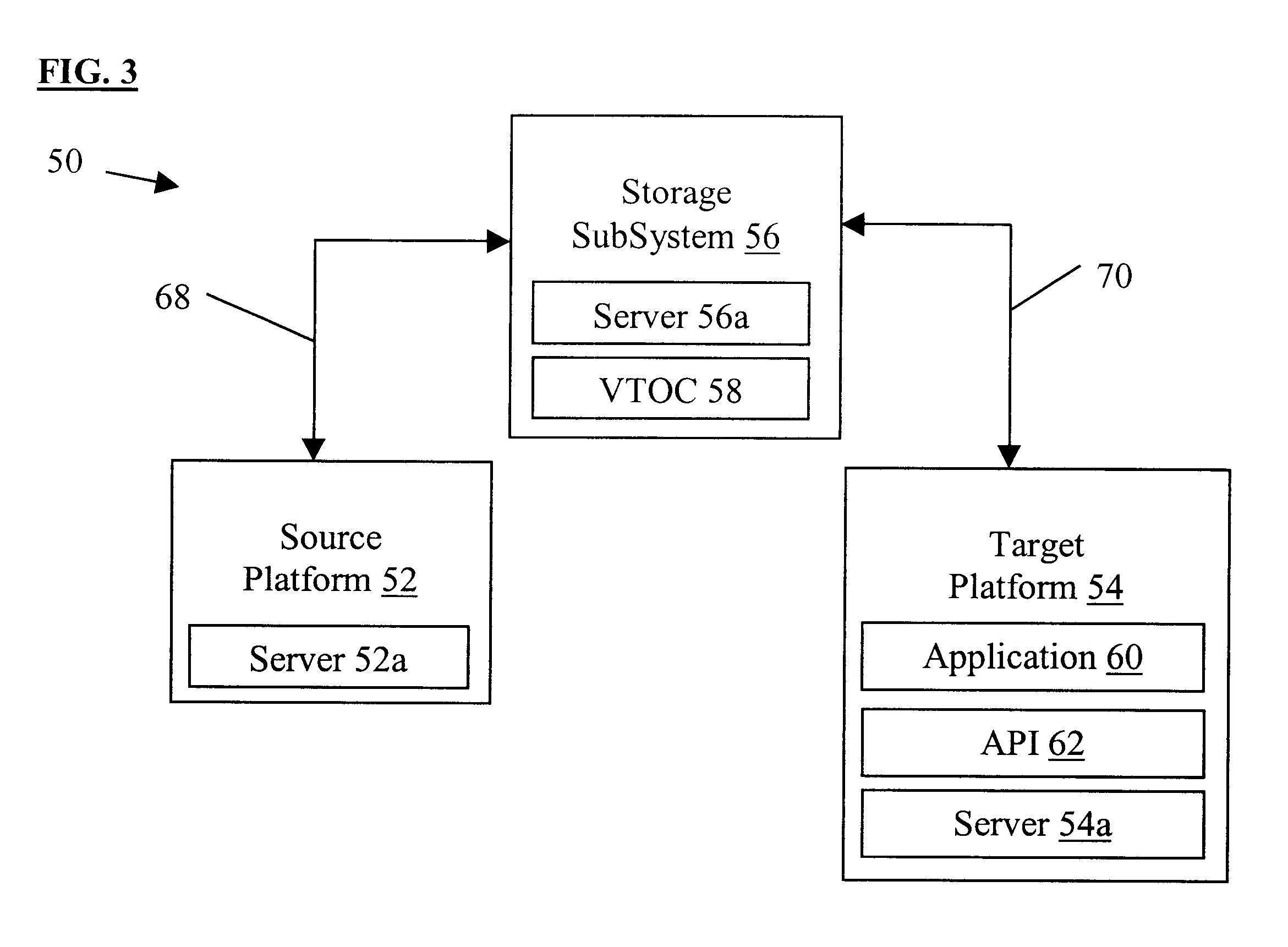
Figure 3
Abstract
Description
FIELD OF THE INVENTIONThe invention relates to extracting data from one hardware platform for processing on a different hardware platform.BACKGROUND OF THE INVENTIONWhen extracting data from one hardware platform (the “source platform”) for processing on another hardware platform (the “target platform”), the data must be transformed into a format acceptable to the target platform. Typically this takes an undesirable amount of time, due to the copying, transformation processes, and size of the data. This situation is compounded by the fact that information integrity must be maintained while accessing the information across the different platforms.More specifically, simply having access to raw information on the source platform, from the target platform, is not sufficient. For example, metadata (data which describes the raw information format and location) is also typically needed. In addition, raw information on the source platform may be modified in a way that is transparent to appl...
Examples
Example
DETAILED DESCRIPTION OF THE DRAWINGS
FIG. 1 shows a system 10 constructed according to the invention to transform data from a source platform 12 to a target platform 14 through a subsystem 16 (i.e., a facility with snapshot capability). Source platform 12 in FIG. 1 typically has the form of a mainframe (such as an IBM file system). Target platform 14 typically has the form of a computer operating in Windows, NT or Unix. Subsystem 16 can take the form of Storage Technology's Iceberg disk system, known in the art, as a snapshot facility. Data communication path 18 between source platform 12 and disk subsystem 16 thus typically is an ESCON data link, known in the art, supporting count key data (“CKD”). Data communication path 20 between subsystem 16 and target platform 14 is typically a SCSI link, also known in the art.
System 10 provides specific advantages over the prior art, particularly with respect to improved speed of data transfers between target platform 14 and source platform 12...