
Fuel cell comprising a solid electrolyte layer
Patent Information
- Authority / Receiving Office
- US · United States
- Current Assignee / Owner
- Publication Date
- 2005-07-12
- Estimated Expiration
- Not applicable · inactive patent
Smart Images
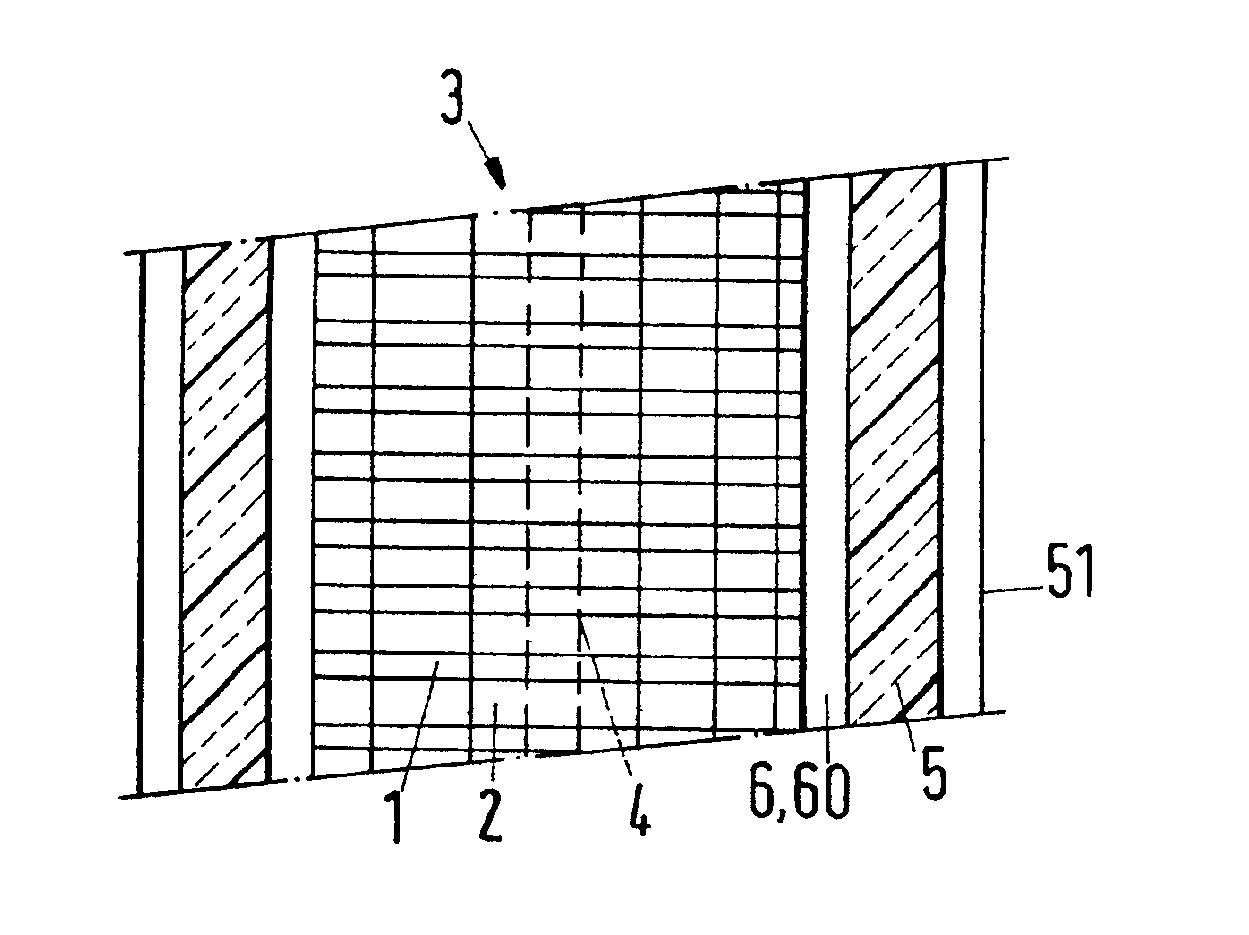
Figure 1 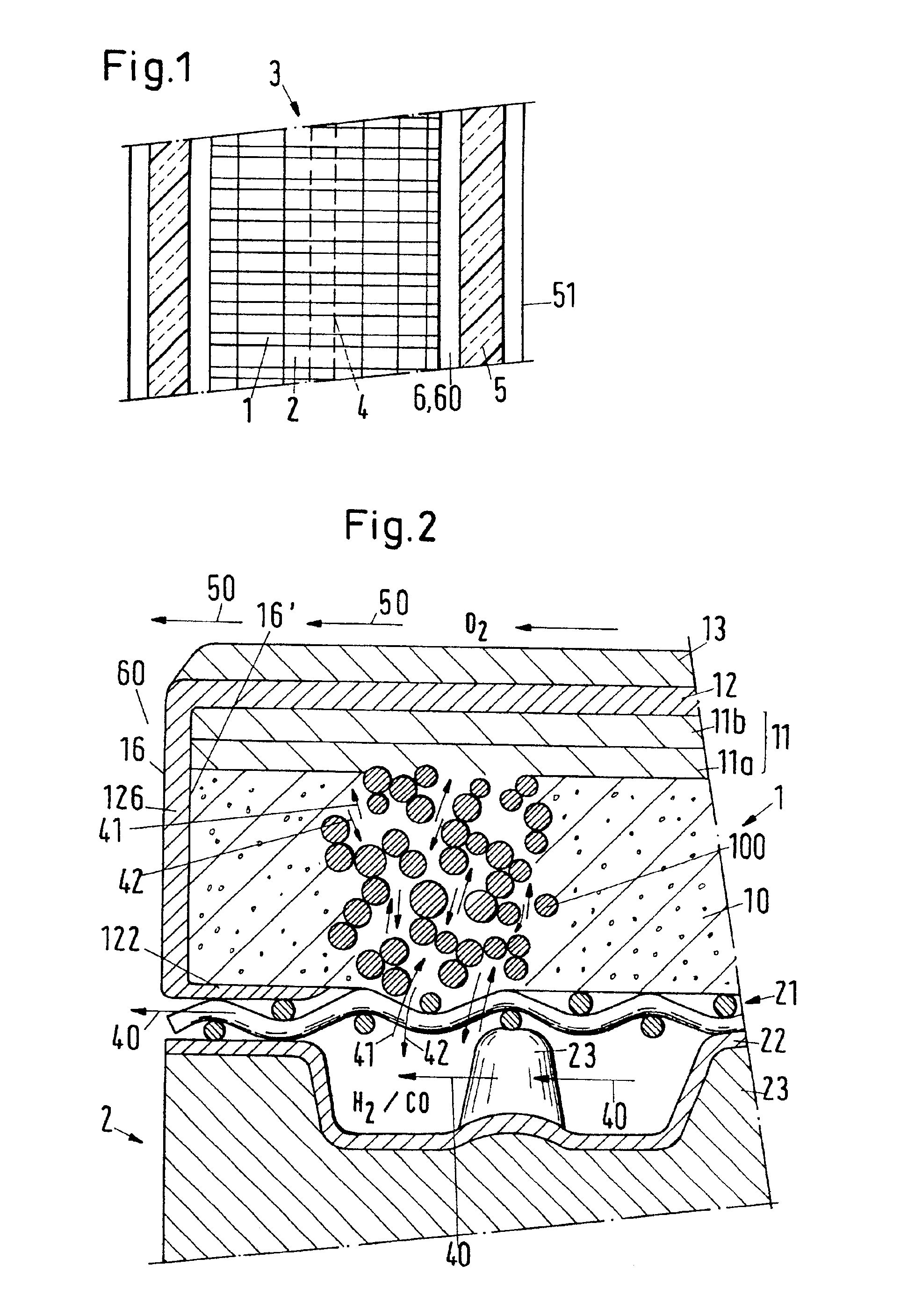
Figure 2 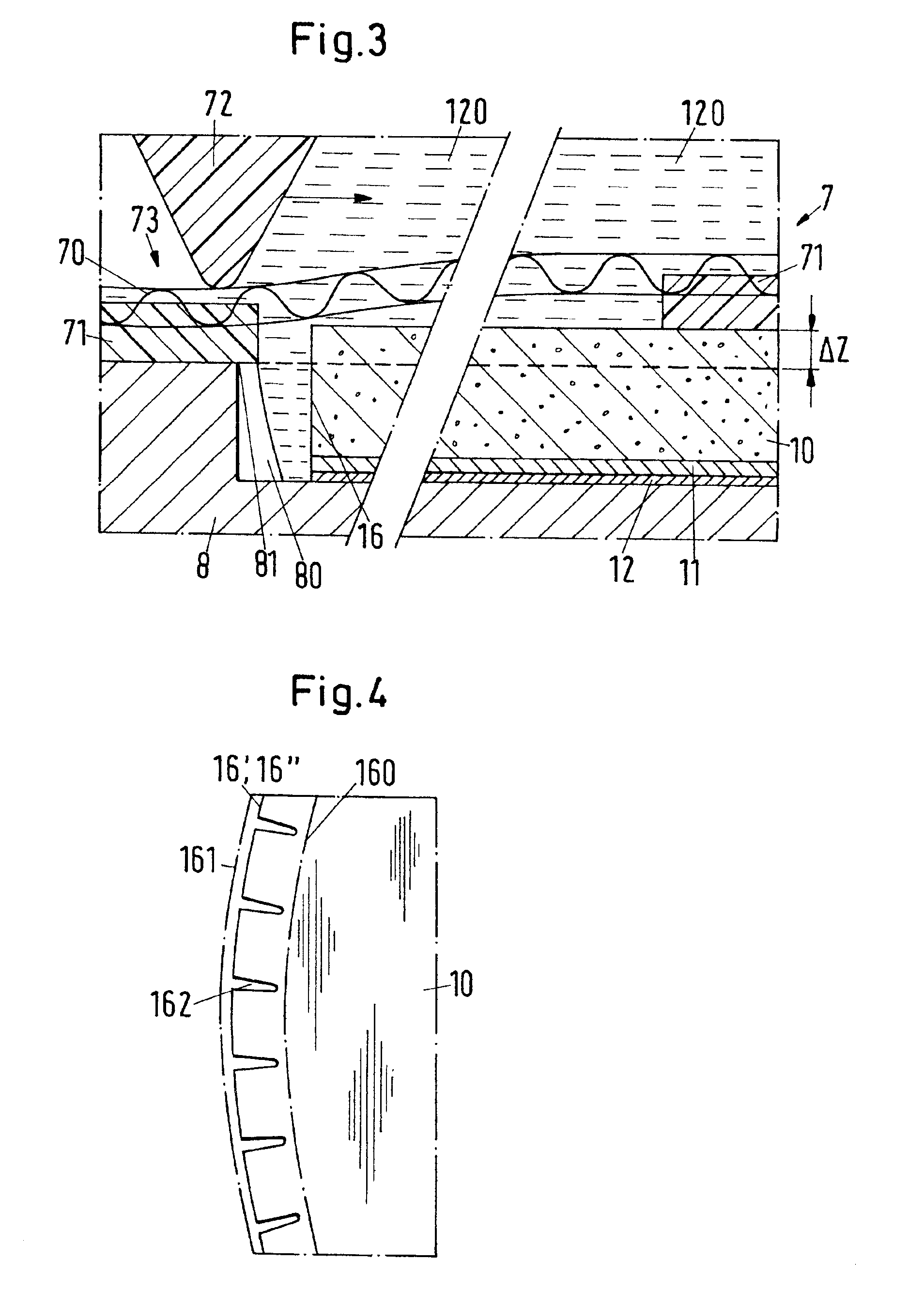
Figure 3
Abstract
Description
BACKGROUND OF THE INVENTION
[0001] The invention relates to a fuel cell comprising a solid electrolyte layer and to a battery comprising fuel cells of this kind.
[0002] High temperature fuel cells, the solid electrolyte of which is made in each case in the form of a thin layer as a part of a multiple layer plate, are known from EP-A-0 635 896 and EP-A-0 788 175. Thin-film electrolytes of this kind, which are 10-20 μm thick, can be applied to a carrier structure by means of a VPS process (Vacuum Plasma Spraying process). In addition to its mechanical function the carrier structure also has an electrochemical function as an electrode and an electrical function as a good conductor. In the so-called ASE cell (Anode Supported Electrolyte cell) the carrier structure is located on the side of the reducing fuel gas (H2, CO), i.e. on the anode side. The carrier structure can be manufactured of metallic felt, porous metallic foam or metal mesh. A suggestion of profiling metal structures of this k...
Examples
Embodiment Construction
[0014]The battery which is schematically illustrated in FIG. 1 consists of a stack 3 of alternatingly arranged multiple layer plates 1 and interconnectors 2, which is shown in side view. The plates 1 are the electrochemically active constructional elements; the interconnectors 2 produce an electrical contact between adjacent cells. The interconnectors 2 are also formed as heat exchangers for preheating the gas flow which conducts oxygen; both of their surfaces carry a profiling which causes a largely uniform distribution of the oxidizing or reducing gas respectively over the multiple layer plate 1. The reducing gas is fed to the stack 3 via a central passage 4.
[0015]The cell stack 3 has in particular an axially symmetrical construction, which is for example circularly cylindrical or else prismatic. The stack 3 is surrounded by a heat insulating sleeve 5 and a ring space 6. Between an outer wall 51 and the sleeve 5 the oxidizing gas, i.e. the gas which contains the oxygen (as a rule ...