
Flow-through sampling cell and use thereof
Patent Information
- Authority / Receiving Office
- US · United States
- Current Assignee / Owner
- Publication Date
- 2001-02-27
- Estimated Expiration
- Not applicable · inactive patent
Smart Images
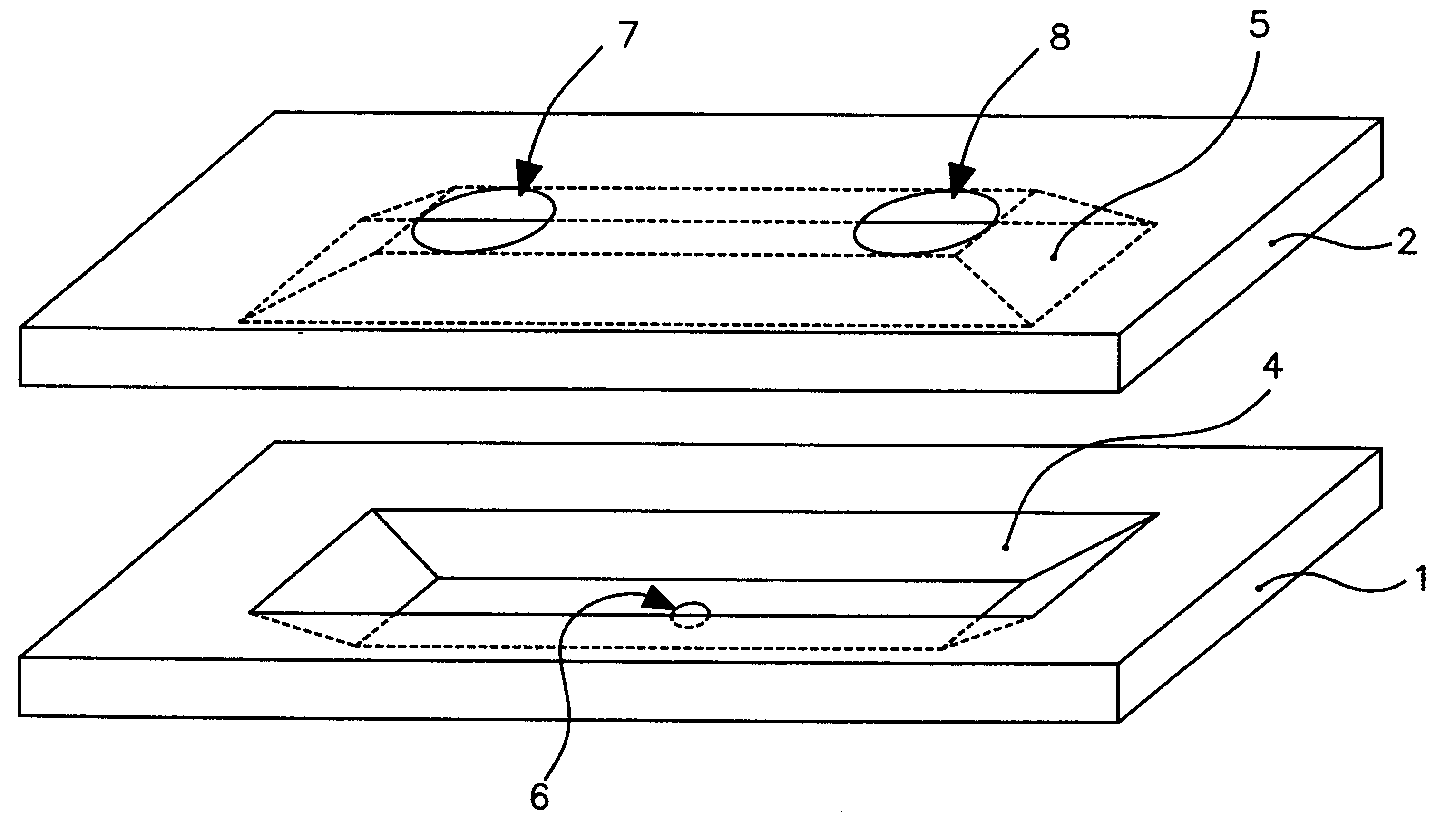
Figure 1 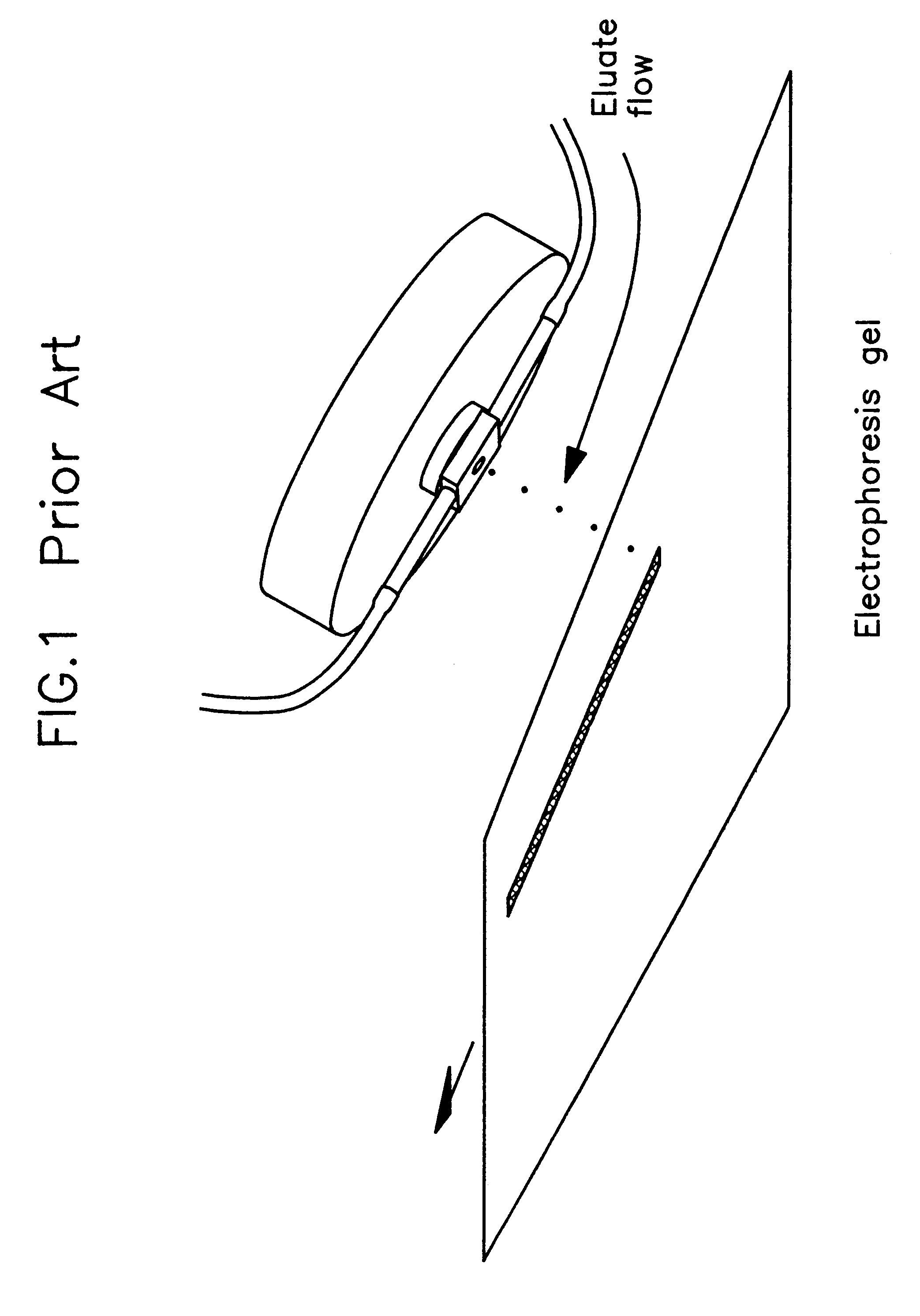
Figure 2 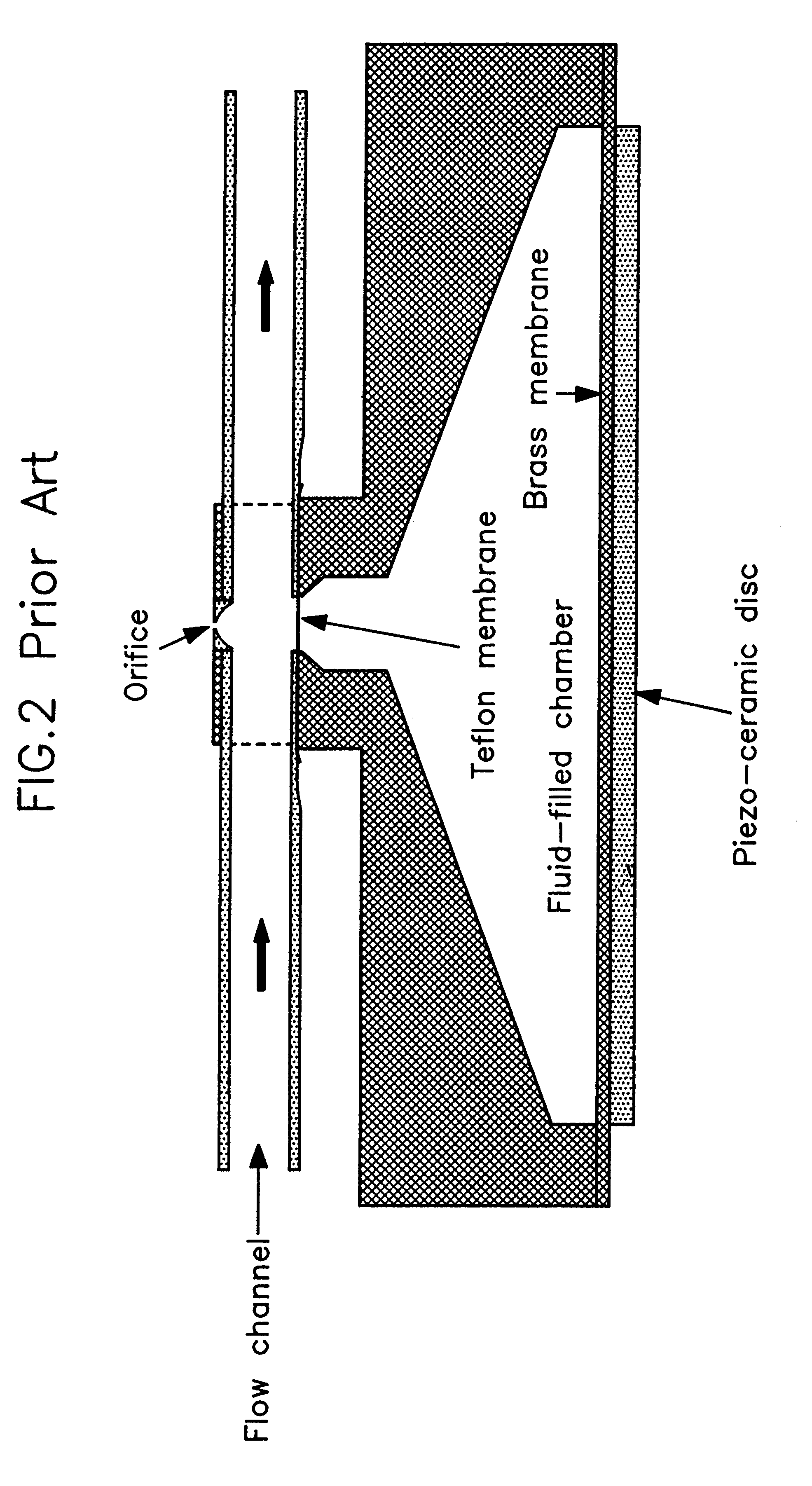
Figure 3
Abstract
Description
This invention relates to a sampling cell of flow-through type, a method for directing samples from such a sampling cell and use of such a sampling cell. The sampling cell is preferably manufactured by etching of silicon wafers. It is especially useful for continuous picovolume sampling in an analytical flow or for picovolume deposition of specific chemicals.1. Background and Prior ArtMicro sample extraction is useful in e.g. fraction determination from protein separation systems. The sample extration and the fraction determination are tedious procedures, often including test tube matrix handling followed by analysis through e.g. gel electrophoresis before a final fraction identification is achieved.Ref. 1 discloses a known sampling tool for fraction identification, being a flow-through cell comprising an orifice type nozzle and a piezo-ceramic disc glued onto a brass membrane. The brass membrane bends when a voltage is applied across the piezo-ceramic disc. The bending brass membra...
Examples
example 2
A sampling cell essentially in accordance with Example 1 was used in the following. A glass capillary for capillary electrophoresis was filled with a solution of sodium chloride (NaCl). Through a first end of the capillary was introduced a thin electrically conducting wire for contacting the solution. The second end of the capillary was placed close to the sampling cell, which was filled with ordinary tap water, and subsequently with a sodium chloride solution which did not alter the below described effects. The drop generation was initiated with a drop emerging frequency of around 50 Hz. A high voltage source was connected to the liquid in the sampling cell and to the wire in the first end of the glass capillary. A voltage of about 2500 V was used. When the voltage was applied the emerging drops were attracted by the second end of the glass capillary. The drops did hit the second end surface of the capillary and the outside of the capillary just below this second end surface. By al...