
Prolonged release microspheres for injectable administration
a technology of microspheres and injectables, applied in the field of microspheres, can solve the problems of denaturation induced by contact with solvents, undesirable phenomena of adsorption at solvent/water interfaces,
Patent Information
- Authority / Receiving Office
- US · United States
- Patent Type
- Patents(United States)
- Current Assignee / Owner
- Publication Date
- 2005-11-22
- Estimated Expiration
- Not applicable · inactive patent
Smart Images
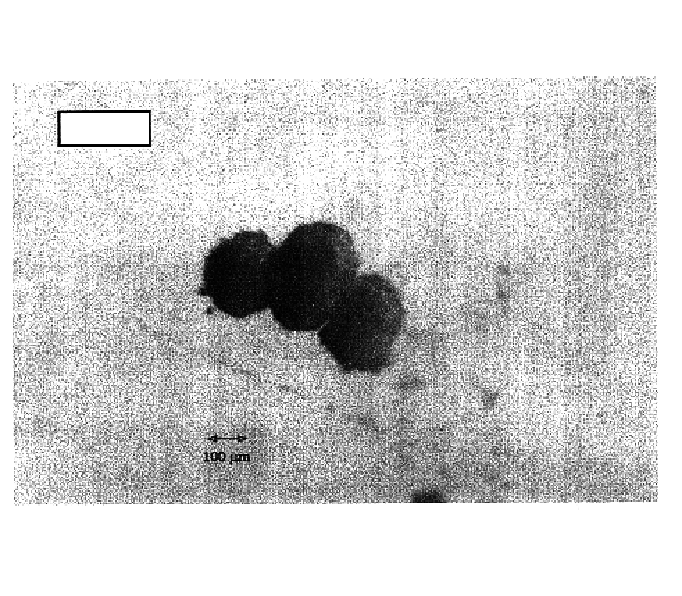
Figure 1 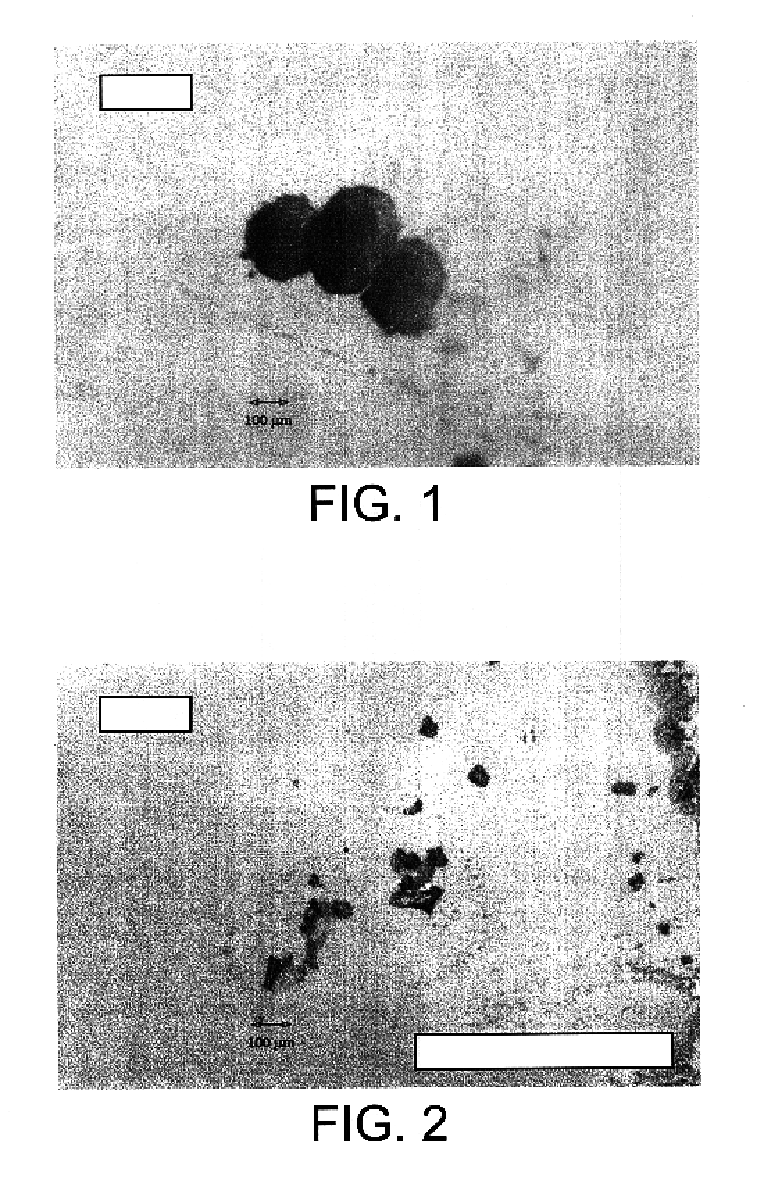
Figure 2 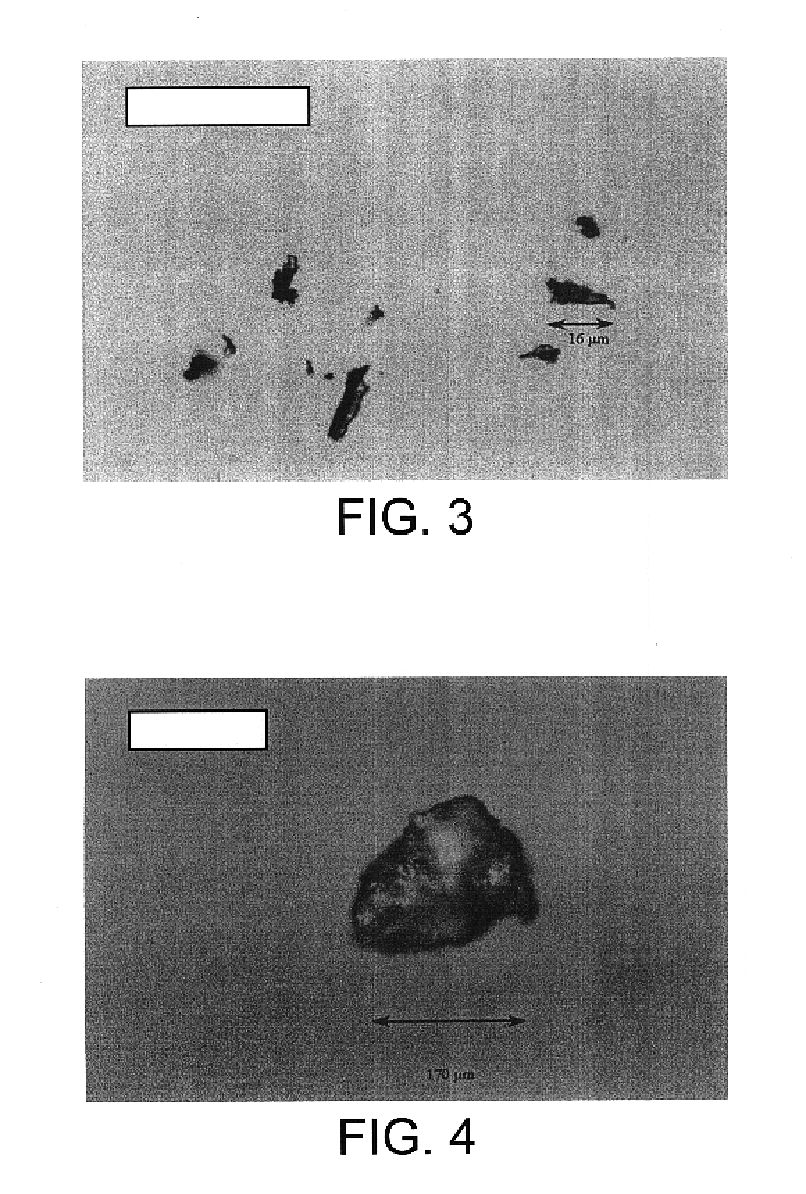
Figure 3
Abstract
Description
[0001] This application claims the right to priority under 35 U.S.C. § 119(e) to U.S. Provisional Patent Application No. 60 / 222,789, filed Jul. 31, 2000.BACKGROUND OF THE INVENTION
[0002] The present invention relates to the field of microparticles intended to be administered by injection or by the subcutaneous or muscular route.
[0003] There is currently a need for prolonged-release pharmaceutical formulations intended for the administration of proteins by injection, which are free of any trace of organic solvents.
[0004] Intense efforts have to be made to develop efficient novel systems for the administration of proteins. All the conventional techniques for preparing controlled release injectable microparticulate systems, whether they be the preparation of microcapsules by the emulsion (oil / water) / solvent evaporation method (Hora et al., Pharm. Res., 7 (1990), 1190-1194; Jalil, R. et al., L. Microencapsulation, 7 (1990) 294-325), the coacervation method in organic phase (Ruiz et al., Pha...
Examples
example 1
Microspheres of GÉLUCIRE® 50 / 02 Containing the Model Protein Bovine Serum Albumin (BSA)
Materials
[0048]300 ml autoclave provided with an insert 180 ml in volume, which is porous (10 μm) at the top and at the bottom. An autoclave provided with a jacket for the regulation of temperature: circulation of silicone oil, heated or cooled by a thermostated bath. Stirring in the autoclave: motor controlled by PID control, shaft with a marine anchor-shaped twin blade rotor.
Products
[0049]BSA Fraction V (Sigma A-7906) ground in a mortar and sieved. 32 to 50 μm fraction: 118.45 mg.
[0050]GÉLUCIRE® 50 / 02 (Gattefossé), waxy mass reduced to chips with a spatula: 452.8 mg.
Procedure
[0051]The two products are placed at the bottom of the insert. The autoclave is closed and placed under stirring with 495 rpm. The successive sequences of formation of the microspheres are then the following:
[0052]injection of CO2 by equilibration with the reservoir and then the column up to the initial conditions of 24.9° C...
example 2
Microspheres of GÉLUCIRE® 50 / 02 Containing a Commercial Preparation of Solid Erythropoietin (HÉMAX®)
Material
[0058]Identical to that used in Example 1.
Products[0059]HÉMAX® 2000 IU: 64 mg.[0060]GÉLUCIRE® 50 / 02 (Gattefossé) waxy mass reduced to chips with a spatula: 259 mg.
Procedure
[0061]The two products are placed at the bottom of the insert. The autoclave is closed and placed under stirring with 460 rpm. The successive sequences of formation of the microspheres are then the following:[0062]injection of CO2 by equilibration with the reservoir and then the column up to the initial conditions of T=23° C. and P=100 bar.[0063]heating of the autoclave by circulation of hot water in the jacket. The heating is regulated by PID; Duration of the heating 24 min.[0064]stabilization of the temperature / pressure at 45° C. and 203 bar. These conditions are maintained for 65 min, stirring 460 rpm.[0065]cooling by circulation of fluid in the jacket. Duration 49 min, to: T=17° C., P=74 bar.[0066]decomp...