
Process for the purification of toluene diisocyanate incorporating a dividing-wall distillation column for the final purification
a technology of toluene diisocyanate and distillation column, which is applied in the direction of isocyanic acid derivatives purification/separation, separation process, isocyanic acid derivative preparation, etc., can solve the problems of affecting the yield of tdi, higher rate of residue formation, and limited process, so as to improve tdi purity, improve tdi purity, and reduce energy requirements and investment costs
Patent Information
- Authority / Receiving Office
- US · United States
- Current Assignee / Owner
- Publication Date
- 2006-09-19
- Estimated Expiration
- Not applicable · inactive patent
Smart Images
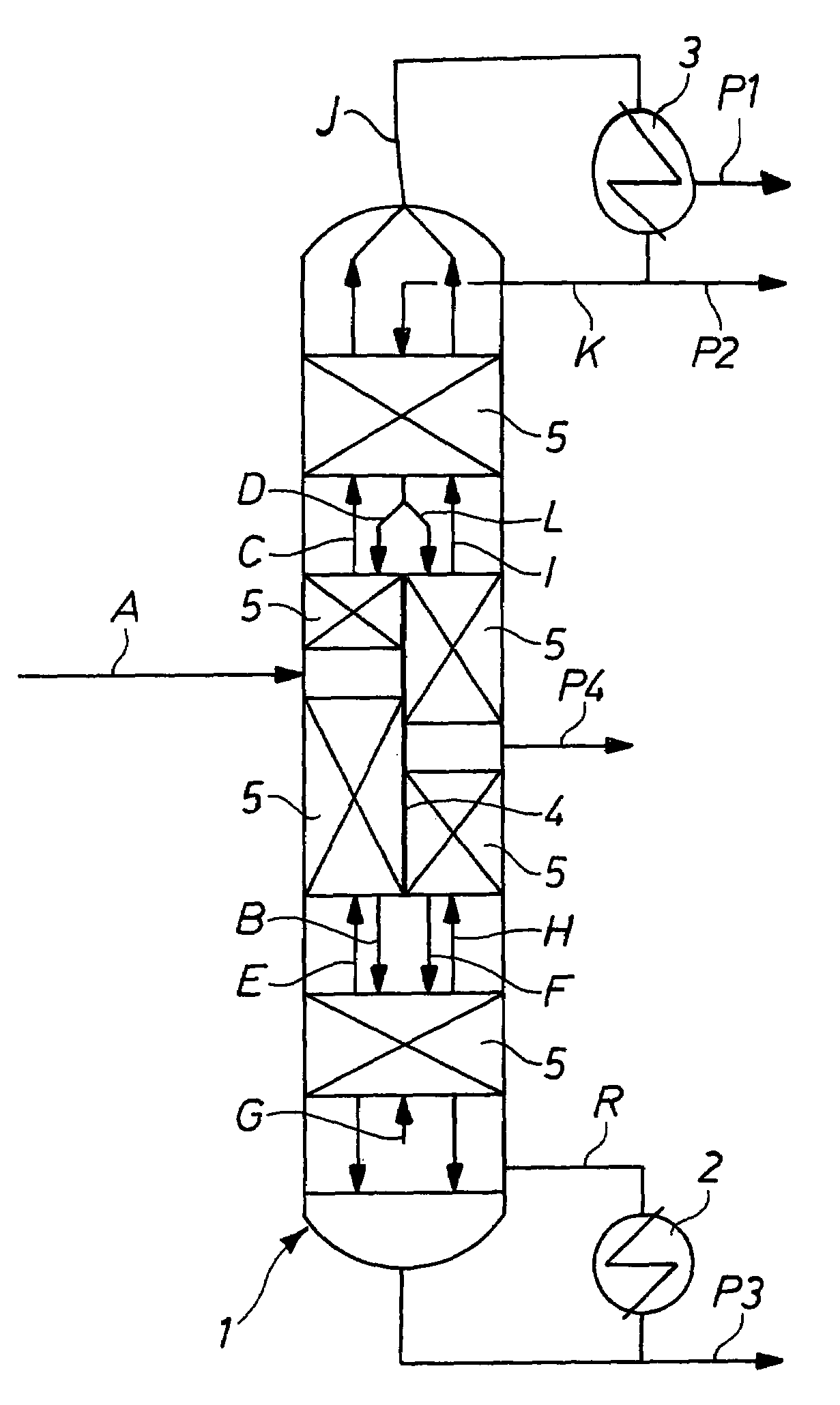
Figure 1 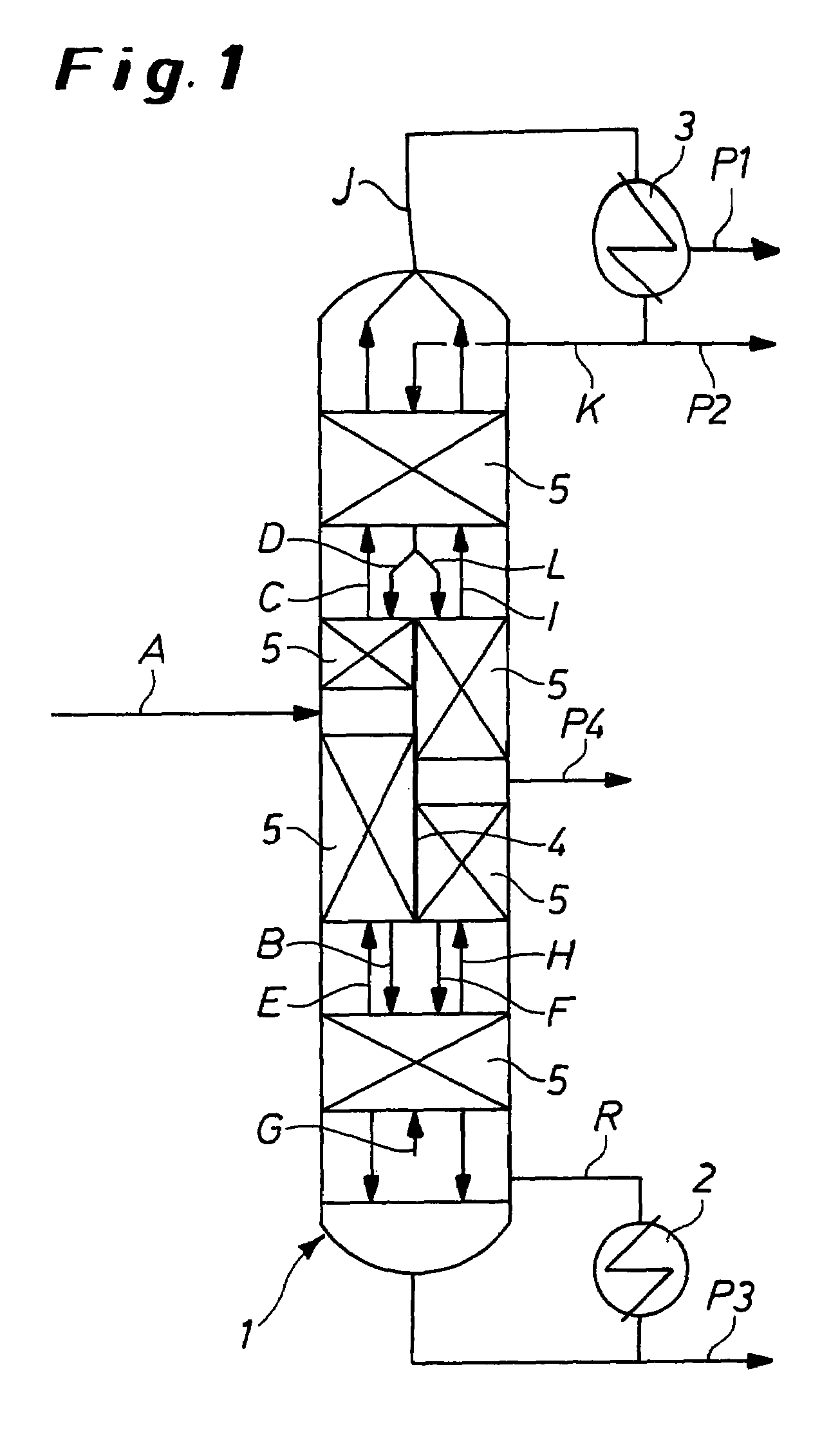
Figure 2
Abstract
Description
BACKGROUND OF THE INVENTION
[0001] The present invention relates to an improvement of a toluene diisocyanate (TDI) recovery and purification process which uses a dividing wall column for the final purification of the TDI product. The process of the present invention benefits from the ability to achieve a higher TDI purity.
[0002] The field of art to which this invention pertains is a process for the purification of toluene diisocyanate (TDI) mixtures. TDI mixtures are generally produced by reacting toluene with nitric acid to yield dinitrotoluene (DNT), hydrogenating the resultant dinitrotoluene (DNT) to yield toluene diamine (TDA) and reacting the toluene diamine (TDA) with phosgene to give toluene diisocyanate (TDI). Toluene diisocyanate (TDI) is a commercial by available material which is particularly useful in the preparation of polyurethanes, polyureas and polyisocyanurate polymers, especially foamed polymers.
[0003] DE-A1-3736988 teaches that organic mono- or polyisocyanates are con...
Examples
Embodiment Construction
[0013]The present invention relates to a process in which toluene diamine is reacted with phosgene in the presence of a solvent in the liquid phase or to a process in which toluene diamine is reacted with phosgene directly in the gas phase with a solvent used in the quench cooling of said reaction. Excess phosgene is then partially or completely removed from the resulting reaction mixture and the de-phosgenated crude distillation feed is fed to a fractionation process in which the solvent and, optionally, the residue is (are) removed. The subsequent crude TDI feed is fed to a divided-wall distillation column in which four fractions are recovered:
[0014]1) a vapor phase low-boiler and solvent enriched product from which the condensable species are preferably recovered and returned to the de-phosgenation, residue removal, or solvent removal process;
[0015]2) a low-boiler enriched product which is then preferably returned to the de-phosgenation, residue removal, or solvent removal proces...