
Throttle system abnormality determination apparatus
a technology of abnormality determination and throttle system, which is applied in the direction of machines/engines, electric control, instruments, etc., can solve the problems of deterioration of drivability of the vehicle driver, and achieve the effect of improving drivability at the time of abnormality in the throttle system, improving abnormality determination accuracy, and deteriorating drivability
Patent Information
- Authority / Receiving Office
- US · United States
- Patent Type
- Patents(United States)
- Current Assignee / Owner
- Publication Date
- 2006-11-07
- Estimated Expiration
- Not applicable · inactive patent
Smart Images
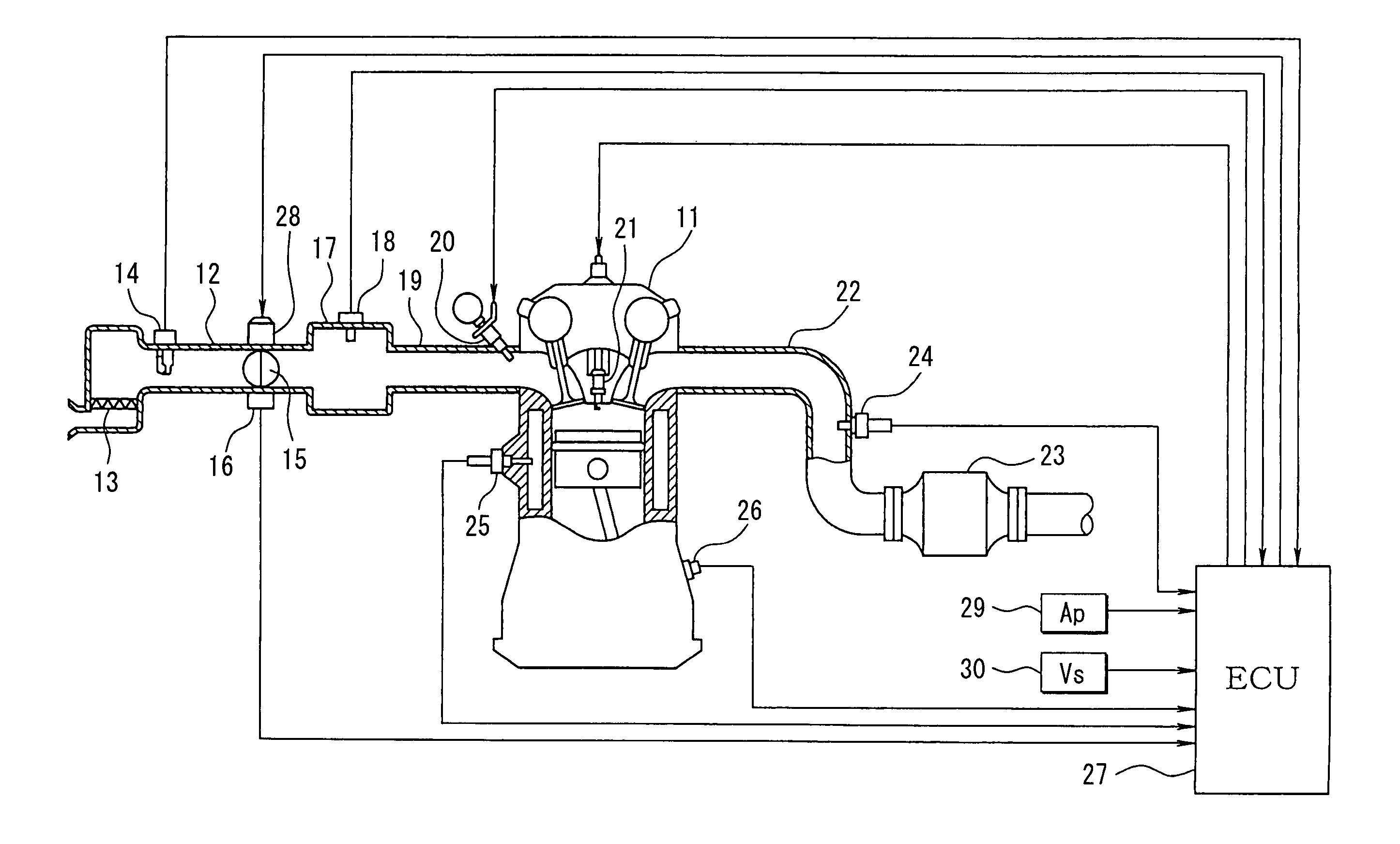
Figure 1 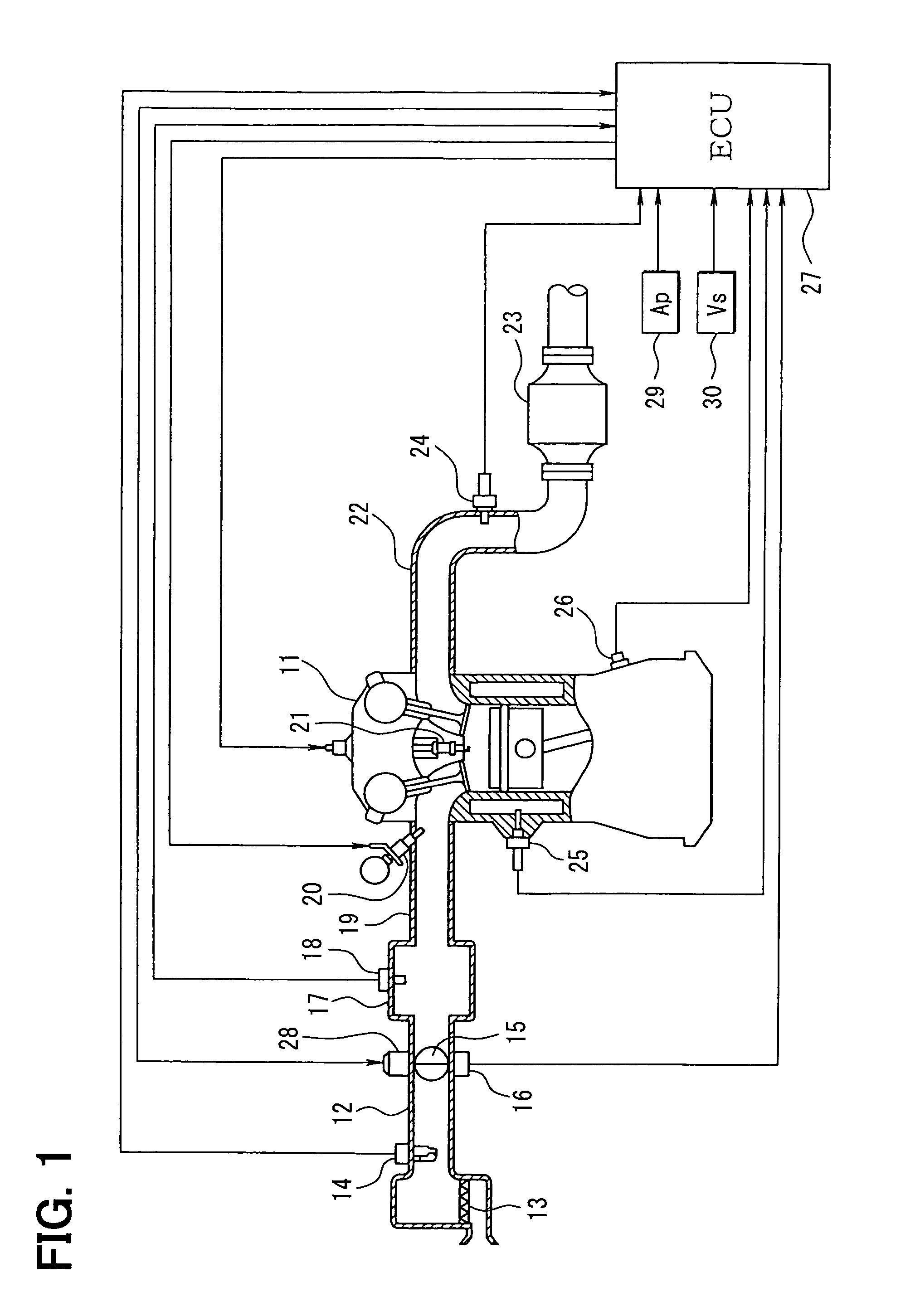
Figure 2 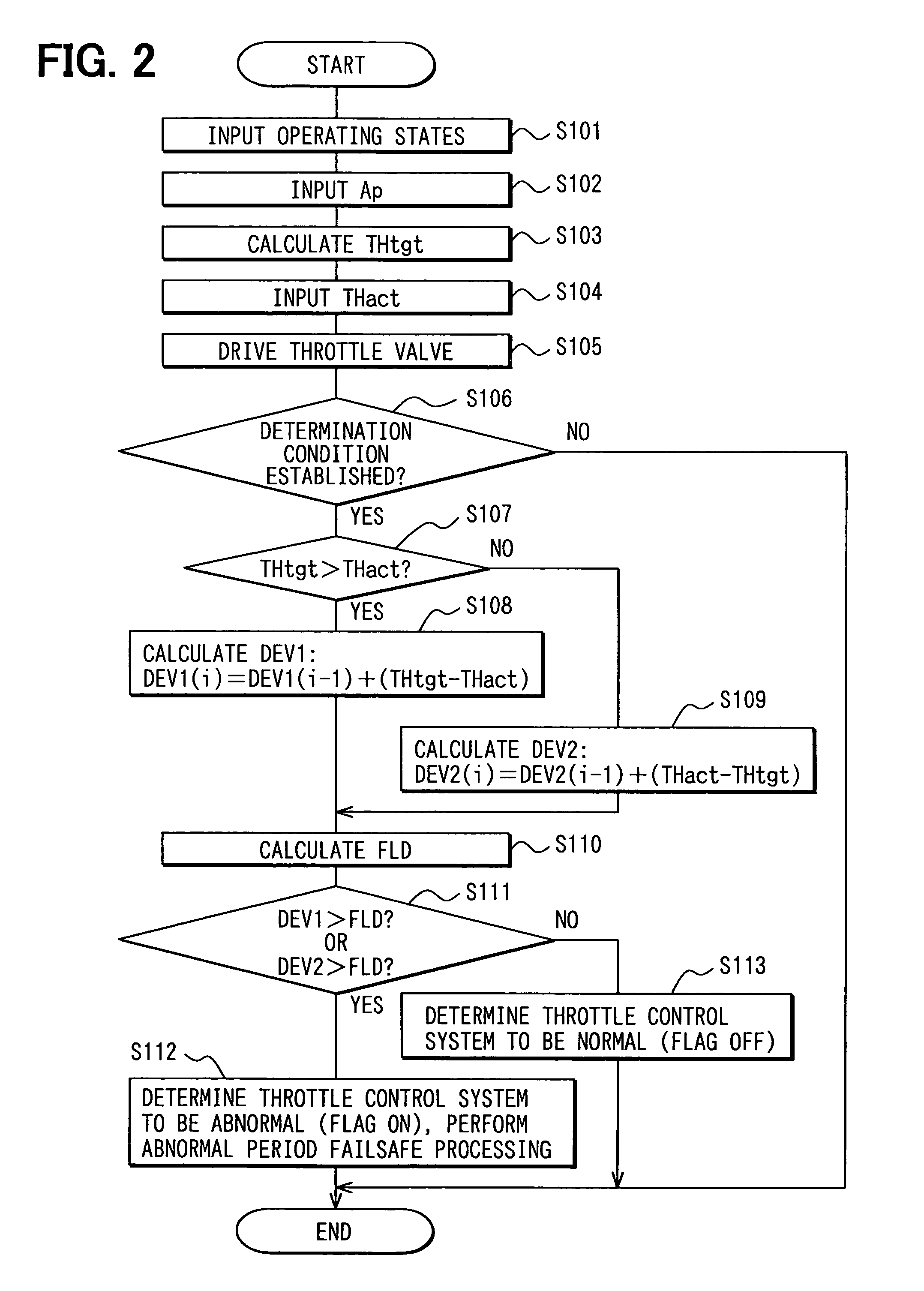
Figure 3
Abstract
Description
CROSS REFERENCE TO RELATED APPLICATION
[0001] This application is based on and incorporates herein by reference Japanese Patent Application No. 2003-427549 filed on Dec. 24, 2003.BACKGROUND OF THE INVENTION
[0002] 1. Field of the Invention
[0003] The present invention relates a throttle system abnormality determination apparatus for determining existence or nonexistence of an abnormality in a throttle control system, which controls a throttle valve of an internal combustion engine, or in parts related to the throttle control system.
[0004] 2. Description of Related Art
[0005] A certain internal combustion engine mounted to a vehicle has an electronic throttle control system for electronically controlling a throttle angle (an opening degree of a throttle valve) TH. The system includes a throttle motor for driving the throttle valve. The system calculates a target throttle angle based on an amount of manipulation of an accelerator and others, and senses an actual throttle angle by a throttle po...
Examples
first embodiment
[0021](First Embodiment)
[0022]Referring to FIG. 1, an engine control system according to a first embodiment of the present invention is illustrated. As shown in FIG. 1, an air cleaner 13 is disposed in the most upstream portion of an intake pipe 12 of an internal combustion engine 11. An air flow meter 14 for sensing an air intake quantity is disposed downstream of the air cleaner 13. A throttle valve 15 and a throttle position sensor 16 are disposed downstream of the air flow meter 14. A throttle motor (a throttle actuator) 28 such as a DC motor regulates an angle of the throttle valve 15. The throttle position sensor 16 senses the angle of the throttle valve 15 (a throttle opening degree).
[0023]A surge tank 17 is disposed downstream of the throttle valve 15. An intake pipe pressure sensor 18 for sensing an intake pipe pressure (a pressure in the intake pipe 12) is mounted to the surge tank 17. An intake manifold 19 for leading the air into respective cylinders of the engine 11 is ...
second embodiment
[0045](Second Embodiment)
[0046]Next, processing based on a throttle motor overcurrent abnormality determination program, which is executed by the ECU 27, according to a second embodiment of the present invention will be explained based on FIGS. 5 to 7.
[0047]In the second embodiment, the ECU 27 executes the program shown in FIG. 5 to calculate duration of a state in which an overcurrent flows through the throttle motor 28. Then, the ECU 27 determines existence or nonexistence of an abnormality in the throttle control system (an overcurrent abnormality of the throttle motor 28) by comparing the duration with an abnormality determination period FLT. The ECU 27 changes the abnormality determination period FLT in accordance with the vehicle speed Vs sensed by the vehicle speed sensor 30. Thus, if the vehicle speed Vs decreases (if the throttle opening degree decreases) and the influence of the abnormality in the throttle control system on the operating state of the engine 11 increases, t...