
Method and apparatus for quantitating surface-binding optical resonance profiles
Patent Information
- Authority / Receiving Office
- US · United States
- Current Assignee / Owner
- Publication Date
- 2010-10-26
Smart Images
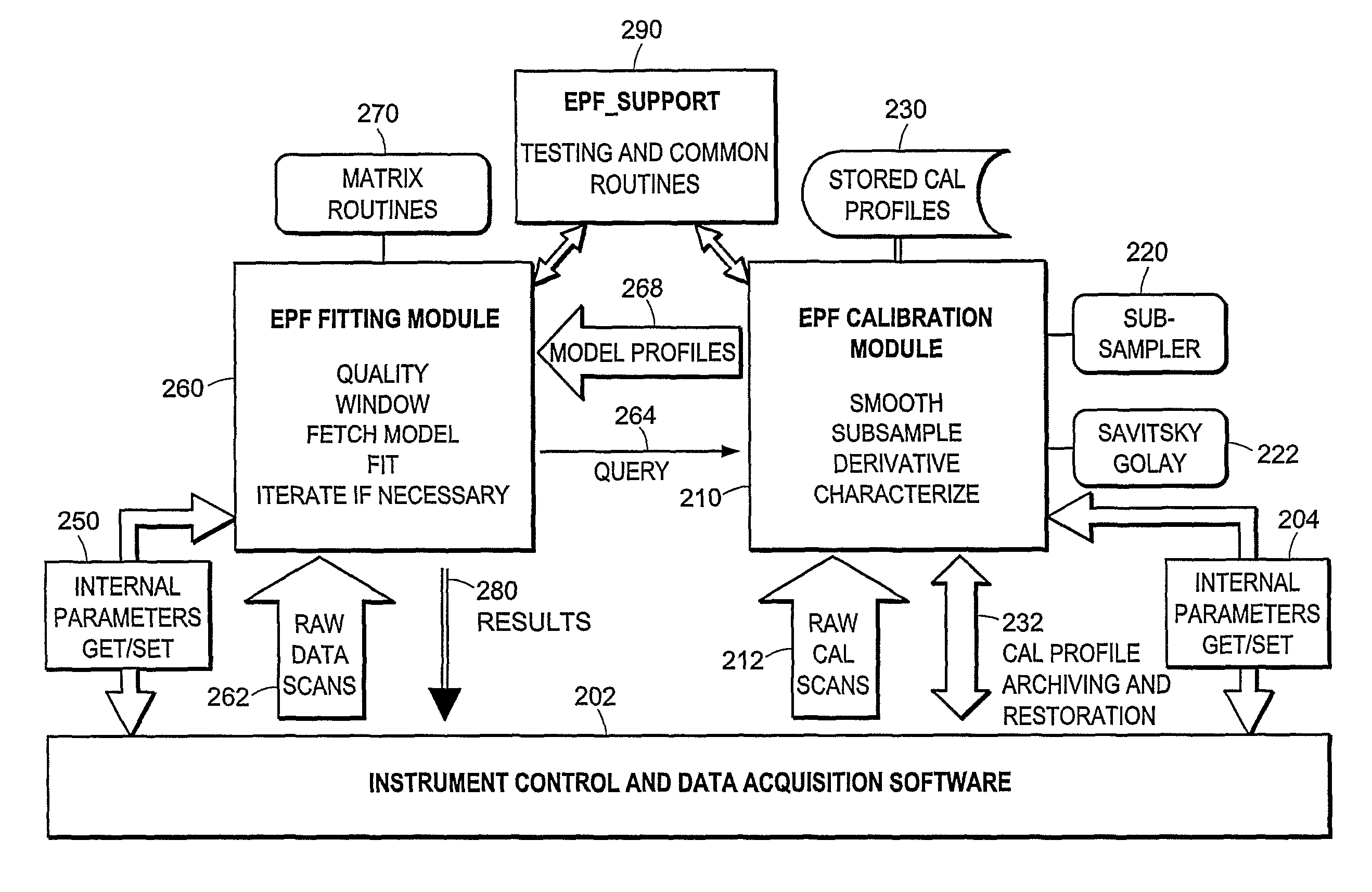
Figure 1 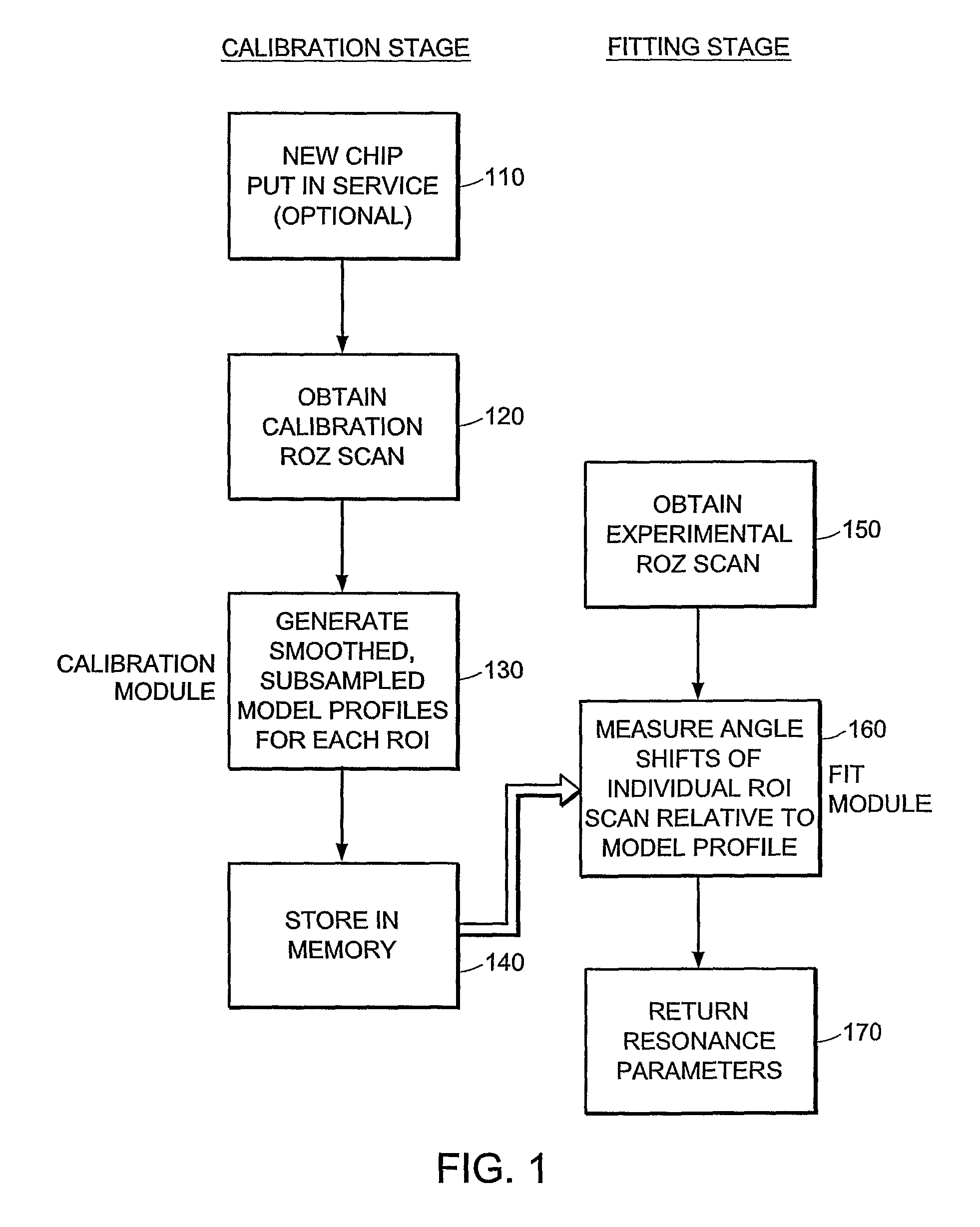
Figure 2 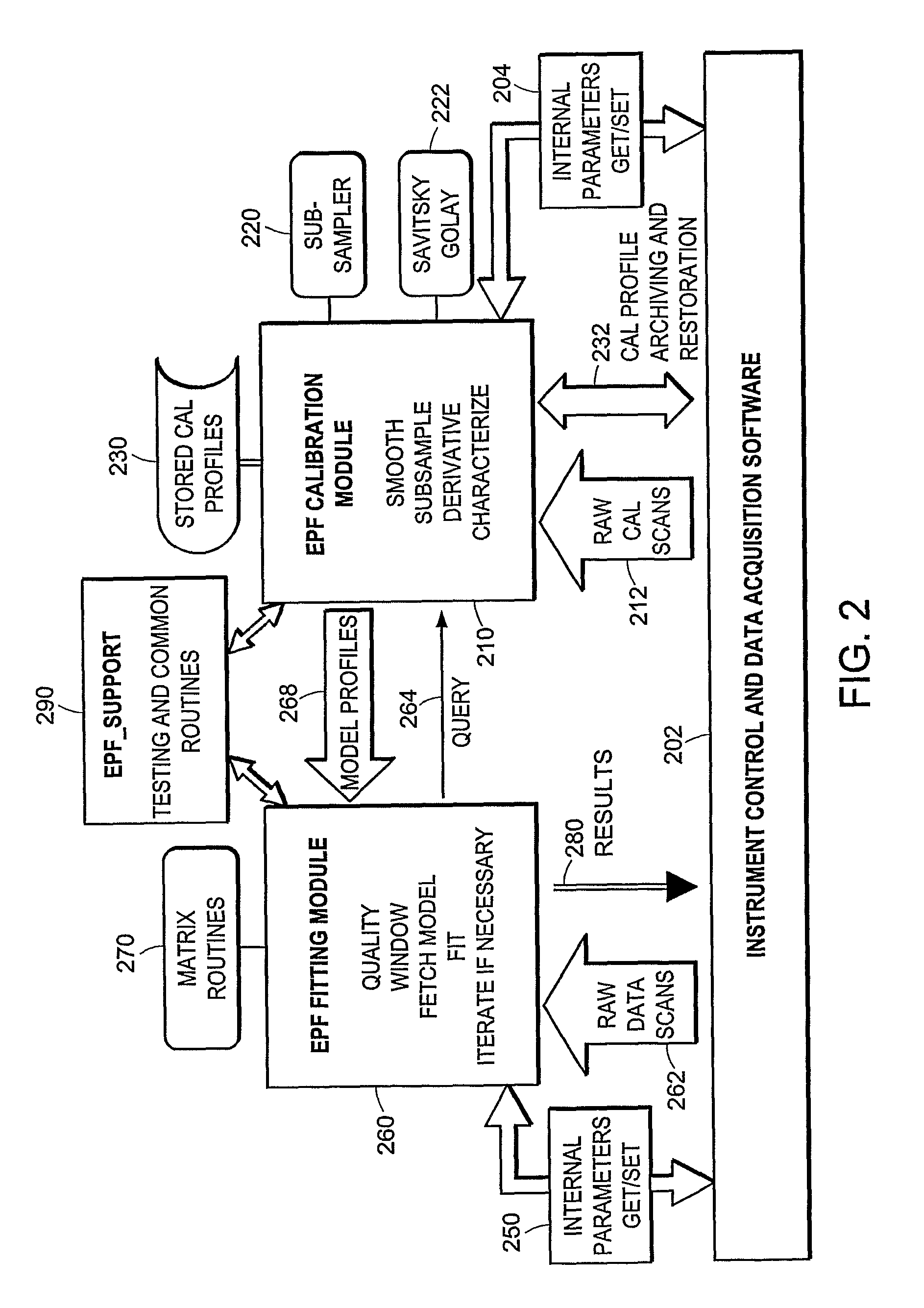
Figure 3
Abstract
Description
CROSS-REFERENCE TO RELATED APPLICATION
[0001] This application claims priority to U.S. Provisional Application 60 / 492,061, filed Aug. 1, 2003.FIELD OF THE INVENTION
[0002] This invention relates to data quantitation methods and, in particular, to quantitation of data profiles obtained using optical resonance surface sensors.BACKGROUND OF THE INVENTION
[0003] Optical resonance surface sensors are utilized in a number of chemical, pharmacological, and biotechnology research fields, including proteomics and drug discovery. Quantitation of surface-binding optical resonance profiles, such as Surface Plasmon Resonance (SPR) profiles, allows real-time observation and analysis of molecular interactions, providing data uninfluenced by biochemical labeling. As a consequence, optical resonance surface sensors have become widely used for the characterization of biological surfaces and the real-time monitoring of binding events.
[0004] At the present time, the most commonly used optical resonance surfac...
Examples
Embodiment Construction
[0087]The current invention utilizes Empirical Profile Fits (EPF) to quantitate surface-binding optical resonance profiles. The EPF peak finding process has two stages, the Calibration stage and the Fit stage. In the Calibration stage, a calibration scan is obtained with relatively fine angle or wavelength spacing over a range sufficient to include full resonance profiles for all regions. Smoothed, subsampled model profiles for each Region of Interest (ROI) are generated, together with first derivative curves and certain diagnostic information. In the Fit stage, individual ROI scans are used for measurement of angle or wavelength shifts relative to the calibration model. The run time scans may be at much coarser angle spacing, may cover entirely different angle ranges than the calibration data, and may have either scan polarity. Resonance shifts, estimated absolute angles or wavelengths, time of resonance minimum, and additional diagnostic and quality information are returned.
[0088]...