
Early coherency indication for return data in shared memory architecture
a shared memory and return data technology, applied in the field of computer and data processing system, can solve the problems of significant bottlenecks that can occur in multi-processor computers, associated with the transfer of data to and from each processor, and often referred to as communication costs, and achieve the effect of reducing the overall latency for handling memory requests and little or no latency
Patent Information
- Authority / Receiving Office
- US · United States
- Patent Type
- Patents(United States)
- Current Assignee / Owner
- Publication Date
- 2011-08-30
- Estimated Expiration
- Not applicable · inactive patent
Smart Images
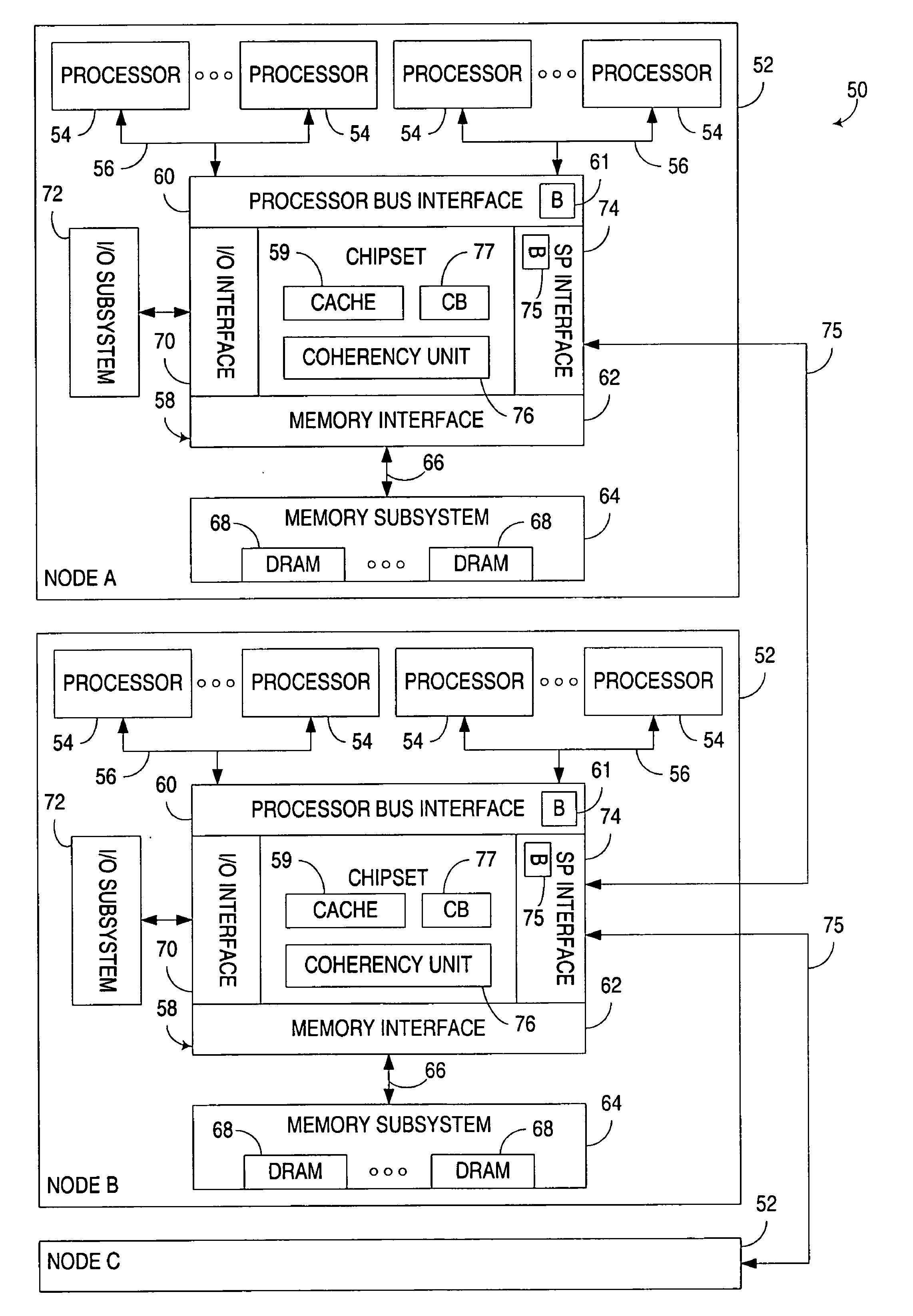
Figure 1 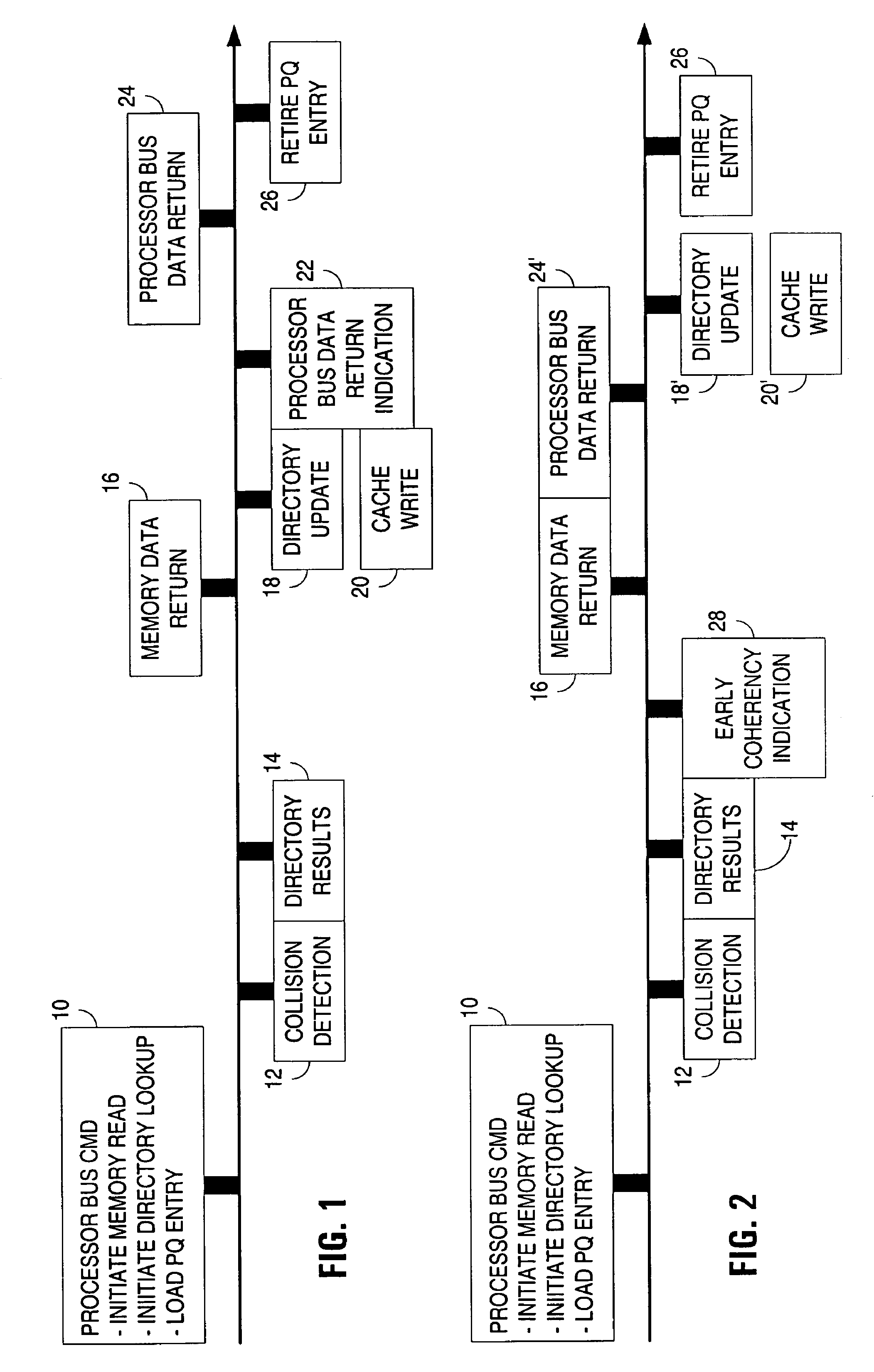
Figure 2 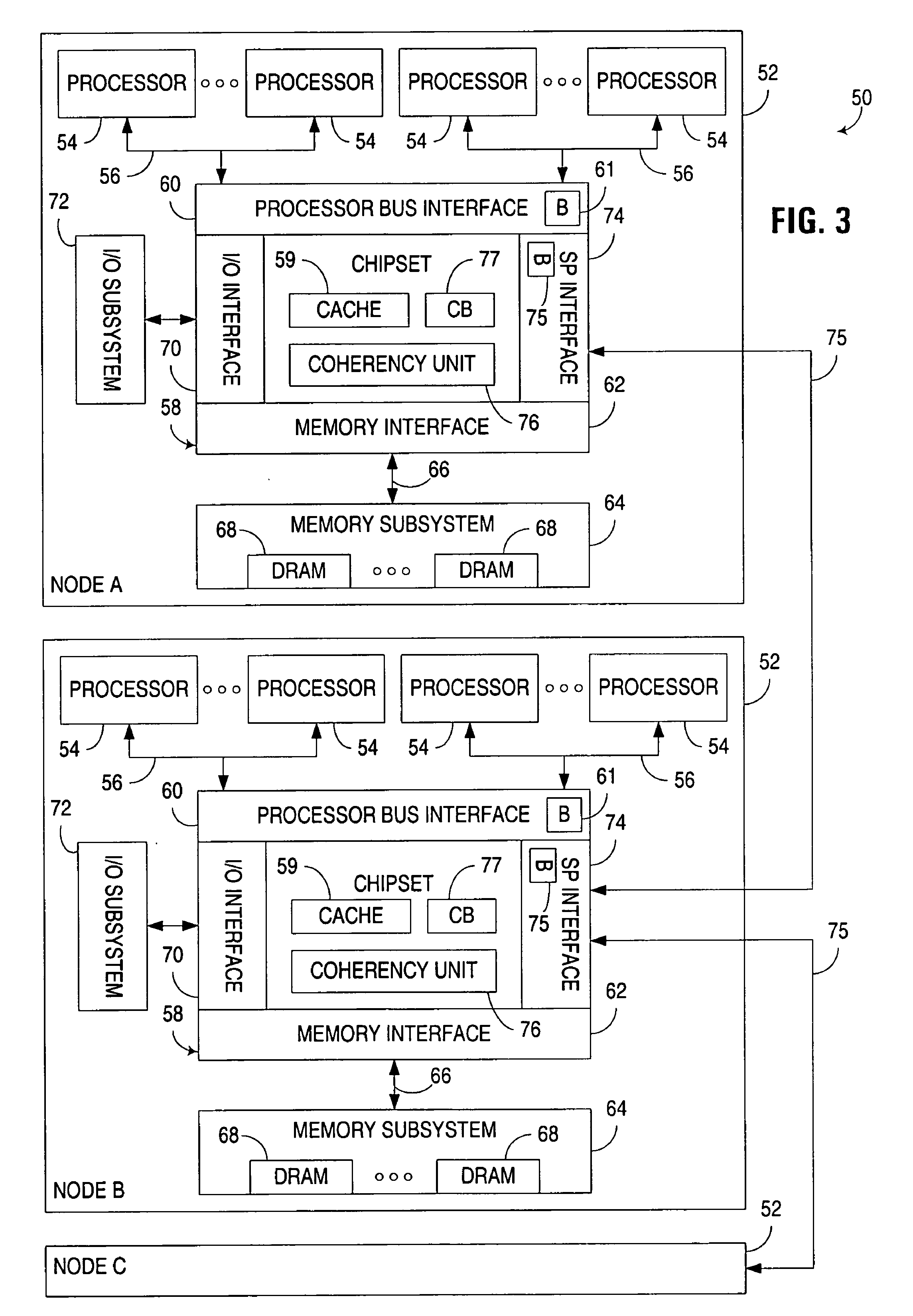
Figure 3
Abstract
Description
FIELD OF THE INVENTION
[0001] The invention relates to computers and data processing systems, and in particular to communicating data in a data processing system incorporating a shared memory architecture.BACKGROUND OF THE INVENTION
[0002] Given the continually increased reliance on computers in contemporary society, computer technology has had to advance on many fronts to keep up with increased demand. One particular subject of significant research and development efforts is parallelism, i.e., the performance of multiple tasks in parallel.
[0003] A number of computer software and hardware technologies have been developed to facilitate increased parallel processing. From a hardware standpoint, computers increasingly rely on multiple processors to provide increased workload capacity. Furthermore, some processors have been developed that support the ability to execute multiple threads in parallel, effectively providing many of the same performance gains attainable through the use of multipl...
Examples
Embodiment Construction
[0024]The embodiments discussed and illustrated hereinafter utilize early coherency indication to enable a communications interface to anticipate a data return from a source, and based upon that anticipation, prepare for communication of the return data, e.g., by planning out and executing any bus arbitration / signaling, preparing a data response packet, etc., prior to data return, such that when the data is returned from its source, it can flow directly to the communications link with minimal latency and with a minimal amount of buffering.
[0025]Embodiments consistent with the invention generally reduce latency and buffering requirements through two related mechanisms. First, the update of a coherency directory is treated as a separate step from performing a lookup of the coherency directory, and furthermore, is removed from the critical path for the processing of the memory request. By doing so, the update to the coherency directory is essentially made independent of enabling the co...