
Identifying and recommending potential communication states based on patterns of use
a technology of communication state and recommendation, applied in the direction of knowledge representation, instruments, electric/magnetic computing, etc., can solve the problems of more complex computing system storage of content, and achieve the effect of effective negotiation, enhanced communication system and the manner in which it can communicate, and improved mobile communication devi
Patent Information
- Authority / Receiving Office
- US · United States
- Patent Type
- Patents(United States)
- Current Assignee / Owner
- Publication Date
- 2011-10-25
- Estimated Expiration
- Not applicable · inactive patent
Smart Images
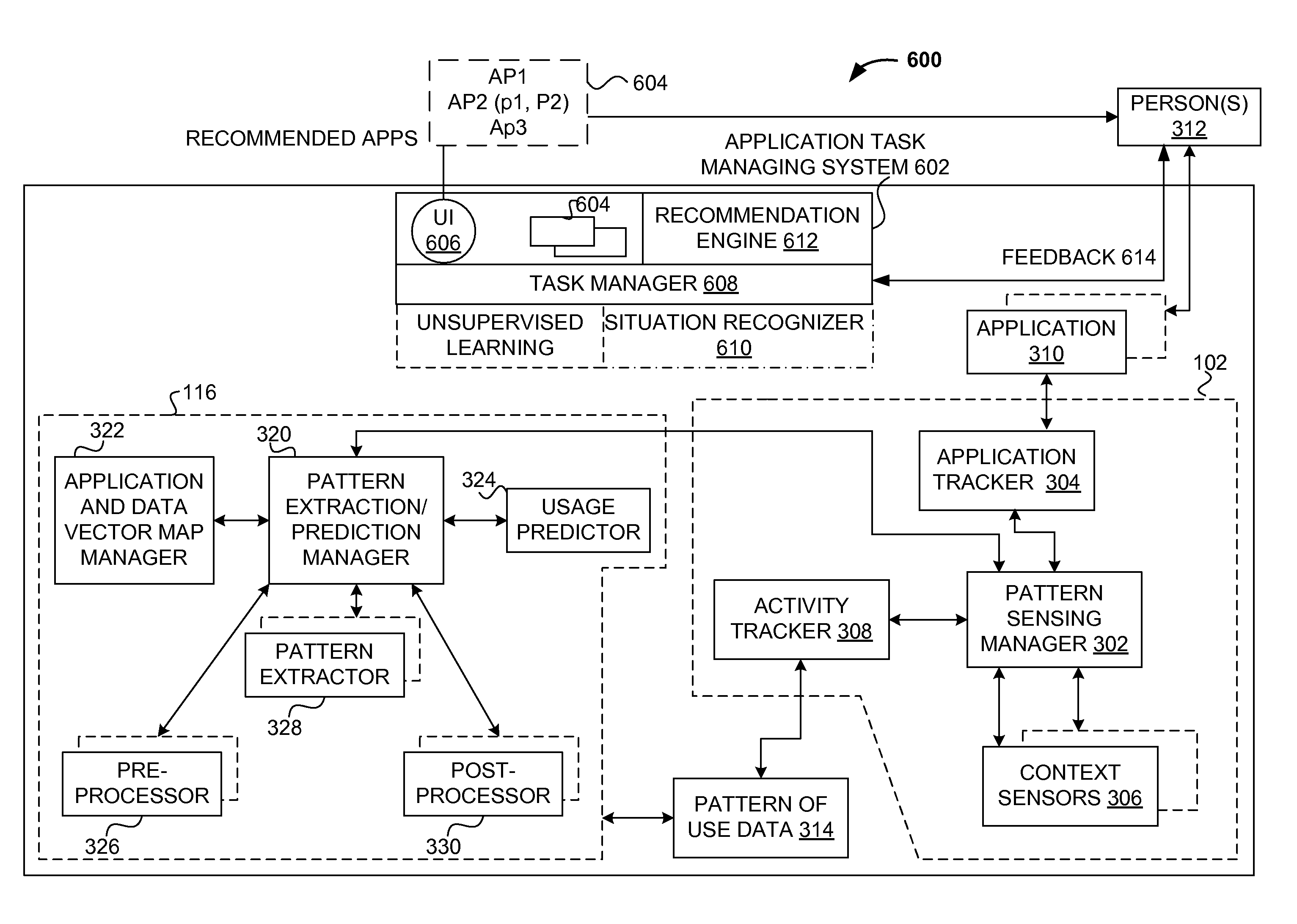
Figure 1 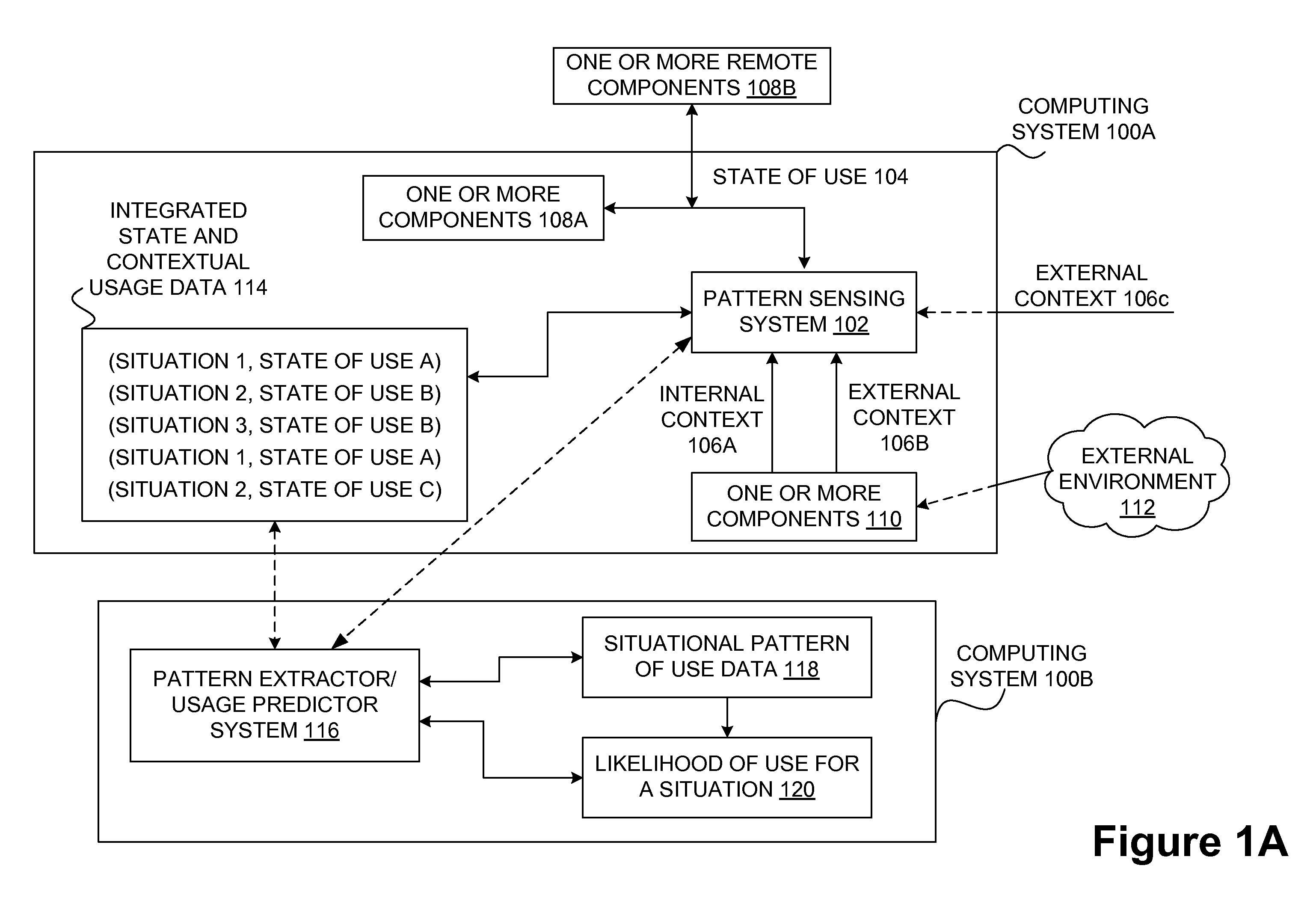
Figure 2 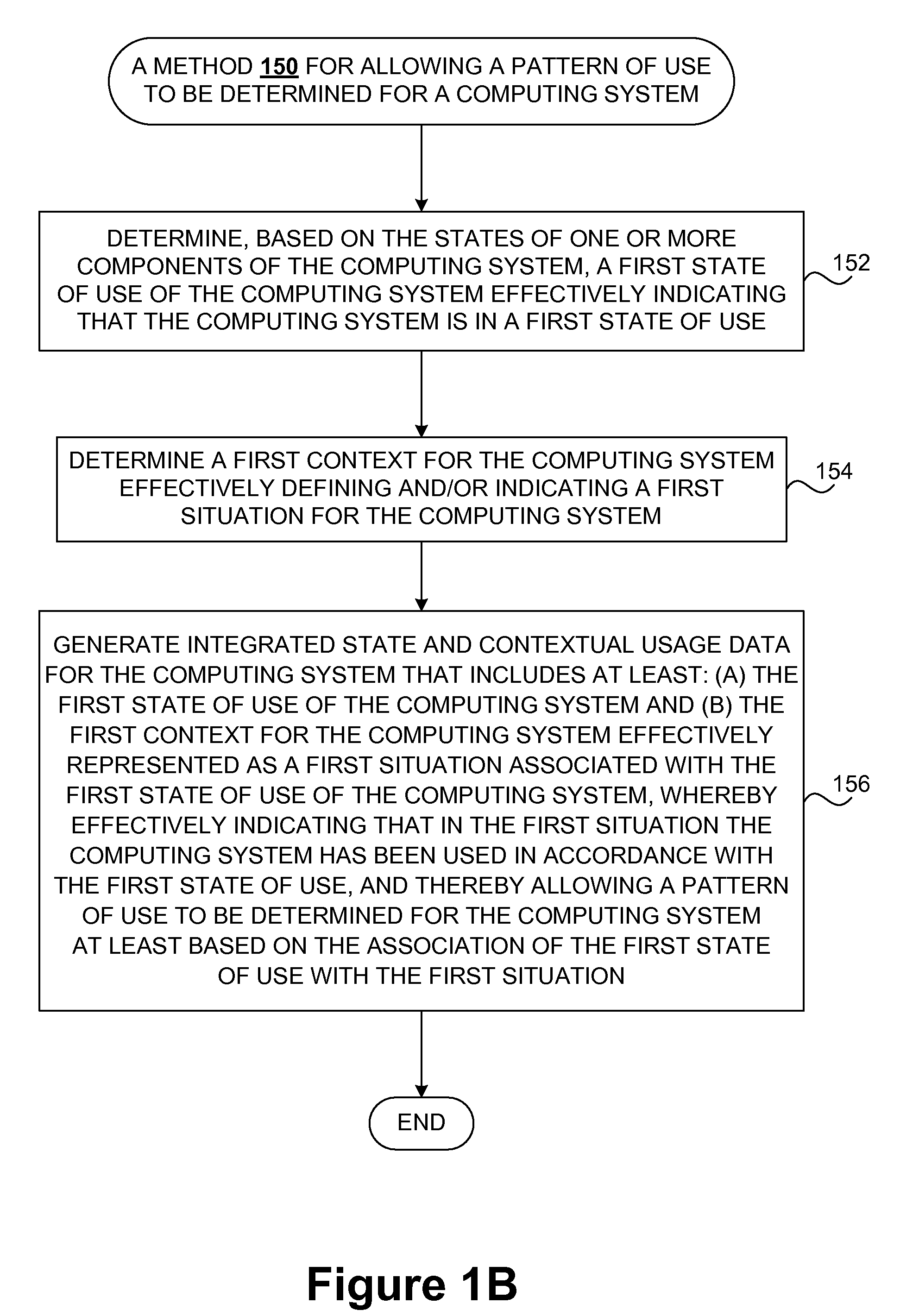
Figure 3
Abstract
Description
BACKGROUND OF THE INVENTIONConceptually, a computing system (e.g., a computing device, a personal computer, a laptop, a Smartphone, a mobile phone) can accept information (content or data) and manipulate it to obtain or determine a result based on a sequence of instructions (or a computer program) that effectively describes how to process the information. Typically, the information used by a computing system is stored in a in a computer readable memory using a digital or binary form. More complex computing systems can store content including the computer program itself. A computer program may be invariable and / or built into, for example a computer (or computing) device as logic circuitry provided on microprocessors or computer chips. Today, general purpose computers can have both kinds of programming. A computing system can also have a support system which, among other things, manages various resources (e.g., memory, peripheral devices) and services (e.g., basic functions such as op...
Examples
Embodiment Construction
As noted in the background section, mobile computing devices have become increasing more popular in recent years. Today, wireless, mobile, and / or portable communication devices (e.g., Smartphones, cell phones, Personal Digital Assistants) are especially popular. In recent years, mobile devices have evolved to provide increasingly more functions. As such, wireless and / or mobile communication devices (e.g., cell phones, SmartpPhones) are available today which can offer functionality traditionally offered by Personal Computers (PCs).
Despite these advances, mobile (or portable) devices still need to work with relatively smaller input / output devices (e.g., displays, screens, keyboards). As such, the enhanced processing power and functionality provided by the newer mobile devices has ironically resulted in frustrating some individuals as it has become increasingly more difficult to navigate through numerous applications, functions, menus and services. As a result, extensive efforts have b...