
Integrated circuit modeling method and framework tool
a technology of integrated circuits and framework tools, applied in cad circuit design, program control, instruments, etc., can solve problems such as human error risk in the same time, and achieve the effects of minimizing redundant code, improving planning and ease of use, and maximum flexibility and accuracy in the development process
Patent Information
- Authority / Receiving Office
- US · United States
- Patent Type
- Patents(United States)
- Current Assignee / Owner
- Publication Date
- 2012-06-19
Smart Images
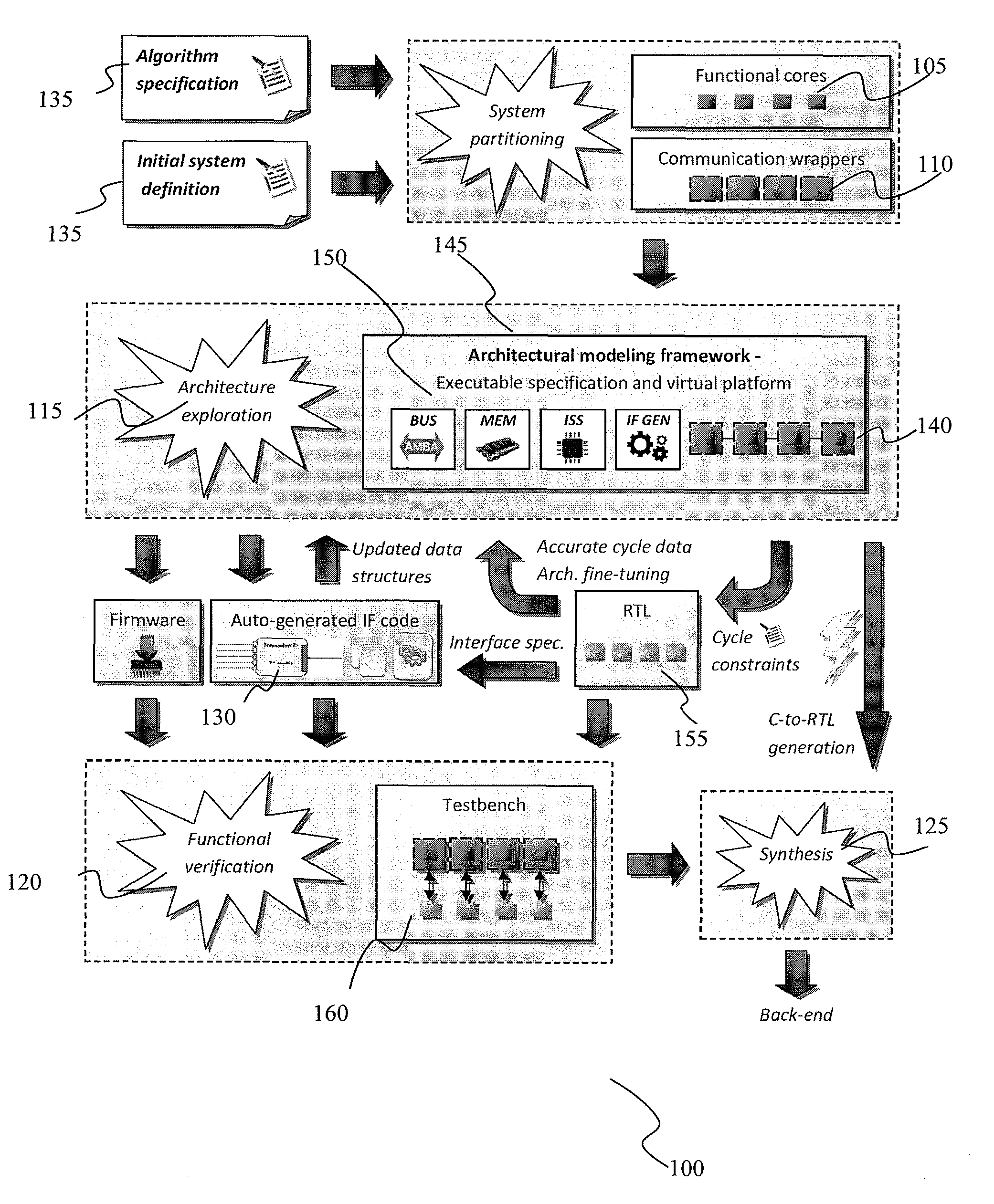
Figure 1 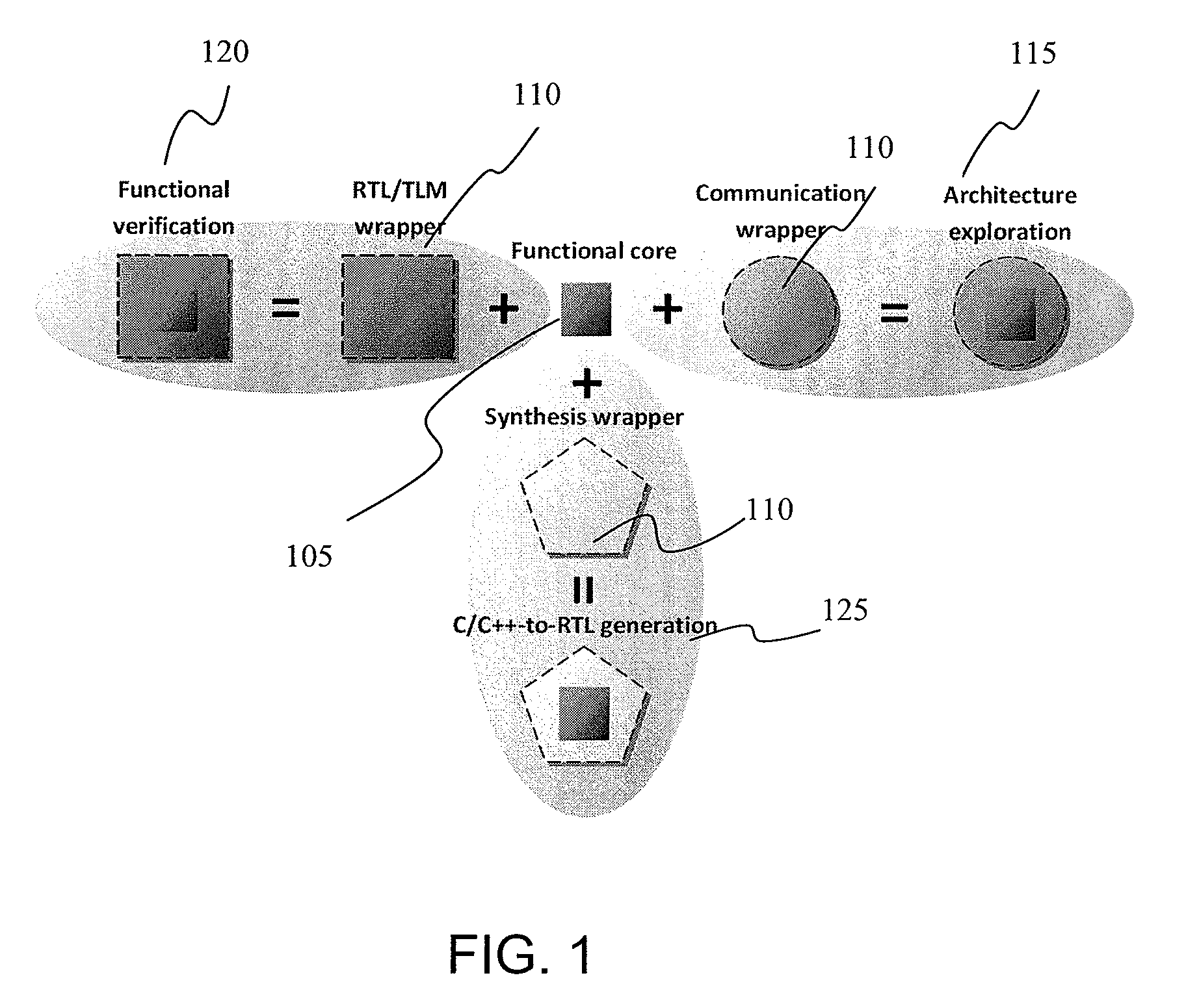
Figure 2 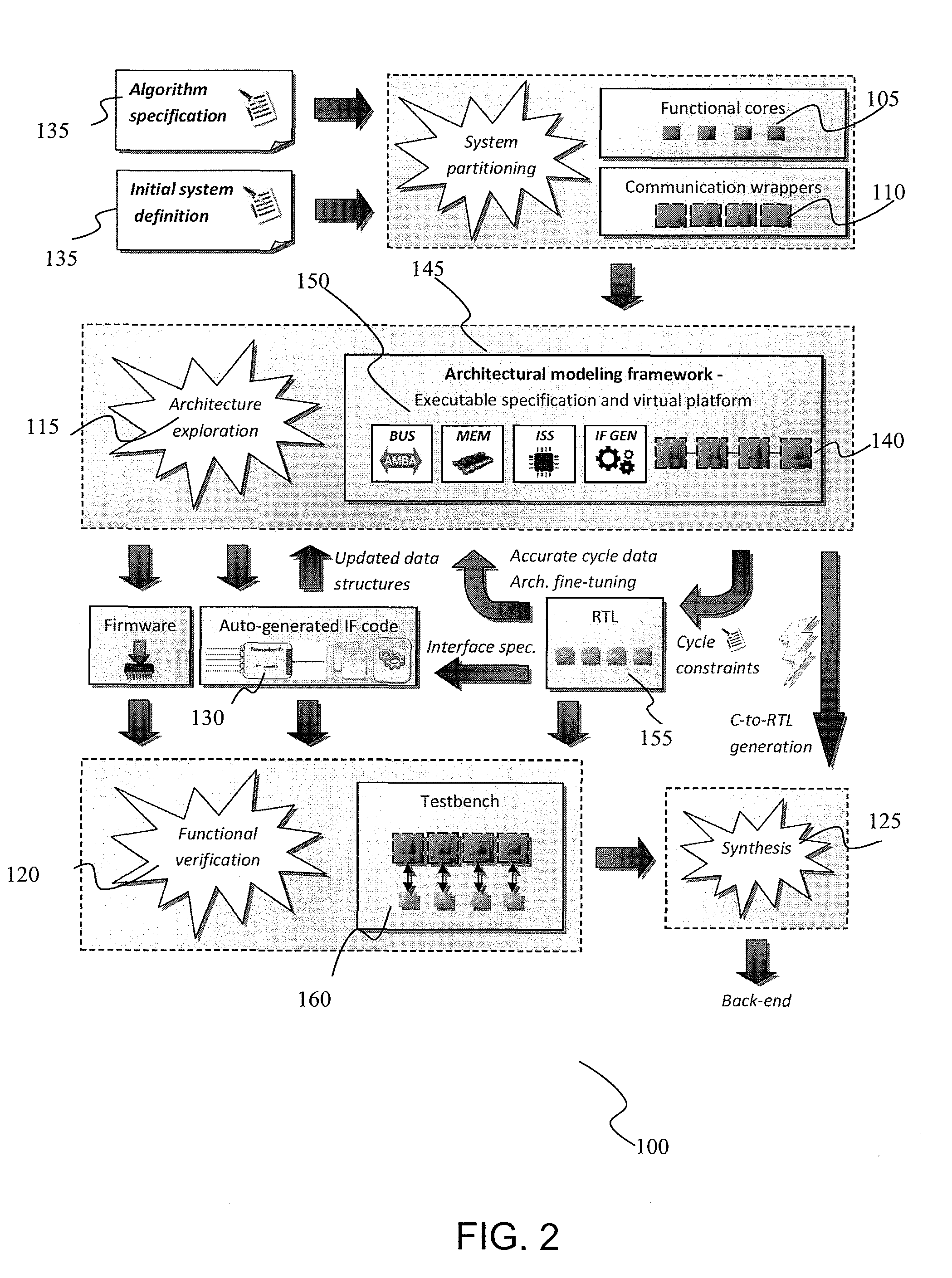
Figure 3
Abstract
Description
CROSS-REFERENCE TO RELATED APPLICATIONS
[0001] There are no related applications.TECHNICAL FIELD
[0002] The claimed invention relates generally to the design and verification of integrated circuits (“IC”). In particular, the claimed invention relates to a computer implementable modeling method of designing, simulating, verifying and implementing an IC. With greater particularity the claimed invention relates to a method of modeling using software models of an IC design at different levels of abstraction, with reuse of a common code base engaged with appropriate translation wrappers and automatic generation of interface code.SUMMARY OF THE INVENTION
[0003] The constant increase in complexity of integrated circuits (defined herein to include Systems-On-a-Chip, “SOC”) requires correspondingly greater effort for design and functional verification of the designed circuits prior to actually synthesizing the circuit in silicon. Software models of hardware modules are commonly used for various pu...
Examples
Embodiment Construction
[0022]FIG. 1 exemplifies how different wrappers 110 can be applied to the same functional core 105 and used in different steps of the method 100. For example, by applying RTL / TLM wrapper 110 which is a type of interconversion or co-simulation wrapper enables core 105 to be used in functional verification step 120 whereas application of a communication wrapper 110 allows usage during architecture exploration step 115 whereas application of a synthesis wrapper 110 enables C to RTL generation step 125.
[0023]This maximizes the reuse of functional code contained within each functional core 105 throughout the modeling method 100 (FIG. 2). The wrapper will thus cooperatively engage with an external environment allowing the wrapped code, such as the functional cores 105, to be used in different environments.
[0024]The functional cores and wrappers represent the basic functional blocks of a software model of the integrated circuit, which is defined in system design inputs. As shown in FIG. 2 ...