
Sequential chip correlation array
a correlation array and chip technology, applied in the field of sequential chip correlation arrays, can solve the problems of increasing the size of the correlator device, posing a great challenge for hand-held gnss applications, and emergency dispatchers may experience difficulty in routing 911 calls to the appropriate center
Patent Information
- Authority / Receiving Office
- US · United States
- Patent Type
- Patents(United States)
- Current Assignee / Owner
- Publication Date
- 2013-01-29
Smart Images
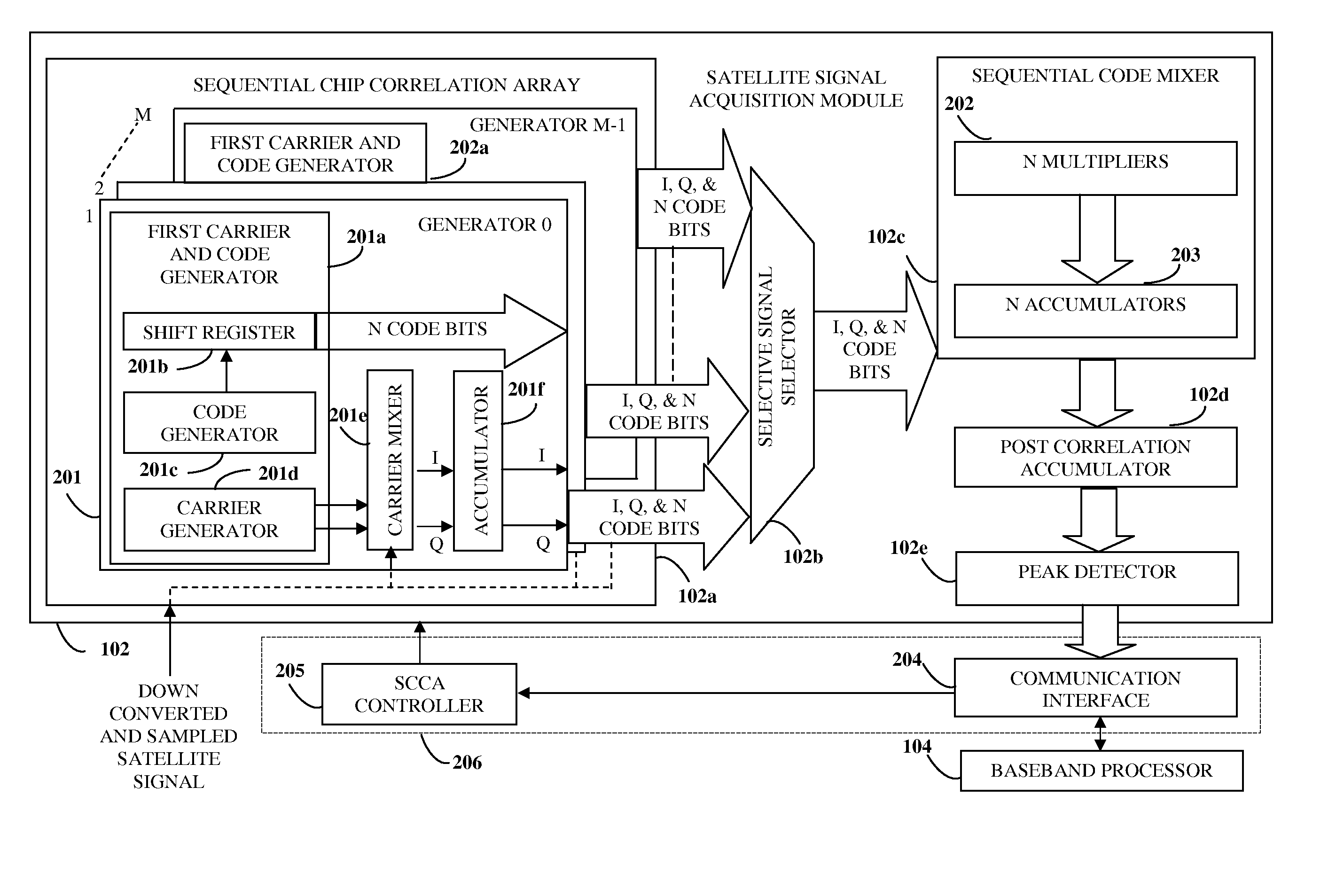
Figure 1 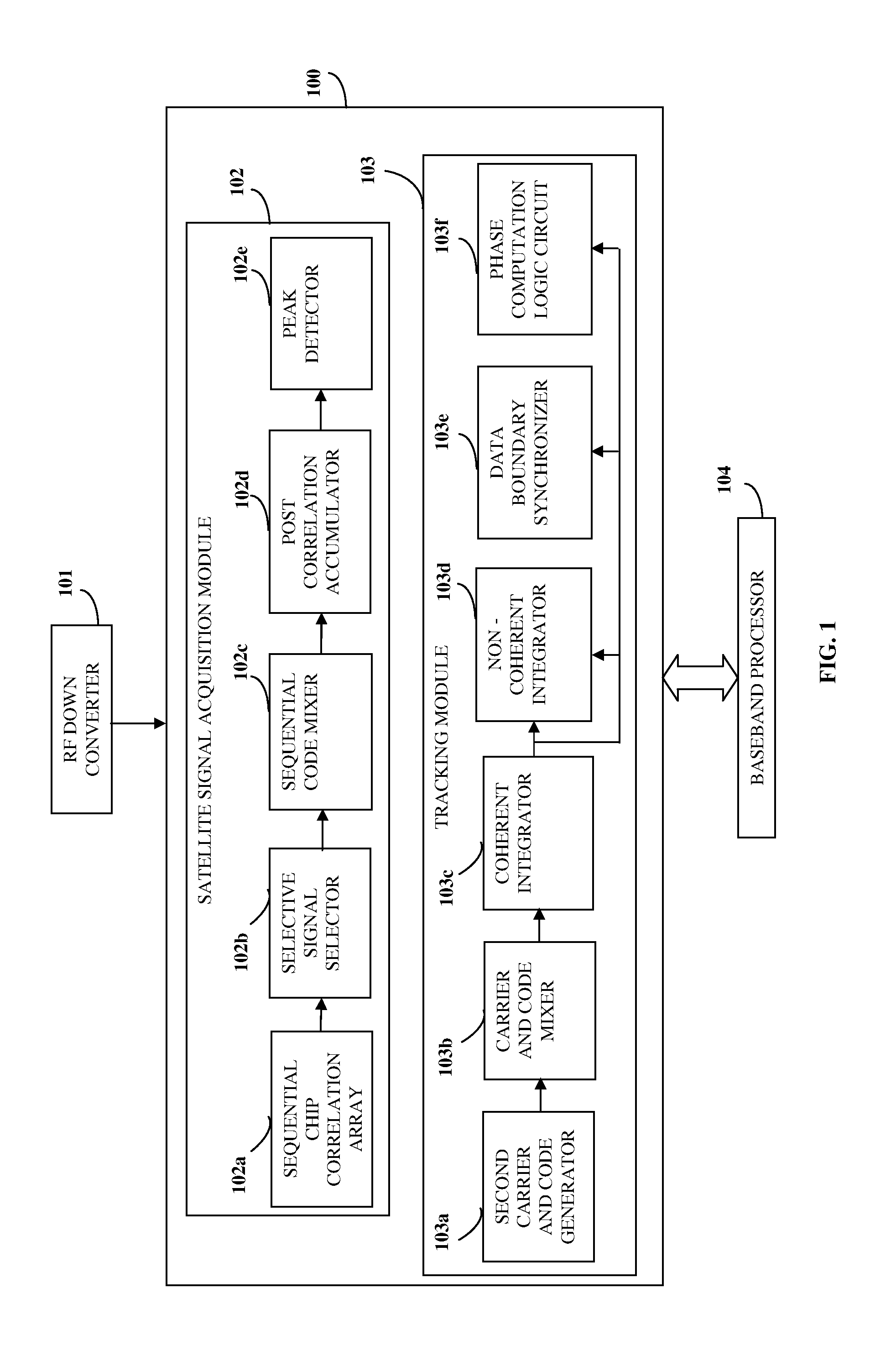
Figure 2 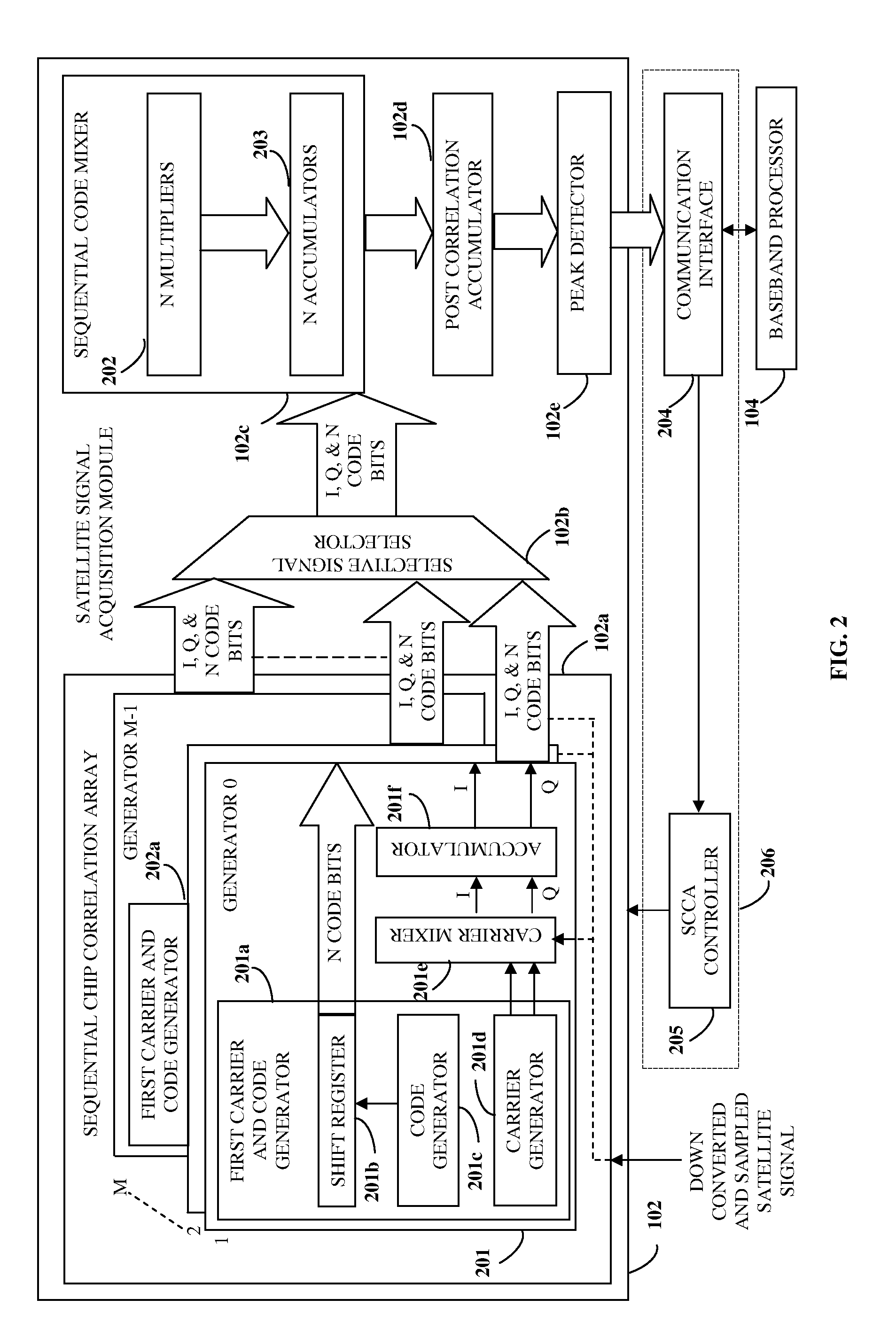
Figure 3
Abstract
Description
BACKGROUND
[0001] Wireless assisted global navigation satellite systems (GNSS) with emerging enhanced 911 (E911) compliance standards require reduced acquisition time in GNSS reception. A user's location information needs to be accurately communicated in the shortest possible time to emergency support providers. If the location data is not accurate, emergency dispatchers may experience difficulty in routing 911 calls to the appropriate center. Mobile phones also need to be operable indoors and in urban canyons. Typical GNSS systems also need to have the capability to handle weak signals and respond with both speed and location accuracy. For example, E911 compliance requires that the object be identified within 125 meters and within a 5 second span in most instances.
[0002] The conventional method to acquire satellite signal is through the use of multiple hardware blocks. Time to first fix (TTFF) performance is dependent on the correlation acquisition process. For example, incoming GNSS ...
Examples
Embodiment Construction
[0023]FIG. 1 illustrates a global navigation satellite system (GNSS) baseband chip 100 for acquiring a global navigation satellite system. A global navigation satellite system is, for example, a global positioning system (GPS) signal comprising ranging signals, used to measure the distance to the satellite, and navigation messages. The navigation messages include data used to calculate the position of the satellite in orbit, and information about time and status of the entire satellite constellation. It should be evident; however, that global navigation satellite system is, for example, associated with other satellite positioning systems, such as the Russian “Glonass” system and the European “Galileo” system. Each GNSS satellite broadcasts a global navigation satellite signal having message data and signal structure that is unique to that satellite, thereby enabling a GNSS receiver to distinguish the global navigation satellite signal from one GNSS satellite to another GNSS satellit...