
Solid lubricant and production method thereof
a technology of solid lubricant and production method, which is applied in the direction of lubricant composition, petroleum industry, base materials, etc., can solve the problems of insufficient non-asbestos brake friction materials, affecting the development of solid lubricants with satisfactory lubricating characteristics in the high-temperature range, and affecting the lubricating performance of solid lubricants, so as to improve thermal resistance and oxidation resistance, and efficiently produce solid lubri
Patent Information
- Authority / Receiving Office
- US · United States
- Patent Type
- Patents(United States)
- Current Assignee / Owner
- Publication Date
- 2013-08-20
Smart Images
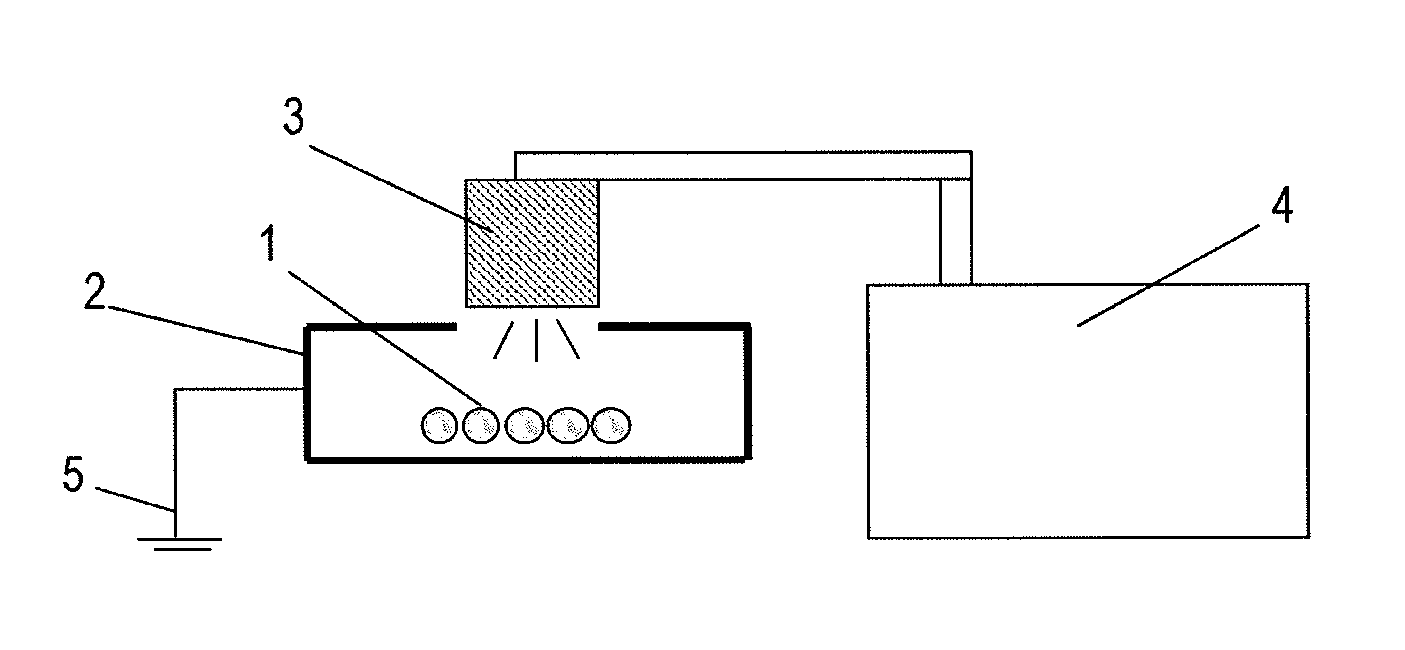
Figure 1 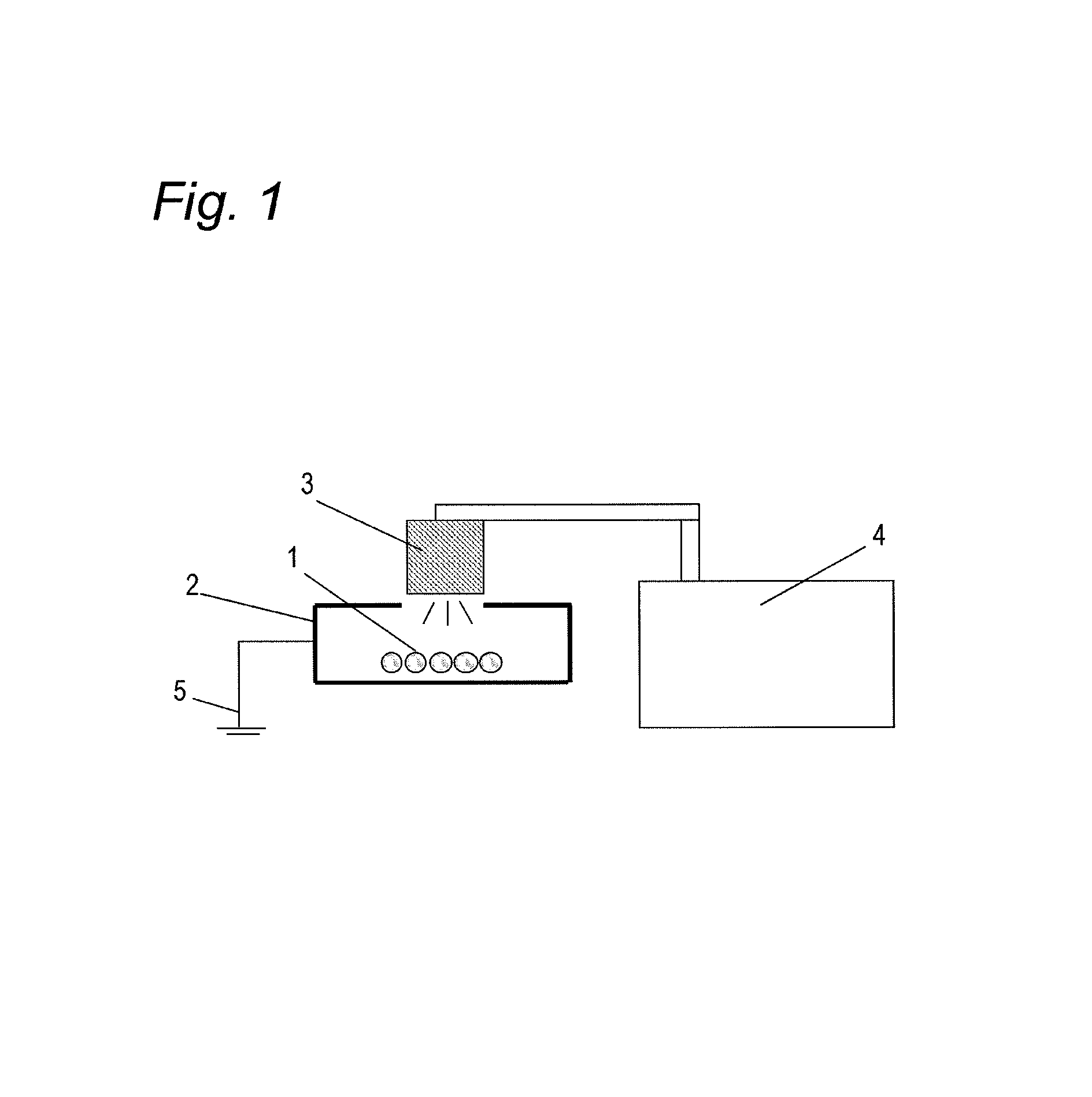
Figure 2 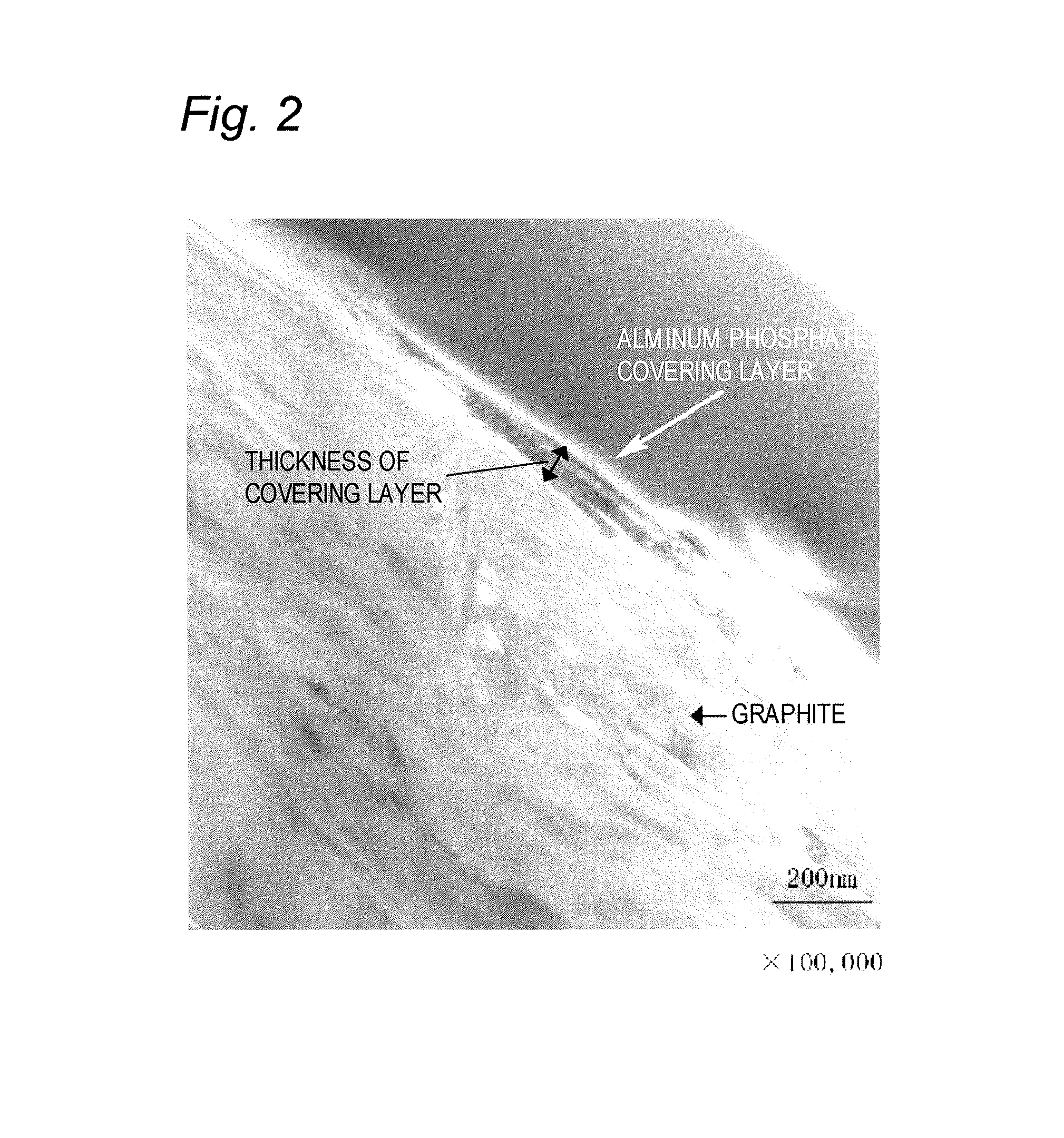
Figure 3
Abstract
Description
RELATED APPLICATION
[0001] This application claims priority from Japanese Patent Application No. 2010-319312, filed Jun. 18, 2010 and Japanese Patent Application No. 2009-239431, filed Oct. 16, 2009, which are incorporated by reference in its entirety.BACKGROUND
[0002] The present invention relates to a solid lubricant, a production method thereof, a non-asbestos brake friction material, and a sliding component using the solid lubricant. More particularly, the invention relates to a solid lubricant more significantly improved in thermal resistance and oxidation resistance than graphite and enhanced in lubricating performance at high temperature, an effective production method thereof, a non-asbestos brake friction material, and a sliding component using the above-mentioned solid lubricant.
[0003] Layered materials such as graphite and molybdenum disulfide and organic materials such as polytetrafluoroethylene (PTFE) are used as solid lubricants in non-asbestos brake friction materials and ...
Examples
example 1
[0067]Aluminum dihydrogen phosphate was dissolved in pure water to prepare an aqueous solution having a concentration of 1% by mass. To 100 parts by mass of this aqueous solution, 42 parts by mass of artificial graphite (manufactured by Tokai Carbon Co., Ltd., trade name: “G152A”, average particle size: 700 μm) was added, followed by stirring at a temperature of 50° C. for 1 hour by using a rotary vane stirrer (manufactured by AS ONE Corporation, model name: “PM-203”).
[0068]The resultant mixture was dried in the atmosphere for 24 hours and cracked, followed by heat treatment in vacuum at 800° C. for 3 hours. After the heat treatment, the cracked mixture was pulverized in a mortar to obtain a solid lubricant of Example 1 comprising graphite powder in which particle surfaces were coated with aluminum dihydrogen phosphate.
[0069]A transmission electron microscope (TEM) photograph of this solid lubricant is shown in FIG. 2, Incidentally, the thickness of a phosphate covering layer was 50...
examples 2 to 4
[0070]In the same manner as in Example 1, aqueous solutions having aluminum dihydrogen phosphate concentrations of 0.5%, 5% and 10% by mass were prepared, and the artificial graphite (described above) was treated to obtain solid lubricants of Examples 2 to 4 comprising graphite powder in which particle surfaces were coated with aluminum dihydrogen phosphate.
example 5
[0071]A solid lubricant of Example 5 comprising graphite powder in which particle surfaces were coated with magnesium dihydrogen phosphate was obtained in the same manner as in Example 1 with the exception that an aqueous solution having a concentration of 1% by mass was prepared using magnesium dihydrogen phosphate in place of aluminum dihydrogen phosphate.