
Bi-direction rapid action electrostatically actuated microvalve
a micro-valve, electrostatically actuated technology, applied in the field of microfluidics, can solve the problems of increasing the lifetime operation of the device, and achieve the effects of low surface energy, quick actuation, and reduced film squeezing pressure of the membrane electrod
Patent Information
- Authority / Receiving Office
- US · United States
- Patent Type
- Patents(United States)
- Current Assignee / Owner
- Publication Date
- 2014-01-14
- Estimated Expiration
- Not applicable · inactive patent
Smart Images
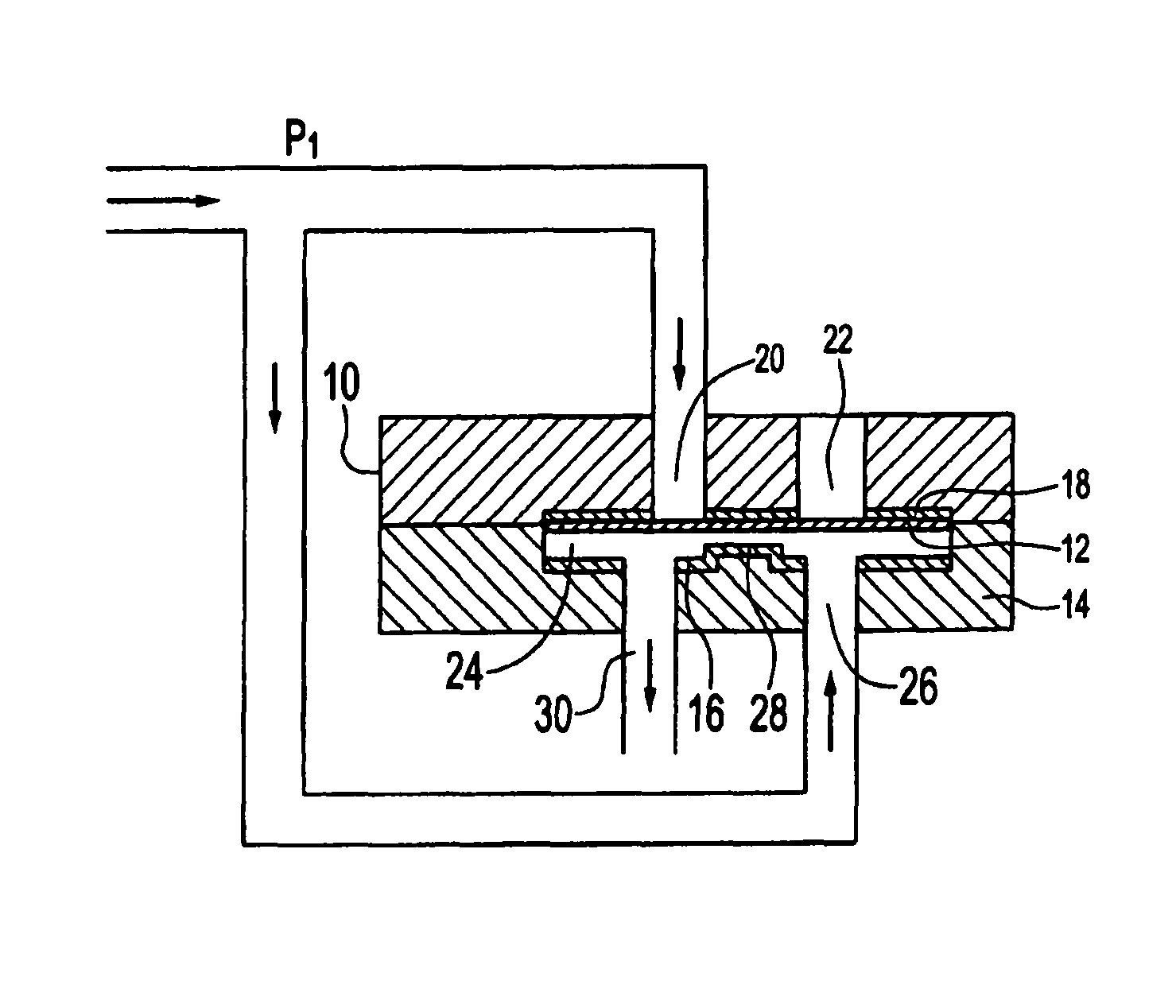
Figure 1 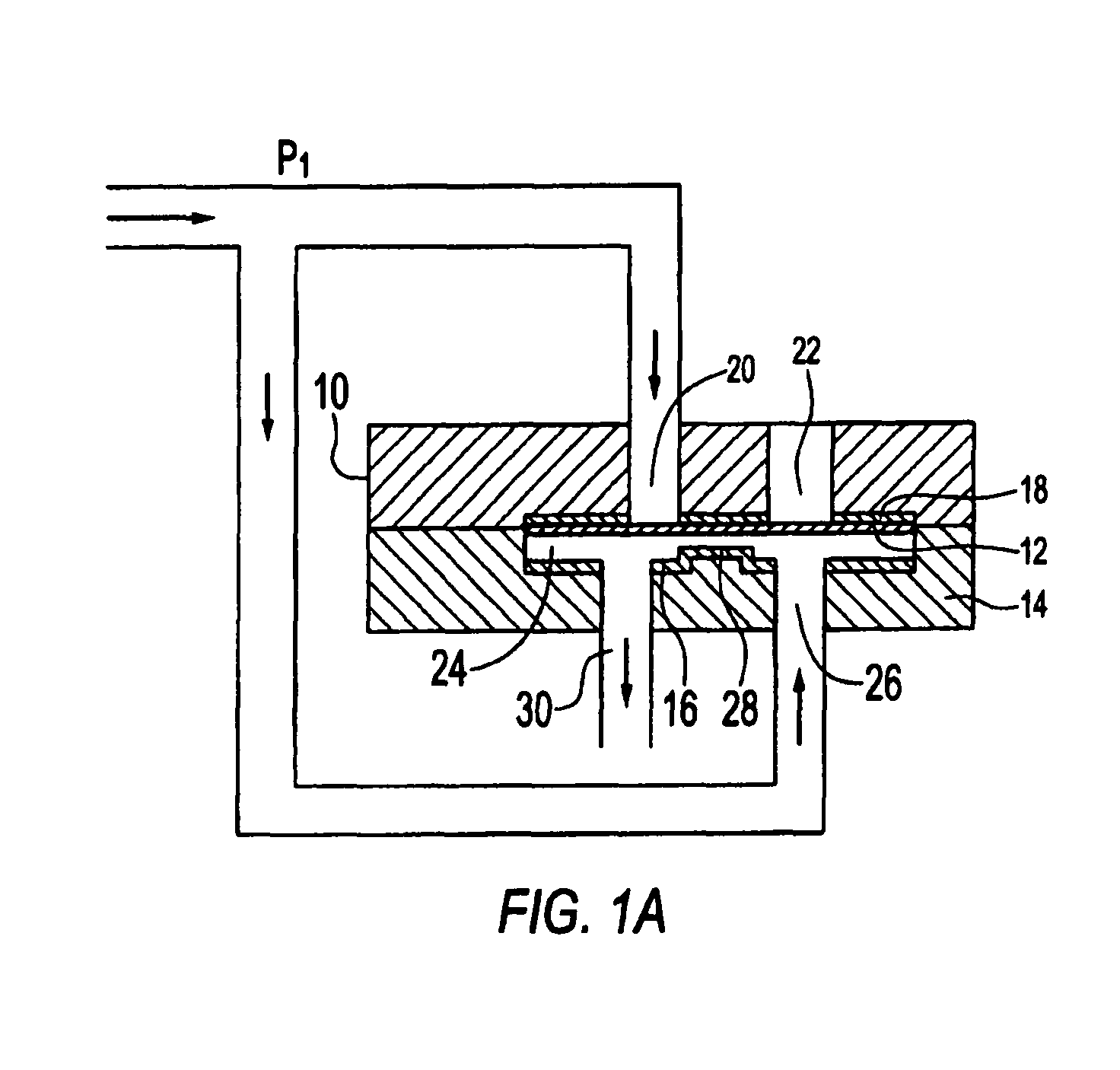
Figure 2 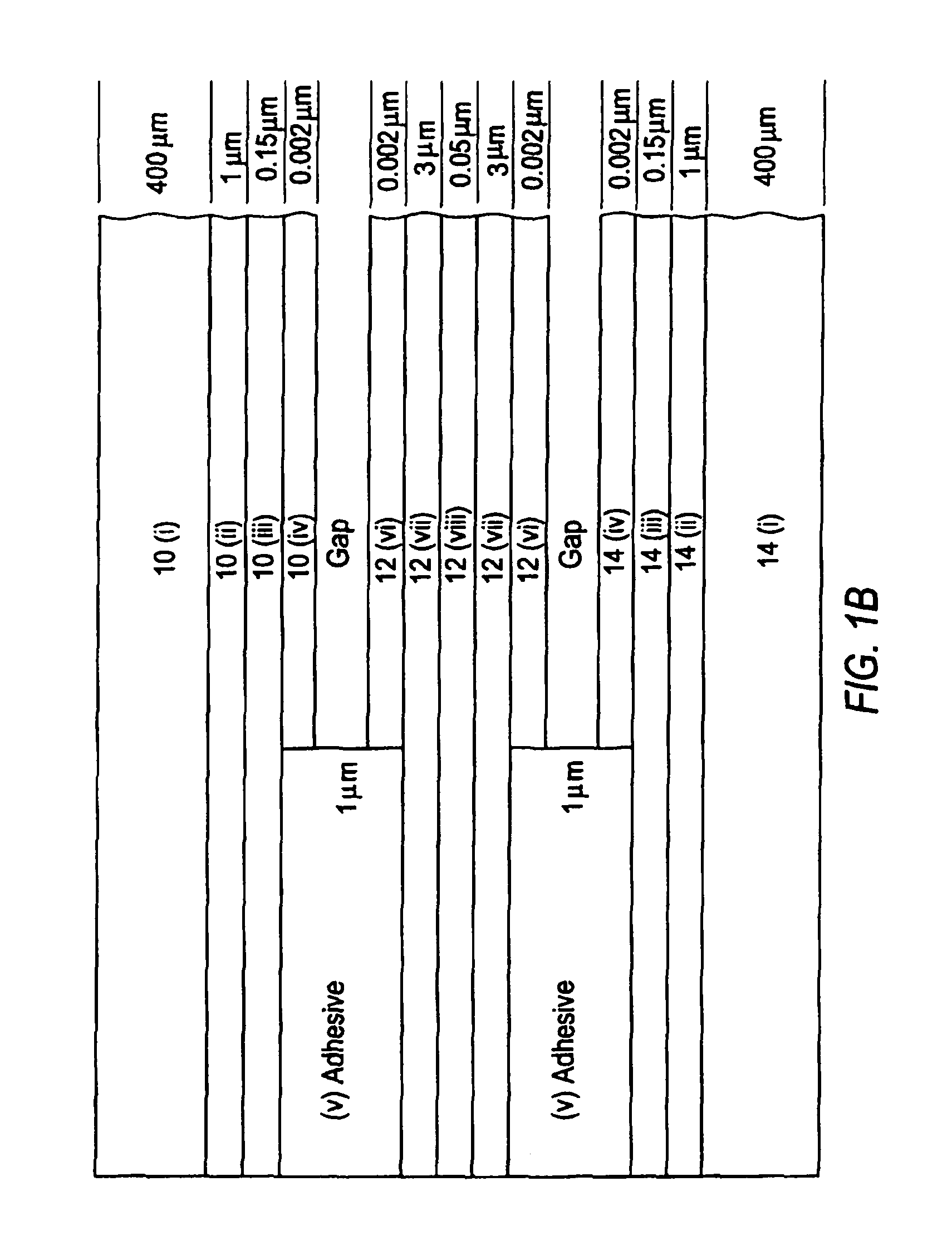
Figure 3
Abstract
Description
PRIORITY CLAIM
[0001] This application is a Continuation-in-Part of U.S. patent application Ser. No. 11 / 493,376, filed Jul. 26, 2006, now abandoned which claims priority under 35 U.S.C. §119 to Patent Application No. 60 / 702,972, filed Jul. 27, 2005, the disclosures of which are expressly incorporated by reference in the entireties.STATEMENT OF GOVERNMENT INTEREST
[0002] This invention was made with Government assistance under Contract No. FA8650-04-1-7121 awarded by the Defense Advanced Research Projects Agency (DARPA). The Government has certain rights in this invention.FIELD OF THE INVENTION
[0003] The invention concerns microfluidics. The invention provides an electrostatically actuated microvalve that can be used in a wide variety of microfluidic applications, e.g., chemical analysis, pre-concentrators, micro-total analysis system (μTAS), gas / liquid sample injection, mixing, lab-on-a chip, micropumps and compressors, etc.BACKGROUND
[0004] Microvalves are the subject of continuing resear...
Examples
Embodiment Construction
[0039]A preferred embodiment bi-directional electrostatic microvalve of the invention includes a membrane electrode that is controlled by application of voltage to fixed electrodes disposed on either side of the membrane electrode. Dielectric insulating layers separate the electrodes. One of the fixed electrodes defines a microcavity. Microfluidic channels formed into the electrodes provide fluid to the microcavity. A central pad defined in the microcavity places a portion of the second electrode close to the membrane electrode to provide a quick actuation while the microcavity reduces film squeezing pressure when opening the membrane electrode.
[0040]In preferred embodiment microvalves, low surface charge trapping and low surface energy coatings coat low bulk charge dielectric layers. In preferred embodiments, thin silicon nitride coatings provide low surface charge trapping dielectric. For low surface energy, fluorocarbon films made from cross-linked carbon di-fluoride monomers or ...