
Intervertebral disc and insertion methods therefor
a technology of intervertebral discs and insertion methods, which is applied in the field of cervical intervertebral disc implants, can solve the problems of undesirable progressive fusion of long sequences of vertebrae, significant pain to individuals suffering from conditions, etc., and achieve the effects of facilitating long-term fixation, preventing over-insertion, and facilitating long-term fixation to endplate bones
Patent Information
- Authority / Receiving Office
- US · United States
- Patent Type
- Patents(United States)
- Current Assignee / Owner
- Publication Date
- 2014-07-15
Smart Images
Figure 1 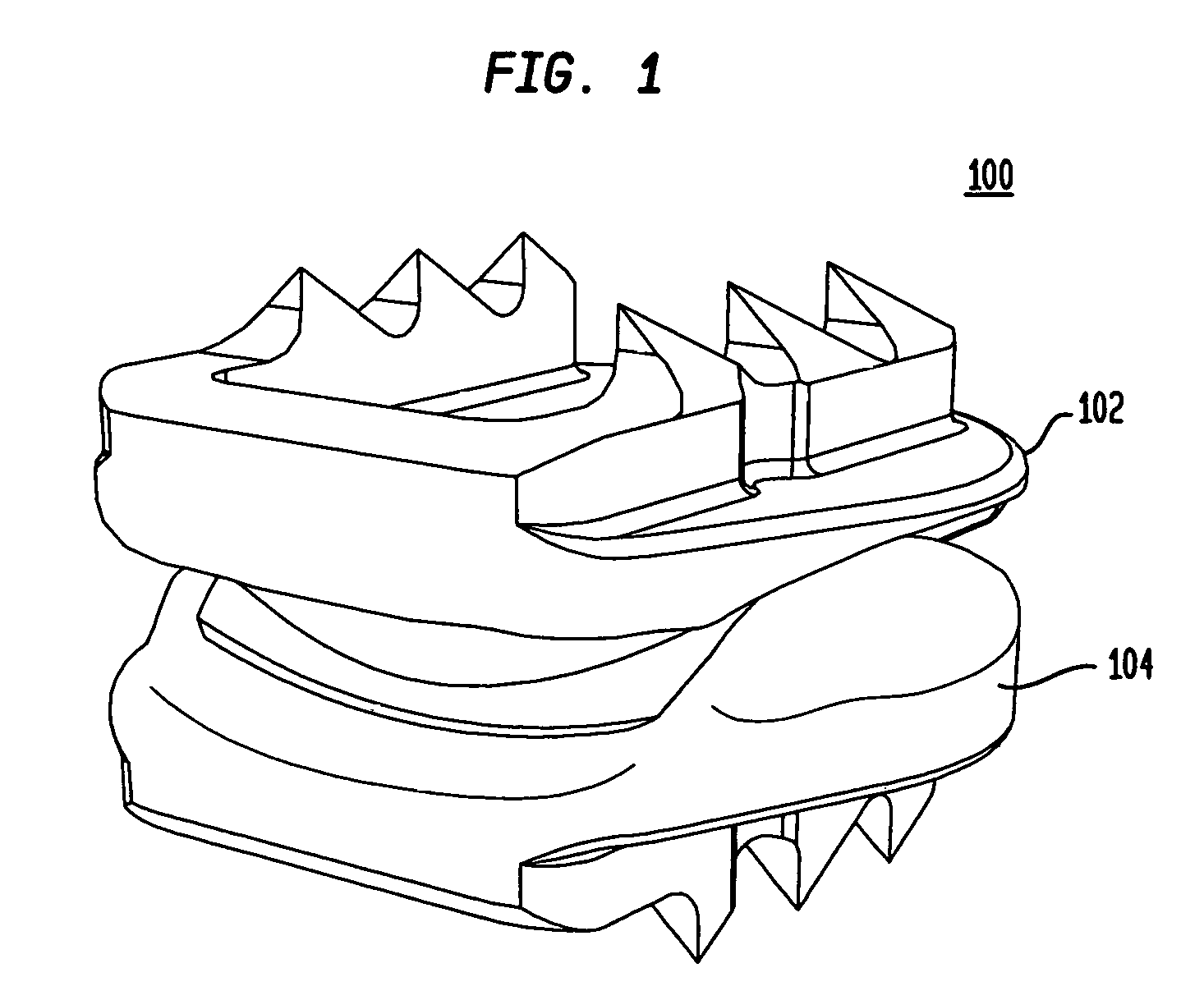
Figure 2 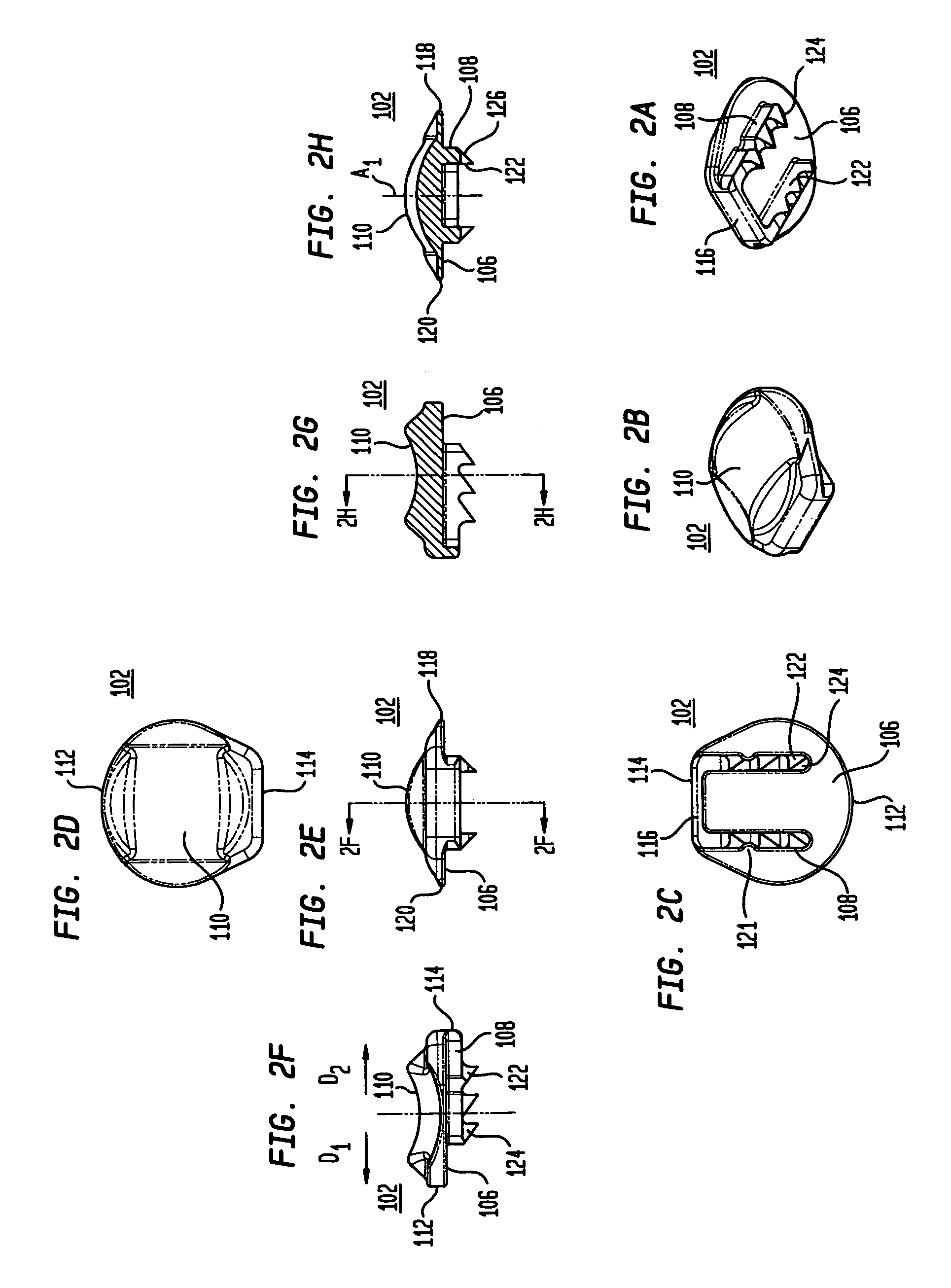
Figure 3
Abstract
Description
CROSS-REFERENCE TO RELATED APPLICATIONS
[0001] The present application claims the benefit of the filing dates of U.S. Provisional Patent Application Nos. 60 / 790,415, filed Apr. 7, 2006, 60 / 721,053, filed Sep. 27, 2005, 60 / 701,306, filed Jul. 21, 2005 and 60 / 685,295, filed May 27, 2005, the disclosures of which are hereby incorporated by reference herein.
[0002] The present application relates to U.S. Pat. No. 6,908,484, entitled “Cervical Disc Replacement” and filed on Mar. 6, 2003; U.S. Pat. No. 6,994,728, entitled “Cervical Disc Replacement Method” and filed on Feb. 11, 2004; United States Patent Application Publication No. 2004 / 0176851, entitled “Cervical Disc Replacement” and filed on Feb. 11, 2004; U.S. Pat. No. 6,994,729, entitled “Cervical Disc Replacement” and filed on Feb. 11, 2004; U.S. Pat. No. 6,997,955, entitled “Cervical Disc Replacement” and filed on Feb. 11, 2004; U.S. Pat. No. 6,972,037, entitled “Cervical Disc Replacement” and filed on Feb. 11, 2004; U.S. Pat. No. 6,97...
Examples
Embodiment Construction
[0081]Referring to FIG. 1, in certain preferred embodiments of the present invention, an intervertebral disc implant 100 includes a top element 102 and a bottom element 104. As will be described in more detail below, the top and bottom elements 102, 104 have opposing articulating surfaces that engage one another. The intervertebral disc implant is adapted to be inserted into a disc space between adjacent vertebrae.
[0082]Referring to FIGS. 2A-2H, the top element 102 includes a first bone engaging surface 106 having protrusions 108A, 108B and a second articulating surface 110. Referring to FIGS. 2C and 2D, the top element has a posterior end 112 and an anterior end 114. As shown in FIGS. 2A and 2C, the two protrusions 108 are interconnected by an anterior wall 116 that extends along the anterior end 114 of the top element. The anterior wall preferably serves as a vertebral body stop to prevent over insertion of the intervertebral disc implant and / or posterior migration of the implant....