

Inverse signal transformation
a signal transformation and signal technology, applied in the field of inverse signal transformation, can solve the problems of inherently unstable dplls, highly unpredictable time delay variations, and many applications, and achieve the effects of high unreliability of conventional dppl configurations and inherently unstable dplls
Patent Information
- Authority / Receiving Office
- US · United States
- Patent Type
- Patents(United States)
- Current Assignee / Owner
- Publication Date
- 2015-07-07
- Estimated Expiration
- Not applicable · inactive patent
Smart Images
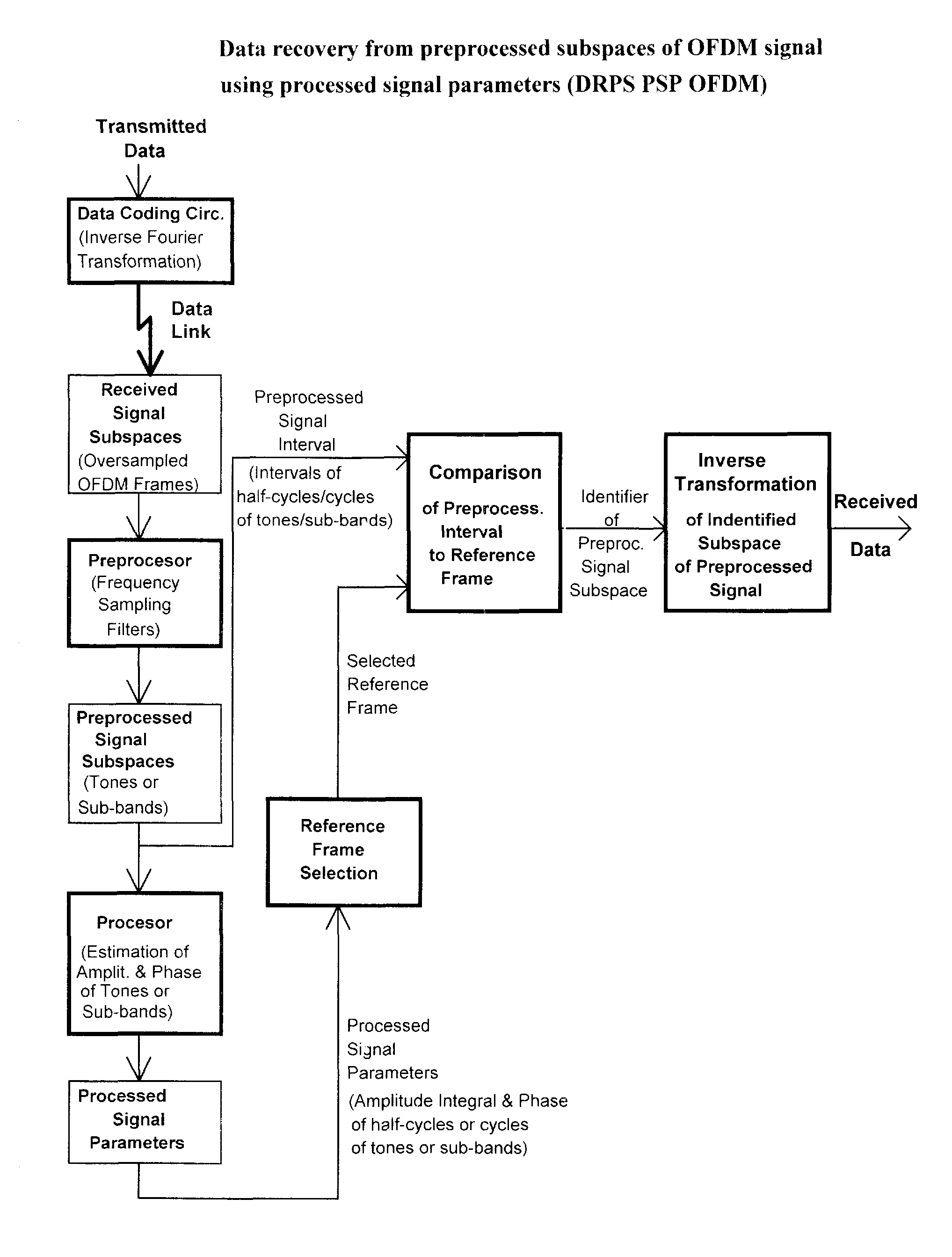
Figure 1 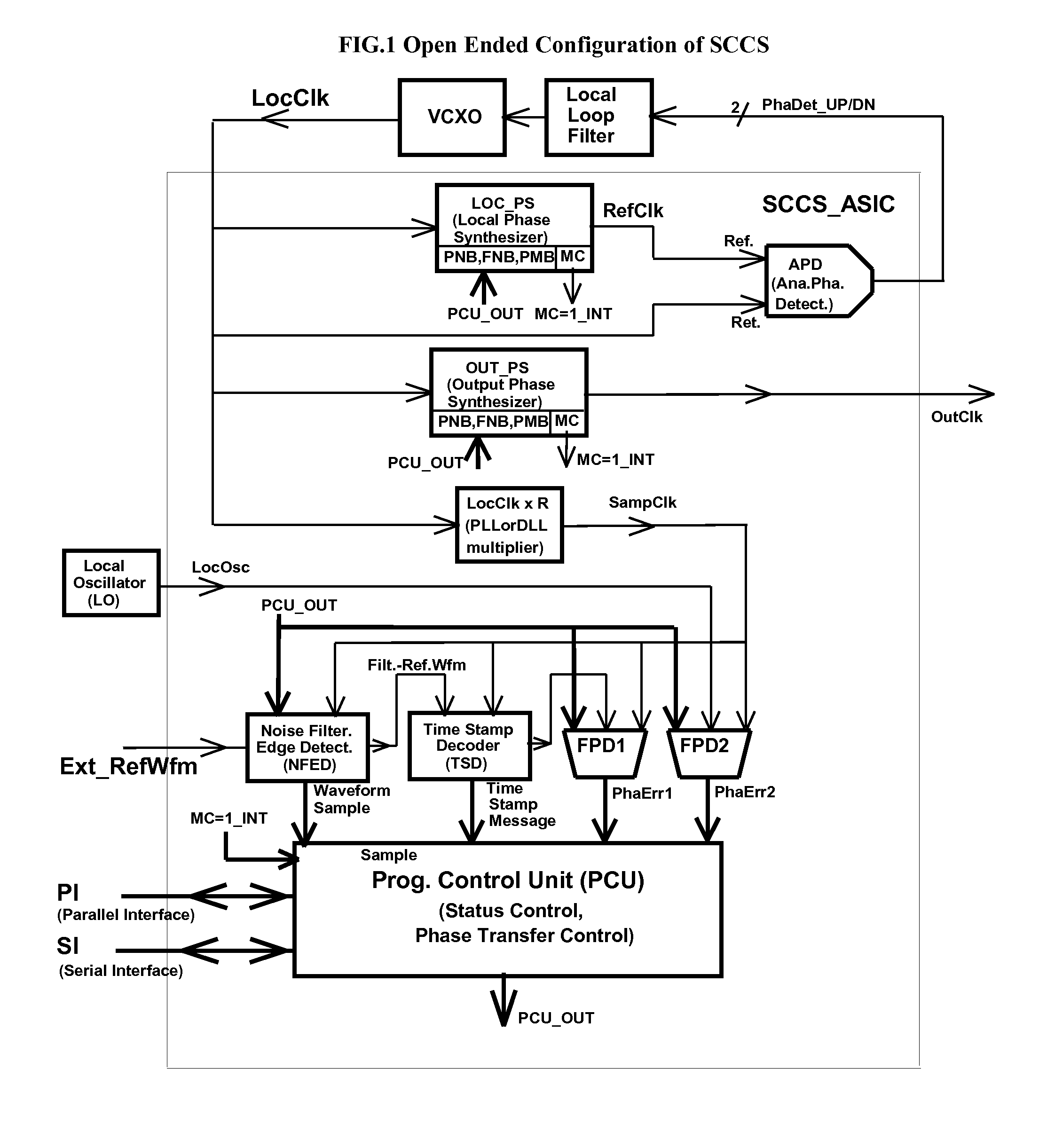
Figure 2 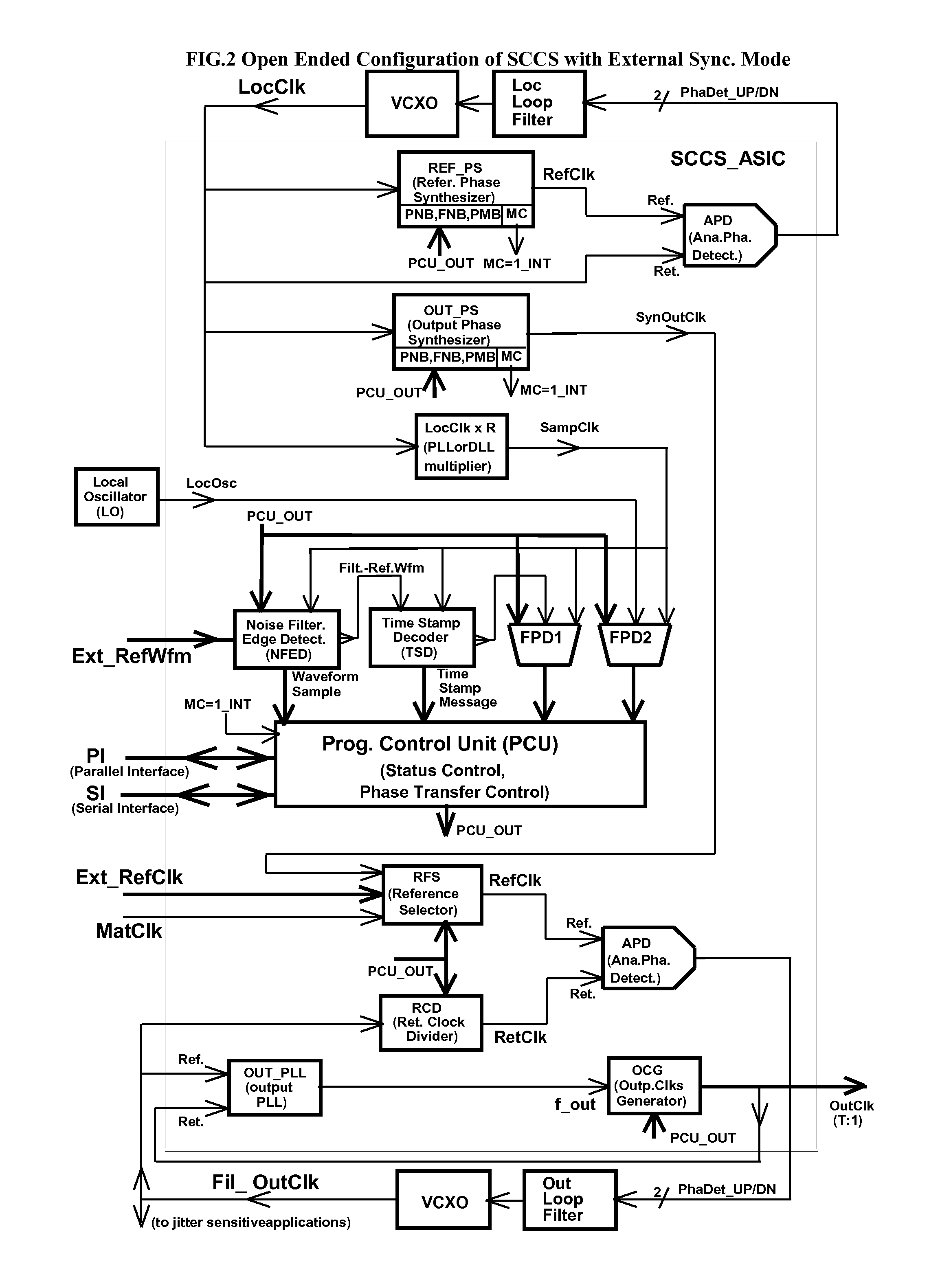
Figure 3
Abstract
Description
CROSS-REFERENCE TO RELATED APPLICATIONS
[0001] This application is Continuation In Part of:
[0002] U.S. non-provisional application Ser. No. 12 / 047,318, filed on 12 Mar. 2008, now U.S. Pat. No. 8,284,877, which is incorporated by reference herein as if fully set forth, wherein such U.S. Ser. No. 12 / 047,318 claims priority benefits of U.S. provisional application 60 / 894,433 filed on 12 Mar. 2007;
[0003] U.S. non-provisional application Ser. No. 11 / 931,026, filed on Oct. 31, 2007, now U.S. Pat. No. 8,358,725, which is incorporated by reference herein as if fully set forth, wherein such Ser. No. 11 / 931,026 claims priority benefits and is Continuation In Part of PCT international application no. PCT / CA2006 / 001120, filed Jun. 27, 2006.BACKGROUND OF THE INVENTION
[0004] 1. Field of the Invention
[0005] This application presents inverse signal transformation (IST) reversing transmission channel transfer function, in order to achieve a direct recovery of original data and synchronizing clock from rec...
Examples
Embodiment Construction
[1054]1. Embodiments of NFIT
[1055]The Inverse Transformation Method (ITM) is introduced in FIG. 23 as including subsystems shown in blocks 1-7.
[1056]These subsystems enable an efficient low-power processing of high-speed oversampled data is enabled by implementing real-time processing units (RTPs) which use simplified algorithms based on variable coefficients.
[1057]These RTPs are controlled by a Programmable Control Unit (PCU) which performs a background processing. This background processing includes implementing adaptive non-linear algorithms which analyze received line signal and intermediate processing results, in order to define such coefficients and to download them to content addressed memories such as the Control Register Set for 129 Tone (mentioned further below as 129T_CRS occurring in FIG. 26, FIG. 28 and FIG. 29).
[1058]These memories are accessed by the RTPs implementing said ITM outlined in FIG. 23. These RTPs can be implemented as it is detailed below for 129 Tone of D...