
Protective covers
a protective cover and cover technology, applied in the field of protective covers, can solve the problems of creating a microclimate, affecting freezing in place, etc., and achieve the effects of preventing humidity buildup, preventing or at least minimizing oxidation and corrosion of the covered object, and ensuring the appearance of the cover
Patent Information
- Authority / Receiving Office
- US · United States
- Patent Type
- Patents(United States)
- Current Assignee / Owner
- Publication Date
- 2015-12-01
Smart Images
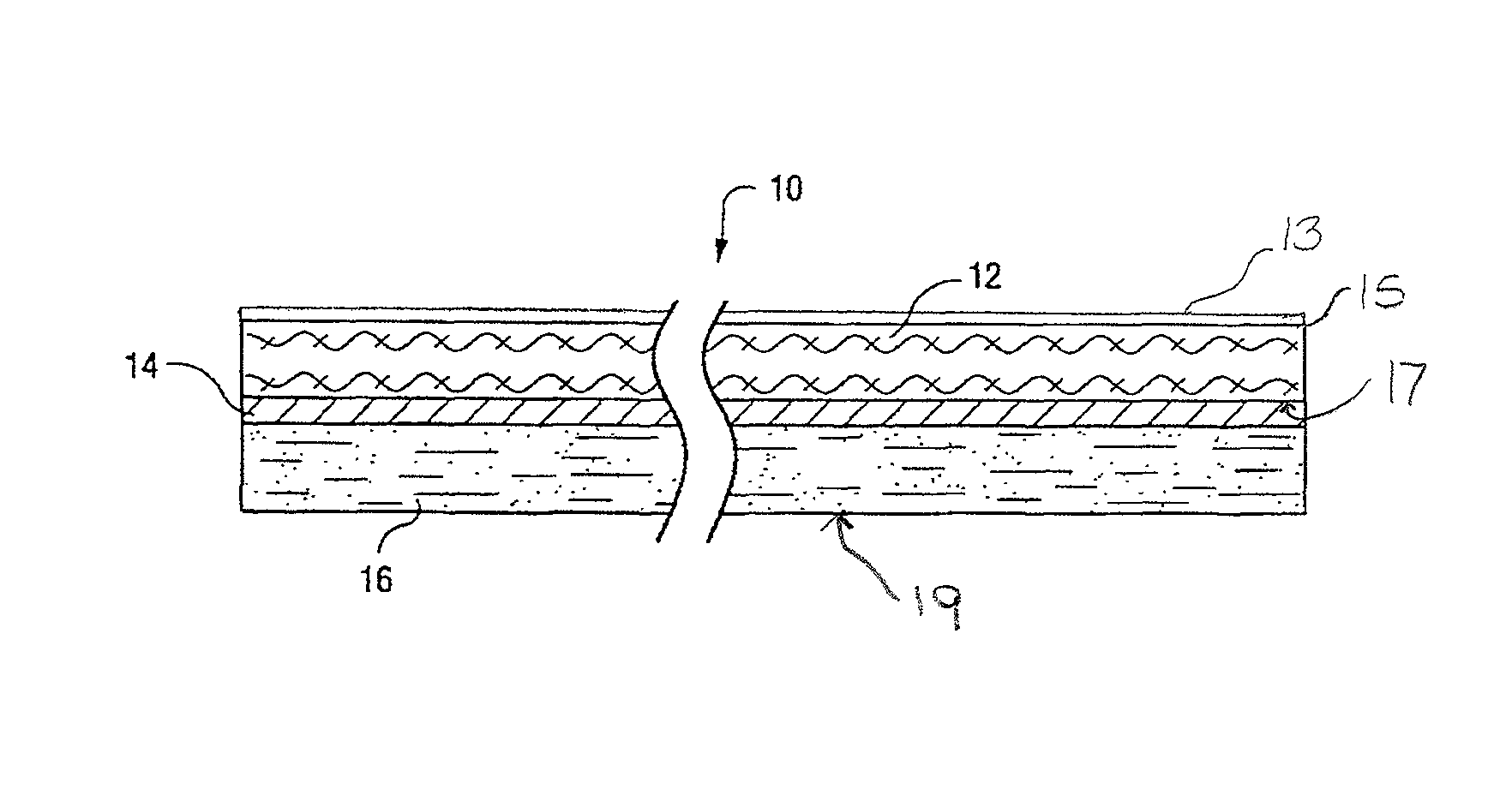
Figure 1 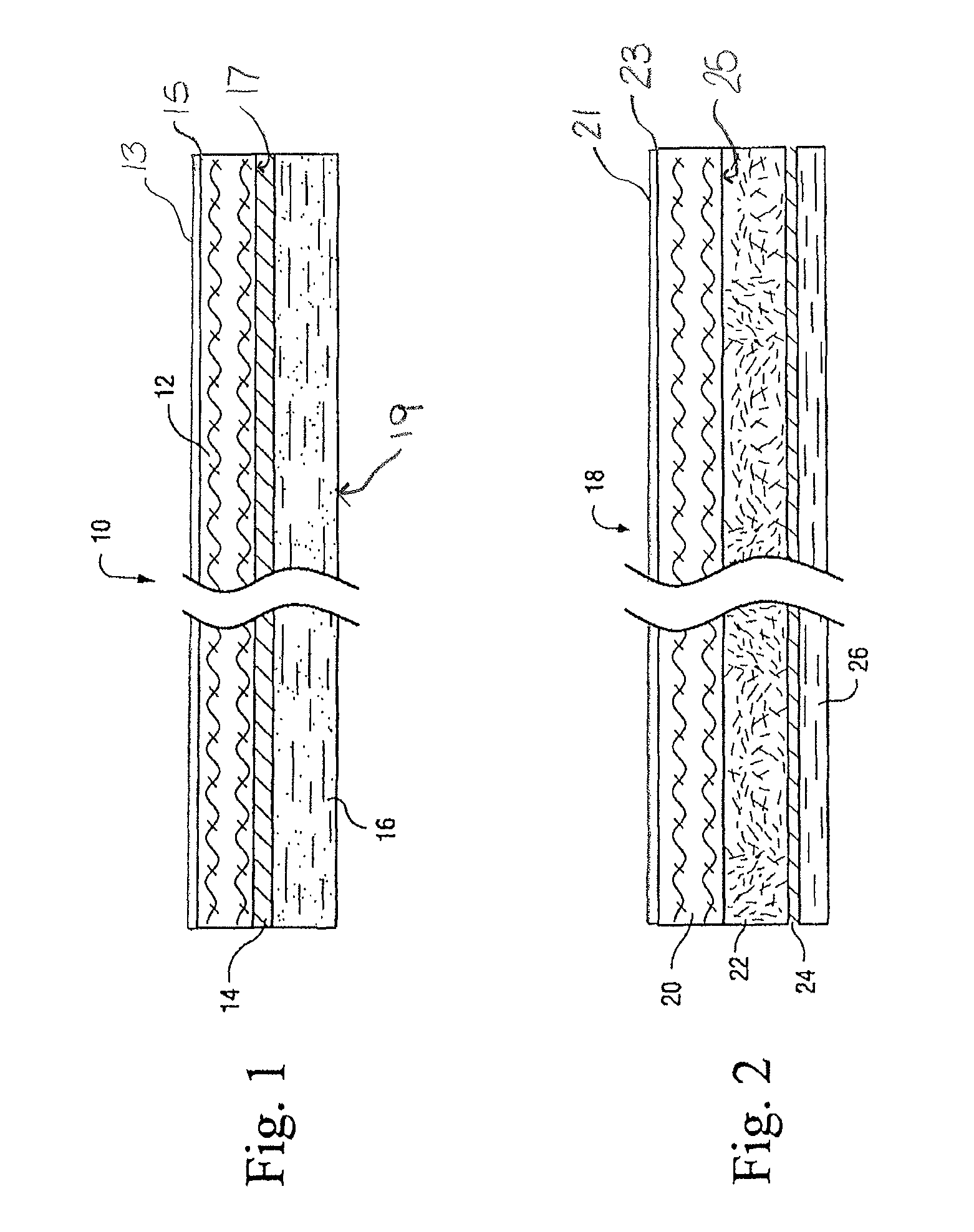
Figure 2 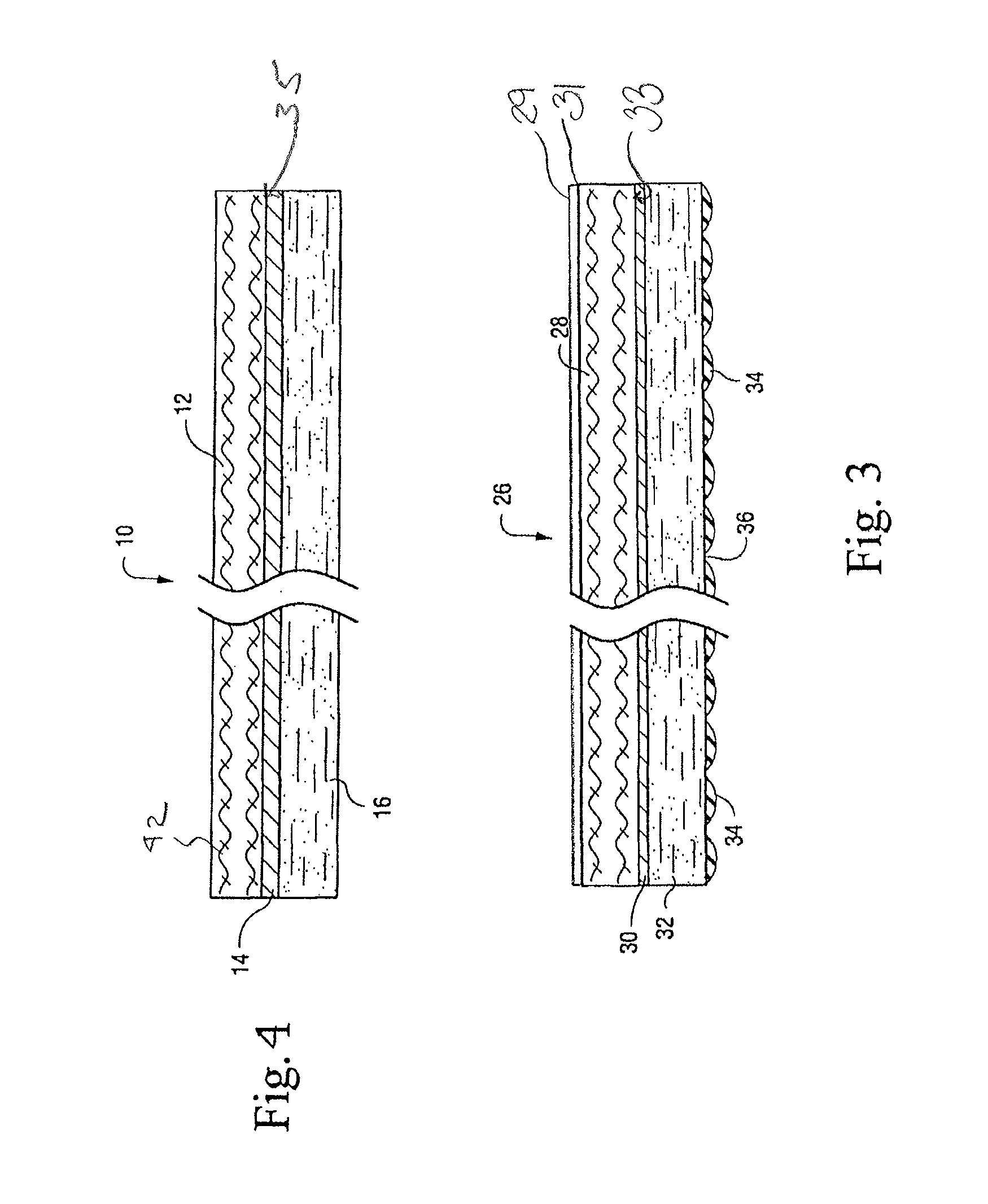
Figure 3
Abstract
Description
CROSS-REFERENCE TO RELATED APPLICATIONS
[0001] This application claims priority from U.S. Provisional Application Ser. No. 61 / 578,446 titled “Protected Covers And Related Fabrics” which was filed on Dec. 21, 2011, and is a continuation-in-part of U.S. patent application Ser. No. 11 / 482,105 filed on Jul. 7, 2006 and entitled “Protective Covers And Related Fabrics”, both of which are incorporated herein fully by reference.TECHNICAL FIELD
[0002] The present invention relates to enhanced properties for protective covers for equipment typically stored outdoors such as airplanes, vehicles, munitions, weapons and weapons systems, electrical equipment and the like, and more particularly, to the construction of fabrics for such protective covers.BACKGROUND INFORMATION
[0003] Protective covers are often used to protect equipment and parts in a wide range of environmental conditions. Corrosion and oxidation are of particular concern, especially in connection with vehicles, airplanes, munitions, weap...
Examples
first embodiment
[0042]FIG. 6 shows how a cover, manufactured according to the present invention, allows the relative humidity to escape from under the cover. The cover enables the air to get to equilibrium faster, thereby reducing or eliminating the condensation under the cover. As shown in FIG. 6, the prior art (standard technology) cover maintains the relative humidity level over a 30 minute time span. In contract, the cover of the present invention drastically reduces the relative humidity over the same 30 minute time span.
[0043]The existing technology claims the cover materials are breathable based upon a measured moisture vapor transmission rate (MVTR) primarily attributed to the monolithic or micro-porous polyurethane coating applied to the cover material. This means a higher pressure under the cover must be attained and condensation must occur and be absorbed into the polyurethane layer before moisture will start to transfer through the cover. In the prior art, a wet system of moisture traps...
second embodiment
[0049]Referring now to FIG. 2, a second embodiment illustrates a cover 18 that includes an outer textile or face layer 20 similar to face layer 12, overlying an interior textile fabric layer 22 incorporating super-absorbent polymers {SAPS). The textile fabric layer 22 is preferably a suitable non-woven fabric enclosing the SAP's in an otherwise conventional fashion. The layer 22 in turn overlies an ePTFE film or membrane 24 similar to membrane 14 described in connection with FIG. 1. The inner layer 26 is a textile fabric that may be of a material similar to inner textile layer 16 described hereinabove. Use of SAPs in the intermediate fabric layer 22 minimizes the possibility of reabsorption of moisture back into the space below the cover.
[0050]FIG. 3 illustrates a variation of the embodiment shown in FIG. 1. As such, the outer textile or face layer 28, intermediate membrane 30 and inner textile layer 32 are similar to the corresponding layers 12, 14 and 16 described hereinabove in c...