
Methods for determining active ingredients in pro-drug PEG protein conjugates with releasable PEG reagents (in vitro de-pegylation)
a technology of peg protein and active ingredients, applied in the field of in vitro assay systems, can solve the problems of reducing the biological function of the protein in irreversible manner, limiting the therapeutic effect, and reducing the half-life and circulation time of the applied protein, and achieves no negative effect on mammals
Patent Information
- Authority / Receiving Office
- US · United States
- Patent Type
- Patents(United States)
- Current Assignee / Owner
- Publication Date
- 2016-03-01
Smart Images
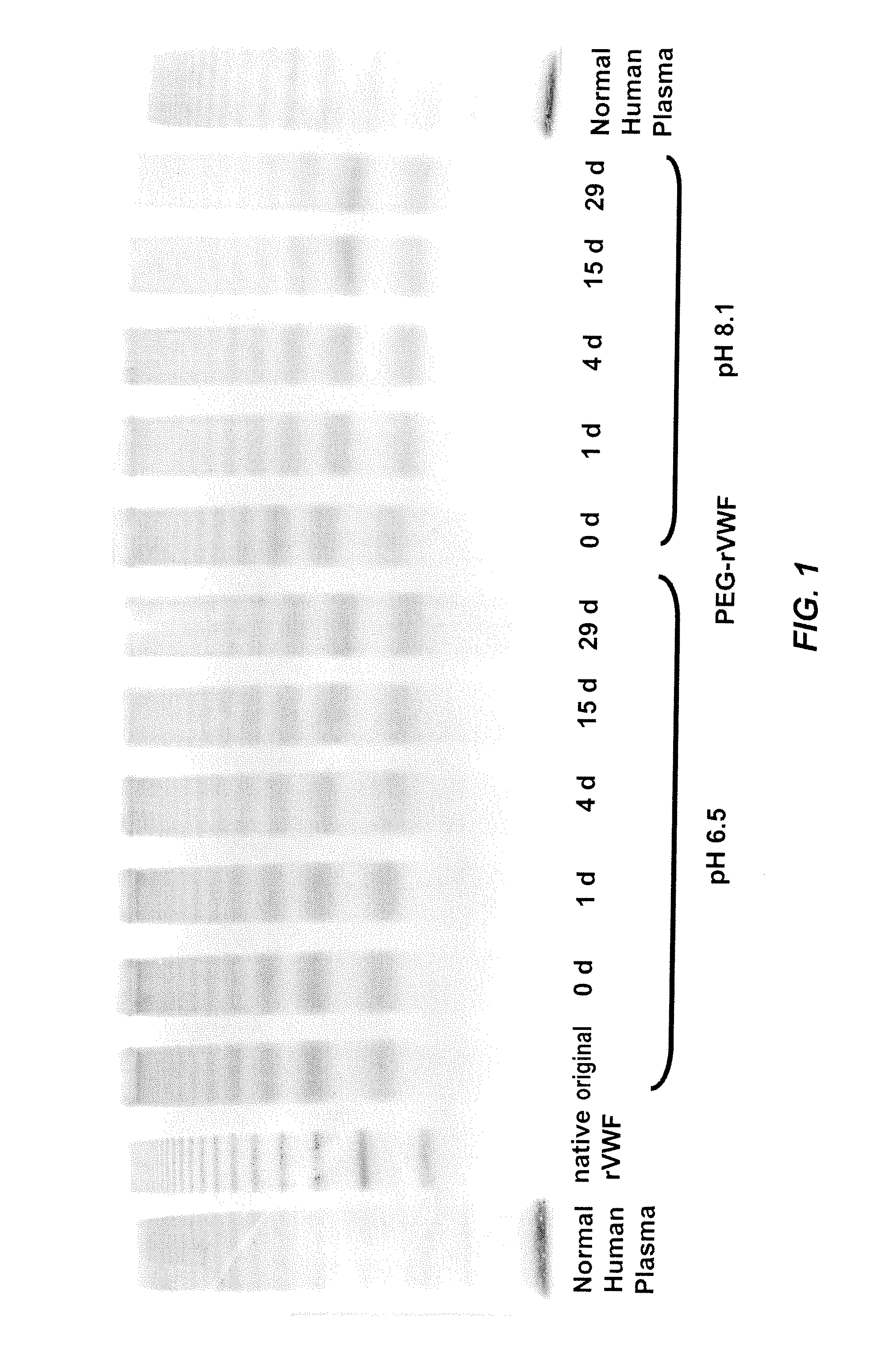
Figure 1 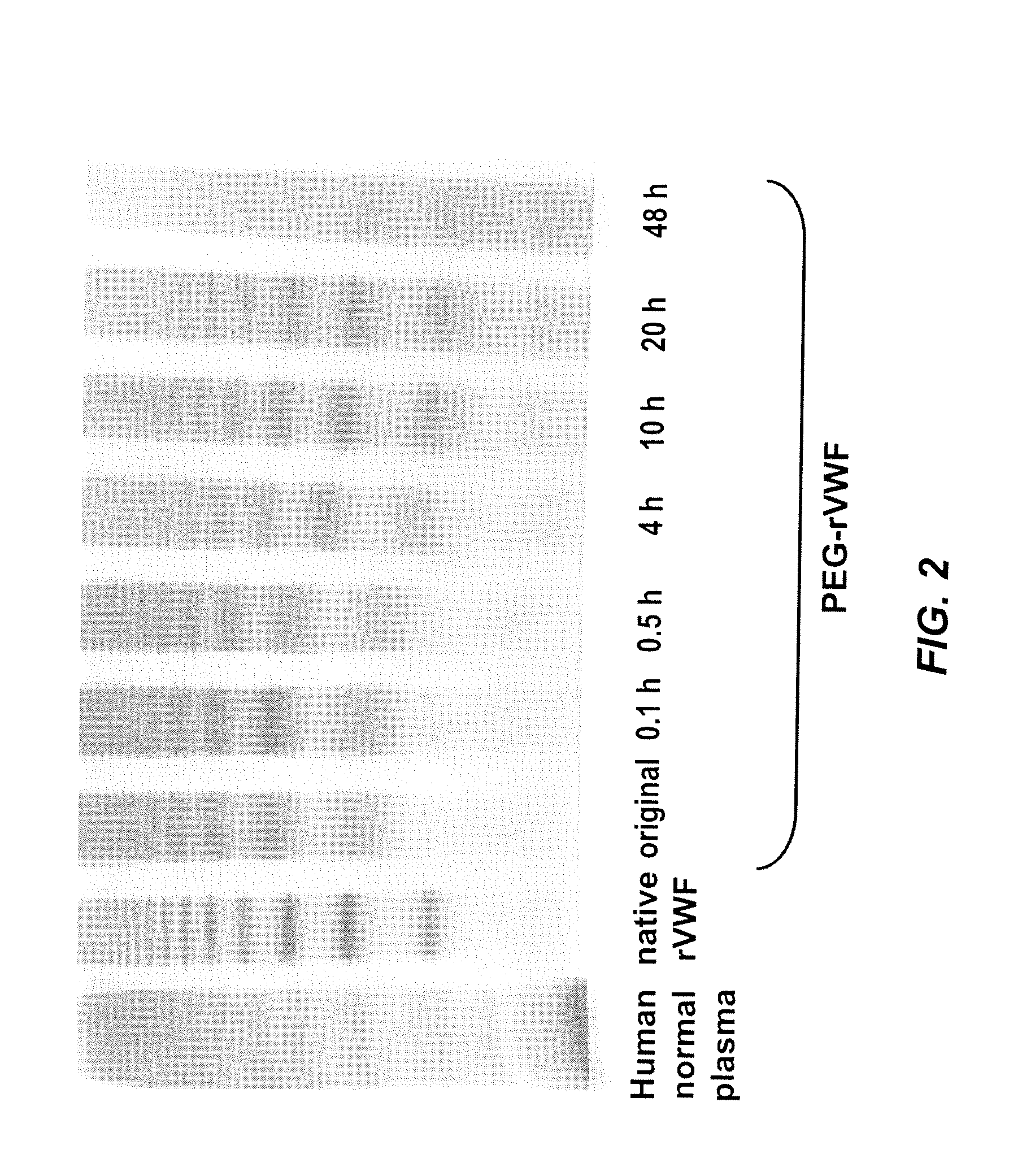
Figure 2 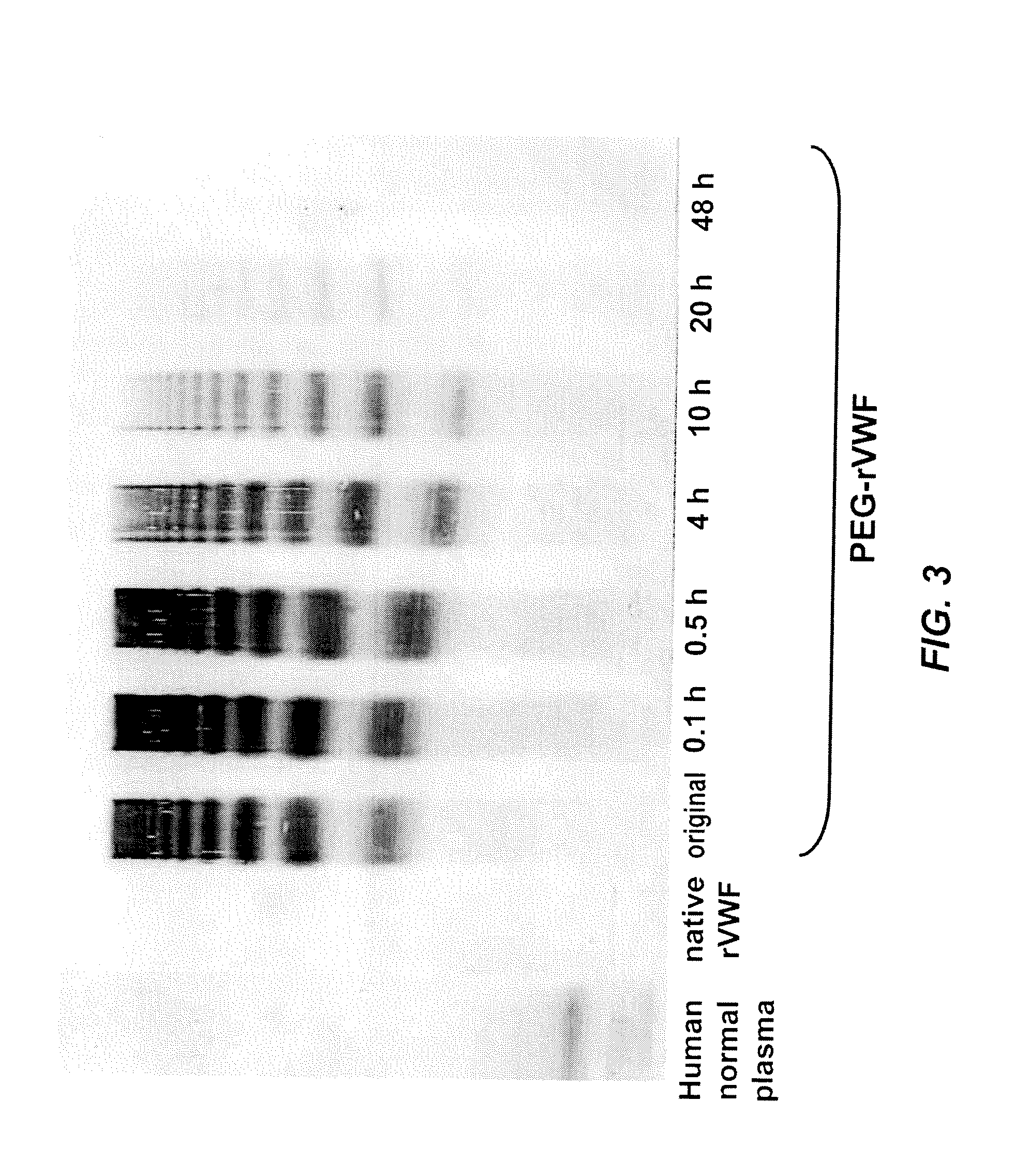
Figure 3
Abstract
Description
RELATED APPLICATIONS
[0001] This application claims benefit of U.S. Provisional Patent Application Ser. No. 61 / 107,257, filed Oct. 21, 2008, and U.S. Provisional Patent Application Ser. No. 61 / 242,634, filed Sep. 15, 2009, each of which is incorporated herein by reference in its entirety.FIELD OF THE INVENTION
[0002] The invention generally relates to the development of in vitro assay systems to force the release of a water-soluble polymer, such as polyethylene glycol (PEG) and polysialic acid (PSA), from proteins modified with a reversibly-linked water-soluble polymer. The invention includes methods for analyzing the release of the water-soluble polymer and measuring regained protein activity. The invention further includes methods appropriate for the quality control of proteins modified with releasable water-soluble polymers, including polymers like PEG and PSA.BACKGROUND OF THE INVENTION
[0003] The lack or dysfunction of blood clotting Factor VIII (FVIII) is associated with the bleedin...
Examples
example 1
In Vitro De-PEGylation of Releasable PEG-rVWF at Increased PH
[0069]De-PEGylation of a releasable PEG rVWF conjugate (conjugated with a 20K branched PEG) was carried out by incubating the protein at two different pH values, pH 6.5 and pH 8.1. Purified PEG-rVWF was dissolved in 0.02 M Na-Citrate, 0.15 M NaCl with a pH value of 6.5. For the alkaline sample, the same buffer was adjusted to pH 8.1 by the addition of 0.1 M NaOH. Sub-samples were withdrawn at defined time points and analyzed regarding their content of VWF antigen (VWF:Ag), free PEG, total PEG, and VWF composition of multimers.
[0070]The content of VWF:Ag was determined with a sandwich ELISA using commercially available antibodies (Dako, Glostrup, Denmark). Free PEG and total PEG were determined by a high-performance liquid chromatography (HPLC) method provided by Nektar Therapeutics (Huntsville, Ala.). The terms “high-performance liquid chromatography,”“high pressure liquid chromatography,” and HPLC are used interchangeably...
example 2
In Vitro De-PEGylation of Releasable PEG-rVWF in the Presence of Primary Amines and High PH
[0074]A releasable PEG-rVWF (20 k branched PEG) conjugate was diluted in a 0.02 M sodium citrate, 0.15 M NaCl buffer at a pH of 9.8, containing 100 mM lysine, and incubated at 37° C. Sub-samples were withdrawn at defined time points and analyzed for their content of VWF antigen (VWF:Ag), free PEG, total PEG, and multimeric composition. Multimer analysis was performed by high-density horizontal SDS agarose gel electrophoresis and immunostaining using antibodies either directed against human VWF (Dako, Glostrup, Denmark) or PEG (in-house developed polyclonal rabbit anti-PEG antibody). The results are summarized in Table 2, FIG. 2, and FIG. 3.
[0075]
TABLE 2Changes in VWF:Ag values and appearance of freePEG upon incubation of reversibly PEGylated rVWFat elevated pH and in the presence of free amines.PEG-rVWFpH 9.8100 mM lysineIncubationRatiotimeVWF:Ag / proteinFree PEG(hrs)(IU / mg)(% of total PEG)Basi...
example 3
In Vitro Recovery of Protein Activity of Releasable PEG-rFVIII in the Presence of Selected Free Amines
[0079]A releasable PEG-rFVIII conjugate (20 K branched PEG) was diluted to 5 IU / ml FVIII chromogenic activity in a buffer with a pH of 7.3 (10 mM histidine, 90 mM NaCl, 1.7 mM CaCl2, 10 mM Tris, 0.26 mM glutathione, 176 mM mannitol, 23.5 mM trehalose, and 0.1 g / l Tween 80); the buffer additionally contained lysine, histidine, or a combination of both amino acids, and the buffer was incubated at 37° C. to force the in vitro release of PEG from the protein conjugate. Sub-samples were withdrawn at defined time points (24 h, 48 h, and 72 h) and FVIII chromogenic activity was determined online by use of a FVIII chromogenic assay. The results are summarized in FIG. 5.
[0080]In a buffer lacking amines, activity increased from 5.0 to 11.5 IU / ml FVIII:C after 72 h. At the 72 h time point, the presence of 100 mM histidine increased FVIII activity to 17.8 IU / ml, 100 mM lysine to 20.4 IU / ml, 200...