
Formulations for targeted release of agents under low ph conditions and methods of use thereof
a technology of low ph conditions and formulations, applied in the field of polymers, can solve the problems of complexes that cannot be easily broken or aggregated, many cationic, and exhibit substantial toxicity, and achieve the effects of improving polymers, high efficiency in vitro, and effective delivery of therapeutic, diagnostic, and/or prophylactic agents
Patent Information
- Authority / Receiving Office
- US · United States
- Patent Type
- Applications(United States)
- Current Assignee / Owner
- Publication Date
- 2017-12-21
Smart Images
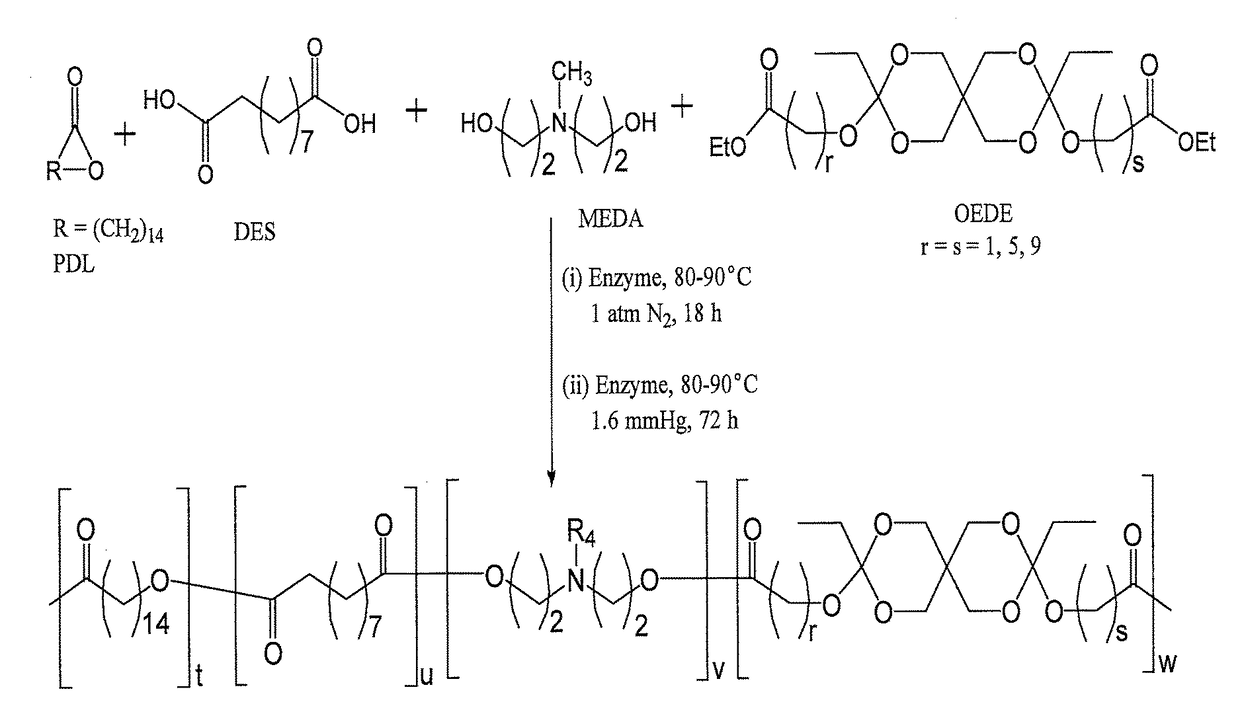
Figure 1 
Figure 2 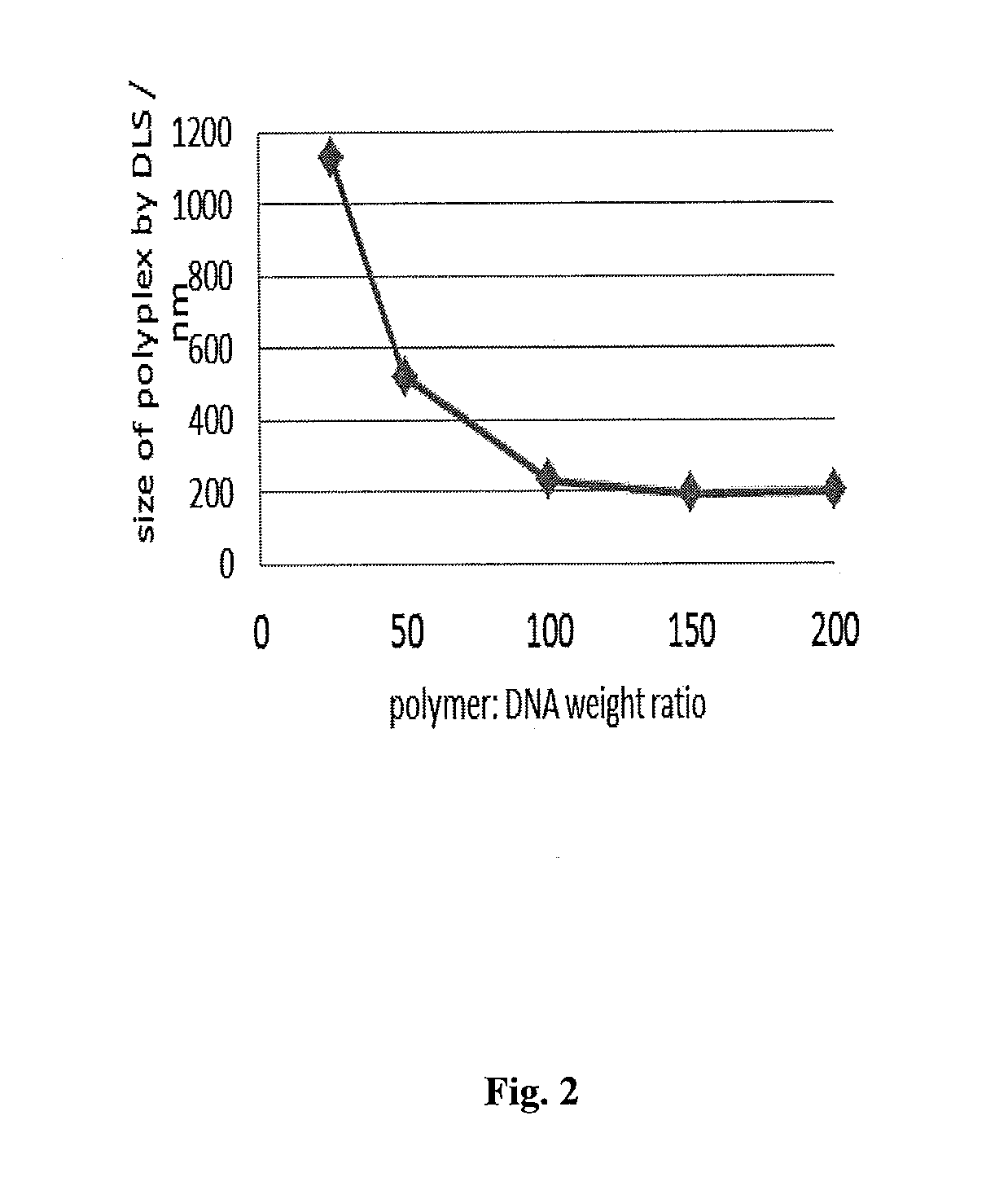
Figure 3
Abstract
Description
CROSS-REFERENCE TO RELATED APPLICATION
[0001] This application claims benefit of and priority to U.S. Utility application Ser. No. 14 / 547,051 filed Nov. 18, 2014, and where permissible is hereby incorporated by reference in its entirety.STATEMENT REGARDING FEDERALLY SPONSORED RESEARCH OR DEVELOPMENT
[0002] This invention was made with government support under CA149128 and EB000487 awarded by National Institutes of Health. The government has certain rights in the invention.REFERENCE TO SEQUENCE LISTING
[0003] The Sequence Listing submitted as a text file named “YU_6587_CIP_PCT_ST25.txt,” created on Nov. 17, 2015, and having a size of 2,251 bytes is hereby incorporated by reference pursuant to 37 C.F.R. §1.52(e)(5).FIELD OF THE INVENTION
[0004] The field of the invention is generally related to polymer compositions and methods for improved systemic delivery of diagnostic, prophylactic and / or therapeutic agents in vitro and in vivo, targeted to low pH tissue environments or cellular compartmen...
Examples
example 1
and Characterization of Poly(Amine-Co-Ester-Co-Ortho Ester) Quaterpolymers
[0372]Materials and Methods
[0373]Materials
[0374]ω-pentadecalactone (PDL), diethyl sebacate (DES), N-methyldiethanolamine (MEDA), 3,9-Divinyl-2,4,8,10-tetraoxaspiro[5.5]undecane (DTSU), ethyl glycolate, ethyl 6-hydroxy hexanoate and methyl 10-hydroxydecanoate were purchased from Aldrich Chemical Co. and were used as received. Immobilized Candida antarctica lipase B (CALB) supported on acrylic resin (Novozym 435), potassium t-butoxide, chloroform, dichloromethane, hexane, pentane, diphenyl ether, tetrahydrofuran, ethylene diamine, triethylamine and chloroform-d were also obtained from Aldrich Chemical Co. The lipase catalyst was dried at 50° C. under 2.0 mmHg for 20 h prior to use.
[0375]HEK293 cells and U87MG cells were obtained from American Type Culture Collection (Manassas, Va.) and grown at 37° C. under 5% CO2 atmosphere in Dulbecco's modified Eagle's medium (DMEM) containing 10% fetal bovine serum and 1% pe...