
Selective tnfr1 antagonist peptide sn10 and application thereof in inflammatory bowel disease
a tnfr1 antagonist and inflammatory bowel disease technology, applied in the field of biomedical technology, to achieve the effect of increasing the half-life and stability of hydrostatin-sn10
Patent Information
- Authority / Receiving Office
- US · United States
- Patent Type
- Applications(United States)
- Current Assignee / Owner
- Publication Date
- 2020-09-03
- Estimated Expiration
- Not applicable · inactive patent
Smart Images
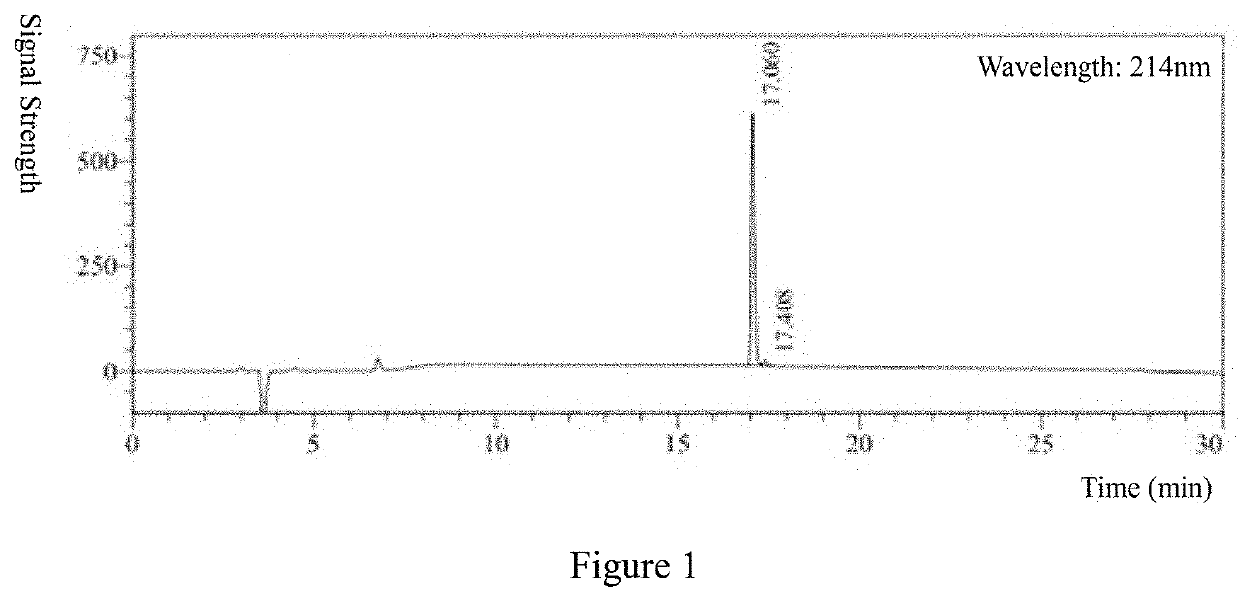
Figure 1 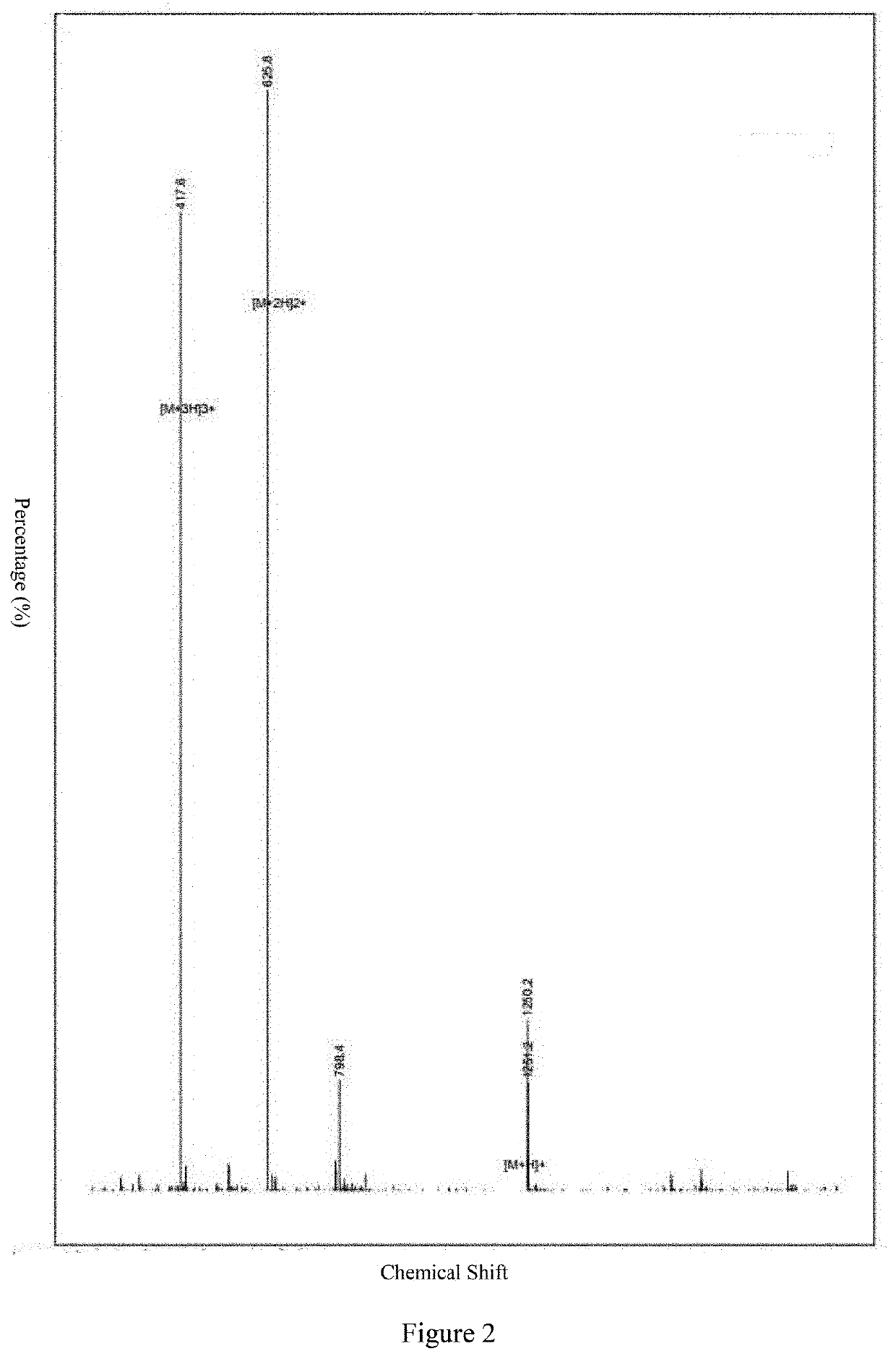
Figure 2 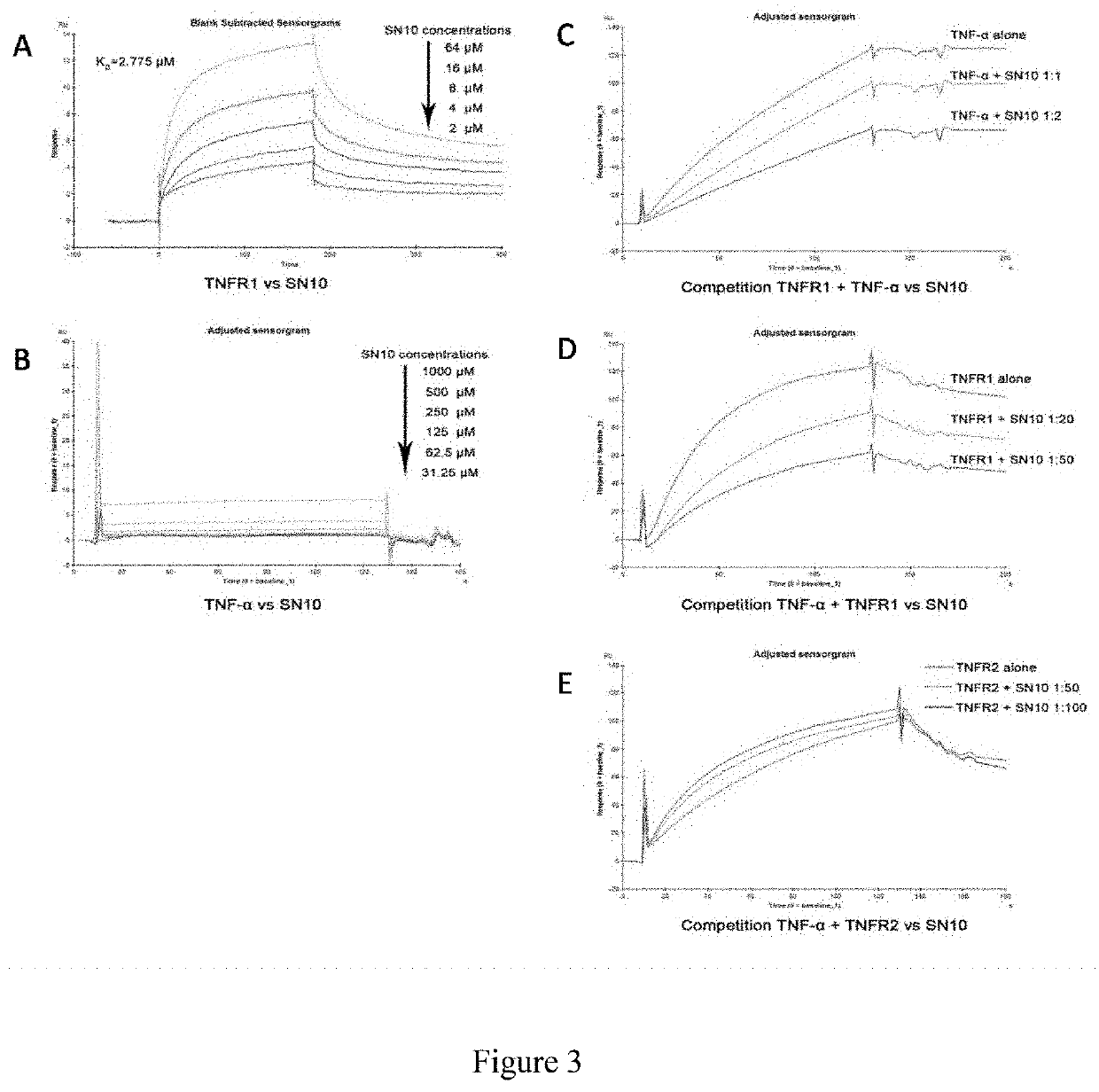
Figure 3
Abstract
Description
CROSS-REFERENCES TO RELATED PATENT APPLICATION
[0001] This application is a National Stage Application of PCT International Patent Application No. PCT / CN2018 / 077857 filed on Mar. 2, 2018, under 35 U.S.C. § 371, which claims priority to and the benefit of Chinese Patent Application No. 201710178897.0, filed on Mar. 23, 2017, and the disclosure of which is incorporated herein in its entirety by reference.STATEMENT REGARDING SEQUENCE LISTING
[0002] The sequence listing associated with this application is provided in text format in lieu of a paper copy and is hereby incorporated by reference into the specification. The name of the text file containing the sequence listing is CNUS-XTP19002-PCT_SL_20190920.txt. The text file is 666 byte; was created on Sep. 20, 2019 and is being submitted via EFS-Web with the filing of the specification.BACKGROUND OF THE INVENTION1. Field of the Invention
[0003] The invention concerning to the field of biomedical technology, in particular, is a selective TNFR1 ...
Examples
example 1
and Detection of a Selective TNFR1 Antagonist Peptide Hydrostatin-SN10
[0047]Hydrostatin-SN10 was synthesized by solid phase peptide synthesis technique, and its purity and molecular weight were analyzed by HPLC (FIG. 1) and MS (FIG. 2). The results showed that the purity was >97% and the molecular weight was 1250.29 g / mol.
example 2
nalysis of the Binding Capacity of Hydrostatin-SN10 to TNFR1
[0048]1. The running buffer flows through the channel set in the CM-5 sensor chip at a flow rate of 10 l / min until the baseline level is reached.
[0049]2. Activate the surface reactive groups of each channel of the chip with the buffer recommended by the instrument.
[0050]3. Dissolve TNFR1 and TNFR2 lyophilized powder with EP buffer, inject at a certain concentration, coat it on the surface of the chip, and then block the chip with 1 mol / L ethanolamine. The regeneration conditions are tested prior to the determination of the kinetic curve to select suitable regeneration conditions.
[0051]4. When the running buffer ran to baseline stability, a series of peptides were injected and the intermediate concentration of peptides was injected once and the response for each concentration was recorded.
[0052]As shown in FIG. 3, Hydrostatin-SN10 interacts directly with TNFR1, binding ability with TNFR1 at approximately 2.8 M; Hydrostatin-S...
example 3
sis the Ability of Hydrostatin-SN10 to Bind to TNFR1
[0053]1. Interaction of Hydrostatin-SN10 with TNF-α, TNFR1, TNFR2:
[0054]Prepare a series of gradient concentrations of Hydrostatin-SN10 in a 1:1 dilution ratio, mix an equal volume of fluorescently labeled TNF-α / TNFR1 / TNFR2 200 nM with Hydrostatin-SN10, incubate in the dark for 30 min, and aspirate the appropriate amount of sample on a capillary pipette. Detect, observe the time trajectory of relative fluorescence values and the dose-response curve of thermophoresis Thermophoresis, and calculate the affinity KD value by software NTAffinityAnalysis v2.0.2 to determine whether there is a specific binding tendency.
[0055]2. Competitive Inhibition of TNF-α Binding to TNFR1 / TNFR2 by Hydrostatin-SN10:
[0056]Prepare a series of gradient concentrations of TNF-α in a 1:1 dilution ratio, mix an equal volume of fluorescently labeled TNFR1 / TNFR2 200 nM with TNF-α, incubate in the dark for 30 min, and aspirate the appropriate amount of sample on ...