
Photocatalytic carboxylation of substrates with carbon oxide
A light-driven photocatalytic process addresses the environmental concerns of traditional carboxylic acid production by converting carbon dioxide into value-added carboxylic acids at lower temperatures and costs, utilizing renewable energy and lower-cost feedstocks.
Patent Information
- Application Number
- PCT/US2024/046073
- Authority / Receiving Office
- WO · WO
- Patent Type
- Applications
- Current Assignee / Owner
- Priority Date
- 2023-09-12
- Filing Date
- 2024-09-11
- Publication Date
- 2025-03-20
AI Technical Summary
Current methods for producing carboxylic acids rely on fossil fuel-derived processes, which emit carbon dioxide and contribute to global warming, ecological damage, and human health hazards, necessitating the development of more environmentally friendly production methods.
A light-driven photocatalytic process using carbon dioxide to produce carboxylic acids from various substrates, such as alkanes, alkenes, alkynes, ethers, esters, and amines, at lower temperatures and with lower-cost feedstocks compared to traditional methods.
This process effectively converts carbon dioxide into value-added carboxylic acids, reducing environmental impact by eliminating carbon dioxide emissions and lowering production costs through the use of renewable energy and lower temperature requirements.
Smart Images
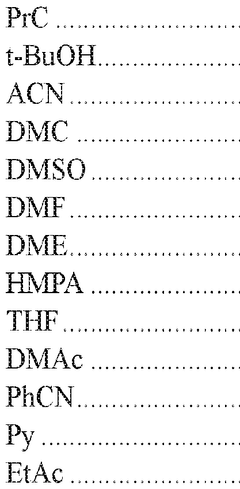
Figure IMGF000011_0001 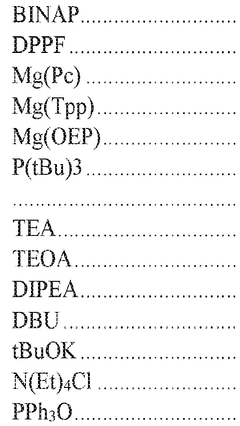
Figure IMGF000013_0001 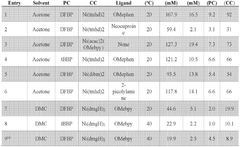
Figure IMGF000017_0001
Abstract
Description
[0001] PCT Application based on U.S. Provisional Application 63 / 537,912 PHOTOCATALYTIC CARBOXYLATION OF SUBSTRATES WITH CARBON DIOXIDE REFERENCE TO PRIOR APPLICATIONS This application claims priority to U.S. provisional application 63 / 537,912 filed September 12, 2023, incorporated herein by reference as if fully written out. STATEMENT REGARDING FEDERALLY SPONSORED RESEARCH OR DEVELOPMENT This invention was made with government support under Grant No.2151548 awarded by the National Science Foundation. The government has certain rights in the invention. FIELD OF THE INVENTION Carboxylic acids form an important class of compounds generally, with direct uses in, e.g., animal feed preservation (including hay, silage, and grains) and in human foods (e.g., in baked goods and cheeses). Carboxylic acid esters are used as solvents for various applications, especially as food and perfume additives where desirable odors and flavor characteristics are important. In addition, butyrate esters are used for example to produce cellulose acetate butyrate (CAB), which is used in a wide variety of tools, paints, and coatings, and is more resistant to degradation than cellulose acetate, and the potassium salt of isobutyric acid is effective as a solubility promoter in the caustic extraction of mercaptans from sour petroleum stocks. However, the production of carboxylic acids using fossil fuel-derived methods can release carbon dioxide emissions that contribute to global warming, ecological damage, and hazards to human health. As these potential impacts are being evaluated, there is a growing demand for more environmentally friendly methods of chemical production. Industrially, the production of aliphatic carboxylic acids with carbon chain length Cnis typically achieved via carbonylation of a Cn-1alcohol with carbon monoxide, via hydrocarboxylation of a Cn-1alkene (e.g., U.S. 4,619,790 A), or via oxidation of a Cnaldehyde (e.g., CA1081254A). All of these processes require petrochemical feedstocks, metal catalysts, and elevated temperatures. The present invention is a light-driven process using a photocatalyst and carbon dioxide, and is one that, in its preferred embodiments, preferably uses lower-cost feedstocks and / or preferably provides the ability to produce carboxylic acids at lower temperatures than existing processes PCT Application based on U.S. Provisional Application 63 / 537,912 and / or preferably provides the ability to convert carbon dioxide into value-added carboxylic acids. For clarity, the terms “invention,” “the invention,” “the present invention,” and the like as used herein refer only to the particular embodiment(s) and / or aspect(s) of the invention immediately mentioned. They are not in any way broadly limiting of the inventors’ overall contributions to the art as described herein, taken as a whole, nor are they generally or specifically limiting with regard to the several individual advances in the art described herein. SUMMARY OF THE INVENTION The inventors have discovered a light-driven process using a photocatalyst and carbon dioxide to produce carboxylic acids from various substrates including alkanes, alkenes, alkynes, ethers, esters and amines. In preferred embodiments the invention process uses lower cost feedstocks and provides the ability to produce carboxylic acids at lower temperatures than existing processes, and provides the ability to convert carbon dioxide into value-added carboxylic acids. DETAILED DESCRIPTION OF THE INVENTION The present invention relates to a process for the direct carboxylation of a substrate selected from any one or more of alkanes, alkenes, alkynes, ethers, esters and amines to produce a carboxylic acid. In a preferred embodiment the present invention process involves a liquid-, gas-, or mixed liquid- gas phase system in which one or more substrates are reacted with carbon dioxide to produce one or more carboxylic acids. Both liquid and gaseous substrates can be converted to carboxylic acids using the invention process. In one embodiment the substrate feedstock is introduced into a reactor containing a solvent and / or liquified directly, and a carbon dioxide feedstock is introduced into the same reactor. In certain embodiments the process utilizes at least one photocatalyst and at least one cocatalyst. In certain embodiments ligands and / or additives can be added to the system. A reaction mixture containing the desired reactants, catalysts, and other components, etc., is irradiated with a light source, which activates the photocatalyst and initiates the reaction to produce a carboxylic acid. PCT Application based on U.S. Provisional Application 63 / 537,912 In a preferred embodiment the process employs one or more substrates, carbon dioxide, a photocatalyst, a transition metal cocatalyst, a ligand, and a solvent in the presence of light to produce the desired carboxylic acid product(s). In a preferred embodiment the process reacts propane with carbon dioxide to produce isobutyric acid and butyric acid. In a preferred embodiment the process reacts ethane with carbon dioxide to produce propionic acid. In a preferred embodiment the process reacts dimethyl ether with carbon dioxide to produce methoxyacetic acid. In a preferred embodiment the process reacts diethyl ether with carbon dioxide to produce 2- ethoxypropanoic acid. In a preferred embodiment the process reacts ethyl acetate with carbon dioxide to produce 2- acetoxypropionic acid. Processes for the production of carboxylic acids, and descriptions of certain oxidations, catalysts, reaction conditions, etc., some aspects of which are useful herein, are found, for example, in U.S. 4,619,790, CA 1081254, JP 2002515472, U.S.9,085,827, JP 6404125, U.S.8,592,633, Ishida, et al., A Light / Ketone / Copper System for Carboxylation of Allylic C−H Bonds of Alkenes with CO2,Chemistry, A European Journal, V 22, Issue 19, May, 2016, and Ishida et al., Carboxylation of Benzylic and Aliphatic C–H Bonds with CO2Induced by Light / Ketone / Nickel, J. Am. Chem. Soc.2019, 141, 50, 19611–19615, all of which are individually incorporated herein by reference as if fully written out. As used herein the articles “a,” “an” and “the” preceding an element or component of the invention are intended to be nonrestrictive regarding the number of instances (i.e., occurrences) of the element or component. Therefore “a,” “an” and “the” should be understood to mean one or more, and the singular word form of the element or component also includes the plural unless the number is obviously meant to be singular. PCT Application based on U.S. Provisional Application 63 / 537,912 As used herein the terms “comprise(s),” “include(s),” “having,” “has,” “can,” “contain(s),” and variants thereof are intended to be open-ended transitional phrases, terms, or words that do not preclude the possibility of additional features, components, acts, steps, groups, structures, etc. As used herein, including within the claims, the term “comprising” is intended to include embodiments encompassed by the terms “consisting essentially of” and “consisting of.” Similarly, the term “consisting essentially of” is intended to include embodiments encompassed by the term “consisting of.” As used herein, when an amount, concentration, or other value or parameter is given as a range, or as a list of values, this is to be understood as including endpoints, as specifically disclosing all ranges formed from any pair of any upper and lower values, and as specifically disclosing all integers and fractions within the range, regardless of whether ranges, all integers, and fractions are separately disclosed. For example, both a range of 3-10 and a listing of values such as 3, 6, 7, 9, and 10 specifically disclose and include ranges such as 5-7 and 6-9 as well as individual values such as 3, 4.7, 8.3, and 10 Recited numerical limitations include an appropriate degree of precision based on the number of significant places used; for example, “up to 5.0” can be read as setting a lower absolute ceiling than “up to 5.” As used herein, when naming substances that can exist in multiple enantiomeric forms, reference to the name of the substance without an enantiomeric designation, such as (d) or (l), refers herein to the genus of substances including the (d) form, the (l) form and the racemic mixture (e.g., d,l), unless otherwise specified. Similarly, generic reference to compounds that can exist in two or more polymorphs is understood to refer to the genus consisting of each individual polymorph species and any combinations or mixtures thereof. Any published article, reference, brochure, written material, etc., including patents and published patent applications, identified herein are incorporated herein by reference as if written out. Without being bound or limited by any theory, the inventors postulate that the mechanism of the invention process involves the excitation of the photocatalyst to form a radical in the excited state which activates a C-H bond of a substrate, for example a C-H bond on an sp3 hybridized carbon atom, to form an alkyl radical. The alkyl radical then interacts with a cocatalyst to form a PCT Application based on U.S. Provisional Application 63 / 537,912 metal alkyl intermediate, and this intermediate reacts with carbon dioxide to form a metal carboxylate. Proton and electron transfer then liberate the carboxylic acid product, regenerating both catalyst and cocatalyst and restarting the cycle. In its several embodiments the present invention process provides at least two major advantages in comparison with other methods. Firstly, the invention process utilizes carbon dioxide as a direct chemical feedstock. As a direct chemical feedstock, carbon dioxide is low-cost and environmentally friendly in comparison with other feedstocks used for the production of carboxylic acids, and it is also a greenhouse gas that contributes to climate change. The invention process thus provides a direct method to functionalize carbon dioxide into value-added products. Secondly, the invention process uses light to drive the drive the reaction via catalysis and generally does not require the same heat as other processes to proceed. This enables process electrification for example, and the use of renewable (e.g., solar, wind, etc.) energy to not only eliminate carbon dioxide emissions from product synthesis but also to utilize carbon dioxide in the invention synthesis. Of course, the removal of a significant heating requirement can also substantially reduce costs for the industrial production of carboxylic acids. In a preferred embodiment the invention process is a liquid phase, gas phase, or mixed liquid / gas phase oxidation process. For example, one or more substrates, in the liquid and / or gaseous phase, is / are reacted with carbon dioxide to produce carboxylic acid(s). The method and manner in which the substrates(s) and carbon dioxide are brought into contact with one another in the presence of the catalyst, etc., is not limited. In one embodiment the substrate feedstock is introduced into a reactor containing a solvent. In another embodiment the substrate feedstock is fed to the reactor in liquified form. In another embodiment the substrate feedstock is liquified in the reactor in the absence or presence of solvent. In another embodiment a gas-phase reaction is used where both the substrate and the carbon dioxide are in the gas form when reacted. The alkane substrate used in the present invention process is not particularly limited. For example, the alkane can be linear or branched, symmetrical or unsymmetrical, cyclic or acyclic. Preferred carbon numbers include C1-C35. Mixtures of two or more can be used. In certain embodiments the alkane is a C1 – C26 alkane, including C2, C3, C4, C5 and C6 alkanes, with ethane and propane being of particular interest. In a preferred embodiment the alkanes PCT Application based on U.S. Provisional Application 63 / 537,912 are acyclic branched or unbranched hydrocarbons having the general formula CnH2n+2, where n is 1-26, preferably 2-10, more preferably 2-5. Ethane, propane, butane, isobutane, pentane, isopentane, and cyclohexane are particularly preferred. In another preferred embodiment the alkane is a C3 – C26, preferably a C5, C6, C7, or C8, monocyclic, or polycyclic, alkane. The source of the alkane(s) is not limited. For example, propane and ethane can be sourced from natural gas (propane and ethane are commonly called NGLs or natural gas liquids). Renewable sources, bio-based feedstock, etc., may be used. The alkene substrate used in the present invention process is not particularly limited. For example, the alkene can be linear or branched, symmetrical or unsymmetrical, cyclic or acyclic, aromatic or nonaromatic. Preferred carbon numbers include C2 -C35. Mixtures of two or more can be used. In certain embodiments the alkene is a C2 – C26 alkene, including C2, C3, C4, C5 and C6 alkenes, with ethene and propene being of particular interest. In a preferred embodiment the alkenes are acyclic branched or unbranched hydrocarbons having the general formula CnH2n, where n is 1-26, preferably 2-10, more preferably 2-5. Ethene, propene, butene, isobutene, pentene, and isopentene are particularly preferred. In another preferred embodiment the alkene is a C3 – C26, preferably a C5, C6, C7, or C8, monocyclic, or polycyclic, alkene. The source of the alkene(s) is not limited. Renewable sources, bio-based feedstock, etc., may be used. The alkyne substrate used in the present invention process is not particularly limited. For example, the alkyne can be linear or branched, symmetrical or unsymmetrical, cyclic or acyclic. Preferred carbon numbers include C2-C35. Mixtures of two or more can be used. In certain embodiments the alkyne is a C2 – C26 alkyne, including C2, C3, C4, C5 and C6 alkynes, with ethyne and propyne being of particular interest. In a preferred embodiment the alkynes are acyclic branched or unbranched hydrocarbons having the general formula CnH2n-2, where n is 1-26, preferably 2-10, more preferably 2-5. Ethyne, propyne, butyne, isobutyne, pentyne, and isopentyne are particularly preferred. In another preferred embodiment the alkyne is a C3 – C26, preferably a C5, C6, C7, or C8, monocyclic, or polycyclic, alkyne. The source of the alkyne(s) is not limited. Renewable sources, bio-based feedstock, etc., may be used. PCT Application based on U.S. Provisional Application 63 / 537,912 The ether substrate used in the present invention process is not particularly limited. For example, the ether can be linear or branched, symmetrical or unsymmetrical, cyclic or acyclic, aromatic or nonaromatic. Preferred carbon numbers include C2-C35. Mixtures of two or more can be used. In certain embodiments the ether is a C2 – C26 ether, including C2, C3, C4, C5 and C6 ethers, with dimethyl ether and diethyl ether being of particular interest. In a preferred embodiment the ethers are acyclic branched or unbranched. Dimethyl ether, diethyl ether, anisole, tetrahydrofuran, furan, and dioxane are particularly preferred. In another preferred embodiment the ether is a C3 – C26, preferably a C5, C6, C7, or C8, monocyclic, or polycyclic, ether. The source of the ether(s) is not limited. Renewable sources, bio-based feedstock, etc., may be used. The ester substrate used in the present invention process is not particularly limited. For example, the ester can be linear or branched, symmetrical or unsymmetrical, cyclic or acyclic, aromatic or nonaromatic. Preferred carbon numbers include C3-C35. Mixtures of two or more can be used. In certain embodiments the ester is a C3 – C26 ether, including C3, C4, C5 and C6 esters, with methyl acetate, ethyl acetate, ethyl propionate, and isopropyl butyrate being of particular interest. In a preferred embodiment the esters are acyclic branched or unbranched. Methyl acetate, ethyl acetate, ethyl propionate, isopropyl butyrate, ethyl benzoate, and ethyl lactate are particularly preferred. In another preferred embodiment the ester is a C3 – C26, preferably a C5, C6, C7, or C8, monocyclic, or polycyclic, ester. The source of the ester(s) is not limited. Renewable sources, bio-based feedstock, etc., may be used. The amine substrate used in the present invention process is not particularly limited. For example, the amine can be a primary, secondary or tertiary amine, linear or branched, symmetrical or unsymmetrical, cyclic or acyclic, aromatic or nonaromatic. Preferred carbon numbers include C3-C35. Mixtures of two or more can be used. In certain embodiments the amine is a C3 – C26 amine, including C3, C4, C5 and C6 amines, with methyl amine, ethyl amine, and isopropyl amine being of particular interest. In a preferred embodiment the amines are acyclic branched or unbranched. Ammonia, methyl amine and ethyl amine are particularly preferred. In another preferred embodiment the amine is a C3 – C26, preferably a C5, C6, C7, or C8, monocyclic, or polycyclic, amine. PCT Application based on U.S. Provisional Application 63 / 537,912 The source of the amine(s) is not limited. Renewable sources, bio-based feedstock, etc., may be used. Useful substrates herein also include compounds with two or more of the same or different functional groups that define an alkane, an alkene, an alkyne, an ether, an ester, and an amine. Examples include ethylmethacrylate, acrylamide, palmitic acid, etc. The source of such substrates is not limited. Renewable sources, bio-based feedstock, etc., may be used. In all instances one preferred group of substrates include at least one sp3 hybridized carbon. The carbon dioxide used in the present invention process is not particularly limited. It can be used in any physical form, including solid, liquid and gas forms, and mixtures thereof. The carbon dioxide used in the invention process may be added to / present in a reaction zone in mixture with one or more other gases. Pure carbon dioxide (meaning carbon dioxide not mixed with another gas) and mixtures of carbon dioxide with non-reactive gases such as nitrogen, the noble gasses (helium, neon, argon, krypton, xenon and radon), etc., are preferred. Where mixtures are used the mixture preferably contains at least 1% v / v carbon dioxide, more preferably 5, 10, 15, 20, 25, 30, 35, 40, 45 and 50% or more. The source of the carbon dioxide is not limited. For example, various carbon capture sources may be used such as point sources (e.g., flue stack of furnaces or from cement or other industrial plants). Also, direct air capture (DAC) from the atmosphere may be used. The photocatalyst used in the present invention process is a carbon-hydrogen (C-H) photoactivation catalyst (photocatalyst) and is not particularly limited as long as it photocatalyzes the direct carboxylation of at least one of an alkane, an alkene, an alkyne, an ether, an ester, and an amine. Mixtures of two or more carbon-hydrogen (C-H) photoactivation catalysts can be used. In a preferred embodiment the photocatalyst is a benzophenone, such as benzophenone itself, 4,4'-di-tert-butylbenzophenone, 4,4'-dimethoxybenzophenone, 4,4'- difluorobenzophenone, 4,4’-bis(dimethylamino)benzophenone, 4,4’-dihydroxybenzophenone, 4,4’-bisphenylbenzophenone, 2-methylbenzophenone, 3-methylbenzophenone, 4- methylbenzophenone, 2-trifluoromethylbenzophenone, 3-fluorobenzophenone, 4- trifluoromethylbenzophenone, 4,4’-diaminobenzophenone, 4,4’-dibromobenzophenone, 4,4’- dicyanobenzophenone, 4-nitrobenzophenone, 2,4-difluorobenzophenone, PCT Application based on U.S. Provisional Application 63 / 537,912 decafluorobenzophenone, benzophenone imine, 4-tert-butylbenzophenone, 2,2',4,4'- tetramethylbenzophenone, etc. The light used in conjunction with the photocatalyst preferably is light having a wavelength range of 250 – 550 nm, more preferably 300-500 nm, most preferably 340-450 nm such as 365 nm. Generally, light can be used in any manner, for example by varying exposure times, and at various doses, wavelengths, and irradiance levels, as determined by one of ordinary skill in the art in consideration of the particular catalyst, apparatus, etc., used, in view of this disclosure. In preferred embodiments the present invention process can be conducted while illuminating a reaction zone comprising the photocatalyst with light. Plural wavelengths may be used. The cocatalyst is an optional reagent in the present invention process but is preferably used. It is not particularly limited as long as it assists, in conjunction with the photocatalyst, in the photocatalysis of the direct carboxylation of an substrate to produce a carboxylic acid. Mixtures of two or more cocatalysts can be used. Transition metal cocatalysts are preferred. Examples of useful cocatalysts include nickel, cobalt, and palladium compounds / complexes such as nickel(II) nitrate hexahydrate, nickel(II) bis(acetylacetonate), nickel(II) bis(acetylacetonate)-4,4’- dimethoxy-2,2’-bipyridine, nickel(II) bis(2,2,6,6-tetramethyl-3,5-heptanedionate), nickel(II) bis(dimethylglyoximate), nickel(II) bis(dimethylglyoximatedifluoroborate), nickel(II) bis(diphenylglyoximate), nickel(II) salen, nickel(II) bis(di-2-pyridinylmethanone), tris(trans-1,2- bis(4-tert-butylphenyl)ethene)nickel(0), cobalt(II) bis(acetylacetonate), bis(dibenzylideneacetone)palladium(0), etc. Mixtures may be used. The ligand is an optional reagent in the present invention process, but is preferably used. It is not particularly limited. Mixtures may be used. In a preferred embodiment aromatic amines such as derivatives of pyridine, bipyridine and phenanthroline derivatives are used. Examples include 2- picolylamine, OMebpy (4,4'-dimethoxy-2,2'-bipyridine), OMephen (4,7-dimethoxy-1,10- phenanthroline) and neocuproine (2,9-dimethyl-1,10-phenanthroline). The additives are an optional reagent in the present invention process, but at least one is preferably used. They are not particularly limited. Mixtures may be used. Preferred additives include cesium salts such as cesium fluoride, cesium hydroxide, and cesium pivalate, and polycyclic aromatic hydrocarbons such as anthracene. PCT Application based on U.S. Provisional Application 63 / 537,912 Solvent is an optional component of the present invention process, but is preferably used. It is not particularly limited. Preferably, the solvent is nonreactive. Mixtures may be used. In a preferred embodiment one or more of propylene carbonate, tert-butanol, acetonitrile, dimethyl carbonate, dimethyl sulfoxide, dimethyl formamide, dimethoxyethane, hexamethylphosphoramide, tetrahydrofuran, dimethyl acetamide, benzonitrile, pyridine, ethyl acetate, acetone, ethylene glycol, and nitromethane are used. Acetone, methyl acetate, and dimethyl carbonate are preferred. Oxygenated solvents (ketones, carbonates, esters, alcohols, etc.) are preferred when using alkane substrates. A non-limiting listing of preferred photocatalysts, cocatalysts, ligands, additives, and solvents useful herein appears below with their CAS number. Each photocatalyst, cocatalyst, ligand, additive, and solvent described herein can be used in combination with any other photocatalyst, cocatalyst, ligand, additive, and solvent described herein. PrC ................................. Propylene carbonate ...................................................................108-32-7 Tert-butanol ..................................................................................75-65-0 Acetonitrile ...................................................................................75-05-8 Dimethyl carbonate ....................................................................616-38-6 Dimethyl sulfoxide .......................................................................67-68-5 Dimethyl formamide ....................................................................68-12-2 Dimethoxyethane........................................................................110-71-4 Hexamethylphosphoramide ........................................................680-31-9 Tetrahydrofuran ..........................................................................109-99-9 Dimethyl acetamide ....................................................................127-19-5 Benzonitrile ................................................................................100-47-0 Pyridine ......................................................................................110-86-1 Ethyl acetate ...............................................................................141-78-6 Acetone .........................................................................................67-64-1 Ethylene glycol ...........................................................................107-21-1 NO2Me ........................... Nitromethane ................................................................................75-52-5 TMAH ............................2,3,6,7-tetramethoxyanthracen-9(10H)-one .........................128080-46-6 TMAO ............................9,10-diethyl-2,3,6,7-tetramethoxyanthracene ..........................5629-55-0 BP ................................... Benzophenone ............................................................................119-61-9 tBBP ...............................4,4'-Di-tert-butylbenzophenone ..............................................15796-82-4 OMeBP ..........................4,4'-Dimethoxybenzophenone ......................................................90-96-0 DFBP..............................4,4'-Difluorobenzophenone ........................................................345-92-6 ANQ ............................... Anthraquinone ..............................................................................84-65-1 DQ .................................. Duroquinone ...............................................................................527-17-3 CA .................................. Chloranil .....................................................................................118-75-2 ........................................10-Methylacridin-9(10H)-one ....................................................719-54-0 PCT Application based on U.S. Provisional Application 63 / 537,912 ........................................3,3',4,4',5-pentamethoxybenzophenone .................................22699-97-4 ........................................ Benzophenone imine ................................................................1013-88-3 ........................................4-tert-Butylbenzophenone ......................................................22679-54-5 ........................................4,4'-Dimethylbenzophenone .......................................................611-97-2 ........................................2,2',4,4'-Tetramethylbenzophenone ..........................................3478-88-4 ........................................ Xanthone ......................................................................................90-47-1 ........................................ Di-p-tolylmethanol .....................................................................885-77-8 ........................................ (2-Me-benzoyl)benzoate ............................................................606-28-0 4,4'-(NMe2)2-BP .............4,4’-Bis(dimethylamino)benzophenone .......................................90-94-8 4,4'-(OH)2-BP ................4,4’-dihydroxybenzophenone .....................................................611-99-4 4,4'-Ph2-BP ....................4,4’-bisphenylbenzophenone ....................................................3478-90-8 ........................................ Thioxanthone ..............................................................................492-22-8 3,6-(tBu)2-acridone ........3,6-Di-tert-butylacridin-9(10H)-one ..................................1810004-91-1 2-Me-BP .........................2-Methylbenzophenone ..............................................................131-58-8 3-Me-BP .........................3-Methylbenzophenone ..............................................................643-65-2 4-Me-BP .........................4-Methylbenzophenone ..............................................................134-84-9 2-CF3-BP .......................2-Trifluoromethylbenzophenone ................................................727-99-1 3-F-BP ............................3-Fluorobenzophenone ...............................................................345-69-7 4-CF3-BP .......................4-Trifluoromethylbenzophenone ................................................728-86-9 kaleidophenone ..............1,3,5-Tribenzoylbenzene ........................................................25871-69-6 2-aza-BP .........................2-Benzoylpyridine ........................................................................91-02-1 3-aza-BP .........................3-Benzoylpyridine ....................................................................5424-19-1 ........................................ Anthrone .......................................................................................90-44-8 DPSO ............................. Diphenyl sulfoxide .....................................................................945-51-7 ........................................ Fluorenone ..................................................................................486-25-9 4,4'-(NH2)2-BP ...............4,4’-diaminobenzophenone ........................................................611-98-3 DPS ................................ Diphenyl sulfone ........................................................................127-63-9 ........................................ Camphorquinone ....................................................................10373-78-1 4-B(OH)2-BP.................. (4-Benzoylphenyl)boronic acid ............................................268218-94-6 4CzIPN ...........................1,2,3,5-Tetrakis(carbazol-9-yl)-4,6-dicyanobenzene .........1416881-52-1 4,4'-Br2-BP .....................4,4’-dibromobenzophenone ......................................................3988-03-2 4,4'-(CN)2-BP .................4,4’-dicyanobenzophenone .....................................................32446-66-5 4-NO2-BP .......................4-Nitrobenzophenone ...............................................................1144-74-7 2,4'-F2-BP .......................2,4-difluorobenzophenone ..........................................................342-25-6 decaFBP ......................... Decafluorobenzophenone ...........................................................853-39-4 4,4'-F2-PhCOPhCOPh ....1,3-bis(4-fluorobenzoyl)benzene .........................................108464-88-6 2,2,2-Ph3-acetophenone .2,2,2-triphenylacetophenone ......................................................466-37-5 Py-BP .............................2,2′-dipyridyl ketone ..............................................................19437-26-4 bpy..................................2,2’-bipyridine ............................................................................366-18-7 OMebpy .........................4,4'-Dimethoxy-2,2'-bipyridine ..............................................17217-57-1 CF3bpy ...........................4,4’-bis(trifluoromethyl)-2,2’-bipyridine .............................142946-79-0 OMephen........................4,7-dimethoxy-1,10-phenanthroline .......................................92149-07-0 PCT Application based on U.S. Provisional Application 63 / 537,912 tBubpy ............................4,4’-di-tert-butyl-2,2’-bipyridine ...........................................72914-19-3 tpy ..................................2,6-di(2-pyridyl)pyridine- α,α′,α″-Tripyridyl ...........................1148-79-4 mephen ........................... Neocuproine ...............................................................................484-11-7 Neocuproine ...................2,9-dimethyl-1,10-phenanthroline ..............................................484-11-7 ........................................2-picolylamine ..........................................................................3731-51-9 CataCXium A ...............................................................................................................321921-71-5 BINAP............................ (±)-2,2′-Bis(diphenylphosphino)-1,1′-binaphthalene .............98327-87-8 Bis(diphenylphosphino)ferrocene ...................................12150-46-8 Magnesium Phthalocyanine .....................................................1661-03-6 Mg(II) meso-tetraphenylporphine ..........................................14640-21-2 Magnesium octaethylporphyrin ..............................................20910-35-4 Tri-tert-butylphosphine ...........................................................13716-12-6 Glycine .........................................................................................56-40-6 Triethylamine .............................................................................121-44-8 Triethanolamine ..........................................................................102-71-6 Diisopropylethylamine .............................................................7087-68-5 Diazabicyclo[5.4.0]undec-7-ene ........................................6674-22-2 Potassium tert-butoxide ..............................................................865-47-4 Tetraethylammonium chloride .....................................................56-34-8 Triphenylphosphine oxide ..........................................................791-28-6 - ............. Nickel nitrate hexahydrate ......................................................13478-00-7 Ni(acac)2........................ Nickel acetylacetonate ..............................................................3264-82-2 Ni(acac)2OMebpy .......... Nickel bis(acetylacetone)-4,4’-dimethoxybipyridine ...........803687-13-0 Ni(dmgH)2...................... Nickel(II) bis(dimethylglyoximate) .......................................13478-93-8 Ni(dmgBF2)2.................. Nickel(II) bis(dimethylglyoximatedifluoroborate).................35200-43-2 Ni(dpgH)2....................... Nickel(II) bis(diphenylglyoximate) ........................................14286-61-4 Ni(salen) ......................... Nickel(II) salen .......................................................................14167-20-5 Ni(py-BP)2..................... Nickel(II) bis(di-2-pyridinylmethanone) ..................................5629-55-0 Ni(tmhd)2....................... Nickel(II) bis(2,2,6,6-tetramethyl-3,5-heptanedionate) .........14481-08-4 Ni(tBu-stb)3.................... Tris(trans-1,2-bis(4-tert-butylphenyl)ethene)nickel(0) ......2468315-70-8 Pd(dba)2.......................... Bis(dibenzylideneacetone)palladium(0) .................................32005-36-0 The present invention process can, in one aspect, be viewed as one using a catalyst composition that comprises at least one photocatalyst, optionally at least one co-catalyst, optionally at least one ligand, and optionally at least one additive. When a solvent is used the amount of substrate reactant present in the reaction zone is not limited, but is preferably present in the reaction zone an amount of at least 1 vol% substrate PCT Application based on U.S. Provisional Application 63 / 537,912 / solvent, more preferably 5-95% v / v substrate / solvent including 6, 8, 10, 15, 20, 25, 30, 35, 40, 45, 50, 55, 60, 65, 70, 75, 80, 85, and 90% v / v substrate / solvent. The amount of photocatalyst used in the invention process is not limited. Based on total volume of substrate and optional solvent, the catalyst can be used in amounts of, e.g., 0.0001 – 500 mM, including 0.005, 0.01, 0.05, 0.1, 0.5, 1, 3, 5, 10, 15, 20, 30, 40, 50, 60, 70, 80, 90, 100, 200, 300, and 400 mM for each catalyst used. The amount of optional co-catalyst used in the invention process is not limited. Based on total volume of substrate and optional solvent, the co-catalyst can be used in amounts of, e.g., 0.0001 – 500 mM, including 0.005, 0.01, 0.05, 0.1, 0.5, 1, 3, 5, 10, 15, 20, 30, 40, 50, 60, 70, 80, 90, 100, 200, 300, and 400 mM for each cocatalyst used. The amount of optional ligand used in the invention process is not limited. Based on total volume of substrate and optional solvent, the additive can be used in amounts of, e.g., 0.0001 – 500 mM, including 0.005, 0.01, 0.05, 0.1, 0.5, 1, 3, 5, 10, 15, 20, 30, 40, 50, 60, 70, 80, 90, 100, 200, 300, and 400 mM for each ligand used. The amount of optional additive used in the invention process is not limited. Based on total volume of substrate and optional solvent, the additive can be used in amounts of, e.g., 0.0001 – 500 mM, including 0.005, 0.01, 0.05, 0.1, 0.5, 1, 3, 5, 10, 15, 20, 30, 40, 50, 60, 70, 80, 90, 100, 200, 300, and 400 mM for each additive used. The catalyst composition used in the present invention process may be generally prepared according to common procedures in the art and may be prepared separately before introduction to the reaction zone, or the components of the catalyst composition can be added to the reaction zone individually or in any combination. The invention process can be accomplished in any manner that brings together the substrate, carbon dioxide, and catalyst composition in a reaction zone under conditions (time, temperature, pressure, etc.) sufficient to produce a carboxylated product. Examples include batch, fed batch, and continuous processes. In a preferred embodiment a fed batch process is used where, for example, the pressure of a carbon dioxide-containing gas is maintained relatively constant throughout reaction. PCT Application based on U.S. Provisional Application 63 / 537,912 In a preferred embodiment the invention process is not conducted in the presence of a sacrificial base. In a preferred embodiment the invention process is not conducted in the presence of a sacrificial acid. In preferred embodiments the present invention process is conducted while illuminating the reaction zone with light, preferably light having a wavelength range of 250 – 550 nm, for example 300-400 nm or 340-370 including 365 nm. More than one wavelength can be used. Generally, light can be used in any manner, for example by varying exposure times, and at various doses, wavelengths, and irradiance levels, as determined by one of ordinary skill in the art in consideration of the particular catalyst composition and apparatus used, in view of this disclosure. Several wavelengths of light can be used together and / or serially, if desired In certain embodiments the invention process can be conducted under a pressure of 1-200 bar (gauge) including 2, 3, 4, 5, 6, 7, 8, 10, 15, 20, 30, 40, 50, 60, 70, 80, and 90 bar, and a temperature of, e.g., from below room temperature (25oC) to above, such as -20, -10, 0, 10, 20, 30, 40, 50, 60, 70, 80, 90, 100, 140, 180, 220, 260, and 300oC. In certain embodiments a preferred temperature is 0-50oC. In certain embodiments the invention process can be conducted for a time of from 15 minutes to forty hours (batch and fed batch), with times of approximately 1, 2, 3, 4, and 5-25 hours, including 8, 16, and 24 hours, providing good results. Generally, the greater the amount of substrate present the longer the reaction takes. In a preferred embodiment the invention reaction is conducted under fed batch conditions, where carbon dioxide and reactant substrate, especially if gaseous, is continuously supplied and the desired pressure is maintained. For example, the substrate, optional solvent, and catalyst composition are placed in a vessel and the air inside the vessel is purged and replaced with carbon dioxide. The system is then pressurized to the desired pressure with gas comprising, e.g., ethane, propane, or dimethyl ether and the vessel is irradiated with, e.g., a 250-450 nm LED; 365nm LED while maintaining temperature. After a given reaction time (e.g., 16 hours), the light is turned off, and the reaction mixture is processed and analyzed, etc. In one embodiment herein light alkanes such as ethane and propane are used as substrate. PCT Application based on U.S. Provisional Application 63 / 537,912 In one embodiment herein no base (e.g., t-BuOk) is used. In one embodiment herein light alkanes such as ethane and propane are used as substrate, and no base (e.g., t-BuOk) is used. In one embodiment herein dimethyl ether is used as the substrate. The contacting step(s) of the invention process may be practiced in any manner and at any scale, including laboratory scale experiments through full scale commercial operations. The process may be operated in any way, including batch, fed batch, continuous, and semi-continuous mode. The contacting step(s) can take place in any of various ways. The order of addition of the reaction materials – substrate, catalyst composition components, carbon dioxide, optional solvent, etc., is not critical. For example, the materials can be added individually, or two or more materials may be combined or mixed before being combined or mixed with other materials. Conventional, liquid and gas phase oxidation reactors as known in the art may be used to practice the invention. Examples include vessels, which may have one or more mechanical agitators, and various bubble column reactors such as those described in U.S. Pat. No.7,692,036. It is also known to design, operate, and control such reactors and the oxidation reaction for the oxidation conditions employed including, e.g., the temperature, pressure, liquid and gas volumes, and corrosive nature of the liquid and gas phases where applicable. See, e.g., U.S. Pat. Nos. 7,692,036 and 6,137,001. In preferred embodiments the process achieves substrate conversions (i.e., carboxylation) of at least 5, 10, 15, 20, 25, 30, 40, 50, 60, 70, 80, 85, 90, 91, 92, 93, 94, 95, 96, 97 and 98%. In preferred embodiments the process provides a selectivity for carboxylic acid formation of at least 5, 10, 15, 20, 25, 30, 40, 50, 60, 70, 80, 85, 90, 91, 92, 93, 94, 95, 96, 97, 98 and 99%. Preferably, selectivity for all byproducts is less than 20, 15, 10, 9, 8, 7, 6, 5, 4, 3, 2 and 1%. In certain preferred embodiments the present invention process, using propane, provides isobutyric acid and butyric acid in ratios ranging from 4:1 to 28:1 with yields of isobutyric acid of 167.9 mM, and butyric acid of 16.5 mM. Using ethane, the product is propionic acid in a yield of 33.4 mM. PCT Application based on U.S. Provisional Application 63 / 537,912 EXAMPLES Numerous non-limiting Examples are summarized in Tables 1, 2, and 3: Table 1. Propane carboxylation Temp [IBA] [BA] TON TON Entry Solvent PC CC Ligand (oC) (mM) (mM) (PC) (CC) PC and CC introduced, respectively. General reaction conditions are as follows: the reaction flask contains 80-100 psia propane and 20-32 psia CO2. The contents of the reaction are as follows: 0.05-0.06 mmol PC, 0.005-0.006 mmol CC, and 0.005-0.01 mmol ligand, in 2-3 mL solvent. Wavelength used was 365 nm with 275 or 290 mW / LED power; irradiation time was 3 or 16 hours. PC = photocatalyst; CC = co-catalyst; IBA = isobutyric acid; BA = butyric acid; TON = turn-over number. (a) 0.01 mmol PC.
[0002] PCT Application based on U.S. Provisional Application 63 / 537,912 Table 2. Ethane carboxylation Volu E N ) 8 2 5 9 1 2 4 1 are as vacuum, CO2(10 or 20 psig) was first added to the reaction flask, followed by ethane to give a final pressure of 100 or 135 psig. Reactive components and loadings are shown in the table. PC = photocatalyst; CC = co-catalyst; PA = propionic acid; TON = turn-over number. Unless otherwise specified, reaction conditions are: (i) LED wavelength = 365 nm with 290 mW / LED power; (ii) irradiation time =16 hours; (iii) Solvent = DMC; (iv) Ligand = OMebpy; (v) Temperature = 20oC. Reaction notes: (a) No ligand; (b) Solvent = acetone; (c) Solvent = methyl acetate. PCT Application based on U.S. Provisional Application 63 / 537,912 Table 3. Carboxylation of ether and ester substrates. Temp [Product] TON TON Entry Substrate Solvent PC CC Ligand (oC) (mM) (PC) (CC) 1DimethylAcetone DFBP Ni(acac)2 Neocuproine 50 80.7 4.0 10.1 carboxylic acid, phenoxyacetic acid, 2-phenoxypropionic acid, and 2-acetoxypropionic acid PCT Application based on U.S. Provisional Application 63 / 537,912 respectively; these are labeled as “Product” in the table. TON of PC and CC were calculated by dividing the mol of products formed over mol of PC and CC introduced, respectively. General reaction conditions for diethyl ether, THF, anisole, and ethyl phenyl ether are as follows: after sparging 5x with CO2to flush out air, CO2(20 or 100 psig) was added to the reaction flask. The contents of the reaction are as follows: 0.05 mmol PC, 0.005 mmol CC, and 0.005 mmol ligand in 2.5 mL solvent. For ethyl phenyl ether and ethyl acetate, the product was observed qualitatively by GC / MS and confirmed using authentic sample, but was not quantified. The contents of the reaction are as follows: 0.04 mmol PC, 0.002 mmol CC, and 0.002 mmol ligand in 2 mL solvent (ethyl phenyl ether) or 1 mL solvent (ethyl acetate), and the reaction setup is as described above. General reaction conditions for dimethyl ether are as follows: after sparging 5x with CO2to flush out air, dimethyl ether (52 psig) was added to the reaction flask, followed by CO2to give a final pressure of 100 psig, except for Entry 1, which contains 0.016 mmol CC and 0.016 mmol ligand. Wavelength used for all reactions was 365 nm with 300 mW / LED power; irradiation time was 16 hours. PC = photocatalyst; CC = co-catalyst; TON = turn-over number; GC / MS = gas chromatography / mass spectrometry. General procedure for propane and ethane substrates: In a further exemplary embodiment, to an Ace Glass pressure tube (part # 8648-42), 13.09 mg (0.06 mmol) 4,4’-difluorobenzophenone, 2.55 mg (0.006 mmol) Ni(tmhd)2, and 1.44 mg (0.006 mmol) OMephen are added. To the same flask a small stir vane is added, followed by 3 mL of acetone. After purging the gas lines through a gas manifold attached to a Schlenk line, the tube is attached to the gas manifold. The reaction tube is filled with 20 psig propane, then the pressure is released; this cycle is performed five times.99 psig of propane is introduced and allowed to dissolve into the solvent for ~2 minutes. CO2 is then added to give a total pressure of 132 psig, after which the system is sealed off from both gases maintaining the connection with the gas buffer to supply additional gas at the premixed ratios. The reaction is then irradiated with 275 mW / LED of 365 nm light using an Analytical Sales and Services HTE LED array (part # LUM296LS365) for 16 hours, while being actively cooled to 20oC. After 16 hours the reactions are removed from light and the pressure is released slowly from the tubes. The sample is then subjected to GC-MS analysis. PCT Application based on U.S. Provisional Application 63 / 537,912 General procedure for dimethyl ether, diethyl ether and ethyl acetate substrates: To an Ace Glass pressure tube (part # 8648-42), 8.73 mg (0.04 mmol) 4,4’- difluorobenzophenone, 4.11 mg (0.016 mmol) Ni(acac)2, and 3.33 mg (0.016 mmol) neocuproine are added. To the same flask a small stir vane is added, followed by 2 mL of acetone and a substrate. After purging the gas lines through a gas manifold attached to a Schlenk line, the tube is attached to the gas manifold. The reaction tube is filled with 20 psig CO2, then the pressure is released; this cycle is performed five times.100 psig of CO2 is introduced and allowed to dissolve into the solvent for ~2 minutes, after which the system is sealed off from both gases maintaining the connection with the gas buffer to supply additional gas. The reaction is then irradiated with 305 mW / LED of 365 nm light using an Analytical Sales and Services HTE LED array (part # LUM296LS365) for 3 hours, while being actively heated to 50oC. After 3 hours the reactions are removed from light and the pressure is released slowly from the tubes. The sample is then subjected to GC-MS analysis. While not limiting, preferred embodiments of the present invention, all of which are fully described and enabled herein, include the following: 1. A process, comprising reacting carbon dioxide with a substrate selected from any one or more of alkanes, alkenes, alkynes, ethers, esters and amines in the presence of a catalyst composition comprising at least one photocatalyst, optionally at least one co-catalyst, optionally at least one ligand, and optionally at least one additive, to produce a carboxylated substrate, wherein said reacting is conducted under light irradiation and optionally conducted in the presence of at least one solvent. 2. The process according to embodiment 1, wherein said reacting occurs under irradiation with light having a wavelength range of 250 – 450 nm, more preferably 300-400 nm, most preferably 340-370 nm such as 365 nm. 3. The process according to each individual preceding embodiment and any combination thereof, wherein said reacting occurs in the presence of said at least one co-catalyst. 4. The process according to each individual preceding embodiment and any combination thereof, wherein said reacting occurs in the presence of said at least one ligand. PCT Application based on U.S. Provisional Application 63 / 537,912 5. The process according to each individual preceding embodiment and any combination thereof, wherein said reacting occurs in the presence of said at least one additive. 6. The process according to each individual preceding embodiment and any combination thereof, wherein said reacting occurs in the presence of said at least one solvent. 7. The process according to each individual preceding embodiment and any combination thereof, wherein said process provides a selectivity for carboxylic acid formation of at least 5, 10, 15, 20, 25, 30, 40, 50, 60, 70, 80, 85, 90, 91, 92, 93, 94, 95, 96, 97, 98 and 99%, and preferably wherein selectivity for all byproducts is less than 20, 15, 10, 9, 8, 7, 6, 5, 4, 3, 2 and 1%. 8. The process according to each individual preceding embodiment and any combination thereof, wherein said at least one photocatalyst is selected from at least one of a benzophenone, such as benzophenone itself, 4,4'-di-tert-butylbenzophenone, 4,4'- dimethoxybenzophenone, 4,4'-difluorobenzophenone, 4,4’-bis(dimethylamino)benzophenone, 4,4’-dihydroxybenzophenone, 4,4’-bisphenylbenzophenone, 2-methylbenzophenone, 3- methylbenzophenone, 4-methylbenzophenone, 2-trifluoromethylbenzophenone, 3- fluorobenzophenone, 4-trifluoromethylbenzophenone, 4,4’-diaminobenzophenone, 4,4’- dibromobenzophenone, 4,4’-dicyanobenzophenone, 4-nitrobenzophenone, 2,4- difluorobenzophenone, decafluorobenzophenone, benzophenone imine, 4-tert- butylbenzophenone, and 2,2',4,4'-tetramethylbenzophenone. 9. The process according to each individual preceding embodiment and any combination thereof, wherein said at least one co-catalyst is present and is at least one of a transition metal cocatalyst, for example nickel, cobalt, and palladium compounds / complexes such as nickel(II) nitrate hexahydrate, nickel(II) bis(acetylacetonate), nickel(II) bis(acetylacetonate)-4,4’-dimethoxy-2,2’-bipyridine, nickel(II) bis(2,2,6,6-tetramethyl-3,5- heptanedionate), nickel(II) bis(dimethylglyoximate), nickel(II) bis(dimethylglyoximatedifluoroborate), nickel(II) bis(diphenylglyoximate), nickel(II) salen, nickel(II) bis(di-2-pyridinylmethanone), and tris(trans-1,2-bis(4-tert- butylphenyl)ethene)nickel(0), cobalt(II) bis(acetylacetonate), and bis(dibenzylideneacetone)palladium(0). PCT Application based on U.S. Provisional Application 63 / 537,912 10. The process according to each individual preceding embodiment and any combination thereof, wherein said at least one ligand is present and is selected from at least one of aromatic amine such as derivatives of pyridine, bipyridine and phenanthroline where examples include 2-picolylamine, OMebpy (4,4'-dimethoxy-2,2'-bipyridine), OMephen (4,7- dimethoxy-1,10-phenanthroline) and neocuproine (2,9-dimethyl-1,10-phenanthroline). 11. The process according to each individual preceding embodiment and any combination thereof, wherein said at least one additive is present and is selected from at least one of cesium salts such as cesium fluoride, cesium hydroxide, and cesium pivalate, and polycyclic aromatic hydrocarbons such as anthracene. 12. The process according to each individual preceding embodiment and any combination thereof, wherein said optional solvent is present and is at least one of propylene carbonate, tert-butanol, acetonitrile, dimethyl carbonate, dimethyl sulfoxide, dimethyl formamide, dimethoxyethane, hexamethylphosphoramide, tetrahydrofuran, dimethyl acetamide, benzonitrile, pyridine, ethyl acetate, acetone, ethylene glycol, and nitromethane, where acetone, methyl acetate, and dimethyl carbonate are preferred, and where oxygenated solvents (ketones, carbonates, esters, alcohols, etc.) are preferred when using alkane substrates. 13. The process according to each individual preceding embodiment except embodiment 12 and any combination thereof, wherein said process is conducted in the absence of said optional solvent. 14. The process according to each individual preceding embodiment and any combination thereof, wherein said carbon dioxide may be added to / present in the reaction in mixture with one or more other gases, can be used in any physical form, including solid, liquid and gas forms, and mixtures thereof, may be added to / present in a reaction zone in mixture with one or more other gases where pure carbon dioxide and mixtures of carbon dioxide with non- reactive gases such as nitrogen, the noble gasses (helium, neon, argon, krypton, xenon and radon), etc., are preferred, and wherein where mixtures are used the mixture preferably contains at least 1% v / v carbon dioxide, more preferably 5, 10, 15, 20, 25, 30, 35, 40, 45 and 50% or more. PCT Application based on U.S. Provisional Application 63 / 537,912 15. The process according to each individual preceding embodiment and any combination thereof, wherein the process achieves substrate conversions of at least 5, 10, 15, 20, 25, 30, 40, 50, 60, 70, 80, 85, 90, 91, 92, 93, 94, 95, 96, 97 and 98%. The above written description of the invention provides a manner and process of making and using it such that any person of ordinary skill in the relevant art is enabled to make and use the same, this enablement being provided in particular for the subject matter of the appended claims, which make up a part of the original description. This description is provided in the context of a particular application and its requirements. Various modifications to the embodiments will be readily apparent to those of ordinary skill in the relevant art, and the generic principles defined herein may be applied to other embodiments and applications without departing from the spirit and scope of the invention. Thus, this invention is not intended to be limited to the embodiments shown but is to be accorded the widest scope consistent with the principles and features disclosed herein. In this regard, certain embodiments within the invention may not show every benefit of the invention, considered broadly. Each embodiment, preferred embodiment, aspect, etc., described herein can be used in combination with every and any other embodiment described herein, preferred or otherwise. Some of the aforedescribed features can be used to advantage without a corresponding use of other features in certain embodiments while, in other embodiments, an advantage can be obtained by using all features together.
Claims
PCT Application based on U.S. Provisional Application 63 / 537,912 What is claimed is:
1. A process, comprising reacting carbon dioxide with a substrate selected from any one or more of alkanes, alkenes, alkynes, ethers, esters and amines in the presence of a catalyst composition comprising at least one photocatalyst, optionally at least one co-catalyst, optionally at least one ligand, and optionally at least one additive, to produce a carboxylated substrate, wherein said reacting is conducted under light irradiation and optionally conducted in the presence of at least one solvent.
2. The process according to claim 1, wherein said reacting occurs under irradiation with light having a wavelength range of 250 – 450 nm.
3. The process according to claim 1, wherein said reacting occurs in the presence of said at least one co-catalyst.
4. The process according to claim 1, wherein said reacting occurs in the presence of said at least one ligand.
5. The process according to claim 1, wherein said reacting occurs in the presence of said at least one additive.
6. The process according to claim 1, wherein said reacting occurs in the presence of said at least one solvent.
7. The process according to claim 1, wherein said process provides a selectivity for carboxylic acid formation of said substrate of at least 50%, and wherein selectivity for all byproducts is less than 20%.
8. The process according to claim 1, wherein said at least one photocatalyst is one or more benzophenones.
9. The process according to claim 1, wherein said at least one co-catalyst is present and is at least one selected from nickel(II) nitrate hexahydrate, nickel(II) bis(acetylacetonate), nickel(II) bis(acetylacetonate)-4,4’-dimethoxy-2,2’-bipyridine, nickel(II) bis(2,2,6,6-tetramethyl- 3,5-heptanedionate), nickel(II) bis(dimethylglyoximate), nickel(II) bis(dimethylglyoximatedifluoroborate), nickel(II) bis(diphenylglyoximate), nickel(II) salen,PCT Application based on U.S. Provisional Application 63 / 537,912 nickel(II) bis(di-2-pyridinylmethanone), tris(trans-1,2-bis(4-tert-butylphenyl)ethene)nickel(0), cobalt(II) bis(acetylacetonate), and bis(dibenzylideneacetone)palladium(0).
10. The process according to claim 1, wherein said at least one ligand is present and is selected from at least one of pyridine, bipyridine, phenanthroline, 2-picolylamine, OMebpy (4,4'- dimethoxy-2,2'-bipyridine), OMephen (4,7-dimethoxy-1,10-phenanthroline) and neocuproine (2,9-dimethyl-1,10-phenanthroline).
11. The process according to claim 1, wherein said at least one additive is present and is at least one selected from cesium fluoride, cesium hydroxide, cesium pivalate, and anthracene.
12. The process according to claim 1, wherein said optional solvent is present and is at least one selected from propylene carbonate, tert-butanol, acetonitrile, dimethyl sulfoxide, dimethyl formamide, dimethoxyethane, hexamethylphosphoramide, tetrahydrofuran, dimethyl acetamide, benzonitrile, pyridine, ethyl acetate, acetone, ethylene glycol, nitromethane, acetone, methyl acetate, and dimethyl carbonate.
13. The process according to claim 1, wherein said process is conducted in the absence of said optional solvent.
14. The process according to claim 1, wherein said carbon dioxide is pure carbon dioxide.
15. The process according to claim 1, wherein the substrate is an alkane, alkene, or alkyne.
16. The process according to claim 1, wherein the substrate is an ether, ester, or amine.
17. The process according to claim 1, wherein the substrate is ethane.
18. The process according to claim 1, wherein the substrate is propane.
19. The process according to claim 1, wherein the substrate is dimethyl ether.
20. The process according to claim 1, wherein the substrate is ethyl acetate.