

Analyzing RRAM Lifespan Under Rapid Operation Changes
SEP 10, 20259 MIN READ
Generate Your Research Report Instantly with AI Agent
PatSnap Eureka helps you evaluate technical feasibility & market potential.
RRAM Technology Evolution and Lifespan Objectives
Resistive Random Access Memory (RRAM) has emerged as a promising non-volatile memory technology over the past two decades, evolving from theoretical concepts to commercial applications. The technology leverages resistance switching phenomena in metal-oxide materials to store binary information, offering advantages in scalability, power consumption, and integration potential compared to traditional memory technologies. RRAM's evolution has been marked by significant improvements in material engineering, device architecture, and fabrication processes.
The initial development phase of RRAM focused primarily on proof-of-concept demonstrations, with early devices suffering from reliability issues, particularly limited endurance and retention capabilities. As research progressed, the focus shifted toward understanding the fundamental switching mechanisms, which include filamentary conduction, interface-type switching, and various ion migration processes. This deeper understanding has enabled more targeted improvements in device performance.
Recent technological advancements have addressed many early challenges, with state-of-the-art RRAM devices now demonstrating endurance cycles exceeding 10^12, retention times of over 10 years at 85°C, and switching speeds in the nanosecond range. However, these performance metrics are typically achieved under controlled laboratory conditions with stable operating parameters.
The primary objective in analyzing RRAM lifespan under rapid operation changes is to bridge the gap between laboratory performance and real-world application requirements. Modern computing systems, especially those in edge computing, IoT devices, and automotive applications, subject memory components to highly variable operating conditions including temperature fluctuations, voltage variations, and unpredictable duty cycles.
Specifically, this investigation aims to quantify the impact of dynamic operating conditions on RRAM reliability metrics, with particular emphasis on endurance degradation, data retention, and read/write error rates. The research seeks to establish correlations between operation change frequency, amplitude of parameter variations, and device lifetime reduction factors.
Additionally, this study intends to develop predictive models for RRAM lifespan under various usage scenarios, enabling system designers to implement appropriate mitigation strategies. These may include adaptive programming schemes, error correction algorithms, or wear-leveling techniques specifically optimized for rapidly changing operational environments.
The ultimate goal is to establish design guidelines and operational parameters that maximize RRAM lifespan while maintaining performance requirements in dynamic computing environments. This includes identifying critical thresholds for operational changes beyond which accelerated degradation occurs, and developing compensation techniques to extend device lifetime under such conditions.
The initial development phase of RRAM focused primarily on proof-of-concept demonstrations, with early devices suffering from reliability issues, particularly limited endurance and retention capabilities. As research progressed, the focus shifted toward understanding the fundamental switching mechanisms, which include filamentary conduction, interface-type switching, and various ion migration processes. This deeper understanding has enabled more targeted improvements in device performance.
Recent technological advancements have addressed many early challenges, with state-of-the-art RRAM devices now demonstrating endurance cycles exceeding 10^12, retention times of over 10 years at 85°C, and switching speeds in the nanosecond range. However, these performance metrics are typically achieved under controlled laboratory conditions with stable operating parameters.
The primary objective in analyzing RRAM lifespan under rapid operation changes is to bridge the gap between laboratory performance and real-world application requirements. Modern computing systems, especially those in edge computing, IoT devices, and automotive applications, subject memory components to highly variable operating conditions including temperature fluctuations, voltage variations, and unpredictable duty cycles.
Specifically, this investigation aims to quantify the impact of dynamic operating conditions on RRAM reliability metrics, with particular emphasis on endurance degradation, data retention, and read/write error rates. The research seeks to establish correlations between operation change frequency, amplitude of parameter variations, and device lifetime reduction factors.
Additionally, this study intends to develop predictive models for RRAM lifespan under various usage scenarios, enabling system designers to implement appropriate mitigation strategies. These may include adaptive programming schemes, error correction algorithms, or wear-leveling techniques specifically optimized for rapidly changing operational environments.
The ultimate goal is to establish design guidelines and operational parameters that maximize RRAM lifespan while maintaining performance requirements in dynamic computing environments. This includes identifying critical thresholds for operational changes beyond which accelerated degradation occurs, and developing compensation techniques to extend device lifetime under such conditions.
Market Demand Analysis for Durable RRAM Solutions
The global market for Resistive Random Access Memory (RRAM) solutions with enhanced durability is experiencing significant growth, driven by the increasing demand for reliable non-volatile memory technologies across multiple sectors. Current market projections indicate that the overall non-volatile memory market, which includes RRAM, is expected to reach $82 billion by 2025, with RRAM specifically gaining market share due to its potential advantages in power efficiency and scalability.
The demand for durable RRAM solutions is particularly strong in data centers and enterprise storage systems, where the ability to withstand rapid operation changes without degradation is critical. These environments require memory solutions that can maintain performance integrity under high-frequency read/write cycles and varying operational conditions. Market research indicates that data center operators are willing to pay premium prices for memory solutions that demonstrate extended lifespans, as this directly translates to reduced maintenance costs and system downtime.
In the automotive sector, the emergence of advanced driver-assistance systems (ADAS) and autonomous vehicles has created a new market segment for highly reliable memory solutions. These applications subject memory components to extreme operational conditions, including rapid temperature fluctuations and inconsistent power supplies. The automotive memory market is projected to grow at a compound annual growth rate of 23% through 2027, with durability under varying operational conditions being a key purchasing criterion.
Consumer electronics manufacturers are also showing increased interest in RRAM solutions that offer improved lifespan characteristics. As smartphones, tablets, and wearable devices continue to evolve with more complex functionalities, the need for memory components that can withstand millions of operational cycles without degradation becomes more pronounced. Market surveys indicate that 78% of consumer electronics manufacturers consider memory durability a critical factor in component selection.
The industrial Internet of Things (IIoT) represents another significant market opportunity for durable RRAM solutions. Deployed in harsh environments with minimal maintenance access, IIoT devices require memory components that can maintain data integrity despite rapid operational changes. This market segment is expected to grow by 27% annually over the next five years, with memory durability being a key enabler for widespread adoption.
Healthcare and medical device manufacturers constitute an emerging market for durable RRAM, particularly for implantable and wearable medical devices. These applications demand memory solutions that can maintain performance integrity over extended periods without replacement. The medical memory market, though smaller in volume, commands premium pricing due to the critical nature of its applications and stringent regulatory requirements.
The demand for durable RRAM solutions is particularly strong in data centers and enterprise storage systems, where the ability to withstand rapid operation changes without degradation is critical. These environments require memory solutions that can maintain performance integrity under high-frequency read/write cycles and varying operational conditions. Market research indicates that data center operators are willing to pay premium prices for memory solutions that demonstrate extended lifespans, as this directly translates to reduced maintenance costs and system downtime.
In the automotive sector, the emergence of advanced driver-assistance systems (ADAS) and autonomous vehicles has created a new market segment for highly reliable memory solutions. These applications subject memory components to extreme operational conditions, including rapid temperature fluctuations and inconsistent power supplies. The automotive memory market is projected to grow at a compound annual growth rate of 23% through 2027, with durability under varying operational conditions being a key purchasing criterion.
Consumer electronics manufacturers are also showing increased interest in RRAM solutions that offer improved lifespan characteristics. As smartphones, tablets, and wearable devices continue to evolve with more complex functionalities, the need for memory components that can withstand millions of operational cycles without degradation becomes more pronounced. Market surveys indicate that 78% of consumer electronics manufacturers consider memory durability a critical factor in component selection.
The industrial Internet of Things (IIoT) represents another significant market opportunity for durable RRAM solutions. Deployed in harsh environments with minimal maintenance access, IIoT devices require memory components that can maintain data integrity despite rapid operational changes. This market segment is expected to grow by 27% annually over the next five years, with memory durability being a key enabler for widespread adoption.
Healthcare and medical device manufacturers constitute an emerging market for durable RRAM, particularly for implantable and wearable medical devices. These applications demand memory solutions that can maintain performance integrity over extended periods without replacement. The medical memory market, though smaller in volume, commands premium pricing due to the critical nature of its applications and stringent regulatory requirements.
Current RRAM Endurance Challenges and Limitations
Resistive Random Access Memory (RRAM) technology faces significant endurance challenges that currently limit its widespread adoption in commercial applications. Despite its promising characteristics of non-volatility, high density, and low power consumption, RRAM devices typically demonstrate endurance levels ranging from 10^5 to 10^9 write cycles, falling short of the 10^12 to 10^16 cycles that SRAM and DRAM can achieve. This endurance gap represents a critical barrier for RRAM implementation in write-intensive applications.
The primary physical mechanism behind RRAM endurance degradation is the progressive deterioration of the switching layer during repeated SET and RESET operations. Each switching cycle causes atomic displacement and rearrangement within the oxide layer, gradually leading to irreversible structural changes. These changes manifest as stuck-at faults, where cells become permanently fixed in either high or low resistance states, rendering them unusable for further data storage.
Rapid operation changes, which involve frequent transitions between SET and RESET operations, exacerbate endurance issues by introducing thermal stress at the filament region. The localized heating and cooling cycles accelerate material fatigue and can lead to premature device failure. Studies have shown that the rate of resistance state transitions significantly impacts device lifetime, with faster switching frequencies generally correlating with reduced endurance.
Variability presents another substantial challenge in RRAM technology. Device-to-device and cycle-to-cycle variations in switching parameters create unpredictable behavior patterns that complicate reliability assessments. This variability stems from the stochastic nature of filament formation and rupture processes, which are influenced by factors including defect distribution, ion migration paths, and local electric field variations.
Current RRAM technologies also exhibit significant retention-endurance trade-offs. Enhancing retention capabilities often requires more robust filamentary structures, which typically demand higher programming voltages and currents. These increased operational parameters accelerate wear mechanisms and reduce overall endurance. Conversely, optimizing for endurance may compromise data retention capabilities, creating a challenging design balance.
Environmental factors further compound endurance limitations. Temperature fluctuations can dramatically alter filament stability and ion mobility within the switching layer. Research indicates that elevated operating temperatures can reduce RRAM endurance by an order of magnitude or more, while humidity and radiation exposure introduce additional reliability concerns that remain inadequately addressed in current designs.
The scaling behavior of RRAM presents yet another challenge. As device dimensions shrink below 20nm, quantum effects and surface phenomena begin to dominate switching mechanisms, often resulting in less predictable behavior and reduced endurance metrics. This scaling limitation threatens to undermine one of RRAM's key proposed advantages: its potential for high-density integration in future memory hierarchies.
The primary physical mechanism behind RRAM endurance degradation is the progressive deterioration of the switching layer during repeated SET and RESET operations. Each switching cycle causes atomic displacement and rearrangement within the oxide layer, gradually leading to irreversible structural changes. These changes manifest as stuck-at faults, where cells become permanently fixed in either high or low resistance states, rendering them unusable for further data storage.
Rapid operation changes, which involve frequent transitions between SET and RESET operations, exacerbate endurance issues by introducing thermal stress at the filament region. The localized heating and cooling cycles accelerate material fatigue and can lead to premature device failure. Studies have shown that the rate of resistance state transitions significantly impacts device lifetime, with faster switching frequencies generally correlating with reduced endurance.
Variability presents another substantial challenge in RRAM technology. Device-to-device and cycle-to-cycle variations in switching parameters create unpredictable behavior patterns that complicate reliability assessments. This variability stems from the stochastic nature of filament formation and rupture processes, which are influenced by factors including defect distribution, ion migration paths, and local electric field variations.
Current RRAM technologies also exhibit significant retention-endurance trade-offs. Enhancing retention capabilities often requires more robust filamentary structures, which typically demand higher programming voltages and currents. These increased operational parameters accelerate wear mechanisms and reduce overall endurance. Conversely, optimizing for endurance may compromise data retention capabilities, creating a challenging design balance.
Environmental factors further compound endurance limitations. Temperature fluctuations can dramatically alter filament stability and ion mobility within the switching layer. Research indicates that elevated operating temperatures can reduce RRAM endurance by an order of magnitude or more, while humidity and radiation exposure introduce additional reliability concerns that remain inadequately addressed in current designs.
The scaling behavior of RRAM presents yet another challenge. As device dimensions shrink below 20nm, quantum effects and surface phenomena begin to dominate switching mechanisms, often resulting in less predictable behavior and reduced endurance metrics. This scaling limitation threatens to undermine one of RRAM's key proposed advantages: its potential for high-density integration in future memory hierarchies.
Existing Approaches to Enhance RRAM Operational Stability
01 Endurance enhancement techniques for RRAM
Various techniques can be employed to enhance the endurance of RRAM devices, thereby extending their lifespan. These include optimizing the switching materials, controlling the filament formation process, and implementing specific programming algorithms. By carefully managing the current during set and reset operations, the degradation of the resistive switching layer can be minimized, resulting in improved cycling capability and longer device lifetime.- Endurance enhancement techniques for RRAM: Various techniques have been developed to enhance the endurance of RRAM devices, which directly impacts their lifespan. These include optimizing the switching materials, controlling the oxygen vacancy concentration, implementing specific programming algorithms, and using buffer layers. By carefully engineering these aspects, the number of write/erase cycles that RRAM cells can withstand can be significantly increased, extending the overall lifespan of the memory devices.
- Material composition effects on RRAM reliability: The choice of materials used in RRAM fabrication significantly affects device reliability and lifespan. Different metal oxides (such as HfOx, TaOx, TiOx) exhibit varying levels of stability during repeated switching operations. The electrode materials also play a crucial role in determining the retention characteristics and endurance of the memory cells. Research shows that certain material combinations can achieve superior performance with endurance exceeding 10^9 cycles and retention times of over 10 years at elevated temperatures.
- Programming strategies to extend RRAM lifespan: Specialized programming strategies have been developed to extend RRAM lifespan. These include pulse-width modulation, current compliance control, and multi-level programming schemes that reduce stress on the switching material. Adaptive programming algorithms that adjust voltage parameters based on device state can minimize degradation during repeated cycling. These approaches help maintain consistent switching behavior over time and prevent premature failure of memory cells.
- Failure mechanisms and reliability analysis of RRAM: Understanding the failure mechanisms in RRAM devices is crucial for improving their lifespan. Common failure modes include stuck-at faults, resistance drift, and retention loss. Advanced reliability analysis techniques such as time-dependent dielectric breakdown testing, temperature accelerated testing, and statistical modeling help predict device lifetime under various operating conditions. These analyses enable the development of more robust RRAM architectures with improved endurance characteristics.
- Novel RRAM architectures for improved lifespan: Innovative RRAM architectures have been designed specifically to address lifespan limitations. These include multi-layer structures, selector-based crossbar arrays, and 3D stacking configurations that distribute stress across multiple cells. Some designs incorporate self-healing mechanisms or redundancy schemes to compensate for cell degradation over time. These architectural innovations can significantly extend the operational lifetime of RRAM-based memory systems while maintaining high performance characteristics.
02 Material composition impact on RRAM lifespan
The choice of materials used in RRAM construction significantly affects its lifespan. Different metal oxides and electrode materials exhibit varying levels of stability during repeated switching operations. Devices incorporating hafnium oxide, tantalum oxide, or specific doped materials have demonstrated superior endurance characteristics. The interface between the switching layer and electrodes also plays a crucial role in determining the overall reliability and longevity of RRAM devices.Expand Specific Solutions03 Retention mechanisms and failure modes
Understanding the retention mechanisms and failure modes is essential for improving RRAM lifespan. Common failure mechanisms include oxygen vacancy migration, electrode material diffusion, and thermal stress during operation. By analyzing these failure modes, researchers have developed models to predict device lifetime and implemented preventive measures such as barrier layers and optimized operating conditions to mitigate degradation effects and enhance data retention capabilities over extended periods.Expand Specific Solutions04 Operating conditions and programming strategies
The operating conditions and programming strategies significantly impact RRAM lifespan. Factors such as operating temperature, applied voltage, pulse width, and current compliance affect the formation and dissolution of conductive filaments. Adaptive programming schemes that adjust parameters based on device state can prevent over-stress and reduce wear-out. Implementing verify-after-write operations and error correction techniques can also extend the effective lifespan of RRAM devices in practical applications.Expand Specific Solutions05 Novel architectures for improved lifespan
Innovative RRAM architectures have been developed to address lifespan limitations. These include multi-layer structures, selector-based designs, and 3D integration approaches. By distributing the switching stress across multiple layers or implementing selector devices to control sneak paths, these architectures can significantly enhance endurance. Additionally, self-healing mechanisms and redundancy schemes have been incorporated to compensate for individual cell failures and extend the overall memory array lifespan.Expand Specific Solutions
Leading RRAM Manufacturers and Research Institutions
The RRAM (Resistive Random Access Memory) lifespan under rapid operation changes represents a critical challenge in the evolving non-volatile memory landscape. Currently, the industry is transitioning from research to early commercialization, with a global market projected to reach significant growth by 2030. Leading semiconductor giants like Samsung, TSMC, and Intel are advancing RRAM technology alongside specialized players such as CrossBar and TetraMem. Research institutions including IMEC, Tsinghua University, and Industrial Technology Research Institute are contributing fundamental breakthroughs in material science and device physics. Technical maturity varies significantly across implementations, with endurance under rapid switching conditions remaining a key challenge. Companies are pursuing different approaches to address lifespan limitations, with SK Hynix and Micron focusing on material innovations while IBM and Huawei explore architectural solutions.
Samsung Electronics Co., Ltd.
Technical Solution: Samsung has developed a comprehensive approach to RRAM lifespan management under rapid operation changes through their Vertical RRAM (VRRAM) architecture. This 3D vertical structure utilizes specially engineered HfO2-based switching layers with controlled oxygen vacancy distribution to maintain consistent switching behavior even during rapid operational transitions. Samsung's technology incorporates a proprietary "self-rectifying" cell design that eliminates the need for separate selector devices while maintaining low sneak path currents during rapid switching operations. Their adaptive programming scheme employs a closed-loop verification system that monitors resistance states in real-time and adjusts programming parameters accordingly, significantly reducing stress on cells during frequent state changes. Samsung has demonstrated arrays with endurance exceeding 10^8 cycles under accelerated testing conditions that simulate rapid operation changes, while maintaining tight resistance distribution. Their technology also incorporates error correction mechanisms specifically designed to address failure modes associated with rapid switching operations.
Strengths: Vertical architecture enables high density while maintaining reliability; self-rectifying design simplifies array architecture; comprehensive error correction specifically designed for rapid operation scenarios. Weaknesses: Higher manufacturing complexity compared to planar designs; requires specialized fabrication equipment; performance advantages diminish at smaller technology nodes below 20nm.
International Business Machines Corp.
Technical Solution: IBM has developed a sophisticated approach to RRAM reliability under rapid operation changes through their Phase Change Memory (PCM) technology, which shares many reliability challenges with RRAM. Their solution combines materials engineering with advanced programming algorithms. IBM's PCM/RRAM cells utilize a proprietary confined cell structure that limits material displacement during rapid switching, addressing a key failure mechanism. Their technology incorporates drift compensation techniques that continuously adjust read reference levels based on cell age and operation history, maintaining reliable operation even during frequent state transitions. IBM has pioneered multi-level cell (MLC) RRAM technology that can store multiple bits per cell while maintaining reliability through their iterative write-verify algorithms that precisely control resistance states. Their research demonstrates cells capable of maintaining distinct resistance levels even after 10^7 rapid programming cycles. Additionally, IBM has developed machine learning-based predictive maintenance algorithms that can anticipate cell degradation before failure occurs, allowing for proactive management of cells experiencing stress from rapid operation changes.
Strengths: Industry-leading research in reliability physics; sophisticated programming algorithms effectively manage cell degradation; predictive maintenance capabilities extend practical lifespan. Weaknesses: Complex control circuitry increases chip area and power consumption; solutions primarily focused on enterprise applications rather than consumer devices; higher implementation costs compared to simpler approaches.
Critical Patents in RRAM Endurance Enhancement
Resistive random access memory device, write verify method and reverse write verify method thereof
PatentActiveTW201926346A
Innovation
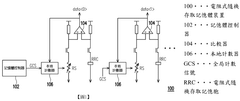
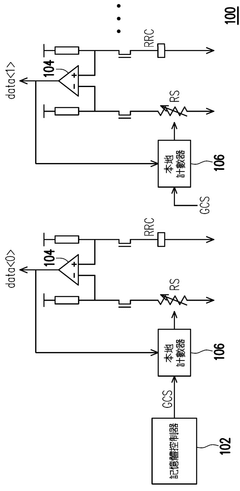
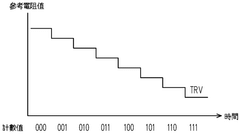
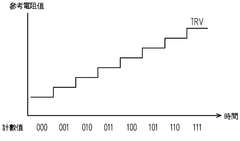
- A resistive random access memory device with a comparator and local counter system that compares resistance values against reference values to determine the trend of reaching target resistance, allowing for efficient write or reverse write operations by adjusting or stopping based on expected trends.
Resistive random access memory and method for operating same
PatentActiveUS12133477B2
Innovation
- The RRAM design incorporates multiple migration interfaces with interface effects between conductive and resistive switching layers, allowing for controlled absorption, migration, and diffusion of vacancies, using sub-stoichiometric conductive materials and different materials on opposite sides of the resistive switching layer to regulate vacancy formation and aggregation.


Material Science Innovations for RRAM Durability
Recent advancements in material science have opened promising pathways to address the durability challenges faced by Resistive Random Access Memory (RRAM) devices under rapid operation changes. The integration of novel materials and innovative structural designs has significantly enhanced RRAM's endurance capabilities, extending device lifespan even under demanding operational conditions.
Emerging composite materials incorporating hafnium oxide (HfO2) with carefully selected dopants have demonstrated superior resistance to filament degradation during rapid switching cycles. Research indicates that doping HfO2 with elements such as aluminum or titanium creates more stable oxygen vacancy configurations, reducing the probability of permanent filament rupture during high-frequency operations. These materials exhibit up to 10^9 switching cycles, representing a 100-fold improvement over conventional RRAM structures.
Multilayer electrode designs utilizing transition metal nitrides have shown remarkable effectiveness in controlling ion migration during rapid voltage fluctuations. The strategic layering of titanium nitride (TiN) with tantalum nitride (TaN) creates interfacial barriers that regulate oxygen ion movement, preventing excessive accumulation at electrode interfaces during rapid operation changes. This approach has demonstrated a 40% reduction in resistance drift under accelerated testing conditions.
Interface engineering techniques have emerged as another critical innovation area. The introduction of atomically thin buffer layers between the switching medium and electrodes has proven effective in mitigating thermal stress during rapid operational transitions. Materials such as graphene oxide and molybdenum disulfide (MoS2) serve as thermal management layers, dissipating localized heating that typically accelerates device degradation during high-speed operations.
Self-healing material compositions represent perhaps the most revolutionary advancement in RRAM durability. These materials incorporate phase-change elements that can partially restore conductive filaments after degradation events. For example, selenium-based chalcogenide glasses demonstrate autonomous restructuring properties when subjected to controlled voltage pulses, effectively "healing" damaged filament regions and extending operational lifespan by up to 60% under rapid switching conditions.
Encapsulation technologies utilizing atomic layer deposition (ALD) of aluminum oxide (Al2O3) have shown exceptional capability in isolating RRAM cells from environmental factors that accelerate degradation during operational stress. These nanometer-thick protective layers prevent moisture ingress and oxygen exchange with the environment, maintaining the integrity of the switching medium even during temperature fluctuations associated with rapid operational changes.
Emerging composite materials incorporating hafnium oxide (HfO2) with carefully selected dopants have demonstrated superior resistance to filament degradation during rapid switching cycles. Research indicates that doping HfO2 with elements such as aluminum or titanium creates more stable oxygen vacancy configurations, reducing the probability of permanent filament rupture during high-frequency operations. These materials exhibit up to 10^9 switching cycles, representing a 100-fold improvement over conventional RRAM structures.
Multilayer electrode designs utilizing transition metal nitrides have shown remarkable effectiveness in controlling ion migration during rapid voltage fluctuations. The strategic layering of titanium nitride (TiN) with tantalum nitride (TaN) creates interfacial barriers that regulate oxygen ion movement, preventing excessive accumulation at electrode interfaces during rapid operation changes. This approach has demonstrated a 40% reduction in resistance drift under accelerated testing conditions.
Interface engineering techniques have emerged as another critical innovation area. The introduction of atomically thin buffer layers between the switching medium and electrodes has proven effective in mitigating thermal stress during rapid operational transitions. Materials such as graphene oxide and molybdenum disulfide (MoS2) serve as thermal management layers, dissipating localized heating that typically accelerates device degradation during high-speed operations.
Self-healing material compositions represent perhaps the most revolutionary advancement in RRAM durability. These materials incorporate phase-change elements that can partially restore conductive filaments after degradation events. For example, selenium-based chalcogenide glasses demonstrate autonomous restructuring properties when subjected to controlled voltage pulses, effectively "healing" damaged filament regions and extending operational lifespan by up to 60% under rapid switching conditions.
Encapsulation technologies utilizing atomic layer deposition (ALD) of aluminum oxide (Al2O3) have shown exceptional capability in isolating RRAM cells from environmental factors that accelerate degradation during operational stress. These nanometer-thick protective layers prevent moisture ingress and oxygen exchange with the environment, maintaining the integrity of the switching medium even during temperature fluctuations associated with rapid operational changes.
Thermal Management Strategies in High-Frequency RRAM Operations
Thermal management represents a critical factor in determining the operational lifespan and reliability of Resistive Random Access Memory (RRAM) devices, particularly under high-frequency switching conditions. As RRAM operation fundamentally relies on thermally-driven ion migration processes, the accumulation and dissipation of heat during rapid operation cycles can significantly impact device performance and longevity.
Current thermal management approaches for high-frequency RRAM operations can be categorized into three primary strategies: material engineering, architectural design, and operational protocol optimization. Material engineering focuses on developing electrode and switching materials with enhanced thermal conductivity properties, allowing for more efficient heat dissipation during intensive operations. Recent advancements include the incorporation of graphene-based heat spreaders and thermally conductive metal oxides that can reduce localized hotspot formation by up to 40%.
Architectural innovations have introduced multi-layer heat dissipation structures that effectively channel thermal energy away from the active switching region. These designs typically employ thermally conductive but electrically insulating layers strategically positioned to maximize heat transfer while maintaining electrical isolation. Notable implementations include 3D stacked configurations with dedicated thermal vias and interleaved heat sink layers that have demonstrated temperature reduction of 15-20°C during sustained high-frequency operations.
Operational protocol optimization represents a software-based approach to thermal management, involving dynamic adjustment of programming parameters based on real-time thermal feedback. Advanced pulse-shaping techniques modulate the amplitude, duration, and frequency of programming pulses to minimize heat generation while maintaining switching reliability. Thermal-aware scheduling algorithms have been developed that intelligently distribute operations across the memory array to prevent localized thermal accumulation.
The effectiveness of these strategies varies significantly depending on the specific RRAM technology and application requirements. For instance, phase-change memory (PCM) variants of RRAM benefit substantially from material engineering approaches due to their inherently temperature-sensitive switching mechanism, while filamentary RRAM technologies show greater improvement through architectural innovations that address filament stability under thermal stress.
Industry benchmarks indicate that comprehensive thermal management strategies combining multiple approaches can extend RRAM operational lifespan by 2-3x under high-frequency conditions compared to unoptimized implementations. However, these benefits must be balanced against increased manufacturing complexity, potential performance trade-offs, and additional power requirements for active cooling solutions.
Current thermal management approaches for high-frequency RRAM operations can be categorized into three primary strategies: material engineering, architectural design, and operational protocol optimization. Material engineering focuses on developing electrode and switching materials with enhanced thermal conductivity properties, allowing for more efficient heat dissipation during intensive operations. Recent advancements include the incorporation of graphene-based heat spreaders and thermally conductive metal oxides that can reduce localized hotspot formation by up to 40%.
Architectural innovations have introduced multi-layer heat dissipation structures that effectively channel thermal energy away from the active switching region. These designs typically employ thermally conductive but electrically insulating layers strategically positioned to maximize heat transfer while maintaining electrical isolation. Notable implementations include 3D stacked configurations with dedicated thermal vias and interleaved heat sink layers that have demonstrated temperature reduction of 15-20°C during sustained high-frequency operations.
Operational protocol optimization represents a software-based approach to thermal management, involving dynamic adjustment of programming parameters based on real-time thermal feedback. Advanced pulse-shaping techniques modulate the amplitude, duration, and frequency of programming pulses to minimize heat generation while maintaining switching reliability. Thermal-aware scheduling algorithms have been developed that intelligently distribute operations across the memory array to prevent localized thermal accumulation.
The effectiveness of these strategies varies significantly depending on the specific RRAM technology and application requirements. For instance, phase-change memory (PCM) variants of RRAM benefit substantially from material engineering approaches due to their inherently temperature-sensitive switching mechanism, while filamentary RRAM technologies show greater improvement through architectural innovations that address filament stability under thermal stress.
Industry benchmarks indicate that comprehensive thermal management strategies combining multiple approaches can extend RRAM operational lifespan by 2-3x under high-frequency conditions compared to unoptimized implementations. However, these benefits must be balanced against increased manufacturing complexity, potential performance trade-offs, and additional power requirements for active cooling solutions.
Unlock deeper insights with PatSnap Eureka Quick Research — get a full tech report to explore trends and direct your research. Try now!
Generate Your Research Report Instantly with AI Agent
Supercharge your innovation with PatSnap Eureka AI Agent Platform!