

Comparing Half Wave Rectifier Types for Industrial Use
JUL 15, 20259 MIN READ
Generate Your Research Report Instantly with AI Agent
PatSnap Eureka helps you evaluate technical feasibility & market potential.
Half Wave Rectifier Background and Objectives
Half wave rectifiers have been a fundamental component in power electronics since the early days of electrical engineering. These devices play a crucial role in converting alternating current (AC) to pulsating direct current (DC), which is essential for numerous industrial applications. The evolution of half wave rectifier technology has been driven by the increasing demand for more efficient and reliable power conversion solutions across various sectors.
The primary objective of this technical research report is to compare different types of half wave rectifiers for industrial use, focusing on their performance, efficiency, and suitability for specific applications. By examining the historical development and current state of half wave rectifier technology, we aim to provide a comprehensive understanding of the available options and their respective advantages and limitations.
Half wave rectifiers have undergone significant improvements since their inception. Early designs relied on vacuum tube diodes, which were later replaced by solid-state semiconductor diodes. This transition marked a major milestone in rectifier technology, offering enhanced reliability, reduced power consumption, and improved overall performance. As industrial requirements became more demanding, the development of specialized rectifier types, such as silicon-controlled rectifiers (SCRs) and metal-oxide-semiconductor field-effect transistors (MOSFETs), further expanded the capabilities and applications of half wave rectification.
The industrial landscape has witnessed a growing need for precise power control and energy efficiency. This has led to the emergence of advanced half wave rectifier designs that incorporate features such as improved thermal management, higher voltage and current ratings, and enhanced switching characteristics. These advancements have enabled the use of half wave rectifiers in a wide range of industrial applications, including motor drives, welding equipment, battery chargers, and power supplies for various electronic systems.
As we delve into the comparison of different half wave rectifier types, it is essential to consider the evolving technological trends and future prospects. The integration of smart control systems, the adoption of wide-bandgap semiconductors, and the push towards miniaturization are some of the key factors shaping the future of half wave rectifier technology. By exploring these trends, we aim to identify potential areas for innovation and improvement in industrial half wave rectifier designs.
This technical research report will provide a thorough analysis of the current state of half wave rectifier technology, highlighting the strengths and weaknesses of different types in industrial applications. By examining the technical challenges and opportunities, we seek to offer valuable insights that can guide future research and development efforts in this critical area of power electronics.
The primary objective of this technical research report is to compare different types of half wave rectifiers for industrial use, focusing on their performance, efficiency, and suitability for specific applications. By examining the historical development and current state of half wave rectifier technology, we aim to provide a comprehensive understanding of the available options and their respective advantages and limitations.
Half wave rectifiers have undergone significant improvements since their inception. Early designs relied on vacuum tube diodes, which were later replaced by solid-state semiconductor diodes. This transition marked a major milestone in rectifier technology, offering enhanced reliability, reduced power consumption, and improved overall performance. As industrial requirements became more demanding, the development of specialized rectifier types, such as silicon-controlled rectifiers (SCRs) and metal-oxide-semiconductor field-effect transistors (MOSFETs), further expanded the capabilities and applications of half wave rectification.
The industrial landscape has witnessed a growing need for precise power control and energy efficiency. This has led to the emergence of advanced half wave rectifier designs that incorporate features such as improved thermal management, higher voltage and current ratings, and enhanced switching characteristics. These advancements have enabled the use of half wave rectifiers in a wide range of industrial applications, including motor drives, welding equipment, battery chargers, and power supplies for various electronic systems.
As we delve into the comparison of different half wave rectifier types, it is essential to consider the evolving technological trends and future prospects. The integration of smart control systems, the adoption of wide-bandgap semiconductors, and the push towards miniaturization are some of the key factors shaping the future of half wave rectifier technology. By exploring these trends, we aim to identify potential areas for innovation and improvement in industrial half wave rectifier designs.
This technical research report will provide a thorough analysis of the current state of half wave rectifier technology, highlighting the strengths and weaknesses of different types in industrial applications. By examining the technical challenges and opportunities, we seek to offer valuable insights that can guide future research and development efforts in this critical area of power electronics.
Industrial Demand Analysis
The industrial demand for half-wave rectifiers continues to grow, driven by the increasing need for power conversion and control in various sectors. Manufacturing, automotive, and renewable energy industries are at the forefront of this demand, seeking efficient and reliable rectification solutions for their power systems.
In the manufacturing sector, half-wave rectifiers play a crucial role in powering industrial machinery and equipment. The demand is particularly strong in process automation, where precise control of DC power is essential for motor drives, welding equipment, and electroplating processes. As factories embrace Industry 4.0 technologies, the need for robust power conversion solutions, including half-wave rectifiers, is expected to rise further.
The automotive industry represents another significant market for half-wave rectifiers. With the rapid growth of electric and hybrid vehicles, there is an increased demand for efficient power conversion systems. Half-wave rectifiers are utilized in various automotive applications, including battery charging systems, motor controllers, and power management units. As the automotive sector continues its shift towards electrification, the demand for advanced rectification technologies is projected to expand substantially.
Renewable energy systems, particularly solar and wind power installations, also contribute to the industrial demand for half-wave rectifiers. These devices are essential components in power inverters and grid-tie systems, converting the generated AC power to DC for storage or further processing. The global push for clean energy solutions is driving the growth of solar and wind power installations, consequently boosting the demand for rectification technologies.
The telecommunications industry is another key driver of half-wave rectifier demand. As 5G networks continue to expand, there is a growing need for efficient power conversion solutions in base stations and network infrastructure. Half-wave rectifiers play a vital role in these systems, ensuring stable power supply for critical communication equipment.
Industrial IoT (Internet of Things) applications are emerging as a new frontier for half-wave rectifier usage. Smart sensors, actuators, and control systems often require DC power, creating opportunities for rectification technologies in industrial environments. As IoT adoption accelerates across various sectors, the demand for compact and efficient power conversion solutions, including half-wave rectifiers, is expected to increase.
The global trend towards energy efficiency and power quality improvement is also influencing the industrial demand for half-wave rectifiers. Companies are increasingly focusing on reducing power losses and improving overall system efficiency, driving the need for advanced rectification solutions that can deliver higher performance and lower energy consumption.
In the manufacturing sector, half-wave rectifiers play a crucial role in powering industrial machinery and equipment. The demand is particularly strong in process automation, where precise control of DC power is essential for motor drives, welding equipment, and electroplating processes. As factories embrace Industry 4.0 technologies, the need for robust power conversion solutions, including half-wave rectifiers, is expected to rise further.
The automotive industry represents another significant market for half-wave rectifiers. With the rapid growth of electric and hybrid vehicles, there is an increased demand for efficient power conversion systems. Half-wave rectifiers are utilized in various automotive applications, including battery charging systems, motor controllers, and power management units. As the automotive sector continues its shift towards electrification, the demand for advanced rectification technologies is projected to expand substantially.
Renewable energy systems, particularly solar and wind power installations, also contribute to the industrial demand for half-wave rectifiers. These devices are essential components in power inverters and grid-tie systems, converting the generated AC power to DC for storage or further processing. The global push for clean energy solutions is driving the growth of solar and wind power installations, consequently boosting the demand for rectification technologies.
The telecommunications industry is another key driver of half-wave rectifier demand. As 5G networks continue to expand, there is a growing need for efficient power conversion solutions in base stations and network infrastructure. Half-wave rectifiers play a vital role in these systems, ensuring stable power supply for critical communication equipment.
Industrial IoT (Internet of Things) applications are emerging as a new frontier for half-wave rectifier usage. Smart sensors, actuators, and control systems often require DC power, creating opportunities for rectification technologies in industrial environments. As IoT adoption accelerates across various sectors, the demand for compact and efficient power conversion solutions, including half-wave rectifiers, is expected to increase.
The global trend towards energy efficiency and power quality improvement is also influencing the industrial demand for half-wave rectifiers. Companies are increasingly focusing on reducing power losses and improving overall system efficiency, driving the need for advanced rectification solutions that can deliver higher performance and lower energy consumption.
Current Challenges in Rectification
Despite the widespread use of rectifiers in industrial applications, several challenges persist in the field of rectification, particularly concerning half-wave rectifiers. One of the primary issues is the inherent inefficiency of half-wave rectification. This process only utilizes one half of the AC cycle, resulting in significant power loss and reduced overall efficiency. This inefficiency becomes particularly problematic in high-power industrial applications where energy conservation is crucial.
Another challenge is the presence of harmonic distortion in the output waveform. Half-wave rectifiers produce a pulsating DC output with a significant AC component, leading to a high ripple factor. This distortion can cause electromagnetic interference (EMI) and affect the performance of sensitive electronic equipment in industrial settings. Addressing this issue often requires additional filtering components, which can increase system complexity and cost.
The issue of voltage regulation also presents a significant challenge in half-wave rectification. The output voltage of a half-wave rectifier can vary considerably with changes in load or input voltage, making it difficult to maintain a stable DC supply. This voltage instability can be particularly problematic in industrial processes that require precise voltage control for optimal operation.
Heat dissipation is another critical concern in industrial rectification applications. The inefficiency of half-wave rectifiers leads to increased heat generation, which can affect the longevity and reliability of the rectifier components. This issue is exacerbated in high-power industrial environments where thermal management is already a significant challenge.
Furthermore, the selection of appropriate semiconductor devices for half-wave rectifiers in industrial applications poses its own set of challenges. The choice between different types of diodes, such as silicon diodes, Schottky diodes, or fast recovery diodes, must be made based on factors like forward voltage drop, reverse recovery time, and power handling capacity. Each type has its own trade-offs, and selecting the optimal device for a specific industrial application can be complex.
Lastly, the issue of power factor correction (PFC) is becoming increasingly important in industrial rectification. Half-wave rectifiers typically have a poor power factor, which can lead to increased energy costs and potential non-compliance with power quality standards. Implementing effective PFC solutions for half-wave rectifiers, especially in high-power industrial applications, remains a significant technical challenge.
Another challenge is the presence of harmonic distortion in the output waveform. Half-wave rectifiers produce a pulsating DC output with a significant AC component, leading to a high ripple factor. This distortion can cause electromagnetic interference (EMI) and affect the performance of sensitive electronic equipment in industrial settings. Addressing this issue often requires additional filtering components, which can increase system complexity and cost.
The issue of voltage regulation also presents a significant challenge in half-wave rectification. The output voltage of a half-wave rectifier can vary considerably with changes in load or input voltage, making it difficult to maintain a stable DC supply. This voltage instability can be particularly problematic in industrial processes that require precise voltage control for optimal operation.
Heat dissipation is another critical concern in industrial rectification applications. The inefficiency of half-wave rectifiers leads to increased heat generation, which can affect the longevity and reliability of the rectifier components. This issue is exacerbated in high-power industrial environments where thermal management is already a significant challenge.
Furthermore, the selection of appropriate semiconductor devices for half-wave rectifiers in industrial applications poses its own set of challenges. The choice between different types of diodes, such as silicon diodes, Schottky diodes, or fast recovery diodes, must be made based on factors like forward voltage drop, reverse recovery time, and power handling capacity. Each type has its own trade-offs, and selecting the optimal device for a specific industrial application can be complex.
Lastly, the issue of power factor correction (PFC) is becoming increasingly important in industrial rectification. Half-wave rectifiers typically have a poor power factor, which can lead to increased energy costs and potential non-compliance with power quality standards. Implementing effective PFC solutions for half-wave rectifiers, especially in high-power industrial applications, remains a significant technical challenge.
Existing Half Wave Rectifier Solutions
01 Circuit design and components
Half wave rectifiers typically consist of a diode and a transformer. The diode allows current to flow in only one direction, effectively converting AC to pulsating DC. The transformer is used to step up or step down the input voltage as needed. Various circuit configurations and component selections can be employed to optimize performance for specific applications.- Circuit design and components: Half-wave rectifiers typically consist of a diode and a transformer. The diode allows current to flow in only one direction, effectively converting AC to pulsating DC. The transformer is used to step up or step down the voltage as needed. Various circuit configurations and component selections can be employed to optimize performance and efficiency.
- Voltage regulation and smoothing: To improve the output of half-wave rectifiers, voltage regulation and smoothing techniques are often employed. This can include the use of capacitors to reduce ripple, voltage regulators to maintain a steady output, and feedback mechanisms to adjust for load variations. These enhancements help to produce a more stable and usable DC output.
- Applications in power supplies: Half-wave rectifiers are commonly used in various power supply applications. They can be found in low-power devices, battery chargers, and some specialized industrial equipment. While not as efficient as full-wave rectifiers, they offer simplicity and cost-effectiveness in certain scenarios where power requirements are less demanding.
- Efficiency improvements: Researchers and engineers continually work on improving the efficiency of half-wave rectifiers. This includes developing new semiconductor materials for diodes, optimizing circuit layouts, and implementing advanced control strategies. These improvements aim to reduce power losses, increase reliability, and extend the range of applications for half-wave rectification.
- Integration with other circuits: Half-wave rectifiers are often integrated with other circuit elements to create more complex power management systems. This can include combining them with inverters, voltage multipliers, or other power conditioning circuits. Such integration allows for more versatile and efficient power conversion solutions in various electronic devices and systems.
02 Efficiency improvements
Techniques to improve the efficiency of half wave rectifiers include using high-speed switching diodes, implementing snubber circuits to reduce switching losses, and optimizing the transformer design. Advanced control methods and feedback systems can also be employed to enhance overall performance and reduce power losses.Expand Specific Solutions03 Applications in power supplies
Half wave rectifiers are commonly used in various power supply applications, including low-power electronic devices, battery chargers, and some industrial equipment. They can be integrated into more complex power supply designs, such as voltage regulators and DC-DC converters, to provide stable and controlled output voltages.Expand Specific Solutions04 Protection and safety features
To enhance reliability and safety, half wave rectifier circuits often incorporate protection features such as overvoltage protection, overcurrent protection, and thermal shutdown mechanisms. These features help prevent damage to the rectifier and connected equipment in case of fault conditions or abnormal operating scenarios.Expand Specific Solutions05 Integration with other circuit elements
Half wave rectifiers can be integrated with other circuit elements to create more complex and functional systems. This includes combining them with filters to reduce ripple, incorporating them into bridge rectifier configurations for full-wave rectification, or using them as part of more advanced power conversion topologies such as flyback converters or forward converters.Expand Specific Solutions
Key Players in Rectifier Industry
The competition landscape for half wave rectifier types in industrial applications is characterized by a mature market with established players and ongoing technological advancements. The market size is substantial, driven by the widespread use of rectifiers in power supplies and electrical systems across various industries. Companies like Huawei Technologies, Sanken Electric, and Panasonic Holdings are at the forefront, leveraging their extensive R&D capabilities to develop more efficient and reliable rectifier solutions. The technology's maturity is evident, with firms such as HOYA Corp. and Semiconductor Energy Laboratory focusing on incremental improvements in performance and energy efficiency. However, emerging players like Suzhou Convert Semiconductor are introducing innovative materials and designs, potentially disrupting the market with next-generation rectifier technologies.
Sanken Electric Co., Ltd.
Technical Solution: Sanken Electric specializes in power semiconductor devices and has developed innovative half-wave rectifier solutions for industrial applications. Their approach focuses on high-efficiency, high-voltage rectifier diodes with fast recovery times[2]. Sanken's rectifiers utilize advanced silicon carbide (SiC) technology, which allows for higher operating temperatures and lower switching losses compared to traditional silicon-based devices[4]. The company has also implemented unique package designs that improve thermal performance and reduce parasitic inductance, leading to better overall system efficiency. Sanken's half-wave rectifiers are particularly well-suited for high-frequency applications in industrial power supplies and motor drives, where they can significantly reduce energy losses and improve power density[6].
Strengths: High efficiency, superior thermal performance, suitable for high-frequency applications. Weaknesses: Potentially higher cost due to SiC technology, may require redesign of existing systems to fully utilize benefits.
Rockwell Automation Technologies, Inc.
Technical Solution: Rockwell Automation has developed advanced half-wave rectifier solutions for industrial applications, focusing on improving efficiency and reducing harmonics. Their approach utilizes silicon-controlled rectifiers (SCRs) in combination with sophisticated control algorithms to optimize power conversion[1]. The company's rectifier systems incorporate adaptive firing angle control, which dynamically adjusts the firing angle of the SCRs based on load conditions and input voltage variations[3]. This results in improved power factor and reduced total harmonic distortion (THD) across a wide range of industrial loads. Additionally, Rockwell has implemented advanced thermal management techniques and robust protection features to enhance the reliability and longevity of their rectifier systems in harsh industrial environments[5].
Strengths: High efficiency, reduced harmonics, adaptive control for varying loads, robust design for industrial use. Weaknesses: Potentially higher initial cost, complexity in implementation and maintenance.
Core Innovations in Rectification
Half-wave regulator rectifier for an alternator
PatentInactiveUS4220909A
Innovation
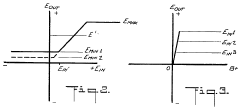
- A half-wave regulator rectifier using a silicon controlled rectifier (SCR) with a control circuit that includes a voltage tracking circuit and controlled switching means, which inhibits conduction when the battery voltage is above the regulated level and ensures safe charging by monitoring alternator voltage and current flow, protecting components from damage during abnormal conditions.
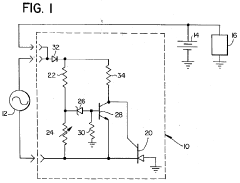
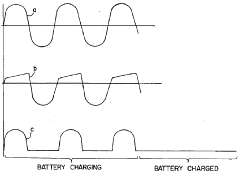
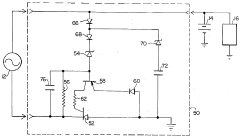
Half-wave rectifier circuit
PatentInactiveUS3936720A
Innovation
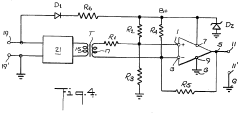
- A high-gain differential amplifier-based half-wave rectifier circuit operating from a single power supply, eliminating the need for voltage regulation and reducing temperature dependence, with resistor ratios optimized to minimize errors and achieve minimal output voltage drop.
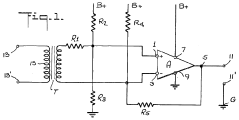
Energy Efficiency Considerations
Energy efficiency is a critical consideration when comparing half-wave rectifier types for industrial use. The efficiency of a rectifier directly impacts power consumption, heat generation, and overall system performance. In industrial applications, where large-scale power conversion is common, even small improvements in energy efficiency can lead to significant cost savings and reduced environmental impact.
Half-wave rectifiers, by their nature, are less efficient than full-wave rectifiers due to their utilization of only half of the AC cycle. However, within the realm of half-wave rectifiers, there are variations in efficiency based on the specific design and components used. Silicon diode-based half-wave rectifiers are widely used due to their simplicity and low cost, but they suffer from a voltage drop across the diode, typically around 0.7V, which contributes to power loss.
Schottky diode-based half-wave rectifiers offer improved efficiency over silicon diodes. With a lower forward voltage drop (typically 0.3-0.5V), Schottky diodes reduce conduction losses, making them more suitable for low-voltage, high-current applications. This characteristic is particularly beneficial in industrial settings where power conservation is paramount.
Synchronous rectification, employing MOSFETs instead of diodes, represents a significant advancement in half-wave rectifier efficiency. By actively controlling the switching of MOSFETs, the voltage drop can be reduced to as low as 0.1V, substantially decreasing power losses. This technique is especially valuable in high-current industrial applications where efficiency gains translate to considerable energy savings.
The choice of filtering components also plays a crucial role in the energy efficiency of half-wave rectifiers. Proper selection of capacitors and inductors for smoothing the rectified output can minimize ripple and reduce the need for additional power-consuming filtering stages. In industrial settings, where power quality is often critical, optimized filtering can contribute to overall system efficiency.
When evaluating half-wave rectifiers for industrial use, it's essential to consider the specific application requirements. Factors such as input voltage range, output current demands, and operating temperature all influence the selection of the most energy-efficient solution. In some cases, the simplicity of a silicon diode-based rectifier may be preferred despite lower efficiency, while in others, the increased complexity and cost of synchronous rectification may be justified by the long-term energy savings.
Ultimately, the energy efficiency of half-wave rectifiers in industrial applications must be balanced against other factors such as cost, reliability, and ease of maintenance. As energy costs continue to rise and environmental concerns grow, the emphasis on selecting the most efficient rectification solutions is likely to increase, driving further innovations in half-wave rectifier design and implementation for industrial use.
Half-wave rectifiers, by their nature, are less efficient than full-wave rectifiers due to their utilization of only half of the AC cycle. However, within the realm of half-wave rectifiers, there are variations in efficiency based on the specific design and components used. Silicon diode-based half-wave rectifiers are widely used due to their simplicity and low cost, but they suffer from a voltage drop across the diode, typically around 0.7V, which contributes to power loss.
Schottky diode-based half-wave rectifiers offer improved efficiency over silicon diodes. With a lower forward voltage drop (typically 0.3-0.5V), Schottky diodes reduce conduction losses, making them more suitable for low-voltage, high-current applications. This characteristic is particularly beneficial in industrial settings where power conservation is paramount.
Synchronous rectification, employing MOSFETs instead of diodes, represents a significant advancement in half-wave rectifier efficiency. By actively controlling the switching of MOSFETs, the voltage drop can be reduced to as low as 0.1V, substantially decreasing power losses. This technique is especially valuable in high-current industrial applications where efficiency gains translate to considerable energy savings.
The choice of filtering components also plays a crucial role in the energy efficiency of half-wave rectifiers. Proper selection of capacitors and inductors for smoothing the rectified output can minimize ripple and reduce the need for additional power-consuming filtering stages. In industrial settings, where power quality is often critical, optimized filtering can contribute to overall system efficiency.
When evaluating half-wave rectifiers for industrial use, it's essential to consider the specific application requirements. Factors such as input voltage range, output current demands, and operating temperature all influence the selection of the most energy-efficient solution. In some cases, the simplicity of a silicon diode-based rectifier may be preferred despite lower efficiency, while in others, the increased complexity and cost of synchronous rectification may be justified by the long-term energy savings.
Ultimately, the energy efficiency of half-wave rectifiers in industrial applications must be balanced against other factors such as cost, reliability, and ease of maintenance. As energy costs continue to rise and environmental concerns grow, the emphasis on selecting the most efficient rectification solutions is likely to increase, driving further innovations in half-wave rectifier design and implementation for industrial use.
Reliability and Maintenance Factors
When comparing half wave rectifier types for industrial use, reliability and maintenance factors play a crucial role in determining the most suitable option. These factors significantly impact the overall performance, longevity, and cost-effectiveness of the rectifier systems in industrial applications.
Reliability is a key consideration in industrial settings, where continuous operation and minimal downtime are essential. Half wave rectifiers with higher reliability ratings are preferred, as they reduce the risk of unexpected failures and production interruptions. The reliability of different rectifier types can be assessed through various metrics, including mean time between failures (MTBF) and failure rate analysis.
Semiconductor-based half wave rectifiers, such as those using silicon diodes, generally offer higher reliability compared to older vacuum tube designs. This is due to their solid-state construction, which eliminates the need for filaments and reduces the risk of mechanical failures. However, the reliability of semiconductor rectifiers can be affected by factors such as temperature fluctuations, voltage spikes, and reverse current flow.
Maintenance requirements are another critical aspect to consider when selecting half wave rectifiers for industrial use. Regular maintenance is necessary to ensure optimal performance and extend the lifespan of the rectifier system. The frequency and complexity of maintenance tasks can vary significantly between different rectifier types.
Vacuum tube rectifiers typically require more frequent maintenance due to the need for periodic replacement of tubes and the potential for filament burnout. In contrast, semiconductor-based rectifiers generally have lower maintenance requirements, as they lack moving parts and do not suffer from filament degradation. However, they may still require periodic inspection and cleaning to prevent dust accumulation and ensure proper heat dissipation.
The ease of maintenance is also an important factor to consider. Modular designs that allow for quick replacement of faulty components can significantly reduce downtime and simplify maintenance procedures. Additionally, the availability of spare parts and technical support from manufacturers can impact the overall maintenance strategy and associated costs.
Environmental factors, such as temperature, humidity, and vibration, can affect both the reliability and maintenance requirements of half wave rectifiers. Industrial environments often present challenging conditions that can accelerate component degradation and increase the need for maintenance. Therefore, selecting rectifiers with appropriate environmental ratings and implementing proper protection measures is crucial for ensuring long-term reliability and minimizing maintenance efforts.
In conclusion, when comparing half wave rectifier types for industrial use, careful consideration of reliability and maintenance factors is essential. By evaluating these aspects alongside performance specifications and cost considerations, industrial users can make informed decisions that optimize their rectifier systems for long-term efficiency and cost-effectiveness.
Reliability is a key consideration in industrial settings, where continuous operation and minimal downtime are essential. Half wave rectifiers with higher reliability ratings are preferred, as they reduce the risk of unexpected failures and production interruptions. The reliability of different rectifier types can be assessed through various metrics, including mean time between failures (MTBF) and failure rate analysis.
Semiconductor-based half wave rectifiers, such as those using silicon diodes, generally offer higher reliability compared to older vacuum tube designs. This is due to their solid-state construction, which eliminates the need for filaments and reduces the risk of mechanical failures. However, the reliability of semiconductor rectifiers can be affected by factors such as temperature fluctuations, voltage spikes, and reverse current flow.
Maintenance requirements are another critical aspect to consider when selecting half wave rectifiers for industrial use. Regular maintenance is necessary to ensure optimal performance and extend the lifespan of the rectifier system. The frequency and complexity of maintenance tasks can vary significantly between different rectifier types.
Vacuum tube rectifiers typically require more frequent maintenance due to the need for periodic replacement of tubes and the potential for filament burnout. In contrast, semiconductor-based rectifiers generally have lower maintenance requirements, as they lack moving parts and do not suffer from filament degradation. However, they may still require periodic inspection and cleaning to prevent dust accumulation and ensure proper heat dissipation.
The ease of maintenance is also an important factor to consider. Modular designs that allow for quick replacement of faulty components can significantly reduce downtime and simplify maintenance procedures. Additionally, the availability of spare parts and technical support from manufacturers can impact the overall maintenance strategy and associated costs.
Environmental factors, such as temperature, humidity, and vibration, can affect both the reliability and maintenance requirements of half wave rectifiers. Industrial environments often present challenging conditions that can accelerate component degradation and increase the need for maintenance. Therefore, selecting rectifiers with appropriate environmental ratings and implementing proper protection measures is crucial for ensuring long-term reliability and minimizing maintenance efforts.
In conclusion, when comparing half wave rectifier types for industrial use, careful consideration of reliability and maintenance factors is essential. By evaluating these aspects alongside performance specifications and cost considerations, industrial users can make informed decisions that optimize their rectifier systems for long-term efficiency and cost-effectiveness.
Unlock deeper insights with PatSnap Eureka Quick Research — get a full tech report to explore trends and direct your research. Try now!
Generate Your Research Report Instantly with AI Agent
Supercharge your innovation with PatSnap Eureka AI Agent Platform!