

Comparing Half Wave Rectifiers to Other Rectification Methods
JUL 15, 20258 MIN READ
Generate Your Research Report Instantly with AI Agent
PatSnap Eureka helps you evaluate technical feasibility & market potential.
Rectification Evolution
Rectification, the process of converting alternating current (AC) to direct current (DC), has undergone significant evolution since its inception. The journey began with simple half-wave rectifiers, which only utilized one half of the AC cycle. These early devices were inefficient and produced pulsating DC output, limiting their applications.
As technology progressed, full-wave rectifiers emerged, marking a substantial improvement. By utilizing both halves of the AC cycle, these rectifiers doubled the frequency of the output pulses and reduced ripple, resulting in smoother DC output. This advancement expanded the use of rectifiers in various electronic applications, from power supplies to radio receivers.
The introduction of bridge rectifiers represented another milestone in rectification technology. Bridge rectifiers, consisting of four diodes arranged in a bridge configuration, offered improved efficiency and reduced transformer requirements compared to center-tapped full-wave rectifiers. This innovation led to more compact and cost-effective power supply designs.
Synchronous rectification emerged as a significant leap forward, particularly in low-voltage, high-current applications. By replacing diodes with actively controlled switches, typically MOSFETs, synchronous rectifiers dramatically reduced voltage drops and power losses. This technology became crucial in improving the efficiency of switch-mode power supplies and voltage regulators.
The advent of silicon-controlled rectifiers (SCRs) and thyristors brought about a revolution in high-power rectification. These devices allowed for precise control of the rectification process, enabling applications in industrial power control, motor drives, and grid-connected power systems. The ability to handle high voltages and currents made SCRs indispensable in large-scale power conversion.
Recent advancements have focused on improving rectification efficiency and reducing electromagnetic interference. The development of soft-switching techniques and resonant converters has led to rectifiers with higher switching frequencies and lower switching losses. These innovations have resulted in smaller, more efficient power supplies for a wide range of electronic devices.
The integration of digital control and smart power management has further enhanced rectification technology. Microcontroller-based systems now allow for adaptive control of rectification parameters, optimizing performance based on load conditions and input variations. This intelligence has improved the overall efficiency and reliability of power conversion systems across various applications.
As technology progressed, full-wave rectifiers emerged, marking a substantial improvement. By utilizing both halves of the AC cycle, these rectifiers doubled the frequency of the output pulses and reduced ripple, resulting in smoother DC output. This advancement expanded the use of rectifiers in various electronic applications, from power supplies to radio receivers.
The introduction of bridge rectifiers represented another milestone in rectification technology. Bridge rectifiers, consisting of four diodes arranged in a bridge configuration, offered improved efficiency and reduced transformer requirements compared to center-tapped full-wave rectifiers. This innovation led to more compact and cost-effective power supply designs.
Synchronous rectification emerged as a significant leap forward, particularly in low-voltage, high-current applications. By replacing diodes with actively controlled switches, typically MOSFETs, synchronous rectifiers dramatically reduced voltage drops and power losses. This technology became crucial in improving the efficiency of switch-mode power supplies and voltage regulators.
The advent of silicon-controlled rectifiers (SCRs) and thyristors brought about a revolution in high-power rectification. These devices allowed for precise control of the rectification process, enabling applications in industrial power control, motor drives, and grid-connected power systems. The ability to handle high voltages and currents made SCRs indispensable in large-scale power conversion.
Recent advancements have focused on improving rectification efficiency and reducing electromagnetic interference. The development of soft-switching techniques and resonant converters has led to rectifiers with higher switching frequencies and lower switching losses. These innovations have resulted in smaller, more efficient power supplies for a wide range of electronic devices.
The integration of digital control and smart power management has further enhanced rectification technology. Microcontroller-based systems now allow for adaptive control of rectification parameters, optimizing performance based on load conditions and input variations. This intelligence has improved the overall efficiency and reliability of power conversion systems across various applications.
Market Demand Analysis
The market demand for rectification methods, including half-wave rectifiers and other alternatives, continues to grow across various industries. This demand is primarily driven by the increasing need for efficient power conversion and management in electronic devices, power supplies, and renewable energy systems.
In the consumer electronics sector, the miniaturization trend has led to a surge in demand for compact and efficient rectification solutions. Half-wave rectifiers, despite their simplicity, face competition from more advanced methods that offer better power efficiency and reduced ripple. The market for smartphones, tablets, and wearable devices requires rectification components that can deliver stable power while minimizing heat generation and space requirements.
The automotive industry represents another significant market for rectification technologies. With the rapid growth of electric and hybrid vehicles, there is a heightened demand for high-performance rectifiers capable of handling higher voltages and currents. While half-wave rectifiers may find applications in certain low-power automotive systems, the industry generally favors more sophisticated rectification methods for critical power management components.
In the renewable energy sector, particularly in solar and wind power systems, the need for efficient power conversion has spurred demand for advanced rectification solutions. Half-wave rectifiers, due to their lower efficiency, are less favored in this market segment. Instead, there is a growing preference for full-wave and bridge rectifiers that can maximize energy harvesting from renewable sources.
The industrial automation and control systems market also contributes significantly to the demand for rectification technologies. These applications often require precise power management and high reliability, driving the adoption of more advanced rectification methods over simpler half-wave designs.
Emerging technologies such as 5G infrastructure and Internet of Things (IoT) devices are creating new opportunities for rectification solutions. These applications demand highly efficient and compact power management components, further challenging the relevance of traditional half-wave rectifiers in cutting-edge systems.
Market analysis indicates a shift towards more sophisticated rectification methods that offer higher efficiency, lower power loss, and better overall performance. While half-wave rectifiers maintain a presence in certain niche applications and low-cost consumer products, the broader market trend favors full-wave rectifiers, synchronous rectifiers, and other advanced topologies.
The global market for power management integrated circuits, which includes various rectification solutions, is projected to experience steady growth in the coming years. This growth is fueled by the increasing electrification of various industries and the continuous innovation in power electronics technologies.
In the consumer electronics sector, the miniaturization trend has led to a surge in demand for compact and efficient rectification solutions. Half-wave rectifiers, despite their simplicity, face competition from more advanced methods that offer better power efficiency and reduced ripple. The market for smartphones, tablets, and wearable devices requires rectification components that can deliver stable power while minimizing heat generation and space requirements.
The automotive industry represents another significant market for rectification technologies. With the rapid growth of electric and hybrid vehicles, there is a heightened demand for high-performance rectifiers capable of handling higher voltages and currents. While half-wave rectifiers may find applications in certain low-power automotive systems, the industry generally favors more sophisticated rectification methods for critical power management components.
In the renewable energy sector, particularly in solar and wind power systems, the need for efficient power conversion has spurred demand for advanced rectification solutions. Half-wave rectifiers, due to their lower efficiency, are less favored in this market segment. Instead, there is a growing preference for full-wave and bridge rectifiers that can maximize energy harvesting from renewable sources.
The industrial automation and control systems market also contributes significantly to the demand for rectification technologies. These applications often require precise power management and high reliability, driving the adoption of more advanced rectification methods over simpler half-wave designs.
Emerging technologies such as 5G infrastructure and Internet of Things (IoT) devices are creating new opportunities for rectification solutions. These applications demand highly efficient and compact power management components, further challenging the relevance of traditional half-wave rectifiers in cutting-edge systems.
Market analysis indicates a shift towards more sophisticated rectification methods that offer higher efficiency, lower power loss, and better overall performance. While half-wave rectifiers maintain a presence in certain niche applications and low-cost consumer products, the broader market trend favors full-wave rectifiers, synchronous rectifiers, and other advanced topologies.
The global market for power management integrated circuits, which includes various rectification solutions, is projected to experience steady growth in the coming years. This growth is fueled by the increasing electrification of various industries and the continuous innovation in power electronics technologies.
Rectifier Challenges
Rectifiers play a crucial role in power electronics, converting alternating current (AC) to direct current (DC). However, they face several challenges that impact their performance and efficiency. One of the primary challenges is power loss, which occurs during the rectification process. This loss is particularly significant in half-wave rectifiers, where only one half of the AC waveform is utilized, resulting in lower efficiency compared to full-wave rectifiers.
Another major challenge is the presence of ripple in the output voltage. Half-wave rectifiers, in particular, produce a higher ripple content due to their inherent design, which can lead to poor voltage regulation and increased noise in the DC output. This ripple can be detrimental to sensitive electronic components and may require additional filtering stages, adding complexity and cost to the overall system.
Harmonic distortion is a significant concern in rectifier circuits. Half-wave rectifiers generate a higher level of harmonic content compared to other rectification methods, potentially causing electromagnetic interference (EMI) and reducing power quality. This issue becomes more pronounced in high-power applications and can lead to compliance problems with electromagnetic compatibility (EMC) standards.
Voltage drop across rectifying components, such as diodes, presents another challenge. In half-wave rectifiers, this voltage drop can be more impactful due to the lower overall efficiency of the circuit. The forward voltage drop of diodes reduces the available output voltage and contributes to power dissipation, affecting the overall system efficiency.
Temperature management is a critical concern in rectifier design. The power dissipation in rectifying components can lead to significant heat generation, particularly in high-current applications. This heat can affect the performance and reliability of the rectifier and surrounding components, necessitating careful thermal design and management strategies.
Reverse recovery time of diodes used in rectifiers poses another challenge, especially in high-frequency applications. This characteristic can lead to switching losses and generate electromagnetic noise. Half-wave rectifiers may be particularly susceptible to these effects due to their simpler circuit topology.
Lastly, the pulsating nature of the output from half-wave rectifiers can cause stress on capacitors used for smoothing. This stress can lead to reduced capacitor lifespan and potential failure, requiring careful component selection and design considerations to ensure long-term reliability.
In conclusion, while half-wave rectifiers offer simplicity in design, they face numerous challenges compared to other rectification methods. These challenges encompass efficiency, output quality, electromagnetic compatibility, thermal management, and component stress. Addressing these issues often requires trade-offs between performance, cost, and complexity, driving ongoing research and development in rectifier technology.
Another major challenge is the presence of ripple in the output voltage. Half-wave rectifiers, in particular, produce a higher ripple content due to their inherent design, which can lead to poor voltage regulation and increased noise in the DC output. This ripple can be detrimental to sensitive electronic components and may require additional filtering stages, adding complexity and cost to the overall system.
Harmonic distortion is a significant concern in rectifier circuits. Half-wave rectifiers generate a higher level of harmonic content compared to other rectification methods, potentially causing electromagnetic interference (EMI) and reducing power quality. This issue becomes more pronounced in high-power applications and can lead to compliance problems with electromagnetic compatibility (EMC) standards.
Voltage drop across rectifying components, such as diodes, presents another challenge. In half-wave rectifiers, this voltage drop can be more impactful due to the lower overall efficiency of the circuit. The forward voltage drop of diodes reduces the available output voltage and contributes to power dissipation, affecting the overall system efficiency.
Temperature management is a critical concern in rectifier design. The power dissipation in rectifying components can lead to significant heat generation, particularly in high-current applications. This heat can affect the performance and reliability of the rectifier and surrounding components, necessitating careful thermal design and management strategies.
Reverse recovery time of diodes used in rectifiers poses another challenge, especially in high-frequency applications. This characteristic can lead to switching losses and generate electromagnetic noise. Half-wave rectifiers may be particularly susceptible to these effects due to their simpler circuit topology.
Lastly, the pulsating nature of the output from half-wave rectifiers can cause stress on capacitors used for smoothing. This stress can lead to reduced capacitor lifespan and potential failure, requiring careful component selection and design considerations to ensure long-term reliability.
In conclusion, while half-wave rectifiers offer simplicity in design, they face numerous challenges compared to other rectification methods. These challenges encompass efficiency, output quality, electromagnetic compatibility, thermal management, and component stress. Addressing these issues often requires trade-offs between performance, cost, and complexity, driving ongoing research and development in rectifier technology.
Current Rectifier Tech
01 Circuit design for half-wave rectifiers
Half-wave rectifiers are designed to convert alternating current (AC) to pulsating direct current (DC). The circuit typically includes a diode that allows current to flow in only one direction during each AC cycle. This design is fundamental to power supply systems and can be optimized for various applications.- Circuit design for half-wave rectifiers: Half-wave rectifiers are designed to convert alternating current (AC) to pulsating direct current (DC). The circuit typically includes a diode that allows current to flow in only one direction during each AC cycle. This design is fundamental to power supply systems and can be optimized for various applications.
- Efficiency improvements in half-wave rectifiers: Advancements in half-wave rectifier designs focus on improving efficiency and reducing power losses. This includes the use of high-performance diodes, optimized circuit layouts, and advanced control mechanisms to minimize voltage drops and enhance overall system performance.
- Integration of half-wave rectifiers in power supplies: Half-wave rectifiers are commonly integrated into various power supply systems. These implementations can be found in household appliances, industrial equipment, and electronic devices. The integration often involves additional components for filtering and voltage regulation to produce a smoother DC output.
- Half-wave rectifiers in specialized applications: Half-wave rectifiers find use in specialized applications such as RF signal detection, sensor circuits, and energy harvesting systems. In these contexts, the rectifier's ability to extract DC from an AC signal is utilized for unique purposes beyond traditional power supply applications.
- Protection and safety features in half-wave rectifier circuits: Modern half-wave rectifier designs incorporate various protection and safety features. These may include overvoltage protection, thermal management systems, and fault detection mechanisms. Such features enhance the reliability and longevity of devices utilizing half-wave rectification.
02 Efficiency improvements in half-wave rectifiers
Advancements in half-wave rectifier designs focus on improving efficiency and reducing power losses. This includes the use of high-performance diodes, optimized circuit layouts, and advanced control mechanisms to minimize voltage drops and enhance overall system performance.Expand Specific Solutions03 Integration of half-wave rectifiers in power supply systems
Half-wave rectifiers are integrated into various power supply systems, including those used in electronic devices, industrial equipment, and renewable energy applications. The integration involves considerations for voltage regulation, filtering, and protection against voltage spikes and overloads.Expand Specific Solutions04 Miniaturization and compact designs
There is a trend towards miniaturization and compact designs of half-wave rectifiers, particularly for use in portable electronics and space-constrained applications. This involves the use of surface-mount components, integrated circuits, and innovative packaging techniques to reduce size while maintaining performance.Expand Specific Solutions05 Control and protection mechanisms
Advanced control and protection mechanisms are implemented in half-wave rectifier circuits to enhance reliability and safety. These include overvoltage protection, current limiting features, and intelligent control systems that adapt to varying load conditions and input voltages.Expand Specific Solutions
Key Industry Players
The competition landscape for half wave rectifiers and other rectification methods is evolving within a mature power electronics industry. The market size is substantial, driven by growing demand for efficient power conversion across various sectors. Technologically, while half wave rectifiers are well-established, there's ongoing innovation in more advanced rectification techniques. Companies like Huawei, NTT, and Midea Group are investing in research and development to improve efficiency and reduce power losses. Semiconductor firms such as SK Hynix and Samsung Electronics are pushing the boundaries of integrated circuit design for rectification applications. Universities like Technical University of Denmark and University of Southampton are contributing to fundamental research in this field.
Technical University of Denmark
Technical Solution: The Technical University of Denmark has developed advanced half-wave rectifier designs that incorporate novel semiconductor materials and topologies. Their approach focuses on improving efficiency and reducing harmonic distortion in power conversion applications. The university's research team has implemented silicon carbide (SiC) devices in half-wave rectifier circuits, achieving higher switching frequencies and lower conduction losses compared to traditional silicon-based designs[1]. Additionally, they have explored the use of gallium nitride (GaN) transistors in half-wave rectification, demonstrating improved thermal performance and higher power density[3].
Strengths: High efficiency, reduced harmonic distortion, and improved thermal performance. Weaknesses: Potentially higher cost due to advanced materials and more complex implementation.
Huawei Technologies Co., Ltd.
Technical Solution: Huawei has developed a proprietary half-wave rectification technology for their power supply units in telecommunications equipment. Their approach integrates advanced control algorithms with high-frequency switching techniques to optimize power conversion efficiency. Huawei's half-wave rectifier design incorporates digital control systems that dynamically adjust the rectification process based on load conditions, resulting in improved overall system efficiency[2]. The company has also implemented synchronous rectification in their half-wave designs, reducing conduction losses and enhancing thermal management in compact form factors[5].
Strengths: High efficiency, adaptive control, and compact design. Weaknesses: Proprietary technology may limit compatibility with other systems.
Core Rectifier Patents
Half-wave rectifier circuit
PatentInactiveUS3936720A
Innovation
- A high-gain differential amplifier-based half-wave rectifier circuit operating from a single power supply, eliminating the need for voltage regulation and reducing temperature dependence, with resistor ratios optimized to minimize errors and achieve minimal output voltage drop.
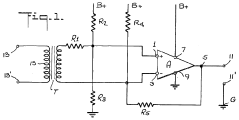
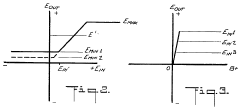
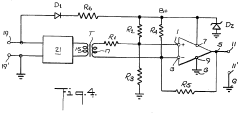
Ac-DC converter circuit
PatentWO2021078863A1
Innovation
- The proposed AC-DC converter circuit employs a ground-gated depletion type transistor with a duty cycle control unit and gallium nitride transistors to reduce parasitic capacitances, enhance switching speed, and improve efficiency, allowing for high-power conversion while minimizing the size and weight of the converter.


Efficiency Comparison
Efficiency is a critical factor when comparing half-wave rectifiers to other rectification methods. Half-wave rectifiers, while simple in design, generally exhibit lower efficiency compared to full-wave and bridge rectifiers. This is primarily due to their utilization of only one half of the AC input cycle, resulting in significant power loss and increased ripple in the output.
In terms of power efficiency, half-wave rectifiers typically convert only about 40% of the input AC power to usable DC power. This low efficiency is attributed to the fact that half of the input waveform is essentially discarded during the rectification process. In contrast, full-wave rectifiers and bridge rectifiers utilize both halves of the AC input cycle, resulting in significantly higher efficiency, often reaching 80% or more.
The ripple factor, which is a measure of the residual AC component in the rectified output, is also considerably higher in half-wave rectifiers. This increased ripple necessitates more extensive filtering to achieve a smooth DC output, further reducing overall system efficiency. Full-wave and bridge rectifiers, by comparison, produce less ripple and require less filtering, contributing to their superior efficiency.
Power factor is another important consideration when evaluating rectifier efficiency. Half-wave rectifiers typically have a poor power factor due to their non-linear current draw from the AC source. This results in increased harmonic distortion and higher apparent power consumption, further reducing overall system efficiency. Full-wave and bridge rectifiers generally exhibit better power factor characteristics, leading to more efficient power utilization.
In applications where size and weight are critical factors, the lower efficiency of half-wave rectifiers often translates to larger and heavier power supply components. This is because more substantial heat sinks and cooling systems are required to dissipate the excess heat generated by the inefficient rectification process. Full-wave and bridge rectifiers, with their higher efficiency, typically allow for more compact and lightweight designs.
It's worth noting that the efficiency gap between half-wave rectifiers and other methods becomes more pronounced at higher power levels. In low-power applications, the difference may be less significant, and the simplicity of half-wave rectifiers might outweigh their efficiency disadvantages. However, as power requirements increase, the benefits of more efficient rectification methods become increasingly apparent.
In terms of power efficiency, half-wave rectifiers typically convert only about 40% of the input AC power to usable DC power. This low efficiency is attributed to the fact that half of the input waveform is essentially discarded during the rectification process. In contrast, full-wave rectifiers and bridge rectifiers utilize both halves of the AC input cycle, resulting in significantly higher efficiency, often reaching 80% or more.
The ripple factor, which is a measure of the residual AC component in the rectified output, is also considerably higher in half-wave rectifiers. This increased ripple necessitates more extensive filtering to achieve a smooth DC output, further reducing overall system efficiency. Full-wave and bridge rectifiers, by comparison, produce less ripple and require less filtering, contributing to their superior efficiency.
Power factor is another important consideration when evaluating rectifier efficiency. Half-wave rectifiers typically have a poor power factor due to their non-linear current draw from the AC source. This results in increased harmonic distortion and higher apparent power consumption, further reducing overall system efficiency. Full-wave and bridge rectifiers generally exhibit better power factor characteristics, leading to more efficient power utilization.
In applications where size and weight are critical factors, the lower efficiency of half-wave rectifiers often translates to larger and heavier power supply components. This is because more substantial heat sinks and cooling systems are required to dissipate the excess heat generated by the inefficient rectification process. Full-wave and bridge rectifiers, with their higher efficiency, typically allow for more compact and lightweight designs.
It's worth noting that the efficiency gap between half-wave rectifiers and other methods becomes more pronounced at higher power levels. In low-power applications, the difference may be less significant, and the simplicity of half-wave rectifiers might outweigh their efficiency disadvantages. However, as power requirements increase, the benefits of more efficient rectification methods become increasingly apparent.
Application Scenarios
Half wave rectifiers find application in various scenarios across different industries due to their simplicity and cost-effectiveness. In power supply systems, they are commonly used in low-power applications where efficiency is not a primary concern. For instance, small electronic devices, such as battery chargers for portable electronics, often employ half wave rectifiers to convert AC to pulsating DC.
In signal processing, half wave rectifiers play a crucial role in envelope detection circuits. These circuits are essential in AM radio receivers, where they extract the audio signal from the modulated carrier wave. The simplicity of half wave rectifiers makes them suitable for this purpose, especially in low-cost consumer electronics.
The automotive industry also utilizes half wave rectifiers in certain applications. They are found in some alternator designs, particularly in older vehicle models, where they convert the AC output of the alternator to DC for charging the battery and powering the vehicle's electrical systems.
In the field of instrumentation, half wave rectifiers are used in peak detection circuits. These circuits are valuable in measuring the maximum amplitude of AC signals, which is crucial in various testing and measurement applications.
Half wave rectifiers also find use in power control systems, particularly in light dimming circuits. By controlling the conduction angle of the rectifier, the amount of power delivered to the load can be regulated, allowing for adjustable lighting intensity.
In renewable energy systems, particularly in small-scale solar power applications, half wave rectifiers can be employed to convert the AC output from inverters to DC for battery charging or direct use in DC appliances.
Despite their limitations in efficiency and output quality, half wave rectifiers continue to be relevant in specific applications where simplicity, low cost, and minimal component count are prioritized over performance. Their use in educational settings is also noteworthy, as they serve as an excellent introduction to the principles of rectification and AC-DC conversion for students in electrical engineering and related fields.
In signal processing, half wave rectifiers play a crucial role in envelope detection circuits. These circuits are essential in AM radio receivers, where they extract the audio signal from the modulated carrier wave. The simplicity of half wave rectifiers makes them suitable for this purpose, especially in low-cost consumer electronics.
The automotive industry also utilizes half wave rectifiers in certain applications. They are found in some alternator designs, particularly in older vehicle models, where they convert the AC output of the alternator to DC for charging the battery and powering the vehicle's electrical systems.
In the field of instrumentation, half wave rectifiers are used in peak detection circuits. These circuits are valuable in measuring the maximum amplitude of AC signals, which is crucial in various testing and measurement applications.
Half wave rectifiers also find use in power control systems, particularly in light dimming circuits. By controlling the conduction angle of the rectifier, the amount of power delivered to the load can be regulated, allowing for adjustable lighting intensity.
In renewable energy systems, particularly in small-scale solar power applications, half wave rectifiers can be employed to convert the AC output from inverters to DC for battery charging or direct use in DC appliances.
Despite their limitations in efficiency and output quality, half wave rectifiers continue to be relevant in specific applications where simplicity, low cost, and minimal component count are prioritized over performance. Their use in educational settings is also noteworthy, as they serve as an excellent introduction to the principles of rectification and AC-DC conversion for students in electrical engineering and related fields.
Unlock deeper insights with PatSnap Eureka Quick Research — get a full tech report to explore trends and direct your research. Try now!
Generate Your Research Report Instantly with AI Agent
Supercharge your innovation with PatSnap Eureka AI Agent Platform!