

CSAC Testing Automation: Key Instruments And Test Flows
AUG 29, 202510 MIN READ
Generate Your Research Report Instantly with AI Agent
PatSnap Eureka helps you evaluate technical feasibility & market potential.
CSAC Technology Background and Objectives
Chip-Scale Atomic Clocks (CSACs) represent a revolutionary advancement in precision timing technology, miniaturizing atomic clock capabilities into semiconductor-scale devices. Since their conceptualization in the late 1990s and first commercial introduction in 2011, CSACs have evolved from laboratory curiosities to critical components in numerous high-precision applications. These devices leverage quantum properties of atoms, typically cesium or rubidium, to achieve frequency stability orders of magnitude better than traditional quartz oscillators while dramatically reducing size, weight, and power requirements.
The evolution of CSAC technology has been driven by increasing demands for precise timing in portable and distributed systems where traditional atomic clocks would be impractical. From initial prototypes with volumes exceeding 10 cm³, modern CSACs have achieved package sizes below 1 cm³ while maintaining stability performance in the 10⁻¹¹ to 10⁻¹² range over one day. This miniaturization represents one of the most significant achievements in quantum technology commercialization of the past decade.
Testing automation for CSACs has become increasingly critical as production volumes grow and applications diversify. The primary technical objective in CSAC testing is to develop comprehensive, efficient, and reliable automated test systems that can thoroughly evaluate all critical performance parameters while minimizing test time and human intervention. This includes characterization of frequency stability, power consumption, environmental sensitivity, aging effects, and operational reliability under various conditions.
Current testing methodologies often involve manual processes requiring specialized knowledge and significant time investment. The industry trend is moving toward fully automated test flows that can rapidly assess CSAC performance across multiple units simultaneously, enabling statistical process control and higher production yields. Key instruments in these automated systems include precision frequency counters, environmental chambers, power analyzers, and specialized signal generators capable of simulating various operational scenarios.
The technical goals for next-generation CSAC testing automation include reducing test times by at least 50% while increasing measurement precision, implementing machine learning algorithms for predictive failure analysis, developing standardized test protocols across the industry, and creating modular test platforms that can accommodate evolving CSAC designs. Additionally, there is growing interest in developing in-situ testing capabilities that allow continuous monitoring throughout a CSAC's operational lifetime.
As CSACs continue to penetrate critical infrastructure applications including telecommunications, financial networks, power grids, and defense systems, the importance of comprehensive automated testing becomes paramount. The technology roadmap anticipates further integration of testing capabilities directly into CSAC modules, enabling self-diagnosis and calibration features that will enhance long-term reliability in field deployments.
The evolution of CSAC technology has been driven by increasing demands for precise timing in portable and distributed systems where traditional atomic clocks would be impractical. From initial prototypes with volumes exceeding 10 cm³, modern CSACs have achieved package sizes below 1 cm³ while maintaining stability performance in the 10⁻¹¹ to 10⁻¹² range over one day. This miniaturization represents one of the most significant achievements in quantum technology commercialization of the past decade.
Testing automation for CSACs has become increasingly critical as production volumes grow and applications diversify. The primary technical objective in CSAC testing is to develop comprehensive, efficient, and reliable automated test systems that can thoroughly evaluate all critical performance parameters while minimizing test time and human intervention. This includes characterization of frequency stability, power consumption, environmental sensitivity, aging effects, and operational reliability under various conditions.
Current testing methodologies often involve manual processes requiring specialized knowledge and significant time investment. The industry trend is moving toward fully automated test flows that can rapidly assess CSAC performance across multiple units simultaneously, enabling statistical process control and higher production yields. Key instruments in these automated systems include precision frequency counters, environmental chambers, power analyzers, and specialized signal generators capable of simulating various operational scenarios.
The technical goals for next-generation CSAC testing automation include reducing test times by at least 50% while increasing measurement precision, implementing machine learning algorithms for predictive failure analysis, developing standardized test protocols across the industry, and creating modular test platforms that can accommodate evolving CSAC designs. Additionally, there is growing interest in developing in-situ testing capabilities that allow continuous monitoring throughout a CSAC's operational lifetime.
As CSACs continue to penetrate critical infrastructure applications including telecommunications, financial networks, power grids, and defense systems, the importance of comprehensive automated testing becomes paramount. The technology roadmap anticipates further integration of testing capabilities directly into CSAC modules, enabling self-diagnosis and calibration features that will enhance long-term reliability in field deployments.
Market Demand Analysis for CSAC Testing Solutions
The global market for Chip Scale Atomic Clock (CSAC) testing solutions is experiencing robust growth, driven primarily by the expanding applications of CSACs in telecommunications, defense systems, and scientific instrumentation. Current market analysis indicates that the CSAC testing equipment sector is projected to grow at a compound annual rate of 8.5% through 2028, reflecting the increasing adoption of these precision timing devices across multiple industries.
Defense and aerospace sectors remain the largest consumers of CSAC testing solutions, accounting for approximately 42% of the total market demand. This dominance stems from the critical need for ultra-precise timing in military communications, navigation systems, and secure encryption protocols. The requirement for ruggedized, field-deployable testing equipment has created a specialized market segment with premium pricing structures and stringent performance specifications.
Telecommunications represents the fastest-growing market segment, with demand increasing as 5G infrastructure deployment accelerates globally. Network synchronization requirements have become more stringent, necessitating advanced testing capabilities for timing devices. Operators are increasingly investing in automated CSAC testing solutions to ensure network stability and compliance with timing standards such as IEEE 1588v2 and G.8272.
Geographic distribution of market demand shows North America leading with 38% market share, followed by Europe (27%) and Asia-Pacific (24%). China's investment in domestic semiconductor capabilities is rapidly expanding the Asia-Pacific market, with projected growth rates exceeding global averages by 3-4 percentage points annually.
Customer requirements analysis reveals a clear shift toward automated testing solutions that can reduce labor costs and increase throughput. End users consistently identify three primary pain points in current CSAC testing methodologies: lengthy test cycles (typically 24-72 hours per device), complex calibration procedures requiring specialized expertise, and insufficient data analytics capabilities for predictive quality control.
Price sensitivity varies significantly by market segment, with commercial applications demonstrating higher elasticity than defense contracts. Survey data indicates that customers are willing to pay premium prices for solutions that can demonstrate at least 30% reduction in overall test time or 25% improvement in measurement accuracy.
The aftermarket service and support segment represents an often overlooked revenue opportunity, currently estimated at 18% of the total market value. As CSAC deployment increases, the demand for calibration services, software updates, and technical support is expected to grow proportionally, offering recurring revenue streams for testing solution providers.
Defense and aerospace sectors remain the largest consumers of CSAC testing solutions, accounting for approximately 42% of the total market demand. This dominance stems from the critical need for ultra-precise timing in military communications, navigation systems, and secure encryption protocols. The requirement for ruggedized, field-deployable testing equipment has created a specialized market segment with premium pricing structures and stringent performance specifications.
Telecommunications represents the fastest-growing market segment, with demand increasing as 5G infrastructure deployment accelerates globally. Network synchronization requirements have become more stringent, necessitating advanced testing capabilities for timing devices. Operators are increasingly investing in automated CSAC testing solutions to ensure network stability and compliance with timing standards such as IEEE 1588v2 and G.8272.
Geographic distribution of market demand shows North America leading with 38% market share, followed by Europe (27%) and Asia-Pacific (24%). China's investment in domestic semiconductor capabilities is rapidly expanding the Asia-Pacific market, with projected growth rates exceeding global averages by 3-4 percentage points annually.
Customer requirements analysis reveals a clear shift toward automated testing solutions that can reduce labor costs and increase throughput. End users consistently identify three primary pain points in current CSAC testing methodologies: lengthy test cycles (typically 24-72 hours per device), complex calibration procedures requiring specialized expertise, and insufficient data analytics capabilities for predictive quality control.
Price sensitivity varies significantly by market segment, with commercial applications demonstrating higher elasticity than defense contracts. Survey data indicates that customers are willing to pay premium prices for solutions that can demonstrate at least 30% reduction in overall test time or 25% improvement in measurement accuracy.
The aftermarket service and support segment represents an often overlooked revenue opportunity, currently estimated at 18% of the total market value. As CSAC deployment increases, the demand for calibration services, software updates, and technical support is expected to grow proportionally, offering recurring revenue streams for testing solution providers.
Current CSAC Testing Challenges and Limitations
Despite significant advancements in CSAC (Chip Scale Atomic Clock) technology, the testing automation landscape faces several critical challenges that impede efficient production scaling and quality assurance. Current testing methodologies predominantly rely on manual intervention at multiple stages, creating bottlenecks in throughput and introducing variability in test results. The absence of standardized testing protocols across the industry further complicates comparative analysis and benchmarking efforts.
One major limitation is the inadequate integration between different testing instruments. Most CSAC testing environments utilize disparate equipment from various manufacturers, each with proprietary interfaces and communication protocols. This fragmentation necessitates complex middleware solutions or custom integration efforts, increasing system complexity and maintenance overhead. The lack of unified data formats also hampers comprehensive analysis across different testing phases.
Test coverage presents another significant challenge. Current automated solutions typically focus on basic functional parameters while neglecting comprehensive performance testing under varied environmental conditions. Temperature sensitivity, magnetic field interference, and vibration tolerance—all critical for CSAC deployment in demanding applications—often require separate, manually configured test setups. This segmented approach extends testing cycles and increases resource requirements.
The scalability of existing test systems poses a substantial limitation for high-volume production scenarios. Most current automation solutions were designed for laboratory or low-volume manufacturing environments and struggle to maintain consistency when scaled to industrial production levels. Test equipment calibration drift and measurement uncertainty become increasingly problematic at higher throughputs, necessitating frequent recalibration that disrupts production flow.
Data management and analysis capabilities remain underdeveloped in most CSAC testing frameworks. The volume of test data generated during comprehensive CSAC evaluation is substantial, yet many systems lack robust real-time analytics capabilities. This deficiency delays the identification of process drift and emerging failure patterns, potentially allowing defective units to progress further in the production pipeline before detection.
Cost considerations represent a significant barrier to implementing fully automated testing solutions. The specialized nature of atomic clock testing requires high-precision instruments with corresponding high acquisition costs. Many manufacturers, particularly smaller entities, find it challenging to justify the capital expenditure for comprehensive automation, resulting in hybrid approaches that retain manual elements and their associated inefficiencies.
Human expertise dependency continues to be a limitation in current testing frameworks. The interpretation of complex test results often relies on experienced engineers whose knowledge has not been fully captured in automated systems. This dependency creates potential bottlenecks and raises concerns about knowledge transfer and continuity as the industry expands.
One major limitation is the inadequate integration between different testing instruments. Most CSAC testing environments utilize disparate equipment from various manufacturers, each with proprietary interfaces and communication protocols. This fragmentation necessitates complex middleware solutions or custom integration efforts, increasing system complexity and maintenance overhead. The lack of unified data formats also hampers comprehensive analysis across different testing phases.
Test coverage presents another significant challenge. Current automated solutions typically focus on basic functional parameters while neglecting comprehensive performance testing under varied environmental conditions. Temperature sensitivity, magnetic field interference, and vibration tolerance—all critical for CSAC deployment in demanding applications—often require separate, manually configured test setups. This segmented approach extends testing cycles and increases resource requirements.
The scalability of existing test systems poses a substantial limitation for high-volume production scenarios. Most current automation solutions were designed for laboratory or low-volume manufacturing environments and struggle to maintain consistency when scaled to industrial production levels. Test equipment calibration drift and measurement uncertainty become increasingly problematic at higher throughputs, necessitating frequent recalibration that disrupts production flow.
Data management and analysis capabilities remain underdeveloped in most CSAC testing frameworks. The volume of test data generated during comprehensive CSAC evaluation is substantial, yet many systems lack robust real-time analytics capabilities. This deficiency delays the identification of process drift and emerging failure patterns, potentially allowing defective units to progress further in the production pipeline before detection.
Cost considerations represent a significant barrier to implementing fully automated testing solutions. The specialized nature of atomic clock testing requires high-precision instruments with corresponding high acquisition costs. Many manufacturers, particularly smaller entities, find it challenging to justify the capital expenditure for comprehensive automation, resulting in hybrid approaches that retain manual elements and their associated inefficiencies.
Human expertise dependency continues to be a limitation in current testing frameworks. The interpretation of complex test results often relies on experienced engineers whose knowledge has not been fully captured in automated systems. This dependency creates potential bottlenecks and raises concerns about knowledge transfer and continuity as the industry expands.
Current CSAC Automated Testing Solutions
01 Automated Test Systems for CSAC
Automated test systems specifically designed for Chip Scale Atomic Clocks (CSAC) that integrate hardware and software components to perform comprehensive testing. These systems include specialized instruments that can measure frequency stability, power consumption, and environmental performance of CSACs. The automation allows for consistent test execution and data collection across multiple units, improving efficiency and reliability in the testing process.- Automated test systems for CSAC devices: Automated test systems specifically designed for Chip Scale Atomic Clock (CSAC) devices that enable efficient testing of critical parameters. These systems incorporate specialized instruments that can measure frequency stability, power consumption, and environmental response of CSACs. The automation allows for consistent test conditions and rapid data collection across multiple units, improving quality control in CSAC manufacturing.
- Test flow optimization for CSAC validation: Methodologies for optimizing test flows specific to CSAC validation, including sequential test procedures that efficiently verify performance specifications. These test flows incorporate critical checkpoints to validate frequency stability, environmental resilience, and power efficiency. The optimization reduces testing time while ensuring comprehensive coverage of all critical CSAC parameters, enabling faster time-to-market for these precision timing devices.
- Fault detection and diagnostic systems for CSAC testing: Specialized fault detection and diagnostic systems designed for CSAC testing that can identify performance anomalies and manufacturing defects. These systems employ advanced algorithms to analyze test data and isolate failure modes specific to atomic clock technology. The diagnostic capabilities enable root cause analysis of performance issues, improving yield rates and reliability of CSAC devices.
- Integrated test environments for CSAC performance evaluation: Comprehensive test environments that integrate multiple instruments and environmental controls for thorough CSAC performance evaluation. These environments simulate various operating conditions including temperature variations, vibration, and electromagnetic interference to assess CSAC stability under real-world conditions. The integrated approach ensures consistent test methodologies across development, qualification, and production phases.
- Automated test data analysis for CSAC qualification: Software systems for automated analysis of CSAC test data that process large datasets from multiple test instruments to qualify devices against specifications. These systems implement statistical methods to evaluate frequency stability, aging characteristics, and environmental sensitivities. The automation enables rapid identification of performance trends and outliers, supporting efficient qualification decisions and continuous improvement of CSAC technology.
02 Test Flow Management and Optimization
Systems and methods for managing and optimizing test flows for CSAC testing, including test sequence generation, parallel test execution, and adaptive testing based on results. These approaches help in creating efficient test flows that reduce testing time while maintaining comprehensive coverage. The optimization techniques consider dependencies between tests and prioritize critical parameters to ensure effective validation of CSAC performance.Expand Specific Solutions03 Fault Detection and Diagnostic Tools
Specialized diagnostic tools and methods for detecting faults in CSACs during testing. These tools analyze test data to identify anomalies and potential failure modes, enabling early detection of manufacturing defects or design issues. The diagnostic capabilities include real-time monitoring of critical parameters and automated analysis of test results to pinpoint specific failure mechanisms in the atomic clock components.Expand Specific Solutions04 Test Data Management and Analysis
Systems for collecting, storing, and analyzing test data from CSAC testing processes. These systems provide capabilities for data visualization, statistical analysis, and trend identification to support quality control and process improvement. The data management solutions enable traceability of test results and facilitate correlation analysis between different test parameters to identify factors affecting CSAC performance.Expand Specific Solutions05 Integration with Manufacturing Systems
Methods and systems for integrating CSAC testing automation with broader manufacturing and production systems. These integrations enable seamless data flow between testing stations and manufacturing execution systems, supporting closed-loop process control and quality management. The integrated approach allows for real-time production decisions based on test results and facilitates efficient resource allocation across the manufacturing process.Expand Specific Solutions
Key Industry Players in CSAC Testing Automation
The CSAC (Chip Scale Atomic Clock) Testing Automation market is currently in a growth phase, with increasing demand driven by telecommunications, defense, and aerospace applications. The market is projected to expand significantly as miniaturized atomic clock technology becomes more critical for precision timing in various systems. Technologically, the field shows varying maturity levels, with established players like ZTE Corp. and NEC Corp. offering comprehensive testing solutions, while specialized companies such as Advantest Corp. and Lam Research Corp. lead in developing advanced testing instruments. Emerging players like Cytochip, Inc. and Novel Microdevices are introducing innovative approaches to miniaturized testing platforms. The competitive landscape is characterized by a mix of large electronics conglomerates and specialized testing equipment manufacturers focusing on automation efficiency and precision measurement capabilities.
ZTE Corp.
Technical Solution: ZTE has developed an integrated CSAC testing automation platform tailored for telecommunications applications. Their system combines high-precision frequency measurement instruments with environmental simulation chambers specifically designed for telecom-grade CSAC validation. ZTE's test flow automation covers critical parameters including frequency stability under vibration, temperature cycling effects on phase noise, and holdover performance during GPS signal loss. The platform incorporates specialized jitter measurement capabilities with femtosecond resolution, essential for evaluating CSAC performance in 5G synchronization applications. Their automated test sequence includes accelerated aging protocols that can predict long-term stability through statistical modeling. ZTE's test data management system provides comprehensive traceability and performance analytics, enabling continuous improvement of both test methodologies and CSAC design.
Strengths: Specialized for telecommunications applications; excellent vibration and environmental testing capabilities; advanced jitter measurement precision. Weaknesses: Less suitable for space/military grade CSAC testing; limited radiation testing capabilities; higher cost structure than general-purpose test solutions.
NEC Corp.
Technical Solution: NEC has pioneered CSAC testing automation through their integrated test platform specifically designed for quantum devices and atomic clocks. Their solution combines precision frequency counters with automated environmental chambers to characterize CSAC performance across temperature ranges (-40°C to +85°C) and under various environmental stressors. NEC's test flow incorporates specialized phase noise analyzers capable of measuring short-term stability with sub-picosecond resolution. The system automates critical test sequences including frequency aging tests, radiation hardness evaluation, and power cycling durability. Their proprietary software suite enables real-time data collection and analysis, with automated pass/fail determination based on configurable performance thresholds for military and commercial CSAC specifications.
Strengths: Exceptional short-term stability measurement capability; comprehensive environmental testing integration; advanced data analytics for performance prediction. Weaknesses: Higher operational costs compared to competitors; complex calibration requirements; limited throughput for high-volume manufacturing.
Core Testing Instruments and Methodologies
Chip-scale atomic clock with two thermal zones
PatentActiveUS8067991B2
Innovation
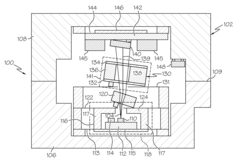
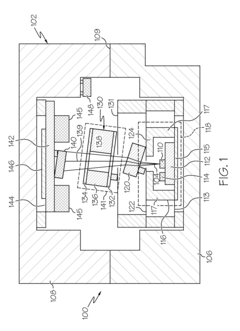
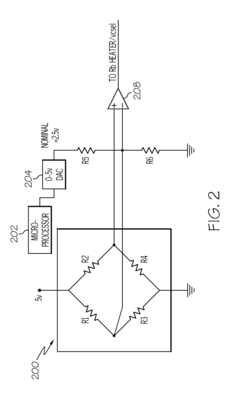
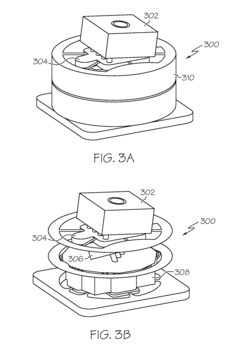
- A two-thermal zone configuration within the physics package, where the laser die and vapor cell are independently maintained at their respective stability points using on-chip temperature sensors and off-chip control electronics, allowing for stable operation of the VCSEL and vapor cell, even in varying ambient temperatures.
Chip-scale atomic clock (CSAC) and method for making same
PatentWO2006036268A2
Innovation
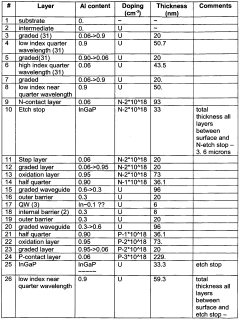
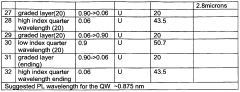
- A portable, at least partially evacuated housing with a cell having internal dimensions less than 1 millimeter, containing metal atomic vapor, an electrical to optical energy converter, an optical energy intensity detector, and conductive windings to stabilize the magnetic field, enabling efficient signal detection and stabilization.
Test Flow Optimization Strategies
Optimizing test flows for CSAC (Chip Scale Atomic Clock) testing automation requires systematic approaches to enhance efficiency while maintaining test coverage and quality. Current CSAC testing processes often involve sequential testing of multiple parameters, resulting in extended test times and reduced throughput. By implementing strategic optimization techniques, manufacturers can significantly reduce test times while maintaining or even improving test coverage.
The implementation of parallel testing architectures represents a primary optimization strategy, allowing multiple test parameters to be evaluated simultaneously rather than sequentially. This approach can reduce overall test time by 30-45% in typical CSAC production environments. Critical to successful parallel testing is the careful analysis of parameter dependencies to ensure measurement integrity is not compromised when tests are conducted concurrently.
Statistical Process Control (SPC) methodologies offer another powerful optimization avenue. By continuously monitoring test results and identifying patterns, manufacturers can implement adaptive test flows that adjust testing depth based on statistical confidence levels. This approach allows for reduced testing on parameters showing consistent stability while maintaining rigorous evaluation of parameters exhibiting variability or drift characteristics.
Machine learning algorithms have demonstrated significant potential in CSAC test flow optimization. These systems can analyze historical test data to identify correlations between parameters, enabling predictive testing models that can estimate certain parameter values based on others already measured. In production environments, this has enabled test time reductions of up to 25% without sacrificing accuracy or reliability metrics.
Test binning strategies represent another effective optimization technique, where devices are categorized into performance tiers early in the test flow. This allows subsequent testing to be tailored to the specific performance category, eliminating unnecessary tests for devices already classified into certain performance bands. Implementation of dynamic binning has shown particular promise, with test time reductions of 15-20% reported in high-volume CSAC production facilities.
Environmental condition optimization further enhances test efficiency. By identifying optimal temperature, humidity, and other environmental factors for specific test phases, overall test time can be reduced while improving measurement repeatability. Some manufacturers have implemented multi-chamber test environments that allow devices to move through optimized conditions for each test phase, reducing overall test cycle time by up to 18%.
The implementation of parallel testing architectures represents a primary optimization strategy, allowing multiple test parameters to be evaluated simultaneously rather than sequentially. This approach can reduce overall test time by 30-45% in typical CSAC production environments. Critical to successful parallel testing is the careful analysis of parameter dependencies to ensure measurement integrity is not compromised when tests are conducted concurrently.
Statistical Process Control (SPC) methodologies offer another powerful optimization avenue. By continuously monitoring test results and identifying patterns, manufacturers can implement adaptive test flows that adjust testing depth based on statistical confidence levels. This approach allows for reduced testing on parameters showing consistent stability while maintaining rigorous evaluation of parameters exhibiting variability or drift characteristics.
Machine learning algorithms have demonstrated significant potential in CSAC test flow optimization. These systems can analyze historical test data to identify correlations between parameters, enabling predictive testing models that can estimate certain parameter values based on others already measured. In production environments, this has enabled test time reductions of up to 25% without sacrificing accuracy or reliability metrics.
Test binning strategies represent another effective optimization technique, where devices are categorized into performance tiers early in the test flow. This allows subsequent testing to be tailored to the specific performance category, eliminating unnecessary tests for devices already classified into certain performance bands. Implementation of dynamic binning has shown particular promise, with test time reductions of 15-20% reported in high-volume CSAC production facilities.
Environmental condition optimization further enhances test efficiency. By identifying optimal temperature, humidity, and other environmental factors for specific test phases, overall test time can be reduced while improving measurement repeatability. Some manufacturers have implemented multi-chamber test environments that allow devices to move through optimized conditions for each test phase, reducing overall test cycle time by up to 18%.
Quality Assurance and Validation Frameworks
Quality assurance and validation frameworks are critical components in the CSAC (Chip-Scale Atomic Clock) testing automation ecosystem. These frameworks establish systematic approaches to ensure that automated test processes deliver reliable, consistent, and accurate results across all testing phases. For CSAC testing, comprehensive validation protocols must address both hardware and software components while maintaining traceability to established metrology standards.
The foundation of effective QA frameworks for CSAC testing begins with test case validation methodologies. These methodologies verify that automated test sequences correctly evaluate all critical parameters including frequency stability, power consumption, environmental resilience, and phase noise characteristics. Statistical process control techniques are integrated to establish baseline performance metrics and identify deviations that may indicate test system failures rather than actual device under test (DUT) issues.
Measurement uncertainty analysis forms another crucial element of CSAC validation frameworks. This involves quantifying and documenting all potential error sources in the automated test system, including instrument calibration uncertainties, environmental variations, connection losses, and software algorithm limitations. Rigorous uncertainty budgets must be established for each measurement type to ensure test results remain meaningful and comparable across different test stations and manufacturing facilities.
Automated regression testing protocols represent a key advancement in CSAC quality assurance. These protocols continuously verify system integrity through scheduled execution of reference measurements on calibrated devices with known characteristics. Any drift in measurement results triggers immediate investigation and recalibration procedures, preventing the propagation of systematic errors throughout production testing.
Test data integrity verification systems constitute another essential component, implementing checksums, data redundancy, and automated cross-validation between different measurement techniques. These systems ensure that data corruption or transmission errors do not compromise test results or lead to false pass/fail determinations in production environments.
Calibration management systems maintain traceability to national standards while automating the scheduling and verification of instrument calibration cycles. For CSAC testing, these systems must account for the unique challenges of quantum-based measurements and ensure that reference standards remain valid across extended production periods. Automated calibration verification routines execute at predetermined intervals to confirm measurement accuracy without disrupting production flows.
Documentation and compliance frameworks complete the quality assurance ecosystem by maintaining comprehensive records of test system validation, calibration histories, and measurement uncertainties. These frameworks support regulatory compliance requirements while providing the foundation for continuous improvement initiatives through detailed analysis of historical test data and system performance metrics.
The foundation of effective QA frameworks for CSAC testing begins with test case validation methodologies. These methodologies verify that automated test sequences correctly evaluate all critical parameters including frequency stability, power consumption, environmental resilience, and phase noise characteristics. Statistical process control techniques are integrated to establish baseline performance metrics and identify deviations that may indicate test system failures rather than actual device under test (DUT) issues.
Measurement uncertainty analysis forms another crucial element of CSAC validation frameworks. This involves quantifying and documenting all potential error sources in the automated test system, including instrument calibration uncertainties, environmental variations, connection losses, and software algorithm limitations. Rigorous uncertainty budgets must be established for each measurement type to ensure test results remain meaningful and comparable across different test stations and manufacturing facilities.
Automated regression testing protocols represent a key advancement in CSAC quality assurance. These protocols continuously verify system integrity through scheduled execution of reference measurements on calibrated devices with known characteristics. Any drift in measurement results triggers immediate investigation and recalibration procedures, preventing the propagation of systematic errors throughout production testing.
Test data integrity verification systems constitute another essential component, implementing checksums, data redundancy, and automated cross-validation between different measurement techniques. These systems ensure that data corruption or transmission errors do not compromise test results or lead to false pass/fail determinations in production environments.
Calibration management systems maintain traceability to national standards while automating the scheduling and verification of instrument calibration cycles. For CSAC testing, these systems must account for the unique challenges of quantum-based measurements and ensure that reference standards remain valid across extended production periods. Automated calibration verification routines execute at predetermined intervals to confirm measurement accuracy without disrupting production flows.
Documentation and compliance frameworks complete the quality assurance ecosystem by maintaining comprehensive records of test system validation, calibration histories, and measurement uncertainties. These frameworks support regulatory compliance requirements while providing the foundation for continuous improvement initiatives through detailed analysis of historical test data and system performance metrics.
Unlock deeper insights with PatSnap Eureka Quick Research — get a full tech report to explore trends and direct your research. Try now!
Generate Your Research Report Instantly with AI Agent
Supercharge your innovation with PatSnap Eureka AI Agent Platform!