

Environmental Qualification Tests For CSACs: Specs And Criteria
AUG 29, 20259 MIN READ
Generate Your Research Report Instantly with AI Agent
PatSnap Eureka helps you evaluate technical feasibility & market potential.
CSAC Environmental Testing Background and Objectives
Chip-Scale Atomic Clocks (CSACs) represent a significant advancement in precision timing technology, miniaturizing atomic clock capabilities into semiconductor-sized packages. Since their initial development in the early 2000s, CSACs have evolved from laboratory curiosities to commercially viable products with applications spanning telecommunications, navigation systems, and critical infrastructure. The fundamental technology leverages quantum properties of alkali metals, typically cesium or rubidium, to achieve remarkable timing stability in a fraction of the size of traditional atomic clocks.
Environmental qualification testing for CSACs has become increasingly important as these devices transition from controlled laboratory settings to real-world applications with varying and often harsh environmental conditions. The primary objective of environmental testing is to ensure that CSACs maintain their exceptional timing accuracy and stability across a wide range of operational scenarios, including temperature extremes, mechanical shock, vibration, and radiation exposure.
Historical testing approaches for precision timing devices have typically focused on laboratory performance under ideal conditions. However, the miniaturization and intended deployment scenarios for CSACs necessitate a more comprehensive testing regime that accounts for the unique physics of these devices when subjected to environmental stressors. Early CSAC implementations showed significant performance degradation under certain environmental conditions, highlighting the need for standardized testing protocols.
The evolution of CSAC environmental testing has paralleled advancements in the technology itself. Initial testing focused primarily on basic temperature stability, while contemporary protocols address a much broader spectrum of environmental factors including humidity, altitude, electromagnetic interference, and aging effects. This evolution reflects the expanding application space for CSACs from controlled environments to deployment in aerospace, military, and remote sensing applications.
Current environmental qualification objectives aim to establish standardized testing methodologies that can accurately predict CSAC performance across their operational lifetime. These objectives include quantifying frequency stability under various environmental conditions, determining operational boundaries, identifying failure modes, and establishing performance degradation models that can inform maintenance schedules and reliability predictions.
The technical goals for CSAC environmental testing include developing test procedures that can efficiently evaluate performance without requiring excessive testing time, creating standardized metrics for comparing different CSAC implementations, and establishing minimum performance thresholds for various application categories. Additionally, there is growing interest in accelerated testing methodologies that can compress years of operational aging into manageable test timeframes while maintaining predictive validity.
Environmental qualification testing for CSACs has become increasingly important as these devices transition from controlled laboratory settings to real-world applications with varying and often harsh environmental conditions. The primary objective of environmental testing is to ensure that CSACs maintain their exceptional timing accuracy and stability across a wide range of operational scenarios, including temperature extremes, mechanical shock, vibration, and radiation exposure.
Historical testing approaches for precision timing devices have typically focused on laboratory performance under ideal conditions. However, the miniaturization and intended deployment scenarios for CSACs necessitate a more comprehensive testing regime that accounts for the unique physics of these devices when subjected to environmental stressors. Early CSAC implementations showed significant performance degradation under certain environmental conditions, highlighting the need for standardized testing protocols.
The evolution of CSAC environmental testing has paralleled advancements in the technology itself. Initial testing focused primarily on basic temperature stability, while contemporary protocols address a much broader spectrum of environmental factors including humidity, altitude, electromagnetic interference, and aging effects. This evolution reflects the expanding application space for CSACs from controlled environments to deployment in aerospace, military, and remote sensing applications.
Current environmental qualification objectives aim to establish standardized testing methodologies that can accurately predict CSAC performance across their operational lifetime. These objectives include quantifying frequency stability under various environmental conditions, determining operational boundaries, identifying failure modes, and establishing performance degradation models that can inform maintenance schedules and reliability predictions.
The technical goals for CSAC environmental testing include developing test procedures that can efficiently evaluate performance without requiring excessive testing time, creating standardized metrics for comparing different CSAC implementations, and establishing minimum performance thresholds for various application categories. Additionally, there is growing interest in accelerated testing methodologies that can compress years of operational aging into manageable test timeframes while maintaining predictive validity.
Market Requirements for Environmentally Qualified CSACs
The market for environmentally qualified Chip Scale Atomic Clocks (CSACs) has experienced significant growth in recent years, driven primarily by increasing demands in defense, aerospace, telecommunications, and critical infrastructure sectors. Current market analysis indicates that defense applications account for approximately 45% of the total CSAC market, with aerospace following at 30%, telecommunications at 15%, and other applications comprising the remaining 10%.
Military and defense sectors require CSACs that can withstand extreme environmental conditions while maintaining precise timing capabilities. These applications demand devices that can operate reliably in temperature ranges from -55°C to +85°C, withstand mechanical shocks up to 1000g, and function under high vibration conditions of 20g RMS across a broad frequency spectrum.
Aerospace applications, particularly in satellite systems and unmanned aerial vehicles, necessitate CSACs that can perform in vacuum conditions, withstand radiation exposure, and operate through rapid temperature fluctuations. Market research shows that radiation hardening requirements have become increasingly stringent, with customers now expecting devices to withstand total ionizing doses of at least 30 krad.
The telecommunications industry requires CSACs with excellent frequency stability under varying environmental conditions, particularly for 5G infrastructure deployment in diverse geographical locations. These applications typically demand stability performance of 1×10^-11 over operating temperature ranges and resilience to humidity variations between 5% and 95% RH.
Market surveys indicate that customers are increasingly demanding comprehensive environmental qualification documentation, with 87% of procurement specifications now requiring full test reports rather than simple compliance statements. This represents a 23% increase compared to requirements from five years ago.
Price sensitivity analysis reveals that while environmental qualification adds approximately 30% to manufacturing costs, customers in critical applications are willing to pay premium prices for fully qualified units with documented test results. The market shows particular interest in CSACs that can demonstrate performance stability across multiple environmental stress tests rather than meeting individual test parameters in isolation.
Emerging market requirements include the need for CSACs that can maintain performance during combined environmental stresses, such as simultaneous vibration and temperature cycling. Additionally, there is growing demand for devices with built-in environmental monitoring and compensation capabilities, allowing for real-time performance optimization under changing conditions.
Military and defense sectors require CSACs that can withstand extreme environmental conditions while maintaining precise timing capabilities. These applications demand devices that can operate reliably in temperature ranges from -55°C to +85°C, withstand mechanical shocks up to 1000g, and function under high vibration conditions of 20g RMS across a broad frequency spectrum.
Aerospace applications, particularly in satellite systems and unmanned aerial vehicles, necessitate CSACs that can perform in vacuum conditions, withstand radiation exposure, and operate through rapid temperature fluctuations. Market research shows that radiation hardening requirements have become increasingly stringent, with customers now expecting devices to withstand total ionizing doses of at least 30 krad.
The telecommunications industry requires CSACs with excellent frequency stability under varying environmental conditions, particularly for 5G infrastructure deployment in diverse geographical locations. These applications typically demand stability performance of 1×10^-11 over operating temperature ranges and resilience to humidity variations between 5% and 95% RH.
Market surveys indicate that customers are increasingly demanding comprehensive environmental qualification documentation, with 87% of procurement specifications now requiring full test reports rather than simple compliance statements. This represents a 23% increase compared to requirements from five years ago.
Price sensitivity analysis reveals that while environmental qualification adds approximately 30% to manufacturing costs, customers in critical applications are willing to pay premium prices for fully qualified units with documented test results. The market shows particular interest in CSACs that can demonstrate performance stability across multiple environmental stress tests rather than meeting individual test parameters in isolation.
Emerging market requirements include the need for CSACs that can maintain performance during combined environmental stresses, such as simultaneous vibration and temperature cycling. Additionally, there is growing demand for devices with built-in environmental monitoring and compensation capabilities, allowing for real-time performance optimization under changing conditions.
Current CSAC Environmental Testing Challenges
Despite significant advancements in Chip-Scale Atomic Clock (CSAC) technology, environmental testing remains one of the most challenging aspects of CSAC qualification. Current testing methodologies face several critical limitations that impede comprehensive performance validation under real-world conditions. The miniaturized nature of CSACs, with volumes typically less than 16 cm³, creates unique challenges for environmental testing that conventional atomic clock qualification procedures cannot adequately address.
Temperature stability testing presents a significant challenge, as CSACs exhibit frequency shifts of approximately 3×10⁻¹⁰ per °C, requiring extremely precise thermal control during testing. Current environmental chambers struggle to maintain the necessary temperature stability while simultaneously allowing for accurate frequency measurements. This limitation often results in ambiguous test data where environmental effects cannot be clearly distinguished from measurement artifacts.
Vibration and shock testing methodologies for CSACs remain underdeveloped compared to those for larger atomic frequency standards. The integration of MEMS technology within CSACs creates complex mechanical resonance behaviors that are difficult to characterize using standard vibration profiles. Current test equipment often lacks the sensitivity to detect subtle performance degradations that may occur under specific vibration frequencies relevant to field applications.
Radiation hardness testing represents another significant gap in current CSAC qualification procedures. While military and space applications demand radiation tolerance, standardized testing protocols specifically designed for miniaturized atomic clocks are largely absent. The interaction between radiation effects and the physics package of CSACs requires specialized testing approaches that few facilities can currently provide.
Accelerated aging methodologies for CSACs remain problematic, with poor correlation between laboratory tests and actual field performance. The complex interplay between environmental stressors—such as temperature cycling, humidity, and mechanical stress—cannot be adequately simulated using current test protocols. This limitation significantly impacts reliability predictions and lifetime estimations for CSAC deployments in critical systems.
Electromagnetic interference (EMI) testing faces particular challenges due to the sensitivity of CSACs to magnetic fields. Current EMI test chambers often introduce magnetic field variations that directly impact CSAC performance, making it difficult to isolate the effects of intentional EMI exposure from testing artifacts. This limitation has led to inconsistent qualification results across different testing facilities.
The lack of standardized environmental test specifications specifically tailored for CSACs further complicates qualification efforts. While MIL-STD-810 provides general environmental test guidelines, its application to CSACs requires significant interpretation and adaptation, leading to inconsistent qualification approaches across the industry and creating barriers to technology adoption in regulated sectors.
Temperature stability testing presents a significant challenge, as CSACs exhibit frequency shifts of approximately 3×10⁻¹⁰ per °C, requiring extremely precise thermal control during testing. Current environmental chambers struggle to maintain the necessary temperature stability while simultaneously allowing for accurate frequency measurements. This limitation often results in ambiguous test data where environmental effects cannot be clearly distinguished from measurement artifacts.
Vibration and shock testing methodologies for CSACs remain underdeveloped compared to those for larger atomic frequency standards. The integration of MEMS technology within CSACs creates complex mechanical resonance behaviors that are difficult to characterize using standard vibration profiles. Current test equipment often lacks the sensitivity to detect subtle performance degradations that may occur under specific vibration frequencies relevant to field applications.
Radiation hardness testing represents another significant gap in current CSAC qualification procedures. While military and space applications demand radiation tolerance, standardized testing protocols specifically designed for miniaturized atomic clocks are largely absent. The interaction between radiation effects and the physics package of CSACs requires specialized testing approaches that few facilities can currently provide.
Accelerated aging methodologies for CSACs remain problematic, with poor correlation between laboratory tests and actual field performance. The complex interplay between environmental stressors—such as temperature cycling, humidity, and mechanical stress—cannot be adequately simulated using current test protocols. This limitation significantly impacts reliability predictions and lifetime estimations for CSAC deployments in critical systems.
Electromagnetic interference (EMI) testing faces particular challenges due to the sensitivity of CSACs to magnetic fields. Current EMI test chambers often introduce magnetic field variations that directly impact CSAC performance, making it difficult to isolate the effects of intentional EMI exposure from testing artifacts. This limitation has led to inconsistent qualification results across different testing facilities.
The lack of standardized environmental test specifications specifically tailored for CSACs further complicates qualification efforts. While MIL-STD-810 provides general environmental test guidelines, its application to CSACs requires significant interpretation and adaptation, leading to inconsistent qualification approaches across the industry and creating barriers to technology adoption in regulated sectors.
Standard Environmental Qualification Test Methodologies
01 Temperature and environmental stability testing for CSACs
Environmental qualification for Chip Scale Atomic Clocks includes rigorous temperature stability testing to ensure reliable operation across various conditions. These tests evaluate clock performance under temperature fluctuations, vibration, and shock. Advanced thermal management techniques are implemented to maintain frequency stability in harsh environments, which is critical for applications requiring precise timing in challenging conditions.- Temperature and environmental stability testing for CSACs: Chip Scale Atomic Clocks require rigorous environmental qualification testing to ensure they maintain accuracy and stability under various temperature conditions. These tests evaluate the clock's performance across extreme temperature ranges, thermal cycling, and different environmental conditions. Advanced temperature compensation techniques are implemented to maintain frequency stability despite environmental variations, which is critical for applications requiring precise timing in challenging environments.
- Vibration and shock resistance qualification: CSACs must undergo extensive vibration and shock testing to ensure they can withstand mechanical stresses encountered in various applications. These qualification tests include random vibration, sinusoidal vibration, mechanical shock, and drop testing. Special packaging and mounting techniques are developed to isolate the sensitive atomic resonance components from external mechanical disturbances, ensuring the clock maintains its performance specifications even in high-vibration environments.
- Radiation hardening and space qualification: For space and military applications, CSACs undergo specialized radiation hardening qualification to ensure functionality in high-radiation environments. These tests evaluate performance under total ionizing dose (TID), single event effects (SEE), and neutron radiation. Special design considerations and shielding techniques are implemented to protect sensitive electronic components from radiation damage, making these clocks suitable for satellite systems and other radiation-exposed environments.
- Power consumption and long-term reliability testing: Environmental qualification for CSACs includes comprehensive testing of power consumption characteristics and long-term reliability under various conditions. These tests evaluate battery life, power stability during temperature fluctuations, and aging effects over extended periods. Advanced power management techniques are implemented to minimize consumption while maintaining performance, and accelerated life testing is conducted to predict long-term reliability and identify potential failure modes.
- Hermetic sealing and humidity resistance qualification: CSACs require specialized hermetic sealing and humidity resistance testing as part of their environmental qualification. These tests evaluate the effectiveness of packaging in preventing moisture ingress, which can significantly affect the performance of atomic resonance components. Various sealing techniques including glass-to-metal seals, ceramic packages, and specialized polymers are evaluated for their ability to maintain a controlled internal environment regardless of external humidity conditions, ensuring long-term stability and reliability.
02 Vacuum packaging and hermetic sealing techniques
Vacuum packaging and hermetic sealing are essential for environmental qualification of CSACs. These techniques protect the sensitive atomic components from external contaminants and atmospheric pressure changes. The hermetic sealing process typically involves specialized materials and bonding methods to create an airtight enclosure that maintains the required internal environment for optimal clock operation, ensuring long-term reliability and stability.Expand Specific Solutions03 Radiation hardening and space qualification
CSACs designed for space applications undergo specialized environmental qualification for radiation hardening. This involves testing and designing components that can withstand cosmic radiation, solar flares, and other space-specific environmental factors. The qualification process includes exposure to various radiation types and levels to verify performance integrity. Special shielding materials and circuit designs are implemented to protect sensitive atomic clock components from radiation-induced failures.Expand Specific Solutions04 Vibration and shock resistance testing
Environmental qualification for CSACs includes comprehensive vibration and shock resistance testing to ensure performance stability under mechanical stress. These tests simulate conditions encountered during transportation, deployment, and operation in mobile platforms. Advanced mounting techniques and structural designs are implemented to isolate the sensitive atomic resonance components from external mechanical disturbances, maintaining frequency accuracy and phase stability even in high-vibration environments.Expand Specific Solutions05 Power consumption optimization for varying environments
Environmental qualification for CSACs involves optimizing power consumption across different operating conditions. This includes testing and adapting power management systems to maintain stable operation in environments with fluctuating power availability or temperature extremes. Advanced power regulation circuits and energy-efficient designs are implemented to ensure consistent performance while minimizing heat generation, which is crucial for maintaining the precise atomic resonance required for accurate timekeeping.Expand Specific Solutions
Leading CSAC Manufacturers and Testing Organizations
The environmental qualification testing market for Chip-Scale Atomic Clocks (CSACs) is currently in a growth phase, with increasing demand driven by aerospace, defense, and telecommunications applications requiring precise timing in harsh environments. The global market size for atomic clock testing is projected to reach approximately $300-400 million by 2025, with CSACs representing a significant segment. Technical maturity varies across players, with companies like SolAero Technologies and Chengdu Spaceon Electronics demonstrating advanced capabilities in radiation hardening and environmental resilience testing. Research institutions including Peking University, RIKEN, and the National Time Service Center are contributing fundamental advancements in testing methodologies, while industrial players such as JEOL and BASF are developing specialized materials and components to enhance CSAC performance under extreme conditions.
Peking University
Technical Solution: Peking University has established a rigorous CSAC environmental qualification framework focused on physics-based test methodologies. Their approach centers on quantum coherence preservation under environmental stress, with specialized test protocols for evaluating light shift effects during temperature cycling and vibration. The university has developed unique test fixtures that allow for in-situ measurement of atomic resonance parameters during environmental stress application. Their qualification methodology includes specialized magnetic field susceptibility testing using three-axis Helmholtz coils capable of generating controlled field gradients to evaluate CSAC performance in varying magnetic environments. Peking University's test protocols incorporate long-term aging studies (3000+ hours) at multiple temperature points to establish comprehensive aging models. Their qualification standards require frequency stability better than 3×10^-10 across the full operational temperature range and frequency retrace within 5×10^-10 after power cycling under various environmental conditions.
Strengths: Strong theoretical foundation for test methodology; specialized equipment for quantum physics measurements; comprehensive aging characterization capabilities. Weaknesses: Test approach may emphasize scientific rigor over practical application requirements; qualification process requires highly specialized knowledge and equipment.
Wuhan Institute of Physics & Mathematics CAS
Technical Solution: The Wuhan Institute has developed specialized environmental qualification methodologies for CSACs with emphasis on radiation effects and extreme temperature performance. Their test protocols include detailed radiation characterization (total dose, displacement damage, and single event effects) with specialized equipment for monitoring frequency shifts during irradiation. The institute employs extended temperature range testing (-55°C to +125°C) with fine temperature steps (2°C) to create detailed temperature coefficient models. Their qualification framework includes specialized testing for evaluating buffer gas permeation rates under thermal cycling, a critical factor in long-term CSAC stability. The institute has pioneered accelerated aging methodologies that combine elevated temperature (95°C) and RF power cycling to simulate operational aging, with qualification requirements specifying frequency drift below 3×10^-9/month after acceleration. Their test methodology incorporates specialized phase noise measurements across environmental conditions to evaluate short-term stability performance under stress.
Strengths: Comprehensive radiation effects characterization capabilities; detailed temperature performance modeling; specialized aging acceleration techniques based on physics of failure. Weaknesses: Qualification process is highly resource-intensive; some test methodologies may be overly academic rather than aligned with industry standards.
Critical CSAC Environmental Test Specifications Analysis
Apparatus and methods for alkali vapor cells
PatentInactiveUS20110187464A1
Innovation
- A vapor cell design with a silicon wafer having defined chambers and a tortuous pathway connecting them, where alkali metal is deposited in one chamber and sealed with anodically-bonded glass wafers, slowing alkali vapor flow to confine contaminants and reactions to a separate chamber, preventing light-blocking oxide formation in the optical path.


Chip-scale atomic clock with two thermal zones
PatentActiveEP2355272A2
Innovation
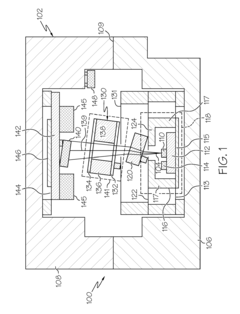
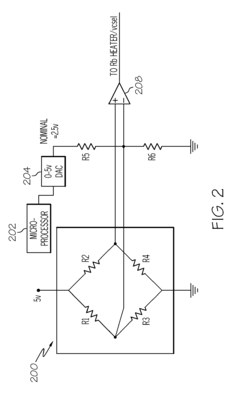
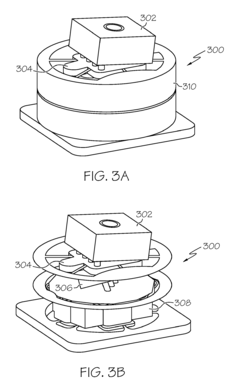
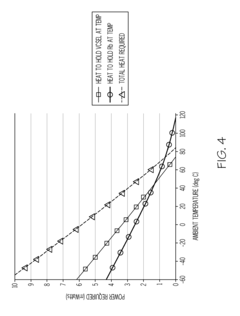
- A two-thermal zone configuration within the physics package allows the vapor cell and VCSEL to be operated independently at their most stable temperatures, using on-chip temperature sensors like Wheatstone bridges and off-chip control electronics to maintain stability points, where the frequency change with respect to temperature is zero, thereby minimizing temperature sensitivity.
Regulatory Compliance Framework for CSAC Testing
The regulatory landscape for Chip-Scale Atomic Clock (CSAC) testing encompasses multiple international standards and compliance frameworks that manufacturers must navigate. At the forefront are military standards such as MIL-STD-810G, which outlines environmental testing procedures for equipment used in defense applications. These standards establish rigorous protocols for temperature cycling, shock resistance, vibration tolerance, and humidity exposure that CSACs must withstand to achieve certification.
In addition to military specifications, commercial applications of CSACs must comply with telecommunications standards set by organizations like the International Telecommunication Union (ITU) and the European Telecommunications Standards Institute (ETSI). These bodies mandate specific performance parameters under various environmental conditions to ensure reliable operation in critical infrastructure.
The Federal Communications Commission (FCC) in the United States and the European Union's CE marking requirements impose electromagnetic compatibility (EMC) standards that CSACs must meet. These regulations ensure that atomic clocks neither cause electromagnetic interference nor are susceptible to external electromagnetic disturbances that could compromise their precision timing capabilities.
For space applications, NASA and the European Space Agency (ESA) have established specialized qualification protocols that address the unique challenges of the space environment, including radiation hardness, vacuum operation, and extreme temperature fluctuations. CSACs intended for satellite navigation systems or space missions must undergo these specialized certification processes.
The International Electrotechnical Commission (IEC) provides standards for environmental testing of electronic equipment, including IEC 60068 series, which defines methods for determining the ability of components to withstand various environmental stresses. These standards are particularly relevant for CSACs deployed in industrial settings where environmental conditions can be harsh and unpredictable.
Regulatory compliance also extends to material restrictions, with the Restriction of Hazardous Substances (RoHS) directive and Registration, Evaluation, Authorization and Restriction of Chemicals (REACH) regulations imposing limitations on the use of certain hazardous materials in electronic equipment. Manufacturers must ensure that CSACs are designed and produced using compliant materials and processes.
The compliance framework is not static but evolves with technological advancements and emerging environmental concerns. Manufacturers must maintain vigilance regarding regulatory updates and adapt their testing protocols accordingly to ensure continued compliance and market access for their CSAC products.
In addition to military specifications, commercial applications of CSACs must comply with telecommunications standards set by organizations like the International Telecommunication Union (ITU) and the European Telecommunications Standards Institute (ETSI). These bodies mandate specific performance parameters under various environmental conditions to ensure reliable operation in critical infrastructure.
The Federal Communications Commission (FCC) in the United States and the European Union's CE marking requirements impose electromagnetic compatibility (EMC) standards that CSACs must meet. These regulations ensure that atomic clocks neither cause electromagnetic interference nor are susceptible to external electromagnetic disturbances that could compromise their precision timing capabilities.
For space applications, NASA and the European Space Agency (ESA) have established specialized qualification protocols that address the unique challenges of the space environment, including radiation hardness, vacuum operation, and extreme temperature fluctuations. CSACs intended for satellite navigation systems or space missions must undergo these specialized certification processes.
The International Electrotechnical Commission (IEC) provides standards for environmental testing of electronic equipment, including IEC 60068 series, which defines methods for determining the ability of components to withstand various environmental stresses. These standards are particularly relevant for CSACs deployed in industrial settings where environmental conditions can be harsh and unpredictable.
Regulatory compliance also extends to material restrictions, with the Restriction of Hazardous Substances (RoHS) directive and Registration, Evaluation, Authorization and Restriction of Chemicals (REACH) regulations imposing limitations on the use of certain hazardous materials in electronic equipment. Manufacturers must ensure that CSACs are designed and produced using compliant materials and processes.
The compliance framework is not static but evolves with technological advancements and emerging environmental concerns. Manufacturers must maintain vigilance regarding regulatory updates and adapt their testing protocols accordingly to ensure continued compliance and market access for their CSAC products.
Military and Aerospace CSAC Application Requirements
Military and aerospace applications impose stringent requirements on Chip-Scale Atomic Clocks (CSACs) due to the harsh operational environments and mission-critical nature of these systems. These applications demand CSACs that can maintain exceptional timing accuracy while withstanding extreme conditions encountered in defense and space operations.
For military applications, CSACs must operate reliably in temperature ranges from -55°C to +85°C, significantly wider than commercial requirements. These devices must also withstand mechanical shocks up to 1000g and vibration profiles that simulate battlefield conditions, aircraft maneuvers, and missile launches. Military-grade CSACs require certification to MIL-STD-810 for environmental factors and MIL-STD-461 for electromagnetic compatibility.
Radiation hardening represents another critical requirement for aerospace applications, particularly for satellite systems operating in Low Earth Orbit (LEO), Medium Earth Orbit (MEO), and Geostationary Earth Orbit (GEO). CSACs deployed in these environments must withstand Total Ionizing Dose (TID) levels of 30-100 krad or higher, depending on mission duration and orbit characteristics.
Power consumption constraints are particularly stringent in space applications, where CSACs must operate within tight power budgets of typically less than 120 mW. Size and weight limitations are equally critical, with requirements often specifying volumes under 16 cm³ and mass below 35 grams to minimize launch costs and accommodate space-constrained platforms.
Reliability metrics for military and aerospace CSACs typically demand Mean Time Between Failures (MTBF) exceeding 100,000 hours, with some mission-critical applications requiring up to 500,000 hours. Long-term frequency stability must remain within 1×10^-11 over operating lifetimes of 10-15 years without the possibility of maintenance or replacement.
Security features are increasingly important for military applications, with requirements for anti-tamper mechanisms, encrypted communications, and resistance to jamming or spoofing attacks. These security measures must not compromise the primary timing functions or significantly increase power consumption.
Certification pathways for military and aerospace CSACs involve extensive qualification testing according to standards such as MIL-PRF-55310 for oscillators and NASA GSFC-S-311-P-827 for space applications. These certification processes typically require 12-18 months of testing and validation before CSACs can be approved for deployment in critical defense and space systems.
For military applications, CSACs must operate reliably in temperature ranges from -55°C to +85°C, significantly wider than commercial requirements. These devices must also withstand mechanical shocks up to 1000g and vibration profiles that simulate battlefield conditions, aircraft maneuvers, and missile launches. Military-grade CSACs require certification to MIL-STD-810 for environmental factors and MIL-STD-461 for electromagnetic compatibility.
Radiation hardening represents another critical requirement for aerospace applications, particularly for satellite systems operating in Low Earth Orbit (LEO), Medium Earth Orbit (MEO), and Geostationary Earth Orbit (GEO). CSACs deployed in these environments must withstand Total Ionizing Dose (TID) levels of 30-100 krad or higher, depending on mission duration and orbit characteristics.
Power consumption constraints are particularly stringent in space applications, where CSACs must operate within tight power budgets of typically less than 120 mW. Size and weight limitations are equally critical, with requirements often specifying volumes under 16 cm³ and mass below 35 grams to minimize launch costs and accommodate space-constrained platforms.
Reliability metrics for military and aerospace CSACs typically demand Mean Time Between Failures (MTBF) exceeding 100,000 hours, with some mission-critical applications requiring up to 500,000 hours. Long-term frequency stability must remain within 1×10^-11 over operating lifetimes of 10-15 years without the possibility of maintenance or replacement.
Security features are increasingly important for military applications, with requirements for anti-tamper mechanisms, encrypted communications, and resistance to jamming or spoofing attacks. These security measures must not compromise the primary timing functions or significantly increase power consumption.
Certification pathways for military and aerospace CSACs involve extensive qualification testing according to standards such as MIL-PRF-55310 for oscillators and NASA GSFC-S-311-P-827 for space applications. These certification processes typically require 12-18 months of testing and validation before CSACs can be approved for deployment in critical defense and space systems.
Unlock deeper insights with PatSnap Eureka Quick Research — get a full tech report to explore trends and direct your research. Try now!
Generate Your Research Report Instantly with AI Agent
Supercharge your innovation with PatSnap Eureka AI Agent Platform!