

Evaluating RRAM Impact on Data Centers' Energy Efficiency
SEP 10, 20259 MIN READ
Generate Your Research Report Instantly with AI Agent
PatSnap Eureka helps you evaluate technical feasibility & market potential.
RRAM Technology Evolution and Objectives
Resistive Random-Access Memory (RRAM) has emerged as a promising non-volatile memory technology with the potential to revolutionize data center operations. The evolution of RRAM technology can be traced back to the early 2000s when researchers began exploring alternative memory solutions to address the limitations of conventional memory technologies such as DRAM and NAND flash. The fundamental principle behind RRAM involves changing the resistance of a dielectric material, which can be switched between high and low resistance states, representing binary data.
The development trajectory of RRAM has been characterized by significant improvements in material science, fabrication techniques, and device architecture. Early RRAM devices faced challenges related to endurance, retention, and reliability. However, advancements in metal oxide materials, electrode configurations, and switching mechanisms have substantially enhanced performance metrics over the past decade.
Current RRAM technology demonstrates several advantages that make it particularly relevant for data center applications. These include low power consumption, high density, fast switching speeds, and compatibility with conventional CMOS processes. The non-volatile nature of RRAM eliminates the need for constant power to maintain stored data, presenting a fundamental shift from traditional volatile memory technologies used in data centers.
The primary technical objective for RRAM in data center applications is to significantly reduce energy consumption while maintaining or improving performance. Data centers currently consume approximately 1-2% of global electricity, with memory systems accounting for a substantial portion of this energy usage. RRAM aims to address this challenge by offering a more energy-efficient alternative that could potentially reduce memory-related power consumption by 40-60% compared to conventional technologies.
Another critical objective is to overcome the memory wall problem in data center architectures. The growing disparity between processor and memory speeds has created bottlenecks that limit overall system performance. RRAM's potential for in-memory computing and its ability to be integrated into 3D structures could fundamentally reshape data center architectures, enabling more efficient data processing paradigms.
Looking forward, the technology evolution of RRAM is expected to focus on scaling capabilities to achieve higher densities, improving write endurance to match or exceed flash memory, and reducing manufacturing costs to enable widespread adoption. The convergence of RRAM with emerging computing paradigms such as neuromorphic computing also presents exciting possibilities for future data center designs that could mimic the energy efficiency of biological systems.
The ultimate objective for RRAM technology in data centers is to enable a new generation of energy-efficient, high-performance computing infrastructure capable of supporting the exponential growth in data processing demands while minimizing environmental impact through drastically reduced power requirements.
The development trajectory of RRAM has been characterized by significant improvements in material science, fabrication techniques, and device architecture. Early RRAM devices faced challenges related to endurance, retention, and reliability. However, advancements in metal oxide materials, electrode configurations, and switching mechanisms have substantially enhanced performance metrics over the past decade.
Current RRAM technology demonstrates several advantages that make it particularly relevant for data center applications. These include low power consumption, high density, fast switching speeds, and compatibility with conventional CMOS processes. The non-volatile nature of RRAM eliminates the need for constant power to maintain stored data, presenting a fundamental shift from traditional volatile memory technologies used in data centers.
The primary technical objective for RRAM in data center applications is to significantly reduce energy consumption while maintaining or improving performance. Data centers currently consume approximately 1-2% of global electricity, with memory systems accounting for a substantial portion of this energy usage. RRAM aims to address this challenge by offering a more energy-efficient alternative that could potentially reduce memory-related power consumption by 40-60% compared to conventional technologies.
Another critical objective is to overcome the memory wall problem in data center architectures. The growing disparity between processor and memory speeds has created bottlenecks that limit overall system performance. RRAM's potential for in-memory computing and its ability to be integrated into 3D structures could fundamentally reshape data center architectures, enabling more efficient data processing paradigms.
Looking forward, the technology evolution of RRAM is expected to focus on scaling capabilities to achieve higher densities, improving write endurance to match or exceed flash memory, and reducing manufacturing costs to enable widespread adoption. The convergence of RRAM with emerging computing paradigms such as neuromorphic computing also presents exciting possibilities for future data center designs that could mimic the energy efficiency of biological systems.
The ultimate objective for RRAM technology in data centers is to enable a new generation of energy-efficient, high-performance computing infrastructure capable of supporting the exponential growth in data processing demands while minimizing environmental impact through drastically reduced power requirements.
Data Center Energy Efficiency Market Analysis
The data center market is experiencing unprecedented growth, with global spending projected to reach $227 billion by 2025, growing at a CAGR of 4.5% from 2020. This expansion is primarily driven by cloud computing adoption, big data analytics, and the proliferation of IoT devices. However, this growth comes with significant energy consumption challenges, as data centers currently consume approximately 1-2% of global electricity and are projected to reach 3-5% by 2030 if current trends continue.
Energy efficiency has become a critical market driver, with cooling and computing operations accounting for over 80% of a data center's energy consumption. Traditional memory technologies like DRAM contribute significantly to this energy footprint, consuming 30-45% of server power. This creates a substantial market opportunity for alternative memory technologies like RRAM (Resistive Random-Access Memory) that promise lower power consumption.
The market for energy-efficient data center technologies is expected to grow at 21.3% CAGR through 2026, outpacing the overall data center market. This acceleration is fueled by regulatory pressures, with initiatives like the EU's Energy Efficiency Directive and the US Department of Energy's Better Buildings Challenge pushing for improved Power Usage Effectiveness (PUE) metrics. The average data center PUE has improved from 2.5 in 2007 to approximately 1.6 in 2022, but further improvements are increasingly challenging with conventional technologies.
RRAM technology addresses this market need by potentially reducing memory subsystem power consumption by 60-90% compared to DRAM, while offering comparable or better performance for specific workloads. The non-volatile nature of RRAM eliminates refresh power requirements, which account for 15-30% of DRAM power consumption in large-scale deployments.
Customer demand is evolving beyond pure performance metrics to emphasize total cost of ownership (TCO), where energy efficiency plays a crucial role. Hyperscale operators like Google, Amazon, and Microsoft have publicly committed to carbon-neutral or carbon-negative operations, creating strong market pull for technologies like RRAM that can significantly reduce energy consumption.
The economic value proposition of RRAM in data centers extends beyond direct energy savings to include reduced cooling requirements, smaller physical footprint, and potential for higher density deployments. Analysis suggests that RRAM implementation could reduce overall data center energy costs by 8-15%, representing billions in potential savings for the industry while simultaneously addressing growing environmental concerns and regulatory requirements.
Energy efficiency has become a critical market driver, with cooling and computing operations accounting for over 80% of a data center's energy consumption. Traditional memory technologies like DRAM contribute significantly to this energy footprint, consuming 30-45% of server power. This creates a substantial market opportunity for alternative memory technologies like RRAM (Resistive Random-Access Memory) that promise lower power consumption.
The market for energy-efficient data center technologies is expected to grow at 21.3% CAGR through 2026, outpacing the overall data center market. This acceleration is fueled by regulatory pressures, with initiatives like the EU's Energy Efficiency Directive and the US Department of Energy's Better Buildings Challenge pushing for improved Power Usage Effectiveness (PUE) metrics. The average data center PUE has improved from 2.5 in 2007 to approximately 1.6 in 2022, but further improvements are increasingly challenging with conventional technologies.
RRAM technology addresses this market need by potentially reducing memory subsystem power consumption by 60-90% compared to DRAM, while offering comparable or better performance for specific workloads. The non-volatile nature of RRAM eliminates refresh power requirements, which account for 15-30% of DRAM power consumption in large-scale deployments.
Customer demand is evolving beyond pure performance metrics to emphasize total cost of ownership (TCO), where energy efficiency plays a crucial role. Hyperscale operators like Google, Amazon, and Microsoft have publicly committed to carbon-neutral or carbon-negative operations, creating strong market pull for technologies like RRAM that can significantly reduce energy consumption.
The economic value proposition of RRAM in data centers extends beyond direct energy savings to include reduced cooling requirements, smaller physical footprint, and potential for higher density deployments. Analysis suggests that RRAM implementation could reduce overall data center energy costs by 8-15%, representing billions in potential savings for the industry while simultaneously addressing growing environmental concerns and regulatory requirements.
RRAM Implementation Challenges and Global Development Status
Despite RRAM's promising potential for enhancing data center energy efficiency, several significant implementation challenges persist. At the device level, endurance limitations remain a critical concern, with most commercial RRAM cells achieving only 10^6 to 10^8 write cycles—insufficient for data center workloads requiring 10^15 cycles. Retention stability presents another challenge, as RRAM cells must maintain stored values for years while operating at elevated temperatures common in server environments.
Variability issues also plague RRAM implementation, with cell-to-cell and cycle-to-cycle variations requiring complex error correction mechanisms that increase system overhead. The sneak path problem in crossbar architectures necessitates selector devices, adding complexity to manufacturing processes and potentially reducing density advantages.
From a manufacturing perspective, integration with CMOS processes remains challenging. While some companies have demonstrated 28nm RRAM integration, scaling to advanced nodes (7nm and below) faces material compatibility and process integration hurdles. The industry also lacks standardized testing methodologies for RRAM, complicating performance comparisons across different technologies and manufacturers.
Globally, RRAM development shows distinct regional patterns. The United States leads in fundamental research through universities like Stanford and MIT, while companies such as Intel and Micron focus on commercialization pathways. Intel's 3D XPoint technology, though not pure RRAM, incorporates similar principles and targets data center applications.
Asia demonstrates strong manufacturing capabilities, with Taiwan's TSMC and South Korea's Samsung investing heavily in RRAM production technologies. China has designated RRAM as a strategic technology in its semiconductor roadmap, with significant government funding supporting companies like YMTC in developing indigenous solutions.
European efforts center around research consortia like IMEC in Belgium, which coordinates multi-institutional projects focusing on material science innovations for RRAM. The European Commission's Horizon Europe program has allocated substantial funding for next-generation memory technologies, including RRAM variants optimized for energy efficiency.
Japan maintains its traditional strength in materials science, with companies like Fujitsu and Panasonic developing proprietary RRAM technologies. Their approach emphasizes reliability and longevity—critical factors for data center implementations—rather than pursuing maximum density.
The global RRAM landscape reveals a technology approaching maturity but still requiring significant engineering refinements before widespread data center adoption. While laboratory demonstrations show impressive energy efficiency gains, translating these results to production-scale manufacturing remains an industry-wide challenge.
Variability issues also plague RRAM implementation, with cell-to-cell and cycle-to-cycle variations requiring complex error correction mechanisms that increase system overhead. The sneak path problem in crossbar architectures necessitates selector devices, adding complexity to manufacturing processes and potentially reducing density advantages.
From a manufacturing perspective, integration with CMOS processes remains challenging. While some companies have demonstrated 28nm RRAM integration, scaling to advanced nodes (7nm and below) faces material compatibility and process integration hurdles. The industry also lacks standardized testing methodologies for RRAM, complicating performance comparisons across different technologies and manufacturers.
Globally, RRAM development shows distinct regional patterns. The United States leads in fundamental research through universities like Stanford and MIT, while companies such as Intel and Micron focus on commercialization pathways. Intel's 3D XPoint technology, though not pure RRAM, incorporates similar principles and targets data center applications.
Asia demonstrates strong manufacturing capabilities, with Taiwan's TSMC and South Korea's Samsung investing heavily in RRAM production technologies. China has designated RRAM as a strategic technology in its semiconductor roadmap, with significant government funding supporting companies like YMTC in developing indigenous solutions.
European efforts center around research consortia like IMEC in Belgium, which coordinates multi-institutional projects focusing on material science innovations for RRAM. The European Commission's Horizon Europe program has allocated substantial funding for next-generation memory technologies, including RRAM variants optimized for energy efficiency.
Japan maintains its traditional strength in materials science, with companies like Fujitsu and Panasonic developing proprietary RRAM technologies. Their approach emphasizes reliability and longevity—critical factors for data center implementations—rather than pursuing maximum density.
The global RRAM landscape reveals a technology approaching maturity but still requiring significant engineering refinements before widespread data center adoption. While laboratory demonstrations show impressive energy efficiency gains, translating these results to production-scale manufacturing remains an industry-wide challenge.
Current RRAM Integration Solutions for Data Centers
01 Low-power operation and energy-efficient design
RRAM devices can be designed to operate at low voltages and currents, significantly reducing power consumption compared to conventional memory technologies. Energy-efficient designs incorporate optimized switching materials, electrode configurations, and control circuitry to minimize the energy required for read and write operations. These designs often focus on reducing the SET/RESET voltages and currents while maintaining reliable operation and data retention capabilities.- Low-power operation techniques for RRAM: Various techniques have been developed to reduce the power consumption of RRAM devices during operation. These include optimizing the programming voltages, implementing pulse width modulation, and designing efficient read/write circuits. By carefully controlling the electrical parameters during switching operations, the energy required for state transitions can be significantly reduced while maintaining reliable data storage capabilities.
- Material engineering for energy-efficient RRAM: The selection and engineering of resistive switching materials play a crucial role in determining RRAM energy efficiency. Research has focused on developing novel materials and optimizing existing ones to achieve lower switching voltages and currents. This includes exploring various metal oxides, chalcogenides, and two-dimensional materials that can facilitate efficient resistive switching with minimal energy requirements.
- Architectural innovations for energy-efficient RRAM: Novel RRAM architectures have been designed to enhance energy efficiency at the system level. These include crossbar arrays, 3D stacking configurations, and hybrid memory hierarchies that optimize data access patterns. Such architectural innovations reduce the energy overhead associated with memory operations by minimizing interconnect distances and enabling parallel operations.
- Integration of RRAM with low-power peripheral circuits: The integration of RRAM cells with energy-efficient peripheral circuits is essential for minimizing overall system power consumption. This includes the development of low-power sense amplifiers, write drivers, and address decoders specifically designed for RRAM operation. Advanced circuit techniques such as voltage scaling, power gating, and adaptive biasing schemes further enhance the energy efficiency of RRAM systems.
- Multi-level cell operation for improved energy efficiency: Multi-level cell (MLC) operation in RRAM devices allows storing multiple bits per cell, significantly improving memory density and energy efficiency per bit stored. Techniques have been developed to reliably program and read multiple resistance states while maintaining low power consumption. This approach reduces the energy cost of data storage by increasing the information density without proportionally increasing power requirements.
02 Novel materials and structures for improved efficiency
Advanced materials and innovative structural designs can enhance the energy efficiency of RRAM devices. This includes the use of novel switching materials, interface engineering, and multi-layer structures that facilitate efficient resistive switching with minimal energy loss. Oxide-based materials, metal-oxide interfaces, and nanostructured electrodes are commonly employed to reduce the energy barrier for switching while maintaining good retention and endurance characteristics.Expand Specific Solutions03 Crossbar array architectures for energy-efficient operation
Crossbar array architectures enable high-density RRAM implementation with improved energy efficiency. These architectures minimize parasitic losses and allow for parallel operations, reducing the overall energy consumption per bit. Advanced selector devices integrated into crossbar arrays help eliminate sneak path currents, which are a significant source of energy waste in high-density memory arrays. The compact design also reduces interconnect lengths, further improving energy efficiency.Expand Specific Solutions04 Programming and operation techniques for energy optimization
Specialized programming algorithms and operation techniques can significantly reduce the energy consumption of RRAM devices. These include pulse-width modulation, amplitude control, and multi-step programming approaches that minimize the energy required for switching operations. Adaptive programming schemes that adjust parameters based on device characteristics and operating conditions help optimize energy usage while maintaining reliability. Read operations can also be optimized through sensing circuit designs that minimize current flow during data retrieval.Expand Specific Solutions05 Integration with low-power peripheral circuits
Integration of RRAM with energy-efficient peripheral circuits enhances overall system energy efficiency. This includes low-power drivers, sense amplifiers, and control logic specifically designed for RRAM operation. Advanced circuit techniques such as charge recycling, voltage scaling, and leakage reduction are employed to minimize energy consumption during both active and standby modes. The co-design of memory cells and peripheral circuits ensures optimal energy efficiency across all operating conditions.Expand Specific Solutions
Leading RRAM Manufacturers and Research Institutions
RRAM technology is currently in the early growth phase of its impact on data center energy efficiency, with a market size projected to expand significantly due to increasing demand for energy-efficient computing solutions. The technology maturity varies across key players, with established semiconductor giants like Intel, IBM, and NVIDIA leading research efforts alongside specialized companies like TetraMem. Qualcomm and Huawei are advancing RRAM applications in mobile-to-data center connectivity, while research institutions including Max Planck Society, KAIST, and Industrial Technology Research Institute are driving fundamental innovations. Academic-industry collaborations are accelerating commercialization, though widespread adoption faces challenges in scaling manufacturing and system integration before RRAM can fully transform data center energy consumption patterns.
International Business Machines Corp.
Technical Solution: IBM's RRAM technology for data centers focuses on their proprietary PCM (Phase Change Memory) implementation that bridges the gap between DRAM and NAND flash storage. Their solution integrates RRAM as a persistent memory tier that significantly reduces data movement between storage and processing units. IBM has demonstrated RRAM-based computational storage architectures that perform data-intensive operations directly in the memory layer, reducing energy consumption by up to 70% compared to conventional DRAM-based systems. Their approach combines RRAM with specialized controllers that optimize read/write operations based on workload characteristics, dynamically adjusting power states to minimize energy usage during idle periods while maintaining rapid response capabilities for critical applications.
Strengths: Mature fabrication capabilities, integration with existing enterprise systems, and comprehensive power management features. IBM's solution offers enterprise-grade reliability with error correction mechanisms specifically designed for RRAM characteristics. Weaknesses: Higher implementation costs compared to conventional memory solutions and requires significant modifications to existing data center architectures to fully realize energy efficiency benefits.
Intel Corp.
Technical Solution: Intel has developed Optane DC Persistent Memory, based on their 3D XPoint technology (a form of RRAM), specifically targeting data center applications. This technology bridges the gap between DRAM and NAND storage, providing near-DRAM performance with storage-like persistence and capacity. Intel's implementation allows data centers to maintain larger working datasets in memory, reducing the energy-intensive data transfers between memory tiers. Their Memory Drive Technology virtualizes Optane DC memory to create a single memory pool, enabling applications to access up to 36TB of memory per system without code modifications. Intel's architecture reduces data center energy consumption through decreased storage I/O operations, lower cooling requirements, and more efficient memory utilization patterns that minimize the need for constant DRAM refreshes.
Strengths: Seamless integration with Intel's processor ecosystem, mature software support through optimized libraries and drivers, and established deployment in major cloud providers. Weaknesses: Vendor lock-in concerns as optimal performance requires Intel's complete hardware stack, and higher acquisition costs compared to traditional memory solutions despite long-term TCO benefits.
Key RRAM Patents and Performance Breakthroughs
Resistive memory cell and operation thereof, and resistive memory and operation and fabrication thereof
PatentInactiveUS20120020140A1
Innovation
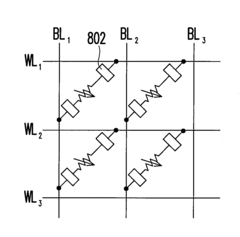
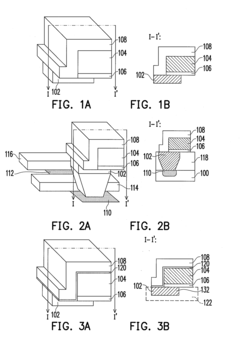
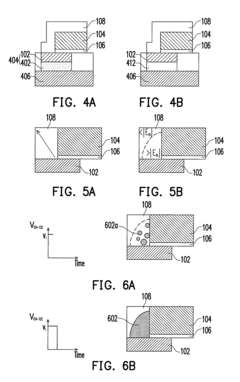
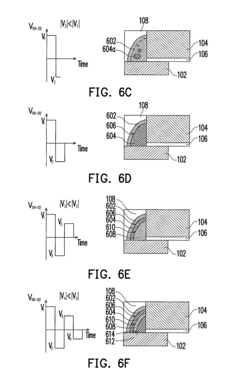
- The use of conductive domain walls in high-resistance ferroelectric materials, such as BiFeO3, to store data by applying voltage pulses and forming domains with varying polarities, allowing for efficient data storage with reduced power consumption.
Resistive random access memory cell
PatentWO2018063209A1
Innovation
- The transistor configuration includes a drain/bulk junction with significantly reduced resistance during RESET operations, allowing for 1D1R operation and circumventing source follower issues by using a diode-like drain/bulk junction with different composition compared to the rest of the transistor substrate, enabling low voltage switching and improved reliability.


Total Cost of Ownership Analysis for RRAM Adoption
The adoption of Resistive Random-Access Memory (RRAM) in data centers requires a comprehensive Total Cost of Ownership (TCO) analysis to justify investment decisions. This analysis encompasses both direct capital expenditures and long-term operational costs associated with implementing RRAM technology across data center infrastructure.
Initial acquisition costs for RRAM implementation include hardware procurement, integration expenses, and potential system architecture modifications. While RRAM components currently command premium pricing compared to conventional memory solutions, economies of scale and manufacturing advancements are projected to reduce these differentials by 15-20% annually over the next three years, making initial investment increasingly competitive.
Installation and integration expenses represent significant considerations in the TCO calculation. Data centers must account for potential downtime during transition phases, specialized engineering expertise requirements, and compatibility testing with existing systems. These transition costs typically constitute 8-12% of the total implementation budget but can be optimized through phased deployment strategies.
The operational expenditure analysis reveals RRAM's most compelling value proposition. Energy consumption metrics indicate potential power savings of 35-45% compared to traditional DRAM-based systems, with particularly significant reductions during idle states. When calculated across a five-year operational timeline, these energy efficiencies translate to approximately $1.2-1.8 million in savings per petabyte of deployed memory for large-scale data centers.
Maintenance requirements and system reliability factors further enhance RRAM's TCO advantage. The non-volatile nature of RRAM reduces data recovery operations, while its simplified architecture decreases component failure rates by an estimated 22% compared to conventional memory systems. These reliability improvements directly impact maintenance staffing requirements and system availability metrics.
Cooling infrastructure represents another critical cost consideration. RRAM's lower thermal output reduces cooling demands by approximately 28-33%, allowing data centers to either decrease cooling infrastructure investments or accommodate higher computing densities within existing thermal management systems. This cooling efficiency contributes an additional 7-10% to overall operational cost reductions.
Depreciation schedules and technology obsolescence factors must also be incorporated into comprehensive TCO models. RRAM's emerging technology status presents both opportunities and risks, with potential for extended useful life compared to mature memory technologies, but also increased uncertainty regarding future compatibility standards and upgrade pathways.
When all factors are considered in a five-year TCO model, RRAM implementation demonstrates potential for 22-30% total cost advantages over traditional memory architectures, with break-even points typically occurring between 18-24 months after deployment. These economic benefits, combined with performance advantages, position RRAM as an increasingly viable option for data centers prioritizing long-term operational efficiency.
Initial acquisition costs for RRAM implementation include hardware procurement, integration expenses, and potential system architecture modifications. While RRAM components currently command premium pricing compared to conventional memory solutions, economies of scale and manufacturing advancements are projected to reduce these differentials by 15-20% annually over the next three years, making initial investment increasingly competitive.
Installation and integration expenses represent significant considerations in the TCO calculation. Data centers must account for potential downtime during transition phases, specialized engineering expertise requirements, and compatibility testing with existing systems. These transition costs typically constitute 8-12% of the total implementation budget but can be optimized through phased deployment strategies.
The operational expenditure analysis reveals RRAM's most compelling value proposition. Energy consumption metrics indicate potential power savings of 35-45% compared to traditional DRAM-based systems, with particularly significant reductions during idle states. When calculated across a five-year operational timeline, these energy efficiencies translate to approximately $1.2-1.8 million in savings per petabyte of deployed memory for large-scale data centers.
Maintenance requirements and system reliability factors further enhance RRAM's TCO advantage. The non-volatile nature of RRAM reduces data recovery operations, while its simplified architecture decreases component failure rates by an estimated 22% compared to conventional memory systems. These reliability improvements directly impact maintenance staffing requirements and system availability metrics.
Cooling infrastructure represents another critical cost consideration. RRAM's lower thermal output reduces cooling demands by approximately 28-33%, allowing data centers to either decrease cooling infrastructure investments or accommodate higher computing densities within existing thermal management systems. This cooling efficiency contributes an additional 7-10% to overall operational cost reductions.
Depreciation schedules and technology obsolescence factors must also be incorporated into comprehensive TCO models. RRAM's emerging technology status presents both opportunities and risks, with potential for extended useful life compared to mature memory technologies, but also increased uncertainty regarding future compatibility standards and upgrade pathways.
When all factors are considered in a five-year TCO model, RRAM implementation demonstrates potential for 22-30% total cost advantages over traditional memory architectures, with break-even points typically occurring between 18-24 months after deployment. These economic benefits, combined with performance advantages, position RRAM as an increasingly viable option for data centers prioritizing long-term operational efficiency.
Thermal Management Considerations in RRAM-based Systems
Thermal management represents a critical consideration in the deployment of RRAM-based systems within data center environments. As RRAM technologies continue to evolve and gain traction as potential replacements for conventional memory solutions, their thermal characteristics demand careful evaluation and management strategies to ensure optimal performance and energy efficiency.
RRAM devices exhibit distinct thermal behaviors compared to traditional memory technologies. While RRAM generally operates at lower power than conventional DRAM, the concentrated heat generation during switching operations can create localized thermal hotspots. These hotspots, if not properly managed, may lead to reliability issues, accelerated aging, and potential data retention problems, particularly in high-density configurations common in data center deployments.
The thermal conductivity properties of RRAM materials present both challenges and opportunities. Most metal oxide materials used in RRAM construction demonstrate relatively poor thermal conductivity compared to silicon or metals, which can impede efficient heat dissipation. This characteristic necessitates innovative thermal management approaches specifically tailored to RRAM's unique material properties and operational patterns.
Data centers implementing RRAM-based memory systems must consider several thermal management strategies. Passive cooling techniques, including optimized heat sink designs and thermally conductive interface materials, can significantly improve heat dissipation from RRAM arrays. Active cooling solutions, such as targeted air or liquid cooling systems, may be necessary for high-performance applications where RRAM devices operate at higher frequencies or in dense configurations.
Thermal-aware architectural designs represent another crucial approach to managing heat in RRAM systems. Distributing memory access patterns to prevent concentrated thermal loads on specific memory regions can substantially reduce hotspot formation. Additionally, implementing thermal sensors within RRAM arrays enables real-time monitoring and dynamic thermal management through techniques such as adaptive refresh rates or workload migration.
The integration of RRAM with 3D stacking technologies introduces additional thermal considerations. While 3D integration offers significant advantages in terms of density and reduced interconnect lengths, it also creates more complex thermal profiles with potential for heat accumulation in internal layers. Advanced through-silicon via (TSV) designs with thermal optimization can help address these challenges by providing effective heat evacuation paths.
From an energy efficiency perspective, proper thermal management directly impacts the overall power consumption of RRAM-based data centers. Effective thermal solutions not only prevent performance degradation but also reduce the energy overhead associated with cooling systems, contributing to improved Power Usage Effectiveness (PUE) metrics for data center operations.
RRAM devices exhibit distinct thermal behaviors compared to traditional memory technologies. While RRAM generally operates at lower power than conventional DRAM, the concentrated heat generation during switching operations can create localized thermal hotspots. These hotspots, if not properly managed, may lead to reliability issues, accelerated aging, and potential data retention problems, particularly in high-density configurations common in data center deployments.
The thermal conductivity properties of RRAM materials present both challenges and opportunities. Most metal oxide materials used in RRAM construction demonstrate relatively poor thermal conductivity compared to silicon or metals, which can impede efficient heat dissipation. This characteristic necessitates innovative thermal management approaches specifically tailored to RRAM's unique material properties and operational patterns.
Data centers implementing RRAM-based memory systems must consider several thermal management strategies. Passive cooling techniques, including optimized heat sink designs and thermally conductive interface materials, can significantly improve heat dissipation from RRAM arrays. Active cooling solutions, such as targeted air or liquid cooling systems, may be necessary for high-performance applications where RRAM devices operate at higher frequencies or in dense configurations.
Thermal-aware architectural designs represent another crucial approach to managing heat in RRAM systems. Distributing memory access patterns to prevent concentrated thermal loads on specific memory regions can substantially reduce hotspot formation. Additionally, implementing thermal sensors within RRAM arrays enables real-time monitoring and dynamic thermal management through techniques such as adaptive refresh rates or workload migration.
The integration of RRAM with 3D stacking technologies introduces additional thermal considerations. While 3D integration offers significant advantages in terms of density and reduced interconnect lengths, it also creates more complex thermal profiles with potential for heat accumulation in internal layers. Advanced through-silicon via (TSV) designs with thermal optimization can help address these challenges by providing effective heat evacuation paths.
From an energy efficiency perspective, proper thermal management directly impacts the overall power consumption of RRAM-based data centers. Effective thermal solutions not only prevent performance degradation but also reduce the energy overhead associated with cooling systems, contributing to improved Power Usage Effectiveness (PUE) metrics for data center operations.
Unlock deeper insights with PatSnap Eureka Quick Research — get a full tech report to explore trends and direct your research. Try now!
Generate Your Research Report Instantly with AI Agent
Supercharge your innovation with PatSnap Eureka AI Agent Platform!