Examining Pintle Hitch Noise Reduction Techniques
AUG 12, 20259 MIN READ
Generate Your Research Report Instantly with AI Agent
PatSnap Eureka helps you evaluate technical feasibility & market potential.
Pintle Hitch Noise Background and Objectives
Pintle hitches have been a crucial component in heavy-duty towing applications for decades, providing a robust and versatile connection between towing vehicles and trailers. However, the inherent design of pintle hitches has long been associated with significant noise issues, particularly during vehicle operation. This persistent problem has led to a growing focus on noise reduction techniques within the industry.
The evolution of pintle hitch technology can be traced back to military applications, where the need for a strong and flexible towing solution was paramount. As the technology transitioned to civilian use, the noise generated by these hitches became increasingly problematic, especially with the rise of stringent noise regulations and heightened consumer expectations for comfort.
The primary sources of pintle hitch noise include metal-on-metal contact, loose connections, and vibrations transmitted through the hitch assembly. These factors contribute to a range of undesirable sounds, from low-frequency rumbling to high-pitched squeaks and rattles. The noise not only affects the comfort of vehicle occupants but can also lead to premature wear of components and potential safety concerns.
Recent years have seen a surge in research and development efforts aimed at mitigating pintle hitch noise. This increased focus is driven by several factors, including stricter environmental regulations, advancements in materials science, and a growing demand for quieter towing solutions in both commercial and recreational sectors.
The objectives of current noise reduction techniques for pintle hitches are multifaceted. Primarily, they aim to significantly decrease the overall noise levels produced during towing operations, enhancing driver and passenger comfort. Additionally, these techniques seek to maintain or improve the structural integrity and towing capacity of the hitch while reducing vibration and wear.
Another key objective is to develop solutions that are cost-effective and easily implementable across a wide range of existing pintle hitch designs. This includes retrofitting options for older vehicles as well as innovative designs for new manufacturing processes. The ultimate goal is to create a new standard in pintle hitch technology that combines superior noise reduction with the robustness and versatility that have made these hitches indispensable in heavy-duty towing applications.
As the industry moves forward, the focus on pintle hitch noise reduction is expected to drive innovation in materials, design principles, and manufacturing techniques. This technological evolution promises to not only address the longstanding issue of noise but also to enhance the overall performance and longevity of pintle hitch systems, paving the way for quieter, more efficient towing solutions in the future.
The evolution of pintle hitch technology can be traced back to military applications, where the need for a strong and flexible towing solution was paramount. As the technology transitioned to civilian use, the noise generated by these hitches became increasingly problematic, especially with the rise of stringent noise regulations and heightened consumer expectations for comfort.
The primary sources of pintle hitch noise include metal-on-metal contact, loose connections, and vibrations transmitted through the hitch assembly. These factors contribute to a range of undesirable sounds, from low-frequency rumbling to high-pitched squeaks and rattles. The noise not only affects the comfort of vehicle occupants but can also lead to premature wear of components and potential safety concerns.
Recent years have seen a surge in research and development efforts aimed at mitigating pintle hitch noise. This increased focus is driven by several factors, including stricter environmental regulations, advancements in materials science, and a growing demand for quieter towing solutions in both commercial and recreational sectors.
The objectives of current noise reduction techniques for pintle hitches are multifaceted. Primarily, they aim to significantly decrease the overall noise levels produced during towing operations, enhancing driver and passenger comfort. Additionally, these techniques seek to maintain or improve the structural integrity and towing capacity of the hitch while reducing vibration and wear.
Another key objective is to develop solutions that are cost-effective and easily implementable across a wide range of existing pintle hitch designs. This includes retrofitting options for older vehicles as well as innovative designs for new manufacturing processes. The ultimate goal is to create a new standard in pintle hitch technology that combines superior noise reduction with the robustness and versatility that have made these hitches indispensable in heavy-duty towing applications.
As the industry moves forward, the focus on pintle hitch noise reduction is expected to drive innovation in materials, design principles, and manufacturing techniques. This technological evolution promises to not only address the longstanding issue of noise but also to enhance the overall performance and longevity of pintle hitch systems, paving the way for quieter, more efficient towing solutions in the future.
Market Analysis for Quiet Towing Solutions
The market for quiet towing solutions has been experiencing significant growth in recent years, driven by increasing demand for recreational vehicles (RVs) and a growing awareness of noise pollution issues. The pintle hitch, a crucial component in towing systems, has been identified as a major source of noise during towing operations. This has created a substantial market opportunity for innovative noise reduction techniques in pintle hitch design and manufacturing.
The global RV market, which is closely tied to the demand for quiet towing solutions, has been expanding steadily. North America, particularly the United States, remains the largest market for RVs and towing equipment. Europe and Asia-Pacific regions are also showing strong growth potential. This widespread adoption of RVs has directly contributed to the increased demand for quieter towing experiences.
Consumer preferences have shifted towards more comfortable and less disruptive towing experiences. RV owners and enthusiasts are increasingly willing to invest in premium towing solutions that offer reduced noise levels. This trend is particularly evident among long-distance travelers and frequent campers who prioritize comfort during their journeys.
The market for quiet towing solutions is not limited to the recreational sector. Commercial and industrial applications, such as construction and agriculture, also present significant opportunities. These sectors require reliable and quiet towing solutions for various equipment and machinery, further expanding the potential market size.
Environmental regulations and noise pollution laws in many countries have become more stringent, pushing manufacturers to develop quieter towing technologies. This regulatory pressure has created a favorable market environment for innovative noise reduction techniques in pintle hitch design.
Competition in the quiet towing solutions market is intensifying, with both established manufacturers and new entrants vying for market share. Companies are investing heavily in research and development to create proprietary noise reduction technologies, leading to a diverse range of solutions entering the market.
The aftermarket segment for quiet towing solutions is also showing promise. Many RV owners are looking to upgrade their existing towing systems with quieter alternatives, creating opportunities for retrofit solutions and aftermarket modifications.
As the market continues to evolve, there is a growing emphasis on integrated solutions that combine noise reduction with other advanced features such as improved safety systems and smart connectivity. This trend is likely to shape the future direction of the quiet towing solutions market, offering opportunities for companies that can provide comprehensive, technologically advanced towing systems.
The global RV market, which is closely tied to the demand for quiet towing solutions, has been expanding steadily. North America, particularly the United States, remains the largest market for RVs and towing equipment. Europe and Asia-Pacific regions are also showing strong growth potential. This widespread adoption of RVs has directly contributed to the increased demand for quieter towing experiences.
Consumer preferences have shifted towards more comfortable and less disruptive towing experiences. RV owners and enthusiasts are increasingly willing to invest in premium towing solutions that offer reduced noise levels. This trend is particularly evident among long-distance travelers and frequent campers who prioritize comfort during their journeys.
The market for quiet towing solutions is not limited to the recreational sector. Commercial and industrial applications, such as construction and agriculture, also present significant opportunities. These sectors require reliable and quiet towing solutions for various equipment and machinery, further expanding the potential market size.
Environmental regulations and noise pollution laws in many countries have become more stringent, pushing manufacturers to develop quieter towing technologies. This regulatory pressure has created a favorable market environment for innovative noise reduction techniques in pintle hitch design.
Competition in the quiet towing solutions market is intensifying, with both established manufacturers and new entrants vying for market share. Companies are investing heavily in research and development to create proprietary noise reduction technologies, leading to a diverse range of solutions entering the market.
The aftermarket segment for quiet towing solutions is also showing promise. Many RV owners are looking to upgrade their existing towing systems with quieter alternatives, creating opportunities for retrofit solutions and aftermarket modifications.
As the market continues to evolve, there is a growing emphasis on integrated solutions that combine noise reduction with other advanced features such as improved safety systems and smart connectivity. This trend is likely to shape the future direction of the quiet towing solutions market, offering opportunities for companies that can provide comprehensive, technologically advanced towing systems.
Current Challenges in Pintle Hitch Noise Reduction
Pintle hitch noise reduction presents several significant challenges in the current technological landscape. One of the primary issues is the inherent design of the pintle hitch, which allows for a certain degree of movement between the towing vehicle and the trailer. This movement, while necessary for maneuverability, often results in unwanted noise during travel, particularly on uneven road surfaces or during acceleration and deceleration.
The materials used in traditional pintle hitch designs also contribute to the noise problem. Metal-on-metal contact points are common in these systems, leading to increased friction and vibration, which translate into audible noise. Finding suitable alternative materials that maintain the required strength and durability while reducing noise generation has proven to be a complex task for engineers and manufacturers.
Another challenge lies in the diverse range of vehicles and trailers that utilize pintle hitches. The varying weights, sizes, and configurations of these combinations make it difficult to develop a one-size-fits-all solution for noise reduction. What works effectively for a light-duty application may be inadequate for heavy-duty industrial use, necessitating a range of specialized solutions.
The dynamic nature of towing further complicates noise reduction efforts. As the vehicle-trailer combination encounters different road conditions, speeds, and load distributions, the noise characteristics can change dramatically. Developing a system that can adapt to these changing conditions and consistently minimize noise across various scenarios remains a significant technical hurdle.
Environmental factors also play a role in the challenges faced by noise reduction technologies. Exposure to harsh weather conditions, road debris, and corrosive elements can degrade the performance of noise-reducing components over time. Ensuring long-term effectiveness and durability of noise reduction solutions in real-world conditions is a critical consideration.
Moreover, the integration of noise reduction technologies must not compromise the primary functions of the pintle hitch, such as load capacity, ease of coupling and uncoupling, and overall safety. Balancing these requirements with effective noise reduction adds another layer of complexity to the design process.
Regulatory compliance presents an additional challenge. As noise pollution regulations become more stringent, particularly in urban areas, manufacturers must ensure that their pintle hitch designs meet or exceed these standards without sacrificing performance or increasing costs prohibitively.
Lastly, the cost-effectiveness of noise reduction solutions remains a significant hurdle. Developing and implementing advanced noise reduction technologies that are both effective and economically viable for mass production is an ongoing challenge for the industry. Striking the right balance between performance and affordability is crucial for widespread adoption of noise-reducing pintle hitch technologies.
The materials used in traditional pintle hitch designs also contribute to the noise problem. Metal-on-metal contact points are common in these systems, leading to increased friction and vibration, which translate into audible noise. Finding suitable alternative materials that maintain the required strength and durability while reducing noise generation has proven to be a complex task for engineers and manufacturers.
Another challenge lies in the diverse range of vehicles and trailers that utilize pintle hitches. The varying weights, sizes, and configurations of these combinations make it difficult to develop a one-size-fits-all solution for noise reduction. What works effectively for a light-duty application may be inadequate for heavy-duty industrial use, necessitating a range of specialized solutions.
The dynamic nature of towing further complicates noise reduction efforts. As the vehicle-trailer combination encounters different road conditions, speeds, and load distributions, the noise characteristics can change dramatically. Developing a system that can adapt to these changing conditions and consistently minimize noise across various scenarios remains a significant technical hurdle.
Environmental factors also play a role in the challenges faced by noise reduction technologies. Exposure to harsh weather conditions, road debris, and corrosive elements can degrade the performance of noise-reducing components over time. Ensuring long-term effectiveness and durability of noise reduction solutions in real-world conditions is a critical consideration.
Moreover, the integration of noise reduction technologies must not compromise the primary functions of the pintle hitch, such as load capacity, ease of coupling and uncoupling, and overall safety. Balancing these requirements with effective noise reduction adds another layer of complexity to the design process.
Regulatory compliance presents an additional challenge. As noise pollution regulations become more stringent, particularly in urban areas, manufacturers must ensure that their pintle hitch designs meet or exceed these standards without sacrificing performance or increasing costs prohibitively.
Lastly, the cost-effectiveness of noise reduction solutions remains a significant hurdle. Developing and implementing advanced noise reduction technologies that are both effective and economically viable for mass production is an ongoing challenge for the industry. Striking the right balance between performance and affordability is crucial for widespread adoption of noise-reducing pintle hitch technologies.
Existing Noise Reduction Solutions for Pintle Hitches
01 Noise reduction through improved hitch design
Innovative pintle hitch designs can significantly reduce noise by minimizing metal-to-metal contact and incorporating noise-dampening materials. These designs often feature improved locking mechanisms and enhanced alignment systems to reduce rattling and vibration during towing.- Noise reduction through improved design: Innovative designs for pintle hitches can significantly reduce noise. This includes incorporating cushioning materials, optimizing the geometry of connecting parts, and using advanced manufacturing techniques to ensure tighter tolerances. These design improvements help minimize vibrations and rattling, resulting in quieter operation.
- Lubrication systems for noise reduction: Implementing effective lubrication systems in pintle hitches can greatly reduce friction-related noise. This may involve self-lubricating components, integrated grease fittings, or automatic lubrication mechanisms. Proper lubrication helps maintain smooth operation and minimizes wear, leading to quieter performance over time.
- Dampening mechanisms: Incorporating dampening mechanisms into pintle hitch designs can effectively absorb vibrations and reduce noise. This may include the use of rubber bushings, shock-absorbing materials, or spring-loaded components. These mechanisms help isolate and dissipate energy from road vibrations and sudden movements.
- Adjustable tension systems: Implementing adjustable tension systems in pintle hitches allows for fine-tuning to reduce play and associated noise. These systems may include threaded adjusters, cam mechanisms, or other means to control the tightness of the connection. By minimizing excess movement, these systems help prevent rattling and other noise-causing issues.
- Advanced locking mechanisms: Developing advanced locking mechanisms for pintle hitches can significantly reduce noise by ensuring a secure and stable connection. This may involve multi-point locking systems, self-adjusting locks, or electronic locking mechanisms. These advanced systems help eliminate play and movement that can lead to noise during operation.
02 Lubrication systems for noise reduction
Incorporating lubrication systems into pintle hitches can help reduce friction between moving parts, thereby minimizing noise. These systems may include self-lubricating materials, grease fittings, or automatic lubrication mechanisms to ensure smooth operation and reduced wear.Expand Specific Solutions03 Shock-absorbing components
Integrating shock-absorbing components into pintle hitch assemblies can help dampen vibrations and reduce noise. These may include rubber bushings, polyurethane inserts, or spring-loaded mechanisms that absorb impact and minimize the transfer of road vibrations to the hitch.Expand Specific Solutions04 Adjustable tension mechanisms
Implementing adjustable tension mechanisms in pintle hitches allows for customized fitment and reduced play between components. These mechanisms can be designed to eliminate slack in the connection, reducing rattling and noise during operation.Expand Specific Solutions05 Advanced materials for noise reduction
Utilizing advanced materials in pintle hitch construction can contribute to noise reduction. These may include high-density plastics, composite materials, or specially engineered alloys that offer improved damping properties and reduced resonance compared to traditional metal components.Expand Specific Solutions
Key Players in Towing Equipment Industry
The pintle hitch noise reduction technology market is in a growth phase, driven by increasing demand for quieter towing solutions in various industries. The global market size is expanding, with projections indicating significant growth in the coming years. Technologically, the field is advancing rapidly, with companies like JTEKT Corp., Sumitomo Rubber Industries, and The Yokohama Rubber Co. leading innovation in noise reduction materials and designs. These firms are leveraging their expertise in automotive and industrial rubber products to develop more effective pintle hitch noise dampening solutions. While the technology is maturing, there is still room for improvement, particularly in areas such as advanced materials and smart, adaptive noise cancellation systems.
Continental Reifen Austria GmbH
Technical Solution: Continental Reifen Austria has applied its expertise in tire technology to develop innovative pintle hitch noise reduction solutions. Their approach centers on the use of advanced elastomer compounds, similar to those used in high-performance tires, to create a series of strategically placed damping elements within the hitch assembly[1]. These elements are designed to absorb vibrations across a wide frequency range, effectively reducing noise under various operating conditions. Continental has also developed a "smart rubber" technology that changes its damping properties in response to temperature and load, ensuring optimal noise reduction performance in different environments[3]. Furthermore, the company has implemented a unique surface texturing technique on metal components, inspired by tire tread patterns, to minimize noise-generating surface contact while maintaining a secure connection[5].
Strengths: Leverages tire technology expertise, adaptive performance across various conditions, innovative surface design. Weaknesses: Potential for higher initial cost, may require specialized manufacturing processes.
Horizon Global Americas, Inc.
Technical Solution: Horizon Global Americas has developed advanced pintle hitch noise reduction techniques focusing on innovative material selection and design optimization. Their approach involves using high-density polyethylene (HDPE) inserts strategically placed between metal components to dampen vibrations and reduce metal-on-metal contact[1]. Additionally, they have implemented a precision-engineered lubrication system that continuously applies a thin film of specialized lubricant to high-friction areas, significantly reducing noise during operation[3]. The company has also introduced a patented "floating pintle" design that allows for slight movement within the hitch assembly, absorbing shocks and minimizing noise transmission to the vehicle cabin[5].
Strengths: Innovative material use, advanced lubrication system, and patented design for enhanced noise reduction. Weaknesses: Potential increased complexity and cost of manufacturing, possible need for more frequent maintenance of lubrication system.
Innovative Technologies in Hitch Noise Suppression
Pintle hitch connector
PatentInactiveUS20180104998A1
Innovation
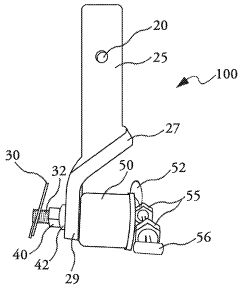
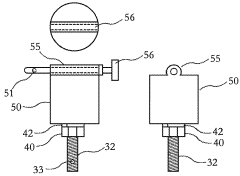
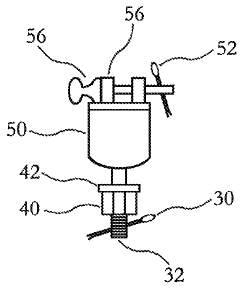
- A pintle hitch connector with a cylindrical trailer contact portion and a threaded portion featuring a locking mechanism and load securing pin, along with a universal connector design that includes a curved hitch bracket and connecting pin, simplifying attachment and reducing manufacturing costs.
Reducing wear in hitch apparatuses
PatentInactiveAU2016218895A1
Innovation
- A pintle hitch apparatus with a recessed wear member that can be easily replaced and a safety chain apparatus with engagement devices that secure selected links above the road surface, allowing for adjustable chain length and preventing damage from excessive force.


Environmental Impact of Towing Noise Reduction
The environmental impact of towing noise reduction is a critical consideration in the development and implementation of pintle hitch noise reduction techniques. As vehicles with trailers become increasingly common on roads worldwide, the noise pollution generated by these combinations has become a growing concern for both urban and rural communities. The reduction of towing noise not only improves the quality of life for residents along transportation routes but also contributes to the overall environmental health of ecosystems.
Noise pollution from towing vehicles can have significant negative effects on wildlife, particularly in sensitive habitats near roadways. Studies have shown that excessive noise can disrupt animal communication, mating behaviors, and migration patterns. By implementing effective noise reduction techniques for pintle hitches, we can mitigate these impacts and help preserve biodiversity in areas adjacent to transportation corridors.
Furthermore, the reduction of towing noise can lead to decreased stress levels in both humans and animals living near high-traffic areas. Chronic exposure to noise pollution has been linked to various health issues, including cardiovascular problems, sleep disturbances, and cognitive impairments. By addressing the noise generated by pintle hitches, we can contribute to improved public health outcomes and reduce the long-term environmental health costs associated with noise pollution.
From an urban planning perspective, the implementation of noise reduction techniques for towing vehicles can have positive implications for land use and development. Areas that were previously considered unsuitable for residential or commercial development due to high levels of traffic noise may become viable options, potentially reducing urban sprawl and promoting more sustainable city growth patterns.
Additionally, the focus on noise reduction in towing applications aligns with broader environmental goals, such as reducing carbon emissions and improving air quality. As quieter towing solutions are developed, there may be opportunities to integrate these technologies with electric and hybrid vehicle systems, further enhancing the overall environmental benefits of transportation innovations.
The economic impact of noise reduction should also be considered. Quieter towing vehicles may lead to increased property values in areas previously affected by high noise levels, contributing to local economic development. Moreover, the demand for noise reduction technologies in the towing industry could drive innovation and create new job opportunities in the automotive and environmental engineering sectors.
In conclusion, the environmental impact of towing noise reduction extends far beyond simple acoustic improvements. It encompasses a wide range of ecological, health, urban development, and economic considerations that collectively contribute to a more sustainable and livable environment for both human and wildlife populations.
Noise pollution from towing vehicles can have significant negative effects on wildlife, particularly in sensitive habitats near roadways. Studies have shown that excessive noise can disrupt animal communication, mating behaviors, and migration patterns. By implementing effective noise reduction techniques for pintle hitches, we can mitigate these impacts and help preserve biodiversity in areas adjacent to transportation corridors.
Furthermore, the reduction of towing noise can lead to decreased stress levels in both humans and animals living near high-traffic areas. Chronic exposure to noise pollution has been linked to various health issues, including cardiovascular problems, sleep disturbances, and cognitive impairments. By addressing the noise generated by pintle hitches, we can contribute to improved public health outcomes and reduce the long-term environmental health costs associated with noise pollution.
From an urban planning perspective, the implementation of noise reduction techniques for towing vehicles can have positive implications for land use and development. Areas that were previously considered unsuitable for residential or commercial development due to high levels of traffic noise may become viable options, potentially reducing urban sprawl and promoting more sustainable city growth patterns.
Additionally, the focus on noise reduction in towing applications aligns with broader environmental goals, such as reducing carbon emissions and improving air quality. As quieter towing solutions are developed, there may be opportunities to integrate these technologies with electric and hybrid vehicle systems, further enhancing the overall environmental benefits of transportation innovations.
The economic impact of noise reduction should also be considered. Quieter towing vehicles may lead to increased property values in areas previously affected by high noise levels, contributing to local economic development. Moreover, the demand for noise reduction technologies in the towing industry could drive innovation and create new job opportunities in the automotive and environmental engineering sectors.
In conclusion, the environmental impact of towing noise reduction extends far beyond simple acoustic improvements. It encompasses a wide range of ecological, health, urban development, and economic considerations that collectively contribute to a more sustainable and livable environment for both human and wildlife populations.
Safety Regulations for Towing Equipment
Safety regulations for towing equipment play a crucial role in ensuring the safe operation of pintle hitches and other towing mechanisms. These regulations are designed to minimize risks associated with towing, including noise-related issues. In the United States, the National Highway Traffic Safety Administration (NHTSA) is responsible for establishing and enforcing safety standards for motor vehicles and related equipment, including towing devices.
The Federal Motor Vehicle Safety Standards (FMVSS) set forth specific requirements for towing equipment, including pintle hitches. These standards cover aspects such as strength, durability, and performance under various conditions. While noise reduction is not explicitly addressed in these regulations, the overall safety and performance requirements indirectly contribute to noise mitigation efforts.
One key aspect of safety regulations is the proper rating and classification of towing equipment. Pintle hitches must be rated for specific gross trailer weight (GTW) and tongue weight (TW) capacities. This ensures that the hitch is capable of safely handling the load it is designed to tow, reducing the risk of structural failure and potential noise-inducing vibrations.
Regulations also mandate proper installation and maintenance procedures for towing equipment. This includes guidelines for securing the hitch to the towing vehicle, proper lubrication of moving parts, and regular inspections for wear and damage. Adhering to these requirements can significantly reduce the likelihood of developing noise issues during operation.
Furthermore, safety regulations often require the use of secondary attachment mechanisms, such as safety chains or cables. These additional safety measures not only prevent complete separation of the trailer from the towing vehicle in case of hitch failure but also help distribute forces more evenly, potentially reducing noise-inducing vibrations and movements.
In recent years, there has been an increased focus on the environmental impact of vehicle noise, including that generated by towing equipment. While not yet fully integrated into safety regulations for towing equipment, this growing concern may lead to future regulatory changes that specifically address noise reduction in pintle hitches and other towing mechanisms.
As manufacturers and researchers work on developing noise reduction techniques for pintle hitches, they must ensure that any modifications or new designs comply with existing safety regulations. This often requires a delicate balance between improving noise performance and maintaining or enhancing the overall safety and reliability of the towing system.
The Federal Motor Vehicle Safety Standards (FMVSS) set forth specific requirements for towing equipment, including pintle hitches. These standards cover aspects such as strength, durability, and performance under various conditions. While noise reduction is not explicitly addressed in these regulations, the overall safety and performance requirements indirectly contribute to noise mitigation efforts.
One key aspect of safety regulations is the proper rating and classification of towing equipment. Pintle hitches must be rated for specific gross trailer weight (GTW) and tongue weight (TW) capacities. This ensures that the hitch is capable of safely handling the load it is designed to tow, reducing the risk of structural failure and potential noise-inducing vibrations.
Regulations also mandate proper installation and maintenance procedures for towing equipment. This includes guidelines for securing the hitch to the towing vehicle, proper lubrication of moving parts, and regular inspections for wear and damage. Adhering to these requirements can significantly reduce the likelihood of developing noise issues during operation.
Furthermore, safety regulations often require the use of secondary attachment mechanisms, such as safety chains or cables. These additional safety measures not only prevent complete separation of the trailer from the towing vehicle in case of hitch failure but also help distribute forces more evenly, potentially reducing noise-inducing vibrations and movements.
In recent years, there has been an increased focus on the environmental impact of vehicle noise, including that generated by towing equipment. While not yet fully integrated into safety regulations for towing equipment, this growing concern may lead to future regulatory changes that specifically address noise reduction in pintle hitches and other towing mechanisms.
As manufacturers and researchers work on developing noise reduction techniques for pintle hitches, they must ensure that any modifications or new designs comply with existing safety regulations. This often requires a delicate balance between improving noise performance and maintaining or enhancing the overall safety and reliability of the towing system.
Unlock deeper insights with PatSnap Eureka Quick Research — get a full tech report to explore trends and direct your research. Try now!
Generate Your Research Report Instantly with AI Agent
Supercharge your innovation with PatSnap Eureka AI Agent Platform!