

Exploring Global Trends in Half Wave Rectifier Usage
JUL 15, 20259 MIN READ
Generate Your Research Report Instantly with AI Agent
PatSnap Eureka helps you evaluate technical feasibility & market potential.
Half Wave Rectifier Evolution and Objectives
Half wave rectifiers have played a crucial role in the development of electronic circuits since their inception in the early 20th century. The evolution of this technology has been closely tied to the advancements in semiconductor materials and circuit design techniques. Initially, half wave rectifiers were primarily used in simple power supply applications, converting alternating current (AC) to pulsating direct current (DC).
As the electronics industry progressed, the demand for more efficient and compact power conversion solutions grew. This led to significant improvements in half wave rectifier designs, including the introduction of solid-state components like diodes, which replaced vacuum tubes. The advent of silicon-based semiconductors in the 1950s further revolutionized the field, enabling the creation of more reliable and efficient rectifier circuits.
In recent decades, the focus has shifted towards enhancing the performance of half wave rectifiers in terms of power efficiency, voltage regulation, and miniaturization. This has been driven by the increasing need for portable electronic devices and the growing emphasis on energy conservation. Researchers and engineers have been exploring various techniques to optimize half wave rectifier circuits, such as implementing advanced control algorithms and utilizing new materials with superior electrical properties.
The current technological landscape presents both challenges and opportunities for half wave rectifier development. One of the primary objectives is to improve the overall efficiency of these circuits, particularly in low-power applications where energy conservation is critical. This includes reducing voltage drops across rectifying components and minimizing power losses during the conversion process.
Another key goal is to enhance the versatility of half wave rectifiers, enabling them to operate effectively across a wider range of input voltages and frequencies. This is particularly important in applications such as renewable energy systems, where input conditions can be highly variable. Additionally, there is a growing focus on integrating half wave rectifiers with other power management components to create more comprehensive and intelligent power conversion solutions.
As we look towards the future, the objectives for half wave rectifier technology continue to evolve. There is an increasing emphasis on developing rectifier circuits that can handle higher power levels while maintaining compact form factors. This is driven by the needs of emerging technologies such as electric vehicles and advanced industrial automation systems. Furthermore, researchers are exploring novel materials and circuit topologies to push the boundaries of rectifier performance, aiming to achieve near-ideal efficiency levels and improved reliability.
In conclusion, the evolution of half wave rectifiers reflects the broader trends in electronic engineering, with a constant drive towards greater efficiency, miniaturization, and versatility. As we explore global trends in their usage, it becomes clear that these fundamental components continue to play a vital role in shaping the future of power electronics and energy management systems.
As the electronics industry progressed, the demand for more efficient and compact power conversion solutions grew. This led to significant improvements in half wave rectifier designs, including the introduction of solid-state components like diodes, which replaced vacuum tubes. The advent of silicon-based semiconductors in the 1950s further revolutionized the field, enabling the creation of more reliable and efficient rectifier circuits.
In recent decades, the focus has shifted towards enhancing the performance of half wave rectifiers in terms of power efficiency, voltage regulation, and miniaturization. This has been driven by the increasing need for portable electronic devices and the growing emphasis on energy conservation. Researchers and engineers have been exploring various techniques to optimize half wave rectifier circuits, such as implementing advanced control algorithms and utilizing new materials with superior electrical properties.
The current technological landscape presents both challenges and opportunities for half wave rectifier development. One of the primary objectives is to improve the overall efficiency of these circuits, particularly in low-power applications where energy conservation is critical. This includes reducing voltage drops across rectifying components and minimizing power losses during the conversion process.
Another key goal is to enhance the versatility of half wave rectifiers, enabling them to operate effectively across a wider range of input voltages and frequencies. This is particularly important in applications such as renewable energy systems, where input conditions can be highly variable. Additionally, there is a growing focus on integrating half wave rectifiers with other power management components to create more comprehensive and intelligent power conversion solutions.
As we look towards the future, the objectives for half wave rectifier technology continue to evolve. There is an increasing emphasis on developing rectifier circuits that can handle higher power levels while maintaining compact form factors. This is driven by the needs of emerging technologies such as electric vehicles and advanced industrial automation systems. Furthermore, researchers are exploring novel materials and circuit topologies to push the boundaries of rectifier performance, aiming to achieve near-ideal efficiency levels and improved reliability.
In conclusion, the evolution of half wave rectifiers reflects the broader trends in electronic engineering, with a constant drive towards greater efficiency, miniaturization, and versatility. As we explore global trends in their usage, it becomes clear that these fundamental components continue to play a vital role in shaping the future of power electronics and energy management systems.
Market Demand Analysis for Half Wave Rectifiers
The global market for half wave rectifiers has been experiencing steady growth, driven by the increasing demand for power electronics across various industries. The automotive sector, in particular, has emerged as a significant consumer of half wave rectifiers, with the rise of electric vehicles (EVs) and hybrid electric vehicles (HEVs) contributing to this trend. These components play a crucial role in converting alternating current (AC) to direct current (DC), which is essential for powering various electronic systems in vehicles.
In the consumer electronics industry, the proliferation of smartphones, tablets, and other portable devices has also fueled the demand for half wave rectifiers. These components are integral to power supply units and battery charging systems, ensuring efficient energy conversion and management. The growing emphasis on energy efficiency and power conservation in electronic devices has further boosted the adoption of advanced rectifier technologies.
The industrial sector represents another significant market for half wave rectifiers. With the ongoing digital transformation and automation of manufacturing processes, there is an increased need for reliable power conversion solutions. Half wave rectifiers are utilized in various industrial applications, including motor drives, welding equipment, and uninterruptible power supplies (UPS).
Emerging technologies such as 5G infrastructure and Internet of Things (IoT) devices are expected to create new opportunities for half wave rectifier manufacturers. These applications require efficient power management solutions, driving the demand for compact and high-performance rectifiers. The telecommunications industry, in particular, is likely to witness substantial growth in rectifier usage as 5G networks continue to expand globally.
Geographically, Asia-Pacific has emerged as the largest market for half wave rectifiers, primarily due to the region's strong presence in electronics manufacturing and rapid industrialization. Countries like China, Japan, and South Korea are at the forefront of this trend, with their robust electronics and automotive industries driving demand. North America and Europe follow closely, with their advanced industrial sectors and growing adoption of renewable energy systems contributing to market growth.
The market demand for half wave rectifiers is also influenced by regulatory factors and environmental concerns. Stringent energy efficiency standards and regulations in various countries are pushing manufacturers to develop more efficient and environmentally friendly rectifier solutions. This trend is particularly evident in the power supply industry, where there is a growing focus on reducing energy losses and improving overall system efficiency.
In the consumer electronics industry, the proliferation of smartphones, tablets, and other portable devices has also fueled the demand for half wave rectifiers. These components are integral to power supply units and battery charging systems, ensuring efficient energy conversion and management. The growing emphasis on energy efficiency and power conservation in electronic devices has further boosted the adoption of advanced rectifier technologies.
The industrial sector represents another significant market for half wave rectifiers. With the ongoing digital transformation and automation of manufacturing processes, there is an increased need for reliable power conversion solutions. Half wave rectifiers are utilized in various industrial applications, including motor drives, welding equipment, and uninterruptible power supplies (UPS).
Emerging technologies such as 5G infrastructure and Internet of Things (IoT) devices are expected to create new opportunities for half wave rectifier manufacturers. These applications require efficient power management solutions, driving the demand for compact and high-performance rectifiers. The telecommunications industry, in particular, is likely to witness substantial growth in rectifier usage as 5G networks continue to expand globally.
Geographically, Asia-Pacific has emerged as the largest market for half wave rectifiers, primarily due to the region's strong presence in electronics manufacturing and rapid industrialization. Countries like China, Japan, and South Korea are at the forefront of this trend, with their robust electronics and automotive industries driving demand. North America and Europe follow closely, with their advanced industrial sectors and growing adoption of renewable energy systems contributing to market growth.
The market demand for half wave rectifiers is also influenced by regulatory factors and environmental concerns. Stringent energy efficiency standards and regulations in various countries are pushing manufacturers to develop more efficient and environmentally friendly rectifier solutions. This trend is particularly evident in the power supply industry, where there is a growing focus on reducing energy losses and improving overall system efficiency.
Current Challenges in Half Wave Rectification
Half wave rectification, while a fundamental technique in power electronics, faces several challenges in modern applications. One of the primary issues is the inherent inefficiency of the process. By utilizing only one half of the AC cycle, half wave rectifiers waste a significant portion of the input power, leading to lower overall efficiency compared to full wave rectification methods.
Another challenge lies in the pulsating nature of the output voltage. The intermittent current flow results in a high ripple factor, which can cause instability in sensitive electronic circuits. This ripple effect necessitates additional filtering components, increasing the complexity and cost of the overall system.
The presence of harmonics in the output waveform poses a significant challenge, particularly in high-power applications. These harmonics can lead to electromagnetic interference (EMI) and power quality issues, potentially affecting nearby equipment and violating regulatory standards. Mitigating these harmonics often requires sophisticated filtering techniques, further complicating the circuit design.
Thermal management is another critical concern in half wave rectifier applications. The unidirectional current flow through the rectifying diode results in concentrated heat generation, which can lead to reduced component lifespan and reliability issues if not properly addressed. This challenge becomes particularly acute in high-current applications where thermal stress is more pronounced.
The limited power handling capability of half wave rectifiers presents a constraint in scaling up for higher power applications. As power requirements increase, the single-diode configuration becomes less suitable, necessitating a shift towards more complex rectification methods or parallel configurations, which introduce their own set of challenges in terms of synchronization and load balancing.
Voltage regulation is another area where half wave rectifiers face difficulties. The output voltage of a half wave rectifier is inherently less stable compared to full wave configurations, making it more susceptible to load variations and input fluctuations. This instability can be problematic in applications requiring precise voltage control.
In the context of modern energy efficiency standards and regulations, the lower efficiency of half wave rectifiers is becoming increasingly problematic. Many jurisdictions are implementing stricter power quality and efficiency requirements, which can be challenging to meet with traditional half wave rectification techniques.
Lastly, the reverse recovery characteristics of diodes used in half wave rectifiers can lead to switching losses and electromagnetic noise, particularly at higher frequencies. This challenge becomes more pronounced as applications demand higher switching speeds and greater efficiency, pushing the limits of conventional rectifier designs.
Another challenge lies in the pulsating nature of the output voltage. The intermittent current flow results in a high ripple factor, which can cause instability in sensitive electronic circuits. This ripple effect necessitates additional filtering components, increasing the complexity and cost of the overall system.
The presence of harmonics in the output waveform poses a significant challenge, particularly in high-power applications. These harmonics can lead to electromagnetic interference (EMI) and power quality issues, potentially affecting nearby equipment and violating regulatory standards. Mitigating these harmonics often requires sophisticated filtering techniques, further complicating the circuit design.
Thermal management is another critical concern in half wave rectifier applications. The unidirectional current flow through the rectifying diode results in concentrated heat generation, which can lead to reduced component lifespan and reliability issues if not properly addressed. This challenge becomes particularly acute in high-current applications where thermal stress is more pronounced.
The limited power handling capability of half wave rectifiers presents a constraint in scaling up for higher power applications. As power requirements increase, the single-diode configuration becomes less suitable, necessitating a shift towards more complex rectification methods or parallel configurations, which introduce their own set of challenges in terms of synchronization and load balancing.
Voltage regulation is another area where half wave rectifiers face difficulties. The output voltage of a half wave rectifier is inherently less stable compared to full wave configurations, making it more susceptible to load variations and input fluctuations. This instability can be problematic in applications requiring precise voltage control.
In the context of modern energy efficiency standards and regulations, the lower efficiency of half wave rectifiers is becoming increasingly problematic. Many jurisdictions are implementing stricter power quality and efficiency requirements, which can be challenging to meet with traditional half wave rectification techniques.
Lastly, the reverse recovery characteristics of diodes used in half wave rectifiers can lead to switching losses and electromagnetic noise, particularly at higher frequencies. This challenge becomes more pronounced as applications demand higher switching speeds and greater efficiency, pushing the limits of conventional rectifier designs.
Existing Half Wave Rectifier Solutions
01 Circuit design and components
Half wave rectifiers typically consist of a diode and transformer. The diode allows current to flow in one direction during the positive half of the AC cycle, while blocking it during the negative half. This results in pulsating DC output. Various circuit designs and component selections can optimize performance and efficiency.- Circuit design and components: Half-wave rectifiers are designed using specific circuit components and configurations. These typically include diodes, transformers, and capacitors arranged in a way to convert alternating current (AC) to pulsating direct current (DC). The circuit allows current to flow in one direction during the positive half of the AC cycle while blocking it during the negative half.
- Power supply applications: Half-wave rectifiers are commonly used in power supply circuits for various electronic devices. They are employed to convert AC mains voltage into DC voltage suitable for powering electronic components. These rectifiers can be found in simple power supplies for low-power applications or as part of more complex power management systems.
- Efficiency improvements: Researchers and engineers have developed methods to improve the efficiency of half-wave rectifiers. These improvements may include the use of advanced semiconductor materials, optimized circuit layouts, or the integration of additional components to reduce power losses and increase overall performance.
- Integration with other circuits: Half-wave rectifiers are often integrated with other circuit elements to create more complex systems. This integration can include voltage regulators, filters, or control circuits to achieve specific voltage outputs or to meet particular application requirements. Such integrated designs can be found in various electronic devices and industrial equipment.
- Specialized applications: Half-wave rectifiers find use in specialized applications beyond general power supplies. These may include RF signal detection, sensor circuits, or specific industrial processes where pulsating DC is required. In these cases, the half-wave rectifier may be modified or optimized to suit the particular application's needs.
02 Voltage regulation and smoothing
To improve the quality of the DC output, half wave rectifiers often incorporate voltage regulation and smoothing techniques. This may include capacitors for filtering, voltage regulators, or additional circuitry to reduce ripple and maintain a more stable output voltage.Expand Specific Solutions03 Applications in power supplies
Half wave rectifiers are commonly used in various power supply applications, including low-power electronic devices, battery chargers, and some industrial equipment. They are often chosen for their simplicity and cost-effectiveness in situations where efficiency is not the primary concern.Expand Specific Solutions04 Efficiency improvements
Research and development efforts focus on improving the efficiency of half wave rectifiers. This includes optimizing component selection, reducing power losses, and exploring new materials or topologies to enhance overall performance and energy conversion.Expand Specific Solutions05 Integration with other circuits
Half wave rectifiers are often integrated with other circuits to create more complex power management systems. This may include combining them with inverters, control circuits, or protection mechanisms to enhance functionality and reliability in various applications.Expand Specific Solutions
Key Players in Rectifier Industry
The global market for half wave rectifiers is in a mature stage, with established players and widespread applications across various industries. The market size is substantial, driven by the growing demand for power electronics in consumer devices, industrial equipment, and renewable energy systems. Technologically, half wave rectifiers are well-established, but innovations continue to improve efficiency and reduce power losses. Companies like Huawei Technologies, Toshiba Corp., and State Grid Corp. of China are leading players, leveraging their extensive R&D capabilities to develop advanced rectifier solutions. Academic institutions such as MIT and Southeast University contribute to ongoing research, while specialized firms like Mixed-Signal Devices focus on niche applications, indicating a diverse and competitive landscape in this field.
Toshiba Corp.
Technical Solution: Toshiba has developed advanced half-wave rectifier circuits for power management in various electronic devices. Their approach focuses on improving efficiency and reducing power loss. They have implemented silicon carbide (SiC) technology in their rectifiers, which allows for higher switching frequencies and lower on-resistance[1]. This results in improved power conversion efficiency, especially in high-voltage applications. Toshiba's half-wave rectifiers also incorporate advanced thermal management techniques to enhance reliability and longevity[3].
Strengths: High efficiency, suitable for high-voltage applications, improved thermal management. Weaknesses: Potentially higher cost due to SiC technology, may be overengineered for low-power applications.
Huawei Technologies Co., Ltd.
Technical Solution: Huawei has been innovating in the field of half-wave rectifiers, particularly for 5G base stations and mobile devices. They have developed a novel approach that combines half-wave rectification with advanced power management ICs. This integration allows for more efficient energy harvesting from RF signals, which is crucial for powering IoT devices and extending battery life in mobile phones[2]. Huawei's solution also incorporates adaptive voltage regulation to optimize power delivery based on the device's current needs, further improving overall system efficiency[4].
Strengths: Highly efficient for RF energy harvesting, adaptive power management, suitable for IoT and mobile devices. Weaknesses: May be less applicable in high-power industrial applications, potential concerns over intellectual property rights.
Core Innovations in Half Wave Rectification
AC to DC conversion circuit
PatentActiveUS7764528B2
Innovation
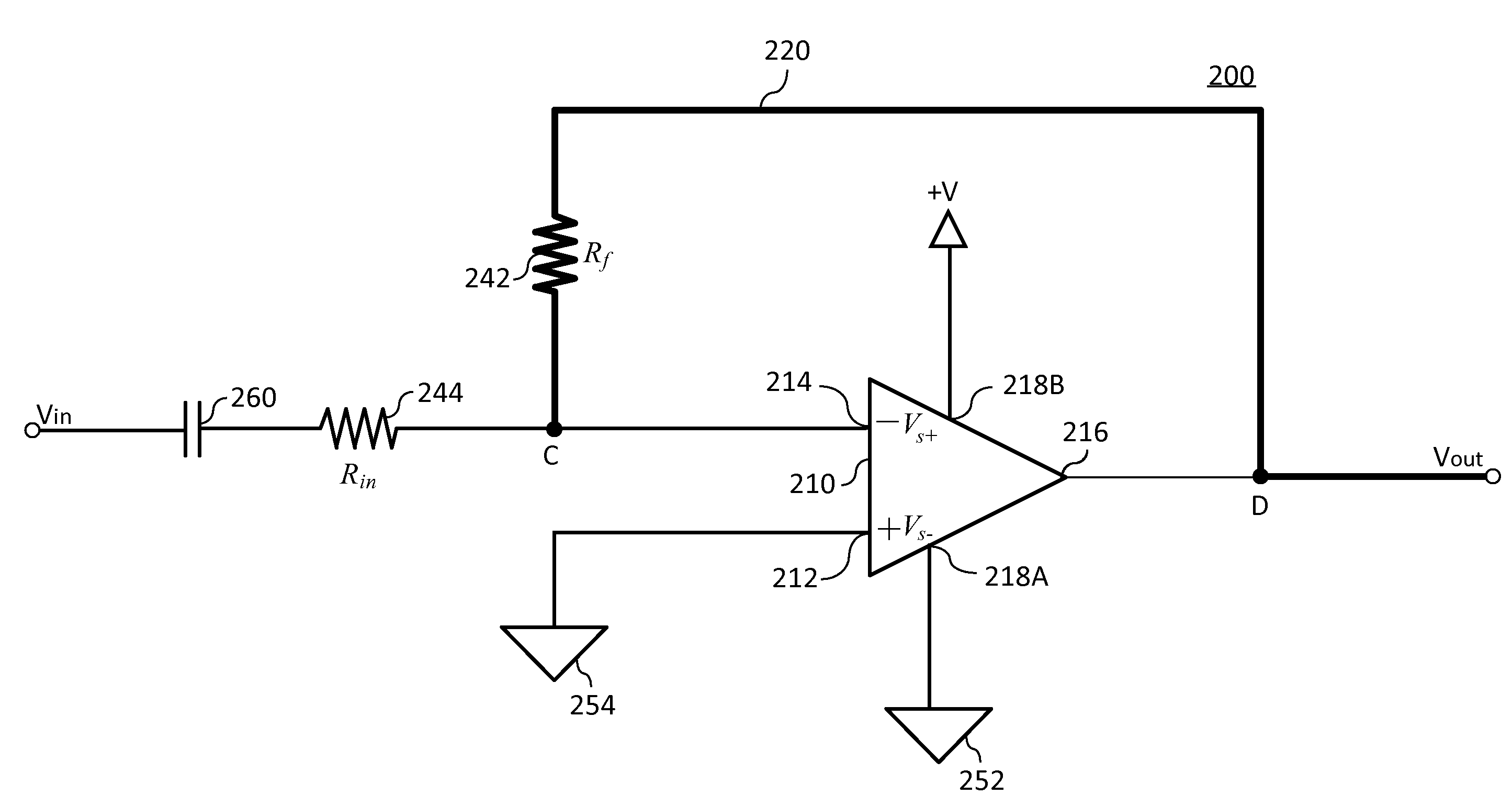
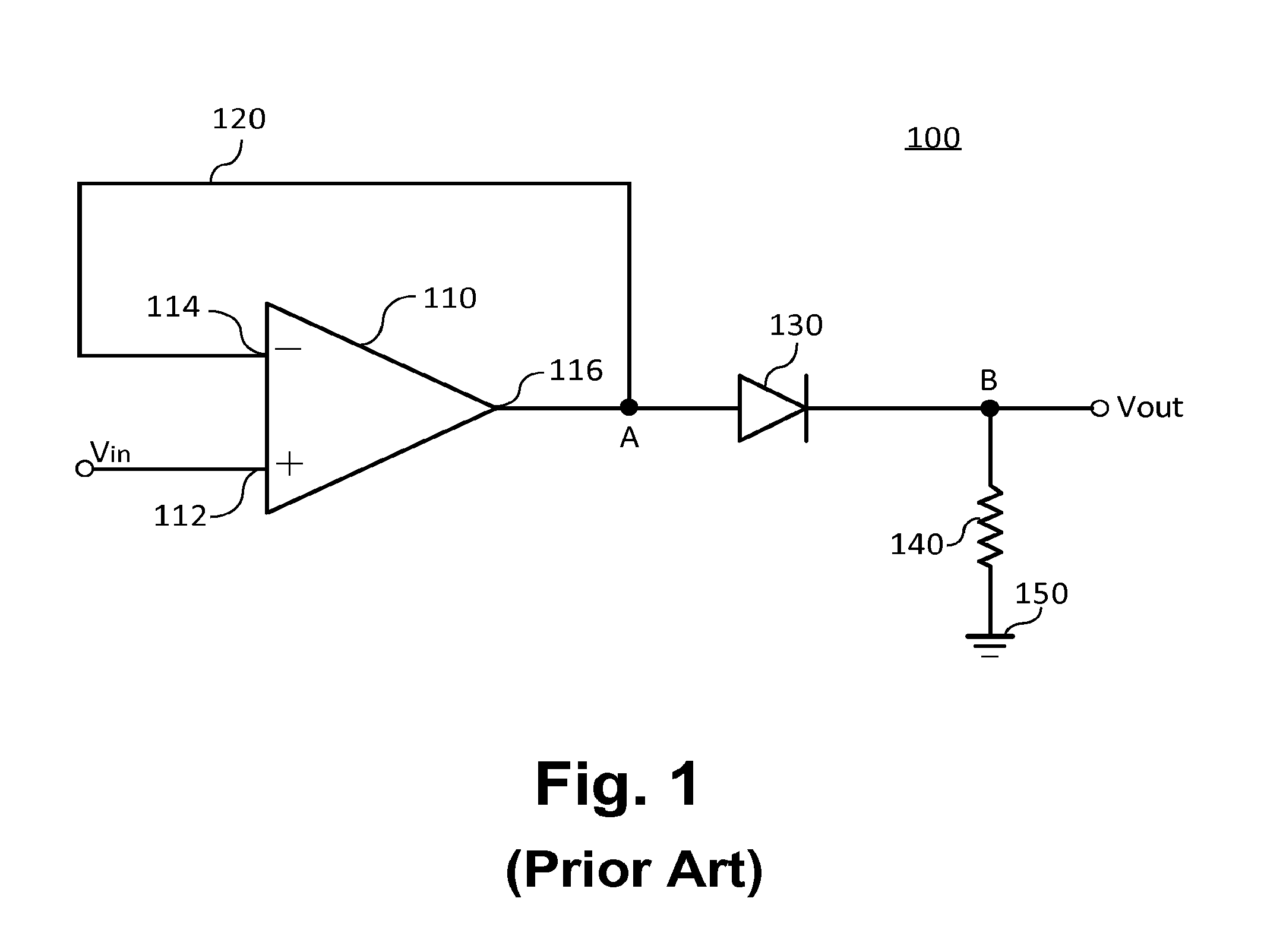
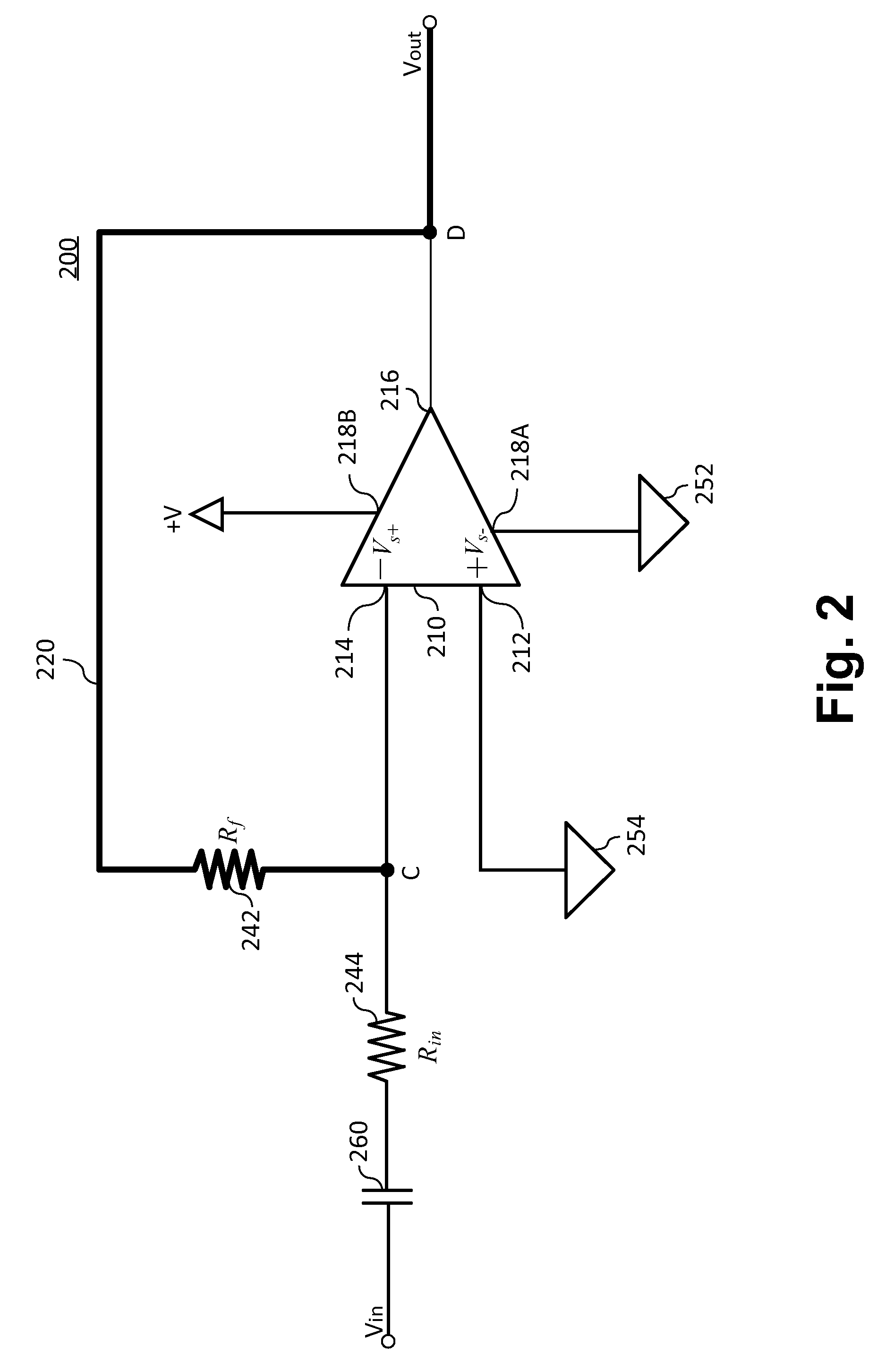
- A diode-less half-wave rectifier circuit utilizing an operational amplifier with a capacitor and resistors in a negative feedback loop, allowing low-level signals to be converted to half-wave rectified DC signals, thereby extending the dynamic range of rectification.
Half-wave regulator rectifier for an alternator
PatentInactiveUS4220909A
Innovation
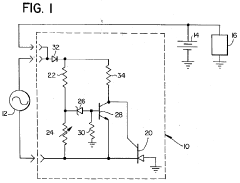
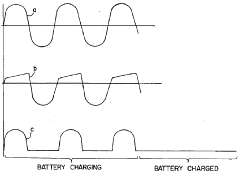
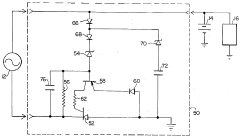
- A half-wave regulator rectifier using a silicon controlled rectifier (SCR) with a control circuit that includes a voltage tracking circuit and controlled switching means, which inhibits conduction when the battery voltage is above the regulated level and ensures safe charging by monitoring alternator voltage and current flow, protecting components from damage during abnormal conditions.
Environmental Impact of Rectifiers
The environmental impact of rectifiers, particularly half wave rectifiers, is a growing concern in the global electronics industry. As these devices play a crucial role in power conversion and electrical systems, their widespread use has significant implications for energy efficiency and environmental sustainability.
Half wave rectifiers, while simple in design, are inherently less efficient than their full wave counterparts. This inefficiency translates to increased power consumption and heat generation, contributing to higher energy demands and potentially larger carbon footprints for systems employing these devices. The environmental consequences of this inefficiency are particularly pronounced in large-scale applications or in regions with carbon-intensive electricity generation.
The manufacturing process of rectifiers also poses environmental challenges. The production of semiconductor materials, such as silicon and germanium, used in rectifiers involves energy-intensive processes and potentially harmful chemical treatments. Additionally, the extraction of rare earth elements often required for high-performance rectifiers can lead to significant environmental degradation in mining areas.
E-waste management is another critical environmental concern associated with rectifiers. As electronic devices become obsolete or malfunction, improper disposal of rectifiers and associated components can lead to soil and water contamination. The presence of heavy metals and other toxic substances in these components exacerbates the environmental risks, particularly in regions with inadequate e-waste recycling infrastructure.
However, recent technological advancements are addressing some of these environmental concerns. The development of more efficient rectifier designs, including synchronous rectification and the use of advanced materials like silicon carbide, is reducing energy losses and improving overall system efficiency. These improvements not only decrease the environmental impact during operation but also potentially extend the lifespan of devices, reducing e-waste generation.
Furthermore, the push towards miniaturization in electronics is having a positive environmental effect on rectifier usage. Smaller, more efficient rectifiers require less raw material in their production and generate less waste at the end of their lifecycle. This trend aligns with broader sustainability goals in the electronics industry.
The increasing adoption of renewable energy sources is also influencing the environmental impact of rectifiers. As solar and wind power systems become more prevalent, the demand for high-efficiency rectifiers in power conversion applications is growing. This shift is driving innovation in rectifier technology, with a focus on minimizing losses and maximizing energy harvesting from these clean energy sources.
Half wave rectifiers, while simple in design, are inherently less efficient than their full wave counterparts. This inefficiency translates to increased power consumption and heat generation, contributing to higher energy demands and potentially larger carbon footprints for systems employing these devices. The environmental consequences of this inefficiency are particularly pronounced in large-scale applications or in regions with carbon-intensive electricity generation.
The manufacturing process of rectifiers also poses environmental challenges. The production of semiconductor materials, such as silicon and germanium, used in rectifiers involves energy-intensive processes and potentially harmful chemical treatments. Additionally, the extraction of rare earth elements often required for high-performance rectifiers can lead to significant environmental degradation in mining areas.
E-waste management is another critical environmental concern associated with rectifiers. As electronic devices become obsolete or malfunction, improper disposal of rectifiers and associated components can lead to soil and water contamination. The presence of heavy metals and other toxic substances in these components exacerbates the environmental risks, particularly in regions with inadequate e-waste recycling infrastructure.
However, recent technological advancements are addressing some of these environmental concerns. The development of more efficient rectifier designs, including synchronous rectification and the use of advanced materials like silicon carbide, is reducing energy losses and improving overall system efficiency. These improvements not only decrease the environmental impact during operation but also potentially extend the lifespan of devices, reducing e-waste generation.
Furthermore, the push towards miniaturization in electronics is having a positive environmental effect on rectifier usage. Smaller, more efficient rectifiers require less raw material in their production and generate less waste at the end of their lifecycle. This trend aligns with broader sustainability goals in the electronics industry.
The increasing adoption of renewable energy sources is also influencing the environmental impact of rectifiers. As solar and wind power systems become more prevalent, the demand for high-efficiency rectifiers in power conversion applications is growing. This shift is driving innovation in rectifier technology, with a focus on minimizing losses and maximizing energy harvesting from these clean energy sources.
Standardization Efforts in Rectifier Design
Standardization efforts in rectifier design have become increasingly important as the global usage of half wave rectifiers continues to expand. These efforts aim to establish common guidelines and specifications for rectifier components, ensuring interoperability, reliability, and consistency across different manufacturers and applications.
One of the primary focuses of standardization has been on the development of uniform testing procedures for rectifier diodes. These procedures help ensure that diodes from various manufacturers meet specific performance criteria, including forward voltage drop, reverse recovery time, and maximum reverse voltage. By establishing these standards, engineers can more easily compare and select components for their designs, leading to improved overall system performance.
Another key area of standardization involves the physical dimensions and packaging of rectifier components. This includes efforts to standardize pin configurations, package sizes, and thermal management requirements. Such standardization facilitates easier integration into circuit boards and simplifies the design process for engineers working on diverse applications.
Efforts have also been made to standardize the nomenclature and labeling of rectifier components. This includes establishing consistent naming conventions for different types of rectifiers and their specifications, making it easier for engineers and technicians to identify and select the appropriate components for their needs.
In recent years, there has been a growing emphasis on standardizing energy efficiency requirements for rectifier designs. This includes setting minimum efficiency standards for power supplies and other applications that utilize half wave rectifiers. These standards aim to reduce energy waste and promote the development of more environmentally friendly electronic devices.
Standardization efforts have also extended to the realm of safety and reliability. Organizations such as the International Electrotechnical Commission (IEC) and the Institute of Electrical and Electronics Engineers (IEEE) have developed standards that address issues such as voltage isolation, thermal management, and electromagnetic compatibility in rectifier designs. These standards help ensure that rectifier-based systems operate safely and reliably across a wide range of applications and environments.
As the Internet of Things (IoT) and other emerging technologies continue to drive demand for compact and efficient power conversion solutions, standardization efforts are increasingly focusing on miniaturization and integration. This includes developing standards for integrated rectifier modules and system-in-package solutions that combine multiple functions into a single, standardized component.
One of the primary focuses of standardization has been on the development of uniform testing procedures for rectifier diodes. These procedures help ensure that diodes from various manufacturers meet specific performance criteria, including forward voltage drop, reverse recovery time, and maximum reverse voltage. By establishing these standards, engineers can more easily compare and select components for their designs, leading to improved overall system performance.
Another key area of standardization involves the physical dimensions and packaging of rectifier components. This includes efforts to standardize pin configurations, package sizes, and thermal management requirements. Such standardization facilitates easier integration into circuit boards and simplifies the design process for engineers working on diverse applications.
Efforts have also been made to standardize the nomenclature and labeling of rectifier components. This includes establishing consistent naming conventions for different types of rectifiers and their specifications, making it easier for engineers and technicians to identify and select the appropriate components for their needs.
In recent years, there has been a growing emphasis on standardizing energy efficiency requirements for rectifier designs. This includes setting minimum efficiency standards for power supplies and other applications that utilize half wave rectifiers. These standards aim to reduce energy waste and promote the development of more environmentally friendly electronic devices.
Standardization efforts have also extended to the realm of safety and reliability. Organizations such as the International Electrotechnical Commission (IEC) and the Institute of Electrical and Electronics Engineers (IEEE) have developed standards that address issues such as voltage isolation, thermal management, and electromagnetic compatibility in rectifier designs. These standards help ensure that rectifier-based systems operate safely and reliably across a wide range of applications and environments.
As the Internet of Things (IoT) and other emerging technologies continue to drive demand for compact and efficient power conversion solutions, standardization efforts are increasingly focusing on miniaturization and integration. This includes developing standards for integrated rectifier modules and system-in-package solutions that combine multiple functions into a single, standardized component.
Unlock deeper insights with PatSnap Eureka Quick Research — get a full tech report to explore trends and direct your research. Try now!
Generate Your Research Report Instantly with AI Agent
Supercharge your innovation with PatSnap Eureka AI Agent Platform!