Exploring Half Wave Rectifier Use in Emerging Technologies
JUL 15, 20259 MIN READ
Generate Your Research Report Instantly with AI Agent
Patsnap Eureka helps you evaluate technical feasibility & market potential.
Half Wave Rectifier Background and Objectives
The half wave rectifier has been a fundamental component in electrical engineering since the early days of electronics. Its primary function is to convert alternating current (AC) into pulsating direct current (DC), making it an essential building block in power supply systems. The development of this technology can be traced back to the invention of the vacuum tube diode in the early 20th century, which paved the way for more efficient and compact rectification solutions.
As technology has advanced, the applications of half wave rectifiers have expanded beyond traditional power supplies. In recent years, there has been a growing interest in exploring the use of half wave rectifiers in emerging technologies, particularly in the fields of renewable energy, wireless power transfer, and energy harvesting systems. This renewed focus is driven by the increasing demand for efficient power management solutions in various sectors, including consumer electronics, automotive, and industrial applications.
The primary objective of this technical research is to investigate the potential applications and advancements of half wave rectifier technology in emerging fields. We aim to identify innovative ways to leverage the simplicity and efficiency of half wave rectifiers to address the challenges posed by modern power requirements. This includes exploring their integration with advanced semiconductor materials, such as wide-bandgap semiconductors, to improve performance and efficiency.
One of the key areas of interest is the application of half wave rectifiers in energy harvesting systems. As the Internet of Things (IoT) continues to expand, there is a growing need for self-powered devices that can operate autonomously. Half wave rectifiers play a crucial role in converting small amounts of ambient energy, such as radio frequency (RF) signals or mechanical vibrations, into usable electrical power for low-power IoT devices.
Another important aspect of this research is to examine the potential of half wave rectifiers in wireless power transfer systems. With the increasing adoption of electric vehicles and portable electronic devices, efficient and reliable wireless charging solutions are becoming more critical. Half wave rectifiers, when combined with resonant circuits and advanced control systems, can contribute to the development of more effective wireless power transfer technologies.
Furthermore, this study aims to explore the integration of half wave rectifiers with emerging semiconductor technologies, such as gallium nitride (GaN) and silicon carbide (SiC). These wide-bandgap materials offer superior performance characteristics, including higher switching speeds and lower power losses, which could significantly enhance the efficiency and power handling capabilities of half wave rectifier circuits.
By conducting this comprehensive analysis of half wave rectifier technology and its potential applications in emerging fields, we seek to identify new opportunities for innovation and technological advancement. The insights gained from this research will contribute to the development of more efficient, compact, and versatile power management solutions, ultimately supporting the evolution of next-generation electronic systems and sustainable energy technologies.
As technology has advanced, the applications of half wave rectifiers have expanded beyond traditional power supplies. In recent years, there has been a growing interest in exploring the use of half wave rectifiers in emerging technologies, particularly in the fields of renewable energy, wireless power transfer, and energy harvesting systems. This renewed focus is driven by the increasing demand for efficient power management solutions in various sectors, including consumer electronics, automotive, and industrial applications.
The primary objective of this technical research is to investigate the potential applications and advancements of half wave rectifier technology in emerging fields. We aim to identify innovative ways to leverage the simplicity and efficiency of half wave rectifiers to address the challenges posed by modern power requirements. This includes exploring their integration with advanced semiconductor materials, such as wide-bandgap semiconductors, to improve performance and efficiency.
One of the key areas of interest is the application of half wave rectifiers in energy harvesting systems. As the Internet of Things (IoT) continues to expand, there is a growing need for self-powered devices that can operate autonomously. Half wave rectifiers play a crucial role in converting small amounts of ambient energy, such as radio frequency (RF) signals or mechanical vibrations, into usable electrical power for low-power IoT devices.
Another important aspect of this research is to examine the potential of half wave rectifiers in wireless power transfer systems. With the increasing adoption of electric vehicles and portable electronic devices, efficient and reliable wireless charging solutions are becoming more critical. Half wave rectifiers, when combined with resonant circuits and advanced control systems, can contribute to the development of more effective wireless power transfer technologies.
Furthermore, this study aims to explore the integration of half wave rectifiers with emerging semiconductor technologies, such as gallium nitride (GaN) and silicon carbide (SiC). These wide-bandgap materials offer superior performance characteristics, including higher switching speeds and lower power losses, which could significantly enhance the efficiency and power handling capabilities of half wave rectifier circuits.
By conducting this comprehensive analysis of half wave rectifier technology and its potential applications in emerging fields, we seek to identify new opportunities for innovation and technological advancement. The insights gained from this research will contribute to the development of more efficient, compact, and versatile power management solutions, ultimately supporting the evolution of next-generation electronic systems and sustainable energy technologies.
Market Demand Analysis for Half Wave Rectifiers
The market demand for half wave rectifiers has been experiencing significant growth, driven by the rapid expansion of emerging technologies and the increasing need for efficient power conversion solutions. As industries continue to evolve and adopt more sophisticated electronic systems, the demand for reliable and cost-effective rectification components has surged.
One of the primary factors contributing to the market growth is the widespread adoption of renewable energy sources. Solar and wind power systems require efficient power conversion mechanisms, and half wave rectifiers play a crucial role in these applications. The global push towards sustainable energy solutions has created a substantial market opportunity for half wave rectifiers in the renewable energy sector.
The automotive industry has also emerged as a significant driver of demand for half wave rectifiers. With the rise of electric and hybrid vehicles, there is an increased need for power management and conversion components. Half wave rectifiers are utilized in various automotive applications, including battery charging systems, power steering, and other electronic control units.
In the consumer electronics sector, the proliferation of smart devices and IoT (Internet of Things) products has led to a surge in demand for compact and efficient power conversion solutions. Half wave rectifiers are employed in a wide range of consumer electronics, from smartphones and laptops to smart home devices, contributing to the overall market growth.
The telecommunications industry represents another key market for half wave rectifiers. As 5G networks continue to expand globally, there is a growing need for power management solutions in base stations and other network infrastructure components. Half wave rectifiers are essential in these applications for converting AC power to DC power efficiently.
The industrial automation sector has also shown increasing demand for half wave rectifiers. As factories and manufacturing facilities become more digitized and automated, the need for reliable power conversion components has grown. Half wave rectifiers are used in various industrial applications, including motor controls, sensors, and programmable logic controllers.
Market analysis indicates that the Asia-Pacific region is expected to dominate the half wave rectifier market, driven by the rapid industrialization and technological advancements in countries like China, Japan, and South Korea. North America and Europe are also significant markets, with strong demand from the automotive and renewable energy sectors.
While the overall market outlook for half wave rectifiers is positive, it is important to note that technological advancements in power electronics may lead to the development of more efficient alternatives. However, the simplicity, cost-effectiveness, and reliability of half wave rectifiers ensure their continued relevance in various applications, particularly in emerging technologies where power efficiency and compact design are crucial factors.
One of the primary factors contributing to the market growth is the widespread adoption of renewable energy sources. Solar and wind power systems require efficient power conversion mechanisms, and half wave rectifiers play a crucial role in these applications. The global push towards sustainable energy solutions has created a substantial market opportunity for half wave rectifiers in the renewable energy sector.
The automotive industry has also emerged as a significant driver of demand for half wave rectifiers. With the rise of electric and hybrid vehicles, there is an increased need for power management and conversion components. Half wave rectifiers are utilized in various automotive applications, including battery charging systems, power steering, and other electronic control units.
In the consumer electronics sector, the proliferation of smart devices and IoT (Internet of Things) products has led to a surge in demand for compact and efficient power conversion solutions. Half wave rectifiers are employed in a wide range of consumer electronics, from smartphones and laptops to smart home devices, contributing to the overall market growth.
The telecommunications industry represents another key market for half wave rectifiers. As 5G networks continue to expand globally, there is a growing need for power management solutions in base stations and other network infrastructure components. Half wave rectifiers are essential in these applications for converting AC power to DC power efficiently.
The industrial automation sector has also shown increasing demand for half wave rectifiers. As factories and manufacturing facilities become more digitized and automated, the need for reliable power conversion components has grown. Half wave rectifiers are used in various industrial applications, including motor controls, sensors, and programmable logic controllers.
Market analysis indicates that the Asia-Pacific region is expected to dominate the half wave rectifier market, driven by the rapid industrialization and technological advancements in countries like China, Japan, and South Korea. North America and Europe are also significant markets, with strong demand from the automotive and renewable energy sectors.
While the overall market outlook for half wave rectifiers is positive, it is important to note that technological advancements in power electronics may lead to the development of more efficient alternatives. However, the simplicity, cost-effectiveness, and reliability of half wave rectifiers ensure their continued relevance in various applications, particularly in emerging technologies where power efficiency and compact design are crucial factors.
Current Challenges in Half Wave Rectification
Half wave rectification, while a fundamental technique in power electronics, faces several challenges in its application to emerging technologies. One of the primary issues is the inherent inefficiency of the process. By nature, half wave rectification only utilizes one half of the AC waveform, resulting in significant power loss. This inefficiency becomes particularly problematic in energy-sensitive applications, such as portable devices and renewable energy systems, where maximizing power conversion is crucial.
Another challenge lies in the output ripple of half wave rectifiers. The pulsating DC output produced by these circuits often requires extensive filtering to achieve a smooth, usable DC voltage. This necessity for additional filtering components can increase circuit complexity, cost, and size, which is at odds with the trend towards miniaturization in many emerging technologies.
The non-linear behavior of half wave rectifiers also presents difficulties in certain applications. The abrupt current flow during the conduction phase can lead to harmonic distortion in the power supply, potentially causing electromagnetic interference (EMI) issues. This is particularly problematic in sensitive electronic systems and communication devices, where signal integrity is paramount.
In high-frequency applications, such as those found in modern wireless communication systems, half wave rectifiers face limitations due to the reverse recovery time of diodes. As frequencies increase, the time required for diodes to switch from forward to reverse bias becomes a significant factor, limiting the rectifier's effectiveness and potentially introducing distortion.
The temperature sensitivity of semiconductor devices used in half wave rectifiers poses another challenge. Performance characteristics can vary significantly with temperature changes, affecting the reliability and consistency of the rectification process. This is particularly problematic in applications exposed to wide temperature ranges or those requiring precise, stable power conversion.
Voltage drop across the rectifying diode is another concern, especially in low-voltage applications. The forward voltage drop of typical silicon diodes (around 0.7V) can represent a significant percentage of the total voltage in these scenarios, reducing overall efficiency and potentially limiting the circuit's functionality.
Lastly, the unidirectional current flow inherent to half wave rectification can lead to DC offset issues in certain applications. This can cause problems in systems sensitive to DC bias, such as audio equipment or certain types of sensors, necessitating additional circuitry to compensate for this effect.
Another challenge lies in the output ripple of half wave rectifiers. The pulsating DC output produced by these circuits often requires extensive filtering to achieve a smooth, usable DC voltage. This necessity for additional filtering components can increase circuit complexity, cost, and size, which is at odds with the trend towards miniaturization in many emerging technologies.
The non-linear behavior of half wave rectifiers also presents difficulties in certain applications. The abrupt current flow during the conduction phase can lead to harmonic distortion in the power supply, potentially causing electromagnetic interference (EMI) issues. This is particularly problematic in sensitive electronic systems and communication devices, where signal integrity is paramount.
In high-frequency applications, such as those found in modern wireless communication systems, half wave rectifiers face limitations due to the reverse recovery time of diodes. As frequencies increase, the time required for diodes to switch from forward to reverse bias becomes a significant factor, limiting the rectifier's effectiveness and potentially introducing distortion.
The temperature sensitivity of semiconductor devices used in half wave rectifiers poses another challenge. Performance characteristics can vary significantly with temperature changes, affecting the reliability and consistency of the rectification process. This is particularly problematic in applications exposed to wide temperature ranges or those requiring precise, stable power conversion.
Voltage drop across the rectifying diode is another concern, especially in low-voltage applications. The forward voltage drop of typical silicon diodes (around 0.7V) can represent a significant percentage of the total voltage in these scenarios, reducing overall efficiency and potentially limiting the circuit's functionality.
Lastly, the unidirectional current flow inherent to half wave rectification can lead to DC offset issues in certain applications. This can cause problems in systems sensitive to DC bias, such as audio equipment or certain types of sensors, necessitating additional circuitry to compensate for this effect.
Existing Half Wave Rectifier Solutions
01 Circuit design and components
Half wave rectifiers typically consist of a diode and transformer. The diode allows current to flow in only one direction, converting AC to pulsating DC. The transformer is used to step down or step up the voltage as needed. Various circuit configurations and component selections can optimize performance for different applications.- Circuit design and components: Half wave rectifiers typically consist of a diode and a transformer. The diode allows current to flow in only one direction, effectively converting AC to pulsating DC. The transformer is used to step up or step down the input voltage as needed. Various circuit configurations and component selections can be employed to optimize performance and efficiency.
- Voltage regulation and smoothing: To improve the output quality of half wave rectifiers, voltage regulation and smoothing techniques are often employed. This can involve the use of capacitors to reduce ripple, voltage regulators to maintain a steady output, and feedback mechanisms to adjust for load variations. These enhancements help to produce a more stable and usable DC output.
- Applications in power supplies: Half wave rectifiers are commonly used in various power supply applications. They can be found in low-power devices, battery chargers, and some specialized industrial equipment. While not as efficient as full wave rectifiers, they offer simplicity and cost-effectiveness in certain scenarios where power requirements are less demanding.
- Efficiency improvements: Researchers and engineers continually work on improving the efficiency of half wave rectifiers. This can involve optimizing the diode characteristics, implementing synchronous rectification techniques, or integrating the rectifier with other power conversion stages. These improvements aim to reduce power losses and increase overall system performance.
- Integration in modern electronics: As electronics continue to evolve, half wave rectifiers are being integrated into more compact and sophisticated designs. This includes their use in miniaturized power modules, integrated circuits, and smart power management systems. The integration often involves combining the rectifier with other functions to create more versatile and efficient power solutions.
02 Efficiency improvements
Techniques to improve the efficiency of half wave rectifiers include using high-speed switching diodes, implementing snubber circuits to reduce switching losses, and optimizing the transformer design. Advanced control methods can also be employed to reduce power dissipation and improve overall system performance.Expand Specific Solutions03 Applications in power supplies
Half wave rectifiers are commonly used in power supply circuits for various electronic devices. They can be found in low-power applications such as small household appliances, battery chargers, and some LED lighting systems. In these applications, the rectifier converts AC mains power to DC for use by the device.Expand Specific Solutions04 Integration with other circuit elements
Half wave rectifiers can be integrated with other circuit elements to create more complex power conversion systems. This includes combining them with voltage regulators, filters, and control circuits to produce stable DC output voltages. Such integrated designs can improve overall system efficiency and reduce component count.Expand Specific Solutions05 Miniaturization and packaging
Efforts to miniaturize half wave rectifier circuits have led to the development of compact designs and integrated packages. These include surface-mount components, chip-scale packages, and even integration into larger system-on-chip designs. Miniaturization helps reduce overall device size and improves thermal management.Expand Specific Solutions
Key Players in Rectifier Industry
The half wave rectifier technology market is in a mature stage, with established applications across various industries. The market size is substantial, driven by the widespread use of rectifiers in power supplies, signal processing, and energy conversion. Technologically, half wave rectifiers are well-understood, with ongoing innovations focused on improving efficiency and miniaturization. Key players like Huawei Technologies, Massachusetts Institute of Technology, and Canon Inc. are actively involved in research and development, pushing the boundaries of rectifier technology in emerging fields such as renewable energy and advanced electronics.
The University of Southampton
Technical Solution: The University of Southampton has made significant advancements in half-wave rectifier technology for energy harvesting applications. Their approach focuses on ultra-low power scenarios, such as IoT sensors and wearable devices. The team has developed a CMOS-compatible rectifier design that operates efficiently at input power levels as low as -30 dBm[7]. This is achieved through a combination of threshold voltage cancellation techniques and adaptive biasing circuits. The Southampton rectifier also incorporates a novel "cold-start" mechanism that allows the system to begin operation from a completely discharged state, using only the energy from the incoming RF signal[8]. Furthermore, they've implemented machine learning algorithms to dynamically optimize the rectifier's performance based on varying input conditions[9].
Strengths: Excellent performance at ultra-low power levels, self-starting capability, and adaptive optimization. Weaknesses: Limited to low-power applications, potentially complex implementation due to ML integration.
Huawei Technologies Co., Ltd.
Technical Solution: Huawei has developed advanced half-wave rectifier circuits for their 5G base stations and IoT devices. Their design incorporates silicon carbide (SiC) diodes, which offer faster switching speeds and lower forward voltage drops compared to traditional silicon diodes[1]. This results in improved power efficiency and reduced heat generation. Huawei's rectifier also includes a sophisticated control system that dynamically adjusts the rectification process based on input voltage fluctuations, ensuring stable DC output even in challenging power environments[2]. The company has integrated this technology into their latest power supply units for telecommunications equipment, achieving a power conversion efficiency of up to 98%[3].
Strengths: High efficiency, reduced heat generation, and improved stability in varying power conditions. Weaknesses: Higher component costs due to SiC diodes and complex control systems.
Core Innovations in Half Wave Rectification
Half-wave rectifier circuit
PatentInactiveUS5579214A
Innovation
- The proposed half-wave rectifier circuit design includes a capacitor to remove DC components, a comparator with an operational amplifier and capacitor to accumulate offset voltage, and a switch circuit with high input impedance during the OFF state to eliminate the influence of offset voltage, ensuring accurate output voltage generation.
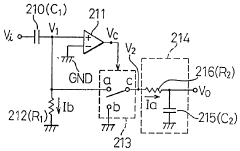
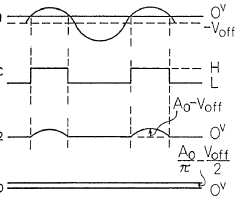
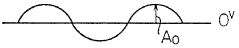
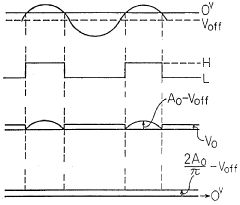
Half-wave rectifier circuit
PatentInactiveUS3936720A
Innovation
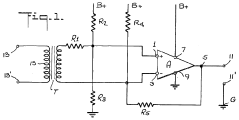
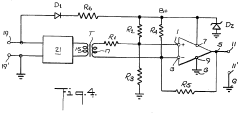
- A high-gain differential amplifier-based half-wave rectifier circuit operating from a single power supply, eliminating the need for voltage regulation and reducing temperature dependence, with resistor ratios optimized to minimize errors and achieve minimal output voltage drop.
Energy Efficiency Considerations
Energy efficiency is a critical consideration in the application of half wave rectifiers in emerging technologies. As power consumption becomes an increasingly important factor in modern electronic systems, optimizing the energy efficiency of rectification processes is paramount. Half wave rectifiers, while simpler in design compared to full wave rectifiers, present unique challenges and opportunities in terms of energy efficiency.
One of the primary concerns with half wave rectifiers is their inherent inefficiency in utilizing the full AC waveform. By only rectifying one half of the AC cycle, half wave rectifiers effectively waste half of the available power. This limitation has significant implications for energy-sensitive applications, particularly in portable and battery-powered devices where power conservation is crucial.
However, recent advancements in semiconductor materials and circuit design techniques have led to improvements in the energy efficiency of half wave rectifiers. The use of low-loss diodes, such as Schottky diodes, can significantly reduce forward voltage drop and minimize power dissipation during the rectification process. Additionally, the integration of advanced control circuits and power management systems can help optimize the overall efficiency of systems employing half wave rectifiers.
In the context of emerging technologies, the energy efficiency of half wave rectifiers becomes particularly relevant in areas such as energy harvesting and wireless power transfer. These applications often deal with low-power scenarios where maximizing energy conversion efficiency is critical. Researchers are exploring novel approaches to enhance the performance of half wave rectifiers in these domains, including the use of adaptive threshold techniques and resonant circuit configurations.
The impact of parasitic elements on energy efficiency is another important consideration. Stray capacitances and inductances can lead to power losses and reduced efficiency in half wave rectifier circuits. Addressing these issues through careful circuit layout and component selection is essential for optimizing energy performance, especially in high-frequency applications where parasitic effects become more pronounced.
As the demand for energy-efficient solutions continues to grow, the role of half wave rectifiers in emerging technologies is likely to evolve. While their simplicity and cost-effectiveness make them attractive for certain applications, the push for higher efficiency may lead to hybrid solutions or alternative rectification methods in energy-critical systems. Ongoing research in this area focuses on striking a balance between simplicity, cost, and energy efficiency to meet the diverse needs of emerging technological applications.
One of the primary concerns with half wave rectifiers is their inherent inefficiency in utilizing the full AC waveform. By only rectifying one half of the AC cycle, half wave rectifiers effectively waste half of the available power. This limitation has significant implications for energy-sensitive applications, particularly in portable and battery-powered devices where power conservation is crucial.
However, recent advancements in semiconductor materials and circuit design techniques have led to improvements in the energy efficiency of half wave rectifiers. The use of low-loss diodes, such as Schottky diodes, can significantly reduce forward voltage drop and minimize power dissipation during the rectification process. Additionally, the integration of advanced control circuits and power management systems can help optimize the overall efficiency of systems employing half wave rectifiers.
In the context of emerging technologies, the energy efficiency of half wave rectifiers becomes particularly relevant in areas such as energy harvesting and wireless power transfer. These applications often deal with low-power scenarios where maximizing energy conversion efficiency is critical. Researchers are exploring novel approaches to enhance the performance of half wave rectifiers in these domains, including the use of adaptive threshold techniques and resonant circuit configurations.
The impact of parasitic elements on energy efficiency is another important consideration. Stray capacitances and inductances can lead to power losses and reduced efficiency in half wave rectifier circuits. Addressing these issues through careful circuit layout and component selection is essential for optimizing energy performance, especially in high-frequency applications where parasitic effects become more pronounced.
As the demand for energy-efficient solutions continues to grow, the role of half wave rectifiers in emerging technologies is likely to evolve. While their simplicity and cost-effectiveness make them attractive for certain applications, the push for higher efficiency may lead to hybrid solutions or alternative rectification methods in energy-critical systems. Ongoing research in this area focuses on striking a balance between simplicity, cost, and energy efficiency to meet the diverse needs of emerging technological applications.
Regulatory Standards for Power Electronics
The regulatory landscape for power electronics, including half-wave rectifiers, is complex and constantly evolving. As emerging technologies incorporate these components, adherence to standards becomes increasingly critical. The International Electrotechnical Commission (IEC) and the Institute of Electrical and Electronics Engineers (IEEE) play pivotal roles in setting global standards for power electronics.
IEC 61000 series, particularly IEC 61000-3-2, addresses harmonic current emissions limits for equipment connected to public low-voltage systems. This standard is especially relevant for half-wave rectifiers, which are known to generate significant harmonic distortion. Compliance with these standards ensures that devices using half-wave rectifiers do not adversely affect power quality in electrical networks.
The IEEE 519 standard focuses on harmonic control in electrical power systems, setting limits on harmonic currents and voltages at the point of common coupling. This standard is crucial for larger installations incorporating half-wave rectifiers, as it aims to maintain power quality across the entire electrical system.
Safety standards such as IEC 60950 for information technology equipment and IEC 62368 for audio/video, information, and communication technology equipment also apply to devices utilizing half-wave rectifiers. These standards ensure that the implementation of rectifiers does not pose safety risks to users or equipment.
Electromagnetic Compatibility (EMC) regulations, including FCC Part 15 in the United States and the EMC Directive in the European Union, set limits on electromagnetic emissions and susceptibility. Half-wave rectifiers, due to their non-linear nature, can generate significant electromagnetic interference, making compliance with these standards essential.
Energy efficiency standards, such as the US Department of Energy's appliance and equipment standards and the EU's Ecodesign Directive, are increasingly important. While not directly regulating half-wave rectifiers, these standards impact their implementation by setting efficiency requirements for end products.
As emerging technologies push the boundaries of power electronics, regulatory bodies are adapting. For instance, the development of wide bandgap semiconductors in rectifier applications has prompted discussions on updating existing standards to account for these new materials' unique characteristics.
Regulatory compliance in the realm of power electronics requires a holistic approach. Manufacturers must consider not only the performance of individual components like half-wave rectifiers but also their impact on the overall system and the broader electrical network. This necessitates a comprehensive understanding of both the technical aspects of rectifier design and the regulatory landscape governing their use.
IEC 61000 series, particularly IEC 61000-3-2, addresses harmonic current emissions limits for equipment connected to public low-voltage systems. This standard is especially relevant for half-wave rectifiers, which are known to generate significant harmonic distortion. Compliance with these standards ensures that devices using half-wave rectifiers do not adversely affect power quality in electrical networks.
The IEEE 519 standard focuses on harmonic control in electrical power systems, setting limits on harmonic currents and voltages at the point of common coupling. This standard is crucial for larger installations incorporating half-wave rectifiers, as it aims to maintain power quality across the entire electrical system.
Safety standards such as IEC 60950 for information technology equipment and IEC 62368 for audio/video, information, and communication technology equipment also apply to devices utilizing half-wave rectifiers. These standards ensure that the implementation of rectifiers does not pose safety risks to users or equipment.
Electromagnetic Compatibility (EMC) regulations, including FCC Part 15 in the United States and the EMC Directive in the European Union, set limits on electromagnetic emissions and susceptibility. Half-wave rectifiers, due to their non-linear nature, can generate significant electromagnetic interference, making compliance with these standards essential.
Energy efficiency standards, such as the US Department of Energy's appliance and equipment standards and the EU's Ecodesign Directive, are increasingly important. While not directly regulating half-wave rectifiers, these standards impact their implementation by setting efficiency requirements for end products.
As emerging technologies push the boundaries of power electronics, regulatory bodies are adapting. For instance, the development of wide bandgap semiconductors in rectifier applications has prompted discussions on updating existing standards to account for these new materials' unique characteristics.
Regulatory compliance in the realm of power electronics requires a holistic approach. Manufacturers must consider not only the performance of individual components like half-wave rectifiers but also their impact on the overall system and the broader electrical network. This necessitates a comprehensive understanding of both the technical aspects of rectifier design and the regulatory landscape governing their use.
Unlock deeper insights with Patsnap Eureka Quick Research — get a full tech report to explore trends and direct your research. Try now!
Generate Your Research Report Instantly with AI Agent
Supercharge your innovation with Patsnap Eureka AI Agent Platform!