

High-Throughput Experimentation and Chemical Process Intensification
SEP 25, 20259 MIN READ
Generate Your Research Report Instantly with AI Agent
PatSnap Eureka helps you evaluate technical feasibility & market potential.
HTE and Process Intensification Background and Objectives
High-throughput experimentation (HTE) and process intensification represent transformative approaches in chemical engineering that have evolved significantly over the past three decades. HTE emerged in the 1990s within the pharmaceutical industry as a methodology to accelerate drug discovery through parallel synthesis and screening of compound libraries. This approach has since expanded across multiple chemical sectors, enabling researchers to conduct hundreds or thousands of experiments simultaneously under varying conditions.
Process intensification, conceptualized in the 1970s but gaining momentum in the early 2000s, focuses on dramatically improving efficiency through innovative equipment design and process methods. The fundamental principle involves reducing equipment size while maintaining or enhancing production capacity, thereby achieving substantial improvements in energy efficiency, safety, and environmental impact.
The convergence of these two methodologies represents a paradigm shift in chemical process development. Traditional chemical process development relied heavily on sequential experimentation and scale-up procedures that were time-consuming and resource-intensive. The integration of HTE with process intensification aims to revolutionize this approach by enabling rapid identification of optimal process parameters while simultaneously developing more compact, efficient production systems.
Current technological advancements in automation, miniaturization, and data analytics have accelerated the implementation of these methodologies. Modern HTE platforms incorporate robotic systems, microfluidic devices, and advanced analytical techniques that allow for unprecedented experimental throughput. Similarly, process intensification has benefited from innovations in materials science, reactor design, and separation technologies.
The primary objectives of advancing HTE and process intensification include reducing time-to-market for new chemical products, minimizing resource consumption in both R&D and production phases, enhancing process safety through better control mechanisms, and developing more sustainable manufacturing processes with reduced environmental footprints.
Industry adoption patterns indicate varying levels of implementation across sectors, with pharmaceuticals and specialty chemicals leading the way, while bulk chemicals and petrochemicals showing more conservative approaches due to scale and safety considerations. Academic research continues to expand the theoretical foundations and practical applications of these methodologies.
Looking forward, the integration of artificial intelligence and machine learning with HTE and process intensification presents unprecedented opportunities for predictive modeling and autonomous experimentation, potentially revolutionizing how chemical processes are developed and optimized in the coming decade.
Process intensification, conceptualized in the 1970s but gaining momentum in the early 2000s, focuses on dramatically improving efficiency through innovative equipment design and process methods. The fundamental principle involves reducing equipment size while maintaining or enhancing production capacity, thereby achieving substantial improvements in energy efficiency, safety, and environmental impact.
The convergence of these two methodologies represents a paradigm shift in chemical process development. Traditional chemical process development relied heavily on sequential experimentation and scale-up procedures that were time-consuming and resource-intensive. The integration of HTE with process intensification aims to revolutionize this approach by enabling rapid identification of optimal process parameters while simultaneously developing more compact, efficient production systems.
Current technological advancements in automation, miniaturization, and data analytics have accelerated the implementation of these methodologies. Modern HTE platforms incorporate robotic systems, microfluidic devices, and advanced analytical techniques that allow for unprecedented experimental throughput. Similarly, process intensification has benefited from innovations in materials science, reactor design, and separation technologies.
The primary objectives of advancing HTE and process intensification include reducing time-to-market for new chemical products, minimizing resource consumption in both R&D and production phases, enhancing process safety through better control mechanisms, and developing more sustainable manufacturing processes with reduced environmental footprints.
Industry adoption patterns indicate varying levels of implementation across sectors, with pharmaceuticals and specialty chemicals leading the way, while bulk chemicals and petrochemicals showing more conservative approaches due to scale and safety considerations. Academic research continues to expand the theoretical foundations and practical applications of these methodologies.
Looking forward, the integration of artificial intelligence and machine learning with HTE and process intensification presents unprecedented opportunities for predictive modeling and autonomous experimentation, potentially revolutionizing how chemical processes are developed and optimized in the coming decade.
Market Demand Analysis for Accelerated Chemical Development
The global market for accelerated chemical development technologies is experiencing robust growth, driven primarily by increasing pressure on chemical and pharmaceutical companies to reduce time-to-market while maintaining quality standards. Current market valuations place the High-Throughput Experimentation (HTE) sector at approximately 1.5 billion USD, with projected annual growth rates of 8-10% through 2028, significantly outpacing traditional chemical development methodologies.
Pharmaceutical and fine chemical industries represent the largest demand segments, collectively accounting for over 60% of the market. This dominance stems from the critical need to accelerate drug discovery processes and optimize synthesis routes for active pharmaceutical ingredients (APIs). The average cost to develop a new pharmaceutical compound exceeds 2 billion USD, with development timelines often stretching beyond 10 years. Technologies that can compress these metrics offer substantial competitive advantages.
Petrochemical and specialty chemical sectors are rapidly emerging as secondary growth drivers, particularly as sustainability concerns intensify. These industries increasingly seek process intensification technologies to reduce energy consumption, minimize waste generation, and optimize resource utilization. Market research indicates that chemical companies implementing HTE and process intensification technologies achieve 30-40% reductions in development timelines and 15-25% decreases in overall R&D costs.
Regional analysis reveals North America and Europe as market leaders, collectively representing approximately 65% of global demand. However, Asia-Pacific markets, particularly China, Japan, and South Korea, are demonstrating the highest growth rates, exceeding 12% annually. This regional shift reflects increasing R&D investments and manufacturing capabilities in these economies.
Customer demand patterns show evolving priorities beyond mere acceleration of development processes. End-users increasingly require integrated solutions that combine high-throughput experimentation hardware with advanced data analytics, machine learning capabilities, and process modeling tools. This integration enables not only faster experimentation but also deeper insights from experimental data.
Sustainability considerations are reshaping market demands, with over 70% of chemical companies citing environmental factors as critical decision drivers for new technology adoption. Process intensification technologies that enable greener chemistry, reduced solvent usage, and energy efficiency are commanding premium positions in the marketplace.
Market forecasts indicate that miniaturization technologies, continuous flow chemistry systems, and parallel reactor technologies will experience the strongest demand growth over the next five years. Additionally, solutions that effectively bridge the gap between laboratory discoveries and commercial-scale production are increasingly valued by customers seeking to minimize scale-up challenges.
Pharmaceutical and fine chemical industries represent the largest demand segments, collectively accounting for over 60% of the market. This dominance stems from the critical need to accelerate drug discovery processes and optimize synthesis routes for active pharmaceutical ingredients (APIs). The average cost to develop a new pharmaceutical compound exceeds 2 billion USD, with development timelines often stretching beyond 10 years. Technologies that can compress these metrics offer substantial competitive advantages.
Petrochemical and specialty chemical sectors are rapidly emerging as secondary growth drivers, particularly as sustainability concerns intensify. These industries increasingly seek process intensification technologies to reduce energy consumption, minimize waste generation, and optimize resource utilization. Market research indicates that chemical companies implementing HTE and process intensification technologies achieve 30-40% reductions in development timelines and 15-25% decreases in overall R&D costs.
Regional analysis reveals North America and Europe as market leaders, collectively representing approximately 65% of global demand. However, Asia-Pacific markets, particularly China, Japan, and South Korea, are demonstrating the highest growth rates, exceeding 12% annually. This regional shift reflects increasing R&D investments and manufacturing capabilities in these economies.
Customer demand patterns show evolving priorities beyond mere acceleration of development processes. End-users increasingly require integrated solutions that combine high-throughput experimentation hardware with advanced data analytics, machine learning capabilities, and process modeling tools. This integration enables not only faster experimentation but also deeper insights from experimental data.
Sustainability considerations are reshaping market demands, with over 70% of chemical companies citing environmental factors as critical decision drivers for new technology adoption. Process intensification technologies that enable greener chemistry, reduced solvent usage, and energy efficiency are commanding premium positions in the marketplace.
Market forecasts indicate that miniaturization technologies, continuous flow chemistry systems, and parallel reactor technologies will experience the strongest demand growth over the next five years. Additionally, solutions that effectively bridge the gap between laboratory discoveries and commercial-scale production are increasingly valued by customers seeking to minimize scale-up challenges.
Current Technological Landscape and Bottlenecks
High-throughput experimentation (HTE) and chemical process intensification represent two complementary approaches that are transforming the chemical industry landscape. Currently, HTE platforms enable researchers to conduct hundreds or thousands of experiments simultaneously, dramatically accelerating discovery and optimization processes. These systems typically integrate automated liquid handling, parallel reactors, and advanced analytics, allowing for rapid screening of reaction conditions, catalysts, and formulations.
The technological landscape has evolved significantly with the integration of robotics and automation, which has reduced manual intervention and human error. Modern HTE systems incorporate in-line analytics such as HPLC, GC, and spectroscopic methods that provide real-time data acquisition. Additionally, machine learning algorithms are increasingly being deployed to design experiments and interpret complex datasets, further enhancing efficiency.
Process intensification technologies have concurrently advanced, with microreactors, flow chemistry systems, and modular processing units gaining prominence. These technologies offer precise control over reaction parameters, improved heat and mass transfer, and enhanced safety profiles compared to traditional batch processes. Continuous flow systems, in particular, have demonstrated significant advantages in terms of scalability and reproducibility.
Despite these advancements, several critical bottlenecks persist in the field. Data management remains a significant challenge, as HTE generates vast amounts of information that must be effectively stored, processed, and analyzed. Many organizations struggle with data silos and incompatible software systems that impede knowledge sharing and comprehensive analysis.
Miniaturization limitations also present technical challenges, particularly for reactions requiring specialized conditions such as high pressure, extreme temperatures, or multiphase systems. The development of robust microscale equipment capable of handling these conditions remains an active area of research.
Scaling from high-throughput discovery to commercial production represents another major bottleneck. Translating optimized conditions from microscale experiments to production-scale processes often requires significant re-optimization due to differences in mixing, heat transfer, and other parameters.
Regulatory frameworks have not fully adapted to these technological innovations, creating uncertainty for implementation in regulated industries such as pharmaceuticals. Additionally, the high capital investment required for advanced HTE and process intensification equipment presents economic barriers, particularly for smaller organizations.
Integration challenges between HTE and process intensification technologies further complicate implementation. While conceptually complementary, these approaches often utilize different equipment, software, and methodologies, making seamless workflow development difficult. Bridging this gap requires interdisciplinary expertise that spans chemistry, engineering, data science, and automation.
The technological landscape has evolved significantly with the integration of robotics and automation, which has reduced manual intervention and human error. Modern HTE systems incorporate in-line analytics such as HPLC, GC, and spectroscopic methods that provide real-time data acquisition. Additionally, machine learning algorithms are increasingly being deployed to design experiments and interpret complex datasets, further enhancing efficiency.
Process intensification technologies have concurrently advanced, with microreactors, flow chemistry systems, and modular processing units gaining prominence. These technologies offer precise control over reaction parameters, improved heat and mass transfer, and enhanced safety profiles compared to traditional batch processes. Continuous flow systems, in particular, have demonstrated significant advantages in terms of scalability and reproducibility.
Despite these advancements, several critical bottlenecks persist in the field. Data management remains a significant challenge, as HTE generates vast amounts of information that must be effectively stored, processed, and analyzed. Many organizations struggle with data silos and incompatible software systems that impede knowledge sharing and comprehensive analysis.
Miniaturization limitations also present technical challenges, particularly for reactions requiring specialized conditions such as high pressure, extreme temperatures, or multiphase systems. The development of robust microscale equipment capable of handling these conditions remains an active area of research.
Scaling from high-throughput discovery to commercial production represents another major bottleneck. Translating optimized conditions from microscale experiments to production-scale processes often requires significant re-optimization due to differences in mixing, heat transfer, and other parameters.
Regulatory frameworks have not fully adapted to these technological innovations, creating uncertainty for implementation in regulated industries such as pharmaceuticals. Additionally, the high capital investment required for advanced HTE and process intensification equipment presents economic barriers, particularly for smaller organizations.
Integration challenges between HTE and process intensification technologies further complicate implementation. While conceptually complementary, these approaches often utilize different equipment, software, and methodologies, making seamless workflow development difficult. Bridging this gap requires interdisciplinary expertise that spans chemistry, engineering, data science, and automation.
Current HTE Methodologies and Implementation Strategies
01 High-throughput screening and experimentation methods
High-throughput screening methods enable rapid testing of multiple chemical reactions or formulations simultaneously. These techniques utilize automated systems, parallel processing, and miniaturized reaction vessels to accelerate the discovery and optimization of chemical processes. By testing numerous conditions in parallel, researchers can quickly identify optimal reaction parameters, catalysts, and reagents, significantly reducing development time and increasing process efficiency.- High-throughput screening and experimentation methods: High-throughput screening technologies enable rapid testing of multiple chemical reactions or formulations simultaneously. These methods utilize automated systems, parallel processing, and miniaturized reaction vessels to accelerate the discovery and optimization of chemical processes. By conducting numerous experiments in parallel, researchers can quickly identify optimal reaction conditions, catalysts, and reagents, significantly reducing development time and increasing process efficiency.
- Process intensification through microreactor technology: Microreactor technology represents a significant advancement in chemical process intensification. These compact devices offer enhanced heat and mass transfer capabilities, precise control over reaction parameters, and improved safety profiles for hazardous reactions. By reducing reaction volumes while maintaining or increasing throughput, microreactors enable more efficient use of resources, reduced waste generation, and often higher yields and selectivity compared to conventional batch processes.
- Automated data analysis and machine learning applications: Advanced data analysis techniques and machine learning algorithms are increasingly applied to chemical process optimization. These computational approaches can rapidly analyze large datasets generated from high-throughput experiments, identify patterns, and predict optimal process conditions. By integrating automated data collection with sophisticated analysis tools, researchers can accelerate process development cycles, identify non-obvious relationships between variables, and continuously improve process efficiency through data-driven decision making.
- Continuous flow processing and process integration: Continuous flow processing represents a paradigm shift from traditional batch manufacturing toward more efficient production methods. By integrating multiple reaction steps into continuous flow systems, manufacturers can achieve higher throughput, improved consistency, reduced equipment footprint, and enhanced safety. These integrated systems often feature in-line monitoring and control capabilities, allowing for real-time process adjustments and quality assurance, ultimately leading to higher productivity and resource efficiency.
- Novel catalyst and reaction engineering approaches: Innovative catalyst design and reaction engineering strategies play a crucial role in chemical process intensification. Advanced catalytic materials with enhanced activity, selectivity, and stability can dramatically improve reaction efficiency and reduce energy requirements. Similarly, novel reactor designs that optimize mixing, heat transfer, and reaction kinetics contribute to process intensification. These approaches often involve multifunctional catalysts, structured reactors, or alternative energy inputs such as microwave or photochemical activation to achieve higher throughput and efficiency.
02 Process intensification technologies and continuous flow systems
Process intensification technologies focus on designing more compact, energy-efficient, and productive chemical processing equipment. Continuous flow systems replace traditional batch processes with uninterrupted operation, offering better control over reaction parameters, improved heat and mass transfer, reduced reaction times, and enhanced safety profiles. These systems enable precise control of residence time, temperature, and mixing, leading to higher yields, improved selectivity, and reduced waste generation.Expand Specific Solutions03 Automated data analysis and machine learning applications
Advanced data analysis techniques and machine learning algorithms are employed to process the large volumes of data generated by high-throughput experimentation. These computational methods can identify patterns, correlations, and optimal conditions that might not be apparent through traditional analysis. Machine learning models can predict reaction outcomes, suggest experimental designs, and optimize process parameters, accelerating development cycles and improving process efficiency through data-driven decision making.Expand Specific Solutions04 Miniaturization and microreactor technology
Miniaturized reaction systems and microreactors enable precise control over reaction conditions while using minimal amounts of reagents. These systems feature enhanced surface-to-volume ratios, resulting in improved heat and mass transfer characteristics. Microreactors allow for rapid screening of reaction conditions, safer handling of hazardous materials, and more efficient mixing. The technology supports parallel processing of multiple reactions simultaneously, significantly increasing experimental throughput while reducing material consumption.Expand Specific Solutions05 Integration of sensors and real-time monitoring systems
Advanced sensor technologies and real-time monitoring systems are integrated into high-throughput experimentation platforms to provide continuous feedback on reaction progress and product quality. These systems enable immediate detection of process deviations, allowing for rapid adjustments to maintain optimal conditions. In-line analytical techniques such as spectroscopy, chromatography, and mass spectrometry provide comprehensive data on reaction kinetics, conversion rates, and product formation, enhancing process understanding and control.Expand Specific Solutions
Leading Organizations and Competitive Landscape
High-Throughput Experimentation (HTE) and Chemical Process Intensification are evolving rapidly in an early growth phase, with the global market expected to reach $2.5 billion by 2027. The competitive landscape features established industrial players like Dow Global Technologies and Corning alongside specialized firms such as hte AG, which focuses exclusively on high-throughput experimentation solutions. Academic institutions including University of North Carolina at Chapel Hill and University of Tokyo are driving fundamental research, while pharmaceutical companies like Wyeth LLC and TransForm Pharmaceuticals are implementing these technologies to accelerate drug discovery. The technology maturity varies significantly across sectors, with petrochemical applications (led by UOP LLC and SABIC) being most advanced, while biotech applications (Novozymes, Bio-Rad) are still developing scalable solutions.
Dow Global Technologies LLC
Technical Solution: Dow Global Technologies has developed the "Parallel Pressure Reactor" (PPR) system for high-throughput experimentation in polymer and chemical process development. Their technology enables simultaneous testing of up to 96 reactions under precisely controlled temperature and pressure conditions. The PPR system incorporates advanced in-situ monitoring capabilities including FTIR, Raman spectroscopy, and particle size analysis that provide real-time reaction progress data[1]. Dow's approach integrates process intensification principles through microfluidic reactor designs that enhance mass and heat transfer while reducing reaction volumes to milliliter scale. Their "Symyx" software platform provides comprehensive experimental design, data management, and predictive modeling capabilities that accelerate the optimization of reaction parameters[5]. The company has successfully applied this technology to reduce development timelines for new catalysts and processes by up to 80%, while simultaneously improving product quality and process efficiency.
Strengths: Comprehensive integration of experimental hardware with powerful informatics tools; extensive application knowledge across multiple chemical sectors; proven scalability from laboratory to commercial implementation. Weaknesses: Systems require significant capital investment; complex technology ecosystem necessitates specialized expertise; primarily optimized for Dow's specific chemistry applications.
hte AG the high throughput experimentation Co.
Technical Solution: hte AG has developed a comprehensive high-throughput experimentation platform called "hte technology" that integrates advanced reactor systems, automated sampling, and data analysis tools. Their workflow-based approach enables parallel testing of up to 48 different catalysts or process conditions simultaneously under industrially relevant conditions. The company's technology incorporates modular reactor designs with precise temperature control (±1°C) and pressure regulation capabilities up to 200 bar[1]. Their systems feature integrated online analytical tools including gas chromatography, mass spectrometry, and spectroscopic methods that enable real-time data collection and analysis. hte's software platform "myhte" provides comprehensive data management, visualization, and statistical analysis tools that transform raw experimental data into actionable insights for process optimization[3].
Strengths: Highly specialized in catalyst testing with industry-leading parallelization capabilities; seamless integration of hardware and software components; proven track record with major chemical companies. Weaknesses: High capital investment requirements; complex systems require specialized training; primarily focused on catalytic processes rather than broader chemical processing applications.
Key Enabling Technologies and Breakthrough Patents
High throughput research workflow
PatentInactiveUS20110029439A1
Innovation
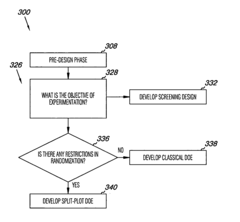
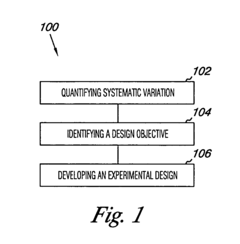
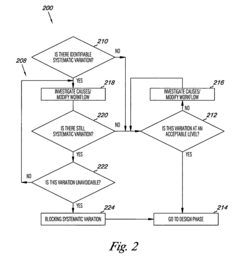
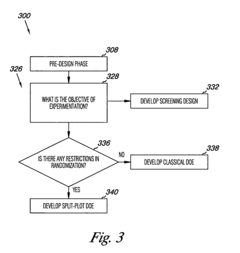
- The method involves quantifying systematic variation through variance component analysis, identifying design objectives, and developing experimental designs such as screening, split-plot, or classical designs to account for systematic variation, and modifying sources of variation to achieve statistically defensible results, using computer-readable mediums and computing devices to implement these steps.
Process intensified microfluidic devices
PatentWO2009009129A1
Innovation
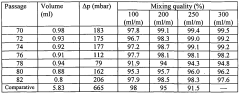
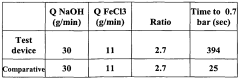
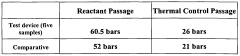
- The design incorporates multiple successive chambers within the reactant passage, featuring a split and re-direction of sub-passages with a 90-degree change in direction, along with a narrowing exit and concave surfaces, which maximizes heat transfer and reduces pressure drop by inducing secondary flows and optimizing chamber layout.
Sustainability Impact and Green Chemistry Integration
The integration of sustainability principles into High-Throughput Experimentation (HTE) and Chemical Process Intensification (CPI) represents a critical evolution in modern chemical engineering practices. These technologies inherently support green chemistry objectives by enabling more efficient resource utilization and waste reduction through optimized experimental design and process parameters.
HTE methodologies significantly reduce the environmental footprint of chemical research by minimizing reagent consumption and waste generation. When properly implemented, HTE platforms can achieve up to 90% reduction in solvent usage compared to traditional batch experimentation, while simultaneously accelerating discovery timelines. This efficiency translates directly to decreased environmental impact across the chemical value chain.
Process intensification techniques further enhance sustainability by fundamentally redesigning chemical processes to maximize energy efficiency and minimize environmental harm. Microreactor technologies, for instance, demonstrate 30-60% improvements in energy efficiency while reducing E-factors (environmental factors measuring waste-to-product ratios) by similar margins. These improvements stem from enhanced heat and mass transfer characteristics that enable precise reaction control.
The principles of green chemistry find natural expression through HTE and CPI approaches. The ability to rapidly screen reaction conditions facilitates the identification of catalysts that function effectively under milder conditions, reducing energy requirements. Similarly, the exploration of alternative solvents, including water-based systems and bio-derived media, becomes more feasible through high-throughput methodologies that can efficiently map performance across diverse solvent parameters.
Life cycle assessment (LCA) studies indicate that implementing HTE-optimized processes can reduce carbon footprints by 15-40% compared to conventionally developed processes. This improvement stems not only from operational efficiencies but also from the ability to identify more selective catalysts and reaction pathways that minimize byproduct formation.
Regulatory frameworks increasingly recognize the value of these approaches. The European Chemical Agency's REACH regulations and the EPA's Green Chemistry Initiative both acknowledge process intensification and high-throughput methodologies as preferred approaches for sustainable chemical development. Companies implementing these technologies often gain competitive advantages through improved regulatory compliance and reduced environmental liability.
The economic case for sustainability through HTE and CPI continues to strengthen as resource costs rise and environmental regulations tighten. Return on investment analyses typically show payback periods of 2-4 years for comprehensive HTE implementations when accounting for reduced waste management costs, improved resource efficiency, and accelerated time-to-market for greener chemical products.
HTE methodologies significantly reduce the environmental footprint of chemical research by minimizing reagent consumption and waste generation. When properly implemented, HTE platforms can achieve up to 90% reduction in solvent usage compared to traditional batch experimentation, while simultaneously accelerating discovery timelines. This efficiency translates directly to decreased environmental impact across the chemical value chain.
Process intensification techniques further enhance sustainability by fundamentally redesigning chemical processes to maximize energy efficiency and minimize environmental harm. Microreactor technologies, for instance, demonstrate 30-60% improvements in energy efficiency while reducing E-factors (environmental factors measuring waste-to-product ratios) by similar margins. These improvements stem from enhanced heat and mass transfer characteristics that enable precise reaction control.
The principles of green chemistry find natural expression through HTE and CPI approaches. The ability to rapidly screen reaction conditions facilitates the identification of catalysts that function effectively under milder conditions, reducing energy requirements. Similarly, the exploration of alternative solvents, including water-based systems and bio-derived media, becomes more feasible through high-throughput methodologies that can efficiently map performance across diverse solvent parameters.
Life cycle assessment (LCA) studies indicate that implementing HTE-optimized processes can reduce carbon footprints by 15-40% compared to conventionally developed processes. This improvement stems not only from operational efficiencies but also from the ability to identify more selective catalysts and reaction pathways that minimize byproduct formation.
Regulatory frameworks increasingly recognize the value of these approaches. The European Chemical Agency's REACH regulations and the EPA's Green Chemistry Initiative both acknowledge process intensification and high-throughput methodologies as preferred approaches for sustainable chemical development. Companies implementing these technologies often gain competitive advantages through improved regulatory compliance and reduced environmental liability.
The economic case for sustainability through HTE and CPI continues to strengthen as resource costs rise and environmental regulations tighten. Return on investment analyses typically show payback periods of 2-4 years for comprehensive HTE implementations when accounting for reduced waste management costs, improved resource efficiency, and accelerated time-to-market for greener chemical products.
Digital Twin and AI Applications in HTE
Digital twins are revolutionizing High-Throughput Experimentation (HTE) by creating virtual replicas of physical experimental setups, enabling researchers to simulate and optimize chemical processes before actual implementation. These digital models integrate real-time data from sensors and analytical instruments, creating a feedback loop that continuously refines experimental parameters and predictions. The integration of AI algorithms with digital twins has significantly enhanced the predictive capabilities of HTE systems, allowing for more accurate forecasting of reaction outcomes and process behaviors.
Machine learning algorithms, particularly deep learning models, have demonstrated remarkable success in analyzing the complex, multidimensional data generated by HTE platforms. These AI systems can identify patterns and correlations that might escape human researchers, leading to unexpected discoveries and optimization opportunities. Reinforcement learning techniques are increasingly being applied to automate experimental design, where algorithms learn optimal experimental conditions through iterative testing and feedback.
Natural language processing (NLP) capabilities are being incorporated to extract valuable insights from scientific literature, patents, and experimental reports, enriching the knowledge base available to HTE systems. This integration allows researchers to leverage historical data and established knowledge when designing new experiments, avoiding redundant work and building upon previous successes.
Cloud-based platforms are emerging as critical infrastructure for digital twin and AI applications in HTE, providing the necessary computational resources for complex simulations and data analysis. These platforms facilitate collaboration among distributed research teams and enable the pooling of experimental data across multiple sites, accelerating the pace of discovery and innovation.
Real-time monitoring and adaptive control systems represent another frontier in AI-enhanced HTE. These systems can automatically adjust experimental parameters based on in-process measurements, optimizing yields and selectivity while minimizing resource consumption. The ability to rapidly respond to unexpected experimental outcomes has proven particularly valuable in process intensification efforts, where operating conditions often push the boundaries of conventional process windows.
Challenges remain in the widespread adoption of digital twins and AI in HTE, including data standardization issues, the need for robust validation methodologies, and concerns about the interpretability of complex AI models. However, the potential benefits in terms of accelerated discovery, reduced experimental costs, and improved process sustainability continue to drive innovation in this field.
Machine learning algorithms, particularly deep learning models, have demonstrated remarkable success in analyzing the complex, multidimensional data generated by HTE platforms. These AI systems can identify patterns and correlations that might escape human researchers, leading to unexpected discoveries and optimization opportunities. Reinforcement learning techniques are increasingly being applied to automate experimental design, where algorithms learn optimal experimental conditions through iterative testing and feedback.
Natural language processing (NLP) capabilities are being incorporated to extract valuable insights from scientific literature, patents, and experimental reports, enriching the knowledge base available to HTE systems. This integration allows researchers to leverage historical data and established knowledge when designing new experiments, avoiding redundant work and building upon previous successes.
Cloud-based platforms are emerging as critical infrastructure for digital twin and AI applications in HTE, providing the necessary computational resources for complex simulations and data analysis. These platforms facilitate collaboration among distributed research teams and enable the pooling of experimental data across multiple sites, accelerating the pace of discovery and innovation.
Real-time monitoring and adaptive control systems represent another frontier in AI-enhanced HTE. These systems can automatically adjust experimental parameters based on in-process measurements, optimizing yields and selectivity while minimizing resource consumption. The ability to rapidly respond to unexpected experimental outcomes has proven particularly valuable in process intensification efforts, where operating conditions often push the boundaries of conventional process windows.
Challenges remain in the widespread adoption of digital twins and AI in HTE, including data standardization issues, the need for robust validation methodologies, and concerns about the interpretability of complex AI models. However, the potential benefits in terms of accelerated discovery, reduced experimental costs, and improved process sustainability continue to drive innovation in this field.
Unlock deeper insights with PatSnap Eureka Quick Research — get a full tech report to explore trends and direct your research. Try now!
Generate Your Research Report Instantly with AI Agent
Supercharge your innovation with PatSnap Eureka AI Agent Platform!