
How Deep Eutectic Solvents Maintain Low Viscosity While Preserving Solvation Power?
SEP 15, 20259 MIN READ
Generate Your Research Report Instantly with AI Agent
Patsnap Eureka helps you evaluate technical feasibility & market potential.
DES Viscosity-Solvation Balance Background and Objectives
Deep Eutectic Solvents (DES) have emerged as a revolutionary class of solvents that bridge the gap between conventional molecular solvents and ionic liquids. Since their formal identification in the early 2000s, DES have attracted significant attention due to their unique physicochemical properties, particularly their ability to maintain relatively low viscosity while exhibiting exceptional solvation capabilities. This apparent paradox represents a fascinating area of research with profound implications for green chemistry and sustainable industrial processes.
The evolution of DES technology can be traced back to the broader field of ionic liquids, which gained prominence in the late 20th century. However, traditional ionic liquids often suffered from high production costs and complex synthesis procedures. DES emerged as an alternative that could be formed through simple mixing of hydrogen bond donors and acceptors, resulting in a significant depression of the freezing point below that of either individual component.
The technical trajectory of DES development has been characterized by progressive understanding of the molecular interactions that govern their behavior. Initial research focused primarily on choline chloride-based systems, but has since expanded to encompass a diverse array of hydrogen bond donors including alcohols, amides, carboxylic acids, and polyols. This diversification has enabled tailoring of DES properties for specific applications.
The primary technical objective in this field is to elucidate the fundamental mechanisms that allow DES to maintain relatively low viscosity while preserving their powerful solvation capabilities. This represents a critical balance that determines their practical utility across various applications, from extraction processes to catalysis and electrochemistry.
Current research aims to develop predictive models that can correlate molecular structure with macroscopic properties, particularly focusing on the hydrogen bonding network and charge delocalization effects that influence both viscosity and solvation power. Understanding these structure-property relationships would enable rational design of DES systems with optimized performance characteristics.
Another key objective is to expand the temperature range over which DES maintain favorable viscosity profiles, as many systems exhibit significant viscosity increases at lower temperatures. This limitation currently restricts their application in certain industrial processes that operate under variable temperature conditions.
The field is also moving toward developing computational frameworks that can accurately predict DES behavior, reducing the need for extensive experimental screening. Such predictive capabilities would accelerate the discovery of novel DES compositions with enhanced performance characteristics, particularly those that maintain an optimal balance between fluidity and solvation strength.
The evolution of DES technology can be traced back to the broader field of ionic liquids, which gained prominence in the late 20th century. However, traditional ionic liquids often suffered from high production costs and complex synthesis procedures. DES emerged as an alternative that could be formed through simple mixing of hydrogen bond donors and acceptors, resulting in a significant depression of the freezing point below that of either individual component.
The technical trajectory of DES development has been characterized by progressive understanding of the molecular interactions that govern their behavior. Initial research focused primarily on choline chloride-based systems, but has since expanded to encompass a diverse array of hydrogen bond donors including alcohols, amides, carboxylic acids, and polyols. This diversification has enabled tailoring of DES properties for specific applications.
The primary technical objective in this field is to elucidate the fundamental mechanisms that allow DES to maintain relatively low viscosity while preserving their powerful solvation capabilities. This represents a critical balance that determines their practical utility across various applications, from extraction processes to catalysis and electrochemistry.
Current research aims to develop predictive models that can correlate molecular structure with macroscopic properties, particularly focusing on the hydrogen bonding network and charge delocalization effects that influence both viscosity and solvation power. Understanding these structure-property relationships would enable rational design of DES systems with optimized performance characteristics.
Another key objective is to expand the temperature range over which DES maintain favorable viscosity profiles, as many systems exhibit significant viscosity increases at lower temperatures. This limitation currently restricts their application in certain industrial processes that operate under variable temperature conditions.
The field is also moving toward developing computational frameworks that can accurately predict DES behavior, reducing the need for extensive experimental screening. Such predictive capabilities would accelerate the discovery of novel DES compositions with enhanced performance characteristics, particularly those that maintain an optimal balance between fluidity and solvation strength.
Market Applications and Demand Analysis for Low-Viscosity DES
The global market for Deep Eutectic Solvents (DES) with optimized viscosity properties is experiencing significant growth, driven by increasing demand for sustainable and environmentally friendly solvents across multiple industries. The unique ability of low-viscosity DES to maintain excellent solvation power while offering improved processability has positioned them as valuable alternatives to conventional organic solvents and ionic liquids.
In the pharmaceutical sector, low-viscosity DES are gaining traction for drug delivery systems and active pharmaceutical ingredient (API) processing. Their enhanced flow properties facilitate more efficient mixing, extraction, and purification processes while maintaining the ability to dissolve complex pharmaceutical compounds. The pharmaceutical solvent market, valued at over $4 billion globally, presents a substantial opportunity for low-viscosity DES adoption.
The cosmetics and personal care industry represents another significant market, with growing consumer demand for "green" formulations driving manufacturers to seek sustainable alternatives to traditional solvents. Low-viscosity DES offer improved spreadability and sensory properties in formulations while maintaining effective delivery of active ingredients. This sector's emphasis on natural ingredients aligns perfectly with the bio-based nature of many DES systems.
In electrochemistry and energy storage applications, the demand for low-viscosity DES is particularly pronounced. Battery technologies require electrolytes with both high ionic conductivity and good solvation properties. Low-viscosity DES that maintain strong solvation power can significantly improve ion transport in electrochemical devices, potentially enhancing battery performance and longevity.
The agrochemical industry presents another expanding market for low-viscosity DES, particularly in pesticide formulations and extraction of bioactive compounds. The global agrochemical market, growing at approximately 4% annually, increasingly values green chemistry solutions that reduce environmental impact while maintaining efficacy.
Industrial catalysis and biocatalysis represent emerging application areas where the dual benefits of low viscosity and strong solvation power are particularly valuable. Enzymatic reactions in low-viscosity DES can proceed with enhanced rates due to reduced mass transfer limitations, while the solvation environment remains favorable for substrate dissolution and catalyst stability.
Market analysis indicates that regions with stringent environmental regulations, particularly Europe and North America, are leading adoption of low-viscosity DES technologies. However, rapid industrialization in Asia-Pacific countries is creating new market opportunities, with projected growth rates exceeding global averages. The overall market trajectory suggests that demand for low-viscosity DES will continue to accelerate as industries increasingly prioritize sustainability alongside performance.
In the pharmaceutical sector, low-viscosity DES are gaining traction for drug delivery systems and active pharmaceutical ingredient (API) processing. Their enhanced flow properties facilitate more efficient mixing, extraction, and purification processes while maintaining the ability to dissolve complex pharmaceutical compounds. The pharmaceutical solvent market, valued at over $4 billion globally, presents a substantial opportunity for low-viscosity DES adoption.
The cosmetics and personal care industry represents another significant market, with growing consumer demand for "green" formulations driving manufacturers to seek sustainable alternatives to traditional solvents. Low-viscosity DES offer improved spreadability and sensory properties in formulations while maintaining effective delivery of active ingredients. This sector's emphasis on natural ingredients aligns perfectly with the bio-based nature of many DES systems.
In electrochemistry and energy storage applications, the demand for low-viscosity DES is particularly pronounced. Battery technologies require electrolytes with both high ionic conductivity and good solvation properties. Low-viscosity DES that maintain strong solvation power can significantly improve ion transport in electrochemical devices, potentially enhancing battery performance and longevity.
The agrochemical industry presents another expanding market for low-viscosity DES, particularly in pesticide formulations and extraction of bioactive compounds. The global agrochemical market, growing at approximately 4% annually, increasingly values green chemistry solutions that reduce environmental impact while maintaining efficacy.
Industrial catalysis and biocatalysis represent emerging application areas where the dual benefits of low viscosity and strong solvation power are particularly valuable. Enzymatic reactions in low-viscosity DES can proceed with enhanced rates due to reduced mass transfer limitations, while the solvation environment remains favorable for substrate dissolution and catalyst stability.
Market analysis indicates that regions with stringent environmental regulations, particularly Europe and North America, are leading adoption of low-viscosity DES technologies. However, rapid industrialization in Asia-Pacific countries is creating new market opportunities, with projected growth rates exceeding global averages. The overall market trajectory suggests that demand for low-viscosity DES will continue to accelerate as industries increasingly prioritize sustainability alongside performance.
Current Challenges in DES Viscosity Optimization
Despite the promising applications of Deep Eutectic Solvents (DES) as green alternatives to conventional solvents, their widespread industrial adoption faces a significant barrier: high viscosity. Most DES systems exhibit viscosities ranging from 100 to 1000 cP at room temperature, substantially higher than conventional organic solvents (0.2-2 cP) and water (0.89 cP). This high viscosity creates numerous operational challenges, including increased energy requirements for pumping, reduced mass transfer rates, and difficulties in handling and processing.
The fundamental challenge lies in the molecular-level trade-off between viscosity and solvation power. The same strong hydrogen bonding networks that enable DES to effectively dissolve various solutes also restrict molecular mobility, resulting in higher viscosity. Breaking this paradox requires innovative approaches that can maintain solvation capabilities while reducing internal friction between molecules.
Temperature manipulation represents the most straightforward approach to viscosity reduction, as DES viscosity typically decreases exponentially with increasing temperature. However, this solution introduces additional energy costs and may compromise the stability of temperature-sensitive compounds, limiting its applicability in certain processes.
Water addition has emerged as another common strategy, with studies showing that even small amounts (5-10 wt%) can dramatically reduce viscosity. However, excessive water dilution can disrupt the unique eutectic properties and solvation mechanisms of DES, potentially negating their advantages over conventional aqueous systems.
Structural modification of DES components presents a more sophisticated approach. Research indicates that using hydrogen bond acceptors with lower molecular weights, asymmetric structures, or flexible alkyl chains can reduce viscosity while preserving essential solvation characteristics. However, predicting the precise impact of structural changes remains challenging due to the complex interplay of intermolecular forces within these systems.
The development of ternary or quaternary DES systems by incorporating additional components represents another frontier in viscosity optimization. These multi-component systems can potentially achieve better balance between viscosity and solvation power, but their design requires sophisticated understanding of molecular interactions and phase behavior.
Computational modeling and machine learning approaches are increasingly being employed to predict DES properties and guide formulation, yet the accuracy of these models is limited by the complexity of hydrogen bonding networks and non-ideal mixing behaviors characteristic of DES systems. Bridging this gap between theoretical prediction and experimental validation remains a significant challenge in the field.
The fundamental challenge lies in the molecular-level trade-off between viscosity and solvation power. The same strong hydrogen bonding networks that enable DES to effectively dissolve various solutes also restrict molecular mobility, resulting in higher viscosity. Breaking this paradox requires innovative approaches that can maintain solvation capabilities while reducing internal friction between molecules.
Temperature manipulation represents the most straightforward approach to viscosity reduction, as DES viscosity typically decreases exponentially with increasing temperature. However, this solution introduces additional energy costs and may compromise the stability of temperature-sensitive compounds, limiting its applicability in certain processes.
Water addition has emerged as another common strategy, with studies showing that even small amounts (5-10 wt%) can dramatically reduce viscosity. However, excessive water dilution can disrupt the unique eutectic properties and solvation mechanisms of DES, potentially negating their advantages over conventional aqueous systems.
Structural modification of DES components presents a more sophisticated approach. Research indicates that using hydrogen bond acceptors with lower molecular weights, asymmetric structures, or flexible alkyl chains can reduce viscosity while preserving essential solvation characteristics. However, predicting the precise impact of structural changes remains challenging due to the complex interplay of intermolecular forces within these systems.
The development of ternary or quaternary DES systems by incorporating additional components represents another frontier in viscosity optimization. These multi-component systems can potentially achieve better balance between viscosity and solvation power, but their design requires sophisticated understanding of molecular interactions and phase behavior.
Computational modeling and machine learning approaches are increasingly being employed to predict DES properties and guide formulation, yet the accuracy of these models is limited by the complexity of hydrogen bonding networks and non-ideal mixing behaviors characteristic of DES systems. Bridging this gap between theoretical prediction and experimental validation remains a significant challenge in the field.
Current Approaches to Viscosity Reduction in DES
01 Composition and structure of deep eutectic solvents affecting viscosity
The viscosity of deep eutectic solvents (DES) is significantly influenced by their composition and molecular structure. The ratio of hydrogen bond donor to hydrogen bond acceptor, the nature of the components, and the strength of intermolecular interactions all play crucial roles in determining viscosity. By carefully selecting components and adjusting their molar ratios, DES with desired viscosity properties can be formulated for specific applications.- Composition and structure of deep eutectic solvents affecting viscosity: The viscosity of deep eutectic solvents (DES) is significantly influenced by their composition and molecular structure. The ratio of hydrogen bond donor to hydrogen bond acceptor, the nature of the components, and the strength of intermolecular interactions all play crucial roles in determining viscosity. Specific combinations of components can be selected to achieve desired viscosity properties for various applications. The molecular structure of the constituent components affects the packing and mobility of molecules within the DES system.
- Temperature effects on deep eutectic solvent viscosity: Temperature has a significant impact on the viscosity of deep eutectic solvents, with viscosity typically decreasing as temperature increases. This relationship often follows an Arrhenius-type behavior. The temperature dependence of viscosity is important for processing conditions and application performance. Some DES formulations are designed to maintain optimal viscosity across specific temperature ranges for industrial applications. Understanding these temperature-viscosity relationships is crucial for predicting DES behavior in various thermal environments.
- Additives and modifiers for controlling DES viscosity: Various additives and modifiers can be incorporated into deep eutectic solvents to control and adjust their viscosity. These include water, organic solvents, ionic liquids, and nanoparticles. Small amounts of these additives can significantly reduce viscosity while maintaining the beneficial properties of the DES. Viscosity modifiers can be selected based on the specific application requirements and compatibility with the DES components. This approach allows for fine-tuning of rheological properties without completely reformulating the base DES system.
- Applications of DES with specific viscosity profiles: Deep eutectic solvents with tailored viscosity profiles find applications across various industries. In pharmaceutical processing, controlled viscosity DES systems facilitate drug delivery and formulation. In chemical separations, specific viscosity ranges optimize extraction efficiency. For electrochemical applications, viscosity affects ion mobility and conductivity. In lubricants and hydraulic fluids, DES viscosity characteristics determine performance under different operating conditions. The ability to design DES with precise viscosity properties enables their use in specialized industrial processes.
- Measurement and prediction methods for DES viscosity: Various techniques and methodologies are employed to measure and predict the viscosity of deep eutectic solvents. Rheological measurements using viscometers and rheometers provide direct experimental data. Computational models and molecular dynamics simulations help predict viscosity based on molecular interactions and composition. Structure-property relationships have been developed to correlate molecular features with viscosity behavior. These methods enable researchers to design DES systems with targeted viscosity properties without extensive experimental testing, accelerating the development of new formulations.
02 Temperature effects on deep eutectic solvent viscosity
Temperature has a profound impact on the viscosity of deep eutectic solvents, with viscosity typically decreasing exponentially as temperature increases. This relationship follows the Arrhenius-type behavior in many DES systems. Understanding the temperature-viscosity relationship is essential for processing conditions and application development, as it allows for viscosity manipulation through controlled heating or cooling during various industrial processes.Expand Specific Solutions03 Additives and modifiers for viscosity control
Various additives and modifiers can be incorporated into deep eutectic solvents to adjust their viscosity. Water is a common viscosity reducer, while certain polymers, nanoparticles, or co-solvents can be used to either increase or decrease viscosity depending on the specific requirements. These additives interact with the DES network, disrupting or enhancing hydrogen bonding patterns and thereby altering flow properties without compromising the fundamental characteristics of the solvent system.Expand Specific Solutions04 Measurement techniques and characterization of DES viscosity
Accurate measurement and characterization of deep eutectic solvent viscosity is crucial for both research and industrial applications. Various techniques including rotational viscometry, capillary viscometry, and rheological analysis are employed to determine viscosity across different shear rates and temperatures. Advanced computational methods and predictive models are also being developed to estimate viscosity based on molecular structure and composition, facilitating the design of new DES systems with tailored viscosity profiles.Expand Specific Solutions05 Applications leveraging controlled viscosity in deep eutectic solvents
The ability to control and manipulate the viscosity of deep eutectic solvents enables their application across diverse fields. In chemical processing, low-viscosity DES facilitate mass transfer and reaction kinetics, while in pharmaceutical formulations, specific viscosity ranges are required for drug delivery systems. In materials science, DES viscosity affects electrodeposition processes and polymer processing. Additionally, in separation technologies, viscosity-optimized DES serve as extraction media or membrane components, demonstrating how viscosity control is fundamental to expanding the practical utility of these green solvents.Expand Specific Solutions
Key Industrial and Academic Players in DES Research
Deep Eutectic Solvents (DES) technology is currently in a growth phase, with an expanding market driven by increasing applications in pharmaceuticals, chemical synthesis, and green chemistry. The global DES market is projected to reach significant scale due to its eco-friendly properties and versatility. Technologically, DES research is advancing rapidly but remains in intermediate maturity, with key players driving innovation. South China University of Technology and University of Manchester lead academic research, while companies like Saudi Aramco and F. Hoffmann-La Roche are developing industrial applications. Nanjing Forestry University focuses on bio-based DES systems, while ExxonMobil and Idemitsu Kosan explore energy applications. The competitive landscape features collaboration between academic institutions and industry partners seeking to optimize DES properties for commercial deployment.
South China University of Technology
Technical Solution: South China University of Technology has developed innovative approaches to deep eutectic solvents (DES) focusing on hydrogen bond network manipulation to maintain low viscosity. Their research demonstrates that incorporating asymmetric hydrogen bond donors disrupts the ordered structure typically responsible for high viscosity in DES systems. They've pioneered the use of molecular dynamics simulations to visualize and quantify hydrogen bonding interactions at the molecular level, revealing that strategic introduction of bulky substituents can prevent extensive hydrogen bond network formation while preserving the essential solvation capabilities. Their work has shown that maintaining a delicate balance between hydrogen bond strength and steric hindrance is crucial for optimizing DES properties. Additionally, they've explored the incorporation of small amounts of water (3-5 wt%) as a network disruptor that significantly reduces viscosity while maintaining the unique solvation environment that makes DES valuable for various applications including biomass processing and metal extraction.
Strengths: Their approach offers precise control over DES viscosity through molecular design rather than temperature manipulation, making these solvents more practical for industrial applications. The molecular dynamics simulation methodology provides predictive capabilities for designing new DES systems with tailored properties. Weaknesses: The modified DES systems may show reduced thermal stability compared to traditional formulations, and the introduction of water or other network disruptors can potentially alter selectivity in certain extraction processes.
Saudi Arabian Oil Co.
Technical Solution: Saudi Arabian Oil Co. (Saudi Aramco) has developed proprietary DES technology focused on maintaining low viscosity for petroleum industry applications. Their approach centers on the development of hydrophobic deep eutectic solvents (HDES) that combine the beneficial properties of traditional DES with significantly improved flow properties. Saudi Aramco's innovation involves incorporating branched alkyl chains into the hydrogen bond donor components, which effectively disrupts hydrogen bonding networks while maintaining sufficient interaction strength for solvation. Their research has demonstrated that these modified DES systems can achieve viscosities below 100 cP at ambient temperatures while maintaining excellent solvation power for hydrocarbons and sulfur compounds. This makes them particularly valuable for petroleum processing applications including desulfurization and asphaltene dissolution. Saudi Aramco has also pioneered the use of small amounts (2-5%) of transition metal chlorides as network modifiers that can simultaneously reduce viscosity and enhance catalytic activity in certain applications. Their comprehensive testing has shown these systems maintain stability under the high-temperature conditions typical in petroleum processing while providing superior performance compared to conventional organic solvents for specific extraction and separation processes.
Strengths: Their HDES formulations show exceptional stability under the high-temperature conditions required for petroleum processing applications. The dual functionality of certain additives (reducing viscosity while enhancing catalytic activity) provides process intensification opportunities. Weaknesses: The specialized formulations may be less versatile for applications outside petroleum processing, and the incorporation of metal chlorides raises potential environmental concerns regarding disposal and long-term sustainability.
Critical Molecular Interactions in DES Systems
Deep eutectic solvent additives
PatentWO2024073167A1
Innovation
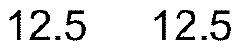
- The use of deep eutectic solvents (DESs), particularly natural deep eutectic solvents (NADESs), which are blends of quaternary ammonium or imidazolium salts with hydrogen bond donors, extending open time and stabilizing pigments without compromising paint stability or film properties, and are derived from renewable sources, thus reducing VOC emissions.



Environmental Impact and Green Chemistry Aspects
Deep Eutectic Solvents (DES) represent a significant advancement in green chemistry, offering substantial environmental benefits compared to conventional organic solvents. Their biodegradability and low toxicity profile make them environmentally benign alternatives that align with sustainable development goals. Most DES components are derived from renewable resources, such as choline chloride from biomass and hydrogen bond donors from plant materials, reducing dependence on petroleum-based chemicals and supporting circular economy principles.
The production of DES requires minimal energy input, typically involving simple mixing procedures at moderate temperatures without complex purification steps. This streamlined manufacturing process results in a significantly lower carbon footprint compared to traditional solvent synthesis. Life cycle assessments have demonstrated that DES-based processes can reduce greenhouse gas emissions by up to 70% in certain applications, particularly in extraction and separation technologies.
DES systems that maintain low viscosity while preserving solvation power are particularly valuable from an environmental perspective. Lower viscosity reduces energy requirements for pumping and mixing operations in industrial processes, contributing to overall energy efficiency. This characteristic enables DES to function effectively at ambient temperatures, further minimizing energy consumption that would otherwise be necessary to maintain operational fluidity in more viscous alternatives.
The tunability of DES compositions allows for targeted optimization of environmental parameters. By selecting appropriate hydrogen bond donors and acceptors, researchers can design DES systems with enhanced biodegradability profiles and reduced ecotoxicity. Recent studies have shown that certain DES formulations can degrade completely within 28 days under standard environmental conditions, leaving no persistent residues in ecosystems.
In waste treatment applications, low-viscosity DES have demonstrated remarkable capabilities for capturing and sequestering environmental pollutants while maintaining processing efficiency. Their ability to dissolve complex organic compounds, heavy metals, and other contaminants without sacrificing flow properties makes them ideal candidates for environmental remediation technologies.
The principles of green chemistry are inherently embodied in DES technology, particularly the concepts of atom economy, safer solvents, and energy efficiency. The dual functionality of maintaining low viscosity while preserving solvation power directly addresses multiple green chemistry principles simultaneously, representing a holistic approach to sustainable solvent design rather than trading one environmental benefit for another.
The production of DES requires minimal energy input, typically involving simple mixing procedures at moderate temperatures without complex purification steps. This streamlined manufacturing process results in a significantly lower carbon footprint compared to traditional solvent synthesis. Life cycle assessments have demonstrated that DES-based processes can reduce greenhouse gas emissions by up to 70% in certain applications, particularly in extraction and separation technologies.
DES systems that maintain low viscosity while preserving solvation power are particularly valuable from an environmental perspective. Lower viscosity reduces energy requirements for pumping and mixing operations in industrial processes, contributing to overall energy efficiency. This characteristic enables DES to function effectively at ambient temperatures, further minimizing energy consumption that would otherwise be necessary to maintain operational fluidity in more viscous alternatives.
The tunability of DES compositions allows for targeted optimization of environmental parameters. By selecting appropriate hydrogen bond donors and acceptors, researchers can design DES systems with enhanced biodegradability profiles and reduced ecotoxicity. Recent studies have shown that certain DES formulations can degrade completely within 28 days under standard environmental conditions, leaving no persistent residues in ecosystems.
In waste treatment applications, low-viscosity DES have demonstrated remarkable capabilities for capturing and sequestering environmental pollutants while maintaining processing efficiency. Their ability to dissolve complex organic compounds, heavy metals, and other contaminants without sacrificing flow properties makes them ideal candidates for environmental remediation technologies.
The principles of green chemistry are inherently embodied in DES technology, particularly the concepts of atom economy, safer solvents, and energy efficiency. The dual functionality of maintaining low viscosity while preserving solvation power directly addresses multiple green chemistry principles simultaneously, representing a holistic approach to sustainable solvent design rather than trading one environmental benefit for another.
Scale-up Considerations for Industrial DES Applications
The industrial scale-up of Deep Eutectic Solvents (DES) presents unique challenges that must be addressed to maintain their advantageous properties of low viscosity and high solvation power. When transitioning from laboratory to industrial scale, heat transfer considerations become paramount as DES formation is often exothermic, requiring sophisticated temperature control systems to prevent localized overheating that could alter viscosity profiles.
Mixing dynamics represent another critical factor in industrial applications. The non-Newtonian behavior exhibited by many DES systems necessitates specialized mixing equipment capable of providing consistent shear rates across large volumes. Insufficient mixing can lead to composition heterogeneity, directly impacting both viscosity and solvation capabilities throughout the batch.
Material compatibility must be carefully evaluated when designing industrial-scale equipment. Certain DES compositions, particularly those containing choline chloride, may exhibit corrosive properties toward specific metals. Selection of appropriate construction materials for tanks, pipes, and processing equipment becomes essential to prevent contamination that could compromise solvent performance.
Process continuity represents a significant scale-up challenge. Batch-to-batch consistency requires precise control over component ratios, mixing parameters, and thermal history. Continuous processing technologies, such as static mixers and flow reactors, offer promising alternatives to traditional batch methods, potentially providing more consistent DES properties across production runs.
Storage stability considerations cannot be overlooked in industrial applications. Some DES systems may undergo phase separation or compositional changes during prolonged storage, affecting their viscosity-solvation balance. Implementation of appropriate storage conditions and stabilization strategies becomes necessary to maintain desired performance characteristics.
Economic viability ultimately determines industrial adoption. While DES components are generally inexpensive, the processing costs associated with maintaining optimal viscosity-solvation relationships must be carefully balanced against performance benefits. Energy requirements for heating, cooling, and mixing operations can significantly impact the overall cost structure of DES-based processes.
Regulatory compliance adds another layer of complexity to industrial scale-up. Though DES are often promoted as environmentally friendly alternatives to conventional solvents, comprehensive toxicological and environmental impact assessments remain necessary, particularly for novel DES compositions designed to optimize viscosity-solvation relationships.
Mixing dynamics represent another critical factor in industrial applications. The non-Newtonian behavior exhibited by many DES systems necessitates specialized mixing equipment capable of providing consistent shear rates across large volumes. Insufficient mixing can lead to composition heterogeneity, directly impacting both viscosity and solvation capabilities throughout the batch.
Material compatibility must be carefully evaluated when designing industrial-scale equipment. Certain DES compositions, particularly those containing choline chloride, may exhibit corrosive properties toward specific metals. Selection of appropriate construction materials for tanks, pipes, and processing equipment becomes essential to prevent contamination that could compromise solvent performance.
Process continuity represents a significant scale-up challenge. Batch-to-batch consistency requires precise control over component ratios, mixing parameters, and thermal history. Continuous processing technologies, such as static mixers and flow reactors, offer promising alternatives to traditional batch methods, potentially providing more consistent DES properties across production runs.
Storage stability considerations cannot be overlooked in industrial applications. Some DES systems may undergo phase separation or compositional changes during prolonged storage, affecting their viscosity-solvation balance. Implementation of appropriate storage conditions and stabilization strategies becomes necessary to maintain desired performance characteristics.
Economic viability ultimately determines industrial adoption. While DES components are generally inexpensive, the processing costs associated with maintaining optimal viscosity-solvation relationships must be carefully balanced against performance benefits. Energy requirements for heating, cooling, and mixing operations can significantly impact the overall cost structure of DES-based processes.
Regulatory compliance adds another layer of complexity to industrial scale-up. Though DES are often promoted as environmentally friendly alternatives to conventional solvents, comprehensive toxicological and environmental impact assessments remain necessary, particularly for novel DES compositions designed to optimize viscosity-solvation relationships.
Unlock deeper insights with Patsnap Eureka Quick Research — get a full tech report to explore trends and direct your research. Try now!
Generate Your Research Report Instantly with AI Agent
Supercharge your innovation with Patsnap Eureka AI Agent Platform!