

How Hydroxyethylcellulose Controls Viscosity in Industrial Processes
JUL 31, 20259 MIN READ
Generate Your Research Report Instantly with AI Agent
Patsnap Eureka helps you evaluate technical feasibility & market potential.
HEC Viscosity Control Background and Objectives
Hydroxyethylcellulose (HEC) has emerged as a crucial component in various industrial processes due to its remarkable ability to control viscosity. The development of HEC as a viscosity modifier dates back to the early 20th century, with significant advancements occurring in the 1950s and 1960s. Since then, its applications have expanded across multiple industries, including paints, cosmetics, pharmaceuticals, and oil drilling fluids.
The evolution of HEC technology has been driven by the increasing demand for precise viscosity control in industrial applications. As manufacturing processes became more sophisticated, the need for reliable and versatile thickening agents grew exponentially. HEC's unique chemical structure, consisting of a cellulose backbone with hydroxyethyl side chains, allows it to form complex networks in aqueous solutions, effectively modifying the rheological properties of the medium.
In recent years, the focus has shifted towards developing HEC variants with enhanced performance characteristics. These include improved stability in extreme pH conditions, better salt tolerance, and increased biodegradability. The ongoing research aims to expand the range of applications and improve the efficiency of HEC-based viscosity control systems.
The primary objective of HEC viscosity control is to achieve precise and predictable rheological properties in various industrial formulations. This includes not only increasing viscosity but also imparting specific flow behaviors such as shear-thinning or thixotropic properties. By fine-tuning these characteristics, manufacturers can optimize product performance, improve process efficiency, and enhance the end-user experience.
Another critical goal is to develop sustainable and environmentally friendly viscosity control solutions. As global environmental regulations become more stringent, there is a growing emphasis on creating HEC products that are biodegradable and derived from renewable resources. This aligns with the broader industry trend towards green chemistry and sustainable manufacturing practices.
Furthermore, the integration of HEC viscosity control with emerging technologies, such as smart materials and responsive systems, represents an exciting frontier in this field. Researchers are exploring ways to create HEC-based materials that can dynamically adjust their viscosity in response to external stimuli, opening up new possibilities for adaptive and self-regulating industrial processes.
As we look to the future, the continued advancement of HEC viscosity control technology is expected to play a pivotal role in enabling innovative product formulations and more efficient manufacturing processes across a wide range of industries. The ongoing research and development efforts in this area are poised to unlock new applications and push the boundaries of what is possible in industrial viscosity control.
The evolution of HEC technology has been driven by the increasing demand for precise viscosity control in industrial applications. As manufacturing processes became more sophisticated, the need for reliable and versatile thickening agents grew exponentially. HEC's unique chemical structure, consisting of a cellulose backbone with hydroxyethyl side chains, allows it to form complex networks in aqueous solutions, effectively modifying the rheological properties of the medium.
In recent years, the focus has shifted towards developing HEC variants with enhanced performance characteristics. These include improved stability in extreme pH conditions, better salt tolerance, and increased biodegradability. The ongoing research aims to expand the range of applications and improve the efficiency of HEC-based viscosity control systems.
The primary objective of HEC viscosity control is to achieve precise and predictable rheological properties in various industrial formulations. This includes not only increasing viscosity but also imparting specific flow behaviors such as shear-thinning or thixotropic properties. By fine-tuning these characteristics, manufacturers can optimize product performance, improve process efficiency, and enhance the end-user experience.
Another critical goal is to develop sustainable and environmentally friendly viscosity control solutions. As global environmental regulations become more stringent, there is a growing emphasis on creating HEC products that are biodegradable and derived from renewable resources. This aligns with the broader industry trend towards green chemistry and sustainable manufacturing practices.
Furthermore, the integration of HEC viscosity control with emerging technologies, such as smart materials and responsive systems, represents an exciting frontier in this field. Researchers are exploring ways to create HEC-based materials that can dynamically adjust their viscosity in response to external stimuli, opening up new possibilities for adaptive and self-regulating industrial processes.
As we look to the future, the continued advancement of HEC viscosity control technology is expected to play a pivotal role in enabling innovative product formulations and more efficient manufacturing processes across a wide range of industries. The ongoing research and development efforts in this area are poised to unlock new applications and push the boundaries of what is possible in industrial viscosity control.
Industrial Demand for HEC-based Viscosity Control
The industrial demand for hydroxyethylcellulose (HEC) as a viscosity control agent has been steadily growing across various sectors. This versatile polymer finds extensive applications in industries such as paints and coatings, personal care products, pharmaceuticals, construction materials, and oil field chemicals. The primary driver for HEC's popularity is its exceptional ability to modify and stabilize the viscosity of aqueous solutions, even at low concentrations.
In the paints and coatings industry, HEC is crucial for achieving optimal rheological properties. It enhances the flow and leveling characteristics of water-based paints, improves brush-ability, and prevents sagging during application. The construction sector relies on HEC for its thickening and water-retention properties in cement-based products, tile adhesives, and joint compounds. These attributes contribute to improved workability and extended open time of construction materials.
The personal care and cosmetics industry has seen a surge in demand for HEC due to its non-ionic nature and compatibility with a wide range of ingredients. It is extensively used in shampoos, lotions, and gels to provide the desired texture and viscosity. In pharmaceuticals, HEC serves as a thickening agent and stabilizer in oral and topical formulations, ensuring proper drug delivery and product consistency.
The oil and gas industry utilizes HEC in drilling fluids and hydraulic fracturing operations. Its ability to control fluid loss and maintain viscosity under high-temperature and high-pressure conditions makes it indispensable in these applications. The demand in this sector fluctuates with oil prices and exploration activities but remains a significant market for HEC.
Environmental concerns and regulatory pressures have further boosted the demand for HEC. As a biodegradable and non-toxic polymer, it aligns with the growing trend towards eco-friendly and sustainable products. This has led to increased adoption in industries seeking to replace less environmentally friendly viscosity modifiers.
The global market for HEC is projected to expand at a compound annual growth rate (CAGR) of around 4-5% over the next five years. This growth is attributed to the rising demand in emerging economies, particularly in Asia-Pacific, where rapid industrialization and urbanization are driving the consumption of HEC-based products. Additionally, ongoing research and development efforts are exploring new applications and formulations, potentially opening up new market segments for HEC-based viscosity control solutions.
In the paints and coatings industry, HEC is crucial for achieving optimal rheological properties. It enhances the flow and leveling characteristics of water-based paints, improves brush-ability, and prevents sagging during application. The construction sector relies on HEC for its thickening and water-retention properties in cement-based products, tile adhesives, and joint compounds. These attributes contribute to improved workability and extended open time of construction materials.
The personal care and cosmetics industry has seen a surge in demand for HEC due to its non-ionic nature and compatibility with a wide range of ingredients. It is extensively used in shampoos, lotions, and gels to provide the desired texture and viscosity. In pharmaceuticals, HEC serves as a thickening agent and stabilizer in oral and topical formulations, ensuring proper drug delivery and product consistency.
The oil and gas industry utilizes HEC in drilling fluids and hydraulic fracturing operations. Its ability to control fluid loss and maintain viscosity under high-temperature and high-pressure conditions makes it indispensable in these applications. The demand in this sector fluctuates with oil prices and exploration activities but remains a significant market for HEC.
Environmental concerns and regulatory pressures have further boosted the demand for HEC. As a biodegradable and non-toxic polymer, it aligns with the growing trend towards eco-friendly and sustainable products. This has led to increased adoption in industries seeking to replace less environmentally friendly viscosity modifiers.
The global market for HEC is projected to expand at a compound annual growth rate (CAGR) of around 4-5% over the next five years. This growth is attributed to the rising demand in emerging economies, particularly in Asia-Pacific, where rapid industrialization and urbanization are driving the consumption of HEC-based products. Additionally, ongoing research and development efforts are exploring new applications and formulations, potentially opening up new market segments for HEC-based viscosity control solutions.
HEC Viscosity Control: Current Status and Challenges
Hydroxyethylcellulose (HEC) has emerged as a crucial component in controlling viscosity across various industrial processes. However, the current status of HEC viscosity control faces several challenges that require attention and innovative solutions. One of the primary issues is the variability in HEC performance across different environmental conditions. Temperature fluctuations, pH levels, and the presence of other chemicals can significantly impact HEC's ability to maintain consistent viscosity, leading to unpredictable outcomes in industrial applications.
Another challenge lies in the precise control of HEC concentration to achieve desired viscosity levels. Many industries struggle with the delicate balance required to optimize HEC usage while maintaining cost-effectiveness. Over-concentration can lead to excessive viscosity and potential processing issues, while under-concentration may result in inadequate viscosity control. This balancing act is further complicated by the diverse range of industrial processes that utilize HEC, each with its unique requirements and constraints.
The interaction between HEC and other additives in industrial formulations presents an additional layer of complexity. Synergistic or antagonistic effects between HEC and other components can alter viscosity profiles in unexpected ways, making it challenging to develop standardized formulations across different applications. This issue is particularly pronounced in industries such as personal care and pharmaceuticals, where product stability and consistency are paramount.
Furthermore, the current methods for measuring and monitoring HEC-induced viscosity in real-time during industrial processes are often inadequate. Many facilities rely on periodic sampling and offline testing, which can lead to delays in identifying and addressing viscosity fluctuations. The development of more advanced, inline viscosity monitoring systems is an ongoing challenge that, if overcome, could significantly improve process control and product quality.
The environmental impact of HEC usage is also becoming an increasingly important consideration. As industries strive for more sustainable practices, there is a growing need to develop eco-friendly alternatives or optimize HEC usage to minimize environmental footprint. This challenge extends to the entire lifecycle of HEC, from production to disposal, and requires a holistic approach to sustainability in viscosity control solutions.
Lastly, the scalability of HEC viscosity control solutions from laboratory to industrial scale remains a significant hurdle. Techniques and formulations that prove effective in small-scale experiments often face unforeseen challenges when implemented in large-scale production environments. Bridging this gap requires extensive research and development efforts to ensure that HEC-based viscosity control strategies remain robust and effective across different scales of operation.
Another challenge lies in the precise control of HEC concentration to achieve desired viscosity levels. Many industries struggle with the delicate balance required to optimize HEC usage while maintaining cost-effectiveness. Over-concentration can lead to excessive viscosity and potential processing issues, while under-concentration may result in inadequate viscosity control. This balancing act is further complicated by the diverse range of industrial processes that utilize HEC, each with its unique requirements and constraints.
The interaction between HEC and other additives in industrial formulations presents an additional layer of complexity. Synergistic or antagonistic effects between HEC and other components can alter viscosity profiles in unexpected ways, making it challenging to develop standardized formulations across different applications. This issue is particularly pronounced in industries such as personal care and pharmaceuticals, where product stability and consistency are paramount.
Furthermore, the current methods for measuring and monitoring HEC-induced viscosity in real-time during industrial processes are often inadequate. Many facilities rely on periodic sampling and offline testing, which can lead to delays in identifying and addressing viscosity fluctuations. The development of more advanced, inline viscosity monitoring systems is an ongoing challenge that, if overcome, could significantly improve process control and product quality.
The environmental impact of HEC usage is also becoming an increasingly important consideration. As industries strive for more sustainable practices, there is a growing need to develop eco-friendly alternatives or optimize HEC usage to minimize environmental footprint. This challenge extends to the entire lifecycle of HEC, from production to disposal, and requires a holistic approach to sustainability in viscosity control solutions.
Lastly, the scalability of HEC viscosity control solutions from laboratory to industrial scale remains a significant hurdle. Techniques and formulations that prove effective in small-scale experiments often face unforeseen challenges when implemented in large-scale production environments. Bridging this gap requires extensive research and development efforts to ensure that HEC-based viscosity control strategies remain robust and effective across different scales of operation.
Current HEC-based Viscosity Control Solutions
01 Viscosity control in aqueous solutions
Hydroxyethylcellulose is used as a thickening agent to control viscosity in aqueous solutions. Its concentration and molecular weight can be adjusted to achieve desired viscosity levels in various applications, such as personal care products, pharmaceuticals, and industrial fluids.- Viscosity control in drilling fluids: Hydroxyethylcellulose is used to control viscosity in drilling fluids. It helps maintain the desired rheological properties of the fluid, ensuring proper suspension of drill cuttings and efficient hole cleaning. The viscosity can be adjusted by varying the concentration of hydroxyethylcellulose in the formulation.
- Viscosity modification in personal care products: Hydroxyethylcellulose is employed as a viscosity modifier in personal care products such as shampoos, lotions, and creams. It helps achieve the desired consistency and improves the product's stability and texture. The viscosity can be tailored by adjusting the molecular weight and concentration of hydroxyethylcellulose.
- Viscosity enhancement in pharmaceutical formulations: In pharmaceutical applications, hydroxyethylcellulose is used to enhance the viscosity of liquid formulations. This helps improve drug stability, control release rates, and enhance patient compliance. The viscosity can be optimized by selecting the appropriate grade and concentration of hydroxyethylcellulose.
- Viscosity adjustment in construction materials: Hydroxyethylcellulose is utilized to adjust the viscosity of construction materials such as cement slurries and gypsum products. It helps improve workability, water retention, and adhesion properties. The viscosity can be fine-tuned by varying the dosage and molecular weight of hydroxyethylcellulose.
- Viscosity measurement and characterization: Various methods and techniques are employed to measure and characterize the viscosity of hydroxyethylcellulose solutions. These include rheological measurements, capillary viscometry, and advanced analytical techniques. Understanding the viscosity behavior helps in optimizing formulations for specific applications.
02 Rheology modification in drilling fluids
Hydroxyethylcellulose is employed as a rheology modifier in drilling fluids. It helps control fluid loss, improve suspension properties, and enhance the overall performance of drilling muds in oil and gas exploration.Expand Specific Solutions03 Stabilization of emulsions and suspensions
The viscosity-enhancing properties of hydroxyethylcellulose are utilized to stabilize emulsions and suspensions in various industries. It prevents phase separation and improves the shelf life of products such as cosmetics, paints, and food items.Expand Specific Solutions04 Controlled release in pharmaceutical formulations
Hydroxyethylcellulose's viscosity-modifying properties are exploited in pharmaceutical formulations to achieve controlled release of active ingredients. By adjusting its concentration and molecular weight, drug release rates can be tailored for specific therapeutic needs.Expand Specific Solutions05 Viscosity measurement techniques
Various methods and apparatus are developed to measure and characterize the viscosity of hydroxyethylcellulose solutions. These techniques help in quality control, product development, and optimization of formulations across different industries.Expand Specific Solutions
Key Players in HEC Production and Application
The market for hydroxyethylcellulose (HEC) in industrial processes is in a mature stage, with a global market size estimated to be over $600 million. The technology for controlling viscosity using HEC is well-established, with key players like Dow Global Technologies, Hercules Corp., and Ashland Inc. leading the field. These companies have developed advanced formulations and application techniques, focusing on improving efficiency and sustainability. The competitive landscape is characterized by ongoing research and development efforts to enhance HEC performance in various industrial applications, including paints, personal care products, and oil field chemicals. Emerging players from Asia, such as Luzhou North Cellulose Co., Ltd, are also making significant strides in the market, contributing to technological advancements and market growth.
Dow Global Technologies LLC
Technical Solution: Dow Global Technologies LLC has developed advanced formulations of hydroxyethylcellulose (HEC) for precise viscosity control in industrial processes. Their technology involves modifying HEC's molecular structure to achieve specific rheological properties. They have introduced a range of HEC grades with varying degrees of substitution and molecular weights, allowing for tailored viscosity profiles[1]. Dow's HEC products demonstrate excellent thickening efficiency, with some grades capable of increasing viscosity by up to 30,000 cP at just 2% concentration[2]. Their formulations also exhibit enhanced stability in high-temperature and high-shear environments, maintaining consistent viscosity even under challenging process conditions[3].
Strengths: Wide range of viscosity options, high efficiency at low concentrations, excellent stability in extreme conditions. Weaknesses: May be more expensive than traditional HEC products, potential for over-thickening if not properly dosed.
Henkel AG & Co. KGaA
Technical Solution: Henkel has developed a proprietary HEC-based technology for viscosity control in adhesives and personal care products. Their approach involves combining HEC with other polymers to create synergistic effects on viscosity and stability. Henkel's HEC formulations incorporate nanoparticles to enhance thixotropic behavior, allowing for shear-thinning properties that facilitate application while maintaining high viscosity at rest[4]. Their technology also includes the use of modified HEC with hydrophobic groups, which provides improved water resistance and emulsion stability in cosmetic formulations[5]. Henkel's HEC-based systems have demonstrated up to 40% improvement in long-term viscosity stability compared to conventional formulations[6].
Strengths: Enhanced thixotropic behavior, improved water resistance, long-term stability. Weaknesses: Complex formulation process, may require specialized equipment for production.
Core Innovations in HEC Viscosity Modification
Blocky hydroxyethylcellulose, derivatives thereof, process of making, and uses thereof
PatentWO2006088953A1
Innovation
- Development of 'blocky' HECs with non-uniform hydroxyethyl group distribution, characterized by a high unsubstituted anhydroglucose trimer ratio and specific hydroxyethyl molar substitution, which form associative networks and exhibit unique adsorption characteristics, enhancing solution viscosity and interaction with media components.


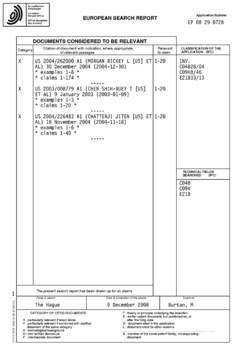
Control of the properties of cement slurries of normal densities with optimized polymers combination
PatentInactiveEP2147902A1
Innovation
- A cement slurry composition combining hydroxyethyl cellulose and acrylamido-methyl-propane sulfonate copolymer, allowing for decoupling of fluid-loss control and slurry viscosity, effective over a wide temperature and density range, using a blend of these polymers with hydraulic cements like Portland and pozzolanic cements.
Environmental Impact of HEC in Industrial Processes
The use of Hydroxyethylcellulose (HEC) in industrial processes has significant environmental implications that warrant careful consideration. As a biodegradable and non-toxic polymer, HEC offers several environmental advantages over synthetic alternatives. Its production from renewable resources, primarily wood pulp and cotton, reduces reliance on petroleum-based materials, contributing to a lower carbon footprint.
However, the environmental impact of HEC extends beyond its production. In industrial applications, HEC's ability to control viscosity often leads to improved process efficiency and reduced waste. By optimizing fluid properties, HEC can minimize the use of other potentially harmful additives, thereby decreasing overall chemical consumption and environmental contamination risks.
The biodegradability of HEC is a crucial factor in its environmental profile. Unlike many synthetic polymers, HEC can be broken down by natural processes, reducing long-term environmental persistence. This characteristic is particularly beneficial in applications where the material may be released into the environment, such as in drilling fluids or personal care products.
Water treatment is another area where HEC's environmental impact is notable. Its use in wastewater treatment processes can enhance flocculation and sedimentation, improving the efficiency of pollutant removal. This can lead to cleaner effluent discharge and reduced environmental stress on aquatic ecosystems.
Despite these benefits, the large-scale use of HEC is not without environmental concerns. The production of HEC requires chemical modification of cellulose, which involves the use of reagents and energy. While less intensive than many synthetic polymer productions, this process still contributes to industrial emissions and resource consumption.
Furthermore, the increasing demand for HEC may lead to expanded cultivation of source plants, potentially impacting land use and biodiversity. Sustainable sourcing practices are crucial to mitigate these effects and ensure the long-term environmental viability of HEC production.
In aquatic environments, high concentrations of HEC can potentially alter water viscosity and affect ecosystem dynamics. While generally considered safe, excessive release of HEC into water bodies could impact aquatic organisms and alter nutrient cycles. Proper handling and disposal practices in industrial settings are essential to prevent such environmental disruptions.
Overall, the environmental impact of HEC in industrial processes is generally positive when compared to many synthetic alternatives. Its biodegradability, renewable sourcing, and efficiency-enhancing properties contribute to a more sustainable industrial landscape. However, responsible use, sustainable production methods, and ongoing research into its long-term environmental effects are necessary to fully leverage its benefits while minimizing potential negative impacts.
However, the environmental impact of HEC extends beyond its production. In industrial applications, HEC's ability to control viscosity often leads to improved process efficiency and reduced waste. By optimizing fluid properties, HEC can minimize the use of other potentially harmful additives, thereby decreasing overall chemical consumption and environmental contamination risks.
The biodegradability of HEC is a crucial factor in its environmental profile. Unlike many synthetic polymers, HEC can be broken down by natural processes, reducing long-term environmental persistence. This characteristic is particularly beneficial in applications where the material may be released into the environment, such as in drilling fluids or personal care products.
Water treatment is another area where HEC's environmental impact is notable. Its use in wastewater treatment processes can enhance flocculation and sedimentation, improving the efficiency of pollutant removal. This can lead to cleaner effluent discharge and reduced environmental stress on aquatic ecosystems.
Despite these benefits, the large-scale use of HEC is not without environmental concerns. The production of HEC requires chemical modification of cellulose, which involves the use of reagents and energy. While less intensive than many synthetic polymer productions, this process still contributes to industrial emissions and resource consumption.
Furthermore, the increasing demand for HEC may lead to expanded cultivation of source plants, potentially impacting land use and biodiversity. Sustainable sourcing practices are crucial to mitigate these effects and ensure the long-term environmental viability of HEC production.
In aquatic environments, high concentrations of HEC can potentially alter water viscosity and affect ecosystem dynamics. While generally considered safe, excessive release of HEC into water bodies could impact aquatic organisms and alter nutrient cycles. Proper handling and disposal practices in industrial settings are essential to prevent such environmental disruptions.
Overall, the environmental impact of HEC in industrial processes is generally positive when compared to many synthetic alternatives. Its biodegradability, renewable sourcing, and efficiency-enhancing properties contribute to a more sustainable industrial landscape. However, responsible use, sustainable production methods, and ongoing research into its long-term environmental effects are necessary to fully leverage its benefits while minimizing potential negative impacts.
Regulatory Framework for HEC Use in Industries
The regulatory framework for hydroxyethylcellulose (HEC) use in industries is complex and multifaceted, reflecting the diverse applications of this versatile polymer across various sectors. In the United States, the Food and Drug Administration (FDA) plays a crucial role in regulating HEC use in food, pharmaceuticals, and cosmetics. For food applications, HEC is classified as a Generally Recognized as Safe (GRAS) substance, allowing its use as a thickening agent and stabilizer within specified limits.
In the pharmaceutical industry, HEC is subject to stringent regulations outlined in the United States Pharmacopeia (USP) and the Code of Federal Regulations (CFR). These guidelines specify purity standards, acceptable impurity levels, and manufacturing practices to ensure product safety and efficacy. The European Medicines Agency (EMA) provides similar regulatory oversight for HEC use in pharmaceutical formulations within the European Union.
For cosmetic applications, HEC falls under the purview of the FDA's cosmetic regulations in the US and the European Commission's Cosmetic Regulation in the EU. These frameworks establish safety requirements, labeling standards, and restrictions on concentration levels for HEC in various cosmetic products.
In industrial settings, such as oil and gas extraction, the use of HEC is governed by environmental regulations set forth by agencies like the Environmental Protection Agency (EPA) in the US and the European Chemicals Agency (ECHA) in the EU. These regulations focus on the environmental impact of HEC, including its biodegradability and potential effects on aquatic ecosystems.
The Occupational Safety and Health Administration (OSHA) in the US and the European Agency for Safety and Health at Work (EU-OSHA) provide guidelines for the safe handling and use of HEC in industrial processes. These regulations address worker exposure limits, personal protective equipment requirements, and proper storage and disposal procedures.
Globally, the transportation and handling of HEC are subject to international regulations such as the United Nations Recommendations on the Transport of Dangerous Goods. These guidelines ensure the safe movement of HEC across borders and between different modes of transport.
As sustainability concerns grow, regulatory bodies are increasingly focusing on the environmental impact of HEC production and use. This has led to the development of new standards and certifications for sustainable sourcing and manufacturing practices, which are becoming increasingly important for companies using HEC in their products and processes.
In the pharmaceutical industry, HEC is subject to stringent regulations outlined in the United States Pharmacopeia (USP) and the Code of Federal Regulations (CFR). These guidelines specify purity standards, acceptable impurity levels, and manufacturing practices to ensure product safety and efficacy. The European Medicines Agency (EMA) provides similar regulatory oversight for HEC use in pharmaceutical formulations within the European Union.
For cosmetic applications, HEC falls under the purview of the FDA's cosmetic regulations in the US and the European Commission's Cosmetic Regulation in the EU. These frameworks establish safety requirements, labeling standards, and restrictions on concentration levels for HEC in various cosmetic products.
In industrial settings, such as oil and gas extraction, the use of HEC is governed by environmental regulations set forth by agencies like the Environmental Protection Agency (EPA) in the US and the European Chemicals Agency (ECHA) in the EU. These regulations focus on the environmental impact of HEC, including its biodegradability and potential effects on aquatic ecosystems.
The Occupational Safety and Health Administration (OSHA) in the US and the European Agency for Safety and Health at Work (EU-OSHA) provide guidelines for the safe handling and use of HEC in industrial processes. These regulations address worker exposure limits, personal protective equipment requirements, and proper storage and disposal procedures.
Globally, the transportation and handling of HEC are subject to international regulations such as the United Nations Recommendations on the Transport of Dangerous Goods. These guidelines ensure the safe movement of HEC across borders and between different modes of transport.
As sustainability concerns grow, regulatory bodies are increasingly focusing on the environmental impact of HEC production and use. This has led to the development of new standards and certifications for sustainable sourcing and manufacturing practices, which are becoming increasingly important for companies using HEC in their products and processes.
Unlock deeper insights with Patsnap Eureka Quick Research — get a full tech report to explore trends and direct your research. Try now!
Generate Your Research Report Instantly with AI Agent
Supercharge your innovation with Patsnap Eureka AI Agent Platform!