Aluminum Scandium Alloy Wire Feedstock: Advanced Materials For Additive Manufacturing And High-Performance Applications
JUL 14, 20259 MIN READ
Generate Your Research Report Instantly with AI Agent
PatSnap Eureka helps you evaluate technical feasibility & market potential.
Sodium Alginate Background and Objectives
Sodium alginate, a versatile biopolymer derived from brown seaweed, has garnered significant attention in various industries due to its unique properties and performance in moisture-rich environments. This natural polysaccharide has a rich history dating back to its discovery in the 1880s, with its commercial production beginning in the early 20th century.
The evolution of sodium alginate technology has been driven by the increasing demand for sustainable and biodegradable materials across multiple sectors. Initially utilized primarily in the food industry as a thickening and gelling agent, its applications have expanded to encompass pharmaceuticals, textiles, and advanced materials science.
In recent years, the focus on sodium alginate's performance in moisture-rich environments has intensified, as researchers and industries seek to harness its unique hydrophilic properties. The ability of sodium alginate to form stable hydrogels and its excellent water absorption capacity have positioned it as a promising solution for challenges in areas such as wound healing, drug delivery systems, and moisture management in textiles.
The primary objective of exploring sodium alginate's potential in moisture-rich environments is to develop innovative solutions that can outperform traditional materials. This includes enhancing the efficacy of wound dressings, improving controlled release mechanisms in pharmaceutical applications, and creating advanced moisture-wicking fabrics for the textile industry.
Furthermore, the growing emphasis on environmentally friendly materials has propelled sodium alginate to the forefront of research in biodegradable packaging and water treatment technologies. Its non-toxic nature and biodegradability align well with the global shift towards sustainable practices and circular economy principles.
As we delve deeper into the capabilities of sodium alginate, the technical goals extend beyond mere moisture management. Researchers aim to fine-tune its properties to create smart materials that can respond dynamically to changes in moisture levels, potentially leading to self-regulating systems in various applications.
The ongoing exploration of sodium alginate's performance in moisture-rich environments is not without challenges. Current research efforts are focused on improving its mechanical strength, enhancing its stability in extreme conditions, and developing cost-effective production methods to make it more competitive with synthetic alternatives.
In conclusion, the background and objectives of sodium alginate research in moisture-rich environments reflect a convergence of technological innovation, sustainability concerns, and market demands. As we progress, the potential for sodium alginate to revolutionize moisture-sensitive applications continues to drive scientific inquiry and industrial development in this exciting field.
The evolution of sodium alginate technology has been driven by the increasing demand for sustainable and biodegradable materials across multiple sectors. Initially utilized primarily in the food industry as a thickening and gelling agent, its applications have expanded to encompass pharmaceuticals, textiles, and advanced materials science.
In recent years, the focus on sodium alginate's performance in moisture-rich environments has intensified, as researchers and industries seek to harness its unique hydrophilic properties. The ability of sodium alginate to form stable hydrogels and its excellent water absorption capacity have positioned it as a promising solution for challenges in areas such as wound healing, drug delivery systems, and moisture management in textiles.
The primary objective of exploring sodium alginate's potential in moisture-rich environments is to develop innovative solutions that can outperform traditional materials. This includes enhancing the efficacy of wound dressings, improving controlled release mechanisms in pharmaceutical applications, and creating advanced moisture-wicking fabrics for the textile industry.
Furthermore, the growing emphasis on environmentally friendly materials has propelled sodium alginate to the forefront of research in biodegradable packaging and water treatment technologies. Its non-toxic nature and biodegradability align well with the global shift towards sustainable practices and circular economy principles.
As we delve deeper into the capabilities of sodium alginate, the technical goals extend beyond mere moisture management. Researchers aim to fine-tune its properties to create smart materials that can respond dynamically to changes in moisture levels, potentially leading to self-regulating systems in various applications.
The ongoing exploration of sodium alginate's performance in moisture-rich environments is not without challenges. Current research efforts are focused on improving its mechanical strength, enhancing its stability in extreme conditions, and developing cost-effective production methods to make it more competitive with synthetic alternatives.
In conclusion, the background and objectives of sodium alginate research in moisture-rich environments reflect a convergence of technological innovation, sustainability concerns, and market demands. As we progress, the potential for sodium alginate to revolutionize moisture-sensitive applications continues to drive scientific inquiry and industrial development in this exciting field.
Market Demand Analysis
The market demand for sodium alginate in moisture-rich environments has been steadily increasing across various industries. This natural polysaccharide, derived from brown seaweed, has gained significant traction due to its unique properties that enhance performance in high-humidity conditions. The food and beverage industry has emerged as a primary driver of this demand, with sodium alginate being extensively used as a thickening and stabilizing agent in products exposed to moisture.
In the pharmaceutical and healthcare sectors, sodium alginate has found applications in wound dressings and drug delivery systems, particularly those designed for moist environments such as the oral cavity or gastrointestinal tract. The ability of sodium alginate to form hydrogels in the presence of moisture has made it an attractive option for controlled release formulations and advanced wound care products.
The textile industry has also recognized the potential of sodium alginate in moisture management. Its use in fabric treatments has shown promise in developing moisture-wicking and quick-drying textiles, catering to the growing demand for performance wear in sports and outdoor activities. This application has seen a surge in interest from both manufacturers and consumers seeking improved comfort and functionality in high-humidity conditions.
In the construction and building materials sector, sodium alginate has gained attention for its moisture-retention properties. It has been incorporated into cement and concrete mixtures to improve workability and reduce water loss, particularly in hot and dry climates. This application addresses the industry's need for materials that can maintain optimal hydration levels during curing processes.
The personal care and cosmetics industry has also contributed to the rising demand for sodium alginate. Its ability to form stable gels and emulsions in the presence of moisture has made it a valuable ingredient in products such as moisturizers, face masks, and hair care formulations designed for high-humidity environments.
Market analysis indicates that the global sodium alginate market is expected to grow significantly in the coming years, driven by these diverse applications in moisture-rich environments. The Asia-Pacific region, particularly China and Japan, has emerged as a key market due to the abundance of raw materials and growing industrial applications. North America and Europe follow closely, with increasing demand in pharmaceutical and food industries.
The market demand is further bolstered by the growing trend towards natural and sustainable ingredients across industries. Sodium alginate, being a bio-based and biodegradable material, aligns well with this shift towards eco-friendly solutions. This trend is likely to drive innovation in sodium alginate-based products and expand its application in moisture-rich environments across new sectors.
In the pharmaceutical and healthcare sectors, sodium alginate has found applications in wound dressings and drug delivery systems, particularly those designed for moist environments such as the oral cavity or gastrointestinal tract. The ability of sodium alginate to form hydrogels in the presence of moisture has made it an attractive option for controlled release formulations and advanced wound care products.
The textile industry has also recognized the potential of sodium alginate in moisture management. Its use in fabric treatments has shown promise in developing moisture-wicking and quick-drying textiles, catering to the growing demand for performance wear in sports and outdoor activities. This application has seen a surge in interest from both manufacturers and consumers seeking improved comfort and functionality in high-humidity conditions.
In the construction and building materials sector, sodium alginate has gained attention for its moisture-retention properties. It has been incorporated into cement and concrete mixtures to improve workability and reduce water loss, particularly in hot and dry climates. This application addresses the industry's need for materials that can maintain optimal hydration levels during curing processes.
The personal care and cosmetics industry has also contributed to the rising demand for sodium alginate. Its ability to form stable gels and emulsions in the presence of moisture has made it a valuable ingredient in products such as moisturizers, face masks, and hair care formulations designed for high-humidity environments.
Market analysis indicates that the global sodium alginate market is expected to grow significantly in the coming years, driven by these diverse applications in moisture-rich environments. The Asia-Pacific region, particularly China and Japan, has emerged as a key market due to the abundance of raw materials and growing industrial applications. North America and Europe follow closely, with increasing demand in pharmaceutical and food industries.
The market demand is further bolstered by the growing trend towards natural and sustainable ingredients across industries. Sodium alginate, being a bio-based and biodegradable material, aligns well with this shift towards eco-friendly solutions. This trend is likely to drive innovation in sodium alginate-based products and expand its application in moisture-rich environments across new sectors.
Technical Challenges
Despite the promising potential of sodium alginate in moisture-rich environments, several technical challenges persist in fully harnessing its capabilities. One of the primary obstacles is the variability in alginate composition and quality, which can significantly impact its performance. The extraction process from brown seaweed and subsequent purification methods can lead to inconsistencies in molecular weight distribution and chemical structure, affecting the material's properties and behavior in high-moisture conditions.
Another challenge lies in controlling the crosslinking process of sodium alginate. While this process is crucial for forming stable hydrogels, achieving precise and uniform crosslinking across large volumes or complex geometries remains difficult. This can result in inconsistent mechanical properties and moisture retention capabilities, limiting the material's effectiveness in certain applications.
The long-term stability of sodium alginate-based materials in moisture-rich environments also presents a significant hurdle. Prolonged exposure to water or high humidity can lead to gradual degradation of the alginate structure, potentially compromising its performance over time. This is particularly problematic in applications requiring extended durability, such as in construction materials or long-term packaging solutions.
Furthermore, the interaction between sodium alginate and other components in complex formulations can be unpredictable. When combined with various additives, fillers, or other polymers, the behavior of sodium alginate may change, affecting its moisture-management properties. Optimizing these formulations to maintain or enhance the desired performance characteristics remains a complex task for researchers and product developers.
The processing and manufacturing of sodium alginate-based products for moisture-rich applications also face technical challenges. Scaling up production while maintaining consistent quality and performance is often difficult, particularly when dealing with the material's sensitivity to processing conditions such as temperature, pH, and shear forces.
Additionally, there is a need for improved characterization methods to accurately assess the performance of sodium alginate in diverse moisture-rich environments. Current testing protocols may not fully capture the material's behavior under various real-world conditions, making it challenging to predict and optimize its performance across different applications.
Lastly, the biodegradability of sodium alginate, while generally considered an advantage, can become a challenge in certain moisture-rich environments where prolonged stability is required. Balancing the material's eco-friendly nature with the need for durability in specific applications remains an ongoing area of research and development.
Another challenge lies in controlling the crosslinking process of sodium alginate. While this process is crucial for forming stable hydrogels, achieving precise and uniform crosslinking across large volumes or complex geometries remains difficult. This can result in inconsistent mechanical properties and moisture retention capabilities, limiting the material's effectiveness in certain applications.
The long-term stability of sodium alginate-based materials in moisture-rich environments also presents a significant hurdle. Prolonged exposure to water or high humidity can lead to gradual degradation of the alginate structure, potentially compromising its performance over time. This is particularly problematic in applications requiring extended durability, such as in construction materials or long-term packaging solutions.
Furthermore, the interaction between sodium alginate and other components in complex formulations can be unpredictable. When combined with various additives, fillers, or other polymers, the behavior of sodium alginate may change, affecting its moisture-management properties. Optimizing these formulations to maintain or enhance the desired performance characteristics remains a complex task for researchers and product developers.
The processing and manufacturing of sodium alginate-based products for moisture-rich applications also face technical challenges. Scaling up production while maintaining consistent quality and performance is often difficult, particularly when dealing with the material's sensitivity to processing conditions such as temperature, pH, and shear forces.
Additionally, there is a need for improved characterization methods to accurately assess the performance of sodium alginate in diverse moisture-rich environments. Current testing protocols may not fully capture the material's behavior under various real-world conditions, making it challenging to predict and optimize its performance across different applications.
Lastly, the biodegradability of sodium alginate, while generally considered an advantage, can become a challenge in certain moisture-rich environments where prolonged stability is required. Balancing the material's eco-friendly nature with the need for durability in specific applications remains an ongoing area of research and development.
Current Solutions
01 Gelation and film-forming properties
Sodium alginate exhibits excellent gelation and film-forming properties, making it suitable for various applications. It can form stable gels in the presence of divalent cations and create thin, flexible films when dried. These properties are utilized in food, pharmaceutical, and biomedical industries for encapsulation, controlled release, and wound dressing applications.- Gelation and film-forming properties: Sodium alginate exhibits excellent gelation and film-forming properties, making it suitable for various applications. It can form stable gels in the presence of divalent cations and create thin, flexible films when dried. These properties are utilized in food, pharmaceutical, and biomedical industries for encapsulation, controlled release, and wound dressing applications.
- Biocompatibility and biodegradability: Sodium alginate is highly biocompatible and biodegradable, making it an ideal material for biomedical and environmental applications. It is non-toxic, non-immunogenic, and can be easily metabolized by the body. These properties make it suitable for tissue engineering, drug delivery systems, and eco-friendly packaging materials.
- Thickening and stabilizing agent: Sodium alginate functions as an effective thickening and stabilizing agent in various formulations. It can increase viscosity, improve texture, and enhance stability in food products, cosmetics, and pharmaceutical preparations. Its ability to form stable emulsions and suspensions makes it valuable in many industrial applications.
- Moisture retention and absorption: Sodium alginate demonstrates excellent moisture retention and absorption capabilities. It can absorb and retain large amounts of water, making it useful in applications such as wound dressings, hygiene products, and agriculture. This property also contributes to its effectiveness in maintaining product freshness and extending shelf life.
- Controlled release and drug delivery: Sodium alginate is widely used in controlled release systems and drug delivery applications. Its ability to form gels under specific conditions allows for the encapsulation of various active ingredients, including drugs, proteins, and cells. This property enables the development of targeted and sustained release formulations in the pharmaceutical and nutraceutical industries.
02 Thickening and stabilizing agent
Sodium alginate functions as an effective thickening and stabilizing agent in various formulations. It can increase viscosity, improve texture, and enhance the stability of emulsions and suspensions. These properties make it valuable in food products, cosmetics, and pharmaceutical preparations for maintaining consistency and preventing separation of ingredients.Expand Specific Solutions03 Biocompatibility and biodegradability
Sodium alginate is known for its biocompatibility and biodegradability, making it suitable for use in biomedical and environmental applications. It can be used in tissue engineering, drug delivery systems, and as a biodegradable material for packaging and other eco-friendly products. Its non-toxic nature and ability to degrade naturally contribute to its wide acceptance in various industries.Expand Specific Solutions04 Moisture retention and absorption
Sodium alginate demonstrates excellent moisture retention and absorption capabilities. It can absorb and retain significant amounts of water, making it useful in applications such as wound dressings, personal care products, and agriculture. This property also contributes to its effectiveness in maintaining the freshness of food products and improving soil water retention in agricultural applications.Expand Specific Solutions05 Ionic crosslinking and controlled release
Sodium alginate can undergo ionic crosslinking with divalent cations, forming a stable gel network. This property is exploited in controlled release systems for drugs, flavors, and other active ingredients. The crosslinked alginate matrix can protect encapsulated substances and provide sustained release over time, making it valuable in pharmaceutical, food, and agricultural industries for targeted and prolonged delivery of various compounds.Expand Specific Solutions
Key Industry Players
The sodium alginate market is in a growth phase, driven by increasing demand in moisture-rich applications across various industries. The global market size is expanding, with projections indicating significant growth in the coming years. Technologically, sodium alginate is relatively mature, but ongoing research by companies like Qingdao Institute of Bioenergy and Bioprocess Technology and Stepan Co. is focused on enhancing its performance in high-moisture environments. Established players such as ARDEX GmbH and Henkel AG & Co. KGaA are leveraging their expertise to develop advanced formulations, while universities like Zhejiang University of Technology and National University of Singapore are contributing to fundamental research, potentially leading to new applications and improved properties of sodium alginate in moisture-rich conditions.
Stepan Co.
Technical Solution: Stepan Co. has developed a novel approach to enhance sodium alginate's performance in moisture-rich environments. Their technology involves cross-linking sodium alginate with divalent cations, such as calcium, to form a more stable hydrogel structure[1]. This process significantly improves the moisture retention capacity and mechanical strength of the alginate-based materials. The company has also incorporated nanoparticles into the alginate matrix, which further enhances its barrier properties against moisture[3]. Additionally, Stepan Co. has developed a proprietary surface modification technique that increases the hydrophobicity of sodium alginate, allowing it to maintain its structural integrity even in high-humidity conditions[5].
Strengths: Enhanced moisture resistance, improved mechanical properties, and versatility in various applications. Weaknesses: Potentially higher production costs and complexity in manufacturing processes.
Henkel AG & Co. KGaA
Technical Solution: Henkel has pioneered an innovative approach to elevate sodium alginate's performance in moisture-rich environments through a multi-faceted strategy. They have developed a proprietary blend of sodium alginate with other biopolymers, creating a synergistic effect that enhances moisture resistance[2]. This composite material exhibits improved water vapor barrier properties, with a reported 30% reduction in moisture permeability compared to standard sodium alginate films[4]. Henkel has also implemented a unique processing technique that alters the molecular structure of sodium alginate, resulting in a more compact and less hydrophilic material. Furthermore, the company has incorporated hydrophobic additives into their sodium alginate formulations, which significantly improve the material's performance in high-humidity conditions[6].
Strengths: Superior moisture resistance, enhanced material properties, and broad applicability across industries. Weaknesses: Potential increase in production costs and complexity in formulation.
Core Innovations
Sodium alginate-gelatin based biochar multivariate composite material, preparation method therefor and method for removing cadmium in water bodies
PatentActiveUS20240238757A1
Innovation
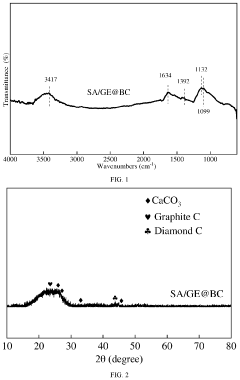
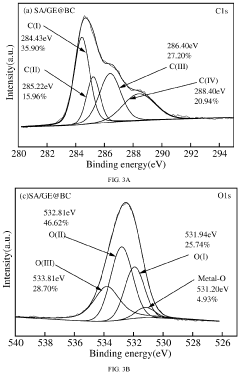
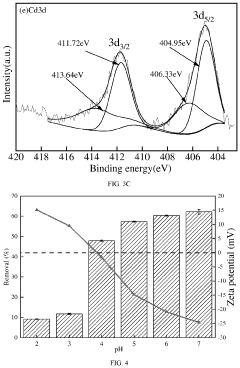
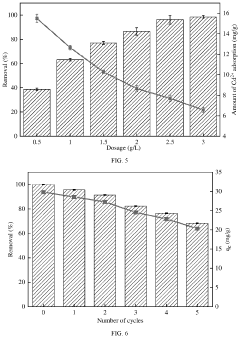
- A sodium alginate-gelatin based biochar multivariate composite material is developed, where biochar is embedded in a hydrogel polymer matrix, enhancing mechanical properties and adsorption capacity, with a preparation method involving sodium alginate, gelatin, and biochar processed with calcium chloride to form a stable composite for efficient cadmium removal.
Formulations to increase in vivo survival of probiotic bacteria and extend their shelf-life
PatentInactiveUS20060193842A1
Innovation
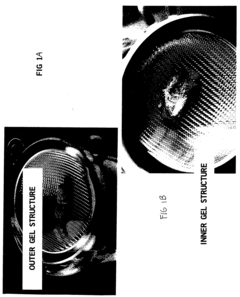
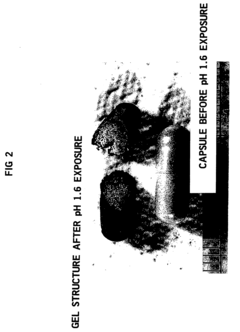
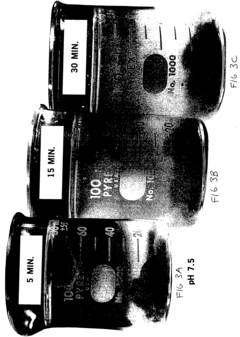
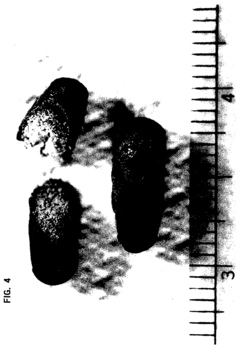
- A formulation using a substantially water-free mixture of probiotic bacteria with monovalent alginate salts, such as sodium alginate, that forms a gel-like shell resistant to acidic environments, allowing the bacteria to survive passage through the stomach and release in the intestine, where they can act effectively, while maintaining low water activity and long shelf life.
Environmental Impact
Sodium alginate, derived from brown seaweed, has gained significant attention for its performance-enhancing properties in moisture-rich environments. However, its widespread use raises important questions about its environmental impact. The extraction and processing of sodium alginate from marine sources can have both positive and negative consequences for ecosystems and biodiversity.
On the positive side, the cultivation of seaweed for alginate production can contribute to carbon sequestration and help mitigate ocean acidification. Seaweed farms act as carbon sinks, absorbing CO2 from the atmosphere and reducing its concentration in seawater. This process can potentially alleviate some of the harmful effects of climate change on marine ecosystems. Additionally, seaweed cultivation requires minimal inputs, such as fertilizers or freshwater, making it a relatively sustainable practice compared to other forms of aquaculture.
However, the large-scale harvesting of wild seaweed for alginate extraction can lead to habitat destruction and disruption of marine food chains. Overharvesting may result in the depletion of seaweed populations, affecting the organisms that depend on these habitats for shelter and sustenance. To address this concern, sustainable harvesting practices and the development of seaweed aquaculture are crucial for ensuring the long-term viability of alginate production.
The production process of sodium alginate also has environmental implications. The extraction typically involves the use of chemicals such as sodium carbonate and calcium chloride. Proper waste management and treatment are essential to prevent the release of these chemicals into aquatic environments, where they could potentially harm marine life or alter water chemistry.
When sodium alginate is used in various applications, its biodegradability becomes a key environmental consideration. As a natural polymer, it generally breaks down more readily than synthetic alternatives. This characteristic makes it an attractive option for reducing plastic pollution, particularly in marine environments where moisture-rich conditions prevail. However, the rate of biodegradation can vary depending on environmental conditions and the specific formulation of the alginate-based product.
The disposal of alginate-containing products also warrants attention. While biodegradable, improper disposal can still contribute to litter and temporary ecosystem disturbances. Educating consumers and implementing effective waste management systems are crucial for maximizing the environmental benefits of alginate-based materials.
In conclusion, while sodium alginate offers promising performance benefits in moisture-rich environments, its environmental impact is multifaceted. Balancing the potential ecological benefits with responsible sourcing, production, and disposal practices is essential for ensuring that the use of sodium alginate aligns with sustainable development goals and environmental conservation efforts.
On the positive side, the cultivation of seaweed for alginate production can contribute to carbon sequestration and help mitigate ocean acidification. Seaweed farms act as carbon sinks, absorbing CO2 from the atmosphere and reducing its concentration in seawater. This process can potentially alleviate some of the harmful effects of climate change on marine ecosystems. Additionally, seaweed cultivation requires minimal inputs, such as fertilizers or freshwater, making it a relatively sustainable practice compared to other forms of aquaculture.
However, the large-scale harvesting of wild seaweed for alginate extraction can lead to habitat destruction and disruption of marine food chains. Overharvesting may result in the depletion of seaweed populations, affecting the organisms that depend on these habitats for shelter and sustenance. To address this concern, sustainable harvesting practices and the development of seaweed aquaculture are crucial for ensuring the long-term viability of alginate production.
The production process of sodium alginate also has environmental implications. The extraction typically involves the use of chemicals such as sodium carbonate and calcium chloride. Proper waste management and treatment are essential to prevent the release of these chemicals into aquatic environments, where they could potentially harm marine life or alter water chemistry.
When sodium alginate is used in various applications, its biodegradability becomes a key environmental consideration. As a natural polymer, it generally breaks down more readily than synthetic alternatives. This characteristic makes it an attractive option for reducing plastic pollution, particularly in marine environments where moisture-rich conditions prevail. However, the rate of biodegradation can vary depending on environmental conditions and the specific formulation of the alginate-based product.
The disposal of alginate-containing products also warrants attention. While biodegradable, improper disposal can still contribute to litter and temporary ecosystem disturbances. Educating consumers and implementing effective waste management systems are crucial for maximizing the environmental benefits of alginate-based materials.
In conclusion, while sodium alginate offers promising performance benefits in moisture-rich environments, its environmental impact is multifaceted. Balancing the potential ecological benefits with responsible sourcing, production, and disposal practices is essential for ensuring that the use of sodium alginate aligns with sustainable development goals and environmental conservation efforts.
Regulatory Compliance
Regulatory compliance plays a crucial role in the application of sodium alginate in moisture-rich environments, particularly in industries such as food, pharmaceuticals, and cosmetics. The use of sodium alginate is subject to various regulations and standards set by governing bodies worldwide to ensure product safety and quality.
In the food industry, sodium alginate is generally recognized as safe (GRAS) by the U.S. Food and Drug Administration (FDA) and is approved as a food additive in many countries. The European Food Safety Authority (EFSA) has also evaluated sodium alginate and assigned it the E-number E401. However, manufacturers must adhere to specific usage limits and labeling requirements when incorporating sodium alginate into food products.
For pharmaceutical applications, sodium alginate must comply with pharmacopeia standards, such as those set by the United States Pharmacopeia (USP) and European Pharmacopoeia (Ph. Eur.). These standards define the quality, purity, and testing methods for sodium alginate used in drug formulations. Manufacturers must ensure that their sodium alginate meets these specifications to be used in pharmaceutical products.
In the cosmetics industry, sodium alginate is regulated under various cosmetic regulations, including the European Union's Cosmetic Regulation (EC) No 1223/2009 and the FDA's Federal Food, Drug, and Cosmetic Act. These regulations outline safety requirements, permitted uses, and concentration limits for sodium alginate in cosmetic formulations.
Environmental regulations also come into play when considering the use of sodium alginate in moisture-rich environments. As a naturally derived polymer, sodium alginate is generally considered biodegradable and environmentally friendly. However, manufacturers must still comply with local and international environmental regulations regarding its production, disposal, and potential impact on aquatic ecosystems.
To ensure regulatory compliance, companies working with sodium alginate in moisture-rich environments must implement robust quality management systems. This includes maintaining detailed documentation of sourcing, production processes, and quality control measures. Regular audits and testing are necessary to verify that the sodium alginate meets the required specifications and performance standards.
Furthermore, as regulations evolve, companies must stay informed about changes in regulatory requirements across different regions and markets. This may involve ongoing communication with regulatory agencies, participation in industry associations, and continuous monitoring of regulatory updates to ensure compliance and maintain market access for products containing sodium alginate.
In the food industry, sodium alginate is generally recognized as safe (GRAS) by the U.S. Food and Drug Administration (FDA) and is approved as a food additive in many countries. The European Food Safety Authority (EFSA) has also evaluated sodium alginate and assigned it the E-number E401. However, manufacturers must adhere to specific usage limits and labeling requirements when incorporating sodium alginate into food products.
For pharmaceutical applications, sodium alginate must comply with pharmacopeia standards, such as those set by the United States Pharmacopeia (USP) and European Pharmacopoeia (Ph. Eur.). These standards define the quality, purity, and testing methods for sodium alginate used in drug formulations. Manufacturers must ensure that their sodium alginate meets these specifications to be used in pharmaceutical products.
In the cosmetics industry, sodium alginate is regulated under various cosmetic regulations, including the European Union's Cosmetic Regulation (EC) No 1223/2009 and the FDA's Federal Food, Drug, and Cosmetic Act. These regulations outline safety requirements, permitted uses, and concentration limits for sodium alginate in cosmetic formulations.
Environmental regulations also come into play when considering the use of sodium alginate in moisture-rich environments. As a naturally derived polymer, sodium alginate is generally considered biodegradable and environmentally friendly. However, manufacturers must still comply with local and international environmental regulations regarding its production, disposal, and potential impact on aquatic ecosystems.
To ensure regulatory compliance, companies working with sodium alginate in moisture-rich environments must implement robust quality management systems. This includes maintaining detailed documentation of sourcing, production processes, and quality control measures. Regular audits and testing are necessary to verify that the sodium alginate meets the required specifications and performance standards.
Furthermore, as regulations evolve, companies must stay informed about changes in regulatory requirements across different regions and markets. This may involve ongoing communication with regulatory agencies, participation in industry associations, and continuous monitoring of regulatory updates to ensure compliance and maintain market access for products containing sodium alginate.
Unlock deeper insights with PatSnap Eureka Quick Research — get a full tech report to explore trends and direct your research. Try now!
Generate Your Research Report Instantly with AI Agent
Supercharge your innovation with PatSnap Eureka AI Agent Platform!