How to Address Non-Linear Loads in Half Wave Rectifiers?
JUL 15, 20259 MIN READ
Generate Your Research Report Instantly with AI Agent
PatSnap Eureka helps you evaluate technical feasibility & market potential.
Half Wave Rectifier Background and Objectives
Half wave rectifiers have been a fundamental component in power electronics since the early days of electrical engineering. These devices convert alternating current (AC) to pulsating direct current (DC) by allowing current flow in only one direction during each AC cycle. The evolution of half wave rectifiers has been closely tied to the development of semiconductor technology, progressing from vacuum tubes to solid-state diodes.
The primary objective in addressing non-linear loads in half wave rectifiers is to improve power quality and efficiency. Non-linear loads, such as switch-mode power supplies and LED drivers, draw current in short pulses rather than in a sinusoidal waveform. This non-linear behavior introduces harmonics and distortions in the power system, leading to reduced power factor, increased losses, and potential electromagnetic interference.
As power electronic systems become more prevalent in both industrial and consumer applications, the need to mitigate the effects of non-linear loads on half wave rectifiers has become increasingly critical. The challenge lies in developing solutions that can maintain the simplicity and cost-effectiveness of half wave rectifiers while addressing the complexities introduced by non-linear loads.
Recent technological advancements have opened up new possibilities for tackling this issue. These include the development of advanced semiconductor materials, improved circuit topologies, and sophisticated control algorithms. The integration of digital control systems and power factor correction techniques has also played a significant role in enhancing the performance of half wave rectifiers under non-linear load conditions.
The ongoing research in this field aims to achieve several key objectives. Firstly, there is a focus on improving the power factor and reducing harmonic distortion caused by non-linear loads. This involves developing innovative circuit designs and control strategies that can shape the input current waveform to more closely match the voltage waveform, even under varying load conditions.
Another important goal is to enhance the overall efficiency of half wave rectifiers when dealing with non-linear loads. This includes minimizing conduction and switching losses, as well as reducing the size and cost of filtering components required to meet electromagnetic compatibility standards.
Furthermore, researchers are exploring ways to make half wave rectifiers more adaptable to different types of non-linear loads. This adaptability is crucial in applications where the load characteristics may change dynamically, such as in variable speed motor drives or renewable energy systems.
As we look towards the future, the development of smart grid technologies and the increasing penetration of renewable energy sources present both challenges and opportunities for half wave rectifiers. The ability to handle non-linear loads efficiently will be crucial in ensuring the stability and reliability of these evolving power systems.
The primary objective in addressing non-linear loads in half wave rectifiers is to improve power quality and efficiency. Non-linear loads, such as switch-mode power supplies and LED drivers, draw current in short pulses rather than in a sinusoidal waveform. This non-linear behavior introduces harmonics and distortions in the power system, leading to reduced power factor, increased losses, and potential electromagnetic interference.
As power electronic systems become more prevalent in both industrial and consumer applications, the need to mitigate the effects of non-linear loads on half wave rectifiers has become increasingly critical. The challenge lies in developing solutions that can maintain the simplicity and cost-effectiveness of half wave rectifiers while addressing the complexities introduced by non-linear loads.
Recent technological advancements have opened up new possibilities for tackling this issue. These include the development of advanced semiconductor materials, improved circuit topologies, and sophisticated control algorithms. The integration of digital control systems and power factor correction techniques has also played a significant role in enhancing the performance of half wave rectifiers under non-linear load conditions.
The ongoing research in this field aims to achieve several key objectives. Firstly, there is a focus on improving the power factor and reducing harmonic distortion caused by non-linear loads. This involves developing innovative circuit designs and control strategies that can shape the input current waveform to more closely match the voltage waveform, even under varying load conditions.
Another important goal is to enhance the overall efficiency of half wave rectifiers when dealing with non-linear loads. This includes minimizing conduction and switching losses, as well as reducing the size and cost of filtering components required to meet electromagnetic compatibility standards.
Furthermore, researchers are exploring ways to make half wave rectifiers more adaptable to different types of non-linear loads. This adaptability is crucial in applications where the load characteristics may change dynamically, such as in variable speed motor drives or renewable energy systems.
As we look towards the future, the development of smart grid technologies and the increasing penetration of renewable energy sources present both challenges and opportunities for half wave rectifiers. The ability to handle non-linear loads efficiently will be crucial in ensuring the stability and reliability of these evolving power systems.
Market Demand Analysis for Non-Linear Load Solutions
The market demand for solutions addressing non-linear loads in half wave rectifiers has been steadily increasing due to the growing complexity of electrical systems and the need for more efficient power conversion. This demand is primarily driven by industries such as consumer electronics, industrial automation, and renewable energy, where power quality and energy efficiency are crucial factors.
In the consumer electronics sector, the proliferation of smart devices and IoT applications has led to a surge in non-linear loads, creating a significant market for rectifier solutions that can handle these challenges. The global smart home market, which heavily relies on such devices, is expected to grow substantially in the coming years, further fueling the demand for advanced rectifier technologies.
The industrial automation sector is another key driver of market demand for non-linear load solutions in half wave rectifiers. As manufacturing processes become increasingly automated and digitalized, the need for reliable and efficient power conversion systems has become paramount. Industries are seeking solutions that can mitigate harmonics, reduce power losses, and improve overall system performance.
Renewable energy systems, particularly solar and wind power installations, also contribute significantly to the market demand. These systems often generate non-linear loads due to their inherent characteristics and the use of power electronic converters. As the adoption of renewable energy continues to accelerate globally, the demand for rectifier solutions capable of handling non-linear loads is expected to grow proportionally.
The automotive industry, with its rapid shift towards electric vehicles (EVs) and hybrid electric vehicles (HEVs), represents another substantial market for non-linear load solutions. The complex power electronics systems in these vehicles require advanced rectifier technologies to ensure efficient energy conversion and management.
Geographically, the market demand is particularly strong in regions with high technological adoption rates and stringent power quality regulations. North America, Europe, and parts of Asia-Pacific, especially countries like China, Japan, and South Korea, are at the forefront of this demand. Emerging economies in Southeast Asia and Latin America are also showing increasing interest in these solutions as they upgrade their power infrastructure and industrial capabilities.
The market is further influenced by regulatory pressures and energy efficiency standards. Governments and international organizations are implementing stricter regulations on power quality and harmonic distortion, compelling industries to adopt more sophisticated rectifier solutions. This regulatory landscape is expected to continue driving market growth in the foreseeable future.
In the consumer electronics sector, the proliferation of smart devices and IoT applications has led to a surge in non-linear loads, creating a significant market for rectifier solutions that can handle these challenges. The global smart home market, which heavily relies on such devices, is expected to grow substantially in the coming years, further fueling the demand for advanced rectifier technologies.
The industrial automation sector is another key driver of market demand for non-linear load solutions in half wave rectifiers. As manufacturing processes become increasingly automated and digitalized, the need for reliable and efficient power conversion systems has become paramount. Industries are seeking solutions that can mitigate harmonics, reduce power losses, and improve overall system performance.
Renewable energy systems, particularly solar and wind power installations, also contribute significantly to the market demand. These systems often generate non-linear loads due to their inherent characteristics and the use of power electronic converters. As the adoption of renewable energy continues to accelerate globally, the demand for rectifier solutions capable of handling non-linear loads is expected to grow proportionally.
The automotive industry, with its rapid shift towards electric vehicles (EVs) and hybrid electric vehicles (HEVs), represents another substantial market for non-linear load solutions. The complex power electronics systems in these vehicles require advanced rectifier technologies to ensure efficient energy conversion and management.
Geographically, the market demand is particularly strong in regions with high technological adoption rates and stringent power quality regulations. North America, Europe, and parts of Asia-Pacific, especially countries like China, Japan, and South Korea, are at the forefront of this demand. Emerging economies in Southeast Asia and Latin America are also showing increasing interest in these solutions as they upgrade their power infrastructure and industrial capabilities.
The market is further influenced by regulatory pressures and energy efficiency standards. Governments and international organizations are implementing stricter regulations on power quality and harmonic distortion, compelling industries to adopt more sophisticated rectifier solutions. This regulatory landscape is expected to continue driving market growth in the foreseeable future.
Current Challenges in Non-Linear Load Handling
Half wave rectifiers face significant challenges when dealing with non-linear loads, which have become increasingly prevalent in modern electrical systems. These loads, characterized by their non-linear current-voltage relationships, introduce harmonics and distortions into the power supply, leading to a host of issues that compromise system efficiency and reliability.
One of the primary challenges is the increased harmonic distortion in the output waveform. Non-linear loads draw current in short pulses rather than in a smooth sinusoidal manner, resulting in harmonic currents that can propagate throughout the electrical system. These harmonics can cause overheating in transformers and conductors, reduce the power factor, and interfere with sensitive electronic equipment.
Another critical issue is the reduced efficiency of the rectification process. The non-linear nature of the load can lead to increased power losses in the rectifier components, particularly in the diodes. This inefficiency translates to higher operating temperatures and reduced overall system performance, potentially shortening the lifespan of the rectifier and associated components.
Voltage regulation becomes more complex with non-linear loads. The varying current draw can cause significant voltage drops and fluctuations, making it difficult to maintain a stable DC output voltage. This instability can lead to poor performance in downstream devices and may necessitate more sophisticated voltage regulation techniques.
EMI (Electromagnetic Interference) generation is another concern when dealing with non-linear loads in half wave rectifiers. The rapid current changes associated with these loads can produce high-frequency noise that may interfere with nearby electronic systems, potentially violating EMC (Electromagnetic Compatibility) standards and regulations.
The design of filtering components becomes more challenging when addressing non-linear loads. Traditional filter designs may be inadequate to suppress the complex harmonic content generated by these loads, necessitating more advanced and potentially more expensive filtering solutions.
Power quality issues extend beyond the rectifier itself, affecting the entire power distribution system. The harmonics generated by non-linear loads can cause problems such as neutral conductor overloading, circuit breaker nuisance tripping, and increased losses in distribution transformers.
Lastly, the unpredictable nature of non-linear loads makes it difficult to accurately model and simulate system behavior. This unpredictability complicates the design process and may lead to over-engineering or under-performance if not properly addressed during the development phase.
One of the primary challenges is the increased harmonic distortion in the output waveform. Non-linear loads draw current in short pulses rather than in a smooth sinusoidal manner, resulting in harmonic currents that can propagate throughout the electrical system. These harmonics can cause overheating in transformers and conductors, reduce the power factor, and interfere with sensitive electronic equipment.
Another critical issue is the reduced efficiency of the rectification process. The non-linear nature of the load can lead to increased power losses in the rectifier components, particularly in the diodes. This inefficiency translates to higher operating temperatures and reduced overall system performance, potentially shortening the lifespan of the rectifier and associated components.
Voltage regulation becomes more complex with non-linear loads. The varying current draw can cause significant voltage drops and fluctuations, making it difficult to maintain a stable DC output voltage. This instability can lead to poor performance in downstream devices and may necessitate more sophisticated voltage regulation techniques.
EMI (Electromagnetic Interference) generation is another concern when dealing with non-linear loads in half wave rectifiers. The rapid current changes associated with these loads can produce high-frequency noise that may interfere with nearby electronic systems, potentially violating EMC (Electromagnetic Compatibility) standards and regulations.
The design of filtering components becomes more challenging when addressing non-linear loads. Traditional filter designs may be inadequate to suppress the complex harmonic content generated by these loads, necessitating more advanced and potentially more expensive filtering solutions.
Power quality issues extend beyond the rectifier itself, affecting the entire power distribution system. The harmonics generated by non-linear loads can cause problems such as neutral conductor overloading, circuit breaker nuisance tripping, and increased losses in distribution transformers.
Lastly, the unpredictable nature of non-linear loads makes it difficult to accurately model and simulate system behavior. This unpredictability complicates the design process and may lead to over-engineering or under-performance if not properly addressed during the development phase.
Existing Non-Linear Load Compensation Techniques
01 Half-wave rectifier circuits for non-linear loads
Half-wave rectifier circuits are designed to handle non-linear loads in power supply systems. These circuits convert alternating current (AC) to pulsating direct current (DC) by allowing current flow in only one direction during each AC cycle. They are particularly useful for applications with non-linear load characteristics, such as LED lighting or motor drives.- Half-wave rectifier circuits for non-linear loads: Half-wave rectifiers are designed to handle non-linear loads in power supply systems. These circuits convert alternating current (AC) to pulsating direct current (DC) by allowing current flow in only one direction during each AC cycle. When dealing with non-linear loads, such as electronic devices with varying power requirements, these rectifiers need to be optimized to maintain efficiency and reduce harmonic distortion.
- Power factor correction in half-wave rectifiers: Power factor correction techniques are implemented in half-wave rectifier circuits to improve efficiency when dealing with non-linear loads. These methods aim to reduce the phase difference between voltage and current waveforms, minimizing reactive power and harmonics. Advanced control algorithms and circuit designs are employed to achieve better power quality and comply with regulatory standards.
- Harmonic reduction techniques for non-linear loads: Various harmonic reduction techniques are applied to half-wave rectifiers to mitigate the effects of non-linear loads. These methods include passive and active filtering, multi-pulse rectification, and advanced switching strategies. By reducing harmonics, the overall system performance is improved, leading to better power quality and reduced electromagnetic interference.
- Control strategies for half-wave rectifiers with non-linear loads: Advanced control strategies are implemented in half-wave rectifier systems to manage non-linear loads effectively. These include digital control algorithms, adaptive control techniques, and predictive control methods. Such strategies aim to optimize the rectifier's performance, improve dynamic response, and enhance overall system stability under varying load conditions.
- Thermal management in half-wave rectifiers for non-linear loads: Thermal management solutions are crucial for half-wave rectifiers handling non-linear loads, as these loads can cause increased power dissipation and heat generation. Techniques such as improved heat sink designs, forced cooling methods, and thermal modeling are employed to ensure reliable operation and extend the lifespan of rectifier components under demanding non-linear load conditions.
02 Power factor correction for half-wave rectifiers
Power factor correction techniques are implemented in half-wave rectifier circuits to improve the power quality and efficiency when dealing with non-linear loads. These methods aim to reduce harmonic distortion and increase the power factor, resulting in better overall system performance and compliance with power quality standards.Expand Specific Solutions03 Control strategies for half-wave rectifiers with non-linear loads
Advanced control strategies are employed to optimize the performance of half-wave rectifiers when connected to non-linear loads. These control methods may include digital signal processing techniques, adaptive algorithms, or predictive control to improve the rectifier's response to load variations and minimize distortion.Expand Specific Solutions04 Harmonic mitigation in half-wave rectifiers for non-linear loads
Various harmonic mitigation techniques are applied to half-wave rectifier circuits to reduce the harmonic content generated by non-linear loads. These may include passive filtering, active filtering, or hybrid approaches to attenuate harmonics and improve the quality of the output waveform.Expand Specific Solutions05 Efficiency improvements in half-wave rectifiers for non-linear loads
Innovative designs and components are utilized to enhance the efficiency of half-wave rectifiers when supplying non-linear loads. These improvements may involve the use of advanced semiconductor devices, resonant circuits, or soft-switching techniques to reduce power losses and increase overall system efficiency.Expand Specific Solutions
Key Players in Power Electronics Industry
The market for addressing non-linear loads in half wave rectifiers is in a growth phase, driven by increasing demand for power quality improvement in various industries. The global power electronics market, which encompasses this technology, is projected to reach significant size in the coming years. While the technology is relatively mature, ongoing research and development efforts by key players such as Mitsubishi Electric, Siemens, and Samsung Electronics are focused on improving efficiency and reducing harmonics. Academic institutions like MIT and City University of Hong Kong are also contributing to advancements in this field, indicating a collaborative ecosystem between industry and academia for further innovation.
Mitsubishi Electric Corp.
Technical Solution: Mitsubishi Electric has developed an advanced half-wave rectifier system that addresses non-linear loads through a combination of active power factor correction (PFC) and harmonic filtering techniques. Their solution incorporates a microcontroller-based control system that dynamically adjusts the rectifier's operation based on the load characteristics[1]. The system employs a boost converter topology with a high-frequency switching IGBT, allowing for precise control of the input current waveform[3]. This approach significantly reduces total harmonic distortion (THD) and improves power factor, even under highly non-linear load conditions. Additionally, Mitsubishi's rectifier incorporates a passive LC filter stage to further attenuate high-frequency harmonics[5].
Strengths: Excellent THD reduction and power factor improvement, adaptable to various non-linear loads. Weaknesses: Increased complexity and cost compared to simpler rectifier designs, potential for electromagnetic interference due to high-frequency switching.
Siemens Corp.
Technical Solution: Siemens has introduced an innovative approach to handling non-linear loads in half-wave rectifiers through their Smart Rectifier Technology (SRT). This system utilizes advanced digital signal processing (DSP) algorithms to analyze the load characteristics in real-time and adjust the rectification process accordingly[2]. The SRT incorporates a hybrid active/passive filter network that dynamically compensates for harmonic distortions caused by non-linear loads[4]. Siemens' solution also features a predictive current control scheme that anticipates load changes and preemptively adjusts the rectifier's operation, resulting in improved transient response and overall system stability[6]. Furthermore, the system includes a sophisticated power quality monitoring module that provides detailed analytics on harmonic content and power factor, enabling proactive maintenance and optimization.
Strengths: Excellent dynamic response to load changes, comprehensive power quality monitoring. Weaknesses: High initial cost, requires specialized knowledge for installation and maintenance.
Core Innovations in Half Wave Rectifier Design
Semiconductor device and method for manufacturing semiconductor device
PatentInactiveUS20110216566A1
Innovation
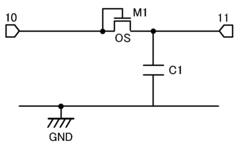
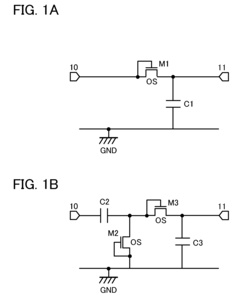
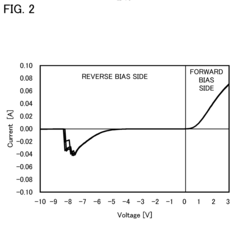
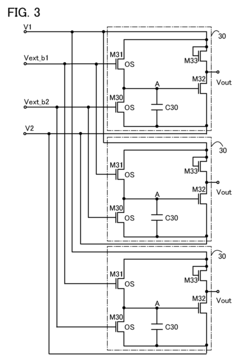
- A rectifier circuit utilizing transistors with oxide semiconductor channel formation regions, specifically indium gallium zinc oxide (IGZO), which have significantly lower off-state currents, thereby reducing the risk of breakdown and improving reliability and efficiency by using a full-wave voltage doubler configuration and optimizing heat treatment processes to form high-quality oxide semiconductors.
Non-linear function generating arrangement in an integrated circuit
PatentInactiveEP0276632A1
Innovation
- The use of time-continuous voltage followers with multiple non-inverting inputs to implement non-linear functions, such as half-wave rectification and amplitude limiting, which reduces space requirements and eliminates the need for clock signals, thereby simplifying the system and reducing complexity.


Regulatory Standards for Power Quality
Regulatory standards for power quality play a crucial role in addressing non-linear loads in half-wave rectifiers. These standards are designed to ensure the safe and efficient operation of electrical systems while minimizing the negative impacts of harmonic distortion and other power quality issues.
The International Electrotechnical Commission (IEC) has established several standards that directly address power quality concerns. IEC 61000-3-2 is particularly relevant, as it sets limits on harmonic current emissions for equipment with input current up to 16A per phase. This standard is applicable to half-wave rectifiers and other non-linear loads that can introduce harmonics into the power system.
In the United States, the Institute of Electrical and Electronics Engineers (IEEE) has developed IEEE 519-2014, which provides recommended practices and requirements for harmonic control in electrical power systems. This standard sets limits on both voltage and current distortion at the point of common coupling between the utility and the customer.
The European Union has adopted EN 50160, which specifies voltage characteristics of electricity supplied by public distribution networks. This standard includes requirements for harmonic voltage distortion and provides guidelines for maintaining power quality in the presence of non-linear loads.
Many countries have incorporated these international standards into their national regulations. For example, in the United Kingdom, the Electricity Safety, Quality and Continuity Regulations 2002 (amended in 2009) set out requirements for power quality, including limits on harmonic distortion.
Compliance with these standards often requires the implementation of power factor correction and harmonic mitigation techniques in half-wave rectifier circuits. This may involve the use of passive filters, active power filters, or more advanced rectifier topologies that inherently produce fewer harmonics.
Manufacturers of equipment containing half-wave rectifiers must ensure their products meet these regulatory standards before they can be sold in various markets. This often involves extensive testing and certification processes to demonstrate compliance.
It's important to note that regulatory standards for power quality are continually evolving to keep pace with technological advancements and changing power system characteristics. For instance, the increasing prevalence of renewable energy sources and power electronic devices has led to updates in existing standards and the development of new ones to address emerging power quality challenges.
Engineers and designers working with half-wave rectifiers must stay informed about these regulatory standards and their updates. Adherence to these standards not only ensures legal compliance but also contributes to the overall stability and reliability of electrical power systems.
The International Electrotechnical Commission (IEC) has established several standards that directly address power quality concerns. IEC 61000-3-2 is particularly relevant, as it sets limits on harmonic current emissions for equipment with input current up to 16A per phase. This standard is applicable to half-wave rectifiers and other non-linear loads that can introduce harmonics into the power system.
In the United States, the Institute of Electrical and Electronics Engineers (IEEE) has developed IEEE 519-2014, which provides recommended practices and requirements for harmonic control in electrical power systems. This standard sets limits on both voltage and current distortion at the point of common coupling between the utility and the customer.
The European Union has adopted EN 50160, which specifies voltage characteristics of electricity supplied by public distribution networks. This standard includes requirements for harmonic voltage distortion and provides guidelines for maintaining power quality in the presence of non-linear loads.
Many countries have incorporated these international standards into their national regulations. For example, in the United Kingdom, the Electricity Safety, Quality and Continuity Regulations 2002 (amended in 2009) set out requirements for power quality, including limits on harmonic distortion.
Compliance with these standards often requires the implementation of power factor correction and harmonic mitigation techniques in half-wave rectifier circuits. This may involve the use of passive filters, active power filters, or more advanced rectifier topologies that inherently produce fewer harmonics.
Manufacturers of equipment containing half-wave rectifiers must ensure their products meet these regulatory standards before they can be sold in various markets. This often involves extensive testing and certification processes to demonstrate compliance.
It's important to note that regulatory standards for power quality are continually evolving to keep pace with technological advancements and changing power system characteristics. For instance, the increasing prevalence of renewable energy sources and power electronic devices has led to updates in existing standards and the development of new ones to address emerging power quality challenges.
Engineers and designers working with half-wave rectifiers must stay informed about these regulatory standards and their updates. Adherence to these standards not only ensures legal compliance but also contributes to the overall stability and reliability of electrical power systems.
Environmental Impact of Rectifier Efficiency
The environmental impact of rectifier efficiency in half-wave rectifiers with non-linear loads is a critical consideration in modern power electronics. As energy consumption and environmental concerns continue to grow, the efficiency of power conversion systems becomes increasingly important. Half-wave rectifiers, when dealing with non-linear loads, can significantly affect overall system efficiency and, consequently, the environmental footprint of electronic devices and power systems.
Inefficient rectification in the presence of non-linear loads leads to increased power losses, primarily in the form of heat dissipation. This not only reduces the overall efficiency of the system but also contributes to unnecessary energy consumption. The excess heat generated requires additional cooling mechanisms, further increasing power consumption and potentially leading to the use of environmentally harmful refrigerants in larger systems.
Moreover, the inefficient handling of non-linear loads in half-wave rectifiers can result in harmonic distortion of the current waveform. These harmonics propagate back into the power grid, causing power quality issues and potentially affecting other connected devices. The presence of harmonics leads to increased losses in transmission and distribution systems, ultimately resulting in higher overall energy consumption and associated environmental impacts.
The production of electronic components used in rectifier circuits also has environmental implications. More efficient rectifiers may require advanced semiconductor materials or more complex circuit designs, which could potentially increase the environmental cost of manufacturing. However, this initial environmental investment is often offset by the long-term benefits of improved efficiency during operation.
From a lifecycle perspective, improved rectifier efficiency can significantly reduce the carbon footprint of electronic devices. By minimizing energy losses and extending the lifespan of components through reduced thermal stress, efficient rectifiers contribute to the overall sustainability of electronic products. This aligns with global efforts to reduce electronic waste and promote energy-efficient technologies.
In the context of renewable energy systems, such as solar and wind power, efficient rectification becomes even more crucial. These systems often deal with variable and non-linear power outputs, making the efficient conversion of power essential for maximizing the environmental benefits of renewable energy sources. Improved rectifier efficiency in these applications directly translates to more clean energy being effectively utilized, further reducing reliance on fossil fuels.
As regulations and standards for energy efficiency become more stringent worldwide, addressing the efficiency of half-wave rectifiers with non-linear loads is not just an environmental concern but also a compliance issue. Manufacturers and system designers must consider these environmental impacts to meet regulatory requirements and consumer expectations for eco-friendly products.
Inefficient rectification in the presence of non-linear loads leads to increased power losses, primarily in the form of heat dissipation. This not only reduces the overall efficiency of the system but also contributes to unnecessary energy consumption. The excess heat generated requires additional cooling mechanisms, further increasing power consumption and potentially leading to the use of environmentally harmful refrigerants in larger systems.
Moreover, the inefficient handling of non-linear loads in half-wave rectifiers can result in harmonic distortion of the current waveform. These harmonics propagate back into the power grid, causing power quality issues and potentially affecting other connected devices. The presence of harmonics leads to increased losses in transmission and distribution systems, ultimately resulting in higher overall energy consumption and associated environmental impacts.
The production of electronic components used in rectifier circuits also has environmental implications. More efficient rectifiers may require advanced semiconductor materials or more complex circuit designs, which could potentially increase the environmental cost of manufacturing. However, this initial environmental investment is often offset by the long-term benefits of improved efficiency during operation.
From a lifecycle perspective, improved rectifier efficiency can significantly reduce the carbon footprint of electronic devices. By minimizing energy losses and extending the lifespan of components through reduced thermal stress, efficient rectifiers contribute to the overall sustainability of electronic products. This aligns with global efforts to reduce electronic waste and promote energy-efficient technologies.
In the context of renewable energy systems, such as solar and wind power, efficient rectification becomes even more crucial. These systems often deal with variable and non-linear power outputs, making the efficient conversion of power essential for maximizing the environmental benefits of renewable energy sources. Improved rectifier efficiency in these applications directly translates to more clean energy being effectively utilized, further reducing reliance on fossil fuels.
As regulations and standards for energy efficiency become more stringent worldwide, addressing the efficiency of half-wave rectifiers with non-linear loads is not just an environmental concern but also a compliance issue. Manufacturers and system designers must consider these environmental impacts to meet regulatory requirements and consumer expectations for eco-friendly products.
Unlock deeper insights with PatSnap Eureka Quick Research — get a full tech report to explore trends and direct your research. Try now!
Generate Your Research Report Instantly with AI Agent
Supercharge your innovation with PatSnap Eureka AI Agent Platform!