

How to Measure Success in Half Wave Rectifier Implementation?
JUL 16, 20259 MIN READ
Generate Your Research Report Instantly with AI Agent
PatSnap Eureka helps you evaluate technical feasibility & market potential.
Half Wave Rectifier Background and Objectives
Half wave rectification is a fundamental concept in electrical engineering, serving as a cornerstone for power supply design and signal processing applications. The technology has evolved significantly since its inception in the early 20th century, with continuous improvements in efficiency, reliability, and performance. The primary objective of half wave rectifier implementation is to convert alternating current (AC) into pulsating direct current (DC), effectively utilizing only one half of the AC waveform.
The development of half wave rectifiers has been closely tied to the advancement of semiconductor technology. Early implementations relied on vacuum tube diodes, which were bulky and inefficient. The introduction of solid-state diodes in the mid-20th century marked a significant milestone, enabling more compact and reliable rectifier designs. Modern half wave rectifiers often employ silicon diodes or Schottky diodes, offering improved efficiency and faster switching speeds.
As the demand for power electronics has grown exponentially across various industries, the importance of optimizing half wave rectifier performance has become increasingly critical. Key technological trends in this field include the development of high-frequency rectifiers for switch-mode power supplies, the integration of rectifier circuits in microelectronic devices, and the exploration of novel materials for improved thermal management and efficiency.
The primary technical goals in half wave rectifier implementation revolve around maximizing efficiency, minimizing power loss, and reducing harmonic distortion. Researchers and engineers strive to develop rectifiers with higher power handling capabilities, lower forward voltage drops, and improved reverse recovery characteristics. Additionally, there is a growing focus on enhancing the overall system reliability and longevity, particularly in high-power applications.
Another significant objective in the field is the miniaturization of rectifier circuits, driven by the increasing demand for compact electronic devices. This has led to innovations in packaging technologies and the development of integrated rectifier solutions that combine multiple components into a single chip or module.
The measurement of success in half wave rectifier implementation encompasses various parameters and performance metrics. These include conversion efficiency, ripple factor, form factor, transformer utilization factor, and peak inverse voltage. Engineers and researchers continually refine measurement techniques and develop new methodologies to accurately assess and compare the performance of different rectifier designs.
As we look towards the future, the evolution of half wave rectifier technology is expected to continue, driven by emerging applications in renewable energy systems, electric vehicles, and advanced power distribution networks. The ongoing research in wide-bandgap semiconductors, such as silicon carbide and gallium nitride, promises to push the boundaries of rectifier performance, enabling higher operating frequencies, improved efficiency, and enhanced thermal characteristics.
The development of half wave rectifiers has been closely tied to the advancement of semiconductor technology. Early implementations relied on vacuum tube diodes, which were bulky and inefficient. The introduction of solid-state diodes in the mid-20th century marked a significant milestone, enabling more compact and reliable rectifier designs. Modern half wave rectifiers often employ silicon diodes or Schottky diodes, offering improved efficiency and faster switching speeds.
As the demand for power electronics has grown exponentially across various industries, the importance of optimizing half wave rectifier performance has become increasingly critical. Key technological trends in this field include the development of high-frequency rectifiers for switch-mode power supplies, the integration of rectifier circuits in microelectronic devices, and the exploration of novel materials for improved thermal management and efficiency.
The primary technical goals in half wave rectifier implementation revolve around maximizing efficiency, minimizing power loss, and reducing harmonic distortion. Researchers and engineers strive to develop rectifiers with higher power handling capabilities, lower forward voltage drops, and improved reverse recovery characteristics. Additionally, there is a growing focus on enhancing the overall system reliability and longevity, particularly in high-power applications.
Another significant objective in the field is the miniaturization of rectifier circuits, driven by the increasing demand for compact electronic devices. This has led to innovations in packaging technologies and the development of integrated rectifier solutions that combine multiple components into a single chip or module.
The measurement of success in half wave rectifier implementation encompasses various parameters and performance metrics. These include conversion efficiency, ripple factor, form factor, transformer utilization factor, and peak inverse voltage. Engineers and researchers continually refine measurement techniques and develop new methodologies to accurately assess and compare the performance of different rectifier designs.
As we look towards the future, the evolution of half wave rectifier technology is expected to continue, driven by emerging applications in renewable energy systems, electric vehicles, and advanced power distribution networks. The ongoing research in wide-bandgap semiconductors, such as silicon carbide and gallium nitride, promises to push the boundaries of rectifier performance, enabling higher operating frequencies, improved efficiency, and enhanced thermal characteristics.
Market Demand Analysis for Half Wave Rectifiers
The market demand for half wave rectifiers has been steadily growing, driven by the increasing need for power conversion and management across various industries. These devices play a crucial role in converting alternating current (AC) to pulsating direct current (DC), making them essential components in numerous electronic applications.
In the consumer electronics sector, the proliferation of smartphones, tablets, and other portable devices has significantly boosted the demand for half wave rectifiers. These components are integral to power adapters and chargers, ensuring efficient power conversion and extending battery life. As the global smartphone market continues to expand, with an estimated 1.38 billion units shipped in 2022, the demand for half wave rectifiers in this segment remains robust.
The automotive industry represents another major market for half wave rectifiers. With the rapid growth of electric vehicles (EVs) and hybrid electric vehicles (HEVs), the need for efficient power conversion systems has surged. Half wave rectifiers are used in various automotive applications, including battery management systems, onboard chargers, and power distribution units. The global EV market is projected to grow at a CAGR of 22.5% from 2023 to 2030, indicating a substantial increase in demand for half wave rectifiers in this sector.
Industrial applications also contribute significantly to the market demand for half wave rectifiers. These components are widely used in power supplies, motor control systems, and renewable energy converters. The growing adoption of industrial automation and the Internet of Things (IoT) in manufacturing processes has further amplified the need for reliable power conversion solutions, including half wave rectifiers.
The renewable energy sector presents a promising growth opportunity for half wave rectifiers. Solar inverters and wind power systems rely on these components for efficient power conversion and grid integration. As countries worldwide push for cleaner energy sources, the demand for half wave rectifiers in renewable energy applications is expected to rise substantially.
In terms of regional demand, Asia Pacific leads the market due to its strong presence in electronics manufacturing and rapid industrialization. North America and Europe follow, driven by advancements in automotive technology and renewable energy initiatives. Emerging economies in Latin America and Africa are also showing increased demand as they upgrade their power infrastructure and adopt new technologies.
The market for half wave rectifiers is characterized by continuous technological advancements aimed at improving efficiency, reducing power losses, and miniaturization. Manufacturers are focusing on developing high-performance rectifiers that can handle higher voltages and currents while maintaining compact form factors. This trend is particularly evident in applications requiring high power density, such as data centers and telecommunications equipment.
In the consumer electronics sector, the proliferation of smartphones, tablets, and other portable devices has significantly boosted the demand for half wave rectifiers. These components are integral to power adapters and chargers, ensuring efficient power conversion and extending battery life. As the global smartphone market continues to expand, with an estimated 1.38 billion units shipped in 2022, the demand for half wave rectifiers in this segment remains robust.
The automotive industry represents another major market for half wave rectifiers. With the rapid growth of electric vehicles (EVs) and hybrid electric vehicles (HEVs), the need for efficient power conversion systems has surged. Half wave rectifiers are used in various automotive applications, including battery management systems, onboard chargers, and power distribution units. The global EV market is projected to grow at a CAGR of 22.5% from 2023 to 2030, indicating a substantial increase in demand for half wave rectifiers in this sector.
Industrial applications also contribute significantly to the market demand for half wave rectifiers. These components are widely used in power supplies, motor control systems, and renewable energy converters. The growing adoption of industrial automation and the Internet of Things (IoT) in manufacturing processes has further amplified the need for reliable power conversion solutions, including half wave rectifiers.
The renewable energy sector presents a promising growth opportunity for half wave rectifiers. Solar inverters and wind power systems rely on these components for efficient power conversion and grid integration. As countries worldwide push for cleaner energy sources, the demand for half wave rectifiers in renewable energy applications is expected to rise substantially.
In terms of regional demand, Asia Pacific leads the market due to its strong presence in electronics manufacturing and rapid industrialization. North America and Europe follow, driven by advancements in automotive technology and renewable energy initiatives. Emerging economies in Latin America and Africa are also showing increased demand as they upgrade their power infrastructure and adopt new technologies.
The market for half wave rectifiers is characterized by continuous technological advancements aimed at improving efficiency, reducing power losses, and miniaturization. Manufacturers are focusing on developing high-performance rectifiers that can handle higher voltages and currents while maintaining compact form factors. This trend is particularly evident in applications requiring high power density, such as data centers and telecommunications equipment.
Current Challenges in Half Wave Rectifier Design
Half wave rectifier implementation faces several significant challenges that hinder its optimal performance and efficiency. One of the primary issues is the inherent inefficiency of the design, as it only utilizes half of the input waveform. This results in a lower output voltage and power compared to full-wave rectifiers, limiting its applicability in high-power applications.
Another critical challenge is the presence of ripple in the output voltage. The pulsating nature of the half-wave rectified output requires substantial filtering to achieve a smooth DC voltage. This necessitates larger capacitors and more complex filtering circuits, increasing the overall size and cost of the system.
Voltage drop across the rectifying diode presents an additional hurdle. In low-voltage applications, this drop can significantly reduce the available output voltage, impacting the overall efficiency of the rectifier. The forward voltage drop of the diode also contributes to power loss, which becomes more pronounced in high-current applications.
Temperature sensitivity is a notable concern in half-wave rectifier designs. The performance of semiconductor diodes varies with temperature, affecting the rectifier's characteristics across different operating conditions. This can lead to inconsistent output and potential reliability issues in extreme environments.
Reverse recovery time of the diode is another factor that impacts the rectifier's performance, especially at higher frequencies. Slow reverse recovery can result in increased power loss and distortion of the output waveform, limiting the rectifier's effectiveness in high-frequency applications.
The generation of harmonics is a significant challenge in half-wave rectification. The non-linear nature of the rectification process introduces harmonic components into the system, which can cause electromagnetic interference (EMI) and affect the performance of nearby electronic equipment.
Lastly, the poor utilization of the transformer in half-wave rectifier circuits poses a design challenge. The unidirectional current flow in the secondary winding leads to DC magnetization of the core, potentially causing saturation and reducing the transformer's efficiency. This necessitates the use of larger, more expensive transformers to mitigate these effects.
Addressing these challenges requires innovative approaches in circuit design, component selection, and system integration. Researchers and engineers continue to explore advanced materials, improved diode technologies, and novel circuit topologies to enhance the performance and applicability of half-wave rectifiers in modern electronic systems.
Another critical challenge is the presence of ripple in the output voltage. The pulsating nature of the half-wave rectified output requires substantial filtering to achieve a smooth DC voltage. This necessitates larger capacitors and more complex filtering circuits, increasing the overall size and cost of the system.
Voltage drop across the rectifying diode presents an additional hurdle. In low-voltage applications, this drop can significantly reduce the available output voltage, impacting the overall efficiency of the rectifier. The forward voltage drop of the diode also contributes to power loss, which becomes more pronounced in high-current applications.
Temperature sensitivity is a notable concern in half-wave rectifier designs. The performance of semiconductor diodes varies with temperature, affecting the rectifier's characteristics across different operating conditions. This can lead to inconsistent output and potential reliability issues in extreme environments.
Reverse recovery time of the diode is another factor that impacts the rectifier's performance, especially at higher frequencies. Slow reverse recovery can result in increased power loss and distortion of the output waveform, limiting the rectifier's effectiveness in high-frequency applications.
The generation of harmonics is a significant challenge in half-wave rectification. The non-linear nature of the rectification process introduces harmonic components into the system, which can cause electromagnetic interference (EMI) and affect the performance of nearby electronic equipment.
Lastly, the poor utilization of the transformer in half-wave rectifier circuits poses a design challenge. The unidirectional current flow in the secondary winding leads to DC magnetization of the core, potentially causing saturation and reducing the transformer's efficiency. This necessitates the use of larger, more expensive transformers to mitigate these effects.
Addressing these challenges requires innovative approaches in circuit design, component selection, and system integration. Researchers and engineers continue to explore advanced materials, improved diode technologies, and novel circuit topologies to enhance the performance and applicability of half-wave rectifiers in modern electronic systems.
Existing Half Wave Rectifier Implementations
01 Circuit design for half-wave rectifiers
Half-wave rectifiers are designed to convert alternating current (AC) to pulsating direct current (DC). The circuit typically includes a diode that allows current to flow in only one direction during each AC cycle. This design is fundamental to the success of half-wave rectification in various electronic applications.- Circuit design for half-wave rectifiers: Half-wave rectifiers are designed to convert alternating current (AC) to pulsating direct current (DC). The circuit typically includes a diode that allows current to flow in only one direction during each AC cycle. This design is fundamental to many power supply applications and can be optimized for efficiency and performance.
- Applications in power electronics: Half-wave rectifiers find applications in various power electronic devices and systems. They are used in power supplies, battery chargers, and voltage regulators. In these applications, the rectifier's ability to convert AC to DC is crucial for providing the appropriate power to electronic components and systems.
- Efficiency improvements in half-wave rectifiers: Researchers and engineers have developed methods to improve the efficiency of half-wave rectifiers. These improvements may include the use of advanced semiconductor materials, optimized circuit layouts, and the integration of filtering components to reduce ripple and noise in the output voltage.
- Integration with other electronic components: Half-wave rectifiers are often integrated with other electronic components to create more complex systems. This integration can include combining rectifiers with transformers, capacitors, or other circuit elements to achieve specific voltage or current characteristics required for various applications.
- Miniaturization and packaging of half-wave rectifiers: Advancements in semiconductor technology have led to the miniaturization of half-wave rectifiers. This has resulted in compact designs suitable for use in portable electronics and other space-constrained applications. Improved packaging techniques have also enhanced the reliability and thermal management of these devices.
02 Efficiency improvements in half-wave rectifiers
Advancements in half-wave rectifier designs focus on improving efficiency and reducing power losses. This includes the use of high-performance diodes, optimized circuit layouts, and innovative cooling solutions to enhance overall performance and reliability of the rectification process.Expand Specific Solutions03 Integration of half-wave rectifiers in power supplies
Half-wave rectifiers are crucial components in various power supply designs. Their successful integration involves careful consideration of load requirements, voltage regulation, and filtering techniques to produce a stable DC output suitable for powering electronic devices and systems.Expand Specific Solutions04 Application of half-wave rectifiers in wireless charging
Half-wave rectifiers play a significant role in wireless charging systems. Their successful implementation in this context involves optimizing the rectification of received RF signals to DC power, considering factors such as efficiency, size constraints, and electromagnetic compatibility.Expand Specific Solutions05 Half-wave rectifiers in optical applications
The success of half-wave rectifiers extends to optical applications, where they are used in conjunction with photodetectors and light-sensitive devices. These implementations focus on converting optical signals to electrical pulses, enabling various sensing and communication applications.Expand Specific Solutions
Key Players in Rectifier Industry
The half wave rectifier implementation market is in a mature stage, with established technologies and widespread applications across various industries. The market size is substantial, driven by the growing demand for power electronics in consumer devices, industrial equipment, and renewable energy systems. Technologically, the field is well-developed, with ongoing innovations focusing on efficiency improvements and miniaturization. Key players like Technical University of Denmark, Southwest Jiaotong University, and George Mason University contribute to academic research, while companies such as Hitachi Energy Ltd., Sony Group Corp., and Seiko Epson Corp. lead in commercial applications, continuously refining rectifier designs for enhanced performance and reliability.
Hitachi Energy Ltd.
Technical Solution: Hitachi Energy Ltd. has implemented an innovative approach to measure success in half-wave rectifier implementation, focusing on efficiency and reliability in high-power applications. Their method utilizes advanced thermal imaging techniques to map heat distribution across rectifier components, enabling precise identification of potential failure points[7]. The system incorporates high-frequency sampling to capture and analyze switching transients, providing insights into rectifier behavior under dynamic load conditions. Hitachi's solution also features a novel impedance measurement technique to assess the health of rectifier components over time, allowing for predictive maintenance and extended system lifespan[8]. Additionally, their approach includes comprehensive electromagnetic compatibility (EMC) testing to ensure rectifier performance meets stringent regulatory standards.
Strengths: Advanced thermal analysis, high-frequency transient capture, and EMC compliance testing. Weaknesses: May be more suited for high-power industrial applications and potentially overkill for low-power consumer electronics.
State Grid Corp. of China
Technical Solution: State Grid Corp. of China has developed a robust methodology for evaluating half-wave rectifier performance in large-scale power distribution systems. Their approach combines traditional electrical measurements with advanced grid simulation techniques to assess the impact of rectifier implementation on overall power quality[5]. The system utilizes distributed sensor networks to collect real-time data on voltage fluctuations, current harmonics, and power factor across the grid. State Grid's solution also incorporates big data analytics to identify patterns and anomalies in rectifier performance, enabling proactive maintenance and optimization strategies[6]. Furthermore, their method includes comparative analysis of different rectifier topologies to determine the most suitable configurations for specific grid segments.
Strengths: Large-scale system analysis, integration with grid simulation, and data-driven optimization. Weaknesses: May be overly complex for smaller-scale applications and require significant computational resources.
Core Innovations in Half Wave Rectifier Design
High-frequency half-wave rectifier system of low-harmonicity and high-efficiency
PatentInactiveUS10594205B2
Innovation
- A high-frequency half-wave rectifier system with a simplified structure and reduced electronic components, utilizing a resonant tuning unit and voltage regulator module to control the duty cycle and capacitance, thereby reducing harmonic content and electromagnetic interference, and improving conversion efficiency.
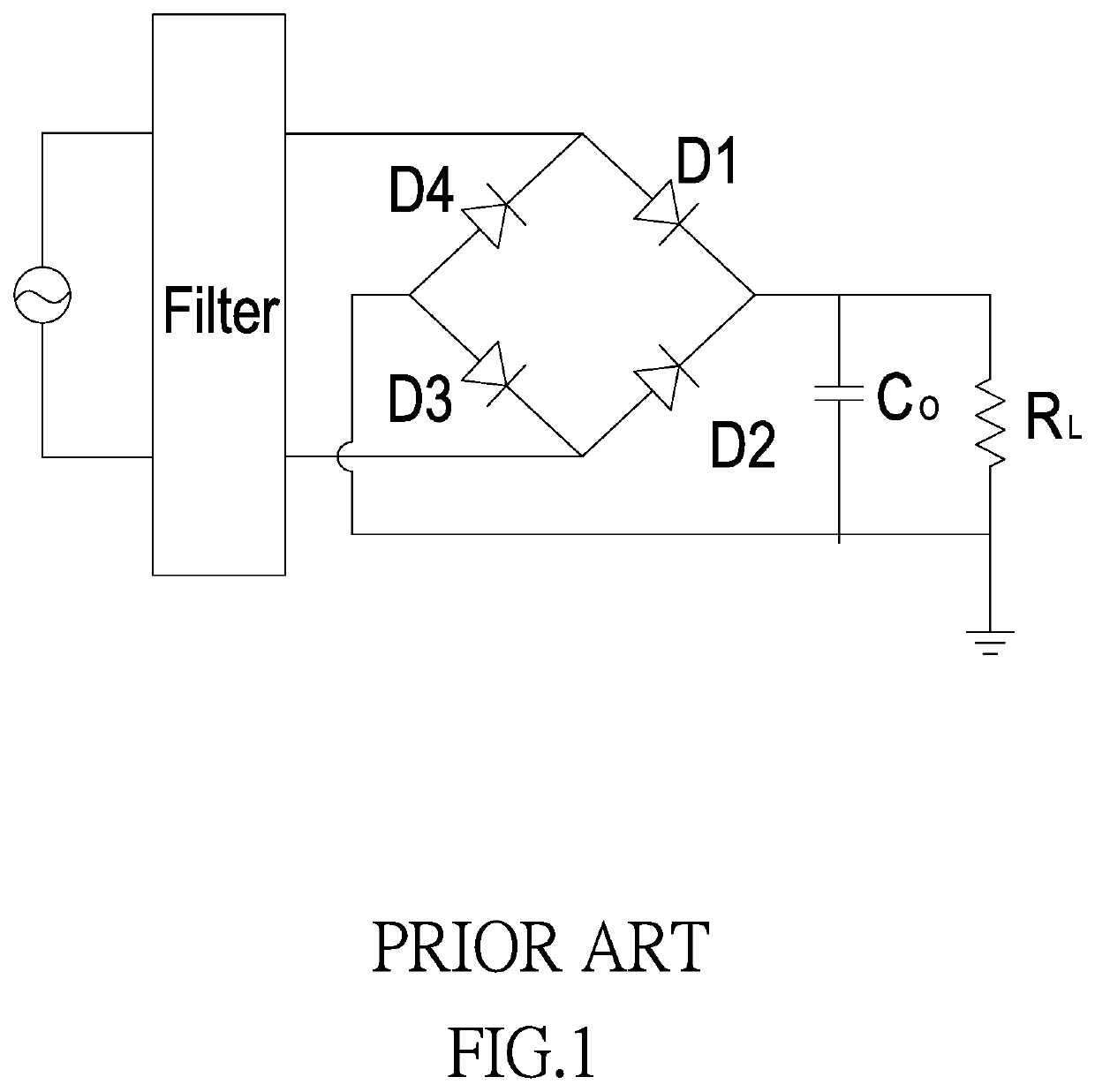
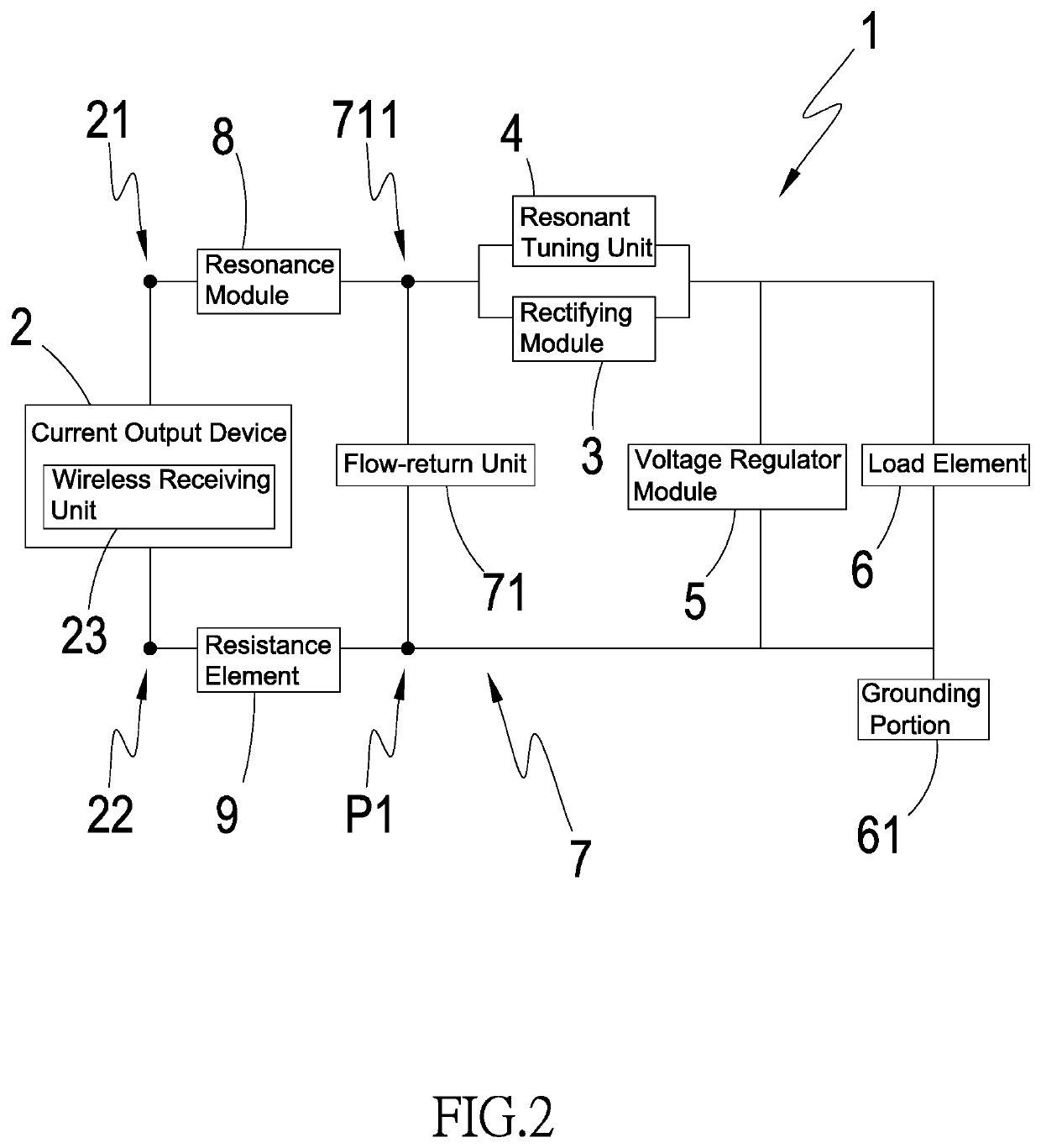
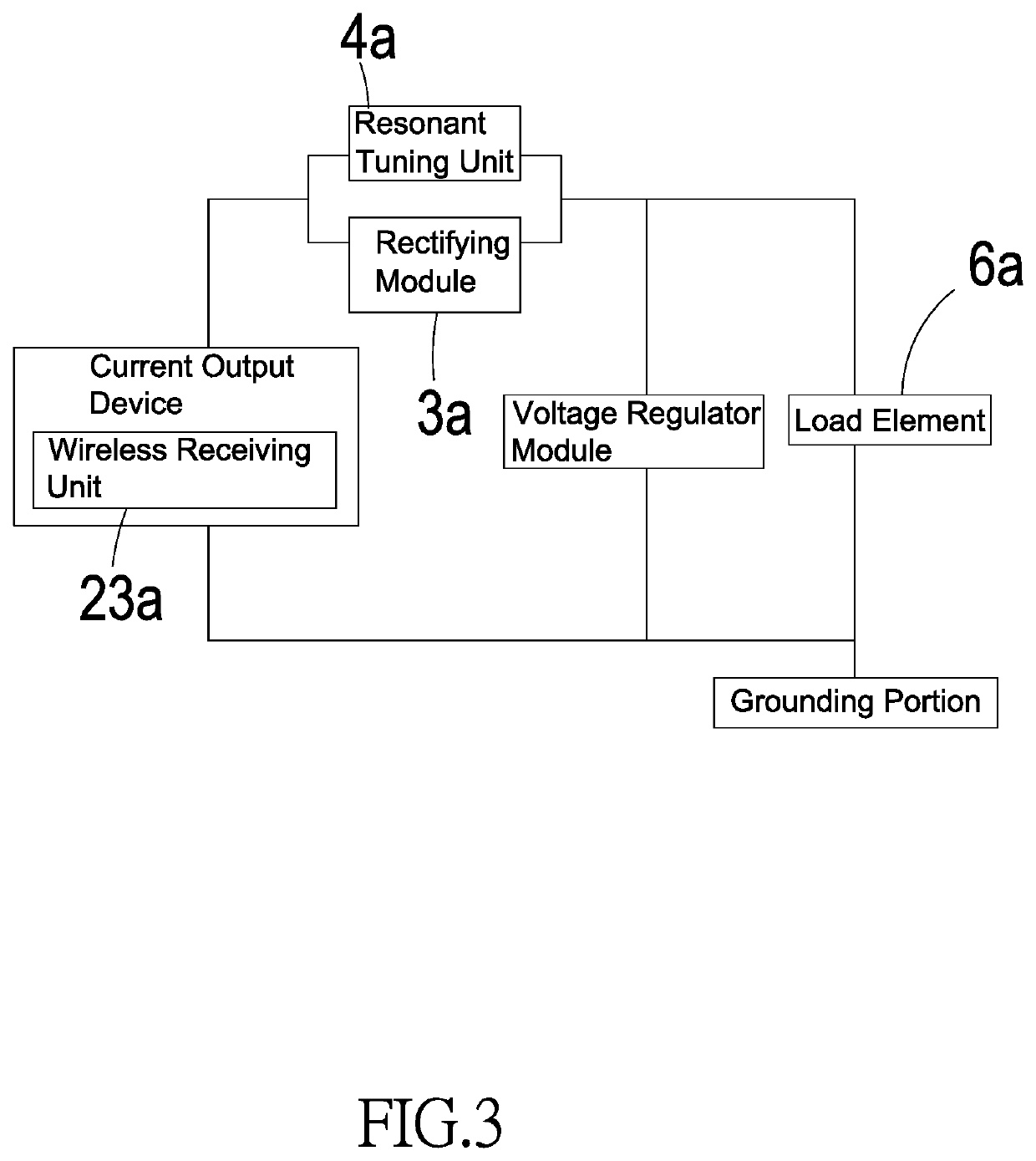
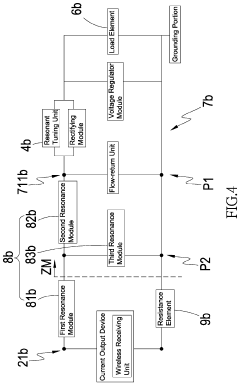
Half-wave rectifier circuit
PatentInactiveUS3936720A
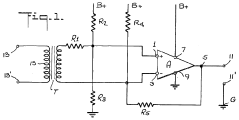
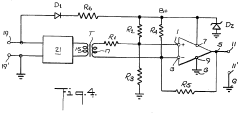
Innovation
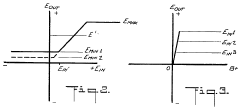
- A high-gain differential amplifier-based half-wave rectifier circuit operating from a single power supply, eliminating the need for voltage regulation and reducing temperature dependence, with resistor ratios optimized to minimize errors and achieve minimal output voltage drop.
Performance Metrics for Half Wave Rectifiers
Measuring the success of a half wave rectifier implementation requires a comprehensive evaluation of various performance metrics. These metrics provide crucial insights into the rectifier's efficiency, reliability, and overall functionality. One of the primary indicators is the rectification efficiency, which quantifies the ratio of DC output power to AC input power. A higher rectification efficiency indicates better conversion of AC to DC, typically ranging from 40% to 81% for half wave rectifiers.
Another essential metric is the ripple factor, which measures the amount of AC component remaining in the rectified output. A lower ripple factor signifies smoother DC output, with typical values for half wave rectifiers ranging from 1.21 to 0.48, depending on the load resistance and filter capacitance. The peak inverse voltage (PIV) is also a critical parameter, representing the maximum reverse voltage the rectifier diode can withstand without breakdown. Proper PIV rating ensures the longevity and reliability of the rectifier circuit.
The form factor, defined as the ratio of RMS value to average value of the rectified output, provides insight into the waveform quality. For an ideal half wave rectifier, the form factor is approximately 1.57. Deviations from this value indicate distortions in the output waveform. Additionally, the transformer utilization factor (TUF) is crucial for assessing the efficiency of power transfer from the transformer to the load. Half wave rectifiers typically have a lower TUF compared to full wave rectifiers, with values around 0.287.
Power quality metrics such as total harmonic distortion (THD) and power factor are also important considerations. A lower THD indicates less harmonic content in the output, while a higher power factor suggests better utilization of input power. For half wave rectifiers, these values can vary significantly based on the specific implementation and load characteristics.
Voltage regulation is another key performance metric, measuring the rectifier's ability to maintain a stable output voltage under varying load conditions. A lower percentage of voltage regulation indicates better stability. Furthermore, the response time and settling time of the rectifier circuit provide insights into its dynamic performance, especially in applications requiring rapid load changes.
Lastly, thermal performance and reliability metrics such as mean time between failures (MTBF) and junction temperature are crucial for assessing the long-term viability of the rectifier implementation. These metrics help in predicting the lifespan and reliability of the rectifier circuit under various operating conditions.
Another essential metric is the ripple factor, which measures the amount of AC component remaining in the rectified output. A lower ripple factor signifies smoother DC output, with typical values for half wave rectifiers ranging from 1.21 to 0.48, depending on the load resistance and filter capacitance. The peak inverse voltage (PIV) is also a critical parameter, representing the maximum reverse voltage the rectifier diode can withstand without breakdown. Proper PIV rating ensures the longevity and reliability of the rectifier circuit.
The form factor, defined as the ratio of RMS value to average value of the rectified output, provides insight into the waveform quality. For an ideal half wave rectifier, the form factor is approximately 1.57. Deviations from this value indicate distortions in the output waveform. Additionally, the transformer utilization factor (TUF) is crucial for assessing the efficiency of power transfer from the transformer to the load. Half wave rectifiers typically have a lower TUF compared to full wave rectifiers, with values around 0.287.
Power quality metrics such as total harmonic distortion (THD) and power factor are also important considerations. A lower THD indicates less harmonic content in the output, while a higher power factor suggests better utilization of input power. For half wave rectifiers, these values can vary significantly based on the specific implementation and load characteristics.
Voltage regulation is another key performance metric, measuring the rectifier's ability to maintain a stable output voltage under varying load conditions. A lower percentage of voltage regulation indicates better stability. Furthermore, the response time and settling time of the rectifier circuit provide insights into its dynamic performance, especially in applications requiring rapid load changes.
Lastly, thermal performance and reliability metrics such as mean time between failures (MTBF) and junction temperature are crucial for assessing the long-term viability of the rectifier implementation. These metrics help in predicting the lifespan and reliability of the rectifier circuit under various operating conditions.
Efficiency Optimization Strategies
Efficiency optimization is crucial for successful implementation of half wave rectifiers. To enhance the overall performance, several strategies can be employed. Firstly, proper component selection plays a vital role. Choosing high-quality diodes with low forward voltage drop and fast recovery time can significantly reduce power losses. Additionally, utilizing Schottky diodes instead of conventional silicon diodes can further improve efficiency due to their lower forward voltage drop.
Another key strategy is to minimize parasitic elements in the circuit. This includes reducing stray inductance and capacitance by optimizing the PCB layout and component placement. Shorter trace lengths and proper grounding techniques can help minimize these unwanted effects, leading to improved efficiency and reduced electromagnetic interference.
Implementing snubber circuits is another effective approach to enhance efficiency. Snubbers help suppress voltage spikes and ringing caused by parasitic elements, reducing switching losses and improving overall system reliability. Careful design and tuning of snubber circuits can significantly impact the rectifier's performance.
Temperature management is also critical for optimizing efficiency. Proper heat dissipation techniques, such as using heat sinks or forced-air cooling, can help maintain the rectifier components within their optimal operating temperature range. This not only improves efficiency but also extends the lifespan of the components.
Furthermore, employing synchronous rectification can lead to substantial efficiency gains, especially in low-voltage applications. By replacing the diode with a controlled switch, such as a MOSFET, conduction losses can be significantly reduced. However, this approach requires careful timing control and additional circuitry.
Lastly, implementing adaptive control strategies can help optimize efficiency across varying load conditions. By dynamically adjusting parameters such as switching frequency or duty cycle based on the load, the rectifier can maintain high efficiency over a wide range of operating conditions. This approach may involve the use of microcontrollers or dedicated control ICs to monitor and adjust the rectifier's performance in real-time.
By combining these strategies and tailoring them to the specific application requirements, significant improvements in half wave rectifier efficiency can be achieved, leading to better overall system performance and reduced power consumption.
Another key strategy is to minimize parasitic elements in the circuit. This includes reducing stray inductance and capacitance by optimizing the PCB layout and component placement. Shorter trace lengths and proper grounding techniques can help minimize these unwanted effects, leading to improved efficiency and reduced electromagnetic interference.
Implementing snubber circuits is another effective approach to enhance efficiency. Snubbers help suppress voltage spikes and ringing caused by parasitic elements, reducing switching losses and improving overall system reliability. Careful design and tuning of snubber circuits can significantly impact the rectifier's performance.
Temperature management is also critical for optimizing efficiency. Proper heat dissipation techniques, such as using heat sinks or forced-air cooling, can help maintain the rectifier components within their optimal operating temperature range. This not only improves efficiency but also extends the lifespan of the components.
Furthermore, employing synchronous rectification can lead to substantial efficiency gains, especially in low-voltage applications. By replacing the diode with a controlled switch, such as a MOSFET, conduction losses can be significantly reduced. However, this approach requires careful timing control and additional circuitry.
Lastly, implementing adaptive control strategies can help optimize efficiency across varying load conditions. By dynamically adjusting parameters such as switching frequency or duty cycle based on the load, the rectifier can maintain high efficiency over a wide range of operating conditions. This approach may involve the use of microcontrollers or dedicated control ICs to monitor and adjust the rectifier's performance in real-time.
By combining these strategies and tailoring them to the specific application requirements, significant improvements in half wave rectifier efficiency can be achieved, leading to better overall system performance and reduced power consumption.
Unlock deeper insights with PatSnap Eureka Quick Research — get a full tech report to explore trends and direct your research. Try now!
Generate Your Research Report Instantly with AI Agent
Supercharge your innovation with PatSnap Eureka AI Agent Platform!