

How to Minimize Half Wave Rectifier Load Resistance?
JUL 15, 20259 MIN READ
Generate Your Research Report Instantly with AI Agent
PatSnap Eureka helps you evaluate technical feasibility & market potential.
Half Wave Rectifier Background and Objectives
Half wave rectification has been a fundamental technique in electrical engineering since the early days of electronics. This process converts alternating current (AC) to pulsating direct current (DC) by allowing only one half of the AC waveform to pass through. The development of half wave rectifiers has been closely tied to the evolution of power electronics and semiconductor technology.
The primary objective in minimizing half wave rectifier load resistance is to enhance the efficiency and performance of the rectification process. By reducing the load resistance, we aim to increase the current flow through the circuit, which can lead to improved power output and better utilization of the input AC signal. However, this goal presents several technical challenges that need to be addressed.
Historically, half wave rectifiers have been used in various applications, from simple power supplies to more complex electronic systems. As technology has advanced, the demand for more efficient and compact power conversion solutions has grown, driving the need for innovative approaches to rectifier design. The minimization of load resistance in half wave rectifiers aligns with this broader trend towards higher efficiency and power density in electronic systems.
The technical evolution in this field has seen significant milestones, including the transition from vacuum tube diodes to solid-state semiconductor diodes, which greatly improved reliability and reduced size. More recent advancements have focused on reducing power losses, improving thermal management, and enhancing overall system efficiency.
Current research and development efforts in half wave rectifier technology are aimed at overcoming several key challenges. These include minimizing voltage drop across the rectifying element, reducing reverse recovery time, and managing heat dissipation effectively. Additionally, there is a growing emphasis on integrating half wave rectifiers into more complex power management systems, where load resistance optimization plays a crucial role in overall system performance.
The goal of minimizing load resistance in half wave rectifiers intersects with broader technological trends such as the Internet of Things (IoT), mobile devices, and renewable energy systems. In these applications, efficient power conversion is critical for extending battery life, reducing energy consumption, and improving overall system reliability.
As we explore solutions to minimize half wave rectifier load resistance, it is essential to consider the trade-offs involved. While lower resistance can increase current flow and power output, it may also lead to increased heat generation and potential stability issues. Therefore, the technical objectives must balance these factors to achieve optimal performance within the constraints of specific applications and system requirements.
The primary objective in minimizing half wave rectifier load resistance is to enhance the efficiency and performance of the rectification process. By reducing the load resistance, we aim to increase the current flow through the circuit, which can lead to improved power output and better utilization of the input AC signal. However, this goal presents several technical challenges that need to be addressed.
Historically, half wave rectifiers have been used in various applications, from simple power supplies to more complex electronic systems. As technology has advanced, the demand for more efficient and compact power conversion solutions has grown, driving the need for innovative approaches to rectifier design. The minimization of load resistance in half wave rectifiers aligns with this broader trend towards higher efficiency and power density in electronic systems.
The technical evolution in this field has seen significant milestones, including the transition from vacuum tube diodes to solid-state semiconductor diodes, which greatly improved reliability and reduced size. More recent advancements have focused on reducing power losses, improving thermal management, and enhancing overall system efficiency.
Current research and development efforts in half wave rectifier technology are aimed at overcoming several key challenges. These include minimizing voltage drop across the rectifying element, reducing reverse recovery time, and managing heat dissipation effectively. Additionally, there is a growing emphasis on integrating half wave rectifiers into more complex power management systems, where load resistance optimization plays a crucial role in overall system performance.
The goal of minimizing load resistance in half wave rectifiers intersects with broader technological trends such as the Internet of Things (IoT), mobile devices, and renewable energy systems. In these applications, efficient power conversion is critical for extending battery life, reducing energy consumption, and improving overall system reliability.
As we explore solutions to minimize half wave rectifier load resistance, it is essential to consider the trade-offs involved. While lower resistance can increase current flow and power output, it may also lead to increased heat generation and potential stability issues. Therefore, the technical objectives must balance these factors to achieve optimal performance within the constraints of specific applications and system requirements.
Market Analysis for Low Resistance Rectifiers
The market for low resistance rectifiers has been experiencing significant growth in recent years, driven by the increasing demand for efficient power conversion and management systems across various industries. This trend is particularly evident in sectors such as consumer electronics, automotive, renewable energy, and industrial automation, where the need for compact and high-performance power solutions is paramount.
In the consumer electronics segment, the proliferation of smartphones, tablets, and wearable devices has created a substantial market for low resistance rectifiers. These components are crucial for optimizing battery life and reducing heat generation in compact devices. The automotive industry is another major driver, with the shift towards electric and hybrid vehicles necessitating advanced power management solutions that can handle high currents with minimal losses.
The renewable energy sector, particularly solar and wind power systems, relies heavily on efficient power conversion technologies. Low resistance rectifiers play a vital role in improving the overall efficiency of these systems, contributing to the growing adoption of clean energy solutions worldwide. In industrial automation, the demand for precise control and energy-efficient operation of machinery has led to increased integration of low resistance rectifiers in motor drives and power supplies.
Market analysis indicates that the global low resistance rectifier market is expected to grow at a compound annual growth rate (CAGR) of over 6% from 2021 to 2026. This growth is attributed to the rising adoption of electric vehicles, the expansion of 5G infrastructure, and the ongoing digital transformation across industries. Asia-Pacific region, led by China and South Korea, is anticipated to dominate the market due to the presence of major electronics manufacturers and the rapid industrialization in these countries.
The competitive landscape of the low resistance rectifier market is characterized by the presence of both established players and innovative startups. Key market players are focusing on research and development to introduce new products with improved efficiency and reduced form factors. There is also a growing trend towards the development of silicon carbide (SiC) and gallium nitride (GaN) based rectifiers, which offer superior performance compared to traditional silicon-based devices.
Despite the positive market outlook, challenges such as the high initial cost of advanced rectifier technologies and the complexity of integrating them into existing systems may hinder market growth to some extent. However, the long-term benefits of improved energy efficiency and system performance are expected to outweigh these challenges, driving continued innovation and market expansion in the low resistance rectifier segment.
In the consumer electronics segment, the proliferation of smartphones, tablets, and wearable devices has created a substantial market for low resistance rectifiers. These components are crucial for optimizing battery life and reducing heat generation in compact devices. The automotive industry is another major driver, with the shift towards electric and hybrid vehicles necessitating advanced power management solutions that can handle high currents with minimal losses.
The renewable energy sector, particularly solar and wind power systems, relies heavily on efficient power conversion technologies. Low resistance rectifiers play a vital role in improving the overall efficiency of these systems, contributing to the growing adoption of clean energy solutions worldwide. In industrial automation, the demand for precise control and energy-efficient operation of machinery has led to increased integration of low resistance rectifiers in motor drives and power supplies.
Market analysis indicates that the global low resistance rectifier market is expected to grow at a compound annual growth rate (CAGR) of over 6% from 2021 to 2026. This growth is attributed to the rising adoption of electric vehicles, the expansion of 5G infrastructure, and the ongoing digital transformation across industries. Asia-Pacific region, led by China and South Korea, is anticipated to dominate the market due to the presence of major electronics manufacturers and the rapid industrialization in these countries.
The competitive landscape of the low resistance rectifier market is characterized by the presence of both established players and innovative startups. Key market players are focusing on research and development to introduce new products with improved efficiency and reduced form factors. There is also a growing trend towards the development of silicon carbide (SiC) and gallium nitride (GaN) based rectifiers, which offer superior performance compared to traditional silicon-based devices.
Despite the positive market outlook, challenges such as the high initial cost of advanced rectifier technologies and the complexity of integrating them into existing systems may hinder market growth to some extent. However, the long-term benefits of improved energy efficiency and system performance are expected to outweigh these challenges, driving continued innovation and market expansion in the low resistance rectifier segment.
Current Challenges in Load Resistance Reduction
Reducing load resistance in half wave rectifiers presents several significant challenges that engineers and researchers are actively working to overcome. One of the primary issues is the trade-off between efficiency and output voltage stability. As load resistance decreases, the current drawn from the rectifier increases, potentially leading to voltage drops and reduced overall efficiency.
Another challenge lies in managing the increased heat generation associated with lower load resistances. The higher currents flowing through the rectifier components can cause thermal stress, potentially leading to reduced component lifespan and reliability issues. This necessitates careful thermal management and component selection to ensure long-term stability and performance.
The ripple factor, which is a measure of the AC component remaining in the rectified DC output, tends to increase as load resistance decreases. This can result in poor output quality and may require additional filtering stages, adding complexity and cost to the overall design. Balancing the need for low load resistance with acceptable ripple levels is a key challenge in rectifier design.
Furthermore, the choice of diode becomes increasingly critical as load resistance is minimized. The forward voltage drop of the diode becomes a more significant factor in overall efficiency, and the diode's reverse recovery characteristics can impact the rectifier's performance at higher frequencies. Selecting diodes with low forward voltage drops and fast recovery times is essential but often comes with increased cost.
The parasitic elements in the circuit, such as stray capacitances and inductances, become more pronounced at lower load resistances. These elements can lead to ringing, overshoot, and other undesirable transient effects, particularly during switching transitions. Mitigating these effects requires careful circuit layout and component selection.
Another challenge is maintaining a good power factor as load resistance decreases. Lower load resistances can lead to higher harmonic content in the input current waveform, potentially violating power quality standards and increasing electromagnetic interference. Addressing this issue may require additional power factor correction circuitry, adding to the complexity and cost of the system.
Lastly, the control and regulation of the rectifier become more demanding as load resistance is reduced. Faster response times are needed to handle rapid load changes, and the control loop must be designed to maintain stability under a wide range of operating conditions. This often requires more sophisticated control algorithms and higher-performance feedback systems.
Another challenge lies in managing the increased heat generation associated with lower load resistances. The higher currents flowing through the rectifier components can cause thermal stress, potentially leading to reduced component lifespan and reliability issues. This necessitates careful thermal management and component selection to ensure long-term stability and performance.
The ripple factor, which is a measure of the AC component remaining in the rectified DC output, tends to increase as load resistance decreases. This can result in poor output quality and may require additional filtering stages, adding complexity and cost to the overall design. Balancing the need for low load resistance with acceptable ripple levels is a key challenge in rectifier design.
Furthermore, the choice of diode becomes increasingly critical as load resistance is minimized. The forward voltage drop of the diode becomes a more significant factor in overall efficiency, and the diode's reverse recovery characteristics can impact the rectifier's performance at higher frequencies. Selecting diodes with low forward voltage drops and fast recovery times is essential but often comes with increased cost.
The parasitic elements in the circuit, such as stray capacitances and inductances, become more pronounced at lower load resistances. These elements can lead to ringing, overshoot, and other undesirable transient effects, particularly during switching transitions. Mitigating these effects requires careful circuit layout and component selection.
Another challenge is maintaining a good power factor as load resistance decreases. Lower load resistances can lead to higher harmonic content in the input current waveform, potentially violating power quality standards and increasing electromagnetic interference. Addressing this issue may require additional power factor correction circuitry, adding to the complexity and cost of the system.
Lastly, the control and regulation of the rectifier become more demanding as load resistance is reduced. Faster response times are needed to handle rapid load changes, and the control loop must be designed to maintain stability under a wide range of operating conditions. This often requires more sophisticated control algorithms and higher-performance feedback systems.
Existing Solutions for Minimizing Load Resistance
01 Load resistance in half-wave rectifier circuits
The load resistance in a half-wave rectifier circuit plays a crucial role in determining the output voltage and current characteristics. It affects the ripple factor, efficiency, and overall performance of the rectifier. Proper selection of load resistance is essential for optimal operation of the rectifier circuit.- Load resistance in half-wave rectifier circuits: The load resistance in a half-wave rectifier circuit plays a crucial role in determining the output voltage and current characteristics. It affects the ripple factor, efficiency, and overall performance of the rectifier. Proper selection of load resistance is essential for optimal operation of the rectifier circuit.
- Impact of load resistance on rectifier efficiency: The load resistance significantly influences the efficiency of a half-wave rectifier. Higher load resistance generally results in improved efficiency, as it reduces power losses in the circuit. However, there is a trade-off between efficiency and output current, which needs to be considered when designing the rectifier circuit.
- Relationship between load resistance and ripple factor: The load resistance in a half-wave rectifier affects the ripple factor of the output voltage. A higher load resistance typically results in a lower ripple factor, producing a smoother DC output. This relationship is important for applications requiring low ripple in the rectified voltage.
- Load resistance matching in rectifier circuits: Proper matching of the load resistance to the rectifier circuit is crucial for optimal power transfer and performance. Techniques such as impedance matching networks or transformers can be used to ensure that the load resistance is appropriately matched to the rectifier output, maximizing efficiency and minimizing losses.
- Variable load resistance in half-wave rectifiers: Implementing variable load resistance in half-wave rectifier circuits allows for dynamic adjustment of the rectifier's performance. This can be achieved through the use of electronic switches or adjustable resistors, enabling the circuit to adapt to changing load conditions or power requirements in real-time.
02 Impact of load resistance on rectifier efficiency
The load resistance significantly influences the efficiency of a half-wave rectifier. Higher load resistance generally results in improved efficiency, as it reduces power losses in the circuit. However, there is a trade-off between efficiency and output current, which needs to be considered when designing the rectifier circuit.Expand Specific Solutions03 Relationship between load resistance and ripple factor
The load resistance in a half-wave rectifier affects the ripple factor of the output voltage. A higher load resistance typically results in a lower ripple factor, producing a smoother DC output. This relationship is important for applications requiring low ripple in the rectified voltage.Expand Specific Solutions04 Load resistance matching for optimal power transfer
Matching the load resistance to the source impedance is crucial for maximizing power transfer in half-wave rectifier circuits. Proper impedance matching ensures that the maximum available power from the source is delivered to the load, improving overall system efficiency.Expand Specific Solutions05 Dynamic load resistance control in rectifier circuits
Implementing dynamic load resistance control in half-wave rectifier circuits can improve performance under varying input conditions. This approach allows for adaptive adjustment of the load resistance to maintain optimal rectifier operation across different input voltages and frequencies.Expand Specific Solutions
Key Players in Rectifier Component Industry
The competitive landscape for minimizing half wave rectifier load resistance is characterized by a mature market with established players and ongoing technological advancements. The market size is substantial, driven by the widespread use of rectifiers in power electronics and electrical systems. Key players like Mitsubishi Electric, TE Connectivity, and Robert Bosch GmbH are at the forefront of innovation, leveraging their extensive R&D capabilities to develop more efficient and compact solutions. The technology's maturity is evident in the diverse applications across industries, with companies like NEC Corp. and Panasonic Holdings Corp. integrating advanced rectifier designs into their consumer and industrial products. However, there's still room for improvement in efficiency and miniaturization, spurring continued research and development efforts.
Mitsubishi Electric Corp.
Technical Solution: Mitsubishi Electric has developed advanced half-wave rectifier circuits with optimized load resistance. Their approach involves using a combination of precision resistor networks and active load control techniques. The company's solution incorporates adaptive impedance matching, which dynamically adjusts the load resistance based on input voltage fluctuations and output current demands[1]. This method ensures optimal power transfer and minimizes losses across a wide range of operating conditions. Additionally, Mitsubishi has implemented advanced thermal management techniques to dissipate heat generated by the load resistance, allowing for higher power handling capabilities[3].
Strengths: Adaptive load control, wide operating range, improved efficiency. Weaknesses: Increased complexity, potentially higher cost due to advanced components.
TE Connectivity Corp.
Technical Solution: TE Connectivity has developed innovative solutions for minimizing half-wave rectifier load resistance. Their approach focuses on the use of advanced materials and novel circuit topologies. The company has introduced a series of low-loss rectifier diodes with ultra-low forward voltage drop, which significantly reduces the overall power dissipation in the rectifier circuit[2]. In addition, TE Connectivity has implemented smart load management systems that utilize microcontroller-based algorithms to optimize the load resistance in real-time, based on the input voltage and current conditions[4]. This dynamic adjustment helps maintain peak efficiency across varying load conditions.
Strengths: Low-loss components, intelligent load management. Weaknesses: Requires additional control circuitry, potential for increased electromagnetic interference.
Core Innovations in Low Resistance Rectification
Half-wave rectifier circuit
PatentInactiveUS5579214A
Innovation
- The proposed half-wave rectifier circuit design includes a capacitor to remove DC components, a comparator with an operational amplifier and capacitor to accumulate offset voltage, and a switch circuit with high input impedance during the OFF state to eliminate the influence of offset voltage, ensuring accurate output voltage generation.
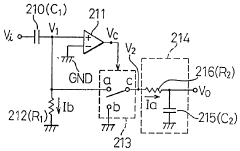
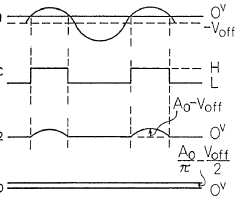
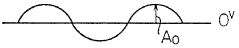
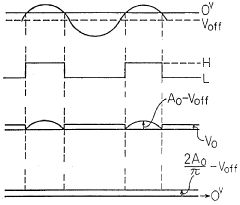
Half-wave rectifier circuit
PatentInactiveUS3936720A
Innovation
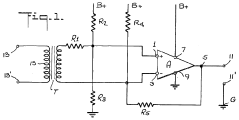
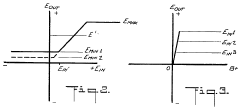
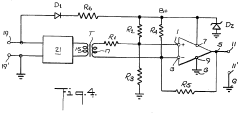
- A high-gain differential amplifier-based half-wave rectifier circuit operating from a single power supply, eliminating the need for voltage regulation and reducing temperature dependence, with resistor ratios optimized to minimize errors and achieve minimal output voltage drop.
Power Loss and Thermal Management Strategies
Power loss and thermal management are critical considerations in half wave rectifier design, particularly when aiming to minimize load resistance. The primary sources of power loss in these circuits include conduction losses in the diode, switching losses during state transitions, and resistive losses in the load itself. To address these issues, several strategies can be employed.
Firstly, selecting high-efficiency diodes with low forward voltage drop and fast recovery times can significantly reduce conduction and switching losses. Schottky diodes, for instance, offer lower forward voltage drops compared to conventional silicon diodes, making them an excellent choice for low-power applications. In higher power scenarios, synchronous rectification using MOSFETs can further improve efficiency by reducing the voltage drop across the rectifying element.
Thermal management plays a crucial role in maintaining the rectifier's performance and longevity. Proper heat dissipation techniques are essential to prevent thermal runaway and component failure. Heat sinks, when properly sized and attached to power components, can effectively transfer heat away from critical areas. In more demanding applications, forced-air cooling or even liquid cooling systems may be necessary to maintain optimal operating temperatures.
Another approach to minimizing power loss is the implementation of snubber circuits. These circuits help to suppress voltage spikes and reduce electromagnetic interference (EMI) during switching transitions. By dampening oscillations and limiting the rate of voltage change, snubber circuits can significantly reduce switching losses and improve overall system efficiency.
The layout and design of the printed circuit board (PCB) also play a vital role in thermal management and power loss reduction. Utilizing thick copper traces for high-current paths, implementing proper ground planes, and strategically placing components to optimize heat dissipation can all contribute to improved thermal performance and reduced power losses.
In applications where variable load resistance is a concern, adaptive control techniques can be employed. These methods dynamically adjust the rectifier's operation based on load conditions, optimizing efficiency across a range of operating points. This approach is particularly beneficial in systems with fluctuating power demands.
Lastly, the integration of advanced materials and packaging technologies can further enhance thermal management and reduce power losses. For instance, the use of thermally conductive substrates or advanced ceramic packages can improve heat dissipation, while the application of wide-bandgap semiconductors like silicon carbide (SiC) or gallium nitride (GaN) can offer superior performance in high-frequency and high-power applications.
Firstly, selecting high-efficiency diodes with low forward voltage drop and fast recovery times can significantly reduce conduction and switching losses. Schottky diodes, for instance, offer lower forward voltage drops compared to conventional silicon diodes, making them an excellent choice for low-power applications. In higher power scenarios, synchronous rectification using MOSFETs can further improve efficiency by reducing the voltage drop across the rectifying element.
Thermal management plays a crucial role in maintaining the rectifier's performance and longevity. Proper heat dissipation techniques are essential to prevent thermal runaway and component failure. Heat sinks, when properly sized and attached to power components, can effectively transfer heat away from critical areas. In more demanding applications, forced-air cooling or even liquid cooling systems may be necessary to maintain optimal operating temperatures.
Another approach to minimizing power loss is the implementation of snubber circuits. These circuits help to suppress voltage spikes and reduce electromagnetic interference (EMI) during switching transitions. By dampening oscillations and limiting the rate of voltage change, snubber circuits can significantly reduce switching losses and improve overall system efficiency.
The layout and design of the printed circuit board (PCB) also play a vital role in thermal management and power loss reduction. Utilizing thick copper traces for high-current paths, implementing proper ground planes, and strategically placing components to optimize heat dissipation can all contribute to improved thermal performance and reduced power losses.
In applications where variable load resistance is a concern, adaptive control techniques can be employed. These methods dynamically adjust the rectifier's operation based on load conditions, optimizing efficiency across a range of operating points. This approach is particularly beneficial in systems with fluctuating power demands.
Lastly, the integration of advanced materials and packaging technologies can further enhance thermal management and reduce power losses. For instance, the use of thermally conductive substrates or advanced ceramic packages can improve heat dissipation, while the application of wide-bandgap semiconductors like silicon carbide (SiC) or gallium nitride (GaN) can offer superior performance in high-frequency and high-power applications.
Applications and Use Cases for Optimized Rectifiers
Optimized rectifiers, particularly those with minimized load resistance, find extensive applications across various industries and use cases. In power electronics, these rectifiers play a crucial role in converting alternating current (AC) to direct current (DC) efficiently. One primary application is in power supplies for electronic devices, where minimized load resistance helps reduce power losses and improve overall efficiency.
In the automotive industry, optimized rectifiers are essential components in alternators and battery charging systems. By minimizing load resistance, these rectifiers enable more efficient energy conversion from the engine's mechanical power to electrical power, ultimately extending battery life and improving fuel efficiency. Similarly, in renewable energy systems such as solar panels and wind turbines, optimized rectifiers with low load resistance are vital for maximizing energy harvesting and conversion efficiency.
Telecommunications infrastructure heavily relies on optimized rectifiers for power management in base stations and data centers. The reduced load resistance allows for more efficient power distribution and helps minimize heat generation, which is critical in maintaining the reliability and longevity of sensitive electronic equipment. In industrial automation and control systems, these rectifiers enable precise voltage regulation and smooth power delivery to various sensors, actuators, and control devices.
Consumer electronics benefit significantly from optimized rectifiers with minimized load resistance. Smartphones, laptops, and other portable devices can achieve faster charging times and improved battery life due to the increased efficiency of power conversion. Additionally, in home appliances such as refrigerators, air conditioners, and washing machines, these rectifiers contribute to energy savings and enhanced performance.
Medical equipment, particularly in diagnostic and imaging devices, requires stable and efficient power supplies. Optimized rectifiers ensure reliable operation and minimize electromagnetic interference, which is crucial for accurate readings and patient safety. In aerospace applications, where weight and efficiency are paramount, these rectifiers contribute to lighter and more fuel-efficient aircraft systems.
The growing field of electric vehicles (EVs) and hybrid electric vehicles (HEVs) heavily relies on optimized rectifiers for efficient power management. These components are essential in onboard chargers, regenerative braking systems, and power conversion between high-voltage batteries and low-voltage vehicle electronics. By minimizing load resistance, EVs can achieve longer driving ranges and faster charging times.
In the automotive industry, optimized rectifiers are essential components in alternators and battery charging systems. By minimizing load resistance, these rectifiers enable more efficient energy conversion from the engine's mechanical power to electrical power, ultimately extending battery life and improving fuel efficiency. Similarly, in renewable energy systems such as solar panels and wind turbines, optimized rectifiers with low load resistance are vital for maximizing energy harvesting and conversion efficiency.
Telecommunications infrastructure heavily relies on optimized rectifiers for power management in base stations and data centers. The reduced load resistance allows for more efficient power distribution and helps minimize heat generation, which is critical in maintaining the reliability and longevity of sensitive electronic equipment. In industrial automation and control systems, these rectifiers enable precise voltage regulation and smooth power delivery to various sensors, actuators, and control devices.
Consumer electronics benefit significantly from optimized rectifiers with minimized load resistance. Smartphones, laptops, and other portable devices can achieve faster charging times and improved battery life due to the increased efficiency of power conversion. Additionally, in home appliances such as refrigerators, air conditioners, and washing machines, these rectifiers contribute to energy savings and enhanced performance.
Medical equipment, particularly in diagnostic and imaging devices, requires stable and efficient power supplies. Optimized rectifiers ensure reliable operation and minimize electromagnetic interference, which is crucial for accurate readings and patient safety. In aerospace applications, where weight and efficiency are paramount, these rectifiers contribute to lighter and more fuel-efficient aircraft systems.
The growing field of electric vehicles (EVs) and hybrid electric vehicles (HEVs) heavily relies on optimized rectifiers for efficient power management. These components are essential in onboard chargers, regenerative braking systems, and power conversion between high-voltage batteries and low-voltage vehicle electronics. By minimizing load resistance, EVs can achieve longer driving ranges and faster charging times.
Unlock deeper insights with PatSnap Eureka Quick Research — get a full tech report to explore trends and direct your research. Try now!
Generate Your Research Report Instantly with AI Agent
Supercharge your innovation with PatSnap Eureka AI Agent Platform!