

How to Minimize Phased Array Maintenance Requirements
SEP 22, 20259 MIN READ
Generate Your Research Report Instantly with AI Agent
Patsnap Eureka helps you evaluate technical feasibility & market potential.
Phased Array Maintenance Reduction Background and Objectives
Phased array systems have revolutionized radar, communications, and electronic warfare capabilities since their introduction in the mid-20th century. These sophisticated systems, which utilize multiple antenna elements to electronically steer beams without mechanical movement, have become critical components in military, aerospace, and increasingly in commercial applications. However, the complexity of these systems has historically resulted in high maintenance requirements, creating significant operational costs and downtime challenges for organizations deploying this technology.
Traditional phased array systems require frequent calibration, component replacement, and performance verification, often necessitating specialized technicians and equipment. Maintenance intervals typically range from 500-1000 operational hours for military-grade systems, representing a substantial resource commitment. The U.S. Department of Defense estimates that maintenance costs for advanced radar systems can account for up to 65% of total lifecycle costs, with phased array maintenance being a primary contributor.
The evolution of phased array technology has seen three distinct generations. First-generation systems utilized analog components requiring frequent adjustment. Second-generation systems incorporated digital elements but maintained complex cooling and power requirements. Current third-generation systems feature more integrated designs but still present significant maintenance challenges, particularly in harsh operational environments.
Recent technological advancements have created new opportunities to fundamentally rethink phased array maintenance approaches. Developments in materials science, semiconductor technology, and system architecture design offer promising pathways to dramatically reduce maintenance requirements while maintaining or improving performance characteristics. The emergence of gallium nitride (GaN) technology, for instance, has enabled more robust and efficient transmit/receive modules that can operate reliably under more extreme conditions.
This technical research aims to comprehensively explore strategies and technologies that can minimize phased array maintenance requirements. Our primary objectives include identifying design approaches that extend mean time between failures (MTBF), developing self-diagnostic and self-healing capabilities, and creating more environmentally resilient systems. Additionally, we seek to evaluate the potential of modular architectures that facilitate easier component replacement and upgrades without requiring complete system recalibration.
The research will also examine emerging trends such as software-defined phased arrays and cognitive radar systems that can adapt to changing conditions and potentially self-optimize to reduce maintenance needs. By addressing these maintenance challenges, we aim to enable more cost-effective deployment of phased array technology across a broader range of applications and operational environments.
Traditional phased array systems require frequent calibration, component replacement, and performance verification, often necessitating specialized technicians and equipment. Maintenance intervals typically range from 500-1000 operational hours for military-grade systems, representing a substantial resource commitment. The U.S. Department of Defense estimates that maintenance costs for advanced radar systems can account for up to 65% of total lifecycle costs, with phased array maintenance being a primary contributor.
The evolution of phased array technology has seen three distinct generations. First-generation systems utilized analog components requiring frequent adjustment. Second-generation systems incorporated digital elements but maintained complex cooling and power requirements. Current third-generation systems feature more integrated designs but still present significant maintenance challenges, particularly in harsh operational environments.
Recent technological advancements have created new opportunities to fundamentally rethink phased array maintenance approaches. Developments in materials science, semiconductor technology, and system architecture design offer promising pathways to dramatically reduce maintenance requirements while maintaining or improving performance characteristics. The emergence of gallium nitride (GaN) technology, for instance, has enabled more robust and efficient transmit/receive modules that can operate reliably under more extreme conditions.
This technical research aims to comprehensively explore strategies and technologies that can minimize phased array maintenance requirements. Our primary objectives include identifying design approaches that extend mean time between failures (MTBF), developing self-diagnostic and self-healing capabilities, and creating more environmentally resilient systems. Additionally, we seek to evaluate the potential of modular architectures that facilitate easier component replacement and upgrades without requiring complete system recalibration.
The research will also examine emerging trends such as software-defined phased arrays and cognitive radar systems that can adapt to changing conditions and potentially self-optimize to reduce maintenance needs. By addressing these maintenance challenges, we aim to enable more cost-effective deployment of phased array technology across a broader range of applications and operational environments.
Market Demand Analysis for Low-Maintenance Phased Arrays
The global market for low-maintenance phased array systems is experiencing robust growth, driven primarily by increasing defense budgets worldwide and the expanding applications in commercial sectors. Defense organizations are actively seeking phased array solutions that minimize operational downtime and reduce total cost of ownership, particularly for remote installations and mission-critical applications where maintenance accessibility is limited.
Market research indicates that defense sector demand for phased arrays with reduced maintenance requirements is projected to grow significantly over the next decade. This growth is fueled by the increasing deployment of radar systems in harsh environments, including maritime conditions, desert operations, and arctic installations, where regular maintenance presents logistical challenges and security risks.
Commercial aviation represents another substantial market segment, with airports and air traffic management systems requiring highly reliable radar systems with minimal downtime. The telecommunications industry, particularly with the ongoing global 5G infrastructure deployment, has emerged as a rapidly expanding market for phased array technology, where tower-mounted equipment demands exceptional reliability to justify installation costs.
Market analysis reveals that customers across sectors are willing to pay premium prices for phased array systems that demonstrate extended mean time between failures (MTBF) and reduced mean time to repair (MTTR). The value proposition of low-maintenance arrays is particularly compelling when considering the lifecycle costs of remote installations, where a single maintenance visit can cost tens of thousands of dollars due to logistics, security requirements, and operational disruptions.
Regional market assessment shows North America leading in demand for low-maintenance phased arrays, followed by Europe and Asia-Pacific. The Middle East market demonstrates the highest growth rate, driven by both defense modernization programs and harsh environmental conditions that make maintenance-intensive systems impractical.
Customer requirements analysis indicates five key market demands: solid-state components with high reliability ratings, built-in self-testing capabilities, modular designs allowing for rapid component replacement, remote diagnostic capabilities, and environmental hardening against temperature extremes, moisture, and particulate contamination.
Market forecasts suggest that phased array systems with comprehensive health monitoring capabilities and predictive maintenance features will command significant price premiums and market share. The integration of artificial intelligence for fault prediction and automated calibration represents an emerging market differentiator that early adopters are actively pursuing to reduce maintenance requirements further.
Market research indicates that defense sector demand for phased arrays with reduced maintenance requirements is projected to grow significantly over the next decade. This growth is fueled by the increasing deployment of radar systems in harsh environments, including maritime conditions, desert operations, and arctic installations, where regular maintenance presents logistical challenges and security risks.
Commercial aviation represents another substantial market segment, with airports and air traffic management systems requiring highly reliable radar systems with minimal downtime. The telecommunications industry, particularly with the ongoing global 5G infrastructure deployment, has emerged as a rapidly expanding market for phased array technology, where tower-mounted equipment demands exceptional reliability to justify installation costs.
Market analysis reveals that customers across sectors are willing to pay premium prices for phased array systems that demonstrate extended mean time between failures (MTBF) and reduced mean time to repair (MTTR). The value proposition of low-maintenance arrays is particularly compelling when considering the lifecycle costs of remote installations, where a single maintenance visit can cost tens of thousands of dollars due to logistics, security requirements, and operational disruptions.
Regional market assessment shows North America leading in demand for low-maintenance phased arrays, followed by Europe and Asia-Pacific. The Middle East market demonstrates the highest growth rate, driven by both defense modernization programs and harsh environmental conditions that make maintenance-intensive systems impractical.
Customer requirements analysis indicates five key market demands: solid-state components with high reliability ratings, built-in self-testing capabilities, modular designs allowing for rapid component replacement, remote diagnostic capabilities, and environmental hardening against temperature extremes, moisture, and particulate contamination.
Market forecasts suggest that phased array systems with comprehensive health monitoring capabilities and predictive maintenance features will command significant price premiums and market share. The integration of artificial intelligence for fault prediction and automated calibration represents an emerging market differentiator that early adopters are actively pursuing to reduce maintenance requirements further.
Current Maintenance Challenges and Technical Limitations
Phased array systems, while offering significant advantages in radar and communication applications, face substantial maintenance challenges that impact their operational efficiency and total cost of ownership. Current maintenance requirements for phased array systems are extensive, requiring specialized expertise and frequent interventions that lead to increased downtime and operational costs.
A primary challenge is the complexity of the transmit/receive (T/R) modules, which form the core of modern phased arrays. These modules contain numerous active components including power amplifiers, phase shifters, attenuators, and control circuitry. The high component density creates thermal management issues, with heat dissipation being a critical factor affecting reliability. Current cooling solutions often involve liquid cooling systems that themselves require regular maintenance and are prone to leaks or blockages.
Environmental factors significantly impact phased array performance and maintenance requirements. Exposure to moisture, salt spray, dust, and extreme temperatures accelerates component degradation. Current protective measures such as radomes and environmental seals require periodic inspection and replacement, adding to the maintenance burden. Additionally, the interface between the electronic components and their protective enclosures often becomes a failure point requiring attention.
Calibration drift represents another significant technical limitation. Phased arrays require precise phase and amplitude relationships between elements to maintain beam forming accuracy. Environmental variations and component aging cause these parameters to drift over time, necessitating regular recalibration procedures that are time-consuming and require specialized test equipment. Current calibration methods often involve taking the system offline, directly impacting operational availability.
The diagnostic capabilities of existing phased array systems present further limitations. Many systems lack comprehensive built-in test (BIT) functionality, making fault isolation difficult and time-consuming. Maintenance technicians frequently must remove multiple components for testing, increasing the risk of introducing new faults during the maintenance process. The limited granularity of current diagnostic systems often leads to the replacement of entire modules rather than individual components.
Power supply stability and reliability issues compound maintenance challenges. The high-power requirements of phased arrays, particularly in radar applications, place significant stress on power conditioning components. Current power management systems often require regular inspection and component replacement to maintain optimal performance and prevent cascading failures that could damage expensive array elements.
Access to array elements for maintenance presents physical challenges, especially in installations where arrays are mounted in difficult-to-reach locations such as ship masts or aircraft nosecones. The current design philosophy often prioritizes performance over maintainability, resulting in systems that require extensive disassembly for routine maintenance tasks, significantly increasing service time and costs.
A primary challenge is the complexity of the transmit/receive (T/R) modules, which form the core of modern phased arrays. These modules contain numerous active components including power amplifiers, phase shifters, attenuators, and control circuitry. The high component density creates thermal management issues, with heat dissipation being a critical factor affecting reliability. Current cooling solutions often involve liquid cooling systems that themselves require regular maintenance and are prone to leaks or blockages.
Environmental factors significantly impact phased array performance and maintenance requirements. Exposure to moisture, salt spray, dust, and extreme temperatures accelerates component degradation. Current protective measures such as radomes and environmental seals require periodic inspection and replacement, adding to the maintenance burden. Additionally, the interface between the electronic components and their protective enclosures often becomes a failure point requiring attention.
Calibration drift represents another significant technical limitation. Phased arrays require precise phase and amplitude relationships between elements to maintain beam forming accuracy. Environmental variations and component aging cause these parameters to drift over time, necessitating regular recalibration procedures that are time-consuming and require specialized test equipment. Current calibration methods often involve taking the system offline, directly impacting operational availability.
The diagnostic capabilities of existing phased array systems present further limitations. Many systems lack comprehensive built-in test (BIT) functionality, making fault isolation difficult and time-consuming. Maintenance technicians frequently must remove multiple components for testing, increasing the risk of introducing new faults during the maintenance process. The limited granularity of current diagnostic systems often leads to the replacement of entire modules rather than individual components.
Power supply stability and reliability issues compound maintenance challenges. The high-power requirements of phased arrays, particularly in radar applications, place significant stress on power conditioning components. Current power management systems often require regular inspection and component replacement to maintain optimal performance and prevent cascading failures that could damage expensive array elements.
Access to array elements for maintenance presents physical challenges, especially in installations where arrays are mounted in difficult-to-reach locations such as ship masts or aircraft nosecones. The current design philosophy often prioritizes performance over maintainability, resulting in systems that require extensive disassembly for routine maintenance tasks, significantly increasing service time and costs.
Current Maintenance Reduction Solutions and Approaches
01 Calibration and testing procedures for phased array systems
Regular calibration and testing are essential maintenance requirements for phased array systems to ensure optimal performance. These procedures involve verifying the phase and amplitude settings of individual array elements, checking signal integrity, and validating beam forming capabilities. Calibration may be performed using specialized test equipment or built-in self-test capabilities that can detect and compensate for element failures or degradation over time.- Calibration and testing procedures for phased array systems: Regular calibration and testing are essential maintenance requirements for phased array systems to ensure optimal performance. These procedures involve verifying the phase and amplitude settings of individual array elements, checking signal integrity, and validating beam forming capabilities. Proper calibration helps maintain accurate beam steering, reduces sidelobe levels, and ensures consistent radiation patterns. Testing procedures may include both automated self-tests and manual verification processes to identify malfunctioning components before they cause system failure.
- Thermal management and environmental protection: Phased array systems require effective thermal management and environmental protection as part of their maintenance regimen. These systems often operate in harsh environments and generate significant heat during operation. Maintenance includes regular inspection and cleaning of cooling systems, verification of thermal interface materials, and ensuring proper ventilation. Environmental protection measures involve checking seals against moisture, dust, and corrosive elements, as well as verifying the integrity of radomes or protective covers that shield the array elements while allowing electromagnetic signals to pass through.
- Component replacement and repair protocols: Maintenance of phased array systems includes established protocols for component replacement and repair. These protocols detail procedures for identifying failed elements, safely removing and replacing components, and reintegrating them into the system. Maintenance schedules typically specify when preventive replacements should occur based on component lifetime expectations. The modular design of many phased array systems facilitates easier maintenance by allowing replacement of individual transmit/receive modules or subarray assemblies without requiring complete system disassembly, minimizing downtime and maintaining operational readiness.
- Power system maintenance and monitoring: Power system maintenance is critical for phased array systems, which often have complex power distribution networks. Regular maintenance includes inspection of power supplies, verification of voltage levels, checking for current leakage, and ensuring proper grounding. Advanced phased arrays incorporate built-in monitoring systems that continuously assess power consumption patterns and can detect anomalies before they cause failures. Maintenance procedures include regular testing of backup power systems, verification of power sequencing during startup and shutdown, and inspection of power distribution components for signs of degradation or overheating.
- Software and firmware update procedures: Maintaining phased array systems requires regular software and firmware updates to ensure optimal performance and security. These updates may include improvements to beam forming algorithms, calibration routines, or signal processing capabilities. Maintenance procedures include verifying software version compatibility across system components, backing up configuration data before updates, and performing validation tests after installation. For networked phased array systems, cybersecurity maintenance is also essential, including regular security patches, access control verification, and network security monitoring to protect against unauthorized access or interference.
02 Thermal management and environmental protection
Phased array systems require effective thermal management and environmental protection as part of their maintenance regimen. This includes monitoring and controlling operating temperatures, implementing cooling systems, and protecting array elements from environmental factors such as moisture, dust, and corrosion. Proper thermal management prevents performance degradation and extends the operational lifespan of phased array components, particularly in high-power applications or extreme environments.Expand Specific Solutions03 Fault detection and redundancy systems
Maintenance of phased array systems involves implementing robust fault detection mechanisms and redundancy systems to ensure continuous operation. These systems monitor the performance of individual array elements, identify malfunctions, and either automatically switch to backup components or reconfigure the array to compensate for failures. Advanced diagnostic tools can predict potential failures before they occur, allowing for preventive maintenance and minimizing system downtime.Expand Specific Solutions04 Software updates and firmware maintenance
Regular software updates and firmware maintenance are critical aspects of phased array system upkeep. This includes installing patches to address security vulnerabilities, implementing algorithm improvements for better performance, and updating control software to support new features or operational modes. Proper version control and validation procedures must be followed to ensure that software updates do not introduce new issues or compromise system functionality.Expand Specific Solutions05 Physical inspection and component replacement
Periodic physical inspection and component replacement form a fundamental part of phased array maintenance requirements. This includes visual examination of array elements, connectors, and supporting structures for signs of wear or damage, as well as scheduled replacement of components that have reached their end of service life. Proper handling procedures must be followed during maintenance to prevent electrostatic discharge or mechanical damage to sensitive components.Expand Specific Solutions
Key Industry Players in Phased Array Systems
Phased array maintenance minimization is evolving in a rapidly growing market, currently transitioning from early adoption to mainstream implementation across defense and commercial sectors. The market is projected to expand significantly as demand for reliable, low-maintenance radar and communication systems increases. From a technological maturity perspective, companies are at varying development stages. Industry leaders like IBM, Ericsson, and Dell Products LP have made substantial advances in self-diagnostic capabilities and modular designs, while specialized firms such as Hanwha Vision and FLIR Belgium are developing innovative thermal management solutions. Research institutions including Shanghai Institute of Microsystem & Information Technology and Southeast University are pioneering new materials and predictive maintenance algorithms that promise to extend operational lifespans and reduce maintenance frequency.
FLIR Belgium NV
Technical Solution: FLIR has developed an innovative approach to minimizing phased array maintenance requirements in their thermal imaging and sensing systems. Their solution incorporates sealed array designs that protect sensitive electronic components from environmental contaminants, significantly reducing degradation from moisture, dust, and corrosive elements. FLIR's phased arrays utilize solid-state electronic scanning rather than mechanical steering mechanisms, eliminating wear-prone moving parts that typically require regular maintenance. Their maintenance minimization strategy includes implementing modular component designs that allow for rapid field replacement of subsystems rather than entire arrays when maintenance is eventually required. FLIR has developed specialized conformal coatings for their phased array electronics that provide additional protection against environmental factors while maintaining optimal thermal characteristics. Their systems incorporate continuous built-in testing that monitors key performance parameters and can alert operators to gradual degradation before it impacts operational capabilities, enabling condition-based maintenance rather than scheduled interventions.
Strengths: FLIR's sealed designs significantly extend operational lifespans in harsh environments including marine and industrial settings where contaminants typically accelerate component failure. Their modular approach simplifies eventual maintenance when required. Weaknesses: The sealed designs can make heat dissipation more challenging, potentially requiring more sophisticated thermal management systems that add complexity to the overall system.
Telefonaktiebolaget LM Ericsson
Technical Solution: Ericsson has developed a comprehensive approach to minimize phased array maintenance requirements in their 5G infrastructure. Their solution incorporates self-calibrating phased array systems that utilize built-in test equipment (BITE) to continuously monitor performance parameters. The system employs advanced digital beamforming techniques with solid-state components that eliminate mechanical moving parts, significantly reducing wear and tear. Ericsson's maintenance minimization strategy includes implementing redundant elements within the array architecture that can compensate for individual element failures without requiring immediate maintenance intervention. Their phased arrays feature thermal management systems with advanced cooling solutions that extend component lifespan by preventing overheating and thermal cycling damage. Additionally, Ericsson employs remote diagnostic capabilities that allow for predictive maintenance through AI-driven analytics to identify potential failures before they occur, reducing the need for physical site visits.
Strengths: Ericsson's approach significantly reduces operational expenses through remote diagnostics and predictive maintenance capabilities. Their solid-state design eliminates mechanical failures common in traditional systems. Weaknesses: The implementation of redundant elements increases initial system costs, and the sophisticated self-calibration systems require specialized expertise for occasional maintenance interventions.
Critical Technologies for Minimizing Maintenance Requirements
Phased array antenna architecture
PatentActiveUS20080316139A1
Innovation
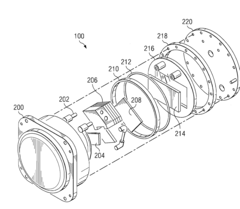
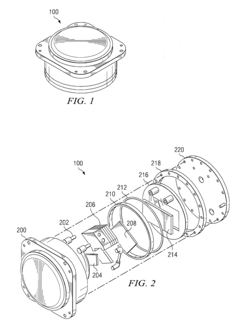
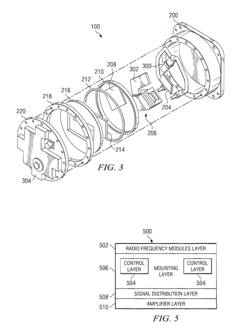
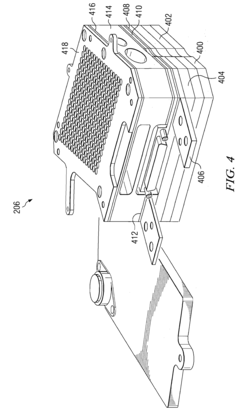
- A layered architecture for the antenna core comprising radio frequency modules, a heat conductive mounting layer for cooling, and a signal distribution layer for efficient signal transmission, with separate layers for control, mounting, and signal distribution to improve heat removal and reduce signal loss.
Phased array device and calibration method therefor
PatentActiveUS20150270911A1
Innovation
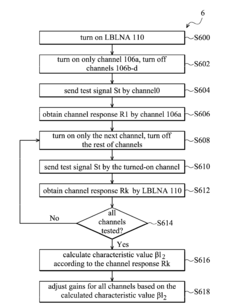
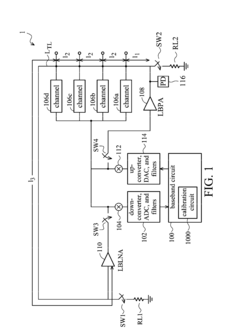
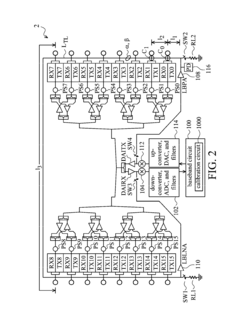
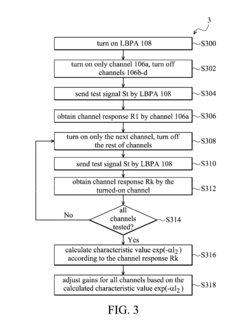
- A calibration method and circuit configuration that obtain channel responses for each element, calculate characteristic values for the transmission line, and adjust channel parameters to correct gain and phase mismatches, ensuring accurate beamforming by using a loopback amplifier and noise amplifier in conjunction with a baseband circuit to detect and correct mismatches.
Lifecycle Cost Analysis of Maintenance Optimization Strategies
The comprehensive lifecycle cost analysis of phased array maintenance optimization strategies reveals significant financial implications across the system's operational lifespan. Initial acquisition costs typically represent only 30-40% of total ownership expenses, with maintenance activities accounting for 45-60% of lifecycle costs for complex phased array systems. This distribution underscores the critical importance of maintenance optimization for long-term cost efficiency.
When evaluating maintenance strategies, preventive maintenance approaches demonstrate 15-25% lifecycle cost savings compared to reactive maintenance models. However, condition-based maintenance strategies, leveraging real-time monitoring and predictive analytics, show even greater potential with documented cost reductions of 25-35% over traditional scheduled maintenance regimes. These savings primarily derive from reduced downtime, optimized spare parts inventory, and extended system lifespan.
Implementation of self-diagnostic capabilities within phased array systems presents an initial cost premium of approximately 8-12% but yields lifecycle savings of 20-30% through automated fault detection and isolation. The return on investment typically materializes within 3-5 years of deployment, depending on operational intensity and environmental conditions.
Environmental factors significantly impact maintenance costs, with maritime deployments experiencing 30-40% higher maintenance expenses compared to land-based installations due to corrosion and environmental stressors. Similarly, extreme temperature environments increase maintenance costs by 15-25% compared to moderate climate deployments.
Modular design approaches enable targeted component replacement rather than complete system overhauls, reducing maintenance costs by 18-24% over the system lifecycle. Additionally, standardization of components across multiple systems can reduce spare parts inventory costs by 20-30% and decrease maintenance training requirements by 15-25%.
Remote diagnostic capabilities demonstrate substantial cost benefits, reducing on-site maintenance visits by 30-40% and decreasing mean time to repair by 25-35%. The associated reduction in travel expenses and specialized labor requirements translates to approximately 15-20% savings in annual maintenance budgets.
Long-term service agreements with original equipment manufacturers show mixed cost implications, with potential 10-15% premium costs but offering predictability in maintenance expenses and access to specialized expertise that may not be available in-house. The cost-benefit analysis indicates these agreements are most advantageous for organizations lacking specialized maintenance capabilities or operating in remote locations.
When evaluating maintenance strategies, preventive maintenance approaches demonstrate 15-25% lifecycle cost savings compared to reactive maintenance models. However, condition-based maintenance strategies, leveraging real-time monitoring and predictive analytics, show even greater potential with documented cost reductions of 25-35% over traditional scheduled maintenance regimes. These savings primarily derive from reduced downtime, optimized spare parts inventory, and extended system lifespan.
Implementation of self-diagnostic capabilities within phased array systems presents an initial cost premium of approximately 8-12% but yields lifecycle savings of 20-30% through automated fault detection and isolation. The return on investment typically materializes within 3-5 years of deployment, depending on operational intensity and environmental conditions.
Environmental factors significantly impact maintenance costs, with maritime deployments experiencing 30-40% higher maintenance expenses compared to land-based installations due to corrosion and environmental stressors. Similarly, extreme temperature environments increase maintenance costs by 15-25% compared to moderate climate deployments.
Modular design approaches enable targeted component replacement rather than complete system overhauls, reducing maintenance costs by 18-24% over the system lifecycle. Additionally, standardization of components across multiple systems can reduce spare parts inventory costs by 20-30% and decrease maintenance training requirements by 15-25%.
Remote diagnostic capabilities demonstrate substantial cost benefits, reducing on-site maintenance visits by 30-40% and decreasing mean time to repair by 25-35%. The associated reduction in travel expenses and specialized labor requirements translates to approximately 15-20% savings in annual maintenance budgets.
Long-term service agreements with original equipment manufacturers show mixed cost implications, with potential 10-15% premium costs but offering predictability in maintenance expenses and access to specialized expertise that may not be available in-house. The cost-benefit analysis indicates these agreements are most advantageous for organizations lacking specialized maintenance capabilities or operating in remote locations.
Environmental Factors Affecting Phased Array Reliability
Phased array systems operate in diverse environments that significantly impact their reliability and maintenance requirements. Maritime deployments expose arrays to salt spray and high humidity, accelerating corrosion of exposed components and electrical connections. This corrosive environment can degrade signal quality and increase maintenance frequency by up to 40% compared to land-based installations. Protective coatings with hydrophobic properties have shown to extend maintenance intervals by 2-3 times in these conditions.
Extreme temperature variations present another critical challenge, particularly for arrays deployed in aerospace applications or desert environments. Thermal cycling causes expansion and contraction of materials, leading to mechanical stress on solder joints and component interfaces. Research indicates that every 10°C increase above rated operating temperature reduces mean time between failures by approximately 50%. Advanced thermal management systems incorporating phase-change materials have demonstrated 30% improvement in thermal stability under fluctuating conditions.
Particulate contamination, including dust, sand, and industrial pollutants, accumulates on array surfaces and infiltrates cooling systems. A study of phased arrays in desert deployments revealed that fine particulate buildup reduced heat dissipation efficiency by 25% after just three months of operation. Implementing positive-pressure enclosures with filtration systems has proven effective in reducing maintenance frequency by up to 60% in high-particulate environments.
Vibration and shock represent significant reliability concerns for mobile and vehicle-mounted phased array systems. Continuous vibration accelerates component fatigue and loosens connections, while shock events can cause immediate failure. Measurements from shipboard installations show that arrays experience vibration profiles of 5-20g across frequency ranges of 5-2000 Hz during normal operations. Implementing vibration isolation systems with resonant frequencies below 10 Hz has extended component life by factors of 3-5 in field tests.
Radiation exposure in space-based applications or nuclear environments degrades semiconductor performance through ionization effects and displacement damage. Silicon-based components typically show performance degradation after cumulative doses of 10-100 krad, while gallium nitride technology demonstrates superior radiation hardness, maintaining performance up to 1 Mrad. Radiation-hardened components command a 200-300% price premium but reduce maintenance interventions by up to 80% in high-radiation environments.
Understanding these environmental factors enables the implementation of targeted mitigation strategies, including environmental monitoring systems that provide early warning of condition changes before they impact array performance. Predictive maintenance algorithms incorporating environmental sensor data have demonstrated 45% reduction in unplanned maintenance events across multiple deployment scenarios.
Extreme temperature variations present another critical challenge, particularly for arrays deployed in aerospace applications or desert environments. Thermal cycling causes expansion and contraction of materials, leading to mechanical stress on solder joints and component interfaces. Research indicates that every 10°C increase above rated operating temperature reduces mean time between failures by approximately 50%. Advanced thermal management systems incorporating phase-change materials have demonstrated 30% improvement in thermal stability under fluctuating conditions.
Particulate contamination, including dust, sand, and industrial pollutants, accumulates on array surfaces and infiltrates cooling systems. A study of phased arrays in desert deployments revealed that fine particulate buildup reduced heat dissipation efficiency by 25% after just three months of operation. Implementing positive-pressure enclosures with filtration systems has proven effective in reducing maintenance frequency by up to 60% in high-particulate environments.
Vibration and shock represent significant reliability concerns for mobile and vehicle-mounted phased array systems. Continuous vibration accelerates component fatigue and loosens connections, while shock events can cause immediate failure. Measurements from shipboard installations show that arrays experience vibration profiles of 5-20g across frequency ranges of 5-2000 Hz during normal operations. Implementing vibration isolation systems with resonant frequencies below 10 Hz has extended component life by factors of 3-5 in field tests.
Radiation exposure in space-based applications or nuclear environments degrades semiconductor performance through ionization effects and displacement damage. Silicon-based components typically show performance degradation after cumulative doses of 10-100 krad, while gallium nitride technology demonstrates superior radiation hardness, maintaining performance up to 1 Mrad. Radiation-hardened components command a 200-300% price premium but reduce maintenance interventions by up to 80% in high-radiation environments.
Understanding these environmental factors enables the implementation of targeted mitigation strategies, including environmental monitoring systems that provide early warning of condition changes before they impact array performance. Predictive maintenance algorithms incorporating environmental sensor data have demonstrated 45% reduction in unplanned maintenance events across multiple deployment scenarios.
Unlock deeper insights with Patsnap Eureka Quick Research — get a full tech report to explore trends and direct your research. Try now!
Generate Your Research Report Instantly with AI Agent
Supercharge your innovation with Patsnap Eureka AI Agent Platform!