

How to Use Half Wave Rectifiers in Telecommunications?
JUL 15, 20259 MIN READ
Generate Your Research Report Instantly with AI Agent
PatSnap Eureka helps you evaluate technical feasibility & market potential.
Half Wave Rectifiers in Telecom: Background and Objectives
Half wave rectifiers have played a significant role in the evolution of telecommunications technology. These devices, which convert alternating current (AC) to pulsating direct current (DC), have been instrumental in the development of various communication systems. The journey of half wave rectifiers in telecom began with early radio receivers and has since expanded to more complex applications in modern telecommunications infrastructure.
The primary objective of using half wave rectifiers in telecommunications is to provide a reliable and efficient method of power conversion. This is crucial for powering various telecom equipment and ensuring the proper functioning of communication systems. As the telecommunications industry has grown and evolved, so too has the application and sophistication of half wave rectifiers within this field.
In the early days of telecommunications, half wave rectifiers were primarily used in simple radio receivers to convert AC signals from antennas into DC signals that could be processed by the receiver's circuitry. This basic application laid the foundation for more advanced uses in the telecom sector. As technology progressed, the role of half wave rectifiers expanded to include power supply units for various telecom devices and infrastructure components.
The technological trajectory of half wave rectifiers in telecommunications has been marked by continuous improvements in efficiency, reliability, and miniaturization. These advancements have been driven by the ever-increasing demands of the telecom industry for more compact, energy-efficient, and high-performance equipment. The evolution of semiconductor technology has also played a crucial role in enhancing the capabilities of half wave rectifiers, allowing for better performance in telecom applications.
One of the key objectives in the use of half wave rectifiers in telecommunications is to achieve optimal power conversion while minimizing signal distortion and power loss. This is particularly important in sensitive communication equipment where signal integrity is paramount. As such, ongoing research and development efforts are focused on improving the design and implementation of half wave rectifiers to meet these stringent requirements.
Another important goal is to enhance the integration of half wave rectifiers into modern telecom systems. This includes developing rectifiers that can handle higher frequencies and power levels, as well as those that can operate efficiently in compact and portable devices. The push towards 5G and beyond has further emphasized the need for advanced rectifier technologies that can support the high-frequency operations of next-generation communication networks.
The primary objective of using half wave rectifiers in telecommunications is to provide a reliable and efficient method of power conversion. This is crucial for powering various telecom equipment and ensuring the proper functioning of communication systems. As the telecommunications industry has grown and evolved, so too has the application and sophistication of half wave rectifiers within this field.
In the early days of telecommunications, half wave rectifiers were primarily used in simple radio receivers to convert AC signals from antennas into DC signals that could be processed by the receiver's circuitry. This basic application laid the foundation for more advanced uses in the telecom sector. As technology progressed, the role of half wave rectifiers expanded to include power supply units for various telecom devices and infrastructure components.
The technological trajectory of half wave rectifiers in telecommunications has been marked by continuous improvements in efficiency, reliability, and miniaturization. These advancements have been driven by the ever-increasing demands of the telecom industry for more compact, energy-efficient, and high-performance equipment. The evolution of semiconductor technology has also played a crucial role in enhancing the capabilities of half wave rectifiers, allowing for better performance in telecom applications.
One of the key objectives in the use of half wave rectifiers in telecommunications is to achieve optimal power conversion while minimizing signal distortion and power loss. This is particularly important in sensitive communication equipment where signal integrity is paramount. As such, ongoing research and development efforts are focused on improving the design and implementation of half wave rectifiers to meet these stringent requirements.
Another important goal is to enhance the integration of half wave rectifiers into modern telecom systems. This includes developing rectifiers that can handle higher frequencies and power levels, as well as those that can operate efficiently in compact and portable devices. The push towards 5G and beyond has further emphasized the need for advanced rectifier technologies that can support the high-frequency operations of next-generation communication networks.
Market Demand Analysis for Telecom Rectification Solutions
The telecommunications industry has witnessed a growing demand for efficient and reliable rectification solutions, particularly in the realm of half-wave rectifiers. This market demand is driven by several factors, including the rapid expansion of wireless networks, the increasing adoption of 5G technology, and the need for more energy-efficient power management systems in telecom infrastructure.
As the global telecom market continues to grow, with projections estimating a market size of over $1.7 trillion by 2025, the demand for rectification solutions is expected to rise proportionally. Half-wave rectifiers play a crucial role in converting alternating current (AC) to direct current (DC), which is essential for powering various telecom equipment and maintaining signal integrity.
The market for telecom rectification solutions is particularly strong in regions experiencing rapid infrastructure development, such as Asia-Pacific and parts of Africa. These areas are investing heavily in expanding their telecommunications networks, creating a significant demand for reliable power conversion technologies. Additionally, developed markets in North America and Europe are focusing on upgrading existing infrastructure to support advanced technologies like 5G, further driving the need for efficient rectification solutions.
One of the key drivers of market demand is the increasing focus on energy efficiency in telecom operations. As telecom companies strive to reduce their carbon footprint and operational costs, there is a growing interest in rectification solutions that offer higher efficiency and lower power losses. Half-wave rectifiers, when properly implemented, can contribute to these goals by providing a balance between simplicity and effectiveness in power conversion.
The rise of Internet of Things (IoT) devices and smart city initiatives is also fueling the demand for telecom rectification solutions. These applications often require distributed power systems that can efficiently convert and manage power at various points in the network. Half-wave rectifiers, due to their compact size and relatively simple design, are well-suited for integration into small-scale, distributed power management systems.
Furthermore, the increasing complexity of telecom networks, including the deployment of small cells and distributed antenna systems, is creating new opportunities for specialized rectification solutions. These applications often require customized power management approaches, driving innovation in half-wave rectifier designs and implementations.
However, the market also faces challenges, such as the need for improved efficiency and reduced harmonics in power conversion. This has led to ongoing research and development efforts to enhance half-wave rectifier performance, including the exploration of advanced materials and circuit designs. As a result, companies that can offer innovative and high-performance rectification solutions are likely to gain a competitive edge in the market.
As the global telecom market continues to grow, with projections estimating a market size of over $1.7 trillion by 2025, the demand for rectification solutions is expected to rise proportionally. Half-wave rectifiers play a crucial role in converting alternating current (AC) to direct current (DC), which is essential for powering various telecom equipment and maintaining signal integrity.
The market for telecom rectification solutions is particularly strong in regions experiencing rapid infrastructure development, such as Asia-Pacific and parts of Africa. These areas are investing heavily in expanding their telecommunications networks, creating a significant demand for reliable power conversion technologies. Additionally, developed markets in North America and Europe are focusing on upgrading existing infrastructure to support advanced technologies like 5G, further driving the need for efficient rectification solutions.
One of the key drivers of market demand is the increasing focus on energy efficiency in telecom operations. As telecom companies strive to reduce their carbon footprint and operational costs, there is a growing interest in rectification solutions that offer higher efficiency and lower power losses. Half-wave rectifiers, when properly implemented, can contribute to these goals by providing a balance between simplicity and effectiveness in power conversion.
The rise of Internet of Things (IoT) devices and smart city initiatives is also fueling the demand for telecom rectification solutions. These applications often require distributed power systems that can efficiently convert and manage power at various points in the network. Half-wave rectifiers, due to their compact size and relatively simple design, are well-suited for integration into small-scale, distributed power management systems.
Furthermore, the increasing complexity of telecom networks, including the deployment of small cells and distributed antenna systems, is creating new opportunities for specialized rectification solutions. These applications often require customized power management approaches, driving innovation in half-wave rectifier designs and implementations.
However, the market also faces challenges, such as the need for improved efficiency and reduced harmonics in power conversion. This has led to ongoing research and development efforts to enhance half-wave rectifier performance, including the exploration of advanced materials and circuit designs. As a result, companies that can offer innovative and high-performance rectification solutions are likely to gain a competitive edge in the market.
Current State and Challenges in Half Wave Rectification
Half wave rectification technology has seen significant advancements in telecommunications applications, yet it still faces several challenges. The current state of this technology is characterized by its widespread use in signal processing, power supply circuits, and modulation techniques within telecommunication systems.
One of the primary advantages of half wave rectifiers in telecommunications is their simplicity and cost-effectiveness. They are commonly employed in small-scale applications where power efficiency is not a critical factor. However, this simplicity also leads to limitations in performance, particularly in terms of power utilization and signal quality.
A major challenge in the current implementation of half wave rectifiers is the issue of harmonic distortion. The non-linear nature of the rectification process introduces harmonics into the output signal, which can interfere with the desired signal and reduce overall system performance. This is particularly problematic in sensitive telecommunication equipment where signal integrity is paramount.
Another significant challenge is the low power efficiency of half wave rectifiers. By nature, these devices only utilize one half of the input waveform, resulting in a theoretical maximum efficiency of 40.6%. This inefficiency can lead to increased power consumption and heat generation, which are critical concerns in modern telecommunications infrastructure where energy efficiency is a key priority.
The pulsating DC output produced by half wave rectifiers also presents challenges in telecommunications applications. The ripple in the output voltage can introduce noise and instability in sensitive circuits, necessitating additional filtering and smoothing components. This not only increases the complexity of the overall system but also impacts its size and cost.
In terms of frequency response, half wave rectifiers face limitations at higher frequencies. As the frequency of the input signal increases, the rectifier's performance degrades due to the diode's reverse recovery time and junction capacitance. This poses challenges in high-frequency telecommunications applications, where rapid switching and precise timing are essential.
Despite these challenges, ongoing research and development efforts are focused on improving the performance of half wave rectifiers in telecommunications. Advanced semiconductor materials and novel circuit designs are being explored to enhance efficiency and reduce harmonic distortion. Additionally, the integration of digital signal processing techniques is being investigated to compensate for some of the inherent limitations of analog half wave rectification.
The geographical distribution of half wave rectifier technology development is primarily concentrated in regions with strong telecommunications and electronics industries. Countries like the United States, China, Japan, and South Korea are at the forefront of research and innovation in this field, driven by their robust telecommunications infrastructure and manufacturing capabilities.
One of the primary advantages of half wave rectifiers in telecommunications is their simplicity and cost-effectiveness. They are commonly employed in small-scale applications where power efficiency is not a critical factor. However, this simplicity also leads to limitations in performance, particularly in terms of power utilization and signal quality.
A major challenge in the current implementation of half wave rectifiers is the issue of harmonic distortion. The non-linear nature of the rectification process introduces harmonics into the output signal, which can interfere with the desired signal and reduce overall system performance. This is particularly problematic in sensitive telecommunication equipment where signal integrity is paramount.
Another significant challenge is the low power efficiency of half wave rectifiers. By nature, these devices only utilize one half of the input waveform, resulting in a theoretical maximum efficiency of 40.6%. This inefficiency can lead to increased power consumption and heat generation, which are critical concerns in modern telecommunications infrastructure where energy efficiency is a key priority.
The pulsating DC output produced by half wave rectifiers also presents challenges in telecommunications applications. The ripple in the output voltage can introduce noise and instability in sensitive circuits, necessitating additional filtering and smoothing components. This not only increases the complexity of the overall system but also impacts its size and cost.
In terms of frequency response, half wave rectifiers face limitations at higher frequencies. As the frequency of the input signal increases, the rectifier's performance degrades due to the diode's reverse recovery time and junction capacitance. This poses challenges in high-frequency telecommunications applications, where rapid switching and precise timing are essential.
Despite these challenges, ongoing research and development efforts are focused on improving the performance of half wave rectifiers in telecommunications. Advanced semiconductor materials and novel circuit designs are being explored to enhance efficiency and reduce harmonic distortion. Additionally, the integration of digital signal processing techniques is being investigated to compensate for some of the inherent limitations of analog half wave rectification.
The geographical distribution of half wave rectifier technology development is primarily concentrated in regions with strong telecommunications and electronics industries. Countries like the United States, China, Japan, and South Korea are at the forefront of research and innovation in this field, driven by their robust telecommunications infrastructure and manufacturing capabilities.
Existing Half Wave Rectifier Implementations in Telecom
01 Circuit design for half-wave rectifiers
Half-wave rectifiers are designed to convert alternating current (AC) to pulsating direct current (DC) by allowing current flow in only one direction. The circuit typically includes a diode that conducts during the positive half-cycle of the AC input and blocks current during the negative half-cycle. This design is fundamental to power supply systems and various electronic applications.- Circuit design for half-wave rectifiers: Half-wave rectifiers are designed to convert alternating current (AC) to pulsating direct current (DC) by allowing current flow in only one direction. The circuit typically consists of a diode and a load resistor. During the positive half-cycle of the AC input, the diode conducts, allowing current to flow through the load. During the negative half-cycle, the diode blocks current flow, resulting in a pulsating DC output.
- Efficiency improvements in half-wave rectifiers: Various techniques are employed to improve the efficiency of half-wave rectifiers. These may include the use of high-speed switching diodes, optimized circuit layouts to reduce parasitic capacitance, and the implementation of snubber circuits to suppress voltage spikes. Advanced control algorithms and feedback mechanisms can also be used to enhance overall system performance and reduce power losses.
- Applications of half-wave rectifiers in power supplies: Half-wave rectifiers find applications in various power supply designs, particularly in low-power or cost-sensitive applications. They are used in simple AC-DC converters, battery chargers, and some types of voltage regulators. In these applications, the rectifier is often combined with filtering capacitors to smooth the pulsating DC output and reduce ripple voltage.
- Integration of half-wave rectifiers in electronic devices: Half-wave rectifiers are integrated into various electronic devices and systems. They can be found in consumer electronics, industrial equipment, and automotive applications. The integration often involves miniaturization of components, use of surface-mount technology, and incorporation of protection features such as overvoltage and overcurrent protection circuits.
- Advancements in half-wave rectifier technology: Recent advancements in half-wave rectifier technology focus on improving efficiency, reducing size, and enhancing reliability. This includes the development of new semiconductor materials for diodes, implementation of synchronous rectification techniques, and the use of advanced packaging methods. Some innovations also explore the integration of half-wave rectifiers with other power conversion stages to create more compact and efficient power management solutions.
02 Efficiency improvements in half-wave rectifiers
Advancements in half-wave rectifier designs focus on improving efficiency and reducing power losses. This includes the use of high-performance diodes, optimized circuit layouts, and advanced control techniques. Some designs incorporate additional components or novel configurations to enhance the rectification process and minimize energy waste.Expand Specific Solutions03 Integration of half-wave rectifiers in power supplies
Half-wave rectifiers are commonly integrated into various power supply systems. These applications range from small-scale electronic devices to larger industrial equipment. The integration often involves additional filtering and smoothing circuits to produce a more stable DC output, making them suitable for powering a wide range of electronic components and systems.Expand Specific Solutions04 Half-wave rectifiers in specialized applications
Half-wave rectifiers find use in specialized applications beyond standard power supplies. These include RF signal detection, sensor circuits, and certain types of voltage regulators. In these contexts, the unique characteristics of half-wave rectification, such as its simplicity and specific output waveform, are leveraged for particular functional requirements.Expand Specific Solutions05 Miniaturization and integration of half-wave rectifier circuits
There is a trend towards miniaturization and integration of half-wave rectifier circuits, particularly in compact electronic devices. This involves developing smaller components, integrating rectifier circuits into microchips or modules, and creating multi-functional units that combine rectification with other power management functions. These advancements contribute to the development of more compact and efficient electronic devices.Expand Specific Solutions
Key Players in Telecom Power Supply Industry
The market for half wave rectifiers in telecommunications is in a mature stage, with established players like Huawei, Ericsson, and Qualcomm dominating the landscape. The technology's maturity is evident in its widespread adoption across various telecom applications. However, ongoing research by institutions like the Technical University of Denmark and National Institute of Information & Communications Technology suggests potential for innovation. Market size is substantial, driven by the global expansion of telecommunications infrastructure. Companies like Samsung, Apple, and Infineon Technologies are also significant contributors, leveraging their expertise in semiconductor technology to enhance rectifier performance in telecom devices.
Huawei Technologies Co., Ltd.
Technical Solution: Huawei has developed advanced half-wave rectifier circuits for telecommunications applications, focusing on improving energy efficiency and signal quality. Their approach integrates silicon-based half-wave rectifiers with high-frequency switching capabilities, allowing for efficient conversion of AC signals to DC in wireless communication systems[1]. Huawei's implementation includes adaptive threshold control mechanisms that dynamically adjust the rectification process based on input signal strength, enhancing overall system performance in varying network conditions[3].
Strengths: High efficiency in signal conversion, adaptive performance in dynamic network environments. Weaknesses: Potential complexity in implementation, may require specialized components.
Telefonaktiebolaget LM Ericsson
Technical Solution: Ericsson has innovated in the use of half-wave rectifiers for 5G and IoT applications. Their approach involves integrating half-wave rectifiers into small cell base stations and IoT devices to improve power management and signal processing. Ericsson's design incorporates advanced semiconductor materials to enhance rectification efficiency at high frequencies, crucial for 5G networks[2]. They have also developed a novel technique that combines half-wave rectification with pulse-width modulation to reduce harmonic distortion in telecommunication signals, resulting in cleaner output and improved spectral efficiency[4].
Strengths: Optimized for high-frequency 5G applications, improved spectral efficiency. Weaknesses: May be more costly due to advanced materials, potentially limited to specific frequency ranges.
Core Innovations in Half Wave Rectifier Design
A method and system for driving a voice coil of a loudspeaker
PatentActiveGB2591767A
Innovation
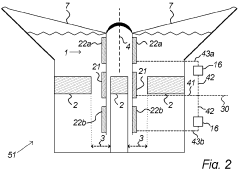
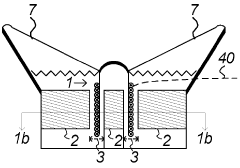
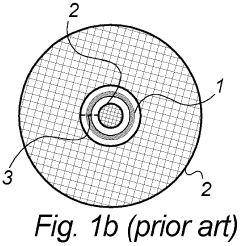
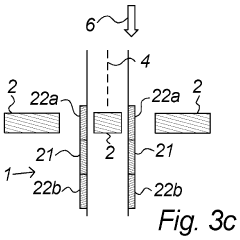
- A voice coil driving system with segmented voice coil sections, where a centre voice coil section and auxiliary voice coil sections are driven by centre and auxiliary driving signals, respectively, with rectifying units attenuating or blocking currents in specific directions to minimize power consumption and heating by only powering sections within the air gap.
Apparatus and method for half duplex wireless repeaters
PatentWO2020096367A1
Innovation
- A half-duplex wireless repeater that converts analog signals to digital, selectively filters and upscales only the used channel frequencies, improving signal-to-noise ratio and dynamic range through digital filtering and signal detection.


Efficiency and Power Quality Considerations
Efficiency and power quality are critical considerations when implementing half wave rectifiers in telecommunications systems. These factors directly impact the overall performance, reliability, and cost-effectiveness of the equipment.
Half wave rectifiers, while simple in design, inherently have lower efficiency compared to full wave rectifiers. This is due to their utilization of only one half of the AC input cycle. In telecommunications applications, where power consumption and heat generation are significant concerns, this reduced efficiency can lead to increased operational costs and potential reliability issues.
The efficiency of half wave rectifiers typically ranges from 40% to 50%, which is considerably lower than the 70% to 80% efficiency achieved by full wave rectifiers. This efficiency gap becomes particularly pronounced in high-power telecommunications equipment, where even small improvements in efficiency can translate to substantial energy savings over time.
Power quality is another crucial aspect when employing half wave rectifiers in telecommunications. The pulsating DC output produced by these rectifiers contains a significant amount of ripple, which can introduce noise and interference into sensitive communication circuits. This ripple can manifest as audible noise in audio systems or as distortion in data transmission, potentially compromising the integrity of the telecommunication signals.
To address these power quality issues, additional filtering components are often required. Capacitors and inductors are commonly used to smooth out the rectified waveform and reduce ripple. However, these additional components increase the complexity, cost, and size of the power supply circuit, which may be undesirable in compact telecommunications devices.
The harmonic content of the input current waveform is another power quality concern associated with half wave rectifiers. The non-linear nature of the rectification process generates harmonic currents, which can cause distortion in the power distribution system and potentially interfere with other equipment connected to the same power source. In telecommunications facilities with numerous rectifiers, the cumulative effect of these harmonics can be significant, potentially leading to power factor degradation and increased stress on the electrical infrastructure.
To mitigate these efficiency and power quality challenges, telecommunications engineers often implement various techniques. Power factor correction circuits can be employed to improve the overall efficiency and reduce harmonic distortion. Additionally, advanced control strategies, such as pulse-width modulation (PWM) techniques, can be utilized to enhance the rectifier's performance and minimize power quality issues.
In conclusion, while half wave rectifiers offer simplicity and cost advantages in certain telecommunications applications, their use necessitates careful consideration of efficiency and power quality implications. Balancing these factors with the specific requirements of the telecommunication system is essential to ensure optimal performance, reliability, and compliance with relevant standards and regulations.
Half wave rectifiers, while simple in design, inherently have lower efficiency compared to full wave rectifiers. This is due to their utilization of only one half of the AC input cycle. In telecommunications applications, where power consumption and heat generation are significant concerns, this reduced efficiency can lead to increased operational costs and potential reliability issues.
The efficiency of half wave rectifiers typically ranges from 40% to 50%, which is considerably lower than the 70% to 80% efficiency achieved by full wave rectifiers. This efficiency gap becomes particularly pronounced in high-power telecommunications equipment, where even small improvements in efficiency can translate to substantial energy savings over time.
Power quality is another crucial aspect when employing half wave rectifiers in telecommunications. The pulsating DC output produced by these rectifiers contains a significant amount of ripple, which can introduce noise and interference into sensitive communication circuits. This ripple can manifest as audible noise in audio systems or as distortion in data transmission, potentially compromising the integrity of the telecommunication signals.
To address these power quality issues, additional filtering components are often required. Capacitors and inductors are commonly used to smooth out the rectified waveform and reduce ripple. However, these additional components increase the complexity, cost, and size of the power supply circuit, which may be undesirable in compact telecommunications devices.
The harmonic content of the input current waveform is another power quality concern associated with half wave rectifiers. The non-linear nature of the rectification process generates harmonic currents, which can cause distortion in the power distribution system and potentially interfere with other equipment connected to the same power source. In telecommunications facilities with numerous rectifiers, the cumulative effect of these harmonics can be significant, potentially leading to power factor degradation and increased stress on the electrical infrastructure.
To mitigate these efficiency and power quality challenges, telecommunications engineers often implement various techniques. Power factor correction circuits can be employed to improve the overall efficiency and reduce harmonic distortion. Additionally, advanced control strategies, such as pulse-width modulation (PWM) techniques, can be utilized to enhance the rectifier's performance and minimize power quality issues.
In conclusion, while half wave rectifiers offer simplicity and cost advantages in certain telecommunications applications, their use necessitates careful consideration of efficiency and power quality implications. Balancing these factors with the specific requirements of the telecommunication system is essential to ensure optimal performance, reliability, and compliance with relevant standards and regulations.
Regulatory Standards for Telecom Power Systems
Regulatory standards for telecom power systems play a crucial role in ensuring the reliability, safety, and efficiency of telecommunications infrastructure. These standards are typically established by national and international regulatory bodies to govern the design, installation, and operation of power systems used in telecommunications facilities.
One of the primary focuses of these regulations is the reliability of power supply. Telecommunications networks are critical infrastructure that require uninterrupted power to maintain continuous service. Regulatory standards often mandate the use of backup power systems, such as batteries and generators, to ensure continuity of service during main power outages. These standards may specify the minimum duration for which backup systems must be able to sustain operations, often ranging from several hours to days depending on the criticality of the facility.
Safety is another key aspect addressed by regulatory standards. These regulations typically cover electrical safety requirements, including proper grounding, insulation, and protection against electrical hazards. They may also specify safety measures for handling and maintaining power equipment, as well as requirements for personnel training and certification.
Energy efficiency is increasingly becoming a focus of regulatory standards for telecom power systems. With the growing concern over environmental impact and energy costs, regulations are being implemented to promote the use of energy-efficient equipment and practices. This may include standards for power conversion efficiency, power factor correction, and the integration of renewable energy sources.
Electromagnetic compatibility (EMC) is another important consideration in telecom power system regulations. Standards often specify limits on electromagnetic emissions from power equipment to prevent interference with sensitive telecommunications equipment and other electronic devices in the vicinity.
Regulatory standards also address the quality of power supplied to telecommunications equipment. This includes specifications for voltage stability, frequency regulation, and harmonic distortion. These requirements are crucial for ensuring the proper functioning and longevity of sensitive telecommunications equipment.
In the context of half-wave rectifiers in telecommunications, regulatory standards may specify requirements for ripple voltage, efficiency, and power factor. While half-wave rectifiers are simpler and less expensive than full-wave rectifiers, they may face challenges in meeting stringent regulatory requirements due to their inherent limitations in power quality and efficiency.
Compliance with these regulatory standards is typically mandatory for telecom operators and equipment manufacturers. Regulatory bodies often conduct inspections and audits to ensure adherence to these standards, with non-compliance potentially resulting in penalties or operational restrictions.
One of the primary focuses of these regulations is the reliability of power supply. Telecommunications networks are critical infrastructure that require uninterrupted power to maintain continuous service. Regulatory standards often mandate the use of backup power systems, such as batteries and generators, to ensure continuity of service during main power outages. These standards may specify the minimum duration for which backup systems must be able to sustain operations, often ranging from several hours to days depending on the criticality of the facility.
Safety is another key aspect addressed by regulatory standards. These regulations typically cover electrical safety requirements, including proper grounding, insulation, and protection against electrical hazards. They may also specify safety measures for handling and maintaining power equipment, as well as requirements for personnel training and certification.
Energy efficiency is increasingly becoming a focus of regulatory standards for telecom power systems. With the growing concern over environmental impact and energy costs, regulations are being implemented to promote the use of energy-efficient equipment and practices. This may include standards for power conversion efficiency, power factor correction, and the integration of renewable energy sources.
Electromagnetic compatibility (EMC) is another important consideration in telecom power system regulations. Standards often specify limits on electromagnetic emissions from power equipment to prevent interference with sensitive telecommunications equipment and other electronic devices in the vicinity.
Regulatory standards also address the quality of power supplied to telecommunications equipment. This includes specifications for voltage stability, frequency regulation, and harmonic distortion. These requirements are crucial for ensuring the proper functioning and longevity of sensitive telecommunications equipment.
In the context of half-wave rectifiers in telecommunications, regulatory standards may specify requirements for ripple voltage, efficiency, and power factor. While half-wave rectifiers are simpler and less expensive than full-wave rectifiers, they may face challenges in meeting stringent regulatory requirements due to their inherent limitations in power quality and efficiency.
Compliance with these regulatory standards is typically mandatory for telecom operators and equipment manufacturers. Regulatory bodies often conduct inspections and audits to ensure adherence to these standards, with non-compliance potentially resulting in penalties or operational restrictions.
Unlock deeper insights with PatSnap Eureka Quick Research — get a full tech report to explore trends and direct your research. Try now!
Generate Your Research Report Instantly with AI Agent
Supercharge your innovation with PatSnap Eureka AI Agent Platform!