How Transparent Conductive Oxides Support Smart Grid Solutions
OCT 27, 202510 MIN READ
Generate Your Research Report Instantly with AI Agent
Patsnap Eureka helps you evaluate technical feasibility & market potential.
TCO Technology Background and Smart Grid Integration Goals
Transparent Conductive Oxides (TCOs) represent a class of materials that combine electrical conductivity with optical transparency, properties that were once considered mutually exclusive. The evolution of TCO technology dates back to the early 20th century, with significant advancements occurring in the 1970s through the development of indium tin oxide (ITO). Over the past decades, TCOs have evolved from simple transparent electrodes to sophisticated materials engineered at the nanoscale, enabling applications across multiple industries including electronics, photovoltaics, and energy systems.
The technological trajectory of TCOs has been characterized by continuous improvements in conductivity-transparency trade-offs, with recent research focusing on alternative materials to address the scarcity and cost issues associated with indium-based compounds. Materials such as aluminum-doped zinc oxide (AZO), fluorine-doped tin oxide (FTO), and more recently, graphene-based transparent conductors represent significant milestones in this evolution.
In the context of smart grid technology, TCOs are emerging as critical components that bridge the gap between energy generation, distribution, and consumption monitoring systems. The integration of TCOs into smart grid infrastructure supports the fundamental transformation from traditional power grids to intelligent, responsive energy networks capable of bidirectional communication and adaptive load management.
The primary technical goals for TCO integration in smart grid solutions encompass several dimensions. First, TCOs enable the development of transparent photovoltaic panels that can be seamlessly integrated into building facades and windows, transforming urban infrastructure into distributed energy generation points within the smart grid ecosystem. Second, TCO-based sensors and monitoring devices provide real-time data on energy consumption patterns, enabling more efficient load balancing and demand response mechanisms.
Furthermore, TCO technology aims to enhance the resilience and adaptability of smart grid systems through improved energy storage solutions and grid-connected devices. The development of TCO-based electrochromic windows and smart glass technologies represents a significant advancement in demand-side management, allowing for dynamic control of solar heat gain and consequent reduction in HVAC energy requirements.
Looking forward, the technological roadmap for TCOs in smart grid applications is focused on achieving greater durability under varying environmental conditions, improved conductivity-transparency ratios, and cost-effective manufacturing processes that can support large-scale deployment. The ultimate goal is to create a seamlessly integrated network of transparent conductive components that enhance both the functionality and aesthetics of smart grid infrastructure, driving the transition toward more sustainable and efficient energy systems.
The technological trajectory of TCOs has been characterized by continuous improvements in conductivity-transparency trade-offs, with recent research focusing on alternative materials to address the scarcity and cost issues associated with indium-based compounds. Materials such as aluminum-doped zinc oxide (AZO), fluorine-doped tin oxide (FTO), and more recently, graphene-based transparent conductors represent significant milestones in this evolution.
In the context of smart grid technology, TCOs are emerging as critical components that bridge the gap between energy generation, distribution, and consumption monitoring systems. The integration of TCOs into smart grid infrastructure supports the fundamental transformation from traditional power grids to intelligent, responsive energy networks capable of bidirectional communication and adaptive load management.
The primary technical goals for TCO integration in smart grid solutions encompass several dimensions. First, TCOs enable the development of transparent photovoltaic panels that can be seamlessly integrated into building facades and windows, transforming urban infrastructure into distributed energy generation points within the smart grid ecosystem. Second, TCO-based sensors and monitoring devices provide real-time data on energy consumption patterns, enabling more efficient load balancing and demand response mechanisms.
Furthermore, TCO technology aims to enhance the resilience and adaptability of smart grid systems through improved energy storage solutions and grid-connected devices. The development of TCO-based electrochromic windows and smart glass technologies represents a significant advancement in demand-side management, allowing for dynamic control of solar heat gain and consequent reduction in HVAC energy requirements.
Looking forward, the technological roadmap for TCOs in smart grid applications is focused on achieving greater durability under varying environmental conditions, improved conductivity-transparency ratios, and cost-effective manufacturing processes that can support large-scale deployment. The ultimate goal is to create a seamlessly integrated network of transparent conductive components that enhance both the functionality and aesthetics of smart grid infrastructure, driving the transition toward more sustainable and efficient energy systems.
Market Demand Analysis for TCO in Smart Grid Applications
The global market for Transparent Conductive Oxides (TCOs) in smart grid applications is experiencing robust growth, driven by the increasing adoption of renewable energy sources and the need for more efficient energy management systems. Current market analysis indicates that the demand for TCOs in smart grid solutions is primarily fueled by their unique properties that enable transparent electronics, photovoltaics, and advanced sensing technologies.
Smart grid infrastructure development represents a significant market opportunity for TCO applications. As utilities worldwide invest in grid modernization, the demand for advanced materials that can support both functionality and aesthetics in smart meters, displays, and monitoring systems continues to rise. The integration of building-integrated photovoltaics (BIPV) and smart windows in energy-efficient buildings further expands the market potential for TCOs.
Market research reveals that the energy sector's transition toward decentralized generation and distribution systems is creating new application areas for TCO-based technologies. These include transparent solar panels for urban environments, smart sensors for grid monitoring, and interactive display interfaces for consumer energy management systems. The compound annual growth rate (CAGR) for TCO materials in smart grid applications exceeds the overall conductive materials market, highlighting the specialized value these materials bring to next-generation energy systems.
Regional market analysis shows varying adoption rates, with North America and Europe leading in smart grid investments incorporating advanced materials like TCOs. Asia-Pacific markets, particularly China, Japan, and South Korea, are showing accelerated growth rates as these countries aggressively expand their renewable energy capacity and smart city initiatives.
Consumer demand trends indicate increasing preference for aesthetically integrated energy solutions, where the transparency of TCOs provides a competitive advantage over traditional conductive materials. This is particularly evident in residential and commercial building sectors, where visible infrastructure is increasingly designed to blend with architectural elements.
Industry forecasts suggest that as smart grid deployments accelerate globally, the market for specialized TCO formulations optimized for energy applications will expand significantly. The demand is particularly strong for TCOs that can withstand outdoor environmental conditions while maintaining optical and electrical performance over extended periods.
Supply chain analysis reveals potential constraints in raw material availability for certain TCO compositions, particularly those using rare earth elements or indium. This has stimulated research into alternative TCO formulations using more abundant materials, which may reshape market dynamics in the coming years as sustainability becomes a more prominent factor in material selection for infrastructure projects.
Smart grid infrastructure development represents a significant market opportunity for TCO applications. As utilities worldwide invest in grid modernization, the demand for advanced materials that can support both functionality and aesthetics in smart meters, displays, and monitoring systems continues to rise. The integration of building-integrated photovoltaics (BIPV) and smart windows in energy-efficient buildings further expands the market potential for TCOs.
Market research reveals that the energy sector's transition toward decentralized generation and distribution systems is creating new application areas for TCO-based technologies. These include transparent solar panels for urban environments, smart sensors for grid monitoring, and interactive display interfaces for consumer energy management systems. The compound annual growth rate (CAGR) for TCO materials in smart grid applications exceeds the overall conductive materials market, highlighting the specialized value these materials bring to next-generation energy systems.
Regional market analysis shows varying adoption rates, with North America and Europe leading in smart grid investments incorporating advanced materials like TCOs. Asia-Pacific markets, particularly China, Japan, and South Korea, are showing accelerated growth rates as these countries aggressively expand their renewable energy capacity and smart city initiatives.
Consumer demand trends indicate increasing preference for aesthetically integrated energy solutions, where the transparency of TCOs provides a competitive advantage over traditional conductive materials. This is particularly evident in residential and commercial building sectors, where visible infrastructure is increasingly designed to blend with architectural elements.
Industry forecasts suggest that as smart grid deployments accelerate globally, the market for specialized TCO formulations optimized for energy applications will expand significantly. The demand is particularly strong for TCOs that can withstand outdoor environmental conditions while maintaining optical and electrical performance over extended periods.
Supply chain analysis reveals potential constraints in raw material availability for certain TCO compositions, particularly those using rare earth elements or indium. This has stimulated research into alternative TCO formulations using more abundant materials, which may reshape market dynamics in the coming years as sustainability becomes a more prominent factor in material selection for infrastructure projects.
Current State and Challenges of TCO Implementation in Smart Grids
The global implementation of Transparent Conductive Oxides (TCOs) in smart grid applications currently exhibits varying degrees of maturity across different regions. In North America and Europe, TCO-based smart grid components have progressed beyond pilot projects to limited commercial deployments, particularly in advanced metering infrastructure and grid monitoring systems. These regions benefit from established research institutions and industry partnerships that accelerate technology transfer from laboratory to field applications.
In contrast, the Asia-Pacific region demonstrates a more fragmented adoption landscape. While countries like Japan, South Korea, and China lead with significant investments in TCO manufacturing capabilities and smart grid infrastructure, other developing economies in the region face substantial implementation barriers due to cost constraints and limited technical expertise.
The primary technical challenges hindering widespread TCO implementation in smart grids revolve around durability and performance consistency. Current TCO materials, particularly indium tin oxide (ITO), exhibit degradation when exposed to environmental stressors common in grid installations, including temperature fluctuations, humidity, and ultraviolet radiation. This degradation manifests as reduced conductivity and optical transparency over time, compromising the long-term reliability of smart grid components.
Cost factors represent another significant barrier to adoption. The manufacturing processes for high-quality TCO films remain expensive, particularly those requiring vacuum deposition techniques. The reliance on scarce materials like indium further exacerbates cost concerns, with price volatility creating uncertainty for large-scale deployment planning. These economic constraints have limited TCO applications primarily to high-value grid components where performance benefits clearly justify the premium costs.
Standardization issues also present substantial challenges. The lack of unified performance metrics and testing protocols for TCO materials in smart grid applications has created market fragmentation. This absence of standards complicates component interoperability and hinders the development of a cohesive supply chain ecosystem. Industry stakeholders have initiated efforts to establish common standards, but consensus remains elusive due to competing proprietary interests.
Integration complexity with existing grid infrastructure represents another significant hurdle. Retrofitting legacy systems with TCO-based components often requires substantial modifications to physical interfaces and control systems. This complexity increases implementation costs and extends deployment timelines, creating resistance among utilities with established infrastructure investment cycles.
Despite these challenges, recent technological advances show promise in addressing key limitations. Emerging alternatives to traditional ITO, including aluminum-doped zinc oxide (AZO) and fluorine-doped tin oxide (FTO), demonstrate improved durability and reduced material costs. Additionally, novel manufacturing approaches like solution processing and roll-to-roll fabrication are gradually reducing production expenses, potentially enabling more widespread adoption across diverse smart grid applications.
In contrast, the Asia-Pacific region demonstrates a more fragmented adoption landscape. While countries like Japan, South Korea, and China lead with significant investments in TCO manufacturing capabilities and smart grid infrastructure, other developing economies in the region face substantial implementation barriers due to cost constraints and limited technical expertise.
The primary technical challenges hindering widespread TCO implementation in smart grids revolve around durability and performance consistency. Current TCO materials, particularly indium tin oxide (ITO), exhibit degradation when exposed to environmental stressors common in grid installations, including temperature fluctuations, humidity, and ultraviolet radiation. This degradation manifests as reduced conductivity and optical transparency over time, compromising the long-term reliability of smart grid components.
Cost factors represent another significant barrier to adoption. The manufacturing processes for high-quality TCO films remain expensive, particularly those requiring vacuum deposition techniques. The reliance on scarce materials like indium further exacerbates cost concerns, with price volatility creating uncertainty for large-scale deployment planning. These economic constraints have limited TCO applications primarily to high-value grid components where performance benefits clearly justify the premium costs.
Standardization issues also present substantial challenges. The lack of unified performance metrics and testing protocols for TCO materials in smart grid applications has created market fragmentation. This absence of standards complicates component interoperability and hinders the development of a cohesive supply chain ecosystem. Industry stakeholders have initiated efforts to establish common standards, but consensus remains elusive due to competing proprietary interests.
Integration complexity with existing grid infrastructure represents another significant hurdle. Retrofitting legacy systems with TCO-based components often requires substantial modifications to physical interfaces and control systems. This complexity increases implementation costs and extends deployment timelines, creating resistance among utilities with established infrastructure investment cycles.
Despite these challenges, recent technological advances show promise in addressing key limitations. Emerging alternatives to traditional ITO, including aluminum-doped zinc oxide (AZO) and fluorine-doped tin oxide (FTO), demonstrate improved durability and reduced material costs. Additionally, novel manufacturing approaches like solution processing and roll-to-roll fabrication are gradually reducing production expenses, potentially enabling more widespread adoption across diverse smart grid applications.
Current TCO Solutions for Smart Grid Infrastructure
01 Composition and structure of transparent conductive oxides
Transparent conductive oxides (TCOs) are materials that combine electrical conductivity with optical transparency. These materials typically consist of metal oxides doped with specific elements to enhance their electrical properties while maintaining transparency. Common TCO materials include indium tin oxide (ITO), zinc oxide (ZnO), and tin oxide (SnO2). The composition and crystal structure of these materials significantly influence their performance characteristics, including conductivity, transparency, and stability.- Indium-based transparent conductive oxides: Indium-based materials, particularly indium tin oxide (ITO), are widely used as transparent conductive oxides in various electronic applications. These materials offer excellent electrical conductivity while maintaining high optical transparency in the visible spectrum. The formulation and deposition methods of indium-based TCOs significantly affect their performance characteristics, including sheet resistance, transparency, and durability. Various techniques such as sputtering and vapor deposition are employed to create thin films with optimized properties for applications in displays, touch screens, and photovoltaic devices.
- Alternative TCO materials to replace indium: Due to the scarcity and high cost of indium, alternative transparent conductive oxide materials are being developed. These alternatives include zinc oxide-based compounds (often doped with aluminum, gallium or other elements), tin oxide-based materials, and various metal oxide combinations. These materials aim to provide comparable electrical and optical properties to ITO while using more abundant and cost-effective elements. Research focuses on improving the conductivity, transparency, and stability of these alternative materials through various doping strategies and processing techniques.
- Deposition and manufacturing techniques for TCOs: Various deposition techniques are employed to create high-quality transparent conductive oxide films with controlled thickness, uniformity, and microstructure. These methods include physical vapor deposition (PVD), chemical vapor deposition (CVD), sputtering, sol-gel processes, and atomic layer deposition (ALD). Each technique offers different advantages in terms of film quality, process temperature, scalability, and cost-effectiveness. Advanced manufacturing approaches focus on achieving higher deposition rates while maintaining film quality and reducing production costs for large-area applications.
- TCO applications in flexible and wearable electronics: Transparent conductive oxides are being adapted for use in flexible and wearable electronic devices. This requires developing TCO materials and deposition methods that can withstand mechanical stress and bending while maintaining electrical conductivity and optical transparency. Approaches include creating composite structures, using nanostructured materials, and developing low-temperature deposition processes compatible with flexible substrates. These advances enable applications in flexible displays, touch sensors, and wearable devices that require both transparency and electrical functionality.
- TCO integration in photovoltaic and optoelectronic devices: Transparent conductive oxides play a crucial role in photovoltaic cells and optoelectronic devices, serving as transparent electrodes that allow light to pass through while collecting or distributing electrical current. The performance of these devices depends significantly on the TCO properties, including work function, band alignment, surface roughness, and interface characteristics. Research focuses on optimizing TCO materials for specific device architectures, improving charge collection efficiency, and enhancing device stability. Advanced TCO designs incorporate nanostructuring and multilayer approaches to achieve better light management and electrical performance.
02 Fabrication methods for transparent conductive oxide films
Various deposition techniques are employed to fabricate transparent conductive oxide films with controlled properties. These methods include sputtering, chemical vapor deposition, sol-gel processing, and atomic layer deposition. The fabrication parameters such as temperature, pressure, and gas composition significantly affect the film quality, crystallinity, and electrical properties. Post-deposition treatments like annealing can further enhance the performance of TCO films by improving crystallinity and reducing defects.Expand Specific Solutions03 Applications of transparent conductive oxides in electronic devices
Transparent conductive oxides are widely used in various electronic and optoelectronic devices. They serve as transparent electrodes in displays, touchscreens, solar cells, and light-emitting diodes. The combination of optical transparency and electrical conductivity makes TCOs ideal for applications where light needs to pass through while maintaining electrical functionality. The performance requirements for TCOs vary depending on the specific application, with factors such as sheet resistance, transparency, and stability being critical considerations.Expand Specific Solutions04 Doping strategies to enhance properties of transparent conductive oxides
Doping is a crucial strategy to enhance the electrical and optical properties of transparent conductive oxides. Various dopants, including metals and non-metals, are incorporated into the oxide matrix to increase carrier concentration and mobility. The type and concentration of dopants significantly influence the performance of TCOs. Co-doping with multiple elements can lead to synergistic effects, resulting in improved conductivity while maintaining high transparency. Controlled doping is essential for tailoring TCOs for specific applications.Expand Specific Solutions05 Alternative materials and sustainable approaches for transparent conductive oxides
Research is focused on developing alternative TCO materials to address limitations of conventional options, particularly the scarcity and high cost of indium in ITO. Emerging alternatives include aluminum-doped zinc oxide, fluorine-doped tin oxide, and various ternary compounds. Additionally, sustainable approaches involve reducing material usage through nanostructuring, developing solution-processable TCOs, and exploring carbon-based alternatives like graphene and carbon nanotubes. These efforts aim to create more environmentally friendly and cost-effective transparent conductive materials for next-generation electronic devices.Expand Specific Solutions
Key Industry Players in TCO and Smart Grid Technologies
The transparent conductive oxides (TCO) market for smart grid solutions is in a growth phase, characterized by increasing adoption across energy management systems. The market is expanding rapidly, driven by the integration of TCO materials in smart windows, displays, and photovoltaic applications that enhance grid efficiency. Technologically, the field shows varying maturity levels with established players like Samsung Electronics and OSRAM leading commercial applications, while research institutions such as Dartmouth College and Gwangju Institute of Science & Technology drive innovation. Companies including Applied Materials, TDK Corp, and Micron Technology are advancing manufacturing processes, while SCHOTT AG and Pilkington Group focus on specialized glass applications. This competitive landscape reflects a market transitioning from research-driven to commercially viable solutions for energy-efficient grid management.
Samsung Electronics Co., Ltd.
Technical Solution: Samsung Electronics has developed a comprehensive TCO technology suite specifically for smart grid integration called GridVision™. Their approach combines gallium-doped zinc oxide (GZO) and hydrogen-doped indium oxide (HIO) materials to create transparent conductive films with exceptional durability in outdoor environments. Samsung's TCO technology enables transparent touch interfaces for grid management systems that can withstand extreme weather conditions while maintaining operational functionality. The company has integrated these materials into smart substations and distribution automation equipment, where the transparent conductive properties allow for both human interface and embedded photovoltaic energy harvesting. Samsung's manufacturing process achieves sheet resistances of 5-8 ohms/square with transparency exceeding 92% in the visible spectrum, making their TCO solutions ideal for smart grid display systems and monitoring equipment that require both visual clarity and electrical functionality.
Strengths: Vertical integration capabilities from material development to system implementation; advanced manufacturing processes enabling consistent quality at scale; extensive field testing in operational smart grid environments. Weaknesses: Proprietary systems may limit interoperability with other grid components; higher initial investment compared to conventional materials; requires specialized maintenance protocols.
Sumitomo Metal Mining Co. Ltd.
Technical Solution: Sumitomo Metal Mining has developed an innovative TCO technology platform called PowerView™ specifically engineered for smart grid applications. Their approach focuses on antimony-doped tin oxide (ATO) and niobium-doped titanium oxide (NTO) materials that offer exceptional durability in harsh outdoor environments typical of grid infrastructure. Sumitomo's TCO films feature self-cleaning properties through photocatalytic activity, reducing maintenance requirements for outdoor smart grid sensors and displays. Their materials achieve sheet resistances of 15-20 ohms/square while maintaining transparency above 85%, with exceptional stability under UV exposure and temperature fluctuations. Sumitomo has implemented these TCO solutions in grid-connected energy storage systems, where transparent conductive layers serve as both functional electrodes and protective barriers. Their manufacturing process utilizes earth-abundant materials, reducing supply chain vulnerabilities while maintaining performance specifications necessary for smart grid applications including touch interfaces for field maintenance systems and transparent heaters for cold-weather operation.
Strengths: Superior environmental stability in outdoor conditions; reduced reliance on critical raw materials; established production capacity ensuring consistent supply. Weaknesses: Slightly lower conductivity compared to premium ITO solutions; higher initial processing temperatures limiting substrate options; less established in Western markets despite strong Asian presence.
Core Patents and Technical Literature on TCO Smart Grid Applications
Methods for depositing transparent conductive oxides
PatentWO2021081585A1
Innovation
- The development of a method to form thin, flexible ternary metal oxide coatings using a liquid indium-tin alloy that oxidizes in ambient conditions, creating a monolayer or bilayer of indium tin oxide with a thickness of less than 50 nm, offering high conductivity and transparency while reducing the need for vacuum processing and indium usage.
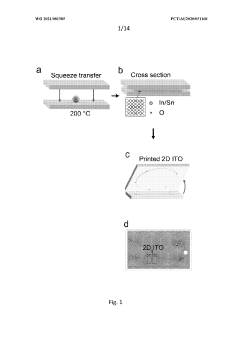
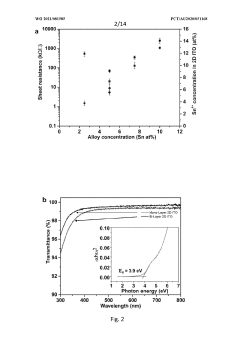
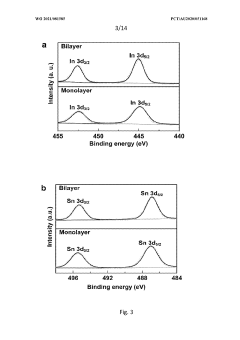
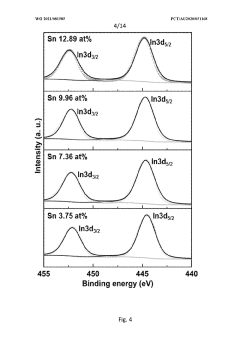
Enhanced transparent conductive oxides
PatentInactiveUS20100203454A1
Innovation
- Incorporating discrete metallic particles and nanostructures into TCO layers to manipulate optical, thermal, and electrical properties through light manipulation, photocurrent reactions, and localized surface plasmon resonance, allowing for enhanced conductivity and optical management, including the use of sub-wavelength particles to control absorption and scattering, and larger particles for light trapping or reflection.
Energy Efficiency and Sustainability Impact Assessment
The implementation of Transparent Conductive Oxides (TCOs) in smart grid infrastructure delivers substantial energy efficiency improvements and sustainability benefits across multiple dimensions of the power ecosystem. When properly integrated into smart grid components such as sensors, displays, and photovoltaic elements, TCO materials significantly reduce energy losses during transmission and distribution processes by enabling more precise monitoring and control of power flows.
TCO-based smart windows and building-integrated photovoltaics demonstrate particularly promising sustainability metrics, with lifecycle assessments indicating potential energy savings of 25-40% in commercial buildings where these technologies are deployed. The reduced need for artificial lighting and climate control directly translates to lower carbon emissions, with some implementations showing reductions of up to 30% in building-related carbon footprints.
From a manufacturing perspective, modern TCO production methods have evolved to minimize environmental impact through reduced processing temperatures and decreased reliance on rare earth elements. Indium-free TCO alternatives, including fluorine-doped tin oxide (FTO) and aluminum-doped zinc oxide (AZO), offer comparable performance with significantly lower environmental extraction costs and improved end-of-life recyclability profiles.
The integration of TCO-enhanced smart grid technologies creates positive feedback loops within energy systems. Enhanced monitoring capabilities lead to optimized load balancing, which reduces peak demand requirements and subsequently minimizes the need for carbon-intensive peaker plants. Quantitative analyses from pilot implementations indicate that TCO-enabled grid monitoring can improve overall system efficiency by 8-12% through these mechanisms.
Water conservation represents another critical sustainability benefit, as TCO manufacturing processes typically require 40-60% less water than traditional conductive material production. This advantage becomes increasingly significant in regions facing water scarcity challenges, where industrial water usage competes with agricultural and residential needs.
Long-term durability testing demonstrates that modern TCO implementations maintain performance characteristics for 15-20 years in typical operating conditions, significantly extending replacement cycles and reducing embodied energy costs associated with system maintenance. This longevity factor substantially improves the overall sustainability profile when conducting comprehensive lifecycle analyses of smart grid infrastructure.
TCO-based smart windows and building-integrated photovoltaics demonstrate particularly promising sustainability metrics, with lifecycle assessments indicating potential energy savings of 25-40% in commercial buildings where these technologies are deployed. The reduced need for artificial lighting and climate control directly translates to lower carbon emissions, with some implementations showing reductions of up to 30% in building-related carbon footprints.
From a manufacturing perspective, modern TCO production methods have evolved to minimize environmental impact through reduced processing temperatures and decreased reliance on rare earth elements. Indium-free TCO alternatives, including fluorine-doped tin oxide (FTO) and aluminum-doped zinc oxide (AZO), offer comparable performance with significantly lower environmental extraction costs and improved end-of-life recyclability profiles.
The integration of TCO-enhanced smart grid technologies creates positive feedback loops within energy systems. Enhanced monitoring capabilities lead to optimized load balancing, which reduces peak demand requirements and subsequently minimizes the need for carbon-intensive peaker plants. Quantitative analyses from pilot implementations indicate that TCO-enabled grid monitoring can improve overall system efficiency by 8-12% through these mechanisms.
Water conservation represents another critical sustainability benefit, as TCO manufacturing processes typically require 40-60% less water than traditional conductive material production. This advantage becomes increasingly significant in regions facing water scarcity challenges, where industrial water usage competes with agricultural and residential needs.
Long-term durability testing demonstrates that modern TCO implementations maintain performance characteristics for 15-20 years in typical operating conditions, significantly extending replacement cycles and reducing embodied energy costs associated with system maintenance. This longevity factor substantially improves the overall sustainability profile when conducting comprehensive lifecycle analyses of smart grid infrastructure.
Regulatory Framework and Standards for TCO in Energy Infrastructure
The regulatory landscape governing Transparent Conductive Oxides (TCOs) in smart grid applications continues to evolve as these materials gain prominence in energy infrastructure. International standards organizations, including the International Electrotechnical Commission (IEC) and IEEE, have developed specific guidelines addressing the performance, durability, and safety requirements for TCO materials used in smart grid components. These standards typically mandate minimum transparency levels, conductivity thresholds, and environmental resilience parameters that TCO implementations must satisfy.
In the United States, the Department of Energy (DOE) has established the Grid Modernization Initiative, which includes provisions for advanced materials like TCOs in grid infrastructure. The Federal Energy Regulatory Commission (FERC) Order 2222 indirectly impacts TCO applications by creating market opportunities for distributed energy resources where these materials often play a critical role. Additionally, the National Electrical Manufacturers Association (NEMA) has published standards specifically addressing transparent conductive materials in electrical applications.
The European Union has implemented the Clean Energy Package, which includes directives relevant to smart grid technologies incorporating TCOs. The European Committee for Electrotechnical Standardization (CENELEC) has developed EN standards that specify requirements for transparent conductive materials used in energy monitoring and management systems. These standards emphasize sustainability metrics, requiring lifecycle assessments for TCO materials.
Certification processes for TCO-based smart grid components typically involve rigorous testing protocols established by organizations such as UL (Underwriters Laboratories) and TÜV. These certifications evaluate electrical safety, optical performance, and long-term reliability under various environmental conditions. The International Organization for Standardization (ISO) has also contributed standards related to quality management systems for manufacturers of TCO materials.
Emerging regulatory trends indicate a growing focus on the environmental impact of TCO production and disposal. Several jurisdictions are implementing extended producer responsibility (EPR) regulations that hold manufacturers accountable for the entire lifecycle of TCO-containing products. The Restriction of Hazardous Substances (RoHS) directive and similar regulations worldwide increasingly scrutinize the chemical composition of TCOs, particularly those containing indium, tin, and other potentially scarce or toxic elements.
Compliance with these regulatory frameworks presents both challenges and opportunities for TCO manufacturers and implementers. While meeting these standards requires significant investment in testing and certification, companies that achieve compliance gain competitive advantages in the rapidly expanding smart grid market. The harmonization of international standards remains an ongoing challenge, with efforts underway to create globally recognized benchmarks for TCO performance in energy applications.
In the United States, the Department of Energy (DOE) has established the Grid Modernization Initiative, which includes provisions for advanced materials like TCOs in grid infrastructure. The Federal Energy Regulatory Commission (FERC) Order 2222 indirectly impacts TCO applications by creating market opportunities for distributed energy resources where these materials often play a critical role. Additionally, the National Electrical Manufacturers Association (NEMA) has published standards specifically addressing transparent conductive materials in electrical applications.
The European Union has implemented the Clean Energy Package, which includes directives relevant to smart grid technologies incorporating TCOs. The European Committee for Electrotechnical Standardization (CENELEC) has developed EN standards that specify requirements for transparent conductive materials used in energy monitoring and management systems. These standards emphasize sustainability metrics, requiring lifecycle assessments for TCO materials.
Certification processes for TCO-based smart grid components typically involve rigorous testing protocols established by organizations such as UL (Underwriters Laboratories) and TÜV. These certifications evaluate electrical safety, optical performance, and long-term reliability under various environmental conditions. The International Organization for Standardization (ISO) has also contributed standards related to quality management systems for manufacturers of TCO materials.
Emerging regulatory trends indicate a growing focus on the environmental impact of TCO production and disposal. Several jurisdictions are implementing extended producer responsibility (EPR) regulations that hold manufacturers accountable for the entire lifecycle of TCO-containing products. The Restriction of Hazardous Substances (RoHS) directive and similar regulations worldwide increasingly scrutinize the chemical composition of TCOs, particularly those containing indium, tin, and other potentially scarce or toxic elements.
Compliance with these regulatory frameworks presents both challenges and opportunities for TCO manufacturers and implementers. While meeting these standards requires significant investment in testing and certification, companies that achieve compliance gain competitive advantages in the rapidly expanding smart grid market. The harmonization of international standards remains an ongoing challenge, with efforts underway to create globally recognized benchmarks for TCO performance in energy applications.
Unlock deeper insights with Patsnap Eureka Quick Research — get a full tech report to explore trends and direct your research. Try now!
Generate Your Research Report Instantly with AI Agent
Supercharge your innovation with Patsnap Eureka AI Agent Platform!