
Key Design Considerations for Half Wave Rectifier Systems
JUL 15, 20259 MIN READ
Generate Your Research Report Instantly with AI Agent
Patsnap Eureka helps you evaluate technical feasibility & market potential.
Half Wave Rectifier Background and Objectives
Half-wave rectifiers have been a fundamental component in electronic circuits since the early days of radio and power supply design. These simple yet effective devices play a crucial role in converting alternating current (AC) to pulsating direct current (DC), forming the basis for many power supply systems and signal processing applications.
The evolution of half-wave rectifier technology can be traced back to the invention of the vacuum tube diode in the early 20th century. As semiconductor technology advanced, solid-state diodes replaced vacuum tubes, leading to more efficient and compact rectifier designs. This progression has continued with the development of high-speed switching diodes and specialized rectifier components, enabling improved performance in modern electronic systems.
The primary objective of half-wave rectifier systems is to efficiently convert AC input into a usable DC output while minimizing power loss and distortion. Key design considerations include optimizing forward voltage drop, reverse recovery time, and peak inverse voltage ratings of the rectifying element. Additionally, engineers must address issues such as ripple voltage, efficiency, and thermal management to ensure reliable operation across various load conditions.
In recent years, the focus has shifted towards enhancing the energy efficiency and power density of rectifier systems. This trend is driven by the growing demand for compact, high-performance power supplies in consumer electronics, telecommunications, and renewable energy applications. As a result, research efforts are increasingly directed towards developing advanced semiconductor materials and novel circuit topologies to improve rectifier performance.
The integration of half-wave rectifiers into more complex power conversion systems has also become a significant area of interest. Modern designs often incorporate rectifiers as part of switch-mode power supplies, voltage multipliers, and power factor correction circuits. This integration necessitates careful consideration of electromagnetic interference (EMI), harmonics, and overall system efficiency.
Looking ahead, the continued miniaturization of electronic devices and the push for higher energy efficiency are expected to drive further innovations in half-wave rectifier design. Emerging technologies such as wide-bandgap semiconductors and advanced packaging techniques promise to deliver rectifiers with lower losses, higher operating frequencies, and improved thermal characteristics.
As we explore the key design considerations for half-wave rectifier systems, it is essential to understand the interplay between component selection, circuit topology, and system-level requirements. By addressing these factors comprehensively, engineers can develop rectifier solutions that meet the evolving needs of modern electronic applications while pushing the boundaries of performance and efficiency.
The evolution of half-wave rectifier technology can be traced back to the invention of the vacuum tube diode in the early 20th century. As semiconductor technology advanced, solid-state diodes replaced vacuum tubes, leading to more efficient and compact rectifier designs. This progression has continued with the development of high-speed switching diodes and specialized rectifier components, enabling improved performance in modern electronic systems.
The primary objective of half-wave rectifier systems is to efficiently convert AC input into a usable DC output while minimizing power loss and distortion. Key design considerations include optimizing forward voltage drop, reverse recovery time, and peak inverse voltage ratings of the rectifying element. Additionally, engineers must address issues such as ripple voltage, efficiency, and thermal management to ensure reliable operation across various load conditions.
In recent years, the focus has shifted towards enhancing the energy efficiency and power density of rectifier systems. This trend is driven by the growing demand for compact, high-performance power supplies in consumer electronics, telecommunications, and renewable energy applications. As a result, research efforts are increasingly directed towards developing advanced semiconductor materials and novel circuit topologies to improve rectifier performance.
The integration of half-wave rectifiers into more complex power conversion systems has also become a significant area of interest. Modern designs often incorporate rectifiers as part of switch-mode power supplies, voltage multipliers, and power factor correction circuits. This integration necessitates careful consideration of electromagnetic interference (EMI), harmonics, and overall system efficiency.
Looking ahead, the continued miniaturization of electronic devices and the push for higher energy efficiency are expected to drive further innovations in half-wave rectifier design. Emerging technologies such as wide-bandgap semiconductors and advanced packaging techniques promise to deliver rectifiers with lower losses, higher operating frequencies, and improved thermal characteristics.
As we explore the key design considerations for half-wave rectifier systems, it is essential to understand the interplay between component selection, circuit topology, and system-level requirements. By addressing these factors comprehensively, engineers can develop rectifier solutions that meet the evolving needs of modern electronic applications while pushing the boundaries of performance and efficiency.
Market Analysis for Half Wave Rectifier Applications
The market for half wave rectifier applications has shown steady growth in recent years, driven by increasing demand in various sectors such as power supplies, signal processing, and renewable energy systems. The global market for rectifier technologies, including half wave rectifiers, is expected to expand significantly over the next decade due to the rising adoption of electronic devices and the growing emphasis on energy efficiency.
In the power supply sector, half wave rectifiers find extensive use in low-power applications, particularly in small electronic devices and battery chargers. The proliferation of smartphones, tablets, and other portable electronics has created a substantial market for compact, efficient power supply solutions. Half wave rectifiers, with their simple design and cost-effectiveness, are well-positioned to meet this demand.
The automotive industry represents another significant market for half wave rectifier applications. With the increasing electrification of vehicles and the integration of advanced electronic systems, there is a growing need for reliable power conversion solutions. Half wave rectifiers are utilized in various automotive subsystems, including lighting, sensors, and control units.
In the field of renewable energy, half wave rectifiers play a crucial role in solar power systems and small-scale wind turbines. As the global push for clean energy intensifies, the demand for efficient power conversion technologies in renewable energy applications is expected to drive further growth in the half wave rectifier market.
The telecommunications sector also contributes to the market demand for half wave rectifiers. These components are used in various communication equipment, including base stations, repeaters, and network infrastructure devices. The ongoing expansion of 5G networks and the increasing data traffic are likely to sustain the demand for rectifier technologies in this sector.
Emerging technologies such as Internet of Things (IoT) devices and wearable electronics present new opportunities for half wave rectifier applications. These devices often require compact, energy-efficient power management solutions, making half wave rectifiers an attractive option for designers and manufacturers.
Geographically, Asia-Pacific is expected to dominate the market for half wave rectifier applications, driven by the region's robust electronics manufacturing industry and rapid technological adoption. North America and Europe are also significant markets, with strong demand from industries such as automotive, aerospace, and renewable energy.
In the power supply sector, half wave rectifiers find extensive use in low-power applications, particularly in small electronic devices and battery chargers. The proliferation of smartphones, tablets, and other portable electronics has created a substantial market for compact, efficient power supply solutions. Half wave rectifiers, with their simple design and cost-effectiveness, are well-positioned to meet this demand.
The automotive industry represents another significant market for half wave rectifier applications. With the increasing electrification of vehicles and the integration of advanced electronic systems, there is a growing need for reliable power conversion solutions. Half wave rectifiers are utilized in various automotive subsystems, including lighting, sensors, and control units.
In the field of renewable energy, half wave rectifiers play a crucial role in solar power systems and small-scale wind turbines. As the global push for clean energy intensifies, the demand for efficient power conversion technologies in renewable energy applications is expected to drive further growth in the half wave rectifier market.
The telecommunications sector also contributes to the market demand for half wave rectifiers. These components are used in various communication equipment, including base stations, repeaters, and network infrastructure devices. The ongoing expansion of 5G networks and the increasing data traffic are likely to sustain the demand for rectifier technologies in this sector.
Emerging technologies such as Internet of Things (IoT) devices and wearable electronics present new opportunities for half wave rectifier applications. These devices often require compact, energy-efficient power management solutions, making half wave rectifiers an attractive option for designers and manufacturers.
Geographically, Asia-Pacific is expected to dominate the market for half wave rectifier applications, driven by the region's robust electronics manufacturing industry and rapid technological adoption. North America and Europe are also significant markets, with strong demand from industries such as automotive, aerospace, and renewable energy.
Current Challenges in Half Wave Rectifier Design
Half wave rectifier systems, while fundamental in power electronics, face several significant challenges in modern design and implementation. One of the primary issues is the inherent inefficiency of these systems. By nature, half wave rectifiers only utilize one half of the AC input cycle, resulting in a considerable waste of potential power. This inefficiency becomes particularly problematic in applications where energy conservation is crucial, such as in renewable energy systems or battery-powered devices.
Another major challenge lies in the quality of the output waveform. The pulsating DC produced by half wave rectifiers contains a significant amount of ripple, which can lead to noise and instability in sensitive electronic circuits. This ripple effect necessitates additional filtering components, increasing the complexity and cost of the overall system. The trade-off between ripple reduction and system simplicity remains a constant design consideration.
The issue of harmonic distortion also presents a significant challenge. Half wave rectifiers introduce harmonic components into the power system, which can cause electromagnetic interference (EMI) and affect the performance of other connected devices. As electronic systems become more interconnected and sensitive, managing these harmonic distortions becomes increasingly critical.
Thermal management is another area of concern in half wave rectifier design. The rectifying diode in these systems must handle the full load current during conduction, leading to significant heat generation. This heat can affect the reliability and lifespan of the diode and surrounding components, necessitating careful thermal design and potentially adding cooling requirements to the system.
Voltage regulation presents yet another challenge. The output voltage of a half wave rectifier can vary significantly with changes in load or input voltage. This variability can be problematic in applications requiring stable DC voltage, often necessitating additional voltage regulation circuitry, which further complicates the design and reduces overall efficiency.
The reverse recovery characteristics of the rectifying diode also pose design challenges. During the transition from forward to reverse bias, the diode requires a finite time to stop conducting, which can lead to switching losses and electromagnetic interference. Selecting diodes with appropriate reverse recovery characteristics while balancing other performance parameters adds complexity to the design process.
Lastly, the physical size of half wave rectifier systems can be a limitation in compact or portable applications. The need for large filtering capacitors to smooth the pulsating DC output often conflicts with the trend towards miniaturization in electronic devices. Balancing size constraints with performance requirements remains an ongoing challenge for designers working with half wave rectifier systems.
Another major challenge lies in the quality of the output waveform. The pulsating DC produced by half wave rectifiers contains a significant amount of ripple, which can lead to noise and instability in sensitive electronic circuits. This ripple effect necessitates additional filtering components, increasing the complexity and cost of the overall system. The trade-off between ripple reduction and system simplicity remains a constant design consideration.
The issue of harmonic distortion also presents a significant challenge. Half wave rectifiers introduce harmonic components into the power system, which can cause electromagnetic interference (EMI) and affect the performance of other connected devices. As electronic systems become more interconnected and sensitive, managing these harmonic distortions becomes increasingly critical.
Thermal management is another area of concern in half wave rectifier design. The rectifying diode in these systems must handle the full load current during conduction, leading to significant heat generation. This heat can affect the reliability and lifespan of the diode and surrounding components, necessitating careful thermal design and potentially adding cooling requirements to the system.
Voltage regulation presents yet another challenge. The output voltage of a half wave rectifier can vary significantly with changes in load or input voltage. This variability can be problematic in applications requiring stable DC voltage, often necessitating additional voltage regulation circuitry, which further complicates the design and reduces overall efficiency.
The reverse recovery characteristics of the rectifying diode also pose design challenges. During the transition from forward to reverse bias, the diode requires a finite time to stop conducting, which can lead to switching losses and electromagnetic interference. Selecting diodes with appropriate reverse recovery characteristics while balancing other performance parameters adds complexity to the design process.
Lastly, the physical size of half wave rectifier systems can be a limitation in compact or portable applications. The need for large filtering capacitors to smooth the pulsating DC output often conflicts with the trend towards miniaturization in electronic devices. Balancing size constraints with performance requirements remains an ongoing challenge for designers working with half wave rectifier systems.
Existing Half Wave Rectifier Design Solutions
01 Circuit design for half-wave rectifiers
Half-wave rectifier systems often involve specific circuit designs to convert AC to pulsating DC. These designs may include diodes, transformers, and capacitors arranged in particular configurations to achieve efficient rectification. The circuit layout and component selection play crucial roles in determining the rectifier's performance and efficiency.- Circuit design for half-wave rectifiers: Half-wave rectifier systems often involve specific circuit designs to convert AC to pulsating DC. These designs may include diodes, transformers, and capacitors arranged in particular configurations to achieve efficient rectification. The circuit layout and component selection are crucial for optimizing the rectifier's performance and reducing ripple in the output voltage.
- Power supply applications: Half-wave rectifiers are commonly used in power supply systems for various electronic devices. They can be found in low-power applications, battery chargers, and some specialized power supplies. The design of these systems often focuses on improving efficiency, reducing power loss, and maintaining stable output voltage under varying load conditions.
- Control and regulation techniques: Advanced control and regulation techniques are employed in half-wave rectifier systems to improve their performance. These may include feedback loops, voltage sensing circuits, and microcontroller-based systems that adjust the rectifier's operation in real-time. Such techniques help maintain consistent output voltage, compensate for input fluctuations, and protect against overload conditions.
- Efficiency improvements: Ongoing research focuses on improving the efficiency of half-wave rectifier systems. This includes the use of advanced semiconductor materials, optimized component layouts, and innovative cooling solutions. Some designs incorporate synchronous rectification or other techniques to reduce power losses and improve overall system efficiency.
- Integration with other power electronics: Half-wave rectifier systems are often integrated with other power electronic components to create more complex and versatile power management solutions. This integration may involve combining rectifiers with inverters, voltage regulators, or power factor correction circuits. Such integrated systems can offer improved performance, smaller form factors, and enhanced functionality for various applications.
02 Power supply applications
Half-wave rectifiers are commonly used in power supply systems for various electronic devices. They can be found in applications ranging from small consumer electronics to industrial equipment. These rectifiers help convert AC mains power to DC, which is required for many electronic components to function properly.Expand Specific Solutions03 Efficiency improvements in half-wave rectification
Researchers and engineers continually work on improving the efficiency of half-wave rectifier systems. This may involve using advanced materials for diodes, implementing new circuit topologies, or incorporating additional components to reduce power losses and improve overall system performance.Expand Specific Solutions04 Integration with other electronic systems
Half-wave rectifiers are often integrated into larger electronic systems or combined with other circuit elements to achieve specific functionalities. This integration may involve coupling the rectifier with voltage regulators, filters, or control circuits to meet the requirements of particular applications.Expand Specific Solutions05 Miniaturization and packaging
As electronic devices become smaller and more compact, there is a growing focus on miniaturizing half-wave rectifier systems. This involves developing new packaging techniques, using surface-mount components, and creating integrated solutions that combine multiple functions in a single package to reduce overall size and improve reliability.Expand Specific Solutions
Key Players in Rectifier Industry
The half wave rectifier system market is in a mature stage, with established technologies and widespread applications across various industries. The global market size for rectifier systems is substantial, driven by increasing demand for power electronics in consumer devices, industrial equipment, and renewable energy systems. Technologically, half wave rectifiers are well-understood, but ongoing research focuses on improving efficiency and reducing power losses. Companies like Energous Corp., Mixed-Signal Devices, Inc., and Delta Electronics, Inc. are at the forefront of innovation, developing advanced rectifier solutions for emerging applications such as wireless power transfer and high-frequency power conversion. Academic institutions like the Technical University of Denmark and King Fahd University of Petroleum & Minerals contribute to fundamental research in this field.
Delta Electronics, Inc.
Technical Solution: Delta Electronics has focused on developing compact and efficient half-wave rectifier solutions for power supply units and LED drivers. Their design approach emphasizes miniaturization and high power density, achieving power densities up to 50W/in³ in some models[10]. Delta's rectifiers incorporate synchronous rectification techniques, replacing traditional diodes with MOSFETs to reduce conduction losses. This approach has yielded efficiency improvements of up to 2% compared to conventional diode rectification[11]. The company also implements digital control schemes that allow for adaptive dead-time adjustment, further optimizing efficiency across varying load conditions[12].
Strengths: High power density, improved efficiency through synchronous rectification. Weaknesses: Increased complexity in control circuitry, potentially higher cost for low-power applications.
Analog Devices International Unlimited Co.
Technical Solution: Analog Devices has developed advanced half-wave rectifier systems utilizing precision diodes and operational amplifiers. Their design incorporates high-speed switching diodes with low forward voltage drop, typically less than 0.3V, to minimize power loss[1]. The company employs a unique feedback loop in their rectifier circuit, which compensates for diode non-linearities and improves overall accuracy. This approach allows for rectification of signals as low as a few millivolts, making it suitable for sensitive sensor applications[2]. Additionally, Analog Devices integrates temperature compensation mechanisms to maintain consistent performance across varying environmental conditions, crucial for industrial and automotive applications[3].
Strengths: High precision, low voltage drop, and temperature stability. Weaknesses: Potentially higher cost and complexity compared to simpler designs.
Core Innovations in Half Wave Rectifier Technology
Ac to DC conversion circuit
PatentActiveUS20090080224A1
Innovation
- A diode-less half-wave rectifier circuit utilizing an operational amplifier with a capacitor and resistors in a negative feedback loop, allowing low-level signals to be converted to DC without clipping, thereby extending the dynamic range of rectification.
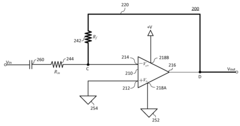
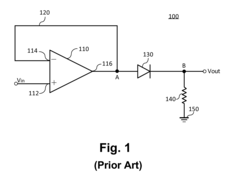
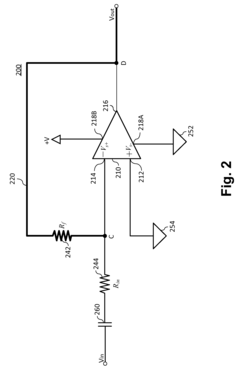
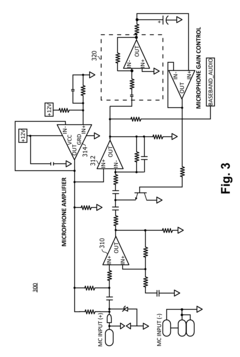
Half-wave rectifier circuit
PatentInactiveUS5579214A
Innovation
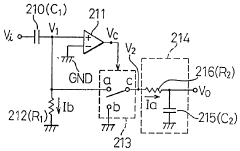
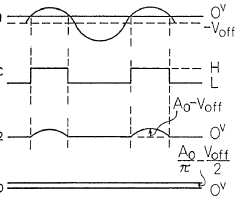
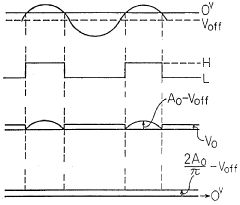
- The proposed half-wave rectifier circuit design includes a capacitor to remove DC components, a comparator with an operational amplifier and capacitor to accumulate offset voltage, and a switch circuit with high input impedance during the OFF state to eliminate the influence of offset voltage, ensuring accurate output voltage generation.
Efficiency and Power Loss Considerations
Efficiency and power loss are critical considerations in the design of half-wave rectifier systems. These factors significantly impact the overall performance and reliability of the rectifier circuit. The efficiency of a half-wave rectifier is inherently lower compared to full-wave rectifiers due to its operational characteristics. In a half-wave rectifier, only one half of the AC input waveform is utilized, resulting in a pulsating DC output with a significant amount of ripple.
One of the primary sources of power loss in half-wave rectifiers is the forward voltage drop across the diode. During the conduction phase, the diode experiences a voltage drop, typically around 0.7V for silicon diodes. This voltage drop leads to power dissipation in the form of heat, reducing the overall efficiency of the system. The choice of diode technology can significantly influence this aspect, with Schottky diodes offering lower forward voltage drops and consequently improved efficiency.
Another factor contributing to power loss is the reverse recovery time of the diode. When the input voltage reverses polarity, the diode requires a finite time to switch from its conducting state to its blocking state. During this transition period, a reverse current flows through the diode, resulting in additional power dissipation. Fast recovery diodes can help mitigate this issue by reducing the reverse recovery time and associated losses.
The load characteristics also play a crucial role in determining the efficiency of a half-wave rectifier system. With resistive loads, the power factor is unity, leading to optimal power transfer. However, inductive or capacitive loads can introduce phase shifts between voltage and current, reducing the power factor and overall efficiency. Proper load matching and power factor correction techniques may be necessary to maximize efficiency in such cases.
Ripple in the output voltage is another consideration that impacts both efficiency and power quality. High ripple content necessitates larger filtering components, which can introduce additional losses and increase the overall size and cost of the system. Implementing effective smoothing circuits, such as capacitor filters or LC filters, can help reduce ripple and improve the quality of the DC output, albeit at the expense of some additional power loss in these components.
Temperature effects on efficiency should not be overlooked. As the temperature of the rectifier components increases, their electrical characteristics change, potentially leading to increased power losses. Proper thermal management, including heat sinking and cooling strategies, is essential to maintain optimal operating temperatures and ensure consistent performance over time.
In conclusion, addressing efficiency and power loss considerations in half-wave rectifier systems requires a holistic approach. Designers must carefully balance various factors, including diode selection, circuit topology, filtering techniques, and thermal management, to achieve the desired performance while minimizing power losses. Continuous advancements in semiconductor technology and circuit design techniques offer opportunities for further optimization of half-wave rectifier systems, driving improvements in efficiency and overall system performance.
One of the primary sources of power loss in half-wave rectifiers is the forward voltage drop across the diode. During the conduction phase, the diode experiences a voltage drop, typically around 0.7V for silicon diodes. This voltage drop leads to power dissipation in the form of heat, reducing the overall efficiency of the system. The choice of diode technology can significantly influence this aspect, with Schottky diodes offering lower forward voltage drops and consequently improved efficiency.
Another factor contributing to power loss is the reverse recovery time of the diode. When the input voltage reverses polarity, the diode requires a finite time to switch from its conducting state to its blocking state. During this transition period, a reverse current flows through the diode, resulting in additional power dissipation. Fast recovery diodes can help mitigate this issue by reducing the reverse recovery time and associated losses.
The load characteristics also play a crucial role in determining the efficiency of a half-wave rectifier system. With resistive loads, the power factor is unity, leading to optimal power transfer. However, inductive or capacitive loads can introduce phase shifts between voltage and current, reducing the power factor and overall efficiency. Proper load matching and power factor correction techniques may be necessary to maximize efficiency in such cases.
Ripple in the output voltage is another consideration that impacts both efficiency and power quality. High ripple content necessitates larger filtering components, which can introduce additional losses and increase the overall size and cost of the system. Implementing effective smoothing circuits, such as capacitor filters or LC filters, can help reduce ripple and improve the quality of the DC output, albeit at the expense of some additional power loss in these components.
Temperature effects on efficiency should not be overlooked. As the temperature of the rectifier components increases, their electrical characteristics change, potentially leading to increased power losses. Proper thermal management, including heat sinking and cooling strategies, is essential to maintain optimal operating temperatures and ensure consistent performance over time.
In conclusion, addressing efficiency and power loss considerations in half-wave rectifier systems requires a holistic approach. Designers must carefully balance various factors, including diode selection, circuit topology, filtering techniques, and thermal management, to achieve the desired performance while minimizing power losses. Continuous advancements in semiconductor technology and circuit design techniques offer opportunities for further optimization of half-wave rectifier systems, driving improvements in efficiency and overall system performance.
EMI and Harmonic Distortion Analysis
Electromagnetic Interference (EMI) and harmonic distortion are critical factors to consider in the design and implementation of half-wave rectifier systems. These phenomena can significantly impact the performance and reliability of electronic devices, making their analysis and mitigation essential for optimal system operation.
EMI in half-wave rectifier systems primarily stems from the abrupt switching of current during the rectification process. This sudden change in current flow generates high-frequency electromagnetic waves that can interfere with nearby electronic components and systems. The severity of EMI depends on factors such as the rectifier's switching frequency, current magnitude, and circuit layout. To mitigate EMI, designers often employ techniques such as proper shielding, filtering, and careful PCB layout design.
Harmonic distortion in half-wave rectifiers is a result of the non-linear nature of the rectification process. The output waveform of a half-wave rectifier contains not only the fundamental frequency but also higher-order harmonics. These harmonics can cause issues such as increased power losses, overheating, and degradation of power quality. The Total Harmonic Distortion (THD) is a key metric used to quantify the level of harmonic distortion in the system.
To analyze and address EMI and harmonic distortion in half-wave rectifier systems, several tools and techniques are employed. Spectrum analyzers and oscilloscopes are commonly used to measure and visualize the frequency components of the rectifier output. Computational methods, such as Fourier analysis, help in quantifying the harmonic content of the waveform. Additionally, simulation software like SPICE can be utilized to model and predict EMI and harmonic behavior under various operating conditions.
Mitigation strategies for EMI and harmonic distortion in half-wave rectifier systems include the use of snubber circuits to reduce voltage spikes and EMI, implementation of EMI filters to attenuate high-frequency noise, and careful selection of rectifier diodes with fast recovery times. For harmonic distortion reduction, techniques such as passive filtering, active power factor correction, and multi-pulse rectification can be employed.
The regulatory landscape surrounding EMI and harmonic distortion is an important consideration for designers. Standards such as IEC 61000 for electromagnetic compatibility and IEEE 519 for harmonic control in electrical power systems set limits on allowable EMI emissions and harmonic distortion levels. Compliance with these standards is crucial for ensuring the interoperability and reliability of electronic systems incorporating half-wave rectifiers.
As technology advances, new materials and design methodologies are emerging to address EMI and harmonic distortion challenges in half-wave rectifier systems. For instance, wide-bandgap semiconductors like silicon carbide (SiC) and gallium nitride (GaN) offer improved switching characteristics, potentially reducing EMI and harmonic content. Additionally, advanced control algorithms and digital signal processing techniques are being explored to actively suppress harmonics and minimize electromagnetic emissions.
EMI in half-wave rectifier systems primarily stems from the abrupt switching of current during the rectification process. This sudden change in current flow generates high-frequency electromagnetic waves that can interfere with nearby electronic components and systems. The severity of EMI depends on factors such as the rectifier's switching frequency, current magnitude, and circuit layout. To mitigate EMI, designers often employ techniques such as proper shielding, filtering, and careful PCB layout design.
Harmonic distortion in half-wave rectifiers is a result of the non-linear nature of the rectification process. The output waveform of a half-wave rectifier contains not only the fundamental frequency but also higher-order harmonics. These harmonics can cause issues such as increased power losses, overheating, and degradation of power quality. The Total Harmonic Distortion (THD) is a key metric used to quantify the level of harmonic distortion in the system.
To analyze and address EMI and harmonic distortion in half-wave rectifier systems, several tools and techniques are employed. Spectrum analyzers and oscilloscopes are commonly used to measure and visualize the frequency components of the rectifier output. Computational methods, such as Fourier analysis, help in quantifying the harmonic content of the waveform. Additionally, simulation software like SPICE can be utilized to model and predict EMI and harmonic behavior under various operating conditions.
Mitigation strategies for EMI and harmonic distortion in half-wave rectifier systems include the use of snubber circuits to reduce voltage spikes and EMI, implementation of EMI filters to attenuate high-frequency noise, and careful selection of rectifier diodes with fast recovery times. For harmonic distortion reduction, techniques such as passive filtering, active power factor correction, and multi-pulse rectification can be employed.
The regulatory landscape surrounding EMI and harmonic distortion is an important consideration for designers. Standards such as IEC 61000 for electromagnetic compatibility and IEEE 519 for harmonic control in electrical power systems set limits on allowable EMI emissions and harmonic distortion levels. Compliance with these standards is crucial for ensuring the interoperability and reliability of electronic systems incorporating half-wave rectifiers.
As technology advances, new materials and design methodologies are emerging to address EMI and harmonic distortion challenges in half-wave rectifier systems. For instance, wide-bandgap semiconductors like silicon carbide (SiC) and gallium nitride (GaN) offer improved switching characteristics, potentially reducing EMI and harmonic content. Additionally, advanced control algorithms and digital signal processing techniques are being explored to actively suppress harmonics and minimize electromagnetic emissions.
Unlock deeper insights with Patsnap Eureka Quick Research — get a full tech report to explore trends and direct your research. Try now!
Generate Your Research Report Instantly with AI Agent
Supercharge your innovation with Patsnap Eureka AI Agent Platform!