

Key Factors Affecting Half Wave Rectifier Output
JUL 15, 20259 MIN READ
Generate Your Research Report Instantly with AI Agent
PatSnap Eureka helps you evaluate technical feasibility & market potential.
Half Wave Rectifier Background and Objectives
Half-wave rectification has been a fundamental technique in electrical engineering since the early days of electronics. This process, which converts alternating current (AC) to pulsating direct current (DC), has played a crucial role in the development of power supplies and signal processing circuits. The evolution of half-wave rectifiers can be traced back to the invention of the vacuum tube diode in the early 20th century, which paved the way for more efficient and compact rectification solutions.
As technology progressed, semiconductor diodes replaced vacuum tubes, leading to significant improvements in rectifier performance and reliability. The advent of silicon-based diodes in the 1950s marked a major milestone, enabling the creation of more efficient and cost-effective half-wave rectifier circuits. This technological advancement facilitated the widespread adoption of electronic devices in various industries and consumer applications.
The primary objective of half-wave rectification is to convert AC input into a unidirectional DC output. However, the efficiency and quality of this conversion process are influenced by several key factors. Understanding these factors is crucial for optimizing rectifier performance and addressing the limitations inherent in half-wave rectification.
One of the main challenges in half-wave rectification is the relatively low efficiency compared to full-wave rectification. This is due to the fact that only one half of the AC cycle is utilized, resulting in a pulsating DC output with significant ripple. Consequently, additional filtering is often required to smooth the output and reduce voltage fluctuations.
Another important consideration is the impact of diode characteristics on rectifier performance. Factors such as forward voltage drop, reverse recovery time, and junction capacitance can significantly affect the output voltage and overall efficiency of the rectifier circuit. As such, the selection of appropriate diode types for specific applications has become a critical aspect of rectifier design.
The load characteristics also play a vital role in determining the performance of half-wave rectifiers. Variations in load impedance can affect the output voltage regulation and ripple factor, necessitating careful consideration of load requirements in circuit design. Furthermore, the interaction between the rectifier and the power source, including factors like source impedance and frequency, can influence the overall system performance.
As technology continues to advance, new materials and device structures are being explored to enhance the capabilities of half-wave rectifiers. Research into wide-bandgap semiconductors, such as silicon carbide and gallium nitride, promises to deliver rectifiers with higher efficiency, faster switching speeds, and improved thermal performance. These developments are expected to expand the application range of half-wave rectifiers in high-power and high-frequency domains.
As technology progressed, semiconductor diodes replaced vacuum tubes, leading to significant improvements in rectifier performance and reliability. The advent of silicon-based diodes in the 1950s marked a major milestone, enabling the creation of more efficient and cost-effective half-wave rectifier circuits. This technological advancement facilitated the widespread adoption of electronic devices in various industries and consumer applications.
The primary objective of half-wave rectification is to convert AC input into a unidirectional DC output. However, the efficiency and quality of this conversion process are influenced by several key factors. Understanding these factors is crucial for optimizing rectifier performance and addressing the limitations inherent in half-wave rectification.
One of the main challenges in half-wave rectification is the relatively low efficiency compared to full-wave rectification. This is due to the fact that only one half of the AC cycle is utilized, resulting in a pulsating DC output with significant ripple. Consequently, additional filtering is often required to smooth the output and reduce voltage fluctuations.
Another important consideration is the impact of diode characteristics on rectifier performance. Factors such as forward voltage drop, reverse recovery time, and junction capacitance can significantly affect the output voltage and overall efficiency of the rectifier circuit. As such, the selection of appropriate diode types for specific applications has become a critical aspect of rectifier design.
The load characteristics also play a vital role in determining the performance of half-wave rectifiers. Variations in load impedance can affect the output voltage regulation and ripple factor, necessitating careful consideration of load requirements in circuit design. Furthermore, the interaction between the rectifier and the power source, including factors like source impedance and frequency, can influence the overall system performance.
As technology continues to advance, new materials and device structures are being explored to enhance the capabilities of half-wave rectifiers. Research into wide-bandgap semiconductors, such as silicon carbide and gallium nitride, promises to deliver rectifiers with higher efficiency, faster switching speeds, and improved thermal performance. These developments are expected to expand the application range of half-wave rectifiers in high-power and high-frequency domains.
Market Demand Analysis for Rectifier Applications
The market demand for rectifier applications has been steadily growing across various industries, driven by the increasing need for power conversion and management in electronic devices. Half-wave rectifiers, as a fundamental component in power supply systems, play a crucial role in converting alternating current (AC) to direct current (DC). The global power electronics market, which includes rectifiers, is projected to reach significant growth in the coming years.
In the consumer electronics sector, the proliferation of smartphones, laptops, and other portable devices has led to a surge in demand for efficient power management solutions. Half-wave rectifiers are integral to charging systems and power adapters, contributing to the market's expansion. The automotive industry also presents a substantial market for rectifier applications, particularly with the rise of electric and hybrid vehicles. These vehicles require sophisticated power conversion systems, where rectifiers are essential components.
The industrial sector represents another significant market for rectifier applications. Factory automation, robotics, and industrial machinery rely heavily on power electronics, including rectifiers, for precise control and energy efficiency. The growing emphasis on Industry 4.0 and smart manufacturing is expected to further boost the demand for advanced rectifier solutions.
Renewable energy systems, such as solar and wind power, constitute a rapidly expanding market for rectifier applications. As the world shifts towards cleaner energy sources, the need for efficient power conversion technologies becomes paramount. Half-wave rectifiers and their more advanced counterparts are crucial in converting the variable output from renewable sources into usable electricity for the grid.
The telecommunications industry, with its ongoing expansion of 5G networks and data centers, represents another key market for rectifier applications. These facilities require robust power management systems to ensure uninterrupted operation and energy efficiency. The demand for rectifiers in this sector is expected to grow as network infrastructure continues to expand globally.
Emerging technologies such as Internet of Things (IoT) devices and wearable technology are creating new opportunities for rectifier applications. These devices often require compact, energy-efficient power management solutions, driving innovation in rectifier design and performance.
The market demand analysis also reveals a growing trend towards more efficient and compact rectifier solutions. Manufacturers are focusing on developing rectifiers with higher power density, improved thermal management, and reduced energy losses. This trend is particularly evident in applications where space and energy efficiency are critical, such as in mobile devices and automotive systems.
In the consumer electronics sector, the proliferation of smartphones, laptops, and other portable devices has led to a surge in demand for efficient power management solutions. Half-wave rectifiers are integral to charging systems and power adapters, contributing to the market's expansion. The automotive industry also presents a substantial market for rectifier applications, particularly with the rise of electric and hybrid vehicles. These vehicles require sophisticated power conversion systems, where rectifiers are essential components.
The industrial sector represents another significant market for rectifier applications. Factory automation, robotics, and industrial machinery rely heavily on power electronics, including rectifiers, for precise control and energy efficiency. The growing emphasis on Industry 4.0 and smart manufacturing is expected to further boost the demand for advanced rectifier solutions.
Renewable energy systems, such as solar and wind power, constitute a rapidly expanding market for rectifier applications. As the world shifts towards cleaner energy sources, the need for efficient power conversion technologies becomes paramount. Half-wave rectifiers and their more advanced counterparts are crucial in converting the variable output from renewable sources into usable electricity for the grid.
The telecommunications industry, with its ongoing expansion of 5G networks and data centers, represents another key market for rectifier applications. These facilities require robust power management systems to ensure uninterrupted operation and energy efficiency. The demand for rectifiers in this sector is expected to grow as network infrastructure continues to expand globally.
Emerging technologies such as Internet of Things (IoT) devices and wearable technology are creating new opportunities for rectifier applications. These devices often require compact, energy-efficient power management solutions, driving innovation in rectifier design and performance.
The market demand analysis also reveals a growing trend towards more efficient and compact rectifier solutions. Manufacturers are focusing on developing rectifiers with higher power density, improved thermal management, and reduced energy losses. This trend is particularly evident in applications where space and energy efficiency are critical, such as in mobile devices and automotive systems.
Current Challenges in Half Wave Rectification
Half wave rectification, while a fundamental technique in power electronics, faces several challenges that impact its efficiency and output quality. One of the primary issues is the inherent inefficiency of the process, as it only utilizes half of the input AC waveform. This results in a significant loss of potential power output, reducing the overall energy conversion efficiency.
Another challenge is the presence of ripple in the output voltage. The pulsating nature of the half-wave rectified signal leads to fluctuations in the DC output, which can be problematic for sensitive electronic devices. This ripple effect necessitates additional filtering components, increasing circuit complexity and cost.
The forward voltage drop across the rectifying diode presents a further challenge, particularly in low-voltage applications. This voltage drop reduces the available output voltage and contributes to power loss, diminishing the rectifier's efficiency. In scenarios where every millivolt counts, this can be a significant drawback.
Temperature sensitivity of semiconductor devices used in half-wave rectifiers poses another challenge. As temperature increases, the characteristics of diodes can change, potentially affecting the rectification process and overall circuit performance. This temperature dependence requires careful consideration in design and may necessitate additional thermal management solutions.
Reverse recovery time of diodes is yet another factor impacting the performance of half-wave rectifiers, especially at higher frequencies. During the transition from forward to reverse bias, diodes require a finite time to stop conducting, which can lead to unwanted current flow and increased power dissipation.
The limited current handling capacity of single-diode half-wave rectifiers restricts their use in high-power applications. This limitation often necessitates the use of more complex rectification schemes or parallel diode arrangements, adding to design complexity and cost.
Electromagnetic interference (EMI) generation is a significant challenge in half-wave rectification. The abrupt current changes during switching can produce high-frequency noise, potentially interfering with nearby electronic systems. This necessitates careful PCB layout and additional EMI suppression techniques.
Lastly, the non-linear loading characteristics of half-wave rectifiers can introduce harmonics into the power system. These harmonics can cause distortion in the supply voltage, potentially affecting other connected devices and reducing overall power quality. Addressing this issue often requires additional filtering or power factor correction circuits, further complicating the design process.
Another challenge is the presence of ripple in the output voltage. The pulsating nature of the half-wave rectified signal leads to fluctuations in the DC output, which can be problematic for sensitive electronic devices. This ripple effect necessitates additional filtering components, increasing circuit complexity and cost.
The forward voltage drop across the rectifying diode presents a further challenge, particularly in low-voltage applications. This voltage drop reduces the available output voltage and contributes to power loss, diminishing the rectifier's efficiency. In scenarios where every millivolt counts, this can be a significant drawback.
Temperature sensitivity of semiconductor devices used in half-wave rectifiers poses another challenge. As temperature increases, the characteristics of diodes can change, potentially affecting the rectification process and overall circuit performance. This temperature dependence requires careful consideration in design and may necessitate additional thermal management solutions.
Reverse recovery time of diodes is yet another factor impacting the performance of half-wave rectifiers, especially at higher frequencies. During the transition from forward to reverse bias, diodes require a finite time to stop conducting, which can lead to unwanted current flow and increased power dissipation.
The limited current handling capacity of single-diode half-wave rectifiers restricts their use in high-power applications. This limitation often necessitates the use of more complex rectification schemes or parallel diode arrangements, adding to design complexity and cost.
Electromagnetic interference (EMI) generation is a significant challenge in half-wave rectification. The abrupt current changes during switching can produce high-frequency noise, potentially interfering with nearby electronic systems. This necessitates careful PCB layout and additional EMI suppression techniques.
Lastly, the non-linear loading characteristics of half-wave rectifiers can introduce harmonics into the power system. These harmonics can cause distortion in the supply voltage, potentially affecting other connected devices and reducing overall power quality. Addressing this issue often requires additional filtering or power factor correction circuits, further complicating the design process.
Existing Half Wave Rectifier Designs
01 Output voltage characteristics
Half-wave rectifiers produce a pulsating DC output voltage with only positive or negative half-cycles of the input AC waveform. This results in a lower average output voltage compared to full-wave rectifiers and higher ripple content. The output waveform consists of discrete pulses separated by zero-voltage periods.- Output voltage characteristics: A half-wave rectifier produces a pulsating DC output voltage from an AC input. The output waveform consists of only positive or negative half-cycles of the input, resulting in a unidirectional but fluctuating voltage. This output typically has a lower average voltage compared to the input AC peak voltage and contains significant ripple.
- Filtering and smoothing techniques: To improve the quality of the half-wave rectifier output, various filtering and smoothing techniques are employed. These may include capacitor filters, inductor-capacitor (LC) filters, or more complex filter networks. Such filtering helps reduce ripple and provides a more stable DC output voltage, making it more suitable for various applications.
- Efficiency and power considerations: Half-wave rectifiers are generally less efficient compared to full-wave rectifiers due to their utilization of only one half-cycle of the AC input. This results in lower power output and increased transformer size requirements. However, they can be advantageous in low-power applications or where simplicity is prioritized over efficiency.
- Applications in power supplies: Half-wave rectifiers find applications in various power supply designs, particularly in low-power or cost-sensitive scenarios. They are used in simple AC-DC converters, battery chargers, and some electronic circuits where basic DC power is required. In some cases, they are combined with voltage regulators to provide more stable output voltages.
- Circuit protection and control: To enhance the reliability and performance of half-wave rectifier circuits, various protection and control mechanisms are implemented. These may include overvoltage protection, current limiting features, and feedback control systems. Such additions help improve the overall stability and safety of the rectifier output, making it more suitable for sensitive electronic applications.
02 Filtering and smoothing techniques
To improve the quality of the half-wave rectifier output, various filtering and smoothing techniques are employed. These may include capacitor filters, inductor-capacitor (LC) filters, or more complex filter networks. These components help reduce ripple and provide a more stable DC output voltage.Expand Specific Solutions03 Efficiency and power factor considerations
Half-wave rectifiers have lower efficiency compared to full-wave rectifiers due to the utilization of only one half-cycle of the input waveform. This results in a lower power factor and increased harmonic content in the input current. Various circuit modifications and power factor correction techniques can be implemented to improve overall efficiency.Expand Specific Solutions04 Applications in low-power circuits
Despite their limitations, half-wave rectifiers find applications in low-power circuits where simplicity and cost-effectiveness are prioritized over efficiency. They are commonly used in small electronic devices, battery chargers, and some sensor circuits where the power requirements are minimal.Expand Specific Solutions05 Voltage regulation and protection
To maintain a stable output voltage and protect the circuit from voltage spikes, various voltage regulation and protection mechanisms are incorporated in half-wave rectifier designs. These may include zener diodes, voltage regulators, or more advanced control circuits to ensure reliable operation and prevent damage to connected loads.Expand Specific Solutions
Key Players in Rectifier Industry
The market for half wave rectifier technology is in a mature stage, with established players and well-understood principles. The global market size for power electronics, which includes rectifiers, is substantial and growing steadily. Technologically, half wave rectifiers are well-developed, with ongoing innovations focusing on efficiency improvements and miniaturization. Companies like Mitsubishi Electric, Yamaha Corp., and Sanken Electric are key players, leveraging their expertise in semiconductor devices and power electronics. Emerging firms such as Mixed-Signal Devices and Energous Corp. are exploring novel applications and integrations, potentially disrupting the traditional market landscape. The competitive dynamics are characterized by a mix of large, diversified electronics manufacturers and specialized power electronics firms, each contributing to incremental advancements in the field.
NXP USA, Inc.
Technical Solution: NXP has focused on developing high-performance half-wave rectifiers for RF and power management applications. Their solutions often incorporate Schottky diodes with ultra-low forward voltage drop, typically less than 0.3V, to maximize efficiency. NXP's rectifiers feature integrated EMI suppression and ESD protection circuits, making them robust for automotive and industrial environments. They have also introduced silicon-germanium (SiGe) based rectifiers for high-frequency applications, offering improved switching speeds and reduced parasitic capacitance[2][5]. NXP's designs often include adaptive biasing techniques to optimize performance across a wide range of input voltages and load conditions.
Strengths: Excellent high-frequency performance and robust design for harsh environments. Weaknesses: May be overspecified for low-power or low-frequency applications.
Power Integrations, Inc.
Technical Solution: Power Integrations specializes in high-voltage power conversion solutions, including advanced half-wave rectifier designs. Their approach focuses on integrating multiple functions into a single IC, reducing component count and improving reliability. They have developed proprietary FluxLink™ technology for high-voltage isolation in their rectifier circuits, enabling compact designs with enhanced safety features[4]. Power Integrations' rectifiers often incorporate adaptive switching techniques to optimize efficiency across varying load conditions. They have also implemented innovative thermal management solutions, such as spread-spectrum frequency modulation, to reduce EMI and improve power density[6].
Strengths: High integration, excellent power density, and advanced safety features. Weaknesses: May be less flexible for customization in specialized applications.
Core Innovations in Rectification Technology
Half-wave rectifier circuit
PatentInactiveUS5579214A
Innovation
- The proposed half-wave rectifier circuit design includes a capacitor to remove DC components, a comparator with an operational amplifier and capacitor to accumulate offset voltage, and a switch circuit with high input impedance during the OFF state to eliminate the influence of offset voltage, ensuring accurate output voltage generation.
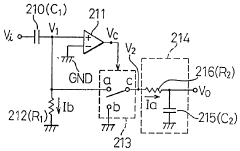
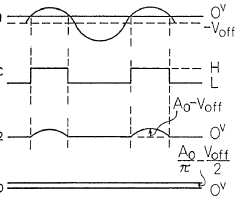
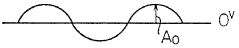
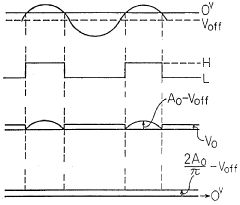
Half-wave rectifier circuit
PatentInactiveUS3936720A
Innovation
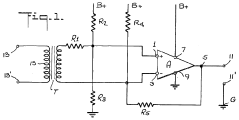
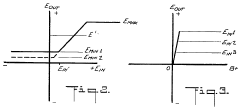
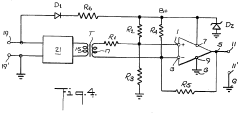
- A high-gain differential amplifier-based half-wave rectifier circuit operating from a single power supply, eliminating the need for voltage regulation and reducing temperature dependence, with resistor ratios optimized to minimize errors and achieve minimal output voltage drop.
Efficiency and Power Loss Analysis
The efficiency of a half-wave rectifier is a critical factor in its overall performance and application suitability. This analysis focuses on the key aspects affecting efficiency and power loss in half-wave rectifier circuits.
One of the primary contributors to efficiency loss in half-wave rectifiers is the inherent nature of the rectification process itself. During the negative half-cycle of the input AC waveform, the rectifier blocks current flow, effectively utilizing only half of the input power. This fundamental limitation results in a theoretical maximum efficiency of approximately 40.6% for ideal half-wave rectifiers.
The choice of diode significantly impacts the rectifier's efficiency. Silicon diodes, commonly used in half-wave rectifiers, typically have a forward voltage drop of about 0.7V. This voltage drop represents a direct power loss, as it reduces the output voltage and dissipates energy as heat. Schottky diodes, with their lower forward voltage drop (around 0.3V), can improve efficiency, especially in low-voltage applications.
Reverse recovery time of the diode is another crucial factor affecting efficiency. During the transition from forward to reverse bias, diodes require a finite time to stop conducting. This reverse recovery time leads to additional power losses and can introduce noise into the circuit. Fast recovery diodes or Schottky diodes with minimal reverse recovery time can mitigate these losses.
The load characteristics play a significant role in determining the rectifier's efficiency. With purely resistive loads, the efficiency is primarily determined by the ratio of the diode's forward voltage drop to the peak input voltage. However, in practical applications with capacitive or inductive loads, additional factors come into play. Capacitive loads, while helping to smooth the output voltage, can lead to high peak currents during the charging phase, potentially increasing power losses in the diode and transformer.
Transformer losses, while not strictly part of the rectifier circuit, are often considered in the overall efficiency analysis of power supply systems using half-wave rectifiers. Core losses due to hysteresis and eddy currents, as well as copper losses in the windings, contribute to reduced overall efficiency. Proper transformer design and material selection can help minimize these losses.
The operating frequency of the input AC signal also affects efficiency. Higher frequencies can lead to increased switching losses in the diode and potentially higher core losses in the transformer. However, they also allow for smaller filter components, which can be beneficial in terms of size and cost.
To optimize efficiency and minimize power loss in half-wave rectifier circuits, several strategies can be employed. These include using low forward voltage drop diodes, implementing snubber circuits to reduce switching losses, optimizing transformer design, and carefully selecting filter components to balance ripple reduction with efficiency. In applications where higher efficiency is crucial, alternative rectification topologies such as full-wave or bridge rectifiers may be considered, as they offer inherently higher efficiency due to their utilization of both half-cycles of the input waveform.
One of the primary contributors to efficiency loss in half-wave rectifiers is the inherent nature of the rectification process itself. During the negative half-cycle of the input AC waveform, the rectifier blocks current flow, effectively utilizing only half of the input power. This fundamental limitation results in a theoretical maximum efficiency of approximately 40.6% for ideal half-wave rectifiers.
The choice of diode significantly impacts the rectifier's efficiency. Silicon diodes, commonly used in half-wave rectifiers, typically have a forward voltage drop of about 0.7V. This voltage drop represents a direct power loss, as it reduces the output voltage and dissipates energy as heat. Schottky diodes, with their lower forward voltage drop (around 0.3V), can improve efficiency, especially in low-voltage applications.
Reverse recovery time of the diode is another crucial factor affecting efficiency. During the transition from forward to reverse bias, diodes require a finite time to stop conducting. This reverse recovery time leads to additional power losses and can introduce noise into the circuit. Fast recovery diodes or Schottky diodes with minimal reverse recovery time can mitigate these losses.
The load characteristics play a significant role in determining the rectifier's efficiency. With purely resistive loads, the efficiency is primarily determined by the ratio of the diode's forward voltage drop to the peak input voltage. However, in practical applications with capacitive or inductive loads, additional factors come into play. Capacitive loads, while helping to smooth the output voltage, can lead to high peak currents during the charging phase, potentially increasing power losses in the diode and transformer.
Transformer losses, while not strictly part of the rectifier circuit, are often considered in the overall efficiency analysis of power supply systems using half-wave rectifiers. Core losses due to hysteresis and eddy currents, as well as copper losses in the windings, contribute to reduced overall efficiency. Proper transformer design and material selection can help minimize these losses.
The operating frequency of the input AC signal also affects efficiency. Higher frequencies can lead to increased switching losses in the diode and potentially higher core losses in the transformer. However, they also allow for smaller filter components, which can be beneficial in terms of size and cost.
To optimize efficiency and minimize power loss in half-wave rectifier circuits, several strategies can be employed. These include using low forward voltage drop diodes, implementing snubber circuits to reduce switching losses, optimizing transformer design, and carefully selecting filter components to balance ripple reduction with efficiency. In applications where higher efficiency is crucial, alternative rectification topologies such as full-wave or bridge rectifiers may be considered, as they offer inherently higher efficiency due to their utilization of both half-cycles of the input waveform.
Environmental Impact of Rectifier Technologies
The environmental impact of rectifier technologies, particularly half-wave rectifiers, is a crucial consideration in the broader context of electronic systems and power conversion. These devices, while essential for converting alternating current (AC) to direct current (DC), can have significant environmental implications throughout their lifecycle.
The production of rectifiers involves the use of various materials, including semiconductors, metals, and plastics. The extraction and processing of these raw materials contribute to resource depletion and energy consumption. Additionally, the manufacturing processes often require substantial energy inputs and may result in the release of pollutants and greenhouse gases.
During operation, half-wave rectifiers and other rectifier technologies can impact energy efficiency. The conversion process inherently involves some energy loss, which is dissipated as heat. This inefficiency not only increases overall energy consumption but also contributes to the urban heat island effect in densely populated areas with high concentrations of electronic devices.
The use of certain materials in rectifiers, such as lead in older designs, poses potential environmental hazards. While many countries have implemented regulations to reduce or eliminate the use of hazardous substances in electronics, the proper disposal and recycling of older devices remain a challenge.
Electromagnetic interference (EMI) generated by rectifier circuits can affect surrounding ecosystems, potentially disrupting wildlife behavior and communication. This is particularly relevant in areas where electronic infrastructure is in close proximity to natural habitats.
At the end of their lifecycle, rectifiers contribute to the growing issue of electronic waste (e-waste). Improper disposal can lead to the leaching of harmful substances into soil and water systems. However, when properly recycled, many of the materials used in rectifiers can be recovered and reused, reducing the demand for new raw materials.
Advancements in rectifier technology, such as the development of more efficient and environmentally friendly designs, are helping to mitigate some of these impacts. For instance, the use of silicon carbide (SiC) and gallium nitride (GaN) in rectifiers offers improved efficiency and reduced energy loss compared to traditional silicon-based devices.
In conclusion, while rectifiers play a vital role in modern electronics, their environmental impact spans from production to disposal. Addressing these challenges requires a holistic approach, including improved manufacturing processes, enhanced energy efficiency, responsible material selection, and effective recycling programs.
The production of rectifiers involves the use of various materials, including semiconductors, metals, and plastics. The extraction and processing of these raw materials contribute to resource depletion and energy consumption. Additionally, the manufacturing processes often require substantial energy inputs and may result in the release of pollutants and greenhouse gases.
During operation, half-wave rectifiers and other rectifier technologies can impact energy efficiency. The conversion process inherently involves some energy loss, which is dissipated as heat. This inefficiency not only increases overall energy consumption but also contributes to the urban heat island effect in densely populated areas with high concentrations of electronic devices.
The use of certain materials in rectifiers, such as lead in older designs, poses potential environmental hazards. While many countries have implemented regulations to reduce or eliminate the use of hazardous substances in electronics, the proper disposal and recycling of older devices remain a challenge.
Electromagnetic interference (EMI) generated by rectifier circuits can affect surrounding ecosystems, potentially disrupting wildlife behavior and communication. This is particularly relevant in areas where electronic infrastructure is in close proximity to natural habitats.
At the end of their lifecycle, rectifiers contribute to the growing issue of electronic waste (e-waste). Improper disposal can lead to the leaching of harmful substances into soil and water systems. However, when properly recycled, many of the materials used in rectifiers can be recovered and reused, reducing the demand for new raw materials.
Advancements in rectifier technology, such as the development of more efficient and environmentally friendly designs, are helping to mitigate some of these impacts. For instance, the use of silicon carbide (SiC) and gallium nitride (GaN) in rectifiers offers improved efficiency and reduced energy loss compared to traditional silicon-based devices.
In conclusion, while rectifiers play a vital role in modern electronics, their environmental impact spans from production to disposal. Addressing these challenges requires a holistic approach, including improved manufacturing processes, enhanced energy efficiency, responsible material selection, and effective recycling programs.
Unlock deeper insights with PatSnap Eureka Quick Research — get a full tech report to explore trends and direct your research. Try now!
Generate Your Research Report Instantly with AI Agent
Supercharge your innovation with PatSnap Eureka AI Agent Platform!