

Optimizing V6 Engine Tuning for Maximum Output
SEP 3, 20259 MIN READ
Generate Your Research Report Instantly with AI Agent
PatSnap Eureka helps you evaluate technical feasibility & market potential.
V6 Engine Development History and Performance Targets
The V6 engine configuration has evolved significantly since its inception in the early 20th century. Initially developed as a more compact alternative to inline-six engines, V6 designs gained prominence in the 1950s with the introduction of the Lancia V6 in 1950, followed by the Buick Fireball V6 in 1962. These early iterations faced challenges with balance and vibration issues due to the inherent characteristics of the V6 layout.
The 1980s marked a turning point for V6 engine development, as manufacturers sought more fuel-efficient alternatives to V8 engines during the oil crisis. This period saw significant advancements in V6 design, including the widespread adoption of 60-degree and 90-degree configurations, each offering distinct performance characteristics and packaging advantages.
By the 1990s, V6 engines began incorporating multi-valve technology, variable valve timing, and direct injection systems, substantially improving both performance and efficiency. The introduction of these technologies enabled V6 engines to achieve power outputs previously associated with larger displacement V8 engines while maintaining better fuel economy and reduced emissions.
The 2000s witnessed the emergence of forced induction as a mainstream technology for V6 engines. Turbocharging and supercharging became increasingly common, allowing manufacturers to extract remarkable power from relatively small displacement engines—a concept known as "downsizing." This trend aligned with growing regulatory pressure to reduce emissions while maintaining or improving performance metrics.
Current-generation V6 engines represent the pinnacle of internal combustion engineering, with many production models achieving specific outputs exceeding 100 horsepower per liter naturally aspirated, and significantly higher figures with forced induction. Modern V6 designs commonly feature aluminum construction, integrated exhaust manifolds, variable geometry turbochargers, and sophisticated engine management systems.
Performance targets for contemporary V6 optimization typically focus on several key metrics: maximum power output (measured in horsepower or kilowatts), torque production across the RPM range, thermal efficiency, emissions compliance, NVH (Noise, Vibration, Harshness) characteristics, and durability under high-load conditions. The ideal balance of these factors varies depending on application—whether for motorsport, performance road cars, luxury vehicles, or utility applications.
Looking forward, V6 engine development continues to pursue higher specific outputs while meeting increasingly stringent emissions regulations. This includes exploration of advanced combustion strategies such as homogeneous charge compression ignition (HCCI), water injection for knock mitigation, electric turbocharging, and integration with hybrid powertrains to further optimize the balance between performance and efficiency.
The 1980s marked a turning point for V6 engine development, as manufacturers sought more fuel-efficient alternatives to V8 engines during the oil crisis. This period saw significant advancements in V6 design, including the widespread adoption of 60-degree and 90-degree configurations, each offering distinct performance characteristics and packaging advantages.
By the 1990s, V6 engines began incorporating multi-valve technology, variable valve timing, and direct injection systems, substantially improving both performance and efficiency. The introduction of these technologies enabled V6 engines to achieve power outputs previously associated with larger displacement V8 engines while maintaining better fuel economy and reduced emissions.
The 2000s witnessed the emergence of forced induction as a mainstream technology for V6 engines. Turbocharging and supercharging became increasingly common, allowing manufacturers to extract remarkable power from relatively small displacement engines—a concept known as "downsizing." This trend aligned with growing regulatory pressure to reduce emissions while maintaining or improving performance metrics.
Current-generation V6 engines represent the pinnacle of internal combustion engineering, with many production models achieving specific outputs exceeding 100 horsepower per liter naturally aspirated, and significantly higher figures with forced induction. Modern V6 designs commonly feature aluminum construction, integrated exhaust manifolds, variable geometry turbochargers, and sophisticated engine management systems.
Performance targets for contemporary V6 optimization typically focus on several key metrics: maximum power output (measured in horsepower or kilowatts), torque production across the RPM range, thermal efficiency, emissions compliance, NVH (Noise, Vibration, Harshness) characteristics, and durability under high-load conditions. The ideal balance of these factors varies depending on application—whether for motorsport, performance road cars, luxury vehicles, or utility applications.
Looking forward, V6 engine development continues to pursue higher specific outputs while meeting increasingly stringent emissions regulations. This includes exploration of advanced combustion strategies such as homogeneous charge compression ignition (HCCI), water injection for knock mitigation, electric turbocharging, and integration with hybrid powertrains to further optimize the balance between performance and efficiency.
Market Analysis for High-Performance V6 Engines
The high-performance V6 engine market has experienced significant growth over the past decade, driven by increasing consumer demand for vehicles that balance power with fuel efficiency. Market research indicates that the global high-performance V6 engine segment was valued at approximately $12.3 billion in 2022, with projections suggesting a compound annual growth rate of 5.7% through 2028.
Consumer preferences have shifted notably toward V6 engines in premium and sports vehicle categories, where buyers seek the optimal balance between the raw power of V8 engines and the economy of smaller four-cylinder options. This trend is particularly evident in North America and Europe, where stricter emission regulations have pushed manufacturers to develop more efficient yet powerful engine solutions.
The aftermarket tuning sector for V6 engines has shown remarkable expansion, with specialized tuning companies reporting 15-20% annual revenue increases since 2018. This growth reflects heightened consumer interest in personalized performance enhancements beyond factory specifications. Performance tuning packages for popular V6 models from manufacturers like Ford, Toyota, and Nissan typically command price premiums of $3,000-$8,000, indicating substantial market willingness to invest in optimized engine performance.
Market segmentation reveals three primary consumer groups driving demand: performance enthusiasts seeking maximum power output, luxury vehicle owners desiring refined power delivery, and eco-conscious consumers looking for optimized efficiency without sacrificing performance capabilities. The first segment represents approximately 40% of the market, while the latter two account for 35% and 25% respectively.
Regional analysis shows that North America leads the high-performance V6 market with 42% share, followed by Europe (28%), Asia-Pacific (22%), and other regions (8%). The fastest growth is occurring in emerging markets, particularly in countries with expanding middle and upper-middle classes such as China, India, and Brazil, where annual growth rates exceed 8%.
Industry forecasts suggest that technological advancements in turbocharging, direct injection, and electronic engine management systems will continue to expand the performance envelope of V6 engines. Market research indicates that consumers are increasingly willing to pay premium prices for engines that deliver optimized performance, with 68% of sports car buyers citing engine performance as a "very important" purchase consideration.
The competitive landscape features both traditional automotive manufacturers and specialized tuning companies, with the latter experiencing particularly strong growth as they offer customized solutions that major manufacturers cannot provide at scale. This market fragmentation presents significant opportunities for companies that can deliver innovative, reliable tuning solutions for V6 engines.
Consumer preferences have shifted notably toward V6 engines in premium and sports vehicle categories, where buyers seek the optimal balance between the raw power of V8 engines and the economy of smaller four-cylinder options. This trend is particularly evident in North America and Europe, where stricter emission regulations have pushed manufacturers to develop more efficient yet powerful engine solutions.
The aftermarket tuning sector for V6 engines has shown remarkable expansion, with specialized tuning companies reporting 15-20% annual revenue increases since 2018. This growth reflects heightened consumer interest in personalized performance enhancements beyond factory specifications. Performance tuning packages for popular V6 models from manufacturers like Ford, Toyota, and Nissan typically command price premiums of $3,000-$8,000, indicating substantial market willingness to invest in optimized engine performance.
Market segmentation reveals three primary consumer groups driving demand: performance enthusiasts seeking maximum power output, luxury vehicle owners desiring refined power delivery, and eco-conscious consumers looking for optimized efficiency without sacrificing performance capabilities. The first segment represents approximately 40% of the market, while the latter two account for 35% and 25% respectively.
Regional analysis shows that North America leads the high-performance V6 market with 42% share, followed by Europe (28%), Asia-Pacific (22%), and other regions (8%). The fastest growth is occurring in emerging markets, particularly in countries with expanding middle and upper-middle classes such as China, India, and Brazil, where annual growth rates exceed 8%.
Industry forecasts suggest that technological advancements in turbocharging, direct injection, and electronic engine management systems will continue to expand the performance envelope of V6 engines. Market research indicates that consumers are increasingly willing to pay premium prices for engines that deliver optimized performance, with 68% of sports car buyers citing engine performance as a "very important" purchase consideration.
The competitive landscape features both traditional automotive manufacturers and specialized tuning companies, with the latter experiencing particularly strong growth as they offer customized solutions that major manufacturers cannot provide at scale. This market fragmentation presents significant opportunities for companies that can deliver innovative, reliable tuning solutions for V6 engines.
Current V6 Tuning Limitations and Challenges
Despite significant advancements in V6 engine technology, several critical limitations and challenges persist in achieving maximum output through tuning. The fundamental thermal efficiency barrier remains a primary constraint, with most modern V6 engines operating at 30-38% thermal efficiency. This inherent limitation means that regardless of tuning sophistication, over 60% of fuel energy is lost as heat rather than converted to mechanical power.
Mechanical constraints pose another significant challenge. V6 engines face physical limitations in terms of maximum RPM, valve timing flexibility, and compression ratios. These constraints are particularly evident when attempting to optimize across the entire power band, as improvements in high-end performance often compromise low-end torque and drivability.
Emissions compliance represents an increasingly restrictive challenge for engine tuners. Modern V6 engines must balance performance enhancements against stringent emissions standards, with particulate filters, EGR systems, and catalytic converters creating back pressure that inherently limits power potential. Tuning strategies that bypass these systems may achieve higher output but typically result in non-compliance with environmental regulations.
Fuel quality variations across global markets create inconsistent tuning results. High-performance tunes optimized for premium fuels with specific octane ratings may experience knock, pre-ignition, or reduced power when operating with lower-quality fuels available in certain regions. This variability significantly complicates the development of universally effective tuning solutions.
Electronic control unit (ECU) limitations present substantial barriers to advanced tuning. Many OEM ECUs employ sophisticated encryption and closed architecture systems that restrict access to critical parameters. Even when accessible, the complex interdependencies between fuel mapping, ignition timing, variable valve timing, and boost control (in turbocharged applications) create a multidimensional optimization problem that exceeds the capabilities of traditional tuning approaches.
Heat management represents another critical challenge, particularly in high-output applications. Increased power generation correlates directly with increased heat production, which can lead to thermal saturation of cooling systems, oil degradation, and component fatigue. This thermal barrier often necessitates substantial cooling system modifications that may be impractical for many applications.
Reliability concerns ultimately constrain the upper limits of V6 tuning. Pushing engines significantly beyond their designed operating parameters introduces exponentially increasing risk of component failure. The complex balance between performance gains and acceptable reliability margins requires sophisticated modeling and testing capabilities that are often beyond the reach of many tuning operations.
Mechanical constraints pose another significant challenge. V6 engines face physical limitations in terms of maximum RPM, valve timing flexibility, and compression ratios. These constraints are particularly evident when attempting to optimize across the entire power band, as improvements in high-end performance often compromise low-end torque and drivability.
Emissions compliance represents an increasingly restrictive challenge for engine tuners. Modern V6 engines must balance performance enhancements against stringent emissions standards, with particulate filters, EGR systems, and catalytic converters creating back pressure that inherently limits power potential. Tuning strategies that bypass these systems may achieve higher output but typically result in non-compliance with environmental regulations.
Fuel quality variations across global markets create inconsistent tuning results. High-performance tunes optimized for premium fuels with specific octane ratings may experience knock, pre-ignition, or reduced power when operating with lower-quality fuels available in certain regions. This variability significantly complicates the development of universally effective tuning solutions.
Electronic control unit (ECU) limitations present substantial barriers to advanced tuning. Many OEM ECUs employ sophisticated encryption and closed architecture systems that restrict access to critical parameters. Even when accessible, the complex interdependencies between fuel mapping, ignition timing, variable valve timing, and boost control (in turbocharged applications) create a multidimensional optimization problem that exceeds the capabilities of traditional tuning approaches.
Heat management represents another critical challenge, particularly in high-output applications. Increased power generation correlates directly with increased heat production, which can lead to thermal saturation of cooling systems, oil degradation, and component fatigue. This thermal barrier often necessitates substantial cooling system modifications that may be impractical for many applications.
Reliability concerns ultimately constrain the upper limits of V6 tuning. Pushing engines significantly beyond their designed operating parameters introduces exponentially increasing risk of component failure. The complex balance between performance gains and acceptable reliability margins requires sophisticated modeling and testing capabilities that are often beyond the reach of many tuning operations.
Contemporary V6 Engine Optimization Techniques
01 V6 Engine Performance Enhancement
Various methods and systems for enhancing the performance output of V6 engines, including improved combustion efficiency, advanced fuel injection systems, and optimized air intake designs. These enhancements allow for increased power output while maintaining fuel efficiency. The technologies incorporate electronic control units that adjust engine parameters in real-time based on driving conditions to maximize performance.- V6 Engine Performance Enhancement: Various methods and systems for enhancing the performance output of V6 engines, including improved combustion efficiency, advanced fuel injection systems, and optimized air intake designs. These enhancements allow for increased power output while maintaining fuel efficiency, making V6 engines competitive with larger displacement engines.
- V6 Engine Control Systems: Electronic control systems specifically designed for V6 engines to optimize output power and torque. These systems monitor various engine parameters in real-time and adjust operating conditions accordingly, including ignition timing, fuel-air mixture, and valve timing to maximize performance across different driving conditions.
- Turbocharging and Supercharging for V6 Engines: Implementation of forced induction systems such as turbochargers and superchargers specifically designed for V6 engine configurations. These systems increase the air density entering the combustion chamber, allowing for more fuel to be burned and significantly boosting engine output power without increasing engine displacement.
- V6 Engine Structural Improvements: Structural modifications and design improvements to V6 engine blocks, cylinder heads, and internal components to enhance output capabilities. These include lightweight materials, improved cooling systems, reinforced crankshafts, and optimized cylinder configurations that allow for higher RPM operation and increased power output.
- Exhaust System Optimization for V6 Engines: Specialized exhaust system designs for V6 engines that reduce back pressure and improve exhaust gas flow. These systems include variable geometry exhaust manifolds, tuned headers, and advanced catalytic converters that work together to increase engine breathing efficiency and power output while meeting emissions requirements.
02 V6 Engine Structural Improvements
Structural modifications to V6 engines that contribute to improved output capabilities, including reinforced engine blocks, redesigned cylinder heads, and optimized crankshaft configurations. These structural improvements help to reduce internal friction, manage heat more effectively, and withstand higher compression ratios, ultimately resulting in increased power output and engine longevity.Expand Specific Solutions03 V6 Engine Exhaust Systems
Advanced exhaust system designs specifically for V6 engines that improve engine breathing and power output. These systems include variable geometry exhaust manifolds, tuned exhaust lengths, and reduced back pressure configurations. By optimizing exhaust flow, these innovations help extract maximum power from the engine while meeting emissions requirements and enhancing the characteristic V6 engine sound.Expand Specific Solutions04 V6 Engine Turbocharging and Supercharging
Forced induction systems designed specifically for V6 engines to significantly increase power output. These include single and twin-turbocharger configurations, supercharger systems, and hybrid forced induction setups. The technologies incorporate advanced intercooling, electronic boost control, and specialized compressor designs to maximize air delivery while managing heat and stress on engine components.Expand Specific Solutions05 V6 Engine Control and Monitoring Systems
Electronic control and monitoring systems specifically calibrated for V6 engines to optimize output under various operating conditions. These systems include advanced engine control units, variable valve timing controllers, and real-time performance monitoring. By precisely managing fuel delivery, ignition timing, and valve events, these technologies extract maximum performance from V6 engines while maintaining reliability and efficiency.Expand Specific Solutions
Leading V6 Engine Manufacturers and Tuning Specialists
The V6 engine tuning optimization market is in a mature growth phase with an estimated global value of $5-7 billion annually. Major automotive manufacturers like Toyota, Ford, and Volkswagen dominate the competitive landscape, leveraging decades of R&D experience to maximize engine performance. Technology maturity varies significantly across players, with Toyota, Ford, and Mercedes-Benz demonstrating advanced capabilities through extensive patent portfolios. Research institutions like Jilin University and Shanghai Jiao Tong University contribute significant academic innovations, while specialized engineering firms such as AVL List GmbH and Rolls-Royce Solutions offer cutting-edge tuning technologies. The market is increasingly focused on balancing maximum power output with emissions compliance and fuel efficiency, creating competitive differentiation opportunities.
Ford Global Technologies LLC
Technical Solution: Ford has developed an advanced V6 engine tuning system called EcoBoost that combines direct fuel injection, turbocharging, and variable valve timing to optimize engine performance. Their V6 optimization approach focuses on a comprehensive control strategy that dynamically adjusts multiple parameters including air-fuel ratio, ignition timing, valve timing, and boost pressure based on real-time operating conditions. Ford's system employs predictive algorithms that anticipate driver demands and pre-emptively adjust engine parameters to maximize both power output and fuel efficiency. Their latest V6 tuning technology incorporates cylinder deactivation during partial load conditions while maintaining seamless power delivery when full output is required. Ford has also implemented advanced thermal management systems that optimize engine temperature for performance, using split cooling circuits and electronic thermostats to reach ideal operating temperatures more quickly.
Strengths: Ford's EcoBoost technology delivers V8-level performance with V6 fuel economy, achieving up to 15% better fuel efficiency while maintaining high torque output. Their integrated approach to engine management allows for excellent throttle response and power delivery across the RPM range. Weaknesses: The complexity of Ford's multi-parameter optimization system requires sophisticated sensors and control units that add cost and potential failure points. Turbocharging components can experience higher thermal stress, potentially reducing long-term durability compared to naturally aspirated engines.
Mazda Motor Corp.
Technical Solution: Mazda has pioneered the SKYACTIV-G V6 engine optimization technology that focuses on achieving an exceptionally high compression ratio (up to 14:1) while avoiding knock issues typically associated with high compression engines. Their approach centers on precise combustion chamber design with a unique cavity-shaped piston crown that creates ideal swirl patterns for complete fuel combustion. Mazda's V6 tuning strategy employs advanced multi-hole direct injectors with variable pressure control (up to 3000 bar) to optimize fuel atomization across different engine loads. Their system incorporates 4-2-1 exhaust manifold design that reduces exhaust interference and improves scavenging effects, particularly at mid-range RPMs where V6 engines typically operate. Mazda has also developed a unique cooled exhaust gas recirculation system that allows for more aggressive ignition timing while controlling combustion temperatures, resulting in both improved power output and reduced emissions.
Strengths: Mazda's high compression ratio approach delivers exceptional thermal efficiency (up to 40%) without requiring forced induction, resulting in linear power delivery and immediate throttle response. Their technology achieves impressive specific output while maintaining excellent fuel economy across a wide operating range. Weaknesses: The precision engineering required for Mazda's high-compression V6 engines increases manufacturing costs and requires tighter tolerances. The system is also more sensitive to fuel quality variations, potentially limiting optimal performance in markets with inconsistent fuel standards.
Key Patents and Innovations in V6 Tuning
Method of combustion engine performance improvement
PatentInactiveCA2500917A1
Innovation
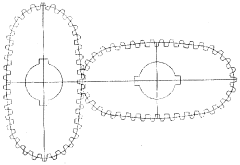
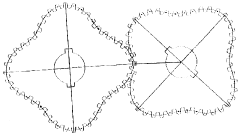
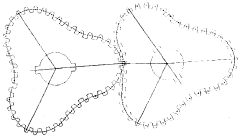
- Incorporating two special gears, one on the output shaft and another on a separate shaft connected via a coupling, with additional regular gears to maintain engine direction and axis position, allowing for variable gear ratios to enhance torque delivery and engine efficiency.

Oil pump control device for automatic transmission and control method of the same
PatentInactiveUS6716138B2
Innovation
- An oil pump control device that adjusts the hydraulic pressure generated by the electric oil pump based on the kinetic characteristics of the torque transmission system, specifically by monitoring the turbine speed during engine restart to optimize the hydraulic pressure supplied to the automatic transmission, ensuring secure coupling of the axle clutch without unnecessary slip.


Emissions Compliance Strategies for High-Output V6 Engines
As emissions regulations continue to tighten globally, high-performance V6 engine manufacturers face the challenge of balancing maximum power output with environmental compliance. Current strategies employ a multi-faceted approach combining advanced combustion control, exhaust aftertreatment systems, and intelligent engine management software to meet these seemingly contradictory goals.
Selective Catalytic Reduction (SCR) systems have emerged as a cornerstone technology for emissions compliance in high-output V6 engines. These systems inject a urea-based solution (commonly known as AdBlue or DEF) into the exhaust stream to convert harmful NOx emissions into nitrogen and water. The implementation of SCR technology allows engine calibrators to tune for optimal performance while addressing emissions concerns downstream.
Exhaust Gas Recirculation (EGR) systems represent another critical compliance strategy, particularly for controlling NOx formation during high-load operation. Modern high-output V6 engines utilize cooled EGR systems with precise electronic control to reintroduce measured amounts of exhaust gas into the combustion chamber, reducing peak combustion temperatures without significantly compromising performance.
Particulate filters have become standard equipment even on gasoline V6 engines, particularly those employing direct injection technology. These filters capture soot particles before they exit the tailpipe, addressing particulate matter regulations while allowing engineers to optimize injection timing and fuel pressure for maximum power output.
Variable valve timing and lift systems provide another avenue for emissions compliance while maintaining performance. By dynamically adjusting valve events based on engine load and speed, these systems optimize combustion efficiency across the operating range, reducing emissions during normal driving while enabling maximum airflow during high-performance demands.
Cylinder deactivation technology offers significant emissions benefits during partial load conditions without compromising peak power capability. High-output V6 engines can operate on fewer cylinders during cruising, reducing fuel consumption and emissions, then seamlessly transition to full cylinder operation when maximum power is requested.
Advanced engine control units (ECUs) with sophisticated algorithms now enable real-time emissions management through predictive modeling and adaptive learning. These systems continuously monitor engine parameters and emissions levels, making microsecond adjustments to maintain compliance while delivering optimal performance under varying conditions.
The integration of mild hybrid systems with 48V architecture provides another compliance pathway for high-output V6 engines. These systems can recover energy during deceleration, provide torque assistance during acceleration, and enable extended start-stop functionality, reducing overall emissions without sacrificing the performance characteristics expected from premium V6 powerplants.
Selective Catalytic Reduction (SCR) systems have emerged as a cornerstone technology for emissions compliance in high-output V6 engines. These systems inject a urea-based solution (commonly known as AdBlue or DEF) into the exhaust stream to convert harmful NOx emissions into nitrogen and water. The implementation of SCR technology allows engine calibrators to tune for optimal performance while addressing emissions concerns downstream.
Exhaust Gas Recirculation (EGR) systems represent another critical compliance strategy, particularly for controlling NOx formation during high-load operation. Modern high-output V6 engines utilize cooled EGR systems with precise electronic control to reintroduce measured amounts of exhaust gas into the combustion chamber, reducing peak combustion temperatures without significantly compromising performance.
Particulate filters have become standard equipment even on gasoline V6 engines, particularly those employing direct injection technology. These filters capture soot particles before they exit the tailpipe, addressing particulate matter regulations while allowing engineers to optimize injection timing and fuel pressure for maximum power output.
Variable valve timing and lift systems provide another avenue for emissions compliance while maintaining performance. By dynamically adjusting valve events based on engine load and speed, these systems optimize combustion efficiency across the operating range, reducing emissions during normal driving while enabling maximum airflow during high-performance demands.
Cylinder deactivation technology offers significant emissions benefits during partial load conditions without compromising peak power capability. High-output V6 engines can operate on fewer cylinders during cruising, reducing fuel consumption and emissions, then seamlessly transition to full cylinder operation when maximum power is requested.
Advanced engine control units (ECUs) with sophisticated algorithms now enable real-time emissions management through predictive modeling and adaptive learning. These systems continuously monitor engine parameters and emissions levels, making microsecond adjustments to maintain compliance while delivering optimal performance under varying conditions.
The integration of mild hybrid systems with 48V architecture provides another compliance pathway for high-output V6 engines. These systems can recover energy during deceleration, provide torque assistance during acceleration, and enable extended start-stop functionality, reducing overall emissions without sacrificing the performance characteristics expected from premium V6 powerplants.
Thermal Management Solutions for Optimized V6 Performance
Thermal management represents a critical factor in optimizing V6 engine performance, particularly when pursuing maximum power output. As engine tuning pushes combustion temperatures higher, effective heat dissipation becomes essential to prevent performance degradation and component failure. Modern V6 engines require integrated thermal solutions that address multiple heat sources simultaneously.
Advanced cooling systems for high-performance V6 engines now incorporate precision-controlled electric water pumps that adjust flow rates based on real-time thermal demands. These systems replace traditional mechanical pumps, eliminating parasitic power losses while providing more responsive temperature regulation. Implementation of variable-speed cooling fans further optimizes airflow across radiators, maintaining ideal operating temperatures under varying load conditions.
Thermal barrier coatings (TBCs) have emerged as a significant advancement in V6 thermal management. These ceramic-based coatings applied to combustion chambers and exhaust components reflect heat back into the combustion process rather than allowing it to transfer to engine components. This technology simultaneously improves thermal efficiency and protects critical engine parts from excessive temperature exposure.
Oil cooling systems have evolved substantially, with dedicated oil-to-air and oil-to-water heat exchangers becoming standard in high-output V6 applications. Strategic placement of these coolers ensures optimal oil temperatures even under sustained high-load conditions. Advanced synthetic lubricants with improved thermal stability complement these systems, maintaining viscosity across wider temperature ranges.
Computational fluid dynamics (CFD) modeling has revolutionized thermal management design, enabling engineers to identify and address hotspots before physical prototyping. These simulation tools allow for optimization of coolant passages and flow characteristics throughout the engine block and cylinder heads, eliminating areas of insufficient cooling that could lead to detonation or component failure.
Integrated charge air cooling systems represent another critical thermal management advancement. Liquid-to-air intercoolers positioned closer to intake ports minimize heat soak and charge air temperature fluctuations, maintaining consistent air density for optimal combustion efficiency. Some cutting-edge systems incorporate two-stage cooling with both air-to-air and liquid-to-air heat exchangers working in sequence.
Electronic thermal management modules now coordinate multiple cooling circuits simultaneously, prioritizing critical components based on sensor inputs and operating conditions. These systems can independently control cylinder head, block, transmission, and intake air temperatures to maintain optimal thermal balance across the entire powertrain system.
Advanced cooling systems for high-performance V6 engines now incorporate precision-controlled electric water pumps that adjust flow rates based on real-time thermal demands. These systems replace traditional mechanical pumps, eliminating parasitic power losses while providing more responsive temperature regulation. Implementation of variable-speed cooling fans further optimizes airflow across radiators, maintaining ideal operating temperatures under varying load conditions.
Thermal barrier coatings (TBCs) have emerged as a significant advancement in V6 thermal management. These ceramic-based coatings applied to combustion chambers and exhaust components reflect heat back into the combustion process rather than allowing it to transfer to engine components. This technology simultaneously improves thermal efficiency and protects critical engine parts from excessive temperature exposure.
Oil cooling systems have evolved substantially, with dedicated oil-to-air and oil-to-water heat exchangers becoming standard in high-output V6 applications. Strategic placement of these coolers ensures optimal oil temperatures even under sustained high-load conditions. Advanced synthetic lubricants with improved thermal stability complement these systems, maintaining viscosity across wider temperature ranges.
Computational fluid dynamics (CFD) modeling has revolutionized thermal management design, enabling engineers to identify and address hotspots before physical prototyping. These simulation tools allow for optimization of coolant passages and flow characteristics throughout the engine block and cylinder heads, eliminating areas of insufficient cooling that could lead to detonation or component failure.
Integrated charge air cooling systems represent another critical thermal management advancement. Liquid-to-air intercoolers positioned closer to intake ports minimize heat soak and charge air temperature fluctuations, maintaining consistent air density for optimal combustion efficiency. Some cutting-edge systems incorporate two-stage cooling with both air-to-air and liquid-to-air heat exchangers working in sequence.
Electronic thermal management modules now coordinate multiple cooling circuits simultaneously, prioritizing critical components based on sensor inputs and operating conditions. These systems can independently control cylinder head, block, transmission, and intake air temperatures to maintain optimal thermal balance across the entire powertrain system.
Unlock deeper insights with PatSnap Eureka Quick Research — get a full tech report to explore trends and direct your research. Try now!
Generate Your Research Report Instantly with AI Agent
Supercharge your innovation with PatSnap Eureka AI Agent Platform!