

Half Wave Rectifiers in Wireless Communication Systems
JUL 15, 20259 MIN READ
Generate Your Research Report Instantly with AI Agent
PatSnap Eureka helps you evaluate technical feasibility & market potential.
Half Wave Rectifier Background and Objectives
Half wave rectifiers have played a crucial role in the evolution of wireless communication systems since the early days of radio technology. These simple yet effective circuits have been instrumental in converting alternating current (AC) signals into pulsating direct current (DC), enabling the extraction of information from radio waves. The development of half wave rectifiers can be traced back to the invention of the crystal detector in the early 20th century, which marked a significant milestone in wireless communication.
As wireless technology progressed, the demand for more efficient and reliable rectification methods grew. This led to the introduction of vacuum tube diodes and later semiconductor diodes, which greatly improved the performance of half wave rectifiers. The advent of solid-state electronics in the mid-20th century further revolutionized the field, allowing for the miniaturization and integration of rectifier circuits into more complex wireless communication systems.
In recent years, the rapid expansion of wireless technologies, including mobile networks, IoT devices, and satellite communications, has reignited interest in half wave rectifiers. These components are now being explored for their potential in energy harvesting applications, where they can convert ambient radio frequency (RF) energy into usable power for low-power electronic devices.
The primary objective of researching half wave rectifiers in wireless communication systems is to enhance their efficiency, reduce power consumption, and improve overall system performance. This includes investigating novel materials and designs that can operate at higher frequencies and handle greater power levels while maintaining minimal signal distortion.
Another key goal is to address the challenges posed by the increasing complexity of modern wireless communication systems. As these systems incorporate multiple frequency bands and advanced modulation techniques, there is a growing need for rectifiers that can adapt to varying signal characteristics and maintain optimal performance across a wide range of operating conditions.
Furthermore, researchers aim to explore the integration of half wave rectifiers with other circuit components to create more compact and multifunctional wireless communication modules. This includes developing rectenna (rectifying antenna) systems for wireless power transfer and energy harvesting applications, which could potentially revolutionize the powering of remote sensors and IoT devices.
As we look towards the future of wireless communication, the continued research and development of half wave rectifiers will play a vital role in enabling new technologies and improving existing ones. From enhancing the efficiency of 5G and future 6G networks to enabling self-powered wireless sensors, the evolution of these fundamental components will undoubtedly shape the landscape of wireless communication systems for years to come.
As wireless technology progressed, the demand for more efficient and reliable rectification methods grew. This led to the introduction of vacuum tube diodes and later semiconductor diodes, which greatly improved the performance of half wave rectifiers. The advent of solid-state electronics in the mid-20th century further revolutionized the field, allowing for the miniaturization and integration of rectifier circuits into more complex wireless communication systems.
In recent years, the rapid expansion of wireless technologies, including mobile networks, IoT devices, and satellite communications, has reignited interest in half wave rectifiers. These components are now being explored for their potential in energy harvesting applications, where they can convert ambient radio frequency (RF) energy into usable power for low-power electronic devices.
The primary objective of researching half wave rectifiers in wireless communication systems is to enhance their efficiency, reduce power consumption, and improve overall system performance. This includes investigating novel materials and designs that can operate at higher frequencies and handle greater power levels while maintaining minimal signal distortion.
Another key goal is to address the challenges posed by the increasing complexity of modern wireless communication systems. As these systems incorporate multiple frequency bands and advanced modulation techniques, there is a growing need for rectifiers that can adapt to varying signal characteristics and maintain optimal performance across a wide range of operating conditions.
Furthermore, researchers aim to explore the integration of half wave rectifiers with other circuit components to create more compact and multifunctional wireless communication modules. This includes developing rectenna (rectifying antenna) systems for wireless power transfer and energy harvesting applications, which could potentially revolutionize the powering of remote sensors and IoT devices.
As we look towards the future of wireless communication, the continued research and development of half wave rectifiers will play a vital role in enabling new technologies and improving existing ones. From enhancing the efficiency of 5G and future 6G networks to enabling self-powered wireless sensors, the evolution of these fundamental components will undoubtedly shape the landscape of wireless communication systems for years to come.
Market Analysis for Wireless Communication Systems
The wireless communication systems market has experienced significant growth in recent years, driven by the increasing demand for high-speed data transmission and connectivity. This market encompasses a wide range of technologies, including cellular networks, Wi-Fi, Bluetooth, and satellite communications. The global wireless communication systems market was valued at $665.1 billion in 2021 and is projected to reach $1,742.3 billion by 2030, growing at a CAGR of 11.3% during the forecast period.
The adoption of 5G technology is a major factor contributing to market growth. As of 2022, 5G networks have been deployed in over 70 countries, with more than 200 million 5G subscriptions worldwide. This rapid expansion is expected to continue, with 5G connections forecasted to reach 3.5 billion by 2026. The increased bandwidth and low latency offered by 5G networks are enabling new applications in areas such as autonomous vehicles, smart cities, and industrial IoT.
In the context of half-wave rectifiers in wireless communication systems, the market analysis reveals a growing interest in energy harvesting technologies. These rectifiers play a crucial role in converting RF energy into usable DC power, which is particularly important for low-power wireless devices and sensors. The global RF energy harvesting market, which includes half-wave rectifier applications, is expected to grow from $984.9 million in 2021 to $2,243.3 million by 2026, at a CAGR of 17.9%.
The increasing deployment of IoT devices is a key driver for the half-wave rectifier market in wireless communication systems. With the number of IoT-connected devices projected to reach 30.9 billion by 2025, there is a growing need for efficient power management solutions. Half-wave rectifiers are being integrated into energy harvesting circuits for IoT sensors, wearable devices, and smart home appliances, enabling longer battery life and even battery-free operation in some cases.
The automotive sector is emerging as a significant market for half-wave rectifiers in wireless communication systems. As vehicles become more connected and autonomous, there is an increasing demand for wireless sensors and communication modules. The automotive wireless communication market is expected to grow from $35.7 billion in 2020 to $95.6 billion by 2026, with a CAGR of 17.8%. Half-wave rectifiers are being used in tire pressure monitoring systems, keyless entry systems, and other automotive applications to improve energy efficiency and reduce wiring complexity.
The adoption of 5G technology is a major factor contributing to market growth. As of 2022, 5G networks have been deployed in over 70 countries, with more than 200 million 5G subscriptions worldwide. This rapid expansion is expected to continue, with 5G connections forecasted to reach 3.5 billion by 2026. The increased bandwidth and low latency offered by 5G networks are enabling new applications in areas such as autonomous vehicles, smart cities, and industrial IoT.
In the context of half-wave rectifiers in wireless communication systems, the market analysis reveals a growing interest in energy harvesting technologies. These rectifiers play a crucial role in converting RF energy into usable DC power, which is particularly important for low-power wireless devices and sensors. The global RF energy harvesting market, which includes half-wave rectifier applications, is expected to grow from $984.9 million in 2021 to $2,243.3 million by 2026, at a CAGR of 17.9%.
The increasing deployment of IoT devices is a key driver for the half-wave rectifier market in wireless communication systems. With the number of IoT-connected devices projected to reach 30.9 billion by 2025, there is a growing need for efficient power management solutions. Half-wave rectifiers are being integrated into energy harvesting circuits for IoT sensors, wearable devices, and smart home appliances, enabling longer battery life and even battery-free operation in some cases.
The automotive sector is emerging as a significant market for half-wave rectifiers in wireless communication systems. As vehicles become more connected and autonomous, there is an increasing demand for wireless sensors and communication modules. The automotive wireless communication market is expected to grow from $35.7 billion in 2020 to $95.6 billion by 2026, with a CAGR of 17.8%. Half-wave rectifiers are being used in tire pressure monitoring systems, keyless entry systems, and other automotive applications to improve energy efficiency and reduce wiring complexity.
Current Challenges in Half Wave Rectifier Technology
Half wave rectifiers in wireless communication systems face several significant challenges that hinder their optimal performance and widespread adoption. One of the primary issues is the low power conversion efficiency, particularly at lower input power levels. This limitation becomes critical in scenarios where energy harvesting from ambient RF signals is crucial for powering low-power devices or sensors in IoT applications.
Another major challenge is the non-linear behavior of rectifying elements, typically Schottky diodes, which leads to harmonic generation and spectral regrowth. This non-linearity can cause interference in adjacent frequency bands and degrade the overall system performance. Additionally, the threshold voltage of diodes presents a barrier to efficient rectification of low-amplitude signals, limiting the sensitivity of energy harvesting systems.
The temperature sensitivity of rectifying components poses another significant challenge. Variations in ambient temperature can lead to fluctuations in the rectifier's performance, affecting the stability and reliability of wireless power transfer systems. This is particularly problematic in outdoor or industrial environments where temperature conditions can vary widely.
Impedance matching between the antenna and the rectifier circuit remains a persistent challenge, especially over a wide range of input power levels and frequencies. Achieving optimal power transfer across diverse operating conditions is crucial for maximizing the efficiency of energy harvesting systems. The dynamic nature of wireless environments further complicates this issue, as signal strength and frequency can vary significantly over time.
Miniaturization of rectifier circuits while maintaining high efficiency is another ongoing challenge. As wireless devices become smaller and more integrated, the need for compact, high-performance rectifiers increases. However, reducing the size of rectifier components often leads to trade-offs in efficiency and power handling capability.
The broadband operation of half wave rectifiers is also a significant area of concern. Many wireless communication systems operate across multiple frequency bands, necessitating rectifiers that can efficiently convert RF energy over a wide spectrum. Designing rectifiers that maintain high efficiency across diverse frequency ranges remains a complex engineering challenge.
Lastly, the cost-effectiveness of implementing advanced rectifier technologies in large-scale wireless systems presents an economic challenge. While novel materials and designs may offer improved performance, their integration into commercial products must be balanced against manufacturing costs and scalability considerations.
Another major challenge is the non-linear behavior of rectifying elements, typically Schottky diodes, which leads to harmonic generation and spectral regrowth. This non-linearity can cause interference in adjacent frequency bands and degrade the overall system performance. Additionally, the threshold voltage of diodes presents a barrier to efficient rectification of low-amplitude signals, limiting the sensitivity of energy harvesting systems.
The temperature sensitivity of rectifying components poses another significant challenge. Variations in ambient temperature can lead to fluctuations in the rectifier's performance, affecting the stability and reliability of wireless power transfer systems. This is particularly problematic in outdoor or industrial environments where temperature conditions can vary widely.
Impedance matching between the antenna and the rectifier circuit remains a persistent challenge, especially over a wide range of input power levels and frequencies. Achieving optimal power transfer across diverse operating conditions is crucial for maximizing the efficiency of energy harvesting systems. The dynamic nature of wireless environments further complicates this issue, as signal strength and frequency can vary significantly over time.
Miniaturization of rectifier circuits while maintaining high efficiency is another ongoing challenge. As wireless devices become smaller and more integrated, the need for compact, high-performance rectifiers increases. However, reducing the size of rectifier components often leads to trade-offs in efficiency and power handling capability.
The broadband operation of half wave rectifiers is also a significant area of concern. Many wireless communication systems operate across multiple frequency bands, necessitating rectifiers that can efficiently convert RF energy over a wide spectrum. Designing rectifiers that maintain high efficiency across diverse frequency ranges remains a complex engineering challenge.
Lastly, the cost-effectiveness of implementing advanced rectifier technologies in large-scale wireless systems presents an economic challenge. While novel materials and designs may offer improved performance, their integration into commercial products must be balanced against manufacturing costs and scalability considerations.
Existing Half Wave Rectifier Solutions
01 Circuit design for half-wave rectifiers
Half-wave rectifiers are designed to convert alternating current (AC) to pulsating direct current (DC). The circuit typically consists of a diode that allows current to flow in one direction during the positive half-cycle of the AC input, while blocking the negative half-cycle. This results in a pulsating DC output that can be further smoothed using capacitors or other filtering components.- Circuit design for half-wave rectifiers: Half-wave rectifiers are designed to convert alternating current (AC) to pulsating direct current (DC) by allowing current flow in only one direction. The circuit typically includes a diode that conducts during the positive half-cycle of the AC input and blocks current during the negative half-cycle. This design is fundamental to power supply systems and various electronic applications.
- Efficiency improvements in half-wave rectifiers: Advancements in half-wave rectifier designs focus on improving efficiency and reducing power losses. This includes the use of high-performance diodes, optimized circuit layouts, and advanced control techniques. Some designs incorporate additional components or novel configurations to minimize voltage drops and enhance overall system performance.
- Integration of half-wave rectifiers in power supplies: Half-wave rectifiers are commonly integrated into various power supply designs, including those for electronic devices, industrial equipment, and renewable energy systems. These integrated designs often include filtering and regulation stages to produce smoother DC output and improve overall power quality.
- Protection and control mechanisms for half-wave rectifiers: To enhance reliability and safety, half-wave rectifier circuits often incorporate protection and control mechanisms. These may include overvoltage protection, current limiting features, and feedback control systems. Such additions help prevent damage to the rectifier and connected loads, and ensure stable operation under varying input conditions.
- Application-specific half-wave rectifier designs: Half-wave rectifiers are tailored for specific applications, such as in telecommunications, automotive systems, and consumer electronics. These specialized designs may incorporate unique features or optimizations to meet the requirements of the particular application, including size constraints, efficiency targets, or environmental considerations.
02 Efficiency improvements in half-wave rectifiers
Various techniques are employed to improve the efficiency of half-wave rectifiers. These may include the use of high-speed switching diodes, optimized circuit layouts to reduce parasitic losses, and the implementation of synchronous rectification techniques. Some designs incorporate advanced control algorithms to minimize power losses and improve overall system performance.Expand Specific Solutions03 Application-specific half-wave rectifier designs
Half-wave rectifiers are tailored for specific applications such as power supplies, battery chargers, and RF signal detection. These specialized designs may incorporate additional components or modifications to meet the unique requirements of each application, such as voltage regulation, current limiting, or high-frequency operation.Expand Specific Solutions04 Integration of half-wave rectifiers in compact devices
Miniaturization efforts have led to the integration of half-wave rectifiers into compact devices and modules. These integrated solutions often combine the rectifier with other functional blocks, such as voltage regulators or protection circuits, to create space-efficient power management solutions for portable electronics and IoT devices.Expand Specific Solutions05 Protection and reliability features in half-wave rectifiers
To enhance the reliability and longevity of half-wave rectifier circuits, various protection features are incorporated. These may include overvoltage protection, thermal shutdown mechanisms, and reverse polarity protection. Some designs also implement redundancy or fault-tolerant architectures to ensure continuous operation in critical applications.Expand Specific Solutions
Key Players in Wireless Communication Industry
The research on half wave rectifiers in wireless communication systems is in a mature stage of development, with a significant market size due to the widespread adoption of wireless technologies. The technical maturity is high, evidenced by the involvement of major players like Qualcomm, Huawei, and Apple. These companies, along with academic institutions such as the University of Electronic Science & Technology of China and the Technical University of Denmark, are driving innovation in this field. The competitive landscape is diverse, including semiconductor manufacturers like NXP and Texas Instruments, as well as telecommunications giants like Samsung and LG, indicating a robust ecosystem of research and development in this technology area.
Huawei Technologies Co., Ltd.
Technical Solution: Huawei has developed advanced half-wave rectifier circuits for wireless communication systems, focusing on improving efficiency and reducing power consumption. Their approach incorporates adaptive threshold control mechanisms that dynamically adjust the rectification process based on input signal strength[1]. This allows for optimal performance across a wide range of operating conditions. Huawei's rectifiers also utilize advanced semiconductor materials, such as Gallium Nitride (GaN), to achieve higher switching frequencies and lower on-resistance[3]. The company has integrated these rectifiers into their 5G base station designs, enabling more efficient power conversion in wireless infrastructure[5].
Strengths: High efficiency across varied signal strengths, reduced power consumption, and seamless integration with 5G infrastructure. Weaknesses: Potentially higher production costs due to advanced materials and complexity of adaptive systems.
QUALCOMM, Inc.
Technical Solution: Qualcomm has pioneered the development of highly efficient half-wave rectifiers for wireless power transfer in mobile devices. Their technology employs a multi-stage rectification process that maximizes power conversion efficiency across a wide range of input power levels[2]. Qualcomm's rectifiers incorporate advanced CMOS processes to minimize parasitic capacitances and reduce switching losses. The company has also developed proprietary voltage boosting techniques that enable effective rectification even at low input voltages, which is crucial for extending the range of wireless charging systems[4]. These rectifiers are a key component of Qualcomm's QuickCharge and WiPower technologies, enabling fast and efficient wireless charging for smartphones and other portable devices[6].
Strengths: High efficiency at low input voltages, wide compatibility with mobile devices, and integration with established wireless charging standards. Weaknesses: May be less suitable for high-power applications compared to full-wave rectifiers.
Core Innovations in Half Wave Rectifier Technology
A method and a device for detection of a first signal superimposed on a second signal
PatentWO2008110169A1
Innovation
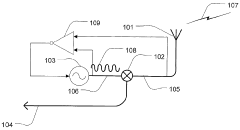
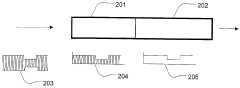
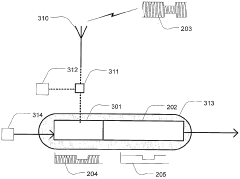
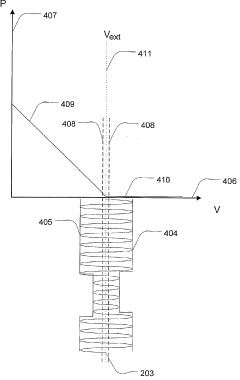
- The method employs a half-wave rectifier and envelope detector, utilizing optoelectronic devices like optical electro-absorption modulators or lasers to transform and extract the signal, eliminating the need for expensive high-frequency components and allowing for simpler frequency tuning and easier upgrades.
A method and a device for detection of a first signal superimposed on a second signal
PatentInactiveEP1971036A1
Innovation
- A method using a half-wave rectifier and an envelope detector to extract the input signal from a high-frequency carrier signal, eliminating the need for expensive local oscillators and RF mixers, and allowing for simpler frequency tuning and easier upgrades by transforming the signal into an envelope signal.


Energy Efficiency Considerations
Energy efficiency is a critical consideration in the design and implementation of half-wave rectifiers for wireless communication systems. As power consumption continues to be a significant concern in modern electronic devices, optimizing the energy efficiency of rectifier circuits becomes paramount. Half-wave rectifiers, while simpler in design compared to full-wave rectifiers, present unique challenges and opportunities for energy optimization.
One of the primary factors affecting energy efficiency in half-wave rectifiers is the conversion efficiency. Due to their inherent nature of only utilizing half of the input waveform, half-wave rectifiers typically have lower conversion efficiencies compared to full-wave counterparts. However, recent advancements in circuit design and materials have led to improved efficiency levels. For instance, the use of Schottky diodes with lower forward voltage drops has significantly reduced power losses during the rectification process.
Another crucial aspect of energy efficiency in half-wave rectifiers is the management of reverse leakage current. This current, which flows when the diode is reverse-biased, contributes to power losses and reduces overall efficiency. Researchers have been exploring various techniques to minimize reverse leakage, including the use of advanced semiconductor materials and novel diode structures.
The choice of operating frequency also plays a vital role in the energy efficiency of half-wave rectifiers in wireless communication systems. Higher frequencies can lead to increased switching losses, while lower frequencies may result in larger, less efficient components. Finding the optimal balance between frequency and efficiency is an ongoing area of research, with particular focus on the emerging 5G and beyond technologies.
Thermal management is another critical factor in ensuring energy efficiency. As rectifier circuits generate heat during operation, effective heat dissipation mechanisms are essential to maintain optimal performance and prevent efficiency degradation. Innovative cooling solutions and thermally efficient packaging designs are being developed to address this challenge.
The integration of energy harvesting techniques with half-wave rectifiers presents an exciting opportunity for improving overall system efficiency. By capturing and utilizing ambient RF energy, these systems can supplement their power sources, reducing the load on primary power supplies and extending battery life in portable devices.
Lastly, the application of advanced control algorithms and adaptive circuit techniques is showing promise in optimizing the energy efficiency of half-wave rectifiers. These approaches allow for dynamic adjustment of circuit parameters based on input power levels and load conditions, ensuring optimal performance across a wide range of operating scenarios.
One of the primary factors affecting energy efficiency in half-wave rectifiers is the conversion efficiency. Due to their inherent nature of only utilizing half of the input waveform, half-wave rectifiers typically have lower conversion efficiencies compared to full-wave counterparts. However, recent advancements in circuit design and materials have led to improved efficiency levels. For instance, the use of Schottky diodes with lower forward voltage drops has significantly reduced power losses during the rectification process.
Another crucial aspect of energy efficiency in half-wave rectifiers is the management of reverse leakage current. This current, which flows when the diode is reverse-biased, contributes to power losses and reduces overall efficiency. Researchers have been exploring various techniques to minimize reverse leakage, including the use of advanced semiconductor materials and novel diode structures.
The choice of operating frequency also plays a vital role in the energy efficiency of half-wave rectifiers in wireless communication systems. Higher frequencies can lead to increased switching losses, while lower frequencies may result in larger, less efficient components. Finding the optimal balance between frequency and efficiency is an ongoing area of research, with particular focus on the emerging 5G and beyond technologies.
Thermal management is another critical factor in ensuring energy efficiency. As rectifier circuits generate heat during operation, effective heat dissipation mechanisms are essential to maintain optimal performance and prevent efficiency degradation. Innovative cooling solutions and thermally efficient packaging designs are being developed to address this challenge.
The integration of energy harvesting techniques with half-wave rectifiers presents an exciting opportunity for improving overall system efficiency. By capturing and utilizing ambient RF energy, these systems can supplement their power sources, reducing the load on primary power supplies and extending battery life in portable devices.
Lastly, the application of advanced control algorithms and adaptive circuit techniques is showing promise in optimizing the energy efficiency of half-wave rectifiers. These approaches allow for dynamic adjustment of circuit parameters based on input power levels and load conditions, ensuring optimal performance across a wide range of operating scenarios.
Electromagnetic Compatibility Analysis
Electromagnetic compatibility (EMC) is a critical consideration in the design and implementation of half-wave rectifiers in wireless communication systems. These rectifiers, while essential for converting alternating current (AC) to direct current (DC), can generate electromagnetic interference (EMI) that may affect the performance of nearby electronic devices or other components within the same system.
The primary source of EMI in half-wave rectifiers is the abrupt switching action that occurs during the rectification process. This switching creates high-frequency harmonics that can propagate through both conducted and radiated paths. Conducted emissions travel through power lines and signal cables, while radiated emissions are transmitted through the air as electromagnetic waves.
To mitigate EMI issues, several strategies can be employed in the design of half-wave rectifiers for wireless communication systems. One approach is the use of snubber circuits, which consist of resistor-capacitor (RC) networks connected in parallel with the rectifying diode. These circuits help to reduce the rate of voltage change (dV/dt) during switching, thereby suppressing high-frequency noise.
Another effective method is the implementation of proper shielding and grounding techniques. Enclosing the rectifier circuit in a conductive enclosure can significantly reduce radiated emissions. Additionally, careful PCB layout design, including the use of ground planes and strategic component placement, can minimize EMI propagation paths.
Filter networks are also crucial in maintaining electromagnetic compatibility. Low-pass filters can be employed at the input and output stages of the rectifier to attenuate high-frequency noise components. Common-mode chokes and differential-mode inductors can be particularly effective in suppressing conducted emissions.
The choice of components in half-wave rectifier designs can greatly impact EMC performance. Fast-recovery diodes with low reverse recovery time can reduce switching noise, while soft-switching techniques can be implemented to minimize abrupt current and voltage transitions.
Compliance with EMC standards is essential for wireless communication systems incorporating half-wave rectifiers. Regulatory bodies such as the Federal Communications Commission (FCC) in the United States and the European Union's EMC Directive set strict limits on both conducted and radiated emissions. Designers must ensure that their rectifier circuits meet these standards through careful design and thorough EMC testing.
As wireless communication systems continue to evolve, with higher frequencies and more complex modulation schemes, the challenges of maintaining electromagnetic compatibility in half-wave rectifier designs are likely to increase. Ongoing research in this area focuses on developing advanced EMI suppression techniques and exploring novel materials and circuit topologies to enhance EMC performance while maintaining high efficiency and reliability in wireless communication applications.
The primary source of EMI in half-wave rectifiers is the abrupt switching action that occurs during the rectification process. This switching creates high-frequency harmonics that can propagate through both conducted and radiated paths. Conducted emissions travel through power lines and signal cables, while radiated emissions are transmitted through the air as electromagnetic waves.
To mitigate EMI issues, several strategies can be employed in the design of half-wave rectifiers for wireless communication systems. One approach is the use of snubber circuits, which consist of resistor-capacitor (RC) networks connected in parallel with the rectifying diode. These circuits help to reduce the rate of voltage change (dV/dt) during switching, thereby suppressing high-frequency noise.
Another effective method is the implementation of proper shielding and grounding techniques. Enclosing the rectifier circuit in a conductive enclosure can significantly reduce radiated emissions. Additionally, careful PCB layout design, including the use of ground planes and strategic component placement, can minimize EMI propagation paths.
Filter networks are also crucial in maintaining electromagnetic compatibility. Low-pass filters can be employed at the input and output stages of the rectifier to attenuate high-frequency noise components. Common-mode chokes and differential-mode inductors can be particularly effective in suppressing conducted emissions.
The choice of components in half-wave rectifier designs can greatly impact EMC performance. Fast-recovery diodes with low reverse recovery time can reduce switching noise, while soft-switching techniques can be implemented to minimize abrupt current and voltage transitions.
Compliance with EMC standards is essential for wireless communication systems incorporating half-wave rectifiers. Regulatory bodies such as the Federal Communications Commission (FCC) in the United States and the European Union's EMC Directive set strict limits on both conducted and radiated emissions. Designers must ensure that their rectifier circuits meet these standards through careful design and thorough EMC testing.
As wireless communication systems continue to evolve, with higher frequencies and more complex modulation schemes, the challenges of maintaining electromagnetic compatibility in half-wave rectifier designs are likely to increase. Ongoing research in this area focuses on developing advanced EMI suppression techniques and exploring novel materials and circuit topologies to enhance EMC performance while maintaining high efficiency and reliability in wireless communication applications.
Unlock deeper insights with PatSnap Eureka Quick Research — get a full tech report to explore trends and direct your research. Try now!
Generate Your Research Report Instantly with AI Agent
Supercharge your innovation with PatSnap Eureka AI Agent Platform!