

Hybrid Manufacturing Tactics Elevating PETG Processing
JUL 28, 202510 MIN READ
Generate Your Research Report Instantly with AI Agent
PatSnap Eureka helps you evaluate technical feasibility & market potential.
PETG Hybrid Manufacturing Background and Objectives
Polyethylene terephthalate glycol (PETG) has emerged as a versatile thermoplastic material with a wide range of applications in various industries. The evolution of PETG processing techniques has been driven by the increasing demand for high-performance, cost-effective, and sustainable manufacturing solutions. Hybrid manufacturing, which combines multiple manufacturing processes, has shown great potential in enhancing PETG processing capabilities and expanding its applications.
The development of PETG hybrid manufacturing techniques can be traced back to the early 2000s when researchers began exploring ways to overcome the limitations of traditional PETG processing methods. Initially, the focus was on improving the material's mechanical properties and processing efficiency. As technology advanced, the scope of hybrid manufacturing expanded to include additive manufacturing, injection molding, and various surface treatment techniques.
The primary objective of research on hybrid manufacturing tactics for PETG processing is to develop innovative methods that can significantly enhance the material's performance, reduce production costs, and minimize environmental impact. This includes improving the material's strength, durability, and dimensional stability while maintaining its desirable properties such as transparency and chemical resistance.
One of the key drivers behind the advancement of PETG hybrid manufacturing is the growing demand for customized and complex-geometry products in industries such as automotive, aerospace, and medical devices. Traditional manufacturing methods often struggle to meet these requirements efficiently and cost-effectively. Hybrid manufacturing techniques aim to address these challenges by combining the strengths of different processes to achieve superior results.
The evolution of PETG hybrid manufacturing has been closely linked to advancements in materials science, process control, and automation technologies. Researchers have been exploring various combinations of manufacturing processes, such as 3D printing followed by injection molding, or extrusion combined with in-line surface treatments. These hybrid approaches aim to leverage the advantages of each process while mitigating their individual limitations.
As the field of PETG hybrid manufacturing continues to evolve, researchers are focusing on several key objectives. These include developing more efficient and precise manufacturing processes, improving the material's recyclability and sustainability, and expanding its applications in emerging industries such as renewable energy and smart packaging. Additionally, there is a growing emphasis on creating scalable and flexible manufacturing solutions that can adapt to changing market demands and technological advancements.
The pursuit of these objectives is expected to drive significant innovations in PETG processing, leading to the development of new products with enhanced performance characteristics and reduced environmental footprint. As research in this field progresses, it is anticipated that PETG hybrid manufacturing will play a crucial role in shaping the future of advanced materials and manufacturing technologies.
The development of PETG hybrid manufacturing techniques can be traced back to the early 2000s when researchers began exploring ways to overcome the limitations of traditional PETG processing methods. Initially, the focus was on improving the material's mechanical properties and processing efficiency. As technology advanced, the scope of hybrid manufacturing expanded to include additive manufacturing, injection molding, and various surface treatment techniques.
The primary objective of research on hybrid manufacturing tactics for PETG processing is to develop innovative methods that can significantly enhance the material's performance, reduce production costs, and minimize environmental impact. This includes improving the material's strength, durability, and dimensional stability while maintaining its desirable properties such as transparency and chemical resistance.
One of the key drivers behind the advancement of PETG hybrid manufacturing is the growing demand for customized and complex-geometry products in industries such as automotive, aerospace, and medical devices. Traditional manufacturing methods often struggle to meet these requirements efficiently and cost-effectively. Hybrid manufacturing techniques aim to address these challenges by combining the strengths of different processes to achieve superior results.
The evolution of PETG hybrid manufacturing has been closely linked to advancements in materials science, process control, and automation technologies. Researchers have been exploring various combinations of manufacturing processes, such as 3D printing followed by injection molding, or extrusion combined with in-line surface treatments. These hybrid approaches aim to leverage the advantages of each process while mitigating their individual limitations.
As the field of PETG hybrid manufacturing continues to evolve, researchers are focusing on several key objectives. These include developing more efficient and precise manufacturing processes, improving the material's recyclability and sustainability, and expanding its applications in emerging industries such as renewable energy and smart packaging. Additionally, there is a growing emphasis on creating scalable and flexible manufacturing solutions that can adapt to changing market demands and technological advancements.
The pursuit of these objectives is expected to drive significant innovations in PETG processing, leading to the development of new products with enhanced performance characteristics and reduced environmental footprint. As research in this field progresses, it is anticipated that PETG hybrid manufacturing will play a crucial role in shaping the future of advanced materials and manufacturing technologies.
Market Analysis for Advanced PETG Products
The market for advanced PETG (Polyethylene Terephthalate Glycol) products has been experiencing significant growth in recent years, driven by the material's unique properties and versatility across various industries. PETG, a modified version of PET, offers enhanced clarity, toughness, and chemical resistance, making it an attractive choice for manufacturers and consumers alike.
In the packaging sector, PETG has gained substantial traction, particularly in food and beverage containers, cosmetics packaging, and pharmaceutical applications. The material's clarity and barrier properties make it ideal for products that require visual appeal and extended shelf life. The global PETG packaging market has been growing steadily, with a compound annual growth rate (CAGR) projected to remain strong in the coming years.
The medical industry has also embraced PETG for its biocompatibility and sterilization capabilities. The demand for PETG in medical device components, surgical instruments, and laboratory equipment has surged, especially in light of recent global health concerns. This sector's growth is expected to continue as healthcare infrastructure expands worldwide.
Consumer goods represent another significant market for advanced PETG products. The material's durability and aesthetic qualities have made it popular in appliances, electronics casings, and household items. As consumers increasingly prioritize sustainability, PETG's recyclability has become a key selling point, further driving its adoption in this sector.
The automotive industry has begun incorporating PETG into various components, valuing its impact resistance and lightweight properties. As vehicle manufacturers strive for fuel efficiency and reduced emissions, the demand for PETG in automotive applications is anticipated to grow substantially.
Market analysis indicates that the Asia-Pacific region is emerging as a major consumer of advanced PETG products, fueled by rapid industrialization and urbanization. North America and Europe continue to be significant markets, with a focus on high-value applications and technological innovations.
The competitive landscape for PETG manufacturing is characterized by a mix of established chemical companies and specialized producers. Key players are investing heavily in research and development to enhance PETG properties and processing techniques, aiming to capture larger market shares and expand into new applications.
As sustainability becomes increasingly important, the market is seeing a trend towards bio-based and recycled PETG alternatives. This shift is likely to reshape the market dynamics in the coming years, with companies that can offer environmentally friendly solutions gaining a competitive edge.
In the packaging sector, PETG has gained substantial traction, particularly in food and beverage containers, cosmetics packaging, and pharmaceutical applications. The material's clarity and barrier properties make it ideal for products that require visual appeal and extended shelf life. The global PETG packaging market has been growing steadily, with a compound annual growth rate (CAGR) projected to remain strong in the coming years.
The medical industry has also embraced PETG for its biocompatibility and sterilization capabilities. The demand for PETG in medical device components, surgical instruments, and laboratory equipment has surged, especially in light of recent global health concerns. This sector's growth is expected to continue as healthcare infrastructure expands worldwide.
Consumer goods represent another significant market for advanced PETG products. The material's durability and aesthetic qualities have made it popular in appliances, electronics casings, and household items. As consumers increasingly prioritize sustainability, PETG's recyclability has become a key selling point, further driving its adoption in this sector.
The automotive industry has begun incorporating PETG into various components, valuing its impact resistance and lightweight properties. As vehicle manufacturers strive for fuel efficiency and reduced emissions, the demand for PETG in automotive applications is anticipated to grow substantially.
Market analysis indicates that the Asia-Pacific region is emerging as a major consumer of advanced PETG products, fueled by rapid industrialization and urbanization. North America and Europe continue to be significant markets, with a focus on high-value applications and technological innovations.
The competitive landscape for PETG manufacturing is characterized by a mix of established chemical companies and specialized producers. Key players are investing heavily in research and development to enhance PETG properties and processing techniques, aiming to capture larger market shares and expand into new applications.
As sustainability becomes increasingly important, the market is seeing a trend towards bio-based and recycled PETG alternatives. This shift is likely to reshape the market dynamics in the coming years, with companies that can offer environmentally friendly solutions gaining a competitive edge.
Current PETG Processing Challenges
PETG (Polyethylene Terephthalate Glycol-modified) processing faces several challenges that hinder its widespread adoption and optimal utilization in various industries. One of the primary issues is the material's sensitivity to moisture absorption, which can lead to hydrolysis during processing. This results in reduced mechanical properties and compromised surface quality of the final product. Manufacturers must implement stringent drying procedures to mitigate this problem, adding complexity and time to the production process.
Another significant challenge is the difficulty in achieving consistent and uniform wall thickness in PETG products, particularly in complex geometries. This issue stems from the material's tendency to experience uneven shrinkage during cooling, which can cause warping, distortion, and dimensional inaccuracies. As a result, manufacturers often struggle to maintain tight tolerances and produce high-precision components without extensive post-processing.
PETG's relatively high melt viscosity compared to other thermoplastics poses challenges in injection molding applications. This characteristic can lead to incomplete mold filling, especially in thin-walled parts or intricate designs. Consequently, processors must carefully optimize injection parameters, such as pressure, temperature, and flow rates, to ensure complete and uniform filling of the mold cavity.
The material's susceptibility to stress cracking under certain conditions is another hurdle in PETG processing. This phenomenon can occur when the material is exposed to specific chemicals or subjected to prolonged stress, potentially compromising the integrity and longevity of the final product. Manufacturers must carefully consider the intended application and environment of PETG components to mitigate this risk.
Furthermore, PETG exhibits limitations in terms of heat resistance compared to some other engineering plastics. This restricts its use in high-temperature applications and necessitates careful consideration of thermal management in product design and manufacturing processes. The material's relatively low glass transition temperature can also lead to challenges in maintaining dimensional stability in environments with fluctuating temperatures.
Recycling and sustainability present additional challenges in PETG processing. While the material is technically recyclable, the presence of glycol modifications can complicate the recycling process and potentially impact the quality of recycled material. This issue becomes particularly relevant as industries strive to improve their environmental footprint and adopt more circular economy practices.
Lastly, achieving optimal surface finish and clarity in PETG products can be challenging, especially in applications requiring high optical quality. Factors such as processing temperatures, cooling rates, and mold surface quality significantly influence the final appearance of PETG components. Manufacturers must carefully balance these parameters to achieve the desired aesthetic and functional properties without compromising other performance aspects.
Another significant challenge is the difficulty in achieving consistent and uniform wall thickness in PETG products, particularly in complex geometries. This issue stems from the material's tendency to experience uneven shrinkage during cooling, which can cause warping, distortion, and dimensional inaccuracies. As a result, manufacturers often struggle to maintain tight tolerances and produce high-precision components without extensive post-processing.
PETG's relatively high melt viscosity compared to other thermoplastics poses challenges in injection molding applications. This characteristic can lead to incomplete mold filling, especially in thin-walled parts or intricate designs. Consequently, processors must carefully optimize injection parameters, such as pressure, temperature, and flow rates, to ensure complete and uniform filling of the mold cavity.
The material's susceptibility to stress cracking under certain conditions is another hurdle in PETG processing. This phenomenon can occur when the material is exposed to specific chemicals or subjected to prolonged stress, potentially compromising the integrity and longevity of the final product. Manufacturers must carefully consider the intended application and environment of PETG components to mitigate this risk.
Furthermore, PETG exhibits limitations in terms of heat resistance compared to some other engineering plastics. This restricts its use in high-temperature applications and necessitates careful consideration of thermal management in product design and manufacturing processes. The material's relatively low glass transition temperature can also lead to challenges in maintaining dimensional stability in environments with fluctuating temperatures.
Recycling and sustainability present additional challenges in PETG processing. While the material is technically recyclable, the presence of glycol modifications can complicate the recycling process and potentially impact the quality of recycled material. This issue becomes particularly relevant as industries strive to improve their environmental footprint and adopt more circular economy practices.
Lastly, achieving optimal surface finish and clarity in PETG products can be challenging, especially in applications requiring high optical quality. Factors such as processing temperatures, cooling rates, and mold surface quality significantly influence the final appearance of PETG components. Manufacturers must carefully balance these parameters to achieve the desired aesthetic and functional properties without compromising other performance aspects.
Existing Hybrid PETG Processing Solutions
01 Extrusion processing of PETG
PETG can be processed using extrusion techniques to create various products. This method involves heating the PETG material and forcing it through a die to form the desired shape. Extrusion processing can be used to produce sheets, films, and other continuous profiles of PETG.- Extrusion and molding techniques for PETG processing: PETG can be processed using various extrusion and molding techniques. These methods include injection molding, blow molding, and extrusion processes. The material's properties allow for efficient processing at lower temperatures compared to other thermoplastics, resulting in energy savings and reduced cycle times. Proper temperature control and cooling rates are crucial for achieving optimal product quality and performance.
- PETG blending and modification: PETG can be blended with other polymers or modified with additives to enhance its properties. This includes improving impact resistance, thermal stability, and barrier properties. Compatibilizers may be used to ensure proper mixing of different polymers. The blending process often involves careful control of mixing ratios and processing conditions to achieve the desired material characteristics.
- PETG film and sheet production: PETG is widely used in film and sheet production due to its excellent clarity and formability. The process involves extruding the material through a die and then cooling it on rollers. Thickness control, surface finish, and orientation are key factors in producing high-quality PETG films and sheets. These products find applications in packaging, displays, and various industrial uses.
- Recycling and reprocessing of PETG: PETG can be recycled and reprocessed, contributing to sustainability efforts. The recycling process typically involves grinding, washing, and remelting the material. Care must be taken to maintain material properties during reprocessing, which may involve the use of stabilizers or other additives. Recycled PETG can be used in various applications, sometimes blended with virgin material to meet specific performance requirements.
- PETG fiber and filament production: PETG can be processed into fibers and filaments for various applications. This involves melting the polymer and extruding it through spinnerets to form continuous fibers. The process requires precise control of drawing ratios, cooling rates, and post-treatment conditions to achieve desired fiber properties. PETG fibers offer advantages such as good dyeability, chemical resistance, and dimensional stability.
02 Injection molding of PETG
Injection molding is a common processing method for PETG. The material is melted and injected into a mold cavity under high pressure. This technique allows for the production of complex shapes and is suitable for high-volume manufacturing of PETG parts with good dimensional accuracy.Expand Specific Solutions03 Thermoforming of PETG sheets
PETG sheets can be processed using thermoforming techniques. This involves heating the PETG sheet until it becomes pliable, then shaping it over a mold using vacuum or pressure. Thermoforming is particularly useful for creating packaging, trays, and other shallow, formed products from PETG.Expand Specific Solutions04 Blending and compounding of PETG
PETG can be blended or compounded with other materials to enhance its properties or create specialized formulations. This process may involve mixing PETG with additives, fillers, or other polymers to achieve desired characteristics such as improved strength, flexibility, or specific visual effects.Expand Specific Solutions05 Post-processing and surface treatment of PETG
After initial forming, PETG products may undergo various post-processing and surface treatment methods. These can include polishing, coating, printing, or chemical treatments to enhance appearance, durability, or functionality. Such processes can improve the surface finish, add decorative elements, or modify the material's properties for specific applications.Expand Specific Solutions
Key Players in PETG Hybrid Manufacturing
The competitive landscape for "Research on Hybrid Manufacturing Tactics Elevating PETG Processing" is characterized by a growing market in an early development stage. The technology is still evolving, with various players exploring innovative approaches to enhance PETG processing through hybrid manufacturing techniques. Market size is expanding as industries recognize the potential of improved PETG processing methods. In terms of technological maturity, companies like China Petroleum & Chemical Corp., SINOPEC Beijing Research Institute of Chemical Industry, and PetroChina Co., Ltd. are leading research efforts, leveraging their expertise in petrochemicals and materials science to advance hybrid manufacturing tactics for PETG. Smaller specialized firms and academic institutions are also contributing to the field's development, fostering a competitive and collaborative environment.
SK Chemicals Co. Ltd.
Technical Solution: SK Chemicals has developed advanced hybrid manufacturing techniques for PETG processing. Their approach combines traditional extrusion methods with innovative in-line modification processes. This hybrid system allows for real-time adjustments of PETG properties during production, enhancing material performance and processing efficiency. The company has implemented a multi-stage reactor system that enables precise control over the polymerization process, resulting in PETG with tailored molecular weight distributions and improved mechanical properties[1]. Additionally, SK Chemicals has integrated AI-driven process control algorithms to optimize production parameters, reducing energy consumption and minimizing waste[3].
Strengths: Highly customizable PETG properties, improved production efficiency, and reduced environmental impact. Weaknesses: Higher initial investment costs and potential complexity in system maintenance.
Bühler AG
Technical Solution: Bühler AG has pioneered a hybrid manufacturing approach for PETG processing that integrates continuous extrusion with batch processing techniques. Their system utilizes a twin-screw extruder coupled with a specially designed reactive processing unit, allowing for controlled chemical modifications during PETG production. This setup enables the incorporation of additives and functional compounds at precise stages of the manufacturing process, resulting in enhanced material properties[2]. Bühler's technology also features an advanced online monitoring system that uses spectroscopic methods to analyze PETG quality in real-time, ensuring consistent product characteristics[4]. The company has further developed a modular design for their hybrid manufacturing line, allowing for easy scalability and adaptation to different production requirements.
Strengths: Versatile production capabilities, high product consistency, and adaptable manufacturing setup. Weaknesses: Potentially higher operational complexity and specialized operator training requirements.
Innovative PETG Hybrid Manufacturing Techniques
Process for the production of glycol-modified polyethylene terephthalate from recycled raw materials
PatentActiveCA3025206C
Innovation
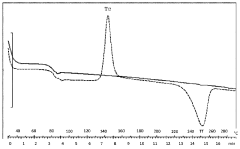
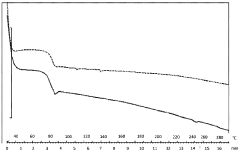
- A process involving the depolymerization of recycled PET in the presence of monoethylene glycol and neopentyl glycol, followed by polymerization under specific temperature and pressure conditions, to produce polyethylene terephthalate glycol-modified (r-PETG) without separating monomers, enabling the creation of a food-grade material suitable for various applications.
Process for the production of glycol-modified polyethylene therephthalate from recycled raw materials
PatentActiveEP3320017A1
Innovation
- A process involving the depolymerization of recycled PET in the presence of monoethylene glycol and neopentyl glycol, followed by polymerization without monomer separation, to produce polyethylene terephthalate glycol-modified (r-PETG) with improved physical and mechanical properties, making it suitable for food-grade applications.
Environmental Impact of PETG Hybrid Manufacturing
The environmental impact of PETG hybrid manufacturing is a critical consideration in the development and implementation of this innovative processing technique. As industries strive for more sustainable production methods, it is essential to evaluate the ecological footprint of PETG hybrid manufacturing compared to traditional manufacturing processes.
One of the primary environmental benefits of PETG hybrid manufacturing is the potential reduction in material waste. By combining additive and subtractive manufacturing techniques, this approach allows for more precise material usage, minimizing excess material and reducing the overall environmental impact associated with raw material production and disposal. This optimization of material consumption can lead to significant reductions in energy consumption and greenhouse gas emissions throughout the supply chain.
Furthermore, PETG hybrid manufacturing offers opportunities for improved energy efficiency in the production process. The integration of additive manufacturing techniques, such as 3D printing, can reduce the energy required for certain manufacturing steps compared to traditional methods. This energy savings can contribute to a lower carbon footprint for PETG products manufactured using hybrid techniques.
The recyclability of PETG is another crucial factor in assessing the environmental impact of hybrid manufacturing. PETG is known for its recyclability, and hybrid manufacturing techniques may enhance this characteristic by enabling the production of more easily recyclable components. This can lead to a more circular economy approach, reducing the amount of plastic waste sent to landfills or incineration facilities.
However, it is important to consider potential negative environmental impacts associated with PETG hybrid manufacturing. The use of multiple manufacturing processes may require additional equipment and resources, potentially increasing the overall energy consumption and carbon footprint of the production facility. Additionally, the complexity of hybrid manufacturing systems may lead to increased maintenance requirements and potential equipment obsolescence, which could result in electronic waste if not properly managed.
Water usage and pollution are also important environmental considerations in PETG hybrid manufacturing. While the process may offer opportunities for reduced water consumption compared to some traditional manufacturing methods, it is crucial to implement proper water treatment and recycling systems to minimize the environmental impact of any wastewater generated during production.
In conclusion, the environmental impact of PETG hybrid manufacturing is multifaceted, offering potential benefits in terms of material efficiency and energy savings, while also presenting challenges related to equipment complexity and resource management. As this technology continues to evolve, it will be essential to conduct comprehensive life cycle assessments to fully understand and optimize its environmental performance, ensuring that the benefits of hybrid manufacturing are realized without compromising ecological sustainability.
One of the primary environmental benefits of PETG hybrid manufacturing is the potential reduction in material waste. By combining additive and subtractive manufacturing techniques, this approach allows for more precise material usage, minimizing excess material and reducing the overall environmental impact associated with raw material production and disposal. This optimization of material consumption can lead to significant reductions in energy consumption and greenhouse gas emissions throughout the supply chain.
Furthermore, PETG hybrid manufacturing offers opportunities for improved energy efficiency in the production process. The integration of additive manufacturing techniques, such as 3D printing, can reduce the energy required for certain manufacturing steps compared to traditional methods. This energy savings can contribute to a lower carbon footprint for PETG products manufactured using hybrid techniques.
The recyclability of PETG is another crucial factor in assessing the environmental impact of hybrid manufacturing. PETG is known for its recyclability, and hybrid manufacturing techniques may enhance this characteristic by enabling the production of more easily recyclable components. This can lead to a more circular economy approach, reducing the amount of plastic waste sent to landfills or incineration facilities.
However, it is important to consider potential negative environmental impacts associated with PETG hybrid manufacturing. The use of multiple manufacturing processes may require additional equipment and resources, potentially increasing the overall energy consumption and carbon footprint of the production facility. Additionally, the complexity of hybrid manufacturing systems may lead to increased maintenance requirements and potential equipment obsolescence, which could result in electronic waste if not properly managed.
Water usage and pollution are also important environmental considerations in PETG hybrid manufacturing. While the process may offer opportunities for reduced water consumption compared to some traditional manufacturing methods, it is crucial to implement proper water treatment and recycling systems to minimize the environmental impact of any wastewater generated during production.
In conclusion, the environmental impact of PETG hybrid manufacturing is multifaceted, offering potential benefits in terms of material efficiency and energy savings, while also presenting challenges related to equipment complexity and resource management. As this technology continues to evolve, it will be essential to conduct comprehensive life cycle assessments to fully understand and optimize its environmental performance, ensuring that the benefits of hybrid manufacturing are realized without compromising ecological sustainability.
Cost-Benefit Analysis of Hybrid PETG Processing
The cost-benefit analysis of hybrid PETG processing reveals a complex interplay of factors that influence the overall economic viability of this innovative manufacturing approach. Initial investment costs for hybrid manufacturing systems are typically higher than traditional single-process setups, primarily due to the integration of multiple technologies and the need for advanced control systems. However, these upfront expenses are often offset by long-term benefits in productivity and material efficiency.
One of the primary advantages of hybrid PETG processing is the reduction in material waste. By combining additive and subtractive manufacturing techniques, manufacturers can optimize material usage, resulting in significant cost savings over time. This is particularly relevant for PETG, a material known for its recyclability and sustainability properties. The hybrid approach allows for more precise control over the final product geometry, minimizing the need for post-processing and reducing associated labor costs.
Energy consumption is another critical factor in the cost-benefit equation. Hybrid systems may initially consume more energy due to the operation of multiple processes. However, the overall energy efficiency can be improved through optimized process integration and reduced production time. This is especially true for complex PETG components that would otherwise require multiple separate manufacturing steps.
Labor costs present a nuanced picture in hybrid PETG processing. While the operation of hybrid systems may require more skilled personnel, potentially increasing labor costs, the increased automation and process integration can lead to a reduction in overall labor hours per unit produced. This shift often results in higher productivity and can justify the investment in workforce upskilling.
Quality improvements achieved through hybrid manufacturing can significantly impact the cost-benefit analysis. The ability to produce PETG parts with enhanced mechanical properties and surface finishes can lead to reduced rejection rates and warranty claims. This improvement in quality can open up new market opportunities and potentially command premium pricing for the finished products.
Time-to-market considerations also play a crucial role in the economic assessment. Hybrid manufacturing can dramatically reduce product development cycles by allowing for rapid prototyping and iterative design improvements. This agility can provide a competitive edge in fast-paced markets, potentially leading to increased market share and revenue.
In conclusion, while the initial costs of implementing hybrid PETG processing technologies can be substantial, the long-term benefits in terms of material efficiency, product quality, and manufacturing flexibility often outweigh these expenses. Companies must carefully evaluate their specific production needs, market demands, and financial capabilities to determine the optimal implementation strategy for hybrid PETG processing technologies.
One of the primary advantages of hybrid PETG processing is the reduction in material waste. By combining additive and subtractive manufacturing techniques, manufacturers can optimize material usage, resulting in significant cost savings over time. This is particularly relevant for PETG, a material known for its recyclability and sustainability properties. The hybrid approach allows for more precise control over the final product geometry, minimizing the need for post-processing and reducing associated labor costs.
Energy consumption is another critical factor in the cost-benefit equation. Hybrid systems may initially consume more energy due to the operation of multiple processes. However, the overall energy efficiency can be improved through optimized process integration and reduced production time. This is especially true for complex PETG components that would otherwise require multiple separate manufacturing steps.
Labor costs present a nuanced picture in hybrid PETG processing. While the operation of hybrid systems may require more skilled personnel, potentially increasing labor costs, the increased automation and process integration can lead to a reduction in overall labor hours per unit produced. This shift often results in higher productivity and can justify the investment in workforce upskilling.
Quality improvements achieved through hybrid manufacturing can significantly impact the cost-benefit analysis. The ability to produce PETG parts with enhanced mechanical properties and surface finishes can lead to reduced rejection rates and warranty claims. This improvement in quality can open up new market opportunities and potentially command premium pricing for the finished products.
Time-to-market considerations also play a crucial role in the economic assessment. Hybrid manufacturing can dramatically reduce product development cycles by allowing for rapid prototyping and iterative design improvements. This agility can provide a competitive edge in fast-paced markets, potentially leading to increased market share and revenue.
In conclusion, while the initial costs of implementing hybrid PETG processing technologies can be substantial, the long-term benefits in terms of material efficiency, product quality, and manufacturing flexibility often outweigh these expenses. Companies must carefully evaluate their specific production needs, market demands, and financial capabilities to determine the optimal implementation strategy for hybrid PETG processing technologies.
Unlock deeper insights with PatSnap Eureka Quick Research — get a full tech report to explore trends and direct your research. Try now!
Generate Your Research Report Instantly with AI Agent
Supercharge your innovation with PatSnap Eureka AI Agent Platform!