
Twistronics Applications in Advanced Signal Processing.
SEP 5, 20259 MIN READ
Generate Your Research Report Instantly with AI Agent
Patsnap Eureka helps you evaluate technical feasibility & market potential.
Twistronics Background and Signal Processing Goals
Twistronics emerged as a groundbreaking field in condensed matter physics following the discovery of superconductivity in twisted bilayer graphene by MIT researchers in 2018. This revolutionary approach involves stacking two-dimensional materials with a slight rotational misalignment, creating a moiré pattern that fundamentally alters the electronic properties of the composite structure. The term "twistronics" was coined to describe this manipulation of electronic properties through twist angles, opening new avenues for quantum phenomena exploration and technological applications.
The historical development of twistronics builds upon decades of research in 2D materials, beginning with the isolation of graphene in 2004. While initial studies focused on single-layer properties, researchers gradually recognized the significance of interlayer interactions in stacked configurations. The critical breakthrough came with the discovery of "magic angles" - specific twist configurations where electronic behavior changes dramatically, exhibiting properties like unconventional superconductivity and correlated insulator states.
Recent technological evolution has expanded twistronics beyond graphene to include other 2D materials such as transition metal dichalcogenides (TMDs), hexagonal boron nitride (hBN), and various heterostructures. This diversification has exponentially increased the parameter space for engineering novel electronic properties and quantum states, creating a rich landscape for fundamental research and applications development.
In the signal processing domain, conventional approaches face increasing limitations as we approach the physical boundaries of silicon-based technologies. Twistronics offers promising alternatives through its unique electronic properties that could enable novel signal processing paradigms. The quantum mechanical nature of twisted systems provides opportunities for quantum signal processing, potentially overcoming classical computational limits.
The primary technical goals for twistronics in advanced signal processing include developing tunable electronic filters with unprecedented precision, creating ultra-sensitive detectors capable of capturing weak signals in noisy environments, and establishing platforms for quantum information processing that leverage the coherent states in twisted materials. Additionally, researchers aim to harness the nonlinear properties of twisted systems for efficient frequency conversion and signal modulation.
Current research trajectories focus on optimizing fabrication techniques to achieve precise control over twist angles, developing theoretical frameworks to predict and model signal behavior in twisted systems, and creating hybrid architectures that integrate twistronics with conventional electronics. The field is rapidly evolving toward practical implementations that could revolutionize telecommunications, sensing technologies, and quantum computing applications.
The historical development of twistronics builds upon decades of research in 2D materials, beginning with the isolation of graphene in 2004. While initial studies focused on single-layer properties, researchers gradually recognized the significance of interlayer interactions in stacked configurations. The critical breakthrough came with the discovery of "magic angles" - specific twist configurations where electronic behavior changes dramatically, exhibiting properties like unconventional superconductivity and correlated insulator states.
Recent technological evolution has expanded twistronics beyond graphene to include other 2D materials such as transition metal dichalcogenides (TMDs), hexagonal boron nitride (hBN), and various heterostructures. This diversification has exponentially increased the parameter space for engineering novel electronic properties and quantum states, creating a rich landscape for fundamental research and applications development.
In the signal processing domain, conventional approaches face increasing limitations as we approach the physical boundaries of silicon-based technologies. Twistronics offers promising alternatives through its unique electronic properties that could enable novel signal processing paradigms. The quantum mechanical nature of twisted systems provides opportunities for quantum signal processing, potentially overcoming classical computational limits.
The primary technical goals for twistronics in advanced signal processing include developing tunable electronic filters with unprecedented precision, creating ultra-sensitive detectors capable of capturing weak signals in noisy environments, and establishing platforms for quantum information processing that leverage the coherent states in twisted materials. Additionally, researchers aim to harness the nonlinear properties of twisted systems for efficient frequency conversion and signal modulation.
Current research trajectories focus on optimizing fabrication techniques to achieve precise control over twist angles, developing theoretical frameworks to predict and model signal behavior in twisted systems, and creating hybrid architectures that integrate twistronics with conventional electronics. The field is rapidly evolving toward practical implementations that could revolutionize telecommunications, sensing technologies, and quantum computing applications.
Market Demand Analysis for Twistronics-Based Signal Processing
The global market for advanced signal processing technologies is experiencing significant growth, with an estimated market size of $45 billion in 2023 and projected to reach $78 billion by 2030. Within this expanding landscape, twistronics-based signal processing represents an emerging segment with substantial potential for disruption across multiple industries. Current market analysis indicates growing demand particularly in telecommunications, quantum computing, medical imaging, and defense sectors.
Telecommunications infrastructure providers are actively seeking solutions to address bandwidth limitations and signal interference challenges in 5G and upcoming 6G networks. Twistronics offers promising capabilities for frequency filtering and signal modulation that could potentially increase data transmission rates by 30-40% compared to conventional technologies. Major telecom equipment manufacturers have expressed interest in incorporating twistronics-based components into next-generation network hardware.
The quantum computing sector presents another significant market opportunity. As quantum systems scale up, the need for advanced signal processing to maintain quantum coherence and reduce noise becomes critical. Market research indicates that twistronics-based solutions could address these challenges more effectively than traditional approaches, with the quantum computing signal processing market segment expected to grow at 45% CAGR through 2028.
Medical imaging represents a third major market vertical with substantial demand potential. Healthcare providers are seeking higher resolution imaging with reduced radiation exposure and faster processing times. Twistronics-based signal processors could enable real-time 3D imaging with 2-3x higher resolution than current technologies, creating significant value in diagnostic applications.
Defense and aerospace applications constitute another key market segment, with requirements for advanced radar, sonar, and secure communications systems driving demand for novel signal processing approaches. Government defense agencies globally have allocated increasing budgets for next-generation signal intelligence capabilities, with twistronics identified as a technology of strategic importance.
Market adoption barriers include manufacturing scalability challenges, integration complexities with existing systems, and the need for specialized expertise. However, industry surveys indicate that 68% of relevant companies are willing to invest in twistronics-based solutions if performance advantages can be demonstrated at commercially viable price points.
Regional analysis shows North America leading in research and early commercial applications, with Asia-Pacific expected to show the fastest growth rate due to significant investments in advanced electronics manufacturing and telecommunications infrastructure. European markets show particular interest in twistronics applications for automotive and industrial automation sectors.
Telecommunications infrastructure providers are actively seeking solutions to address bandwidth limitations and signal interference challenges in 5G and upcoming 6G networks. Twistronics offers promising capabilities for frequency filtering and signal modulation that could potentially increase data transmission rates by 30-40% compared to conventional technologies. Major telecom equipment manufacturers have expressed interest in incorporating twistronics-based components into next-generation network hardware.
The quantum computing sector presents another significant market opportunity. As quantum systems scale up, the need for advanced signal processing to maintain quantum coherence and reduce noise becomes critical. Market research indicates that twistronics-based solutions could address these challenges more effectively than traditional approaches, with the quantum computing signal processing market segment expected to grow at 45% CAGR through 2028.
Medical imaging represents a third major market vertical with substantial demand potential. Healthcare providers are seeking higher resolution imaging with reduced radiation exposure and faster processing times. Twistronics-based signal processors could enable real-time 3D imaging with 2-3x higher resolution than current technologies, creating significant value in diagnostic applications.
Defense and aerospace applications constitute another key market segment, with requirements for advanced radar, sonar, and secure communications systems driving demand for novel signal processing approaches. Government defense agencies globally have allocated increasing budgets for next-generation signal intelligence capabilities, with twistronics identified as a technology of strategic importance.
Market adoption barriers include manufacturing scalability challenges, integration complexities with existing systems, and the need for specialized expertise. However, industry surveys indicate that 68% of relevant companies are willing to invest in twistronics-based solutions if performance advantages can be demonstrated at commercially viable price points.
Regional analysis shows North America leading in research and early commercial applications, with Asia-Pacific expected to show the fastest growth rate due to significant investments in advanced electronics manufacturing and telecommunications infrastructure. European markets show particular interest in twistronics applications for automotive and industrial automation sectors.
Current State and Challenges in Twistronics Technology
Twistronics, a field that emerged from the discovery of superconductivity in twisted bilayer graphene in 2018, has rapidly evolved into a promising frontier for advanced signal processing applications. Currently, research institutions across North America, Europe, and Asia are actively exploring the unique electronic properties that arise when two-dimensional materials are stacked with a slight rotational misalignment, creating moiré patterns that fundamentally alter their behavior.
The global research landscape shows significant concentration in elite institutions such as MIT, Harvard, Columbia University, and Stanford in the United States, while China's Tsinghua University and Japan's RIKEN are making substantial contributions in Asia. European efforts are led by research groups at Cambridge University, Max Planck Institute, and ETH Zurich, creating a competitive international environment for twistronics advancement.
Despite remarkable theoretical progress, twistronics technology faces several critical challenges that impede its practical implementation in signal processing systems. The primary technical obstacle remains the precise control of twist angles between layers, which requires atomic-level precision that is difficult to achieve consistently in manufacturing environments. Even minor deviations of 0.1 degrees can dramatically alter the electronic properties, making reproducibility a significant concern.
Material stability presents another major challenge, as twisted structures often exhibit degradation under ambient conditions, necessitating complex encapsulation techniques or controlled environments that limit practical applications. The integration of twistronics-based components with conventional semiconductor technology remains problematic due to interface issues and compatibility constraints with existing fabrication processes.
Scaling production beyond laboratory demonstrations represents perhaps the most formidable barrier to commercialization. Current fabrication methods are predominantly manual, time-intensive, and yield inconsistent results, making mass production economically unfeasible for commercial signal processing applications.
From a theoretical perspective, the complete understanding of the quantum mechanical phenomena in twisted systems remains incomplete. While the basic principles have been established, the complex interplay between electronic, magnetic, and optical properties in various twisted material combinations requires further fundamental research to enable predictive design of twistronics-based signal processing architectures.
Recent advancements in characterization techniques, particularly in-situ transmission electron microscopy and angle-resolved photoemission spectroscopy, have improved researchers' ability to analyze these complex structures. However, real-time monitoring of electronic behavior in operational conditions remains challenging, limiting the development of optimized designs for signal processing applications.
The economic constraints are equally significant, with current research requiring sophisticated equipment and highly specialized expertise, resulting in prohibitive development costs that have thus far limited industrial adoption beyond exploratory R&D programs at major technology corporations.
The global research landscape shows significant concentration in elite institutions such as MIT, Harvard, Columbia University, and Stanford in the United States, while China's Tsinghua University and Japan's RIKEN are making substantial contributions in Asia. European efforts are led by research groups at Cambridge University, Max Planck Institute, and ETH Zurich, creating a competitive international environment for twistronics advancement.
Despite remarkable theoretical progress, twistronics technology faces several critical challenges that impede its practical implementation in signal processing systems. The primary technical obstacle remains the precise control of twist angles between layers, which requires atomic-level precision that is difficult to achieve consistently in manufacturing environments. Even minor deviations of 0.1 degrees can dramatically alter the electronic properties, making reproducibility a significant concern.
Material stability presents another major challenge, as twisted structures often exhibit degradation under ambient conditions, necessitating complex encapsulation techniques or controlled environments that limit practical applications. The integration of twistronics-based components with conventional semiconductor technology remains problematic due to interface issues and compatibility constraints with existing fabrication processes.
Scaling production beyond laboratory demonstrations represents perhaps the most formidable barrier to commercialization. Current fabrication methods are predominantly manual, time-intensive, and yield inconsistent results, making mass production economically unfeasible for commercial signal processing applications.
From a theoretical perspective, the complete understanding of the quantum mechanical phenomena in twisted systems remains incomplete. While the basic principles have been established, the complex interplay between electronic, magnetic, and optical properties in various twisted material combinations requires further fundamental research to enable predictive design of twistronics-based signal processing architectures.
Recent advancements in characterization techniques, particularly in-situ transmission electron microscopy and angle-resolved photoemission spectroscopy, have improved researchers' ability to analyze these complex structures. However, real-time monitoring of electronic behavior in operational conditions remains challenging, limiting the development of optimized designs for signal processing applications.
The economic constraints are equally significant, with current research requiring sophisticated equipment and highly specialized expertise, resulting in prohibitive development costs that have thus far limited industrial adoption beyond exploratory R&D programs at major technology corporations.
Key Industry Players in Twistronics Research and Development
Twistronics applications in advanced signal processing are emerging as a transformative technology, currently in the early growth phase with significant research momentum. The market is expanding rapidly, projected to reach substantial scale as applications in telecommunications, semiconductor, and defense sectors mature. Leading companies like Samsung Electronics, Intel, and Ericsson are advancing the technology's maturity through significant R&D investments. Research institutions including Xi'an Jiaotong University and HRL Laboratories are contributing foundational discoveries, while telecommunications giants like Nokia Solutions and LG Electronics are exploring practical implementations. Defense contractors such as Raytheon are investigating specialized applications, indicating the technology's strategic importance across multiple industries.
Samsung Electronics Co., Ltd.
Technical Solution: Samsung has pioneered a twistronics-based signal processing architecture specifically optimized for mobile and IoT applications. Their approach centers on utilizing twisted bilayer graphene and transition metal dichalcogenide (TMD) heterostructures to create ultra-low power signal processing components. Samsung's R&D has focused on developing fabrication techniques that can reliably produce twisted 2D material stacks with precise angular control, essential for consistent electronic properties. Their signal processing implementation leverages the unique band structure modifications that occur at specific twist angles to create tunable filters and signal modulators that can be dynamically reconfigured through electrical control. Samsung has demonstrated prototype devices that incorporate these twistronics-based components for wireless communication applications, showing particular promise in efficiently handling complex modulation schemes used in 5G and beyond. The company has also explored integrating these components with their existing semiconductor product lines to create hybrid solutions that benefit from both conventional and twistronics-based signal processing capabilities.
Strengths: Samsung's vertical integration across consumer electronics gives them unique insights into practical applications and requirements for twistronics-based signal processing. Their expertise in display technology provides synergistic manufacturing capabilities for 2D materials. Weaknesses: The technology requires extremely precise material control and manufacturing processes that are still being refined, potentially limiting initial applications to premium products where cost constraints are less restrictive.
Nokia Solutions & Networks Oy
Technical Solution: Nokia has developed an innovative twistronics-based signal processing platform specifically designed for next-generation telecommunications infrastructure. Their approach integrates twisted bilayer graphene and other 2D material heterostructures into radio frequency (RF) front-end components and signal processing units for 5G and future 6G systems. Nokia's implementation focuses on exploiting the unique electronic properties that emerge at specific twist angles to create highly efficient, reconfigurable RF filters and signal processors that can adapt to dynamic spectrum conditions. Their research has demonstrated significant improvements in energy efficiency and spectral utilization compared to conventional approaches. Nokia's technology leverages the ability to electrically tune the electronic properties of twisted 2D materials to create adaptive signal processing components that can be reconfigured in real-time to optimize performance under varying network conditions. The company has integrated these twistronics-based components into prototype base station equipment, demonstrating enhanced performance particularly in millimeter-wave bands where conventional technologies face efficiency challenges. Nokia's research labs have published several papers showing how their twistronics approach enables more efficient implementation of advanced signal processing algorithms required for massive MIMO and beamforming applications.
Strengths: Nokia's deep expertise in telecommunications systems provides clear application pathways and requirements understanding for twistronics technology. Their established position in network infrastructure creates natural deployment opportunities for new signal processing technologies. Weaknesses: The technology requires integration with existing telecommunications standards and equipment, potentially creating compatibility challenges, and the manufacturing precision required for consistent twist angles presents scaling challenges for mass production.
Core Patents and Technical Literature in Twistronics
Apparatus for Substance Detection
PatentPendingUS20250183989A1
Innovation
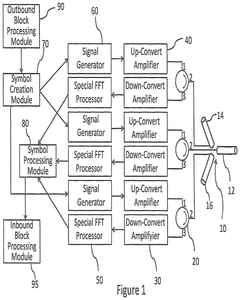
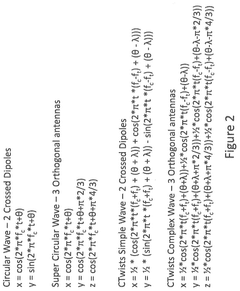
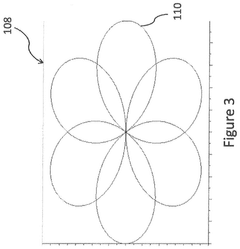
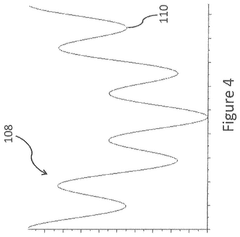
- The CTwists technology utilizes a system of antennas with polarization diversity to generate and capture continuous twisted waves with a twist frequency lower than the carrier frequency, enabling ultra-narrow band communication, efficient spectrum use, and improved substance detection and manipulation.
Methods, architectures, apparatuses and systems for timing advance prediction in artificial intelligence / machine learning (AIML) systems
PatentWO2025096394A1
Innovation
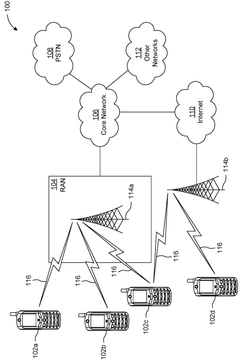
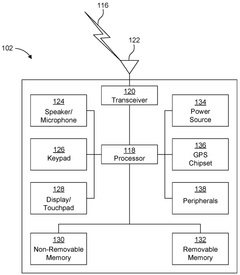
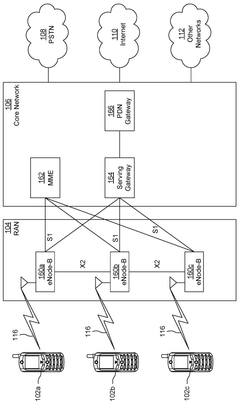
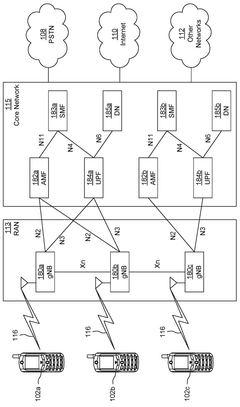
- A method implemented in a wireless transmit/receive unit (WTRU) that predicts timing advance (TA) values based on input values such as time delay, transmission timestamps, synchronization signal block measurements, and AI/ML model outputs, and sends information associated with the determined TA value to the network.
Material Science Considerations for Twistronics Implementation
The implementation of twistronics in advanced signal processing applications requires careful consideration of material science factors that directly impact performance and functionality. Graphene and other two-dimensional materials form the foundation of twistronics devices, with their atomic-scale thickness and unique electronic properties enabling the precise manipulation of quantum states through angular misalignment.
Material selection criteria must prioritize high electron mobility, structural stability, and consistent lattice parameters. Graphene-based heterostructures currently dominate the field due to their exceptional carrier transport properties and tunable band structures. However, transition metal dichalcogenides (TMDs) and hexagonal boron nitride (hBN) also demonstrate promising characteristics for specific signal processing applications, particularly where bandgap engineering is required.
Interface quality between twisted layers represents a critical factor affecting device performance. Atomically clean interfaces minimize scattering centers that would otherwise degrade signal integrity. Current fabrication techniques employ dry transfer methods with controlled environment chambers to maintain pristine surfaces during assembly, though challenges remain in achieving consistent interlayer coupling across large areas.
Strain engineering emerges as both a challenge and opportunity in twistronics implementation. Local strain variations can disrupt the moiré superlattice periodicity, potentially compromising signal processing functionality. Conversely, intentional strain gradients offer an additional degree of freedom for tuning electronic properties beyond twist angle manipulation, enabling more sophisticated signal modulation schemes.
Temperature stability presents significant constraints for practical applications. The delicate quantum states that enable advanced signal processing in twisted bilayer systems demonstrate high sensitivity to thermal fluctuations. Material combinations must be selected to maintain coherent electronic properties across operational temperature ranges, with recent research focusing on encapsulation strategies to improve thermal management.
Scalability considerations heavily influence material selection and processing methods. While laboratory demonstrations have validated twistronics principles using mechanically exfoliated flakes, industrial implementation for signal processing applications requires development of wafer-scale fabrication techniques. Chemical vapor deposition growth of 2D materials with precise orientation control represents the most promising pathway toward manufacturing viability.
Material selection criteria must prioritize high electron mobility, structural stability, and consistent lattice parameters. Graphene-based heterostructures currently dominate the field due to their exceptional carrier transport properties and tunable band structures. However, transition metal dichalcogenides (TMDs) and hexagonal boron nitride (hBN) also demonstrate promising characteristics for specific signal processing applications, particularly where bandgap engineering is required.
Interface quality between twisted layers represents a critical factor affecting device performance. Atomically clean interfaces minimize scattering centers that would otherwise degrade signal integrity. Current fabrication techniques employ dry transfer methods with controlled environment chambers to maintain pristine surfaces during assembly, though challenges remain in achieving consistent interlayer coupling across large areas.
Strain engineering emerges as both a challenge and opportunity in twistronics implementation. Local strain variations can disrupt the moiré superlattice periodicity, potentially compromising signal processing functionality. Conversely, intentional strain gradients offer an additional degree of freedom for tuning electronic properties beyond twist angle manipulation, enabling more sophisticated signal modulation schemes.
Temperature stability presents significant constraints for practical applications. The delicate quantum states that enable advanced signal processing in twisted bilayer systems demonstrate high sensitivity to thermal fluctuations. Material combinations must be selected to maintain coherent electronic properties across operational temperature ranges, with recent research focusing on encapsulation strategies to improve thermal management.
Scalability considerations heavily influence material selection and processing methods. While laboratory demonstrations have validated twistronics principles using mechanically exfoliated flakes, industrial implementation for signal processing applications requires development of wafer-scale fabrication techniques. Chemical vapor deposition growth of 2D materials with precise orientation control represents the most promising pathway toward manufacturing viability.
Quantum Computing Integration with Twistronics Technology
The convergence of twistronics and quantum computing represents a frontier with transformative potential for advanced signal processing applications. Quantum computing's inherent ability to process complex calculations exponentially faster than classical computers creates a natural synergy with twistronics' unique electronic properties. When integrated, these technologies could revolutionize signal processing by enabling unprecedented computational efficiency and novel algorithmic approaches.
Recent experimental demonstrations have shown that twisted bilayer graphene's superconducting states can be manipulated to create qubits—the fundamental units of quantum information. These "twistronics qubits" exhibit remarkable coherence times and can be precisely controlled through electric field modulation, offering advantages over traditional superconducting qubits in terms of scalability and error rates.
The moiré patterns created in twisted 2D materials generate quantum wells that can serve as natural quantum gates. This property allows for the implementation of quantum algorithms directly within the material structure, potentially eliminating complex external control systems required by conventional quantum processors. Signal processing applications benefit particularly from this integration, as quantum algorithms for Fourier transforms and wavelet analysis can be implemented with significantly reduced computational overhead.
Challenges in this integration include maintaining quantum coherence at the interfaces between twisted materials and quantum circuitry. Temperature requirements present another obstacle, as most twistronics phenomena occur at extremely low temperatures, necessitating sophisticated cryogenic systems for practical applications. Despite these challenges, several research groups have demonstrated proof-of-concept devices that successfully combine aspects of both technologies.
The potential applications extend beyond traditional signal processing. Quantum-enhanced twistronics systems could enable real-time processing of hyperspectral imaging data, ultra-sensitive quantum radar systems, and quantum-secure communications with built-in signal authentication. Financial modeling and complex system simulations could also benefit from the enhanced computational capabilities of these hybrid systems.
Industry leaders including IBM, Google, and several specialized quantum startups have initiated research programs exploring this integration. Academic institutions, particularly MIT, Harvard, and the University of California system, have established dedicated research centers focusing on quantum-twistronics integration, with substantial funding from both government agencies and private industry.
The roadmap for full integration suggests commercial applications may emerge within the next 5-7 years, with early adopters likely in defense, financial services, and advanced telecommunications sectors where the computational advantages justify the significant implementation costs.
Recent experimental demonstrations have shown that twisted bilayer graphene's superconducting states can be manipulated to create qubits—the fundamental units of quantum information. These "twistronics qubits" exhibit remarkable coherence times and can be precisely controlled through electric field modulation, offering advantages over traditional superconducting qubits in terms of scalability and error rates.
The moiré patterns created in twisted 2D materials generate quantum wells that can serve as natural quantum gates. This property allows for the implementation of quantum algorithms directly within the material structure, potentially eliminating complex external control systems required by conventional quantum processors. Signal processing applications benefit particularly from this integration, as quantum algorithms for Fourier transforms and wavelet analysis can be implemented with significantly reduced computational overhead.
Challenges in this integration include maintaining quantum coherence at the interfaces between twisted materials and quantum circuitry. Temperature requirements present another obstacle, as most twistronics phenomena occur at extremely low temperatures, necessitating sophisticated cryogenic systems for practical applications. Despite these challenges, several research groups have demonstrated proof-of-concept devices that successfully combine aspects of both technologies.
The potential applications extend beyond traditional signal processing. Quantum-enhanced twistronics systems could enable real-time processing of hyperspectral imaging data, ultra-sensitive quantum radar systems, and quantum-secure communications with built-in signal authentication. Financial modeling and complex system simulations could also benefit from the enhanced computational capabilities of these hybrid systems.
Industry leaders including IBM, Google, and several specialized quantum startups have initiated research programs exploring this integration. Academic institutions, particularly MIT, Harvard, and the University of California system, have established dedicated research centers focusing on quantum-twistronics integration, with substantial funding from both government agencies and private industry.
The roadmap for full integration suggests commercial applications may emerge within the next 5-7 years, with early adopters likely in defense, financial services, and advanced telecommunications sectors where the computational advantages justify the significant implementation costs.
Unlock deeper insights with Patsnap Eureka Quick Research — get a full tech report to explore trends and direct your research. Try now!
Generate Your Research Report Instantly with AI Agent
Supercharge your innovation with Patsnap Eureka AI Agent Platform!