

Neuropilin-1 ligand polypeptide-polyethylene glycol-phospholipid composite, its active targeting liposome vector system and preparation method thereof
A neuropilin, phospholipid complex technology, applied in liposome delivery, pharmaceutical formulations, chemical instruments and methods, etc.
Patent Information
- Authority / Receiving Office
- CN · China
- Patent Type
- Applications(China)
- Current Assignee / Owner
- Publication Date
- 2012-06-27
- Estimated Expiration
- Not applicable · inactive patent
Smart Images
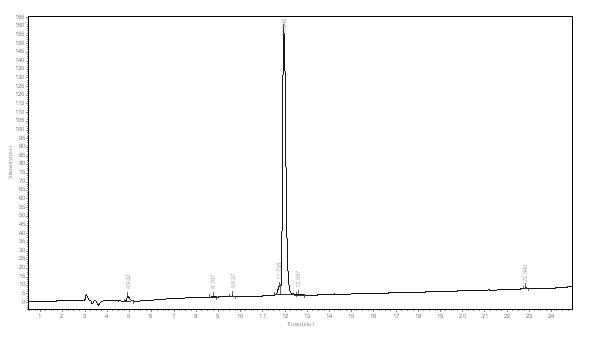
Figure 1 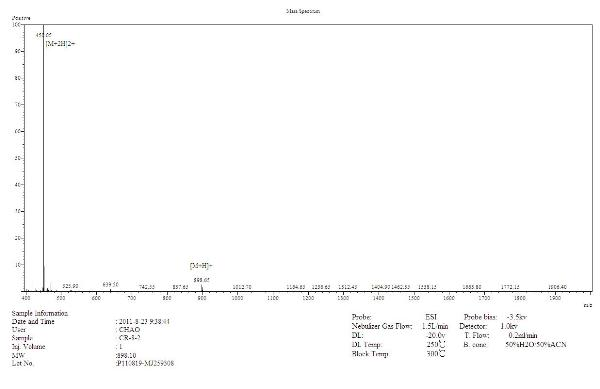
Figure 2 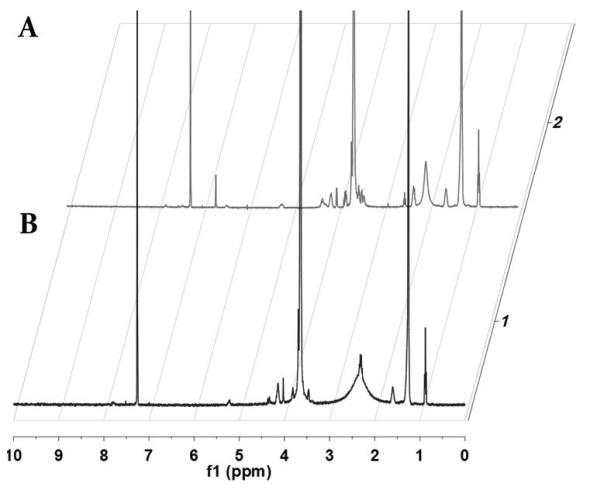
Figure 3
Abstract
Description
technical field
[0001] The invention relates to a neuropilin-1 ligand polypeptide-polyethylene glycol-phospholipid complex, its active targeting liposome carrier system and a preparation method thereof. Background technique
[0002] Prostate cancer is the most common malignant tumor of the male reproductive system, and its incidence increases with age. There are obvious regional differences in its incidence, and it is higher in Europe and the United States. It is reported that after lung cancer, it is the second leading cause of cancer death in men. With the increase of population aging, the incidence rate of males in China has shown an obvious increasing trend in recent years: in 1993, the incidence rate of prostate cancer in China was 1.71 patients per 100,000 people per year, and by 2000 it had risen to 4.55. Due to the lack of awareness and attention to prostate cancer in our country, and early prostate cancer does not have any symptoms, it is difficult to attract peopl...
Examples
Embodiment 1
[0044] Example 1: Synthesis, purification and characterization of CRPAKPAR
[0045] Weigh 0.4167g of Boc-Arg(Z)-PAM resin (degree of substitution: 0.6mmol / g) into a peptide bottle, swell the resin with DMF (N,N-dimethylformamide), drain it after 20 minutes . Add TFA (trifluoroacetic acid) about twice the volume of the resin to stir the reaction, pump out the TFA, then add TFA and operate in the same way once to remove the Boc protecting group. Boc-Ala was activated with HBTU (benzotriazole-N,N,N',N'-tetramethyluronium hexafluorophosphate) in DMF and DIEA (N,N-diisopropylethylamine), After the resin was washed with DMF, Boc-Ala activation solution was added, and the reaction was shaken. After the reaction was completed, the reaction solution was removed, and the resin was washed with DMF. Subsequently, the remaining amino acids were connected sequentially according to the CRPAKPAR sequence in the above-mentioned manner. After the reaction, wash the resin and remove the pr...
Embodiment 2
[0047] Example 2: RPAKPAR-PEG 3350 -Synthesis, purification and characterization of DSPE
[0048] The CRPAKPAR obtained in the above steps was dissolved in PBS solution (pH7.0), and the Mal-PEG 3350 -DSPE (maleimide-polyethylene glycol (molecular weight 3350)-phospholipid complex) was dissolved in DMF, the two were mixed and then reacted with magnetic stirring, TLC (thin-layer chromatography) to monitor the reaction, after Mal-PEG 3350 - After the DSPE reaction is complete, the reaction is stopped, and excess CRPAKPAR and DMF are removed by dialysis (molecular weight cut-off 3.5kDa). Freeze-dried to obtain linear RPAKPAR-PEG 3350 -DSPE, NMR characterizes its structure, see image 3 , A in the figure is Mal-PEG 3350 -NMR spectrum of DSPE, B is RPAKPAR-PEG 3350 -The nuclear magnetic spectrum of DSPE, as can be seen from the figure, the A figure shows the maleimide peak, and the peak disappears in the B figure, while the remaining peaks remain basically unchanged, show...
Embodiment 3
[0049] Example 3: RPAKPAR-PEG 3350 -Synthesis, purification and characterization of DPPE
[0050] The CRPAKPAR obtained in the above steps was dissolved in PBS solution (pH7.0), and the Mal-PEG 3350 - DPPE (maleimide-polyethylene glycol (molecular weight 3350)-phospholipid complex) was dissolved in DMF, the two were mixed and then reacted with magnetic stirring, TLC (thin layer chromatography) to monitor the reaction, after Mal-PEG 3350 - After the DPPE reaction is complete, the reaction is stopped, and the excess CRPAKPAR and DMF are removed by dialysis (molecular weight cut-off 3.5kDa). Freeze-dried to obtain linear RPAKPAR-PEG 3350 -DPPE, NMR characterizes its structure, see image 3 , A in the figure is Mal-PEG 3350 -NMR spectrum of DPPE, B is RPAKPAR-PEG 3350 -The nuclear magnetic spectrum of DPPE, as can be seen from the figure, A shows the peak of maleimide, while the peak in B disappears, while the rest of the peaks remain basically unchanged, showing that M...