
Drug sensitivity prediction method based on cell line and drug similarity networks
A drug sensitivity and cell line technology, applied in the field of biomedicine, can solve the problems of not taking into account the characteristics of biological networks, the effect is not ideal, and the prediction effect is not good
Patent Information
- Authority / Receiving Office
- CN · China
- Current Assignee / Owner
- Publication Date
- 2018-11-16
Smart Images
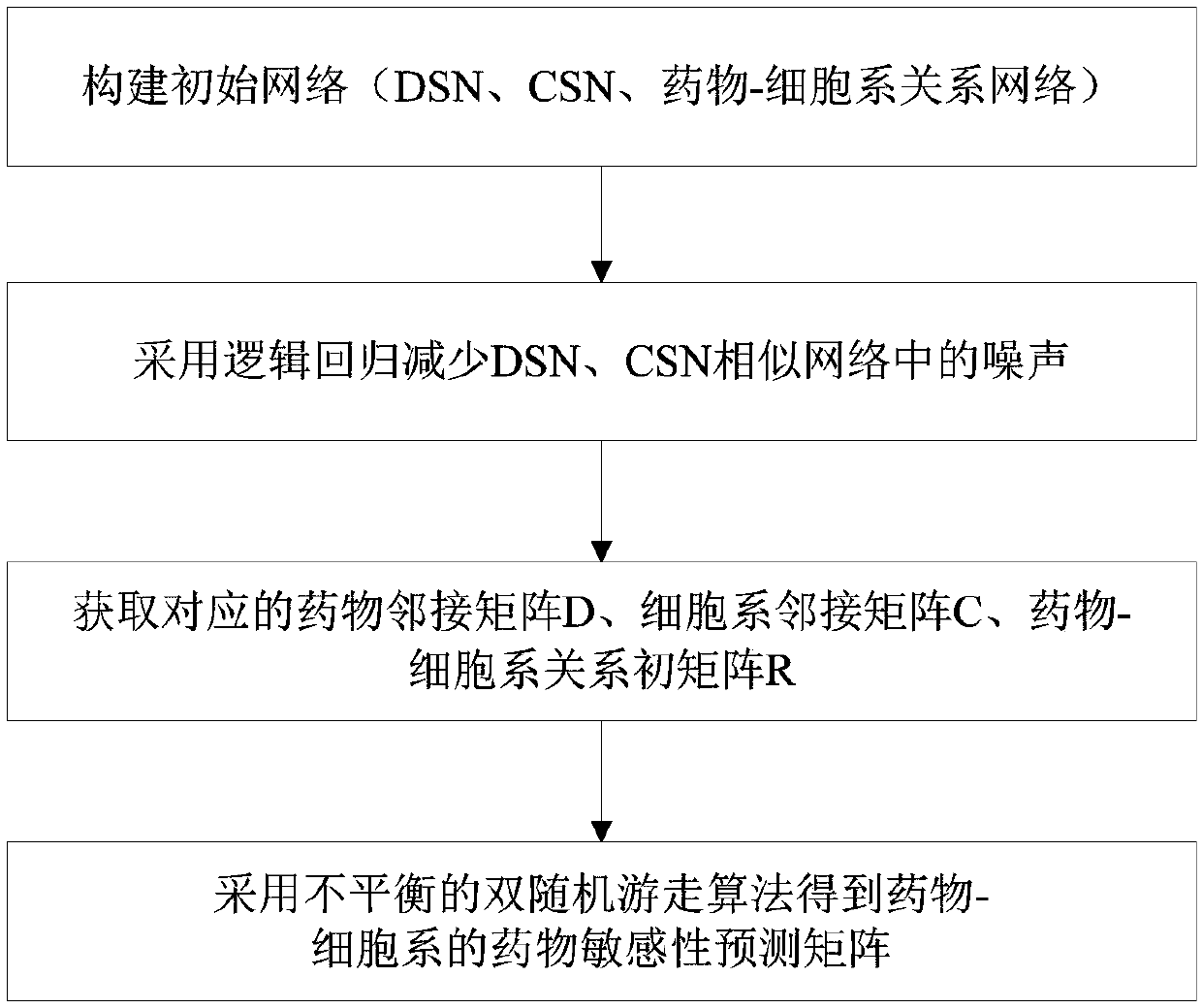
Figure 1 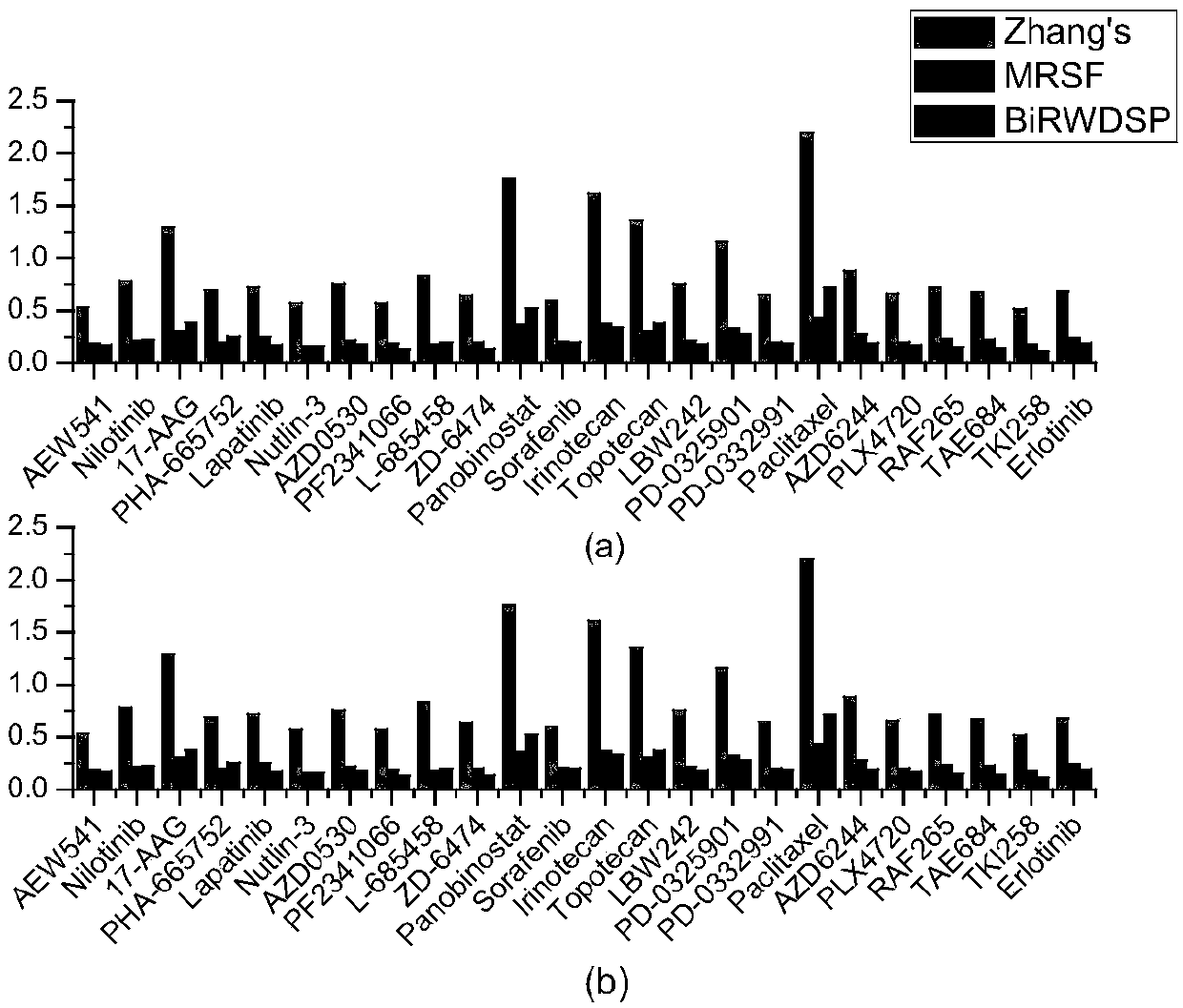
Figure 2 
Figure 3
Abstract
Description
technical field
[0001] The invention belongs to the technical field of biomedicine, and in particular relates to a drug sensitivity prediction method based on a cell line and drug similarity network. Background technique
[0002] Over the past two decades, substantial improvements in high-throughput analytical techniques have raised expectations for personalized or precision medicine to become the future paradigm of medical science. Patients with the same cancer may respond differently to specific drug treatments. Personalized medicine hopes to understand the cause of a specific patient's cancer at the molecular level, and then tailor treatment to address the patient's cancer. Compared with chemotherapy-based monotherapy approaches, personalized medicine looks at tumor response based on established molecular profiles of cancer cells to overcome some of the limitations associated with conventional symptom-oriented disease diagnosis and treatment. The most important step in p...
Examples
Embodiment Construction
[0067] The present invention will be further described below in conjunction with examples.
[0068] Biological data sets used in this example: Cancer Cell Line Encyclopedia (CCLE) and Genomics of Cancer Drug Sensitivity (GDSC) two sets of data sets. The specific data of these two sets of data sets will be introduced in detail in Table 1 below.
[0069] The CCLE dataset consists of large-scale genomic data, including gene expression profiles, mutation status, and copy number variation of 1,036 human cancer cell lines, and eight-point dose-response curves for 24 chemical compounds across 504 cell lines. Gene expression profiling and drug sensitivity data (measured by area under the dose response curve) can be downloaded from the CCLE website (http: / / www.broadinstitute.org / ccle). Among the total 504 cell lines, 491 common cancer cell lines have both drug sensitivity measurement data and gene expression profiling data. In the CCLE data set, there are 24 drugs, 23 of which can fin...